Quick Pizza Dough Recipe (Ready in 30 Minutes)
Ingredients
Scale

This quick pizza dough recipe delivers a soft, chewy homemade crust in just 30 minutes. No long rise, no fancy equipment, just five pantry staples.
This quick pizza dough recipe is the answer to every weeknight pizza craving when you want something better than delivery but don't have hours to babysit a slow-rising ball of dough. With five pantry staples, a packet of instant yeast, and one bowl of warm water, you can have a stretched, sauced, and bubbling pie on the table in about half an hour. No stand mixer required, no mysterious sourdough starter you forgot to feed, no overnight planning — just dinner, ready when you are.
I started making this dough on busy Tuesdays when ordering felt like an admission of defeat, and now it's the thing my whole family asks for on Friday nights, too. The texture is exactly what you want from a homemade pizza dough: crisp on the bottom, chewy through the middle, with those puffy, blistered edges that look like they came out of a pizzeria oven. The technique is forgiving, the cleanup is minimal, and the flavor genuinely rivals doughs that take three times as long.
If you've been intimidated by yeast or convinced that real pizza needs a 24-hour cold ferment, this is your gentle introduction. We're using instant yeast for speed, a touch of sugar to wake it up, and a quick 10-minute rest in place of a long bulk rise. The result is a 30 minute pizza dough that proves weeknight pizza can taste every bit as good as the slow-Sunday version. This quick pizza dough recipe is what I reach for when dinner needs to happen now and ordering out is off the table.
Five everyday staples and a measuring cup are all that stand between you and homemade pizza. Each ingredient in this quick pizza dough recipe earns its place in the bowl, and a few small choices — flour type, yeast type, water temperature — make the difference between a chewy, golden pizza crust and a flat, tough one.
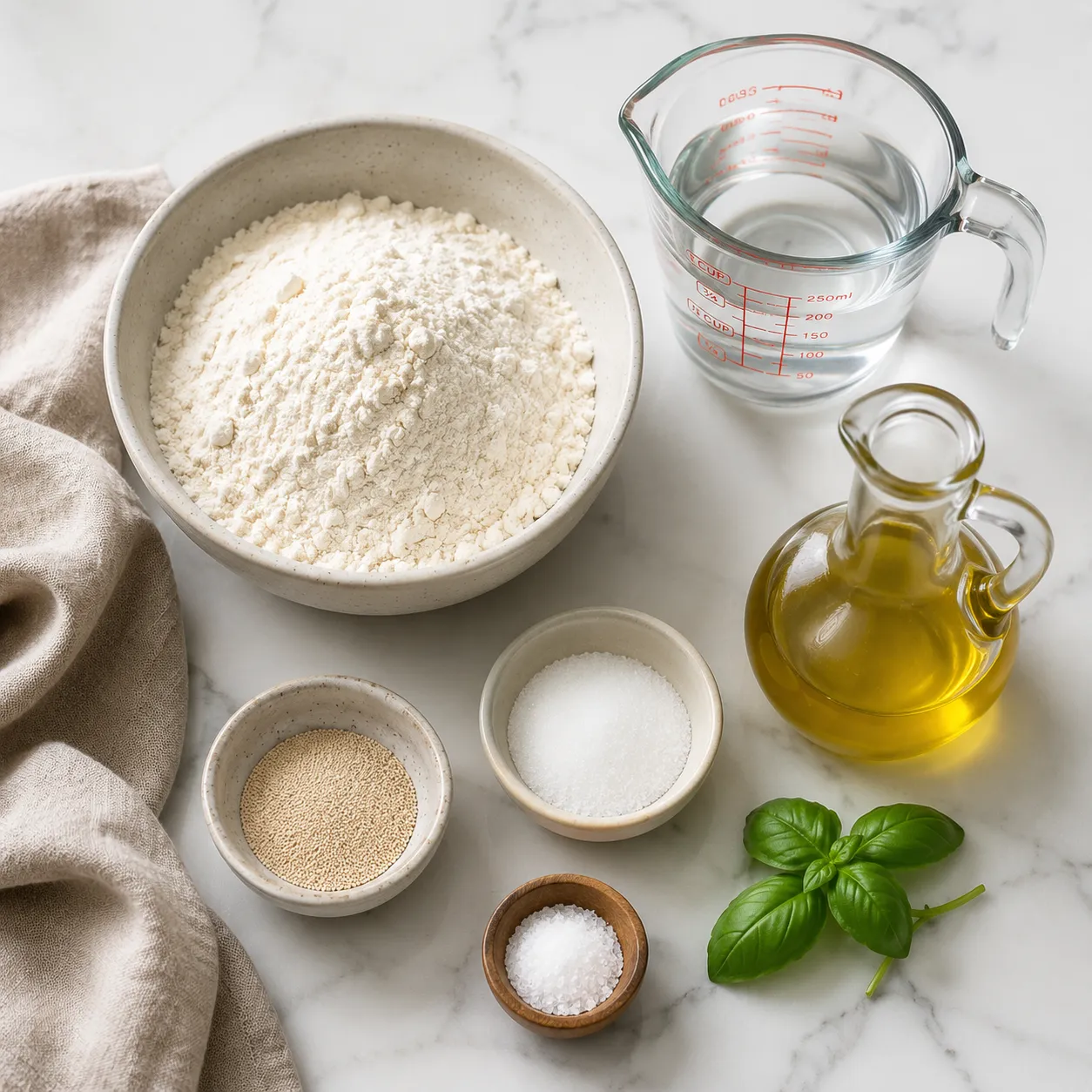
All-purpose flour is the everyday hero here. It produces a tender, chewy pizza crust without the strict hydration math that bread flour can demand. If you have bread flour on hand, swap it in one-for-one for a slightly more elastic, chewier result. For the most authentic pizzeria texture, Italian 00 flour is the gold standard, though honestly any of the three will give you a great crust on a weeknight schedule.
Instant yeast (sometimes labeled rapid-rise or quick-rise) is non-negotiable for the speed of this method. Unlike active dry yeast, instant yeast doesn't need to be proofed first — you can stir it straight into the flour and go. It activates faster, which is exactly what we want from a 30 minute pizza dough. If you only have active dry yeast on hand, dissolve it in the warm water with the sugar and let it foam for five minutes before adding the rest.
Water temperature matters more than people realize. Aim for 100°F to 110°F — warm to the wrist, not hot. Water that's too cool will sluggish the yeast; water hotter than about 120°F can kill it outright. If you don't have a thermometer, run the tap until it feels comfortably warm, like a baby's bath. A teaspoon of sugar feeds the yeast and helps the crust brown, fine sea salt seasons the dough and tightens the gluten, and a generous glug of olive oil softens the texture and adds a whisper of richness.
The quick pizza dough recipe below is simple enough to memorize after one try. Whisk the dry ingredients, add the wet, knead for a few minutes, rest briefly, then stretch and bake. Here's how each stage actually feels in your hands.
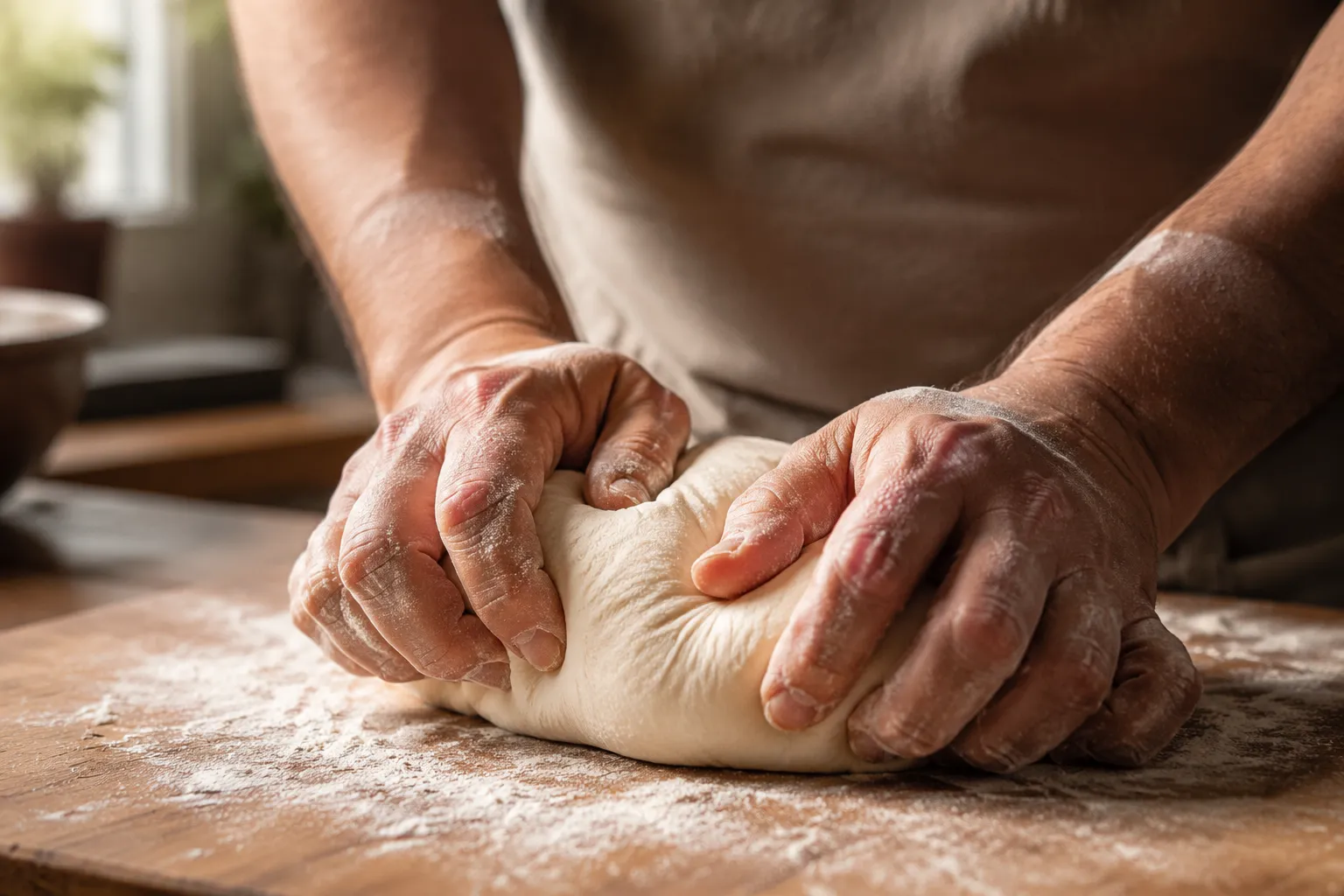
Combine the flour, instant yeast, sugar, and salt in a large bowl and give them a quick whisk to distribute the yeast and salt evenly. Pour in the warm water and olive oil and stir with a wooden spoon until a shaggy dough forms. Turn it onto a lightly floured surface and knead for about five minutes — push with the heel of your hand, fold the dough back over itself, rotate a quarter turn, and repeat. The dough is ready when it feels smooth, slightly tacky, and springs back when you poke it gently.
Resist the urge to add too much extra flour while you knead. A slightly sticky dough bakes into a softer, chewier crust, and the surface tackiness disappears once the dough rests under a towel. If you have a stand mixer, the dough hook on medium-low for three to four minutes does the same job hands-free.
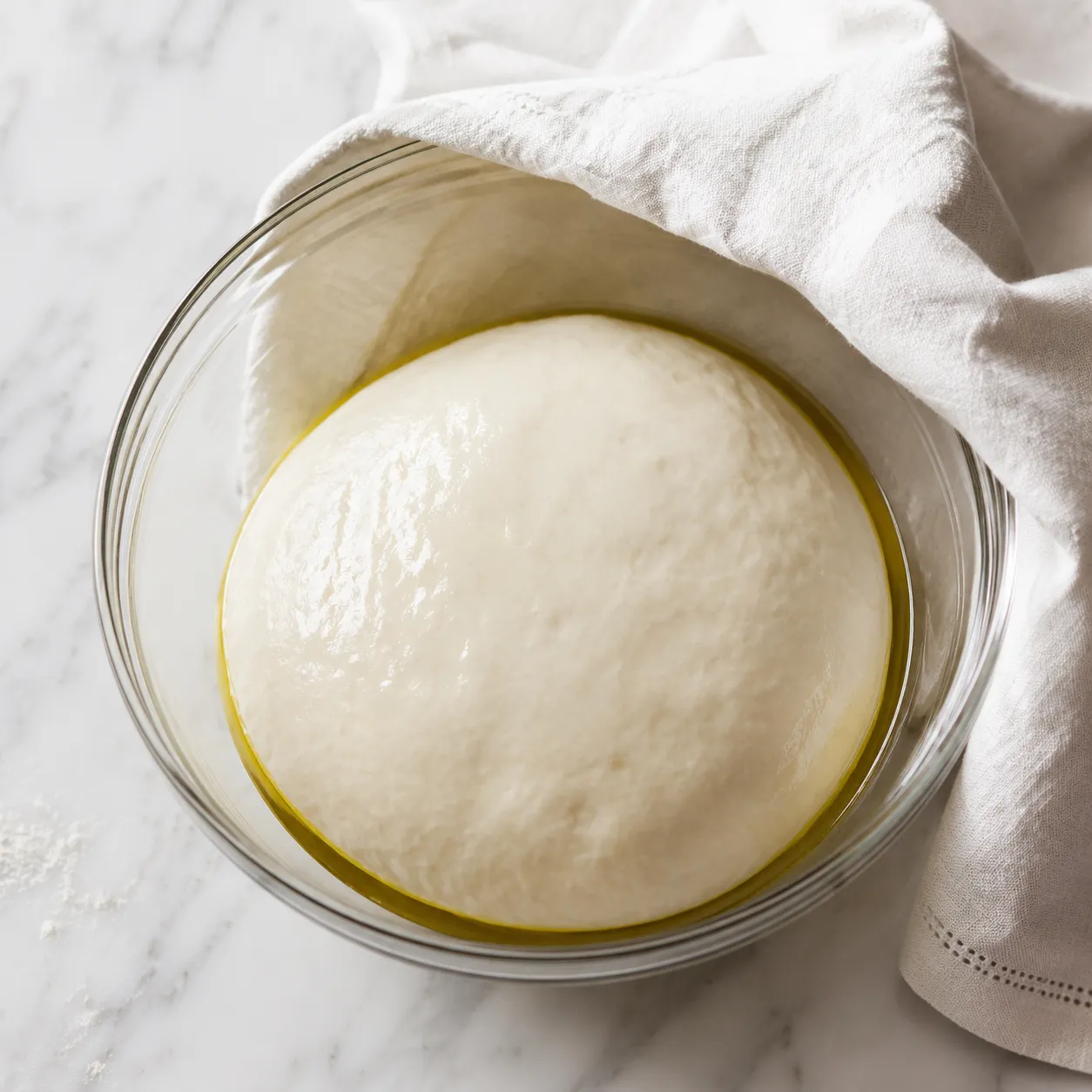
Drop the dough into a lightly oiled bowl, cover with a clean towel, and let it rest for 10 to 15 minutes while you preheat your oven to 500°F with a pizza stone, steel, or upside-down sheet pan inside. This short rest relaxes the gluten so the dough stretches without snapping back, and the instant yeast gets a head start on the airy bubbles you'll see in the finished crust.
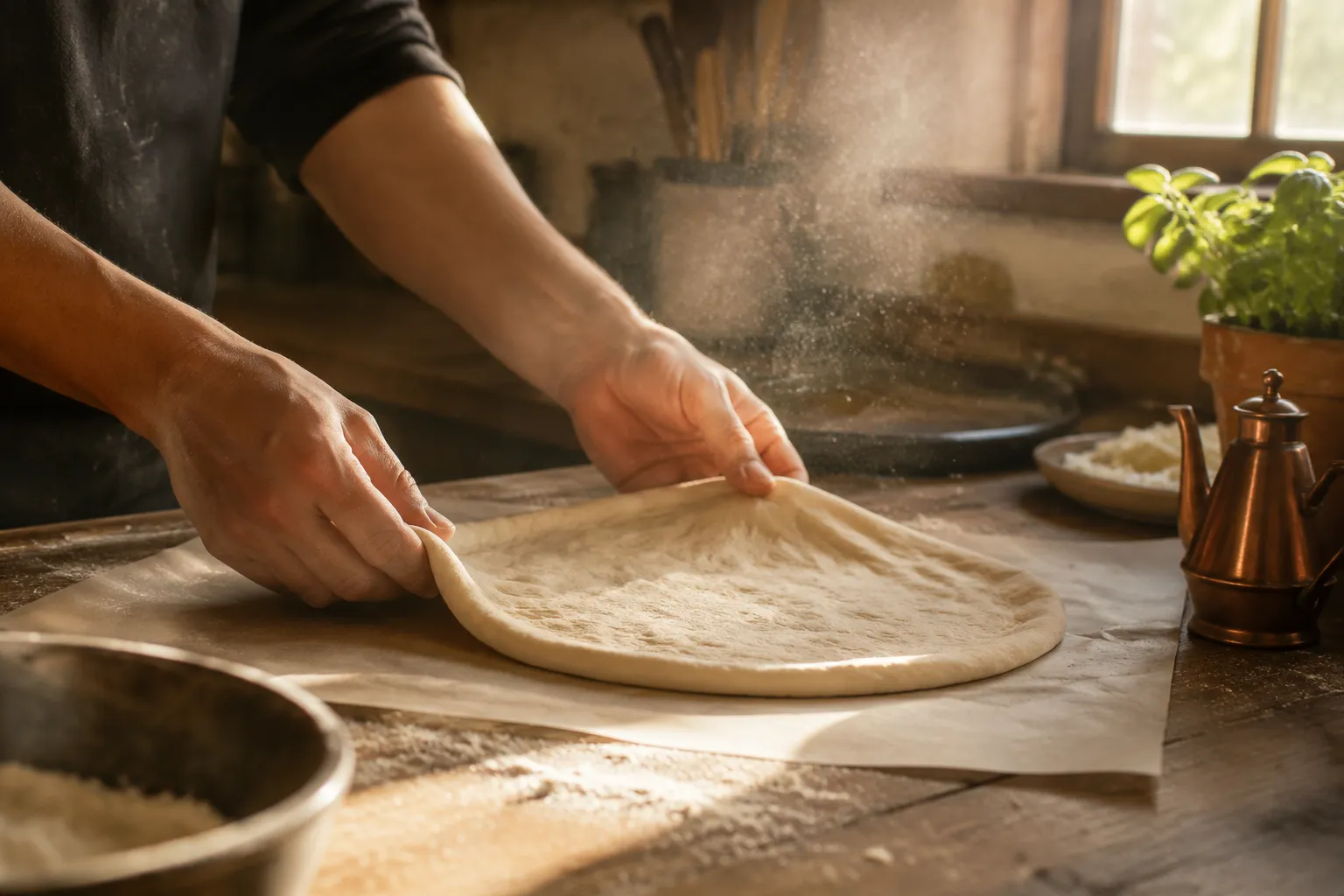
When the rest is up, divide the dough in half for two 12-inch pizzas, or into four pieces for personal pies. Working with one piece at a time, press it into a flat disk on parchment paper, then gently stretch from the center outward, letting gravity help by lifting and rotating the disk between your hands. Aim for about 12 inches across with a slightly thicker rim. Always stretch — never roll with a pin — so the air pockets inside the dough stay intact and bake into that beautiful open crumb.
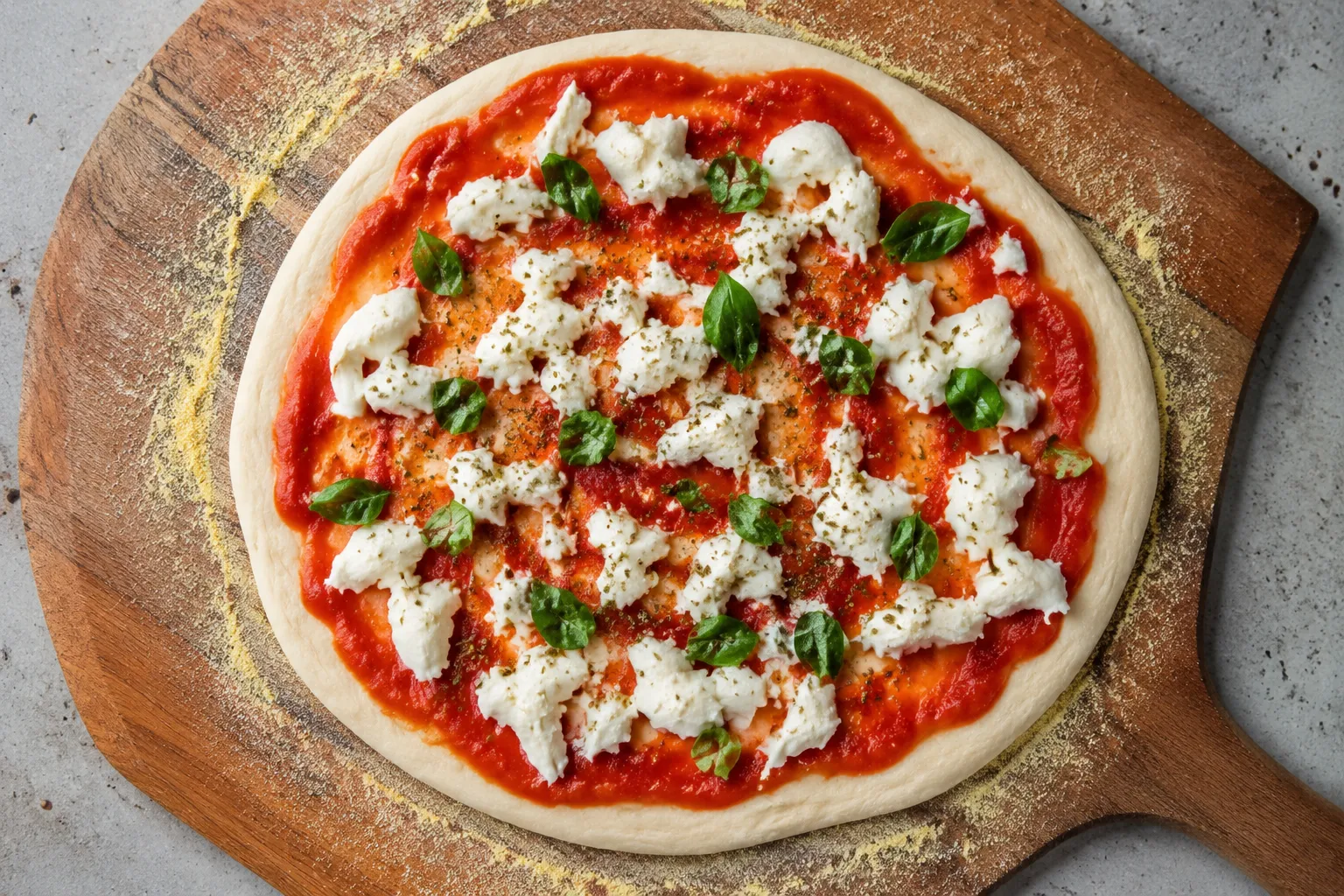
Top your stretched round with a thin layer of sauce — store-bought is fine in a pinch, but a quick five-minute homemade pizza sauce takes everything to the next level — followed by torn cheese and any quick-cooking toppings. Less is more here: an over-loaded pie steams instead of crisps. Slide the parchment onto your hot stone and bake for 10 to 12 minutes, until the crust is deeply golden and the cheese is bubbling and just starting to spot brown.
Half the fun of homemade pizza dough is the topping spread, especially when the kids start campaigning for their own personal pie. A few reliable favorites from our kitchen rotation are below — none of them complicated, all of them satisfying after a long Tuesday.
For a classic margherita, brush the stretched dough with olive oil, dot with crushed San Marzano tomatoes, scatter torn fresh mozzarella, and finish with fresh basil and flaky salt the moment the pie comes out of the oven. The best mozzarella for pizza depends on the style — low-moisture, whole-milk shredded for everyday slices that hold their shape, or fresh mozzarella torn into pillowy pieces for that creamy, milky margherita finish. Loaded veggie is our garden-cleanout pie: thinly sliced bell peppers, red onion, cremini mushrooms, a handful of olives, and a generous sprinkle of dried oregano. For a meat lover's, layer pepperoni, crumbled cooked Italian sausage, and a few rounds of soppressata over plenty of mozzarella, then finish with a drizzle of hot honey for a sweet-savory snap that disappears fast.
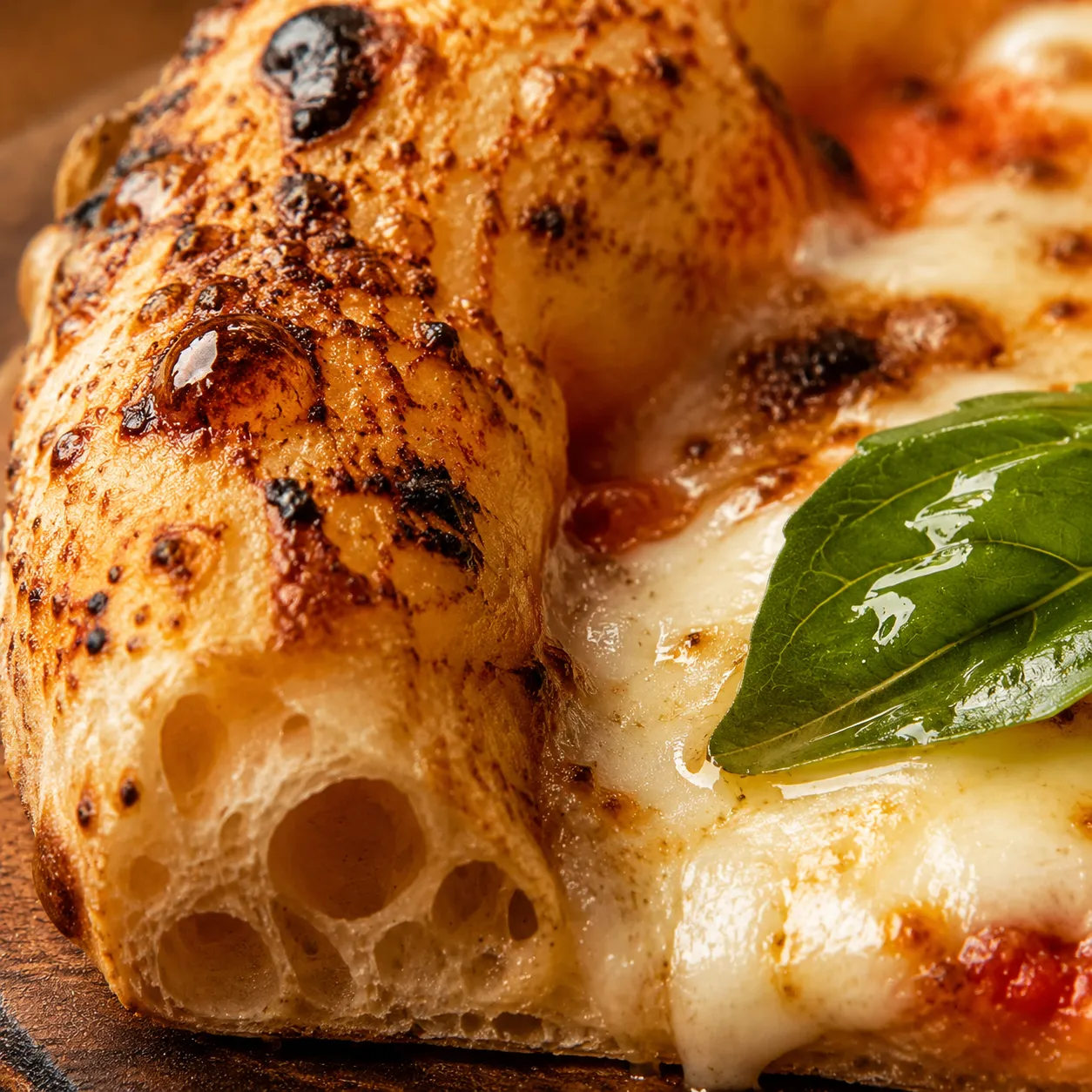
Serve with a peppery arugula salad tossed in lemon and olive oil — the bright greens cut through all that cheese — or a side of garlic knots if you happen to have extra dough on hand. A chilled glass of red, sparkling water with lemon, or a cold beer rounds it all out, and a bowl of olives or pickled pepperoncini on the table makes pizza night feel like a proper occasion.

Leftovers reheat beautifully in a hot dry skillet on the stovetop for two to three minutes — the bottom re-crisps while the cheese remelts on top, no soggy microwave slices in sight. A few flakes of salt and a fresh basil leaf on top, and your reheated slice tastes nearly as good as it did the night before.
Once you have this quick pizza dough recipe in your back pocket, the mental load of weeknight dinner gets noticeably lighter. Friday turns into pizza night by default, and you start improvising toppings from whatever the fridge offers. The base recipe is also wonderfully adaptable — you can pivot to a no-yeast pizza dough using baking powder for an even faster pinch-hitter, switch to a gluten-free pizza crust by using a 1:1 GF flour blend with xanthan gum, or build a vegan pizza recipe by topping with cashew mozzarella, roasted vegetables, and a swoosh of basil pesto. Want a thicker, panned-up version? Press the dough into a well-oiled cast iron skillet and you have a respectable deep dish pizza dough situation in just over an hour.
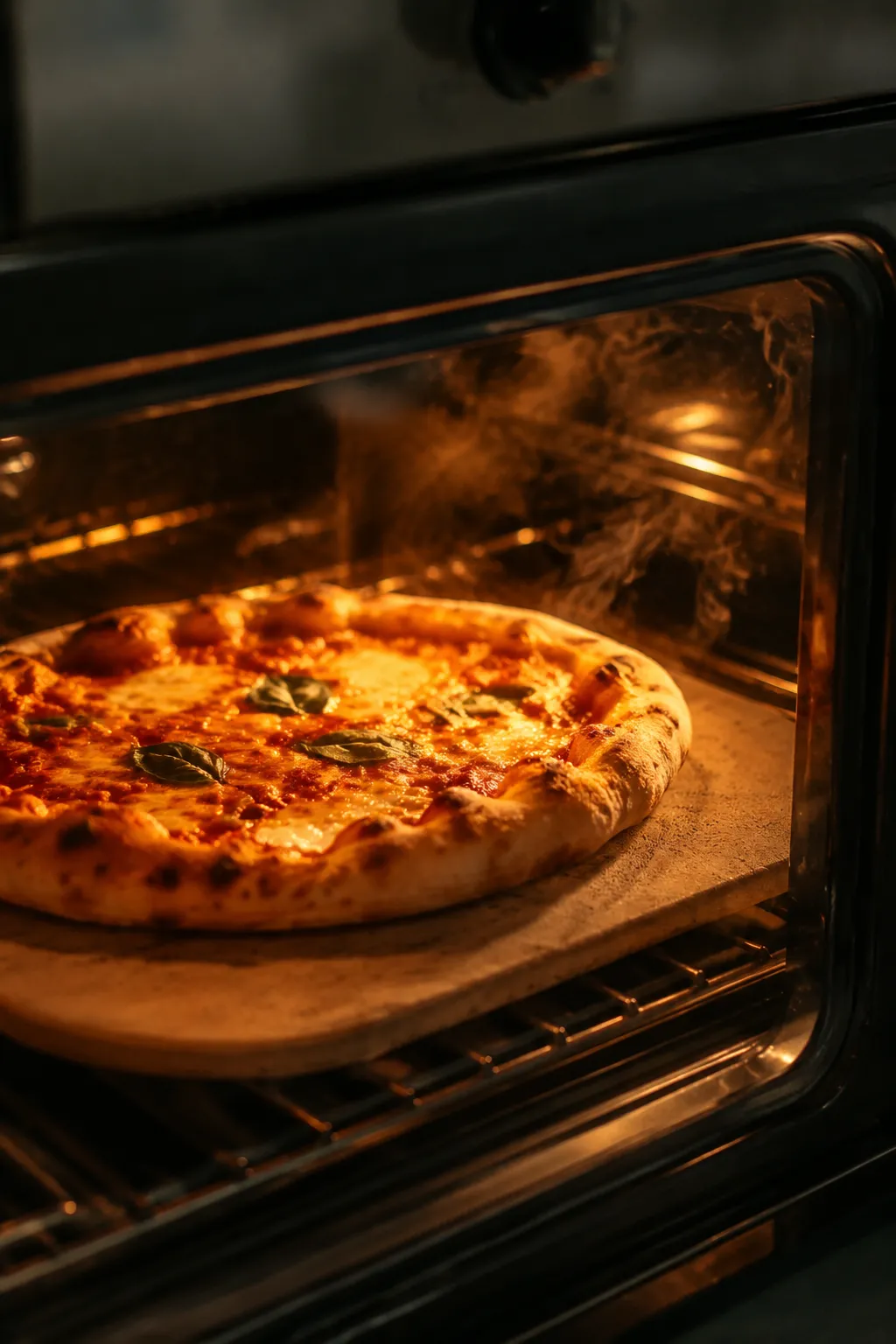
The real secret behind any great homemade pizza isn't a 72-hour ferment or a wood-fired oven — it's heat, plus a dough that's been treated kindly. Crank that oven as hot as it will safely run, give your stone a full 30 minutes to come up to temperature, and trust the simple chemistry of flour, water, and instant yeast to do the rest. With this 30 minute pizza dough as your foundation, weeknight pizza becomes something you genuinely look forward to instead of something you order at the end of a long day.
The same five-ingredient base flexes to fit nearly any diet or pizza style. Once you've made the original a few times, try one of these riffs to keep weeknight pizza fresh.
Refrigerator: After kneading, place the dough in a lightly oiled bowl, cover tightly with plastic wrap or a fitted lid, and refrigerate for up to 3 days. Cold fermentation actually develops more flavor and a slightly chewier crumb, so make-ahead is a bonus rather than a compromise. Pull the dough out about 30 minutes before shaping so it can come back to room temperature and stretch easily.
Freezer: Divide the kneaded dough into individual portions, brush each with olive oil, and freeze in zip-top bags for up to 3 months. Thaw overnight in the fridge, then bring to room temperature before stretching. Leftover baked pizza keeps in an airtight container in the fridge for 3 days — reheat in a hot dry skillet for 2 to 3 minutes for a crisp-bottomed second-day slice that's nearly as good as fresh.