Pork Fried Rice Recipe (Better Than Takeout in 25 Min)
Ingredients
Scale
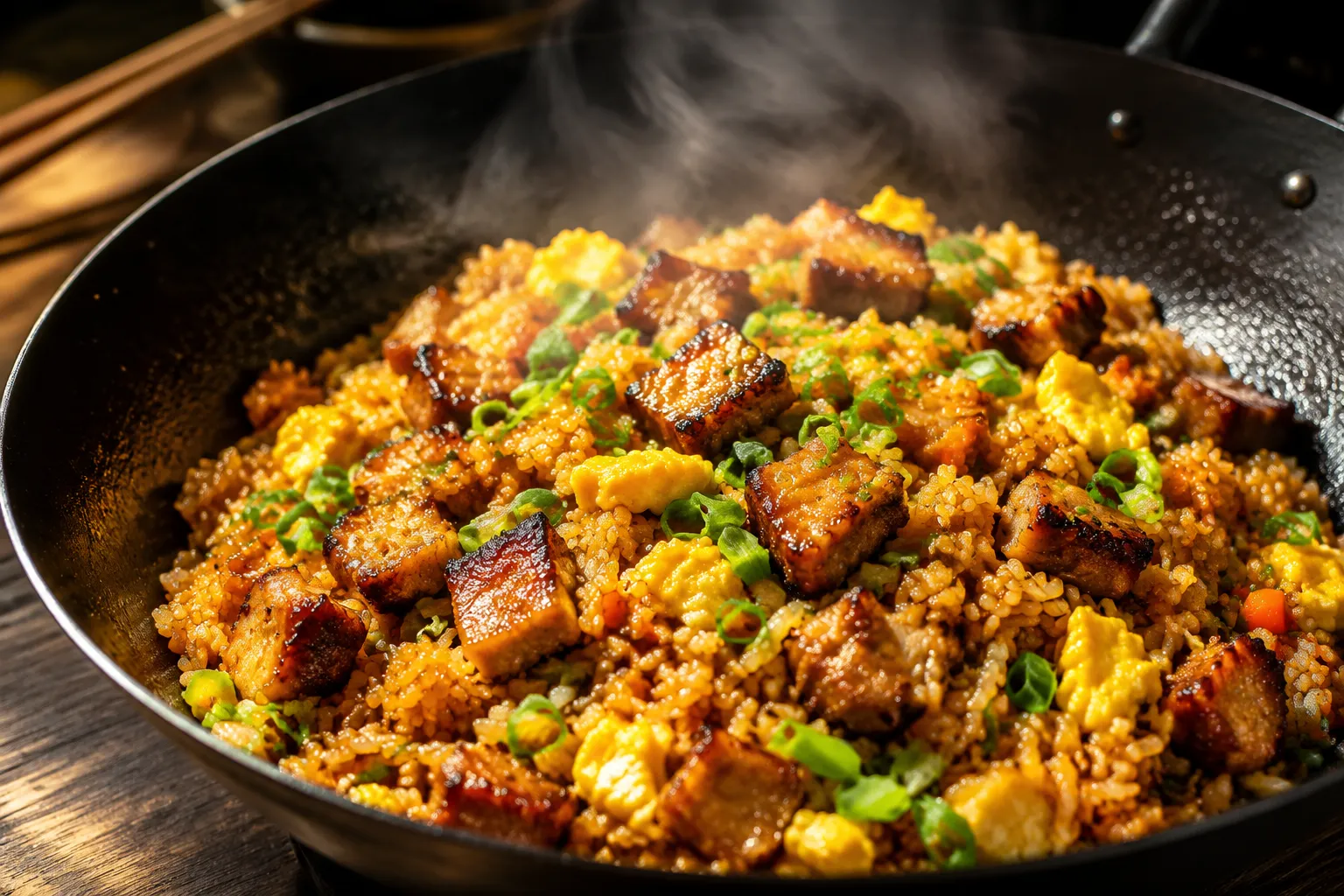
Skip the takeout container. This pork fried rice recipe delivers smoky wok flavor, tender pork, and perfectly fluffy rice in just 25 minutes at home.
This pork fried rice recipe is the one I make when the takeout craving hits hard but I'd rather not deal with delivery fees or soggy containers stacked on the counter. It comes together in 25 minutes with pantry staples, hits all those savory-smoky notes you expect from your favorite Chinese spot, and uses a single pan from start to finish. The secret isn't fancy. It's hot heat, dry rice, and a sauce ratio that actually makes sense.
I learned the hard way that gummy fried rice almost always traces back to one mistake: using freshly cooked grains. Cold, dried-out rice is non-negotiable, and once you've got that plus a quick soy-sesame glaze and well-seared pork, you're already 90% of the way to that golden, separate, slightly chewy texture you can't stop eating. No restaurant equipment required and no MSG bottle hidden in the cupboard, just smart technique on a regular home stove.
Whether you're cooking a Tuesday-night family meal or stretching last night's pork roast into something new, this version flexes hard. I've used leftover pork tenderloin, weekend char siu, and diced boneless chops with equally great results. If you've already mastered chicken fried rice or shrimp fried rice, this one slots right into the rotation, same technique, deeper savor, and a chew you only get from juicy seared pork. Let's build it.
Every component in this pork fried rice recipe earns its place. There's nothing exotic in the lineup, but the way each ingredient is prepped is what separates this from a sad weeknight stir-fry. Quick mise en place is everything because once the pan is hot, you'll be moving fast, no time to chase down a missing measuring spoon.
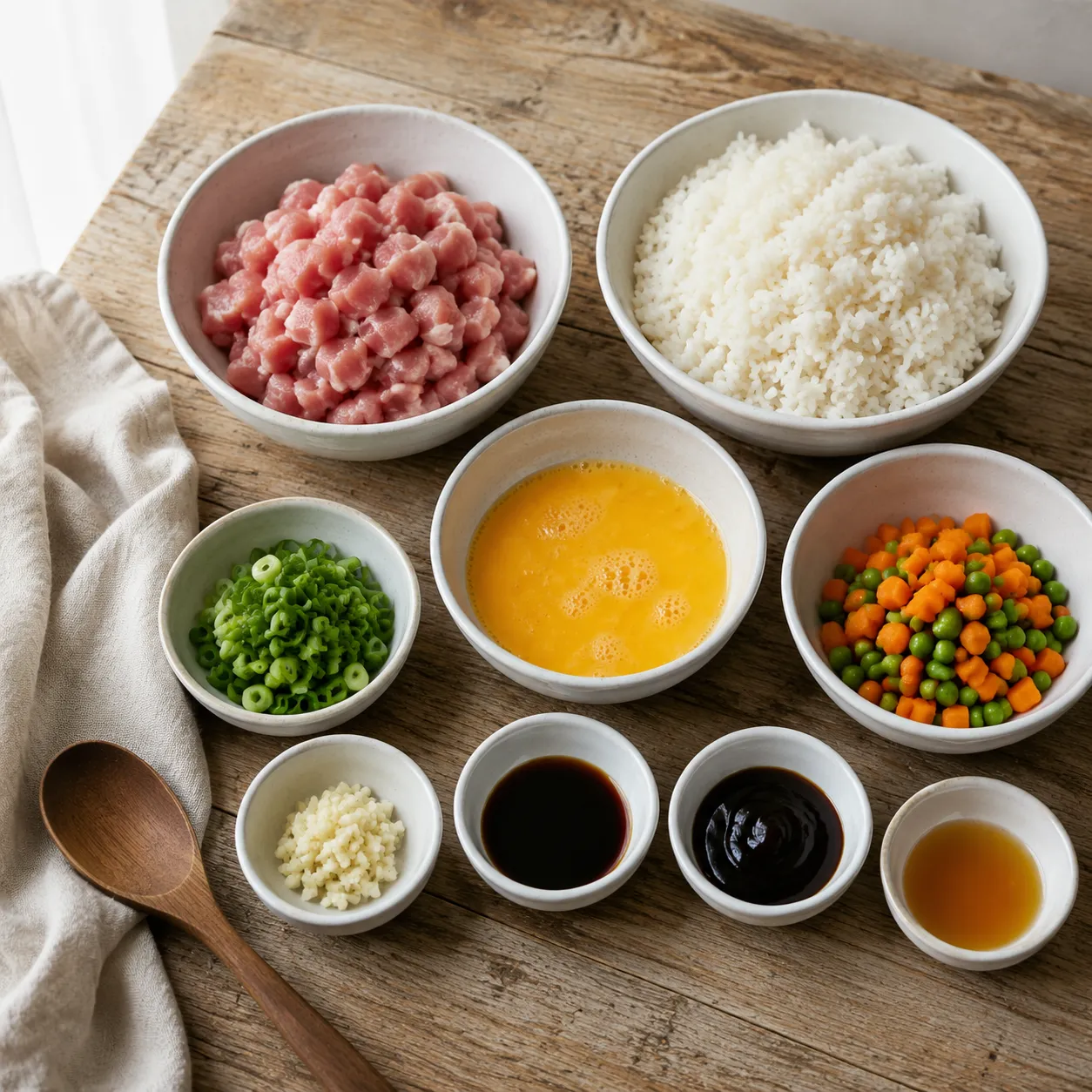
Pork tenderloin is my go-to because it's lean, fast-cooking, and stays tender when diced into half-inch cubes. Boneless pork chops are a great budget swap, and any leftover roast pork or Chinese-style char siu adds a deeper, sweeter caramel flavor with zero extra work. Whatever cut you use, dice it small so it cooks in two to three minutes flat.
This is the make-or-break ingredient. Day-old jasmine rice has lost surface moisture in the fridge overnight, which means each grain stays separate when it hits hot oil instead of clumping into a starchy paste. Long-grain jasmine is my pick for its floral aroma and structural fluff, but leftover basmati or even long-grain white rice will work in a pinch. Plan ahead by cooking a double batch the night before any planned stir-fry.
An easy stir-fry sauce built on three tablespoons of low-sodium soy sauce, one tablespoon of oyster sauce, two teaspoons of toasted sesame oil, and a pinch of white pepper does all the heavy lifting. The oyster sauce adds a savory, almost-sweet backbone, and the sesame oil gets stirred in at the very end so it doesn't lose its toasty perfume. White pepper is the quiet workhorse, it gives that distinct, slightly funky takeout-style heat that black pepper can't replicate.
A bag of frozen peas and carrots is the unsung hero here, pre-cut, perfectly portioned, and ready to drop straight into the wok with no thawing required. Three cloves of fresh garlic, four sliced green onions (whites and greens kept separate), and three beaten eggs round out the supporting cast. The whites of the green onion go in early to caramelize with the garlic, and the greens get sprinkled on at the end for color and a fresh bite.
This is a fast-moving stir-fry, so read through the full method once and have every ingredient prepped, measured, and within arm's reach of the stove. The full numbered instructions live in the recipe card below, but here's the why behind each move so nothing feels mysterious when you're standing over a hot pan.
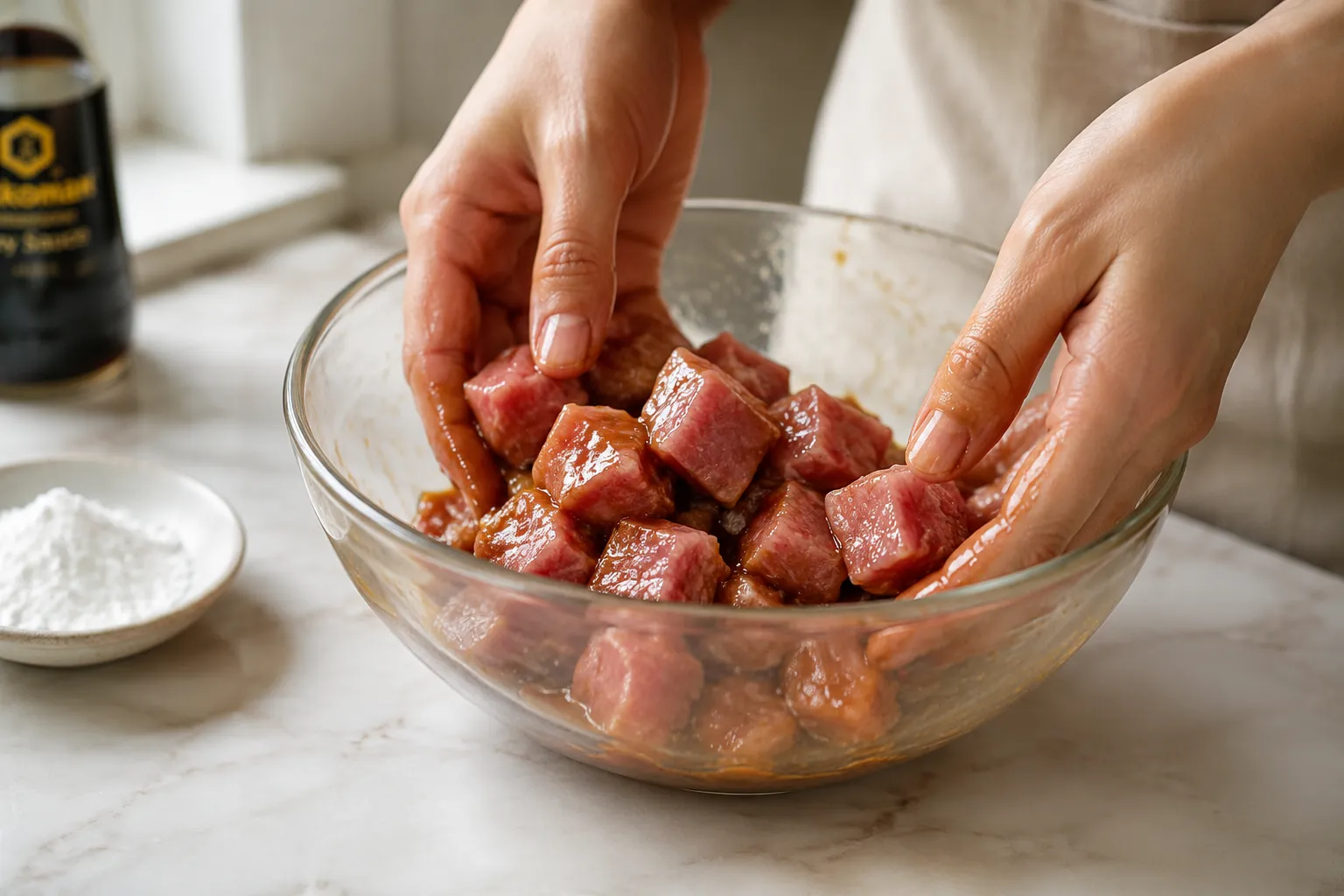
A quick five-minute soak in a teaspoon of soy sauce and a teaspoon of cornstarch transforms diced pork. The soy seasons it from the inside out, and the cornstarch creates a velveting effect that locks in juiciness when the cubes hit the hot pan. This is the trick restaurants use, and it takes almost no extra time.
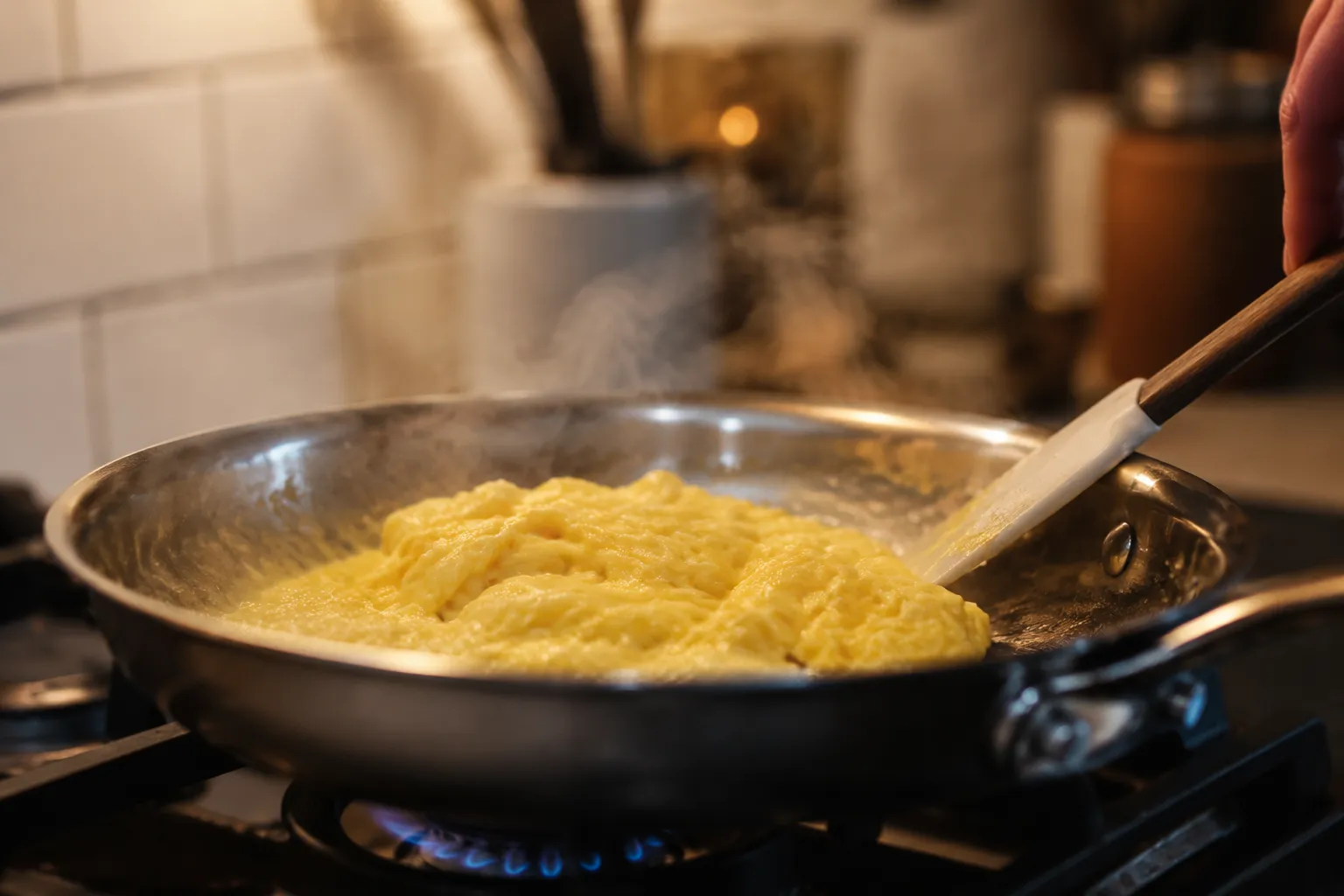
Eggs always go first and come out of the pan before anything else joins. Scramble them in a slick of vegetable oil over medium-high heat, breaking them into soft golden curds, then slide them onto a plate. Cooking the scrambled egg separately means it never gets overcooked or rubbery while the rice fries.
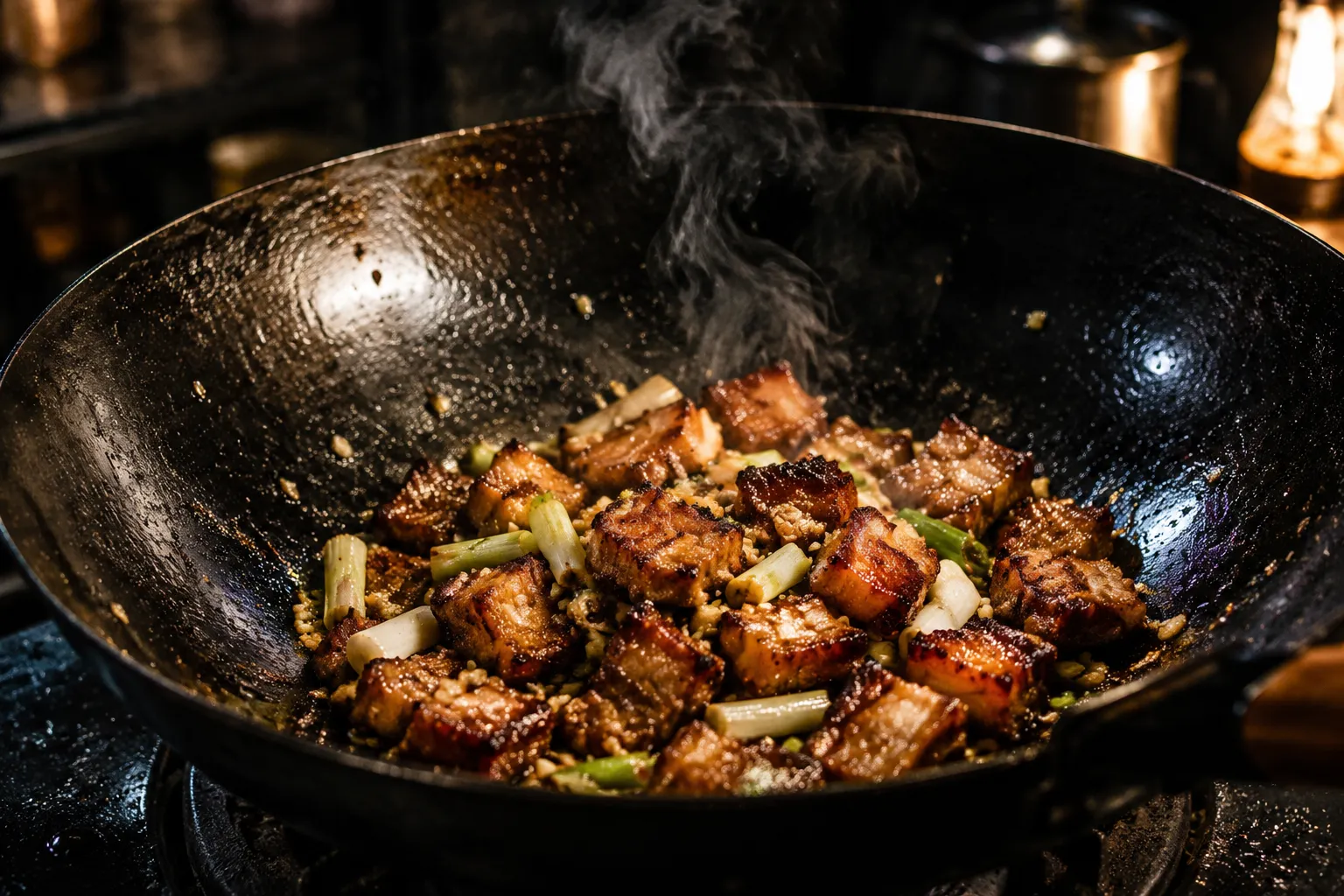
Crank the heat to high, add a fresh splash of oil, and lay the marinated pork in a single layer. Resist the urge to stir for the first 60 seconds, you want a deep golden crust on at least one side of every cube. Toss in the garlic and the white parts of the green onion in the final 30 seconds, just long enough to bloom them in the rendered fat without scorching.
Add the cold rice straight to the hot pan and press it down so each grain gets a chance to make contact with the surface. Let it sit for 30 seconds, then toss, then press again. This is where the slightly toasted, almost-popcorn aroma develops. That's the magic of wok hei, even on a home stove.
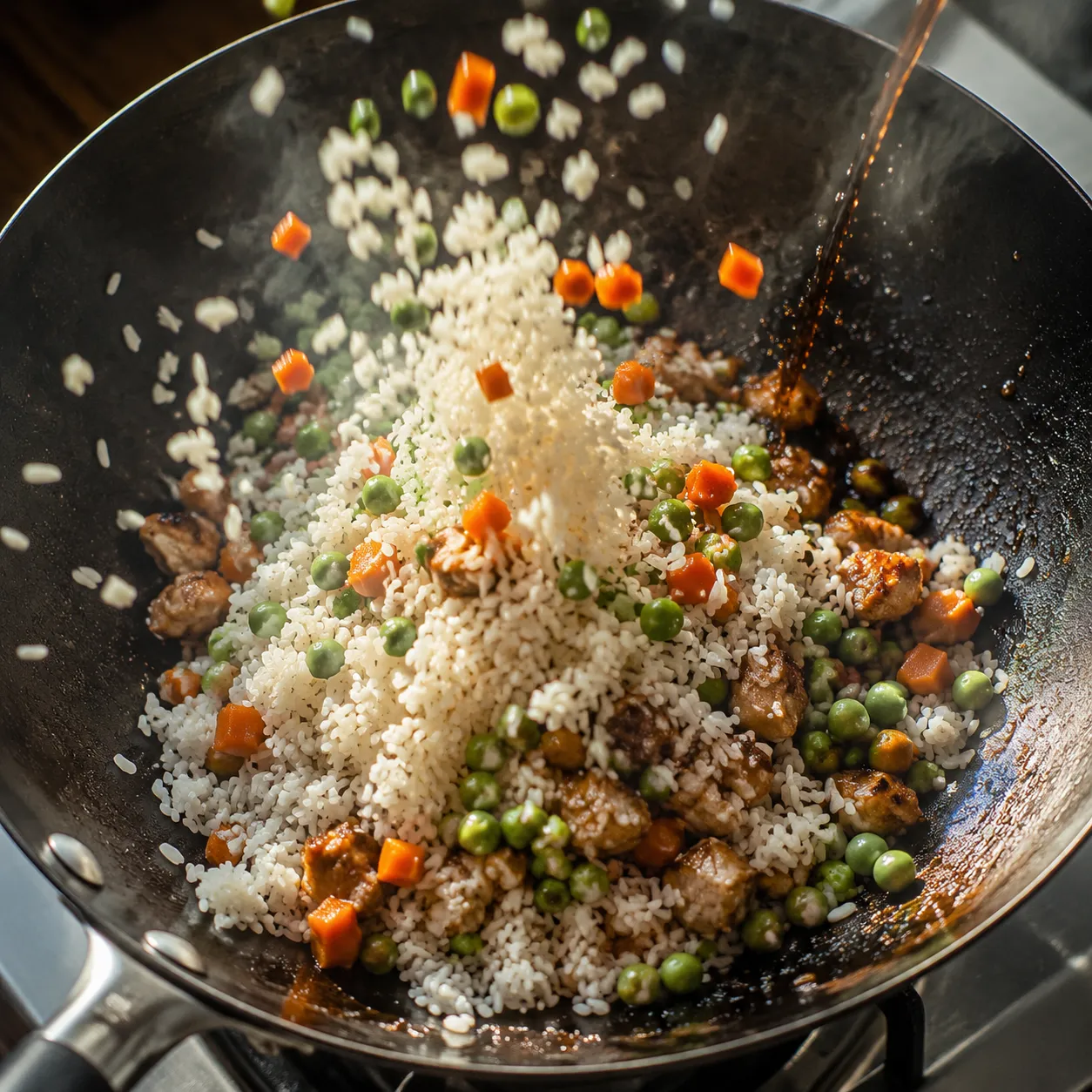
Pour the soy and oyster sauces around the edge of the pan rather than directly onto the rice. The sauce hits the hottest metal and caramelizes for a split second before being tossed through, which is exactly how takeout joints build that smoky depth. Fold in the eggs, peas, carrots, and green onion tops, finish with the toasted sesame oil off the heat, and you're done.
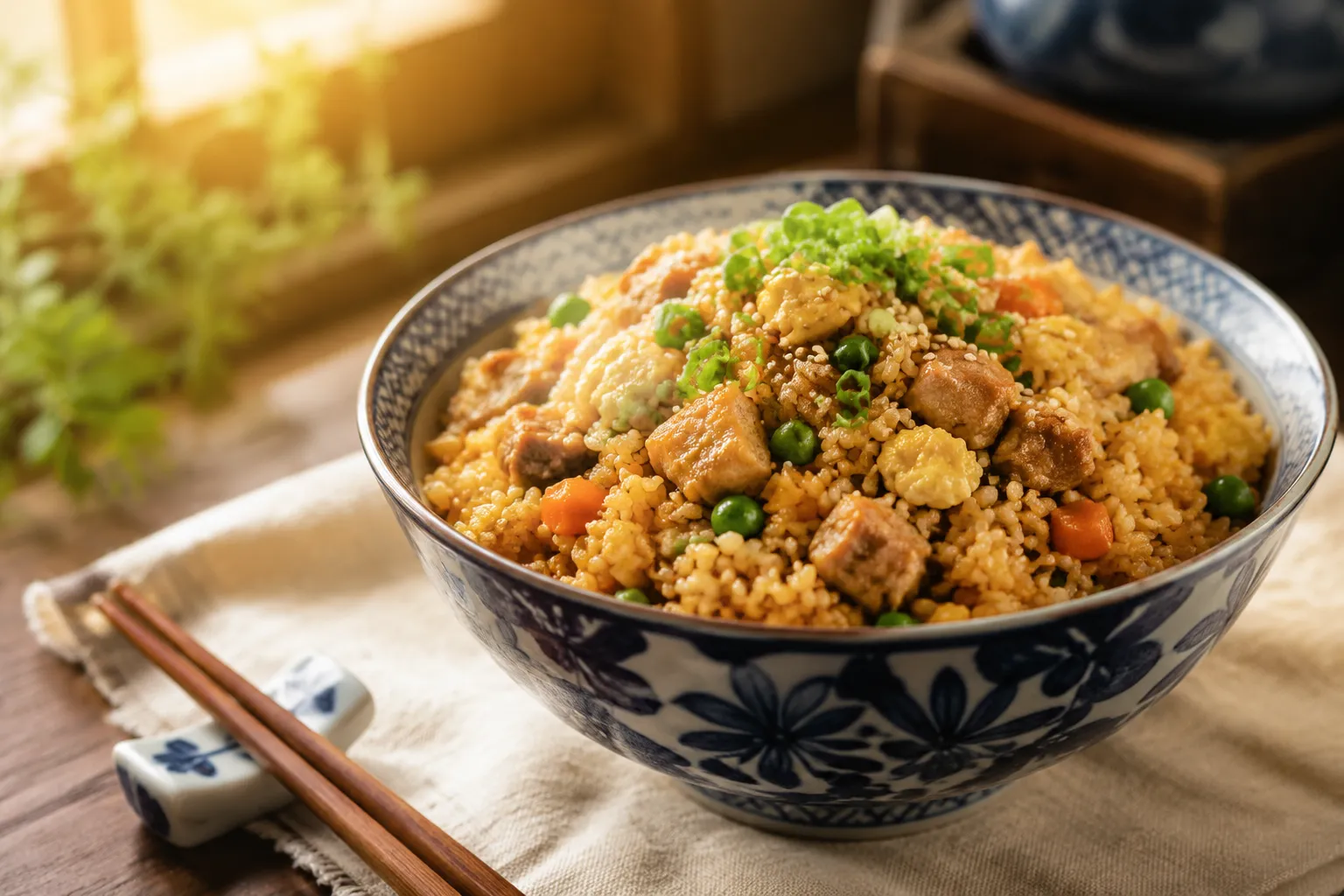
If you've ever wondered what your favorite spot does that you can't quite replicate at home, it's almost always heat. A blazing hot pan and a fast hand. Carbon steel and cast iron both hold heat better than nonstick, and if you're new to stir-frying, learning how to season a wok opens up a whole new world of high-heat cooking. Once you're set up, the same pan handles chicken fried rice, shrimp fried rice, and dozens of other dishes with no sticking.
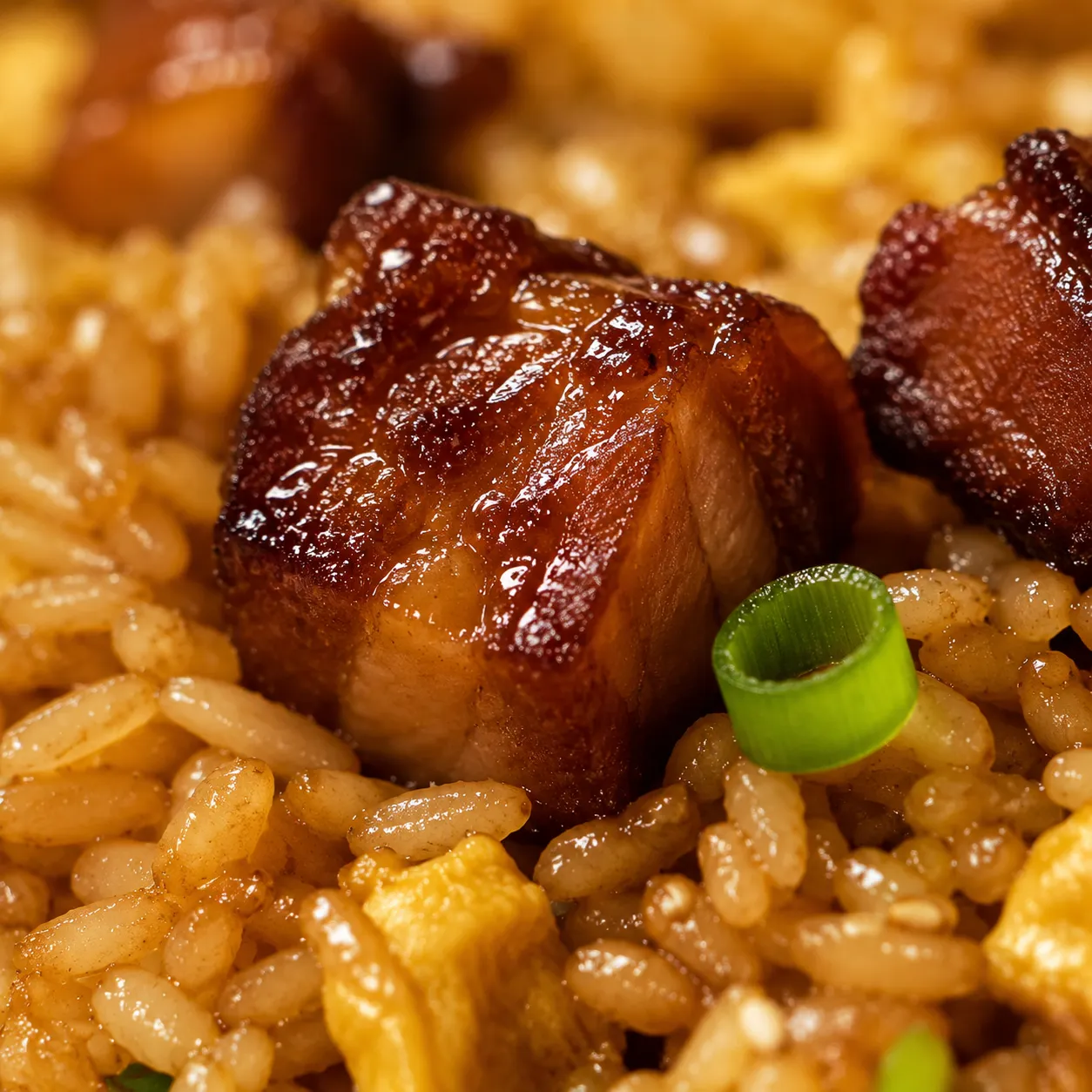
Look closely at a properly cooked bowl and you'll see what separates this pork fried rice recipe from a basic stir-fry: glossy, separate grains lacquered in sauce, juicy caramelized pork, ribbons of soft egg, and the bright pop of green onion. This is the texture that defines real takeout-style fried rice. No mush, no clumps, no flavor that disappears halfway through the bowl.
A big bowl of pork fried rice is dinner all on its own, but if you're making a full Chinese-American spread, a few classic sides round it out beautifully without piling on more cooking. The trick is choosing things that complement the savory-rich main without competing with it.
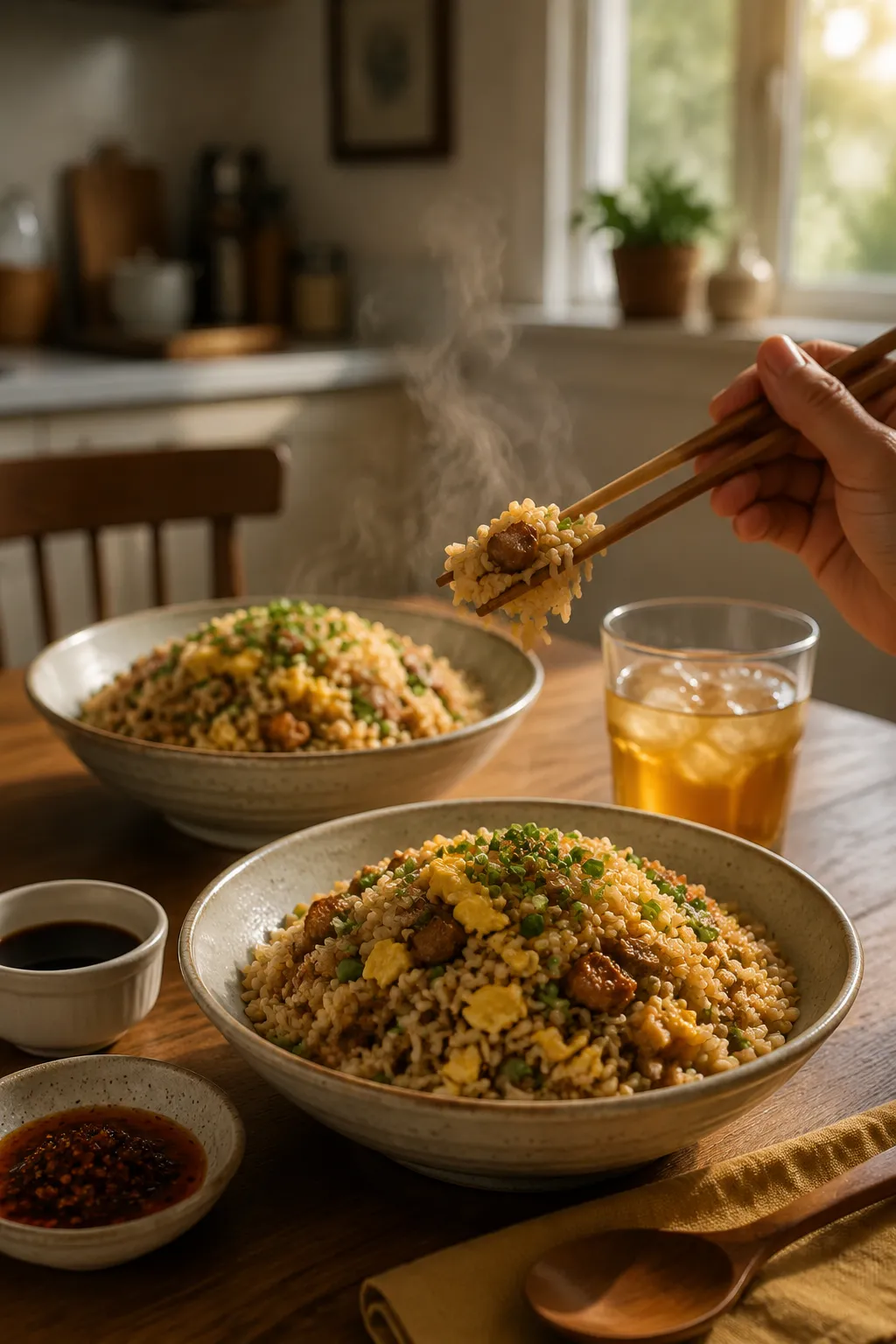
Both are quick, brothy, and make the meal feel like a proper takeout order. Egg drop is mellow and comforting, while hot and sour brings a sharper, peppery kick that plays nicely against the savory rice. Either one comes together in 15 minutes from pantry basics.
If you're going all out, a homemade egg roll recipe is well worth the extra 30 minutes. You can fry a batch ahead while the rice rests under foil. Frozen potstickers from the freezer aisle are a fully respectable shortcut that takes eight minutes flat, no shame at all.
A smashed cucumber salad with rice vinegar, a little sugar, and chili crisp is the cooling, crunchy contrast that keeps the meal from feeling heavy. Toss it together while the rice cooks and you've got a full takeout dinner on the table in under 30 minutes.
This pork fried rice recipe has earned a permanent spot in our weekly rotation, and once you see how forgiving and fast it is, I think it'll do the same in yours. Make it once exactly as written so you know what the baseline tastes like, then start riffing with chili crisp, pineapple, leftover ham, whatever the fridge offers up. That's the joy of a great pork fried rice recipe: it's a template, not a rule book.
Once you've nailed the base, this recipe is a playground. The technique stays exactly the same, just swap proteins, veggies, or aromatics based on what you've got on hand or what mood you're in. These are the variations that come up again and again in my kitchen.
Leftover pork fried rice keeps beautifully in an airtight container in the refrigerator for 3 to 4 days, which makes it one of my favorite Sunday meal-prep items. To revive the texture, reheat individual portions in a hot skillet with a splash of water or chicken broth. This loosens the rice and crisps the bottom in about 3 minutes. Microwaving works in a pinch but tends to dry the grains, so cover the bowl with a damp paper towel and zap in 30-second intervals if that's the route you take.
For longer storage, portion the cooled rice into freezer-safe bags or containers and freeze flat for up to 2 months. Thaw overnight in the fridge before reheating, or reheat directly from frozen in a covered skillet over medium heat with a splash of water until steaming throughout. Always cool the rice to room temperature within an hour of cooking before sealing it up, trapping steam in a hot container leads to sogginess and faster spoilage.