Crab and Coconut Curry: Creamy Filipino-Style Recipe
Ingredients
Scale
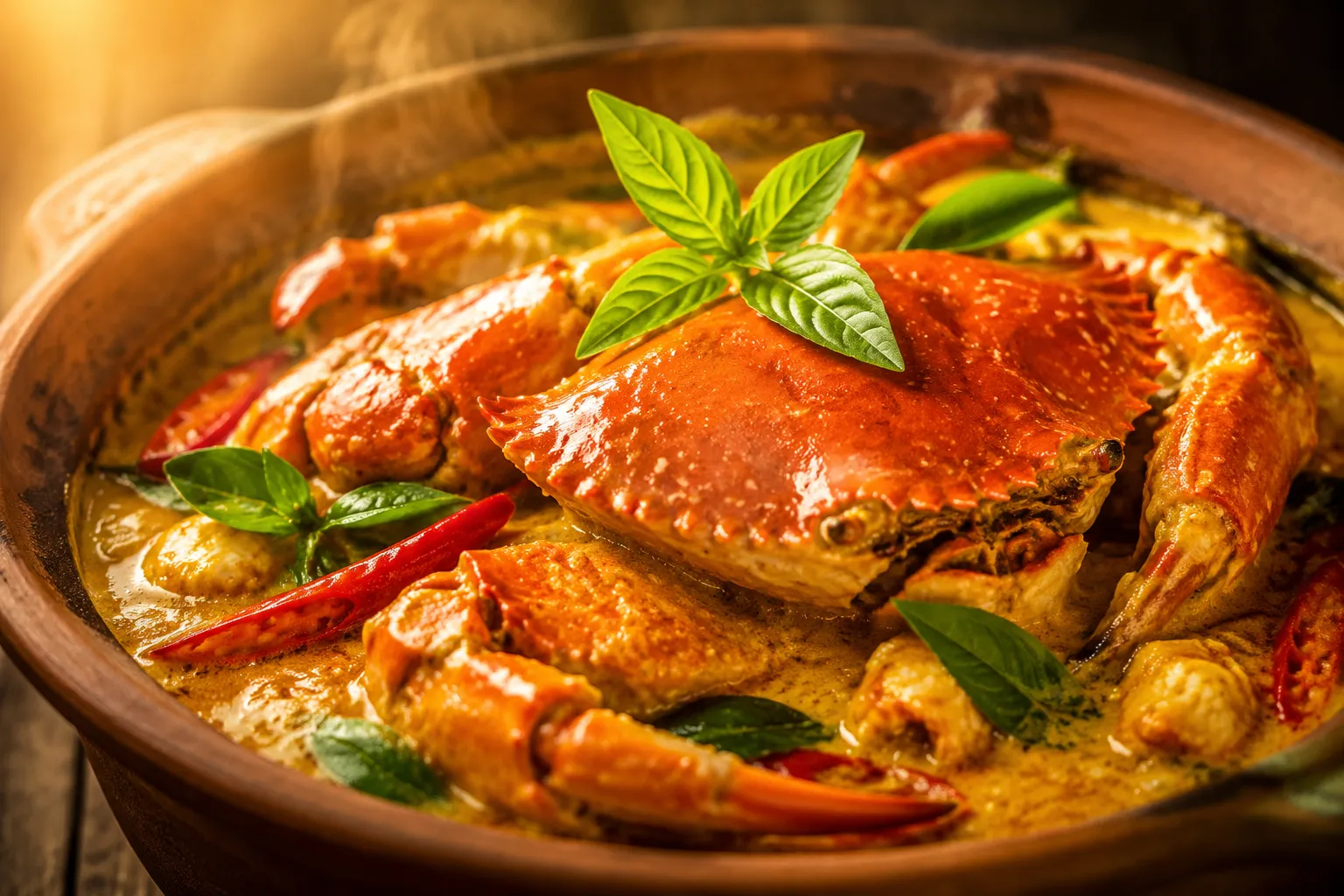
Sweet, briny crab simmered in silky coconut milk with garlic, ginger, and a whisper of chili. This crab and coconut curry tastes like a coastal vacation in one pot.
This crab and coconut curry tastes like a coastal Filipino kitchen distilled into one bubbling pot — sweet shellfish meat clinging to a glossy, golden sauce that's equal parts rich and bright. If you've never simmered crab in coconut milk before, prepare for a small revelation. The brine of the shellfish meets the gentle sweetness of the coconut, and the whole thing turns into something more luxurious than the sum of its parts.
Known across the Philippines as ginataang alimasag, this dish belongs to the wider family of Filipino ginataang dishes — anything braised or simmered in coconut milk earns the name. It's a weeknight workhorse on the islands, a Sunday lunch, a celebration plate. What makes our version a little different is a two-stage coconut milk method: we simmer the crabs in the thinner liquid first so the flavors deepen, then stir the rich cream in at the end so the sauce stays glossy instead of breaking into oily shards. It's a small trick borrowed from old-school home cooks, and it's the difference between a sauce that ribbons off the spoon and one that looks tired.
If you've cooked Thai coconut curry before, the rhythm here will feel familiar — bloom aromatics, build a sauce, finish with greens — but the flavor profile is its own thing. Less lemongrass-forward, more savory and rounded, with fish sauce doing the salty heavy lifting. Plan on about 40 minutes from cutting board to table, plus a stack of napkins because you'll be using your hands.
Few ingredients, but each one matters. Cooking crab and coconut together is the kind of recipe where shortcuts show up immediately in the pot, so I'd rather walk you through the choices than have you guess at the store. Everything below is a one-stop trip to a decent grocery store with a seafood counter.
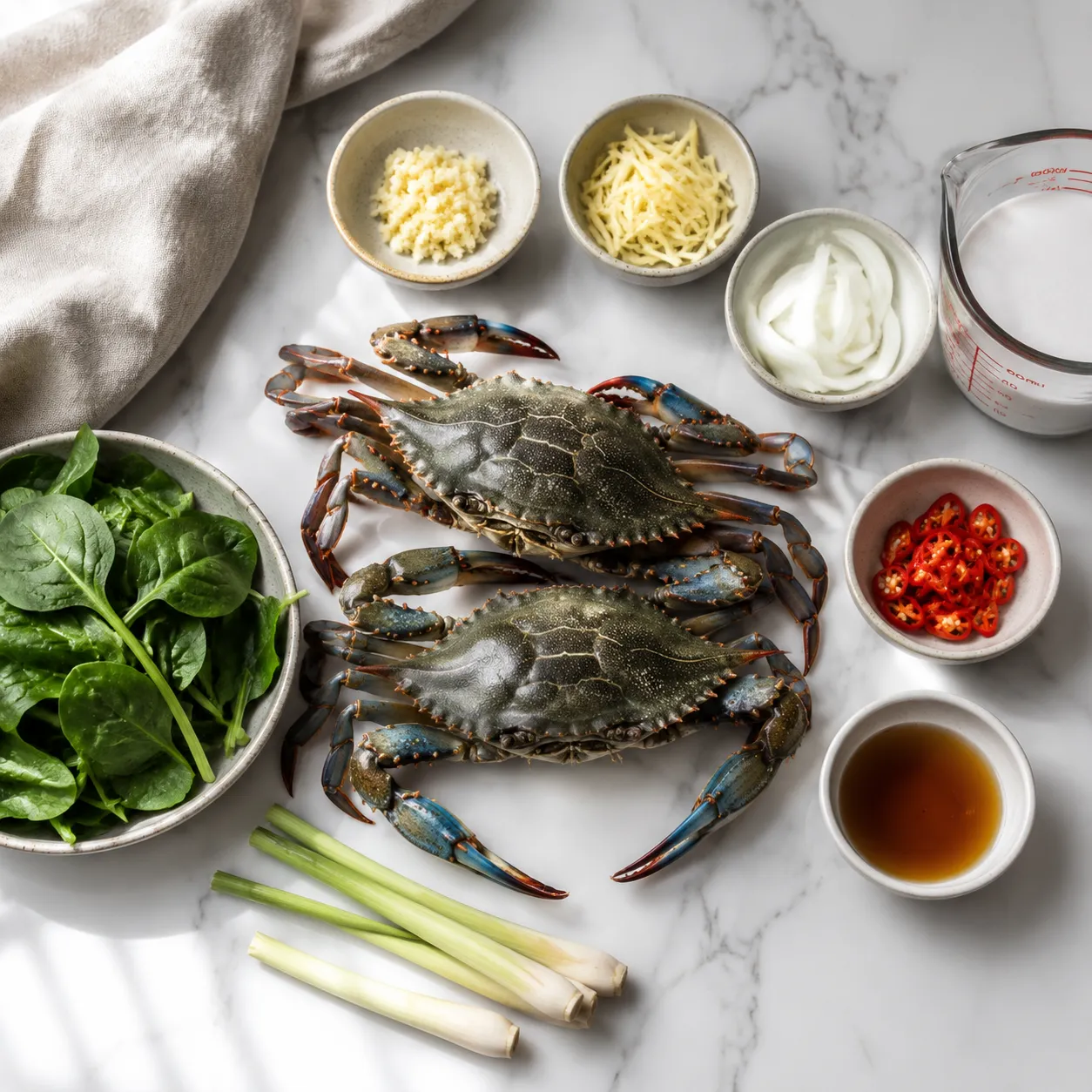
Live blue crabs are traditional, and if you live near a Filipino or Asian market on a Saturday morning, snag them. Dungeness works beautifully too — sweeter meat, bigger claws, more drama on the plate. If live crabs feel like too much, fresh crab from the seafood counter is the next best thing; ask the fishmonger to halve and clean them for you. Frozen pre-cleaned crab clusters are the easy weeknight option and the sauce will still be excellent. Avoid pre-cooked picked lump crab as the main protein here — the whole point is letting shells perfume the broth — but it's a fine emergency add-in stirred at the end.
Reach for full-fat canned coconut milk with no gums or stabilizers. Brands like Aroy-D and Chaokoh are pantry staples for a reason: they separate beautifully into thick cream on top and thin liquid below, which is exactly what we want for the layered method. Lite coconut milk and the boxed cartons meant for coffee will give you a watery, slightly sour sauce. Save those for smoothies.
A confident hand with ginger and garlic anchors the whole pot. I julienne the ginger so you get those sweet, fibrous strands in every bite, and I bruise a stalk of lemongrass with the back of a knife to release its perfume without making the dish taste like soap. Yellow onion sweetens as it softens, and Thai chilies bring a gentle heat that builds rather than slaps.
Filipino home cooks often round the dish out with kabocha squash, snake gourd, long beans, or moringa leaves. Use what you have. I usually finish with a generous handful of baby spinach for color, but bok choy, malunggay, or even thinly sliced kabocha all play nicely. Toss harder vegetables in during the simmer; tender greens go in at the very end so they keep their bite.
Once your aromatics are prepped, this comes together fast — under half an hour from skillet to table. The method is straightforward, but a few small moves make the difference between okay and unforgettable. The biggest one: don't rush the simmer, and never let the cream rip into a hard boil.
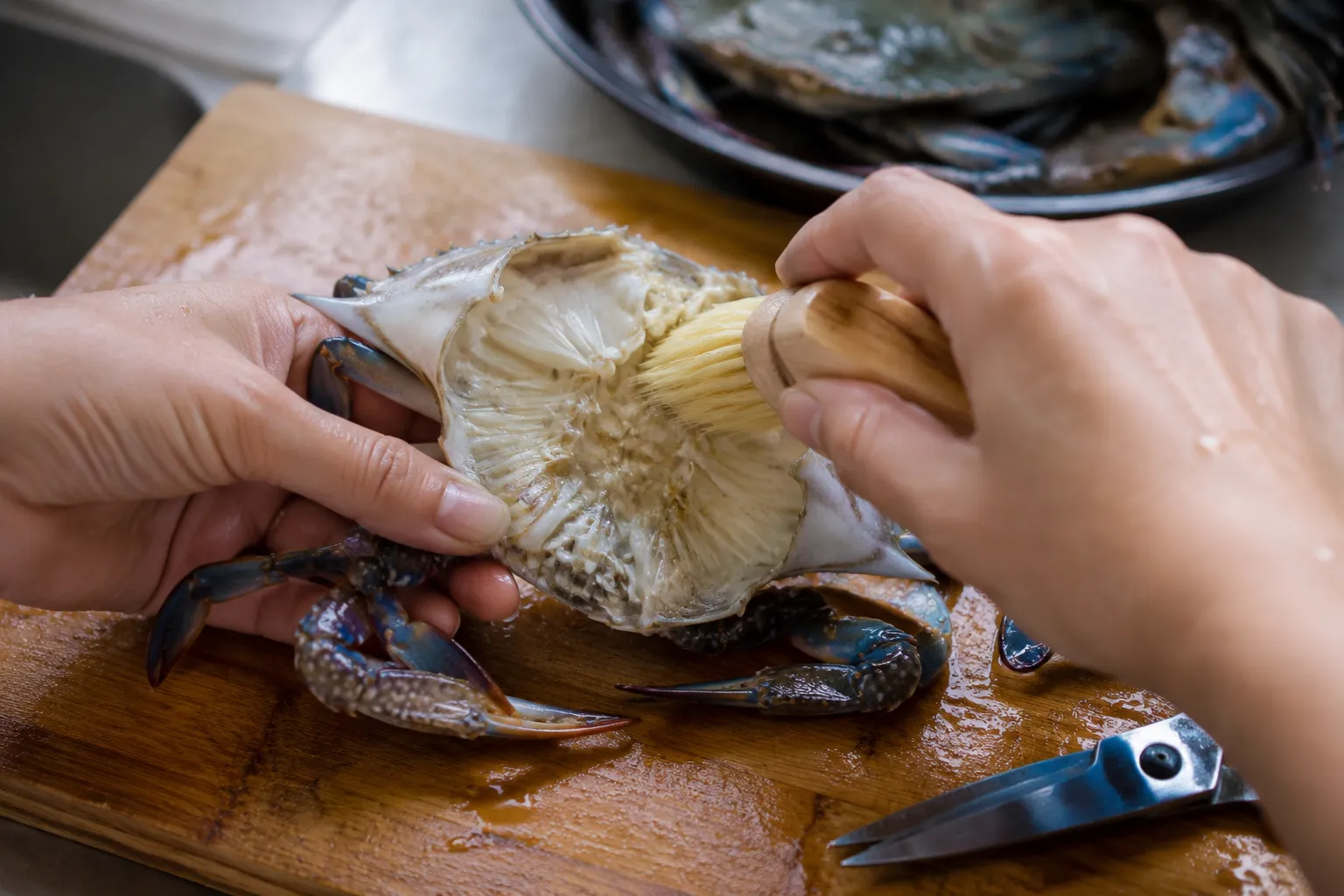
If you bought live crabs, chill them in the freezer for 15 minutes to sedate them, then split them down the back with a heavy knife. Lift off the top shell, scrape out the gills (the spongy gray "dead man's fingers"), and rinse the bodies under cool water. If you're new to this, a quick search for how to clean fresh crab will give you a clear visual; the technique is intuitive once you do it once. Crack the claws lightly with the back of a knife so the sauce can sneak inside.
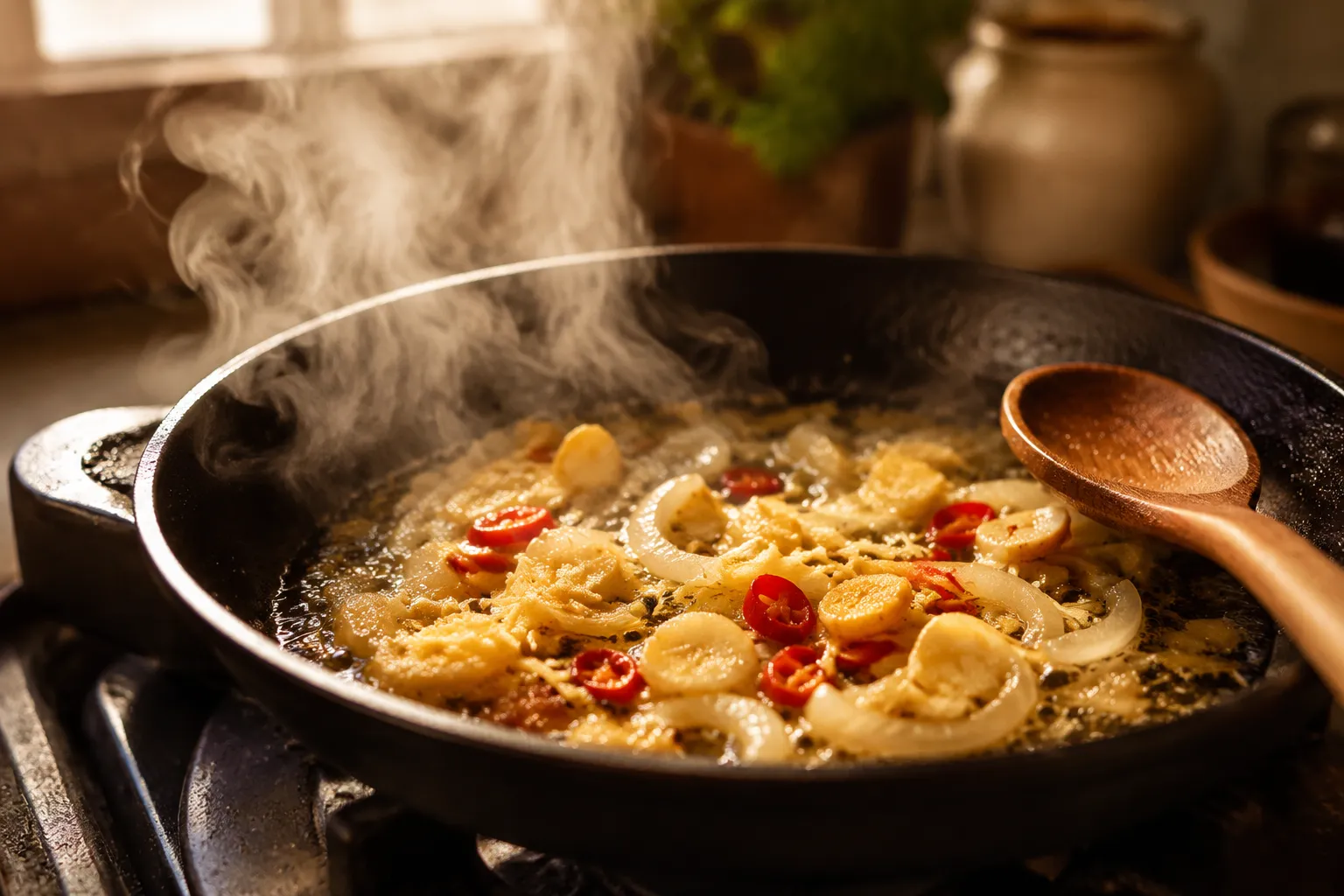
Warm coconut oil in a wide, deep skillet or wok over medium heat. Add the onion first and let it soften for two minutes, then in goes the ginger and garlic with a pinch of salt. You're not browning — you're blooming. The kitchen will smell sweet and slightly peppery within thirty seconds. Slide the chilies and bruised lemongrass in last so their oils don't burn before the liquid hits the pan.
Open your cans without shaking them. Spoon out the thick coconut cream from the top and set it aside — that's your finishing pour. Pour the thinner coconut liquid into the skillet and add the crabs, nestling them into the sauce shell-side up. Cover and simmer gently for 10 to 12 minutes, basting once or twice. The sauce will turn the color of pale honey and the shells will deepen to a vivid orange-red.
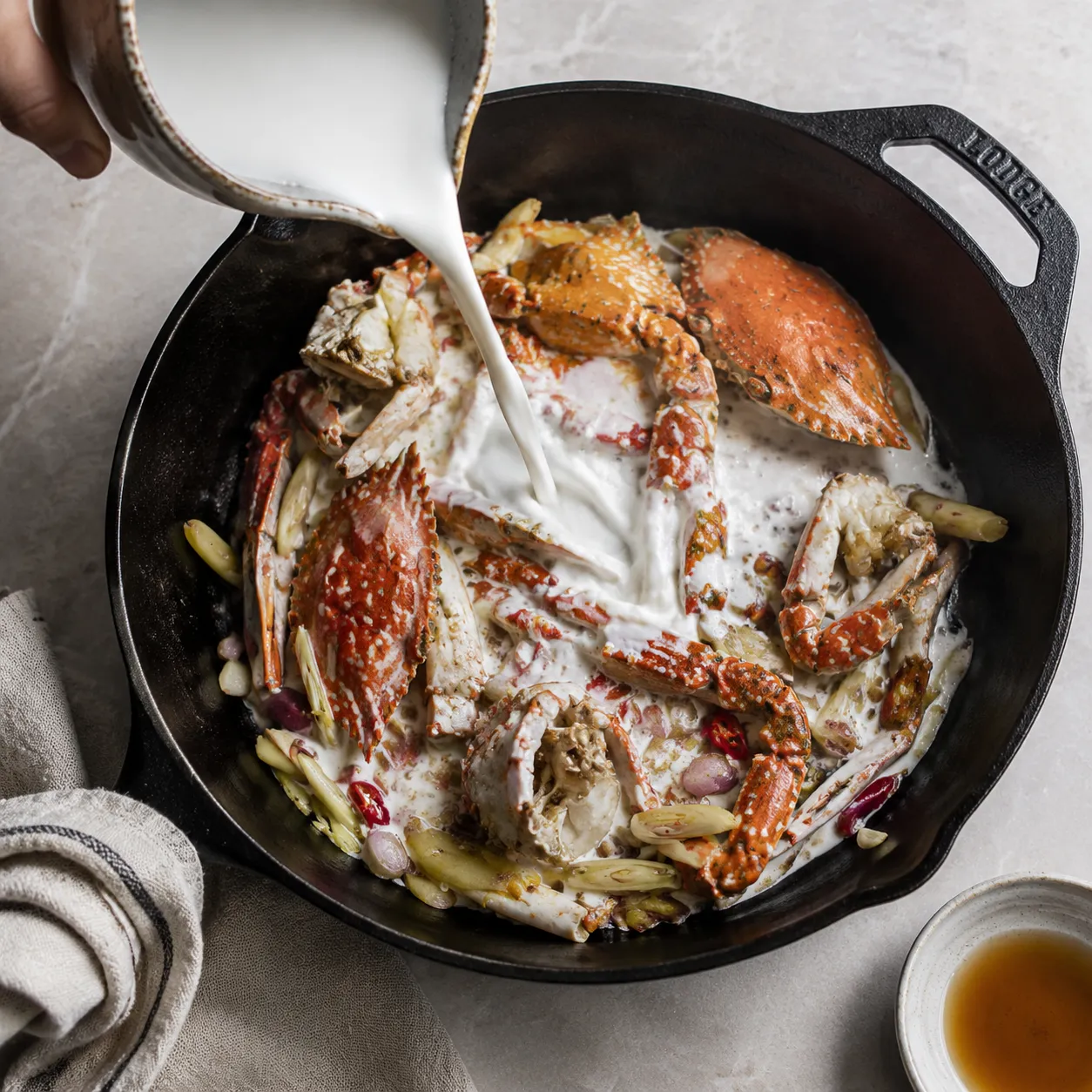
Stir in the reserved coconut cream and fish sauce, lower the heat, and let everything gently warm through for two minutes — no hard boil. Slide in the spinach and let it wilt off the heat. Taste, adjust salt with another splash of fish sauce if you'd like, and finish with extra sliced chili if you want more bite. The finished sauce should coat the back of a spoon and taste sweet, salty, and faintly hot all at once.
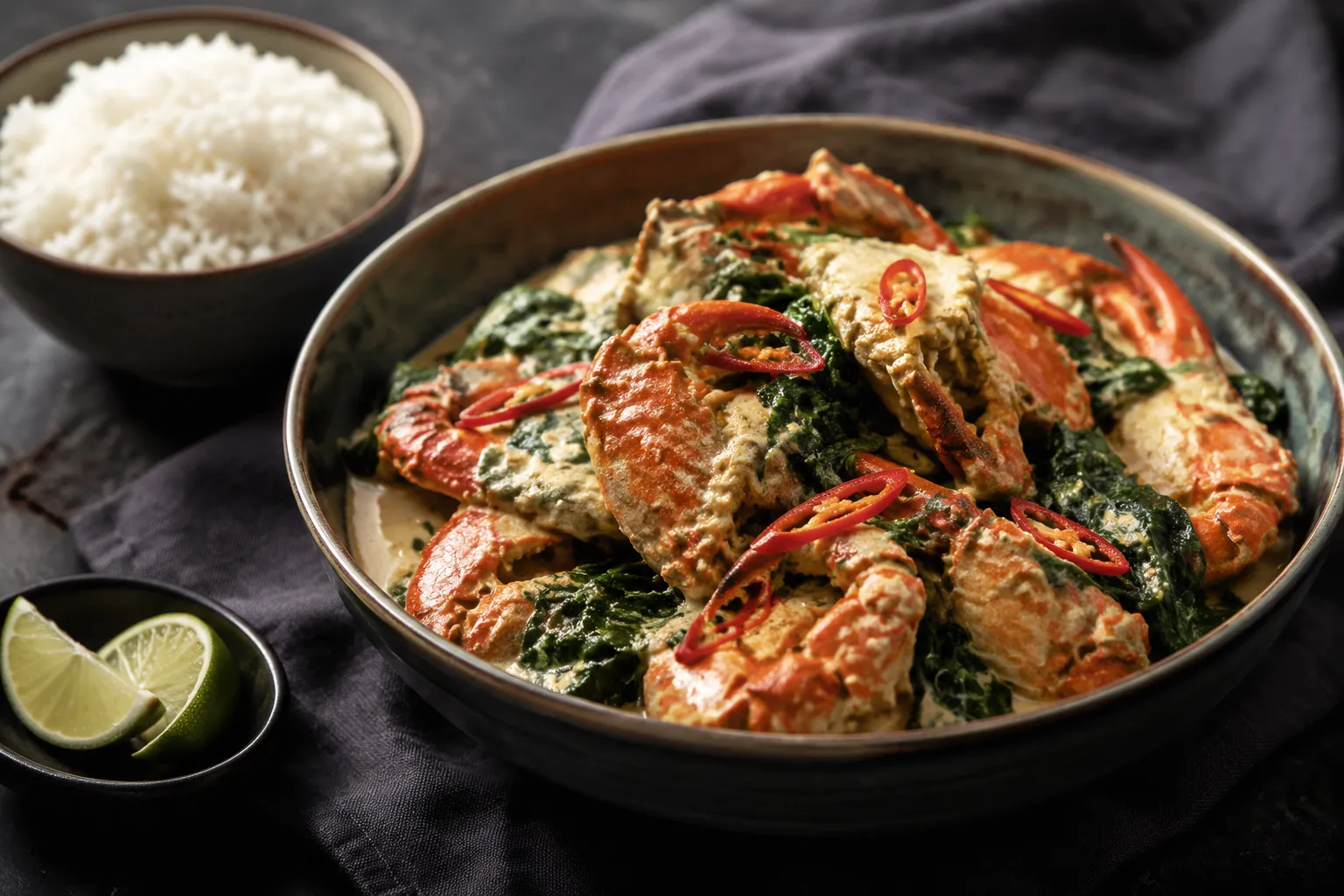
This is hands-and-bibs food, so I plan the table around easy cleanup and lots of soaking-up potential. The heart of any crab and coconut sauce deserves a vehicle, and the sides should stay simple enough that the curry remains the star of the show.
A mound of fluffy jasmine rice is non-negotiable in my house. It catches every drop of the homemade coconut sauce and gives you a neutral palate cleanser between bites of rich shellfish. Day-old rice fried quickly in a little garlic oil is even better if you've got it.
For a Filipino-meets-coastal twist, warm pandesal rolls are unbeatable for swiping through the pot. Naan or a simple buttery flatbread does the same job. I've also been known to serve this over crusty sourdough toast for a deeply un-traditional but completely delicious lunch.
After a few hands-on rounds with crab claws, a sharp, cool counterpoint resets the palate. Thin-sliced cucumbers tossed with rice vinegar, a pinch of sugar, and crushed peanuts is my go-to. If you're rounding out the menu with more easy seafood dinner ideas, grilled shrimp skewers or a simple ceviche on the side stretch this into a full feast for guests.

Whether you're making this Filipino crab curry for a weeknight indulgence or feeding a crowd on a Saturday night, the technique scales easily — just keep the two-stage coconut method intact and you'll get a sauce that holds together no matter how big the pot. This coconut crab recipe also slots nicely into a wider rotation of coconut milk seafood recipes worth keeping in your back pocket: shrimp moqueca, mussels in green curry, salmon laksa.
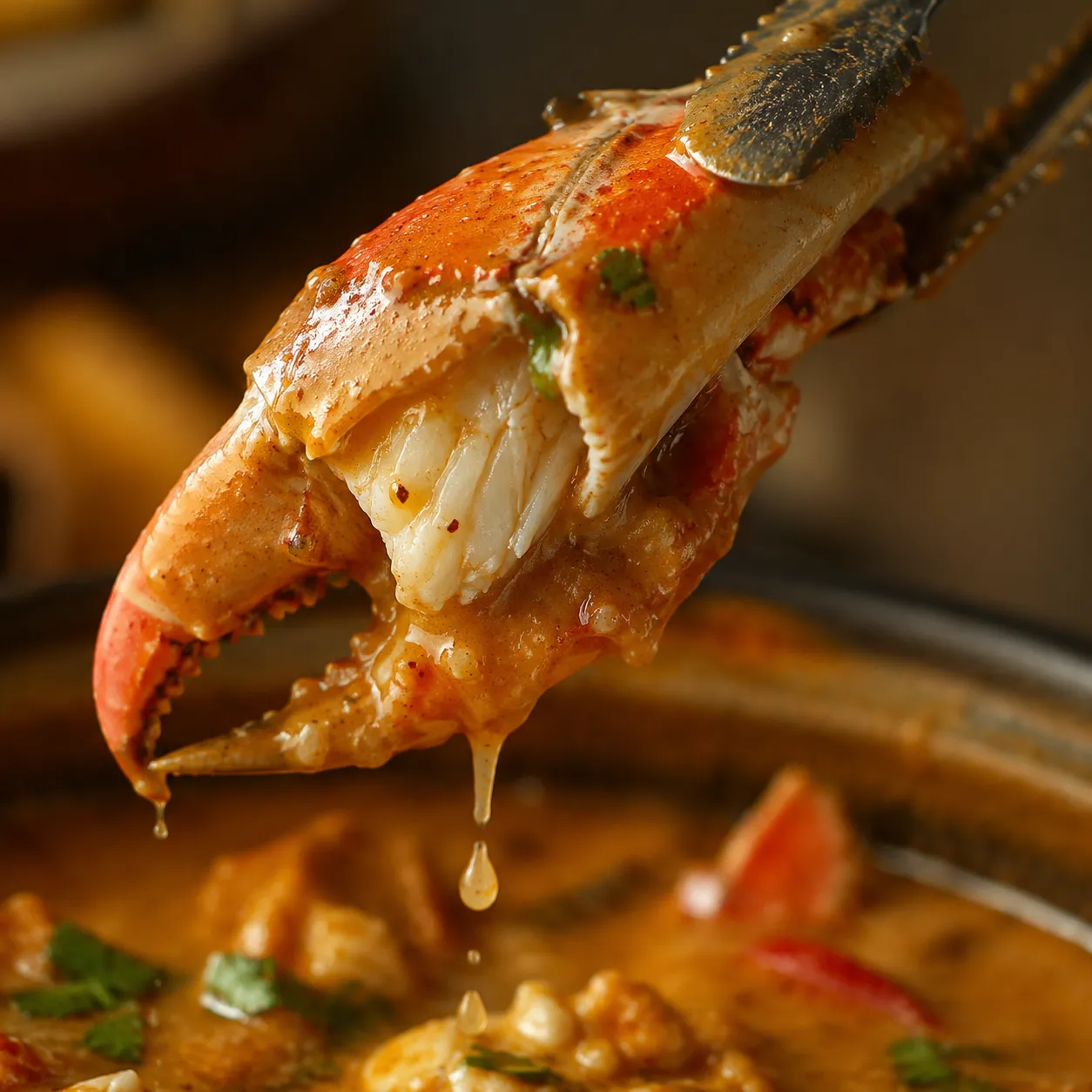
Set a stack of napkins in the middle of the table, pour something cold, and let everyone go at the claws with their fingers. That, more than any single ingredient, is the soul of a good crab and coconut bowl — slow shared dinner, sticky fingers, sauce-dipped bread, the very last spoonful of jasmine rice scraping the bottom of the pot.
The crab-in-coconut-milk technique travels widely across coastal Asia, and each region brings something distinct to the pot. Once you've nailed the base recipe, these riffs are easy weekend experiments.
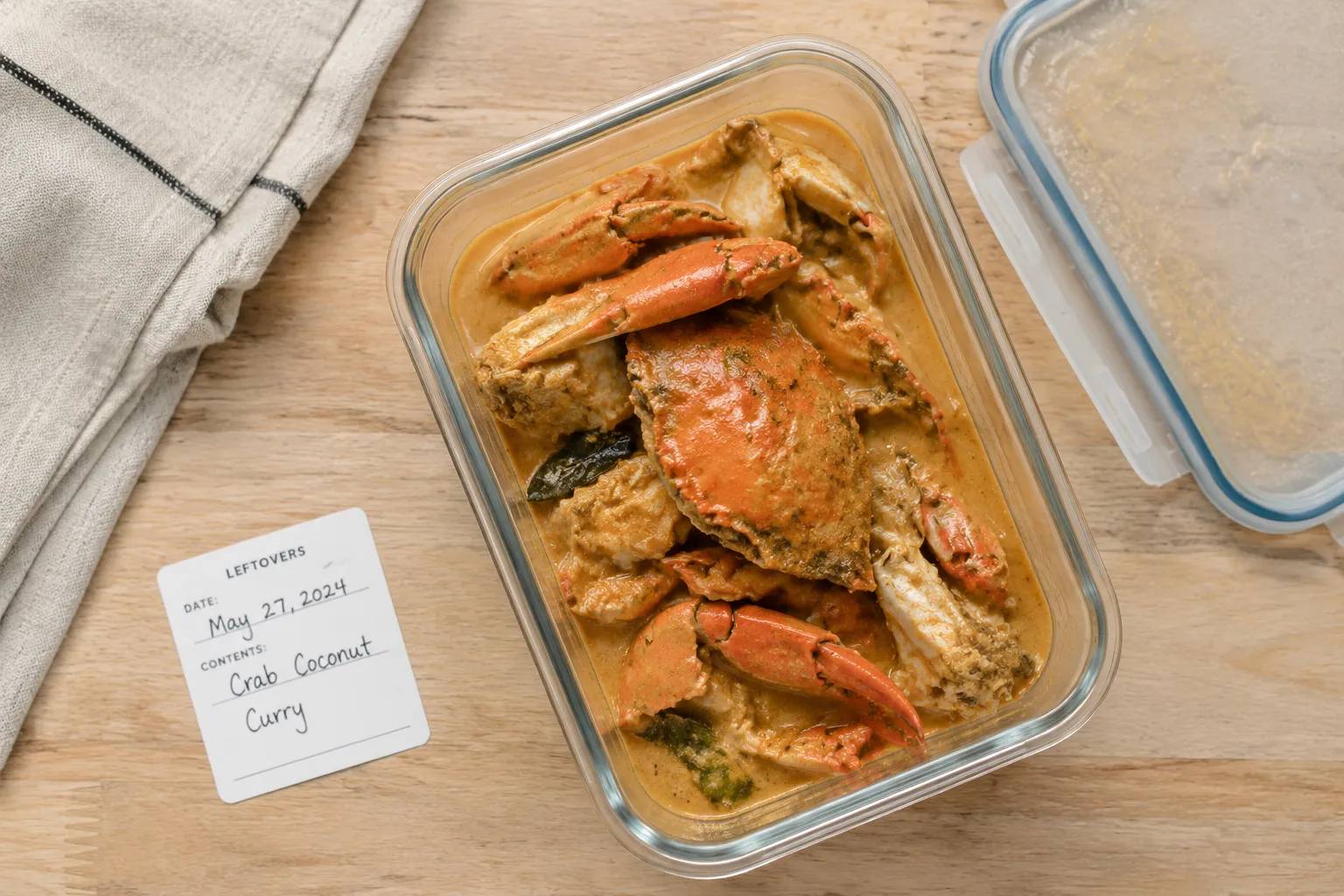
Leftover crab and coconut curry keeps well in the fridge for up to two days, stored in an airtight container once fully cooled. Pull the meat out of the shells before storing if you want to make the next-day version easier to eat — flake it into the sauce, and it'll reheat into a dreamy stew over rice or noodles.
To reheat, warm gently in a skillet over low heat with a splash of fresh coconut milk or water to loosen the sauce — never microwave on high or bring back to a boil, which will cause the coconut fat to break and turn grainy. Freezing is not recommended for this dish; coconut sauces lose their silky texture once thawed, and the crab meat turns rubbery. If you do need to freeze, separate the meat from the shells, freeze the sauce alone, and add freshly steamed crab when you reheat.