Split Pea Soup Recipe with Ham (Cozy & Easy)
Ingredients
Scale
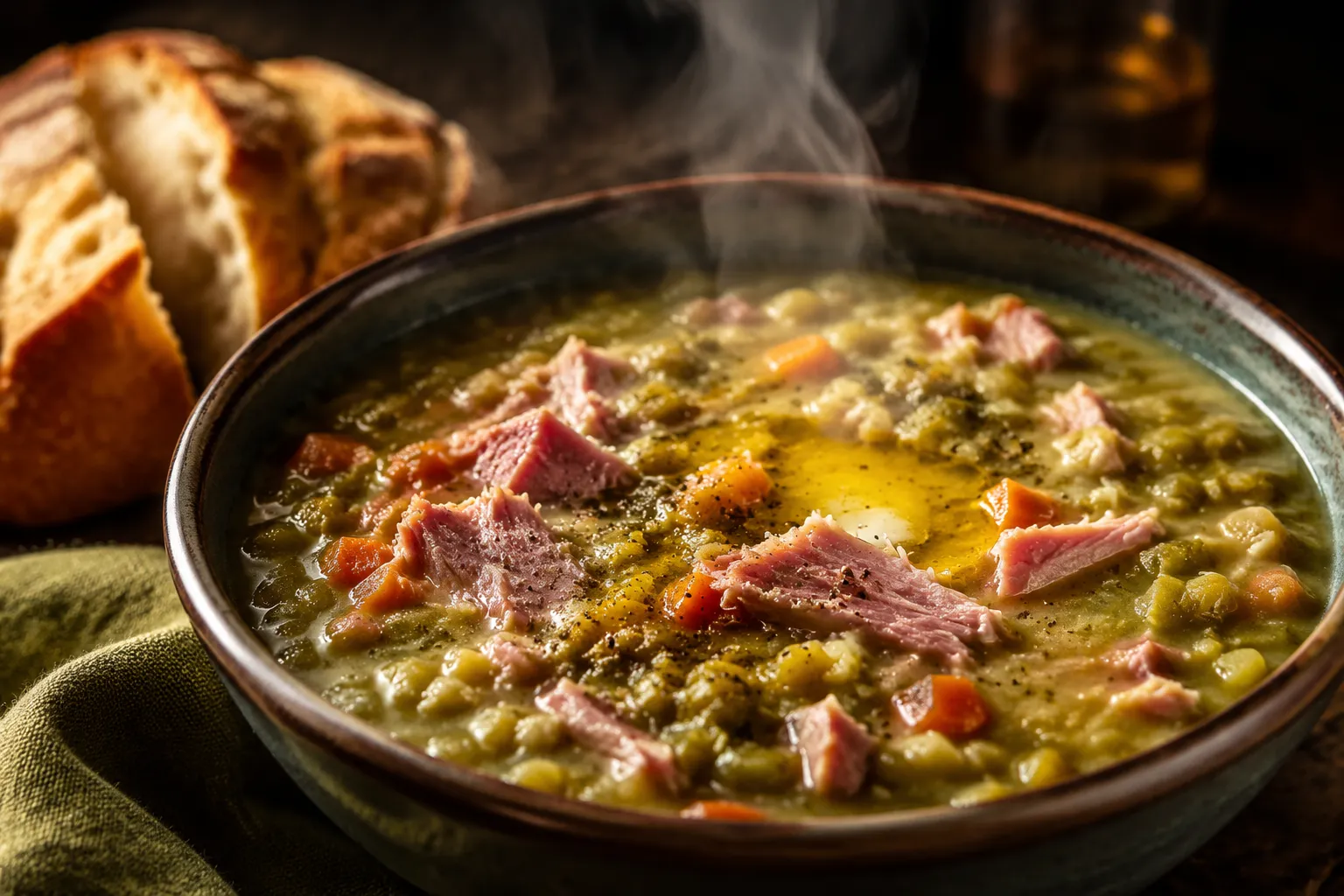
A thick, smoky split pea soup recipe simmered with a leftover ham bone until silky and rich. The cozy bowl your stove was made for.
This split pea soup recipe is the bowl I crave the second the calendar tips toward sweater weather. It's thick, smoky, deeply savory, and built around one workhorse ingredient: a leftover ham bone with shreds of meat still clinging to it. One pot, about an hour of mostly hands-off simmering, and you end up with a soup that tastes like it took far more effort than it actually did.
If you've ever gone hunting for split pea soup with ham bone recipes after a holiday roast, you already know the appeal. The bone seasons the broth from the inside out, the dried peas melt into a velvety base, and a quick handful of carrot and celery keeps things from feeling one-note. This is one of the great leftover holiday ham recipes — the kind of payoff dish that justifies buying a bone-in ham in the first place. My grandmother used to make a version every January, and the smell of it bubbling on the stove is still my shorthand for cold-weather comfort food.
Below you'll find every angle covered: green versus yellow peas, how to use a bone, a hock, or just diced ham, plus adjustments for the slow cooker and Instant Pot. I'll also walk through the small finishing trick (a splash of vinegar) that pulls everything into focus. Keep scrolling for the full printable recipe card, plus storage and reheating notes that keep leftovers tasting just-made.
Good split pea and ham soup is a short ingredient list doing big flavor work. The peas thicken the pot all on their own, the ham bone seasons every spoonful, and a quartet of aromatics builds the kind of base you'd expect from a much fussier dish. I lean on low-sodium broth so the smoky meat can do the salting for me, then finish with vinegar to wake everything up. If you keep a stash of homemade chicken stock in the freezer, this is exactly the sort of weekend project it's destined for. Everything else is pantry territory — onions, carrots, celery, garlic, bay leaves, thyme — which is part of why this soup feels so frugal and forgiving.
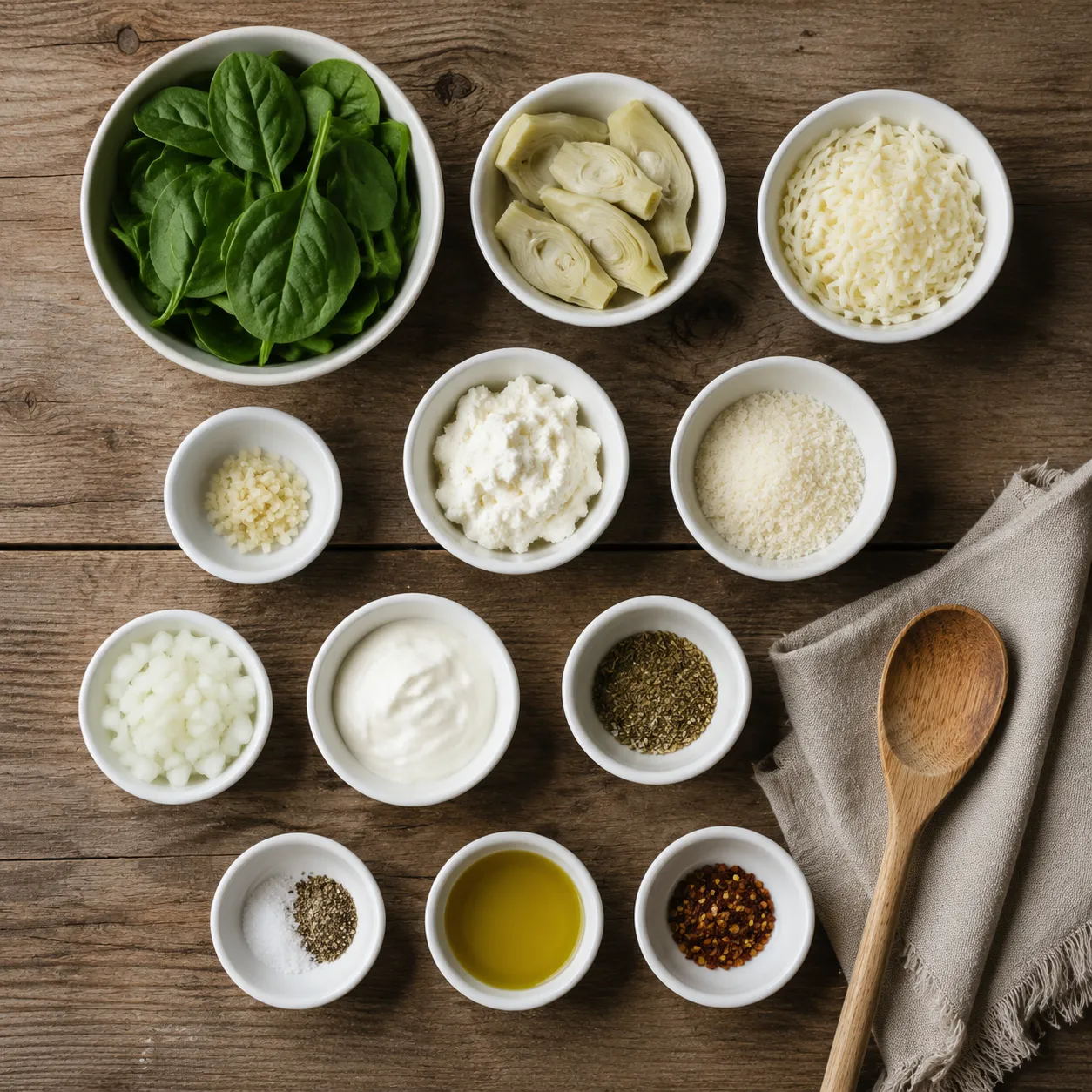
Green split peas are the classic choice — they break down into a moss-green, almost-creamy purée with that mineral, slightly grassy flavor people associate with the dish. Yellow split peas behave identically in the pot but cook into a sunnier, milder, faintly sweeter soup that reminds me of Quebecois soupe aux pois jaunes. Either works beautifully here. Just don't sub in whole dried peas, lentils, or chickpeas; you want the variety labeled "split" so the legumes collapse into that signature creamy texture. Look for peas that are bright in color and not dusty in the bag — older legumes can take ages to soften.
The leftover holiday ham bone is the gold standard because it carries marrow, connective tissue, and shreds of meat — three flavor weapons in one ingredient. If you don't have one tucked in the freezer, two smoked ham hocks are an easy stand-in and most grocery store meat counters carry them year-round. In a real pinch, 2 cups of diced cooked ham plus a teaspoon of smoked paprika will mimic the depth, though the body will be a little thinner without that gelatin-rich bone. Whatever you choose, look for something cured and smoked rather than fresh — the smoke is the whole personality of the bowl.
Classic mirepoix plus garlic is doing the unsung work here. Diced small so the pieces melt into the broth, the onion brings sweetness, carrot adds color and a subtle candy edge, celery delivers that herbal background note, and garlic ties everything together. Bay leaves and dried thyme hold up beautifully through the long simmer; fresh thyme can stand in if that's what's on the counter (use about double the amount). Don't skip the aromatics — they're the difference between a bowl that tastes hearty and one that tastes flat and one-dimensional.
Stovetop is the path I default to because the long, gentle simmer concentrates flavor in a way the pressure cooker just can't match. The full sequence — sauté, simmer, shred, finish — clocks in at around 90 minutes, almost all of it passive while you fold laundry or read a book. Detailed measurements live in the recipe card below, but here's how the cooking actually flows from cold pot to ladled bowl.
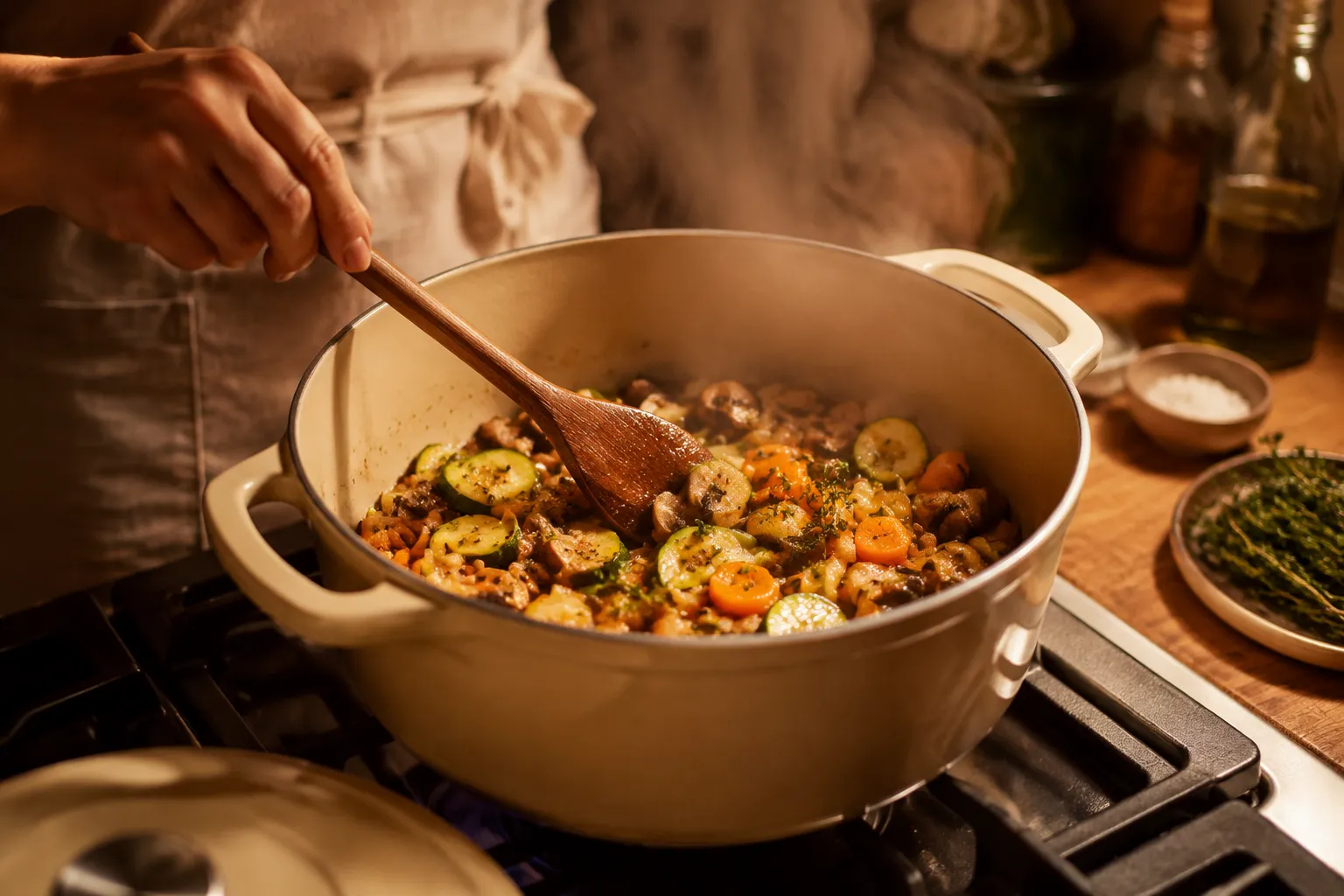
Melt a couple tablespoons of butter (or olive oil, or a mix of both) in a 6-quart Dutch oven over medium heat, then add the diced onion, carrot, and celery with a pinch of salt. Cook for 6 to 8 minutes, stirring now and then, until the onion is translucent and the carrots have softened at the edges. Add the minced garlic, thyme, and a few cracks of black pepper, and cook for 60 seconds more — just until you can smell the garlic lifting out of the pan. This is your flavor foundation, so don't rush it.
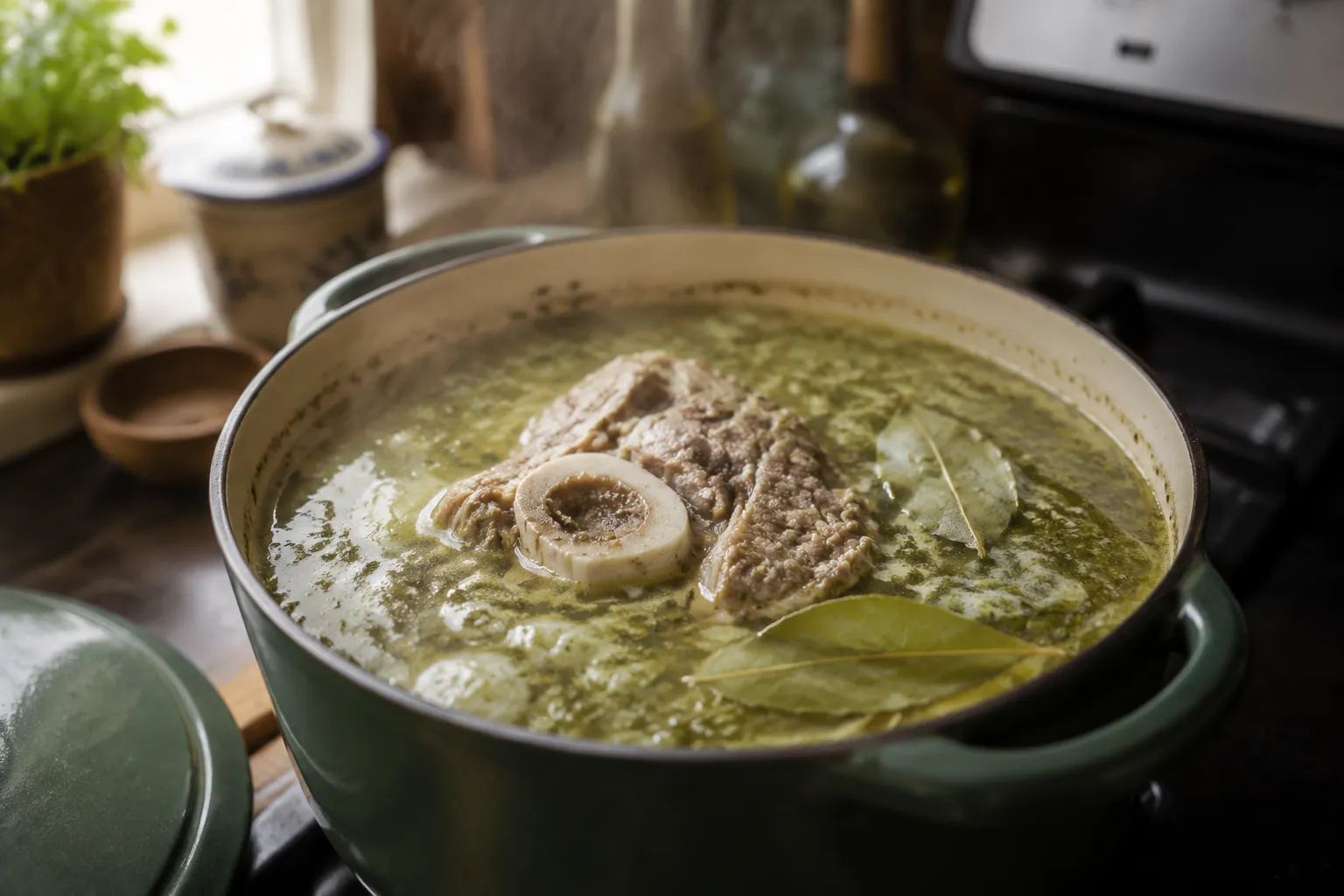
Pour in the rinsed split peas and 8 cups of broth, then nestle the ham bone right into the middle of the pot so it's mostly submerged. Add the bay leaves, bring everything to a boil over high heat, then drop the heat to maintain a gentle simmer with the lid set slightly ajar. Cook for 60 to 75 minutes, stirring every 15 minutes or so to keep the peas from catching on the bottom, until the legumes have completely fallen apart and the broth has gone thick and silky. Don't be tempted to crank the heat to speed things up — a hard boil will scorch the peas and produce a bitter, muddy flavor. The bone releases its meat and collagen slowly across the simmer; patience is what makes the soup taste restaurant-good.
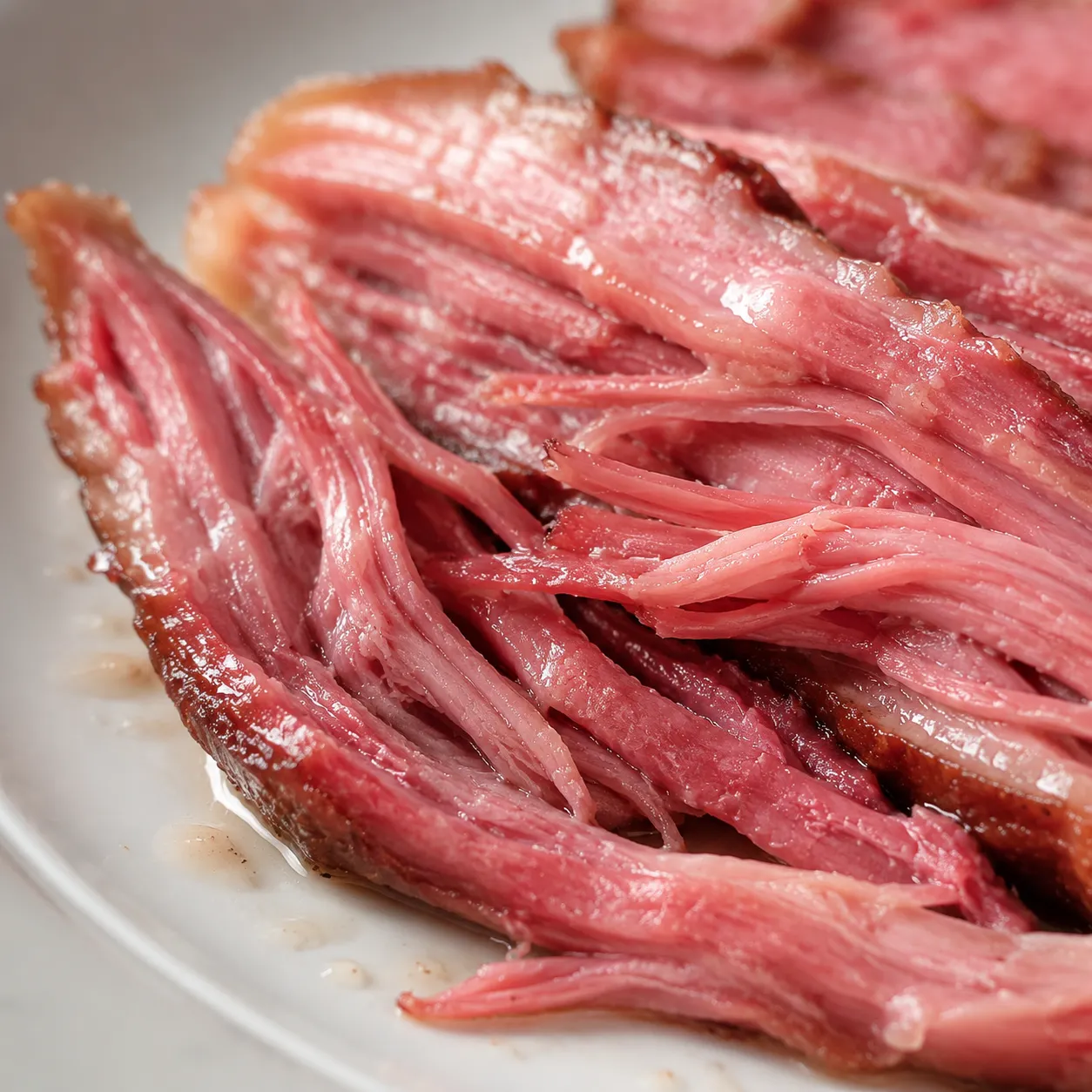
Lift the bone out with tongs and set it on a cutting board to cool for a few minutes — it'll be fragile and falling apart, which is exactly what you want. Pull the meat off in shreds with two forks, discarding the bone, fat cap, and any cartilage, then stir the shredded meat back into the pot. Fish out the bay leaves, taste for salt, and add a teaspoon of apple cider vinegar to brighten everything up. The vinegar is the move that takes this from "good" to "did you change something?" without anyone being able to identify why.
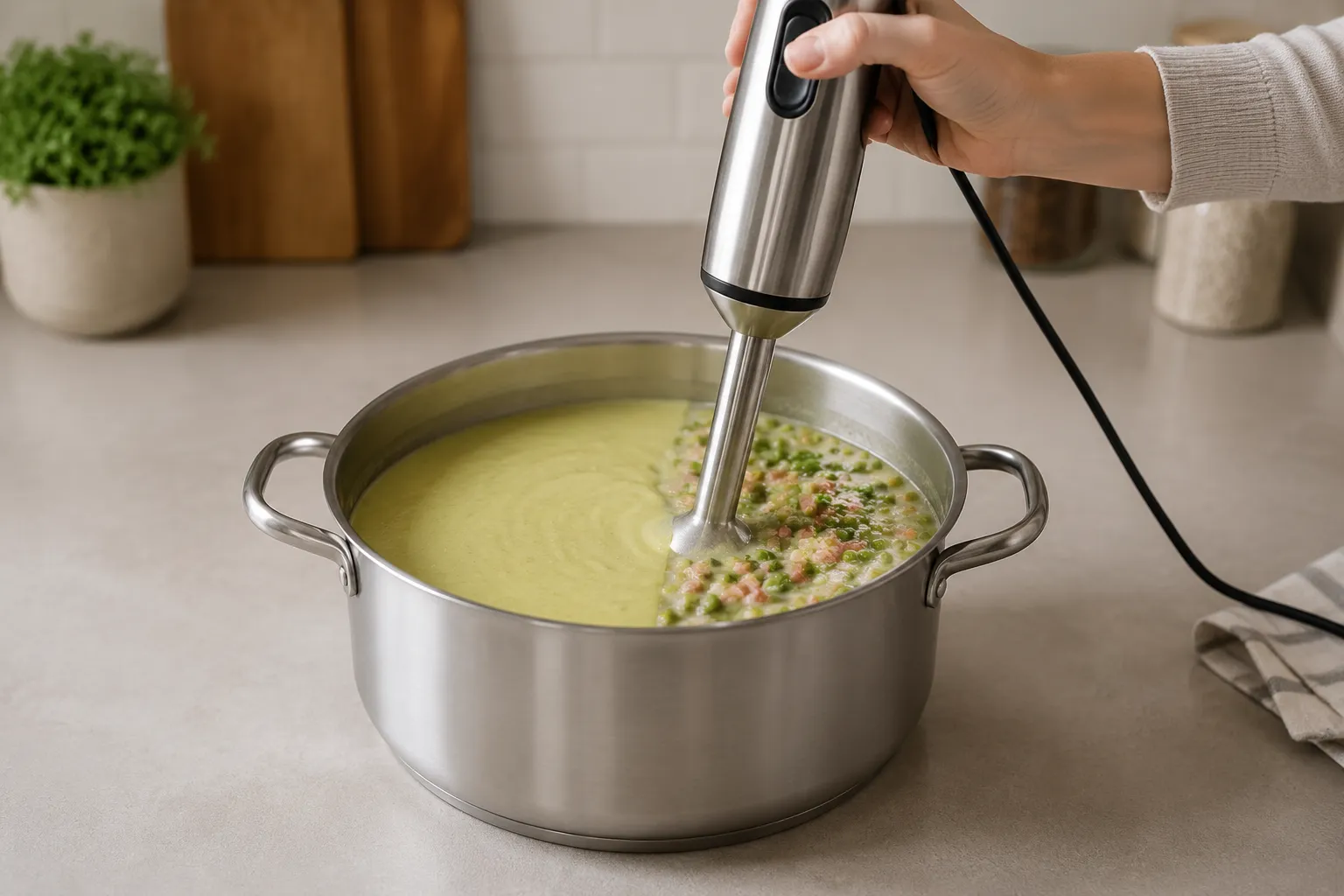
If your pot looks thinner than you'd like, an immersion blender is the easiest fix in the world. Pulse it through about a third of the soup — leaving the rest chunky — and you'll get that classic restaurant texture without adding a drop of cream. This is also the move if your peas were on the older side and held their shape stubbornly through the simmer.
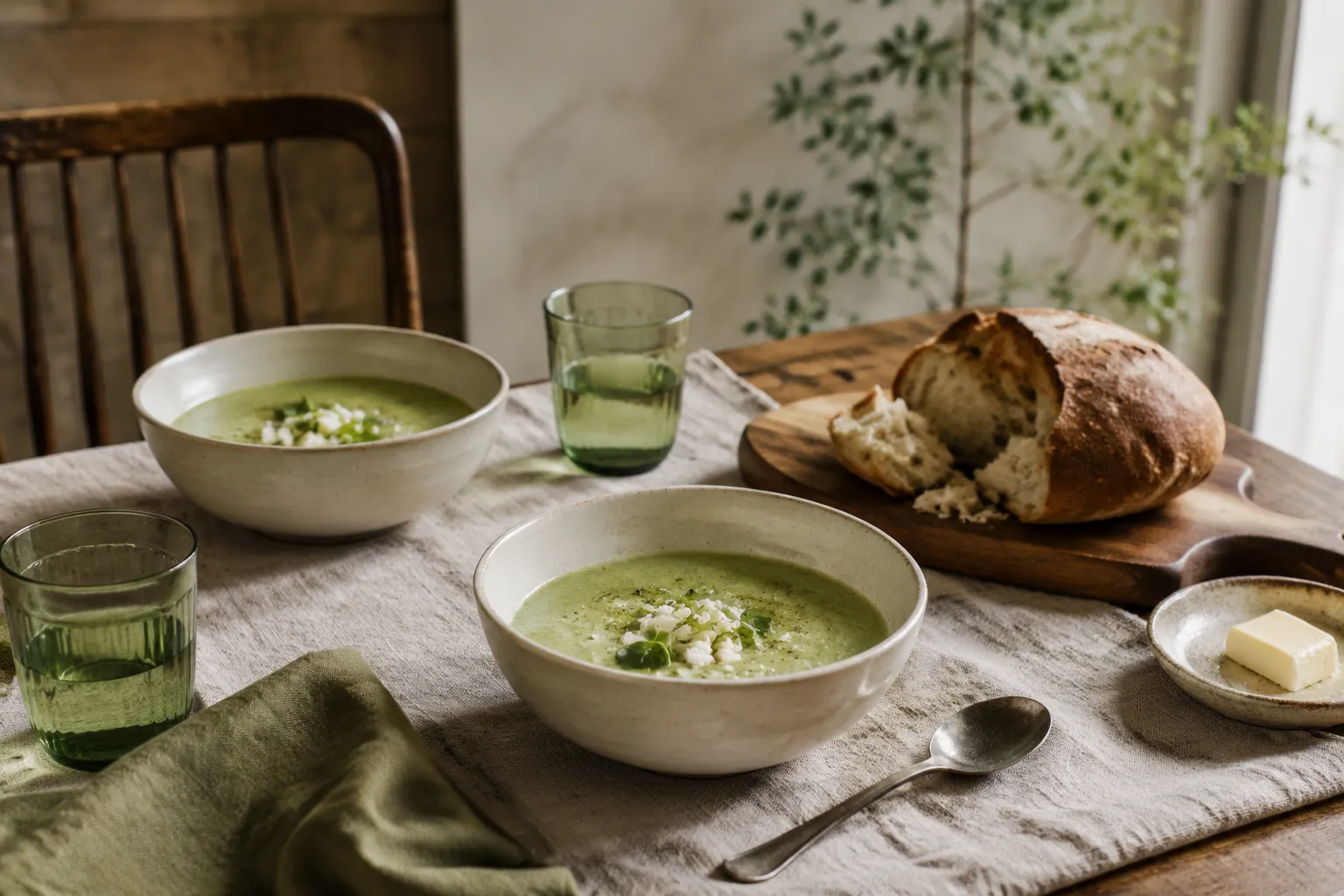
A great split pea soup recipe is a complete meal on its own, but the right side dish elevates the whole table. I lean toward simple, sharp, or crunchy partners — anything that contrasts with the soup's velvety body. A glass of crisp white wine like Pinot Grigio or even a dry cider rounds things out beautifully if you're serving company, and a small dish of pickles or quick-pickled red onions on the side echoes the vinegar finish in the soup itself.
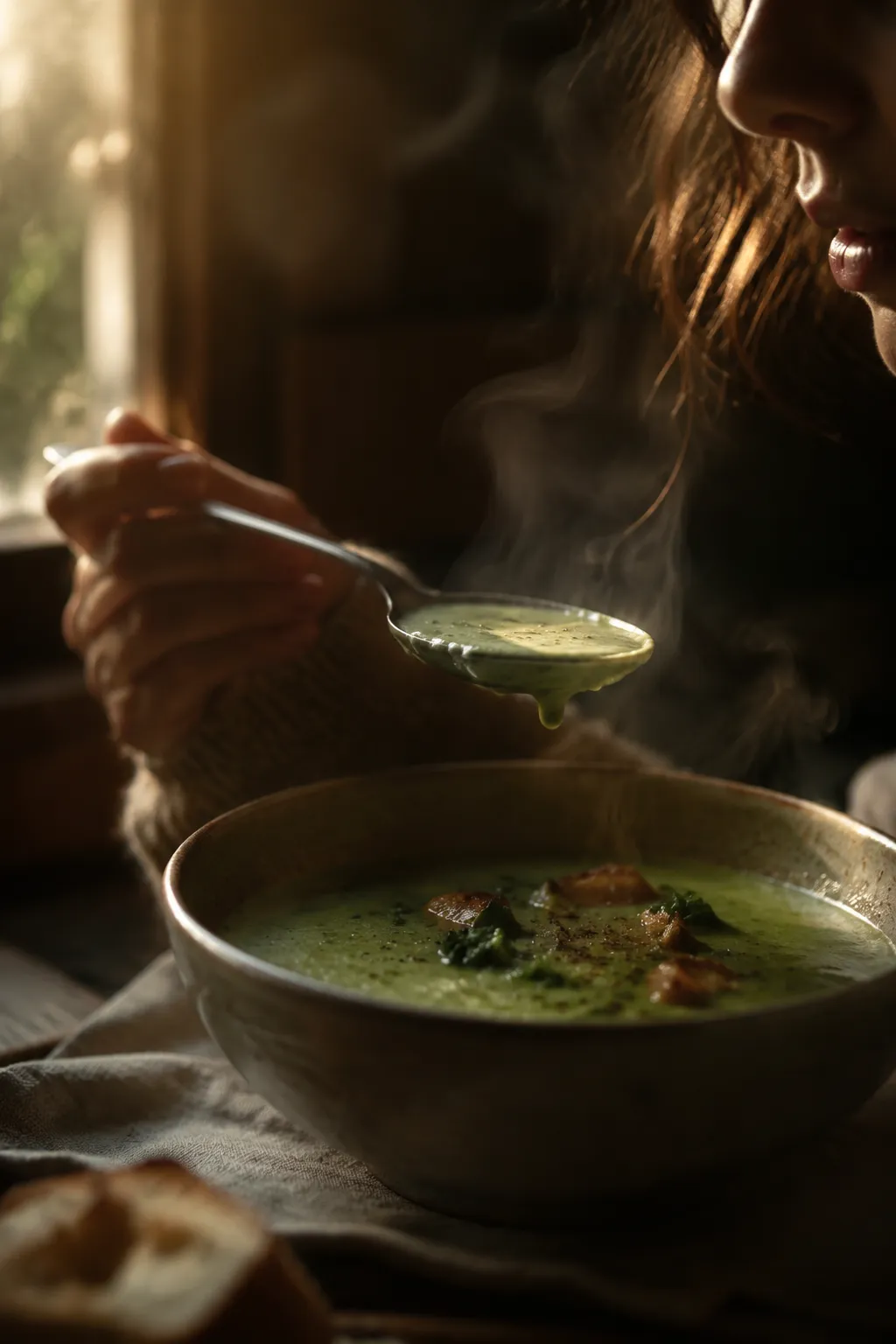
A torn hunk of sourdough or a slab of buttered rye is the obvious move, and a sharp cheddar grilled cheese cut into dunkable strips is even better. Croutons toasted in olive oil and garlic add textural contrast right in the bowl. If you're already in a soup-and-bread mood, my easy lentil soup and creamy potato soup recipes use the same supporting cast and freeze just as well — perfect for stocking the freezer with weeknight insurance against the takeout impulse.
Something bitter and bright cuts straight through the soup's richness. A pile of arugula with shaved parmesan, lemon juice, and good olive oil takes 90 seconds and tastes built for the job. A classic Caesar with anchovy-rich dressing also works beautifully — those briny, salty notes echo the smoky ham without competing with it. A simple endive and pear salad with crumbled blue cheese is another lovely match: sweet, sharp, and refreshingly cold against the warm bowl.
Once you've made this once, it's the kind of recipe that wedges itself permanently into your winter rotation. It scales up easily for a crowd, freezes for months, and somehow tastes even better on day two as the flavors keep marrying in the fridge. Tuck a portion into the freezer for a sick day or a weeknight you can't face cooking — and if you need a refresher on how to store soup safely, the storage notes below have you fully covered.
The base recipe takes well to swaps. Whether you want a hands-off slow cooker version, a 30-minute pressure cooker bowl, or a fully meatless option, the technique adapts cleanly without losing the smoky personality.
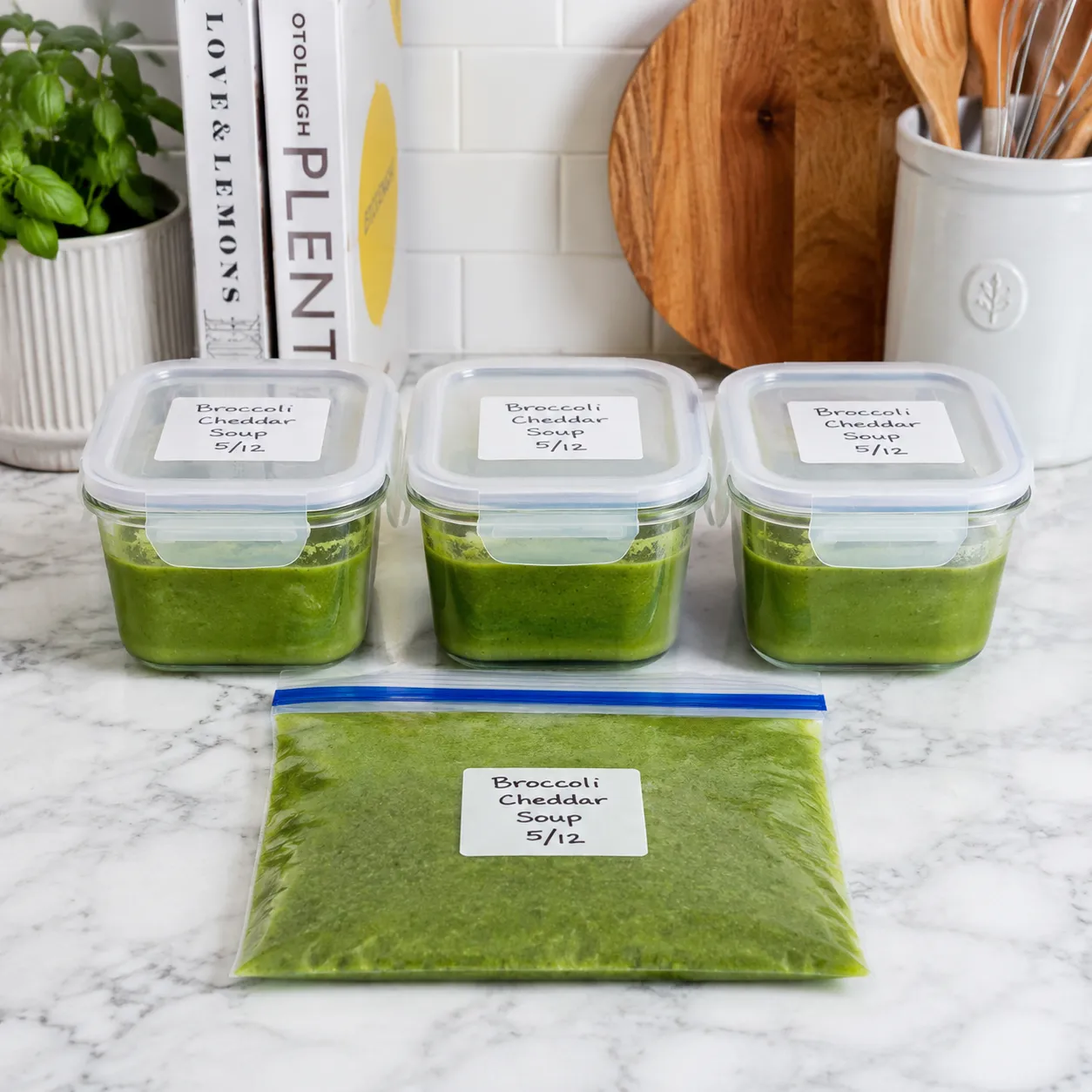
Refrigerate split pea soup in an airtight container for up to 4 days. The pot will thicken substantially overnight as the peas continue absorbing liquid, so loosen it with a splash of broth or water when reheating over low heat. To freeze, cool the soup completely, portion it into freezer bags or rigid containers leaving an inch of headspace for expansion, and freeze flat for up to 3 months. Label with the date so you don't end up playing freezer roulette in March.
Reheat gently on the stovetop over low to medium heat, stirring often and adding broth a quarter cup at a time until you hit your desired consistency. The microwave works in a pinch — cover loosely, heat in 90-second bursts, and stir between rounds to keep the texture smooth. Avoid hard boiling reheated pea soup; high heat tends to make it sputter, scorch on the bottom, and break the silky texture you worked for.