New England Clam Chowder: Creamy Classic Recipe
Ingredients
Scale
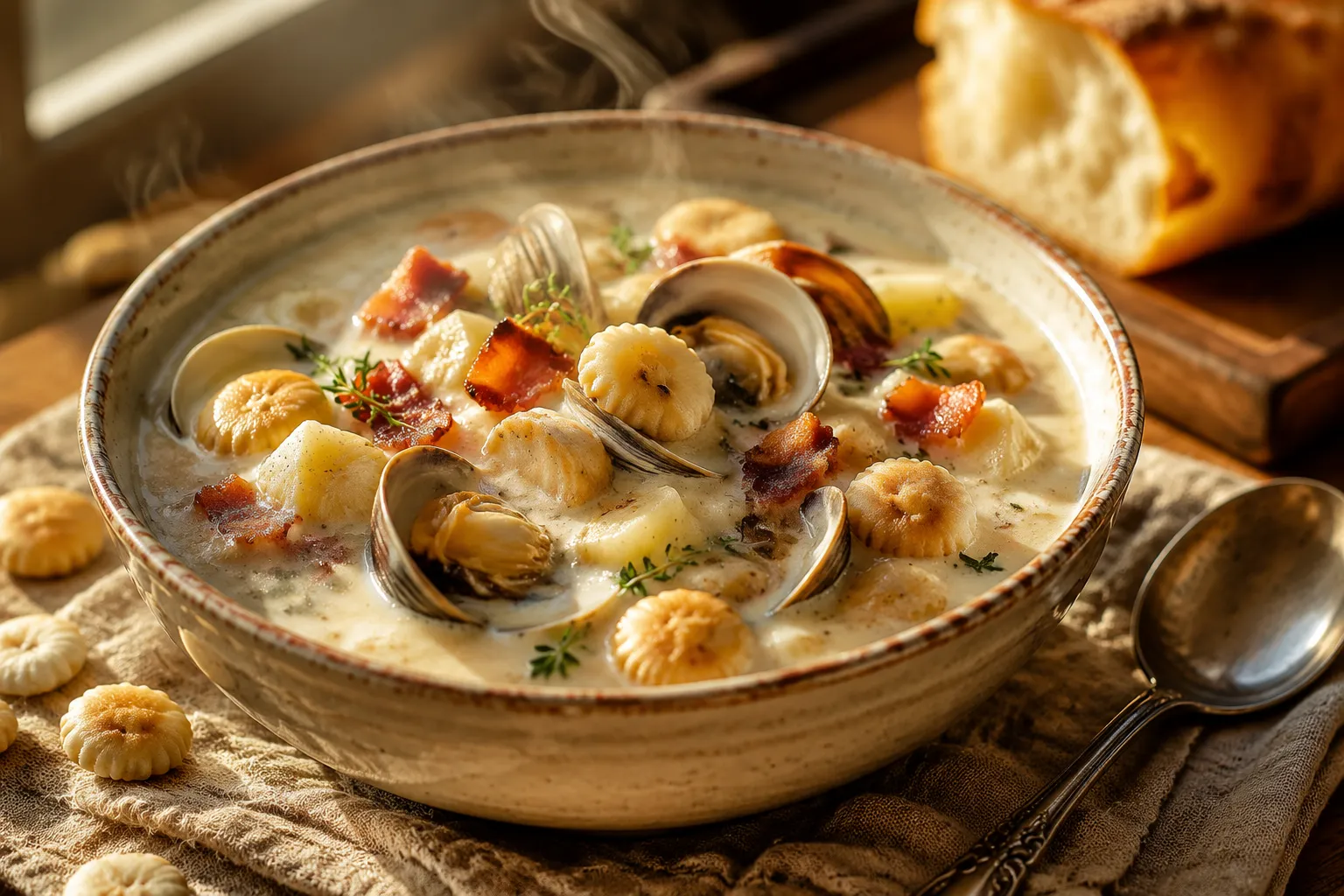
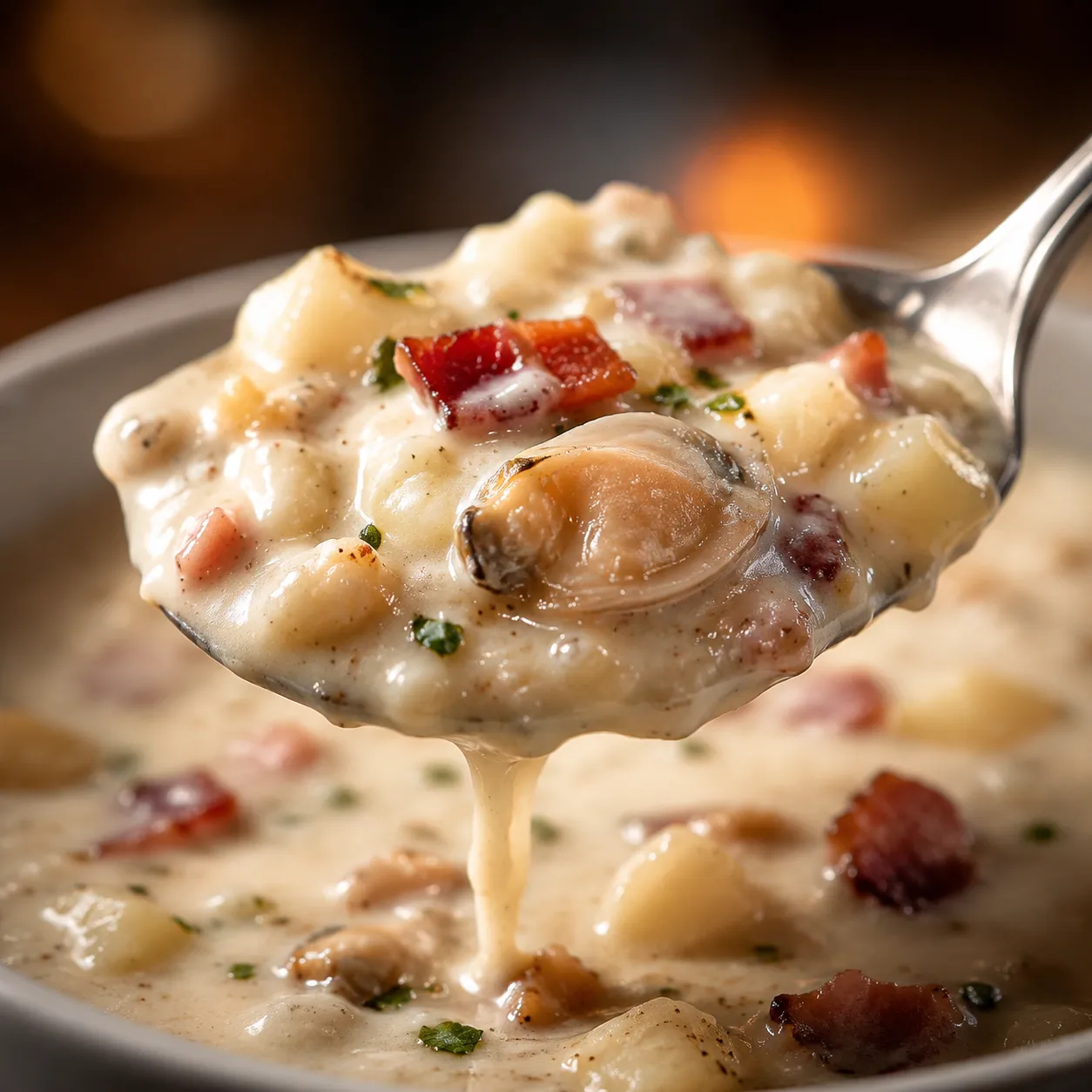
A bowl of true New England clam chowder: silky cream broth, smoky bacon, tender potatoes, and briny clams. Cozy, classic, and ready in under an hour.
There's nothing quite like a bowl of New England clam chowder on a cool afternoon — silky, briny, smoky, and rich enough to make you close your eyes after the first spoonful. This is the kind of soup I grew up watching come together in chowder houses up and down the Cape, where the broth runs creamy but never gluey, the potatoes hold their shape, and every bite hits that perfect balance of sweet clam, smoky bacon, and salted dairy. After years of testing, this is the chowder I cook at home when I want to feel like I just walked off the dock.
What makes this version stand out is the technique borrowed from old-school New England seafood recipes: rendering thick-cut bacon for the fat, adding a pat of butter for richness, and whisking in a light flour roux that thickens the broth without ever turning it pasty. We're also leaning on Yukon gold potatoes, which keep their creamy, waxy texture better than russets, and on canned clams plus a bottle of clam juice — which means you can pull this together any night of the week without hunting for fresh quahogs.
If you've ever cooked a clam chowder recipe and ended up with something thick as wallpaper paste or thin as skim milk, this one fixes both problems. It's cozy, it's classic, and it tastes like the real deal — straight from the kitchen of any good waterfront tavern in Boston, Portland, or Newport. Forty-five minutes from start to ladle, and you'll have a New England clam chowder from scratch that beats anything ladled out of a soup tureen at a dock-side restaurant.
Before we get to the pot, it's worth knowing what you're making — because not all chowders are created equal. The two most famous American versions are wildly different soups that just happen to share a name, and choosing between them is half the battle.
New England clam chowder is the cream-and-milk style most Americans picture: pale, glossy, thickened with a flour roux and the natural starch from potatoes, and almost decadent in its richness. Manhattan clam chowder, on the other hand, is tomato-based, brothy, lean, and brightly herbaceous — closer in spirit to a Mediterranean fish stew than a creamy seafood soup. Old-time New Englanders famously hate the Manhattan style; in 1939, a Maine legislator even tried to introduce a bill making it illegal to add tomatoes to chowder.
Today, you'll find regional variations everywhere. Rhode Island makes a clear-broth version with no dairy and no tomato. Long Island tries to bridge the divide with both. But for true comfort food — the kind that fogs up windows and warms cold hands — nothing beats the Yankee classic. That's the version we're making here, with all the chowder-house tricks built in.
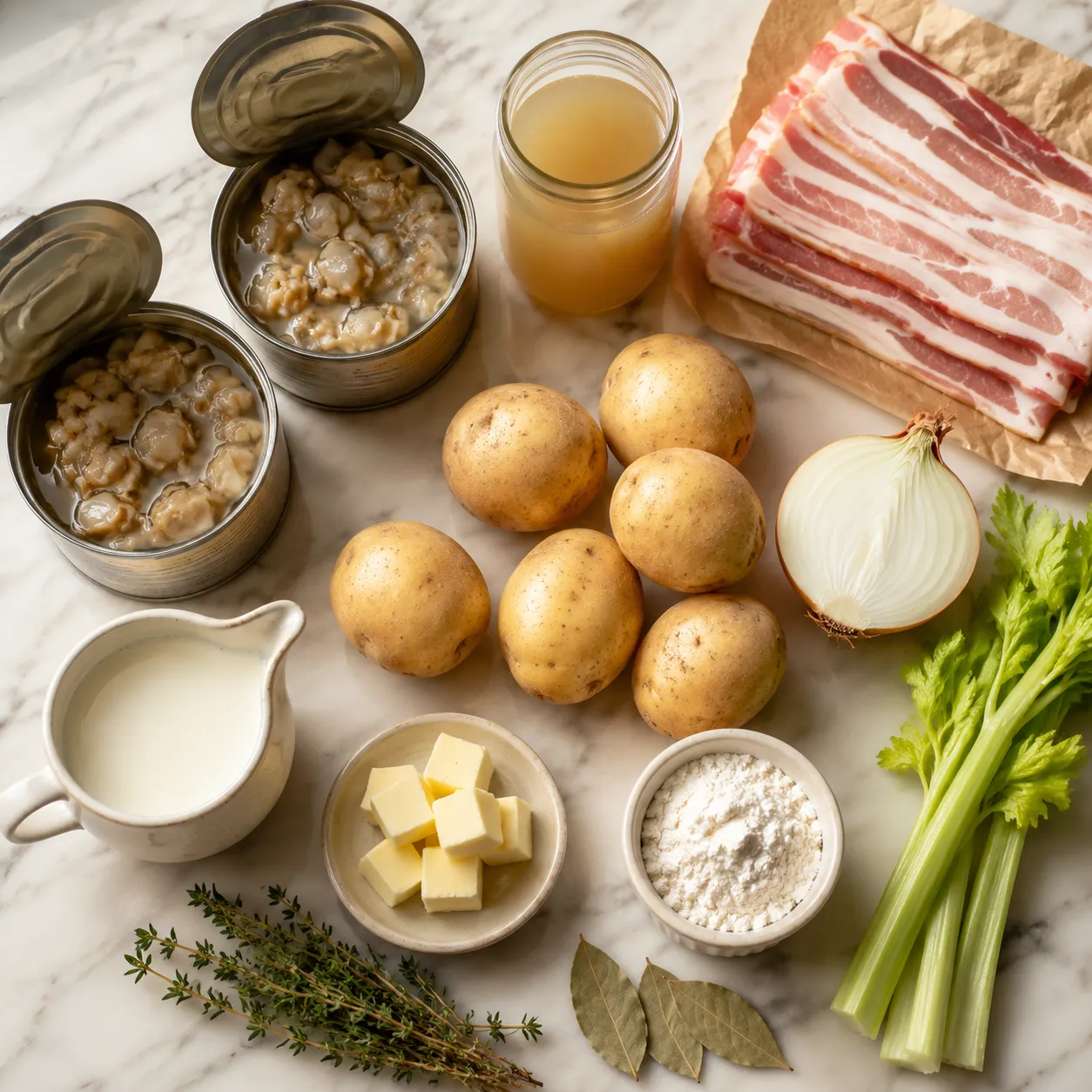
A great chowder is built on a short list of honest ingredients. There's no shortcut for quality here — but the good news is everything is easy to find at any grocery store. Here's what you'll need and why each one matters:
Once your ingredients are prepped, the chowder comes together in about 30 minutes of mostly hands-off cooking. The order matters — building flavor in stages is what separates a great pot from a flat one — so don't be tempted to dump everything in at once.
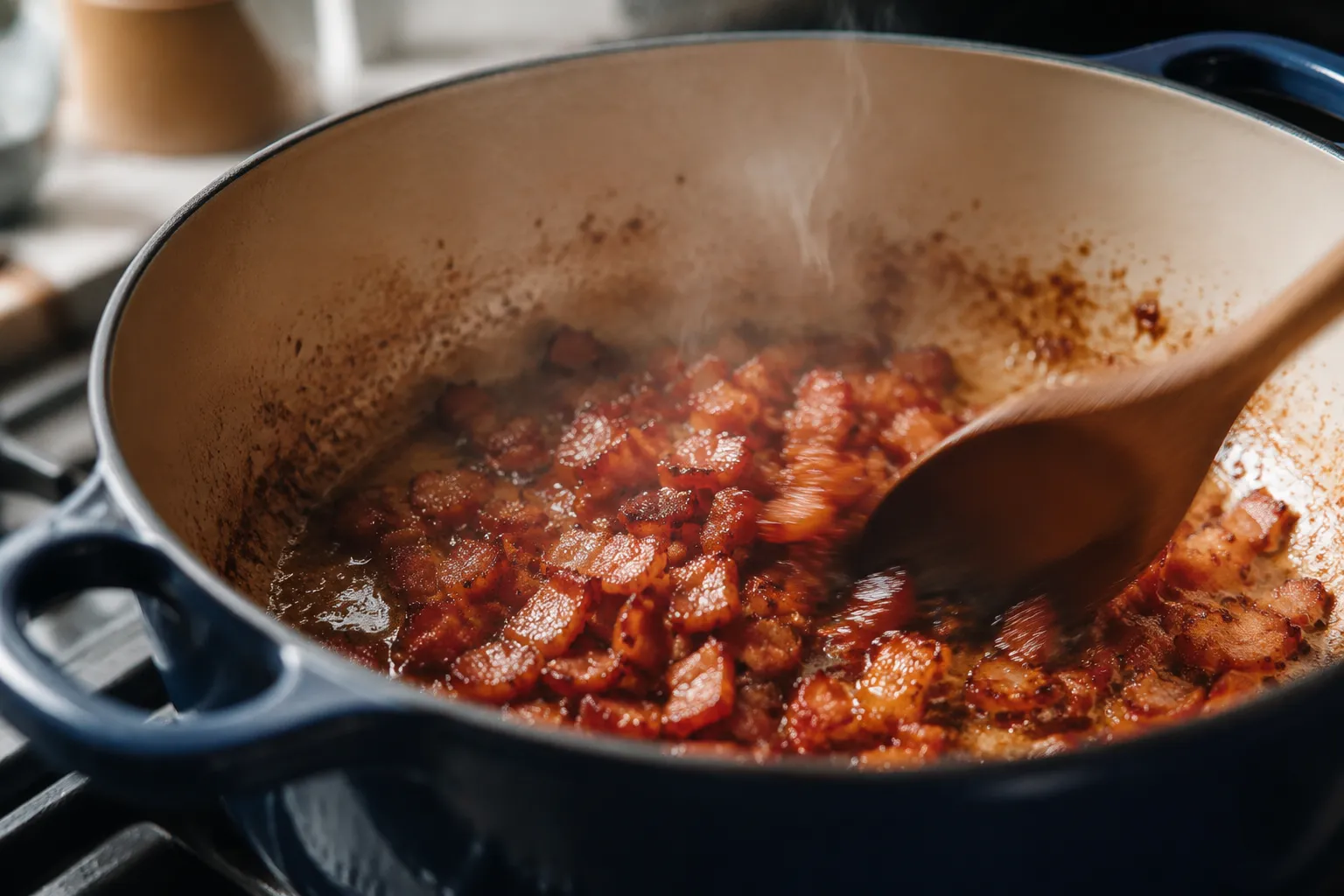
Start by rendering the bacon. Dice four slices of thick-cut bacon and add them cold to a heavy Dutch oven over medium-low heat. Cook slowly, stirring occasionally, until the fat renders out and the bacon turns deep amber and crisp at the edges, about 8 minutes. Use a slotted spoon to transfer the bacon to a paper towel — we'll add it back at the end so it stays crisp instead of going limp in the broth.
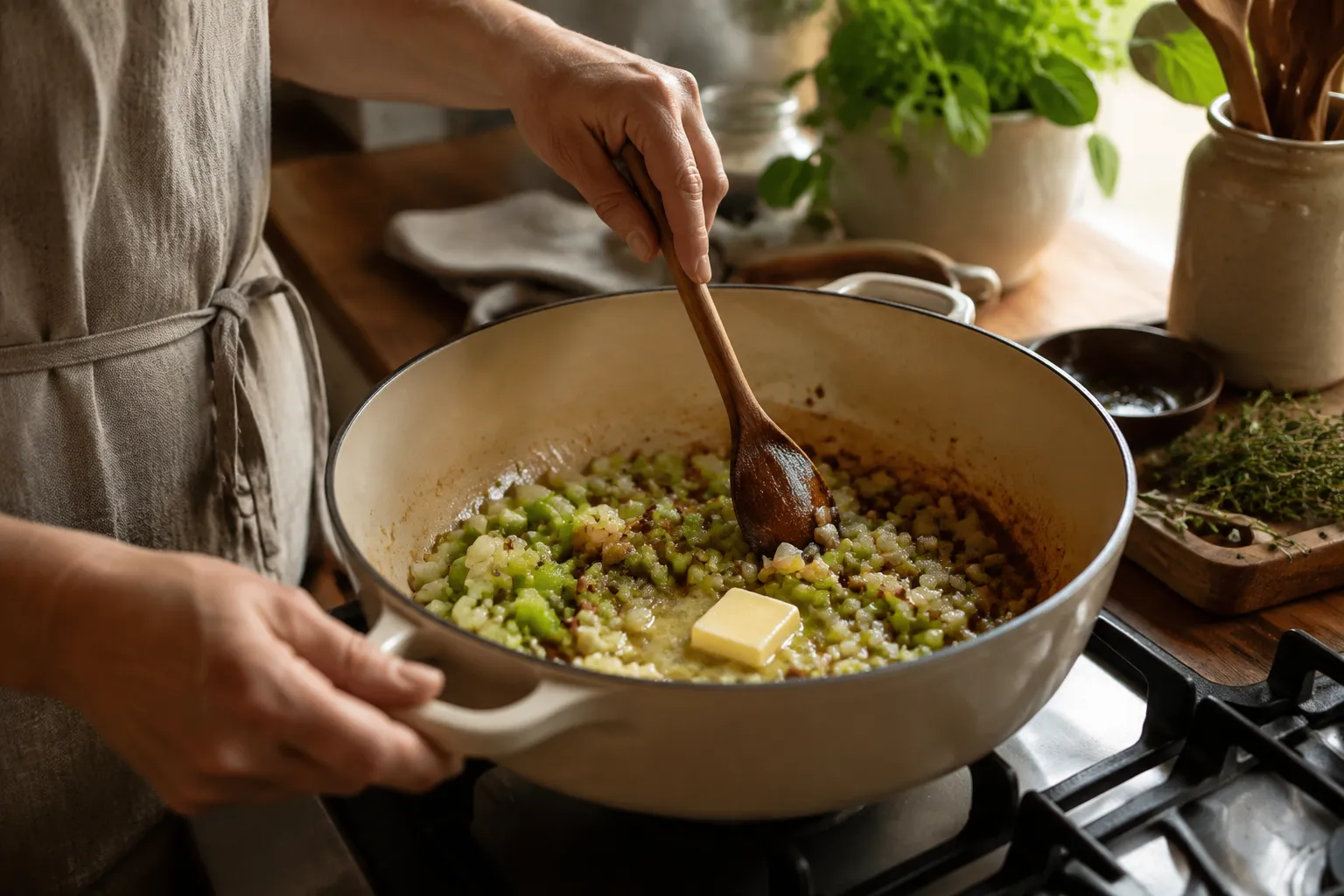
Build the flavor base in the rendered fat. Add the butter to the pot and let it melt into the bacon drippings, then add the diced onion and celery with a pinch of salt. Cook over medium heat until the vegetables turn translucent and just begin to soften, about 5 to 6 minutes. Stir in the flour and cook for another full minute, stirring constantly — this toasts the raw taste out of the roux and sets up that silky body the chowder is known for.
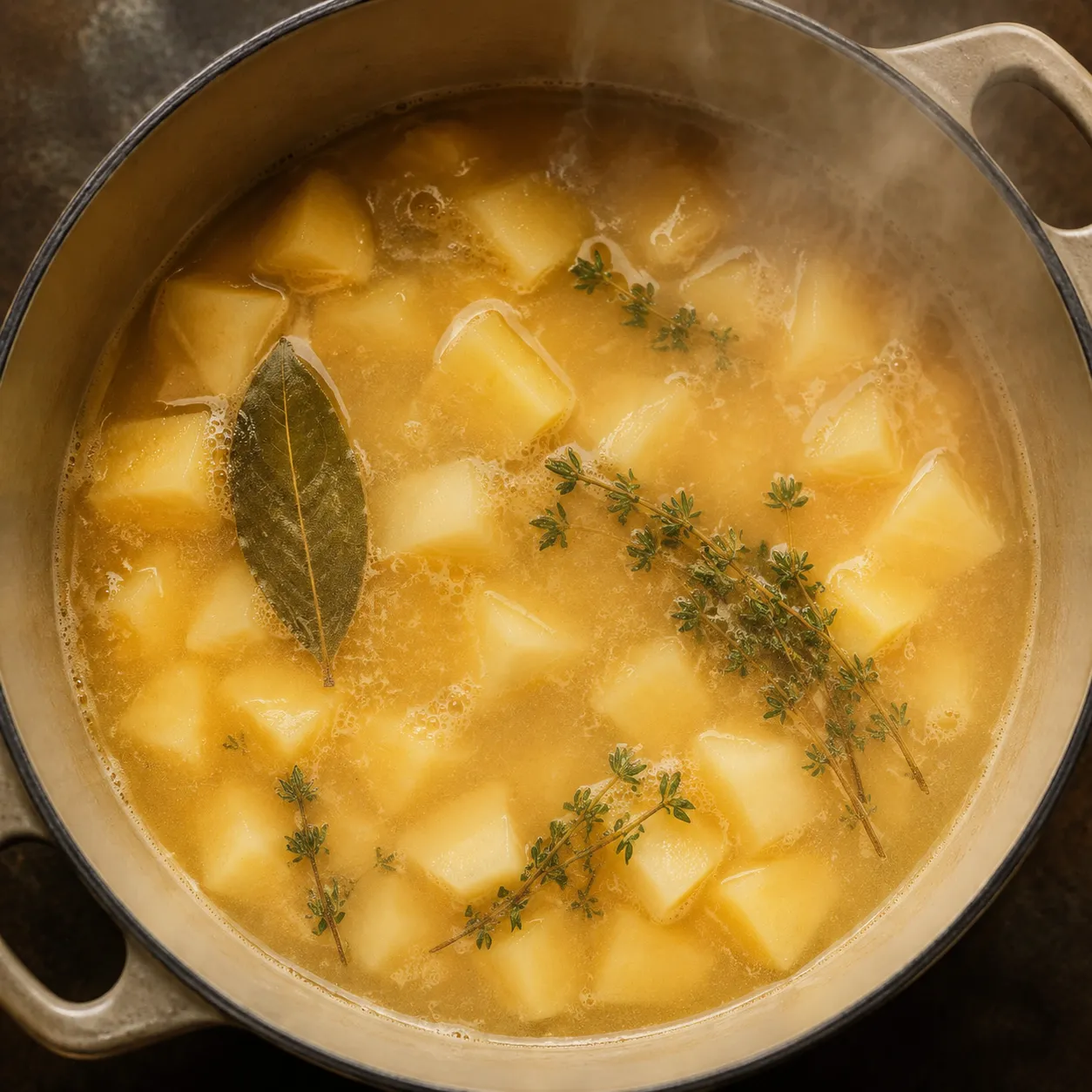
Simmer the potatoes. Slowly whisk in the bottled clam juice and the reserved liquid from the canned clams, scraping up any browned bits from the bottom of the pot. Add the diced Yukon gold potatoes, the bay leaf, and a few sprigs of fresh thyme. Bring to a gentle simmer and cook uncovered until the potatoes are fork-tender, about 12 to 15 minutes. The starch from the potatoes will leach into the broth and help thicken it even further as the soup cooks.
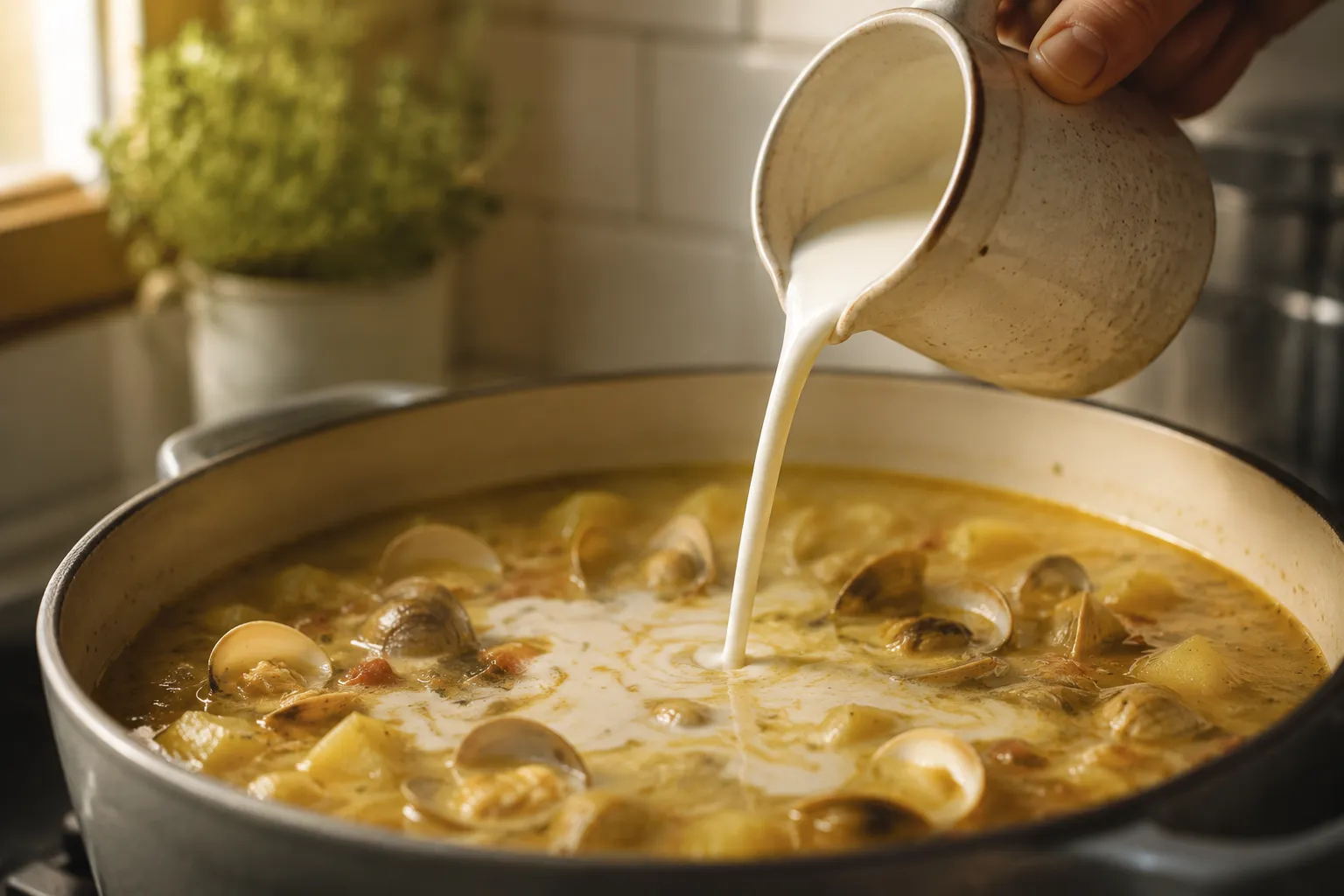
Add the clams and cream. Reduce the heat to low. Stir in the heavy cream and whole milk, then add the chopped clams. Warm everything through for 3 to 4 minutes — but do not let it boil, or the cream may break and the clams will turn rubbery and tough. Taste, then season with salt and plenty of cracked black pepper. Discard the bay leaf and thyme stems before serving.
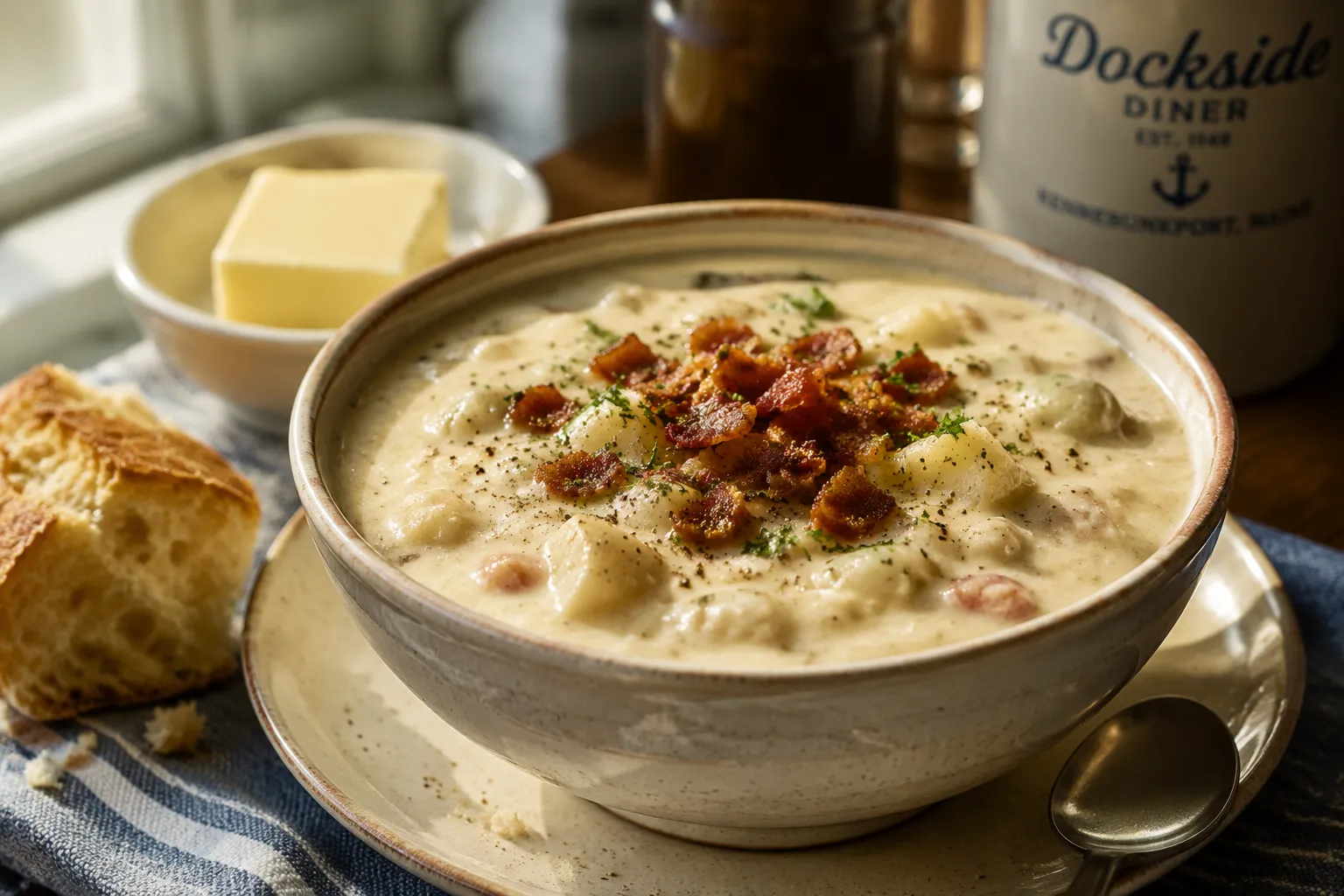
Ladle into warm bowls and shower with the reserved crispy bacon and a little extra fresh thyme. Leftovers — if you have any — taste even better the next day, when the flavors have had time to settle and meld into one another.
Few soups are as ready for company as a good chowder. The classic move is a small bowl of oyster crackers on the side, ready to be crumbled in by the handful — they soften just enough to add body without disappearing into the broth. A torn-up baguette or, even better, a hollowed-out sourdough boule used as a bread bowl turns the dish into a full meal. You can also serve it alongside a wedge of crusty garlic bread for soaking up every last drop, which is honestly the best part of the meal.
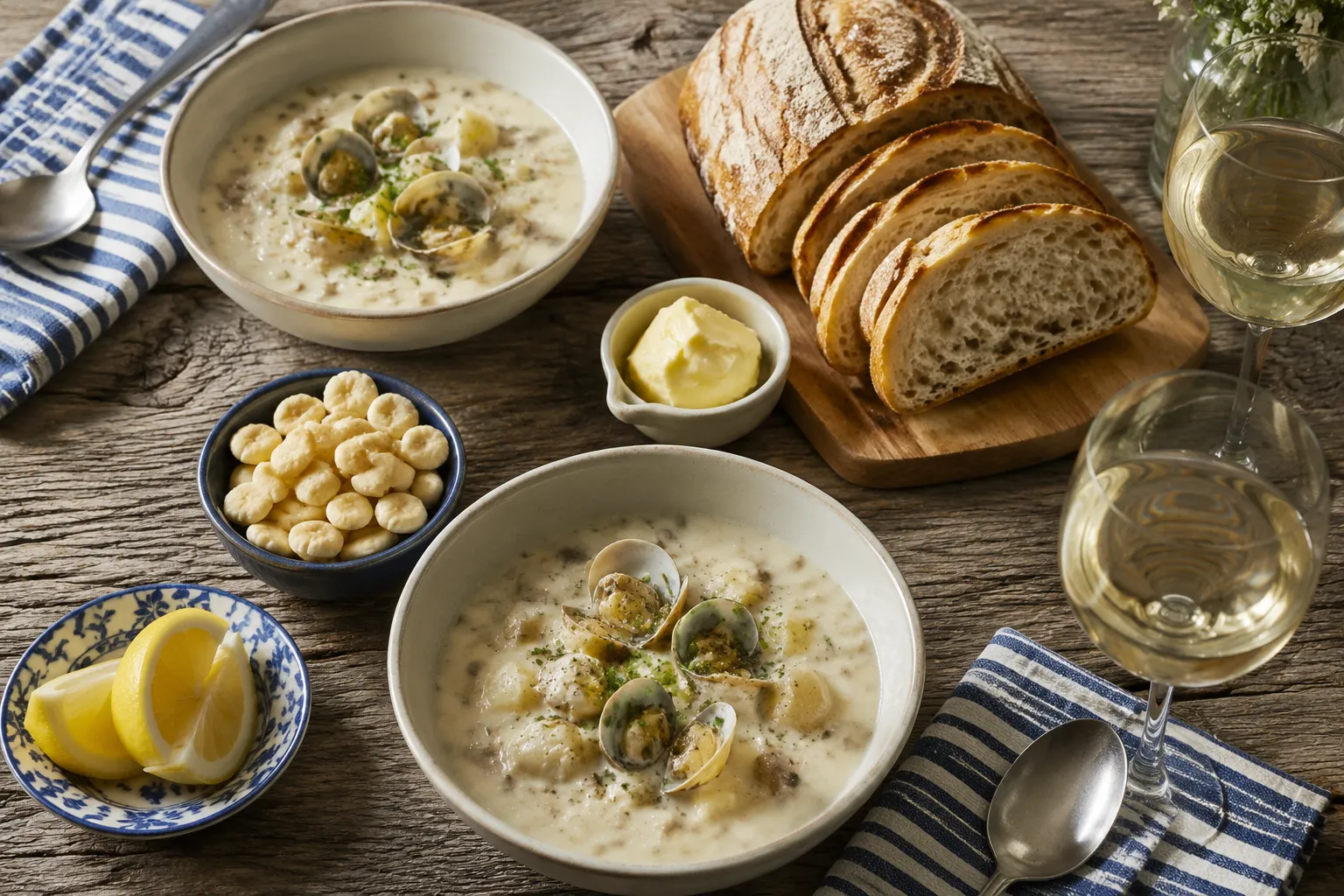
For something lighter on the side, a crisp green salad with a sharp lemon vinaigrette cuts the richness beautifully. I love it with shaved fennel, arugula, and a few segments of grapefruit. To drink, an unoaked Chablis, a dry Riesling, or a cold pilsner all work wonders against the cream. And if you want to lean into a full coastal feast, this New England clam chowder pairs perfectly with steamed mussels, a lobster roll, or any of your favorite summer seafood plates — just dial back the richness elsewhere on the table so the chowder gets to be the star.
Chowder is one of those dishes that feels like a heritage recipe even the first time you make it. Once you've made one batch on the stove, you'll never go back to the canned stuff at the grocery store — and you'll have a go-to dish for snowstorms, beach houses, and Sunday suppers for years to come. Grab a spoon and dig in.
This chowder is a strong canvas, and once you've nailed the basic technique it's easy to tailor it to whatever's in your fridge or pantry. A splash of dry white wine after the aromatics adds brightness; a finishing dash of sherry vinegar takes it almost into bisque territory. Here are a few favorite riffs to keep things interesting:
Cool the chowder to room temperature before transferring to airtight containers. It will keep in the refrigerator for up to 3 days, and the flavor actually improves on day two as everything settles. Reheat gently on the stovetop over low heat, stirring often, until just steaming — never let it boil, or the cream may separate. If it thickens too much in the fridge, thin with a splash of milk or extra clam juice as you reheat.
Cream-based chowders don't freeze well; the dairy tends to break and turn grainy on thawing. If you want to make ahead and freeze, stop the recipe before adding the cream and milk. Cool and freeze the broth-and-potato base for up to 2 months, then thaw overnight in the refrigerator, reheat gently, and stir in the dairy and clams just before serving for the best texture.