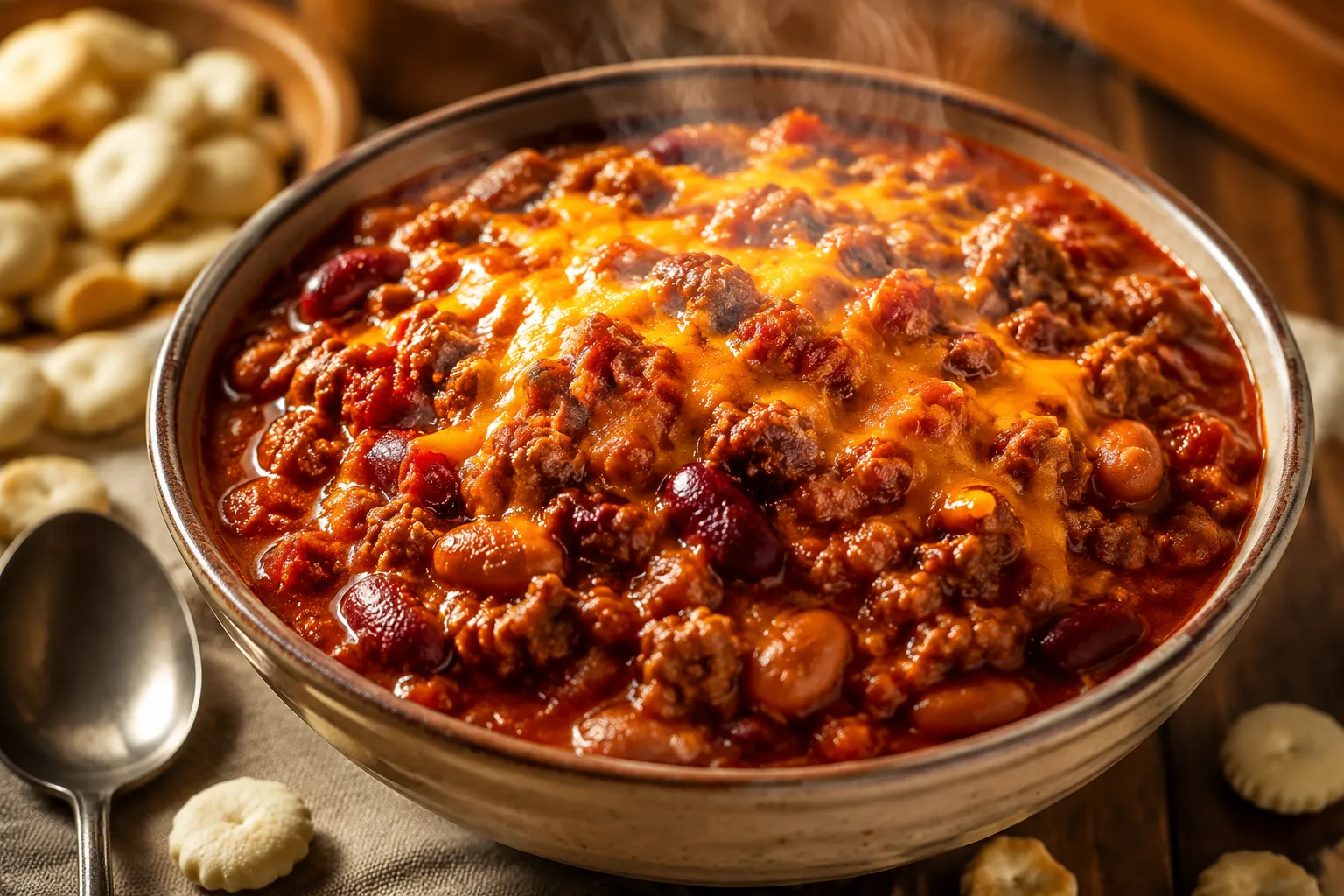
Pasta Fagioli Recipe: Cozy Italian Bean Soup in 40 Min
Ingredients
Scale
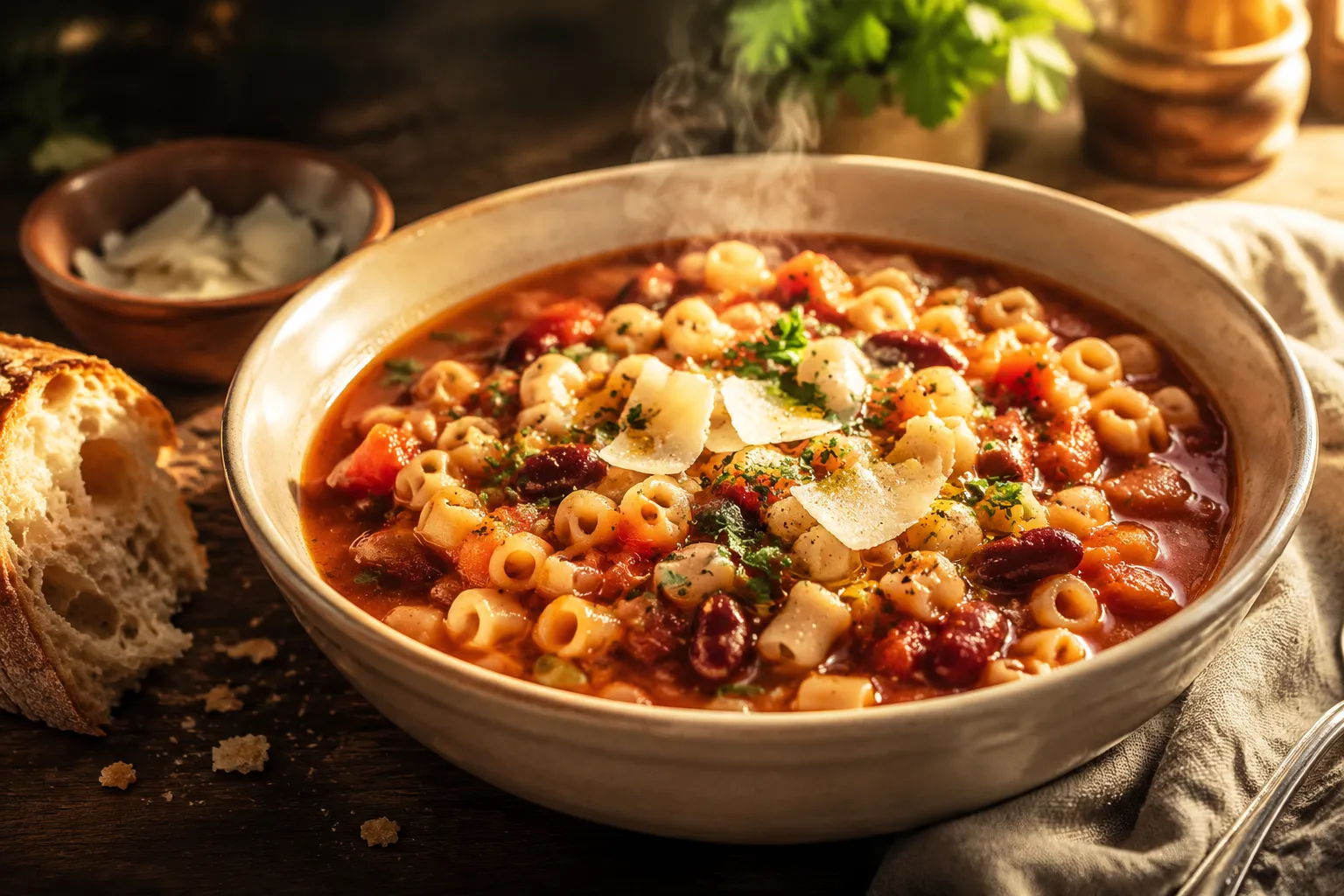
A rustic Italian pasta fagioli soup that's hearty, savory, and ready in 40 minutes. One pot, pantry staples, and bowls everyone goes back for.
This pasta fagioli recipe is the kind of soup that turns an ordinary Tuesday into something worth lingering at the table for. It's hearty without being heavy, loaded with two kinds of beans, tender pasta, and a tomato-laced broth that tastes like it simmered all afternoon — even though the whole pot is done in 40 minutes flat. If you've ever ordered pasta fagioli soup at Olive Garden and wondered whether you could make it better at home, the answer is a confident yes.
This is one of those soups my Italian-American neighbors would call "pasta fa-zool" while stirring a pot the size of a small car. The genius of pasta e fagioli is its frugality — pantry beans, canned tomatoes, a heel of cheese tucked into the broth — transformed into something soulful and restaurant-worthy. It's a true Italian bean soup with deep, layered flavor that completely belies how simple the method really is.
I've made this hundreds of times for weeknight dinners, lazy Sundays, and friends-over potlucks, and I keep refining the small tricks: a Parmesan rind for umami, a partial bean purée to thicken the broth without flour, and cooking the pasta strategically so leftovers stay perfect. Grab a Dutch oven and a wooden spoon — let's make a pot.
At its heart, pasta e fagioli (literally "pasta and beans") is a peasant dish from northern and central Italy that stretches a few humble ingredients into a soul-warming meal. The broth is thick, tomato-leaning, and bean-forward, with small pasta shapes that hold their own against the tender legumes. People often confuse it with minestrone soup, but the two are siblings, not twins. Minestrone leans heavily on whatever vegetables are in season — zucchini, green beans, spinach, potatoes — and the broth tends to be looser and more vegetal. Pasta fagioli keeps the focus tight: beans, pasta, tomato, aromatics, and a savory backbone. Think of pasta fagioli as the hearty starch-and-protein cousin and minestrone as the lighter garden bowl.
You'll hear it two ways, and both are correct. The proper Italian pronunciation is "pasta eh fah-JOH-lee" — three full words, soft on the consonants. In Italian-American kitchens (and in Dean Martin's That's Amore), it gets affectionately squashed into "pasta fa-ZOOL." Around our house we use them interchangeably and never correct anyone — half the joy of a soup like this is the family-table shorthand it carries.
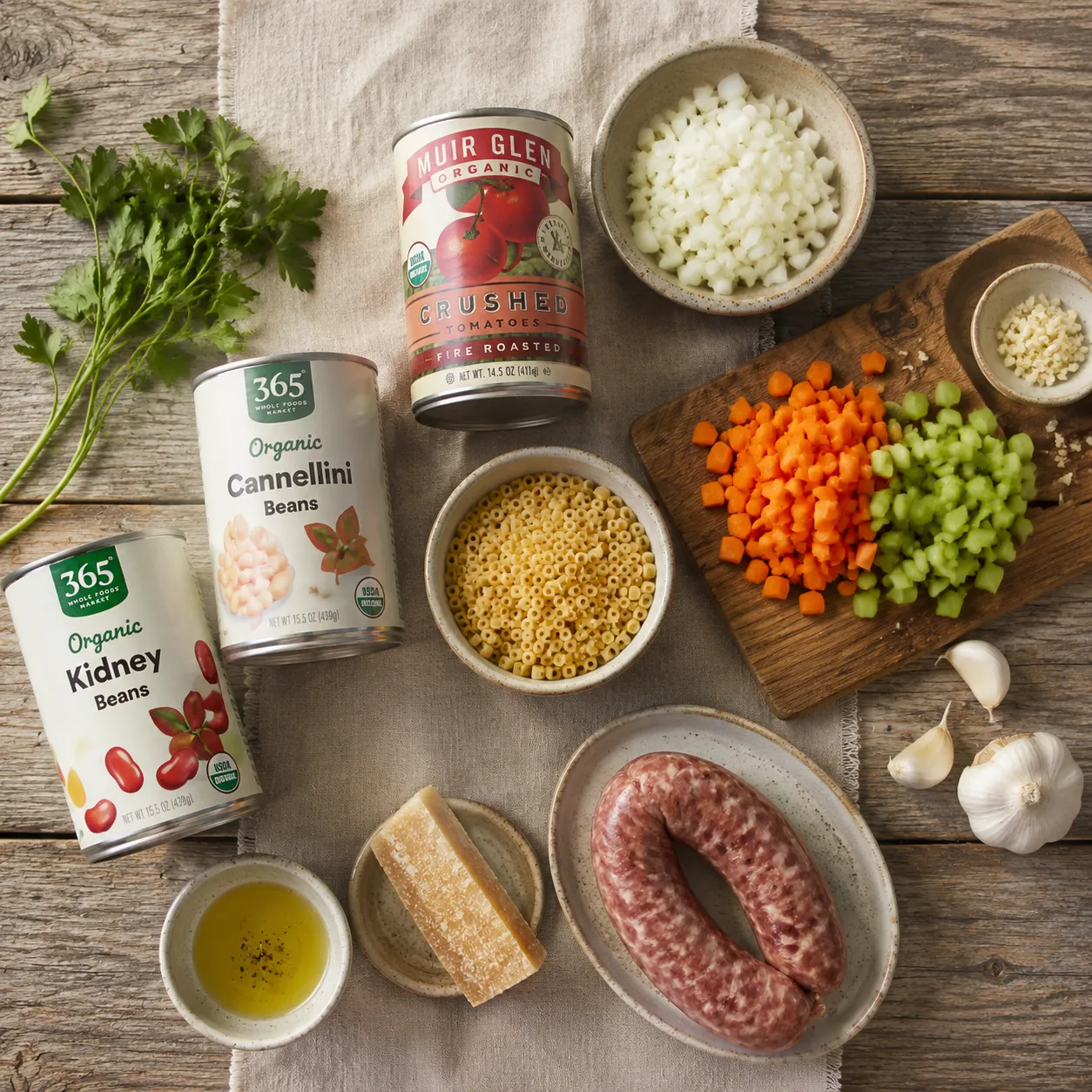
This is a true pantry-and-fridge soup. Most weeks I have nearly everything on hand, which is exactly why this pasta fagioli recipe ends up on heavy rotation in my kitchen from October all the way through March.
Two kinds of beans give the soup its layered texture. Cannellini beans stay creamy and almost buttery when simmered, slowly melting into the broth. Red kidney beans are firmer with a deeper, earthier flavor, and they hold their shape, giving each spoonful contrast. Canned beans are perfectly fine here — just drain and rinse them well so the broth doesn't turn starchy.
The classic shape is ditalini pasta — those tiny tube-shaped noodles practically built for soup spoons. If you can't find them, small elbow macaroni, ditali, tubetti, or mini shells all work beautifully. Avoid long pasta or anything wider than your spoon — this is a soup you should be able to scoop, not slurp.
A foundation of mirepoix (onion, carrot, celery) browned in olive oil, garlic added at the very end so it doesn't burn, crushed tomatoes for body, and a generous pour of homemade chicken broth (or low-sodium boxed broth when life is busy) build a base that tastes layered and slow-cooked. Italian seasoning, a bay leaf, and a small pinch of red pepper flakes round everything out.
Here's the move that takes this from good to great: drop a Parmesan rind into the simmering pot. As it cooks, it slowly releases salt, umami, and a creamy nutty richness straight into the broth. Save your Parmesan rinds in the freezer for soups, beans, and risottos — they're flavor gold and they cost you nothing.
The full step-by-step lives in the recipe card below, but here's the at-the-stove walk-through for this pasta fagioli recipe so you know exactly what to expect at every stage.
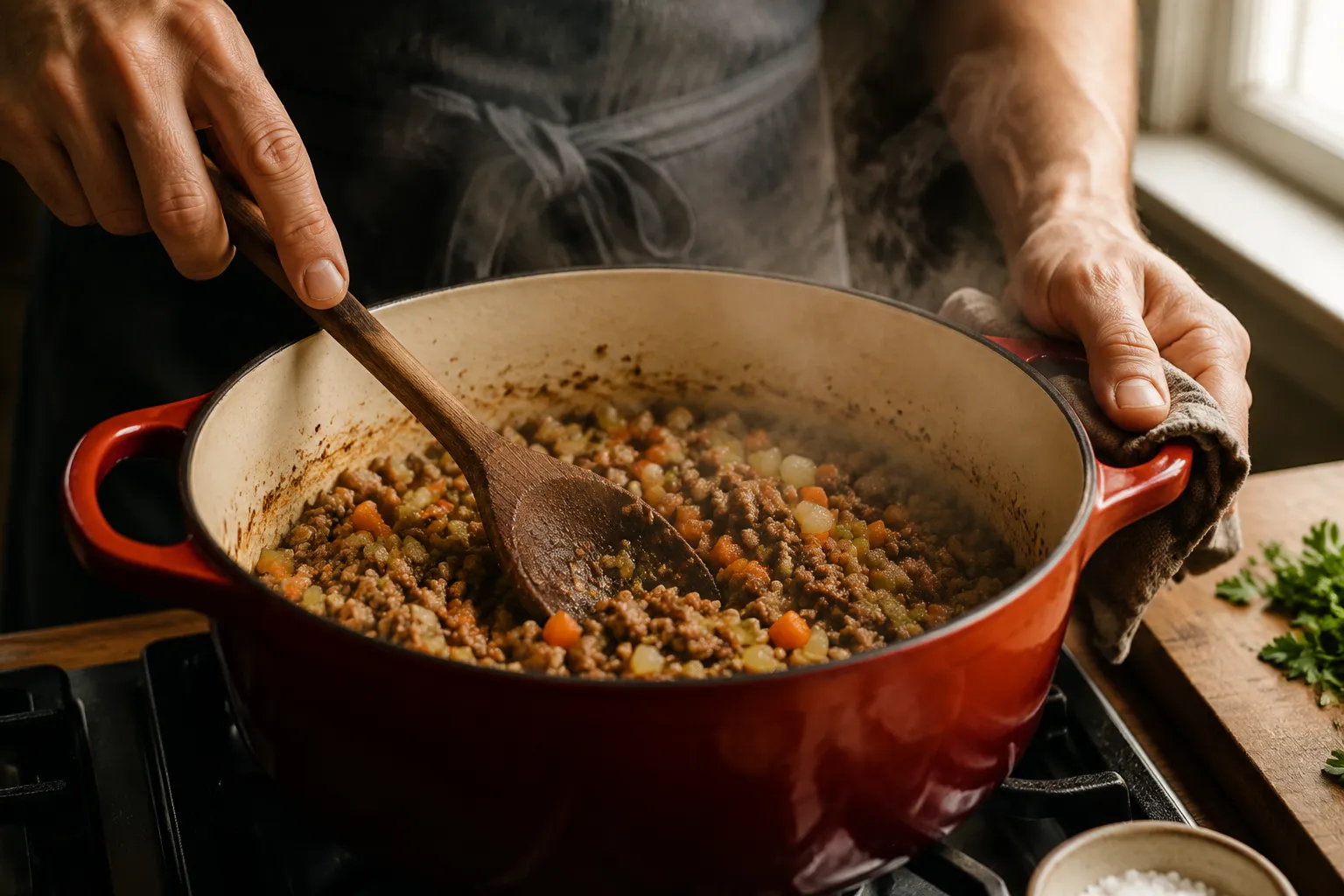
Heat a tablespoon of olive oil in a large Dutch oven over medium-high heat. Crumble in the Italian sausage and let it brown, undisturbed for a minute or two, before breaking it up. Once it's mostly cooked through, add the diced onion, carrot, and celery and cook until softened and just starting to caramelize at the edges, about 5–6 minutes. Stir in the minced garlic for the last 30 seconds — you want fragrant, not bitter. This stage is your flavor bedrock; don't rush it.
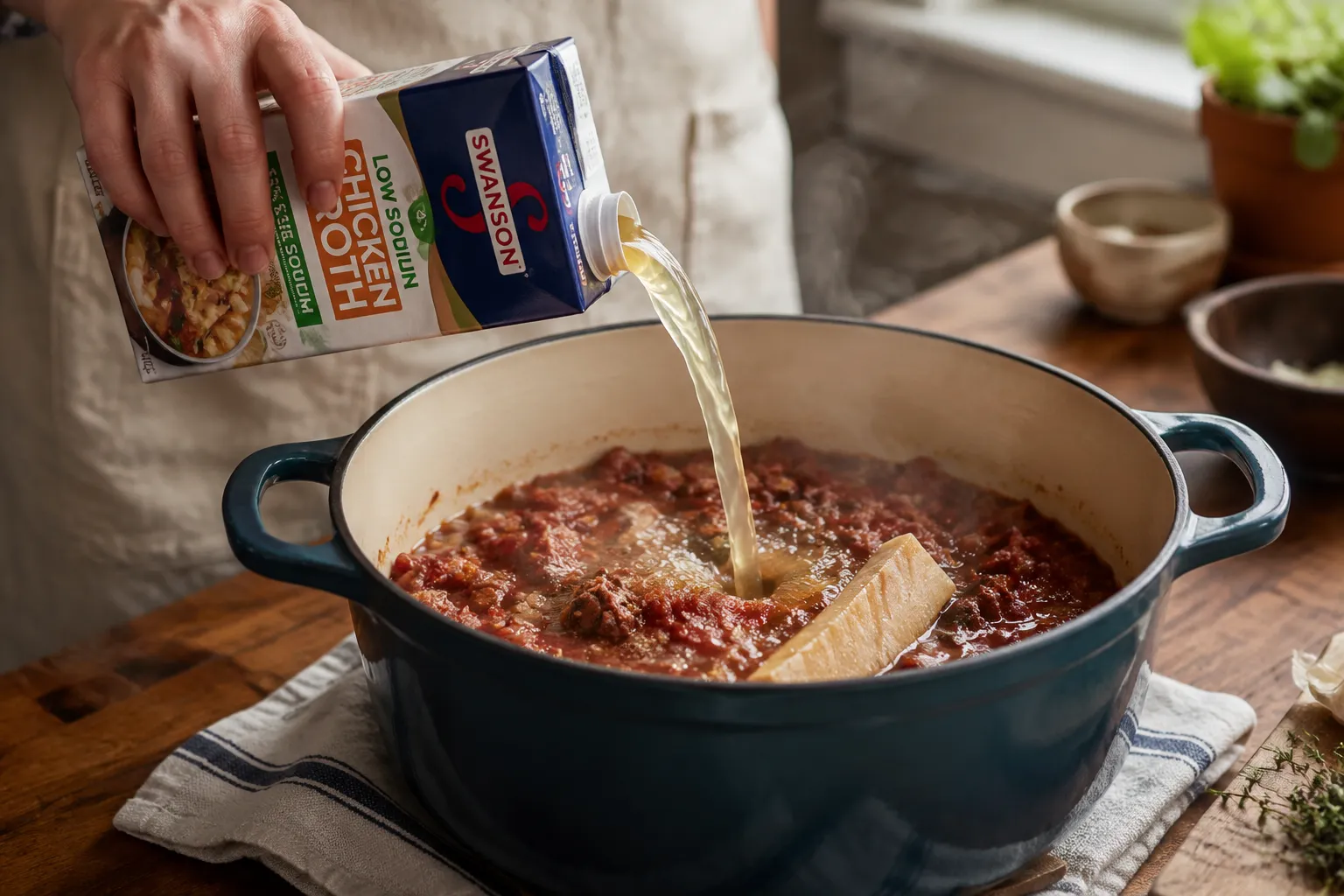
Pour in the crushed tomatoes and let them sizzle for a minute to deepen, then add the chicken broth, Italian seasoning, a bay leaf, and the Parmesan rind. Use your spoon to scrape up any browned bits stuck to the bottom of the pot — that fond is pure flavor. Bring everything up to a gentle simmer and watch the kitchen start to smell like an Italian grandmother's apartment.
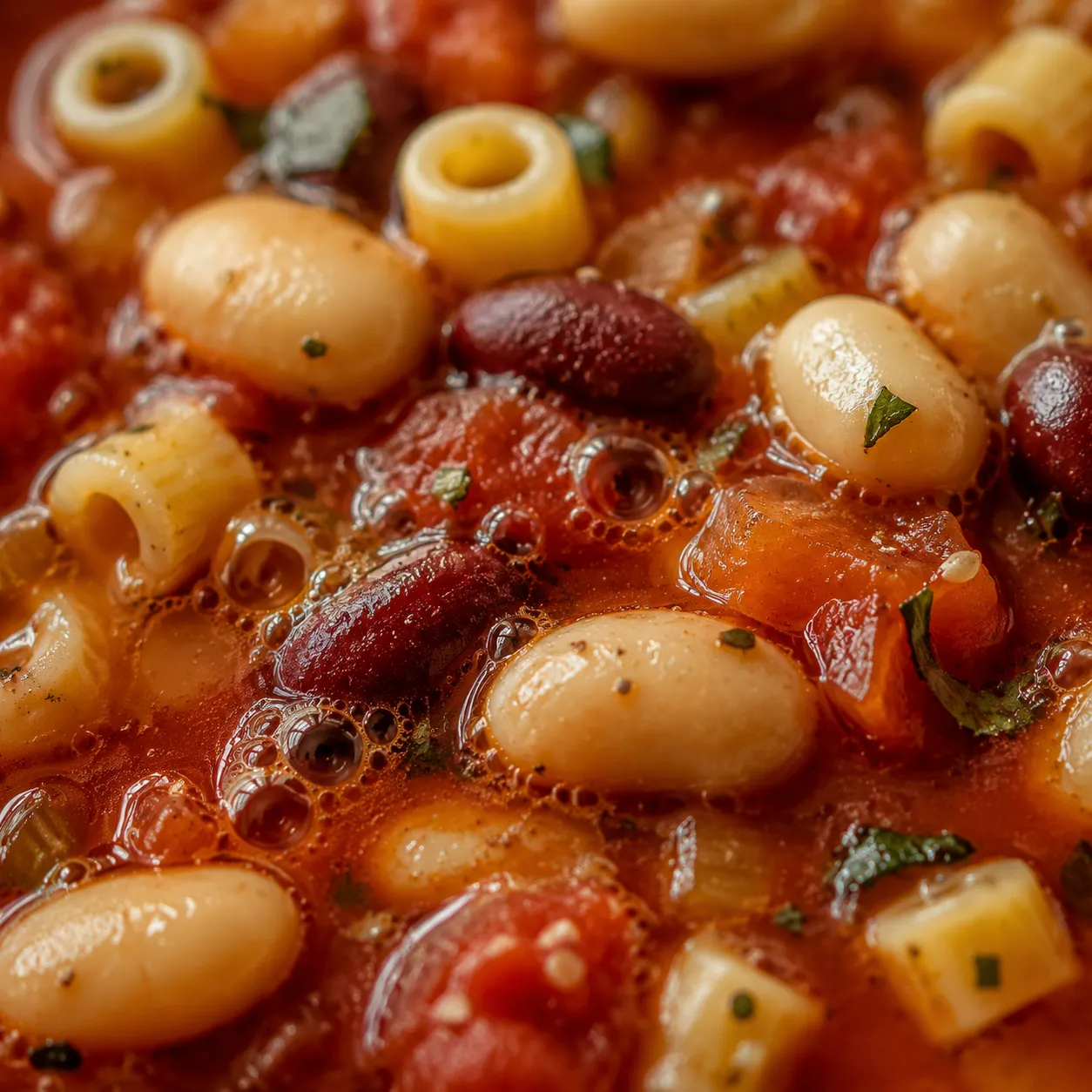
Add both cans of drained beans. For a thicker, restaurant-style body, scoop out about a cup of beans with a little broth, blend them smooth with an immersion blender or in a small countertop blender, and stir the purée back in. This is the cheat code for that velvety Olive Garden-style texture without any flour or cream. Simmer for 10 minutes to let everything marry.
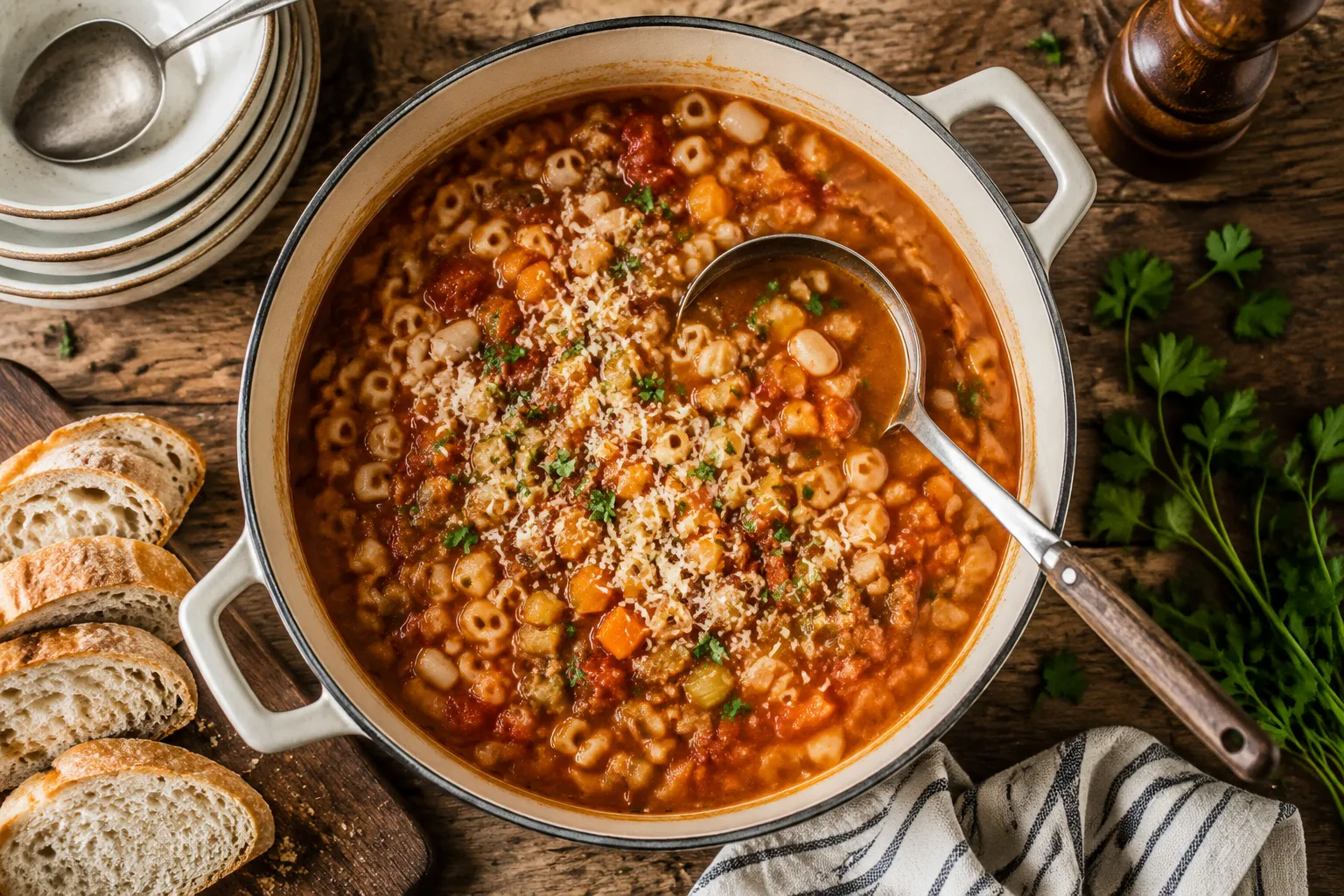
Add the ditalini directly to the pot and cook until al dente, 8–9 minutes, stirring occasionally so nothing sticks. (See the tips section below for cooking pasta separately if you're planning lots of leftovers.) Fish out the bay leaf and the softened Parmesan rind. Taste, season generously with salt and lots of cracked black pepper, and stir in a handful of chopped parsley. Ladle into bowls and finish with grated Parmesan and a swirl of good olive oil.
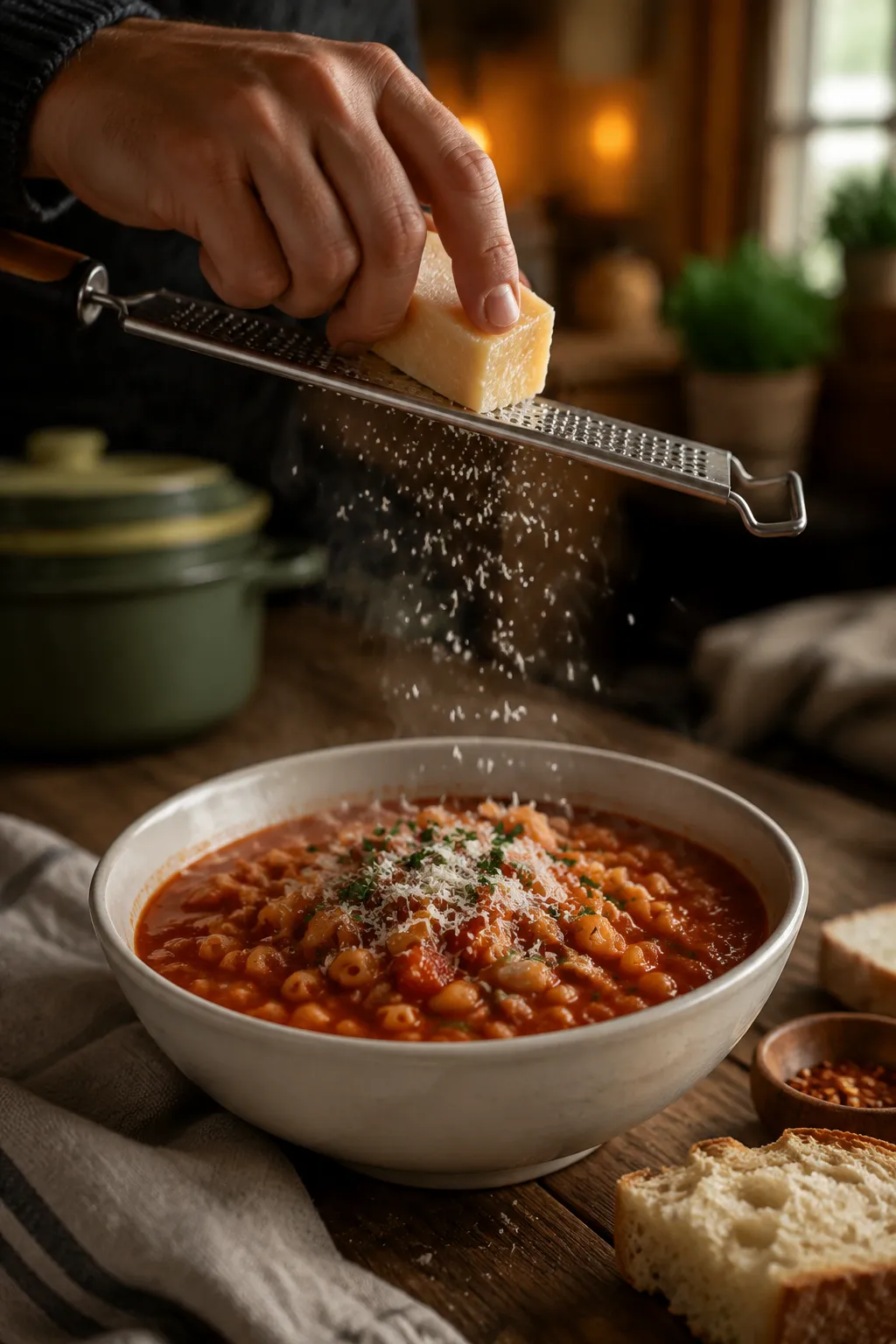
Three small choices set this pasta fagioli recipe apart from the boxed-mix shortcuts. First, the Parmesan rind — it melts slowly and turns the broth glossy and savory in a way bouillon cubes simply can't. Second, blending a portion of the beans replaces the need for cream or a roux; it gives the soup that thick, hugging texture that clings to every piece of pasta. Third, using good Italian sausage instead of plain ground beef adds fennel, garlic, and a little heat right into the base.
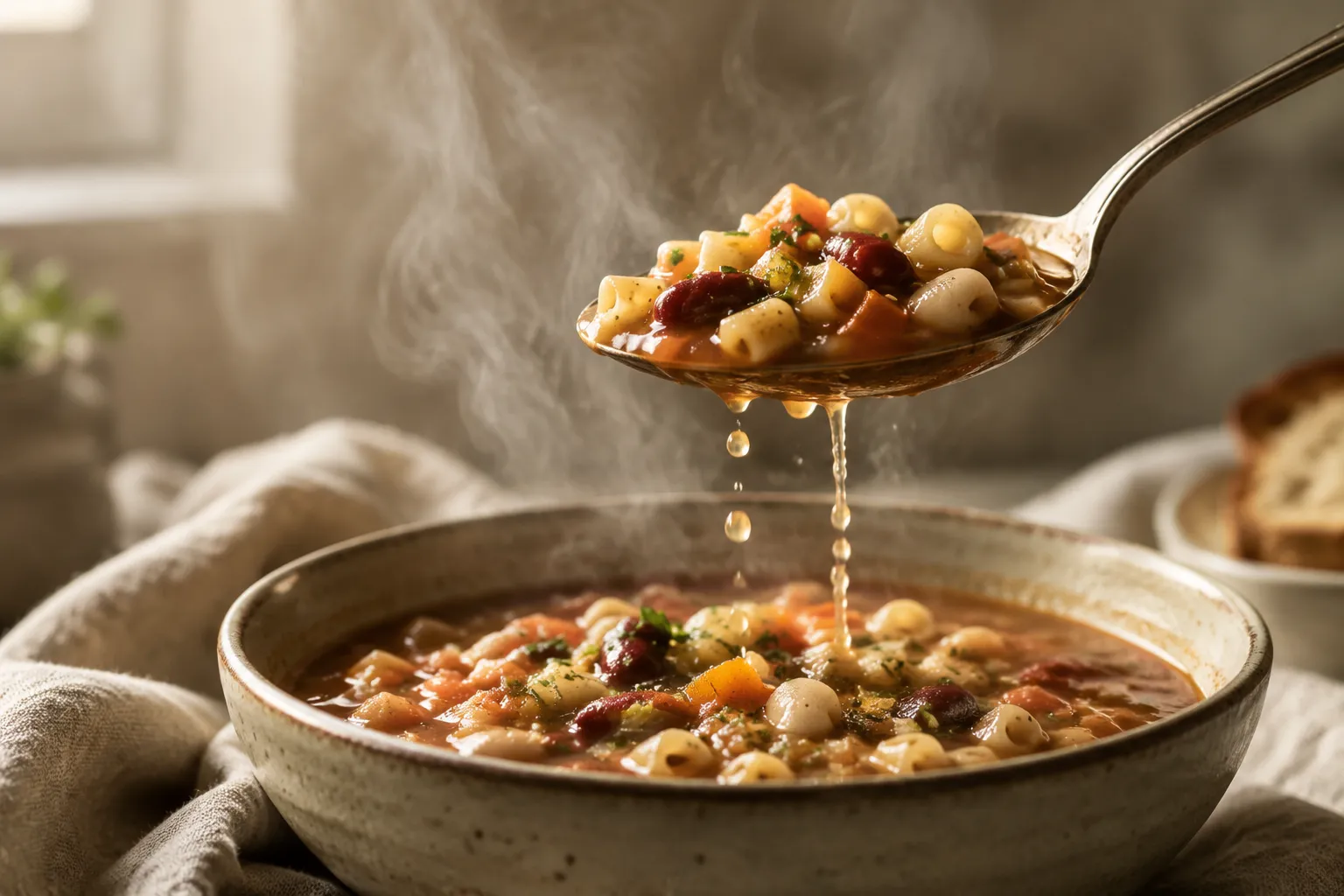
Once you nail the technique, you'll find yourself riffing — turning leftovers into an Italian sausage soup with extra greens, swapping in chickpeas, or going meat-free with a Parm-heavy vegetable broth. Serve it with crusty bread, garlic bread, or a sharp arugula salad with lemon. A glass of Chianti doesn't hurt either. You'll be tempted to skip the parsley garnish — don't. The fresh green note is exactly what keeps the bowl from feeling too rich.
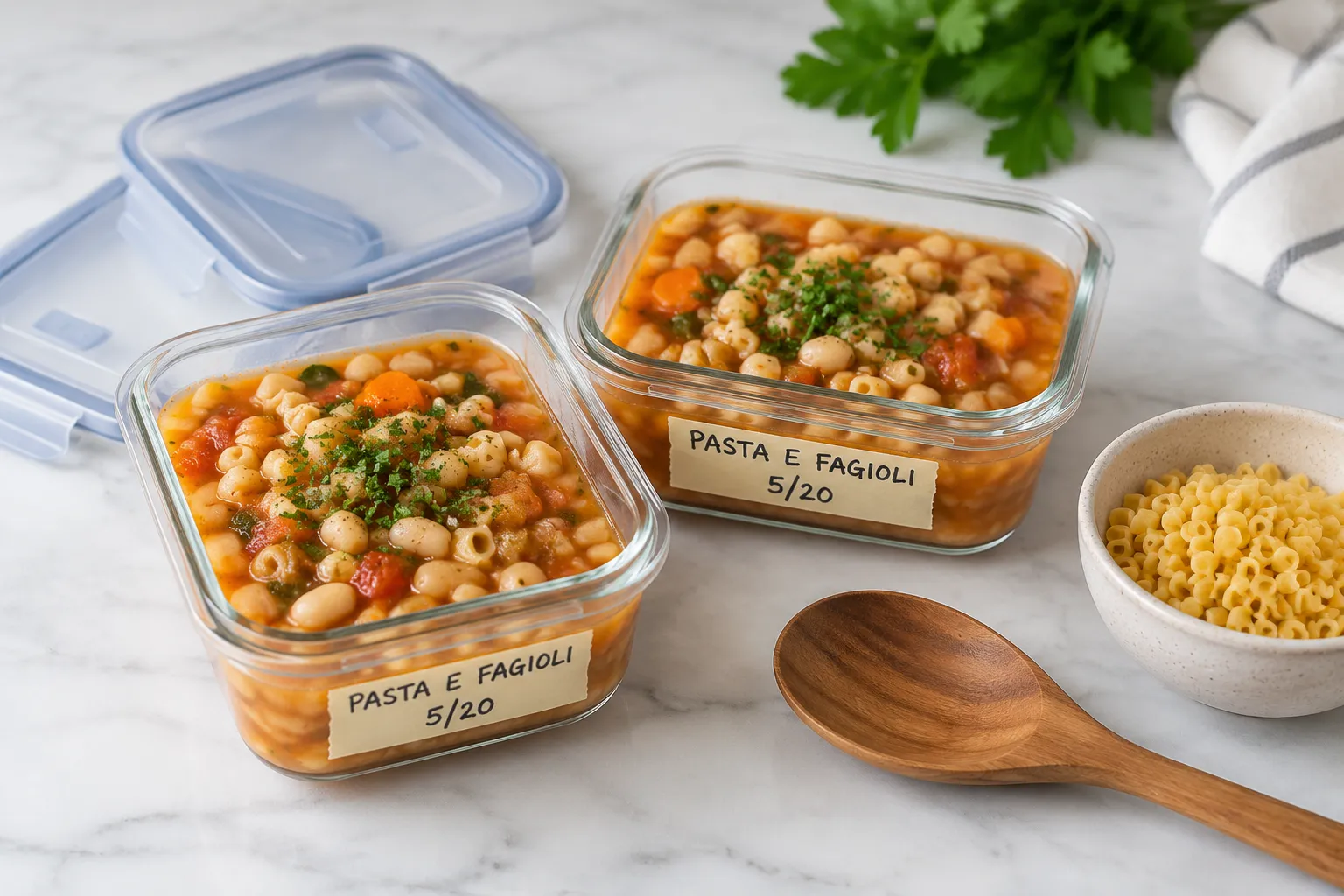
This is one of those soups that's almost better the next day, especially if you keep the pasta separate. Pack the broth into glass containers and the cooked ditalini in its own little tub, then combine in the bowl when you reheat. (Full storage instructions are in the section below.) For a casual dinner party, double the recipe, set out a board with shaved Parmesan, chili flakes, lemon wedges, fresh herbs, and a basket of warm bread, and let everyone build their own bowl.
If you're meal-prepping for the week, divide into single-serve portions, label them, and you've got lunch sorted Monday through Wednesday. It's the rare soup that survives the office microwave with its dignity intact — provided you remembered to keep the pasta separate. There's a reason this pasta fagioli recipe has stayed on Italian tables for centuries: it's resourceful, deeply satisfying, and gets better every single time you make it. Whether you call it pasta e fagioli, pasta fa-zool, or just "that bean soup," I hope it becomes a regular on your stove. Grab a hunk of bread for dunking, and don't forget the extra Parmesan at the table.
The beauty of this soup is how forgiving it is. Once the technique is in your hands, you can take it in a dozen directions depending on what's in your fridge and who's at the table.
Refrigerator: Store leftover soup in an airtight container in the fridge for up to 4 days. For best texture, keep the cooked pasta in a separate container and add it to the bowl just before reheating. The flavor of the broth actually improves overnight as the beans, sausage, and Parmesan settle in together.
Freezer: Freeze the soup base (without pasta) in airtight containers or freezer bags for up to 3 months. Thaw overnight in the fridge before reheating. Reheating: Warm gently on the stovetop over medium-low heat, stirring occasionally and adding a splash of broth or water if the soup has thickened too much. Drop in fresh-cooked ditalini at the end so it stays firm and brothy instead of bloated and mushy.