Homemade Stove Top Stuffing Recipe (Better Than Boxed)
Ingredients
Scale
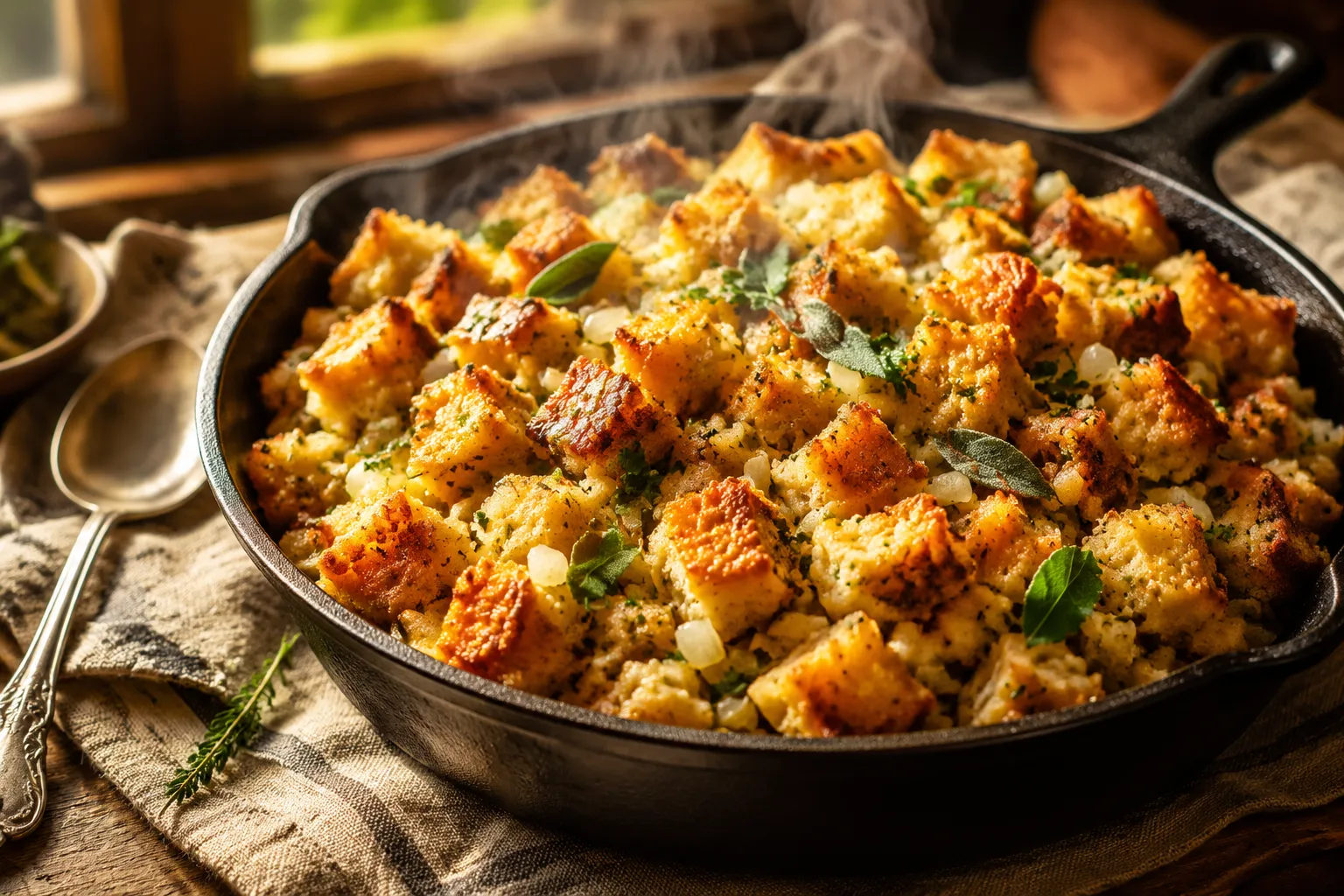
Skip the box. This homemade stove top stuffing is buttery, herby, and ready in 30 minutes, with the same nostalgic flavor and a fresher, richer finish.
This homemade stove top stuffing recipe is the one I make when I want every cozy, herby, butter-soaked memory of the boxed version, but with the rich flavor that only real bread and fresh herbs can give you. It comes together in one skillet in 30 minutes, no oven required, which means it earns a spot on your Thanksgiving table and your random Tuesday dinner alike. Think golden cubes of toasted sourdough swimming in seasoned broth, soft bites of onion and celery, and a snowfall of chopped sage and parsley right at the end.
I grew up on the red-and-white box, and I have a soft spot for it to this day. But once I learned how easy stuffing from scratch really is, the box started to feel like a missed opportunity. With a loaf of day-old bread, a stick of butter, and a few pantry basics, you get something that tastes like it simmered all afternoon, even though it didn't.
If you're cooking for the holidays, this is the kind of Thanksgiving side dish that frees up your oven for the bird and still earns the loudest compliments at the table. If you're cooking on a weeknight, it's the homiest thing you can put next to a simple roast chicken or pan-seared pork chops. Either way, you'll be glad you skipped the box.
The boxed version leans on dehydrated bread crumbs and a heavy hit of seasoning powder. It works, but it's flat. This homemade stuffing builds flavor in layers, the way a from-scratch recipe should. Butter foams and browns slightly in the skillet. Onion and celery soften and turn sweet. Garlic blooms for just a minute before the broth goes in. Every step adds something the boxed version simply can't.
The bread matters too. Real cubes of sourdough or country white absorb the broth without dissolving, so each bite has structure. Fresh sage and thyme bring that unmistakable holiday smell, and a final shower of parsley keeps the whole skillet bright instead of muddy. The texture lands somewhere between a tender pilaf and a classic baked dressing, which is exactly what you want when there's gravy on the table.
Best of all, this skillet method is forgiving. You can make it ahead, reheat it gently, double it for a crowd, or stir in extras like sausage or mushrooms. It's the kind of recipe that earns a permanent spot in your binder.
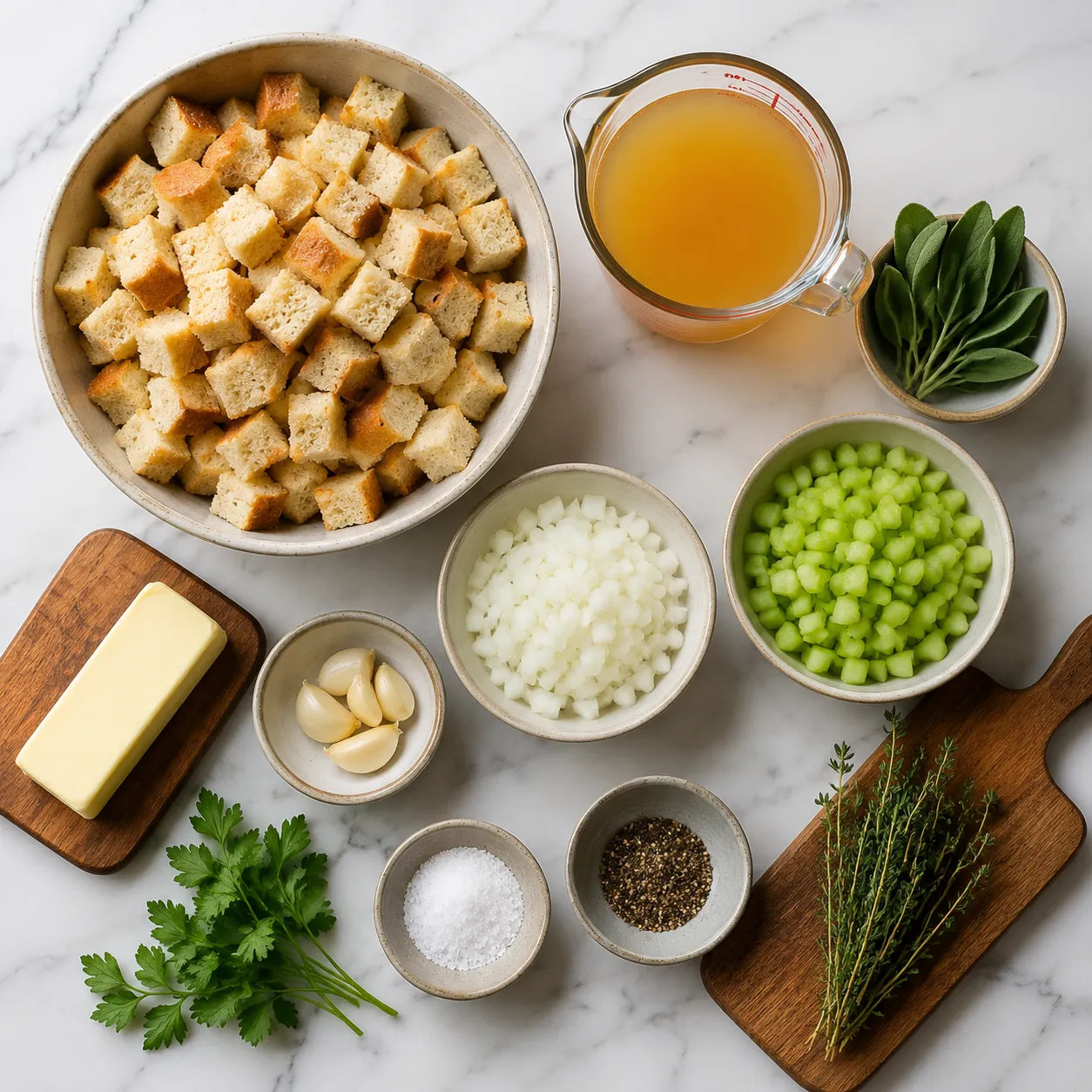
Every ingredient here pulls real weight, so quality counts. Nothing is fussy or hard to find, but a few small choices make the difference between fine and fantastic. Here's what you'll want to grab and why each one matters.
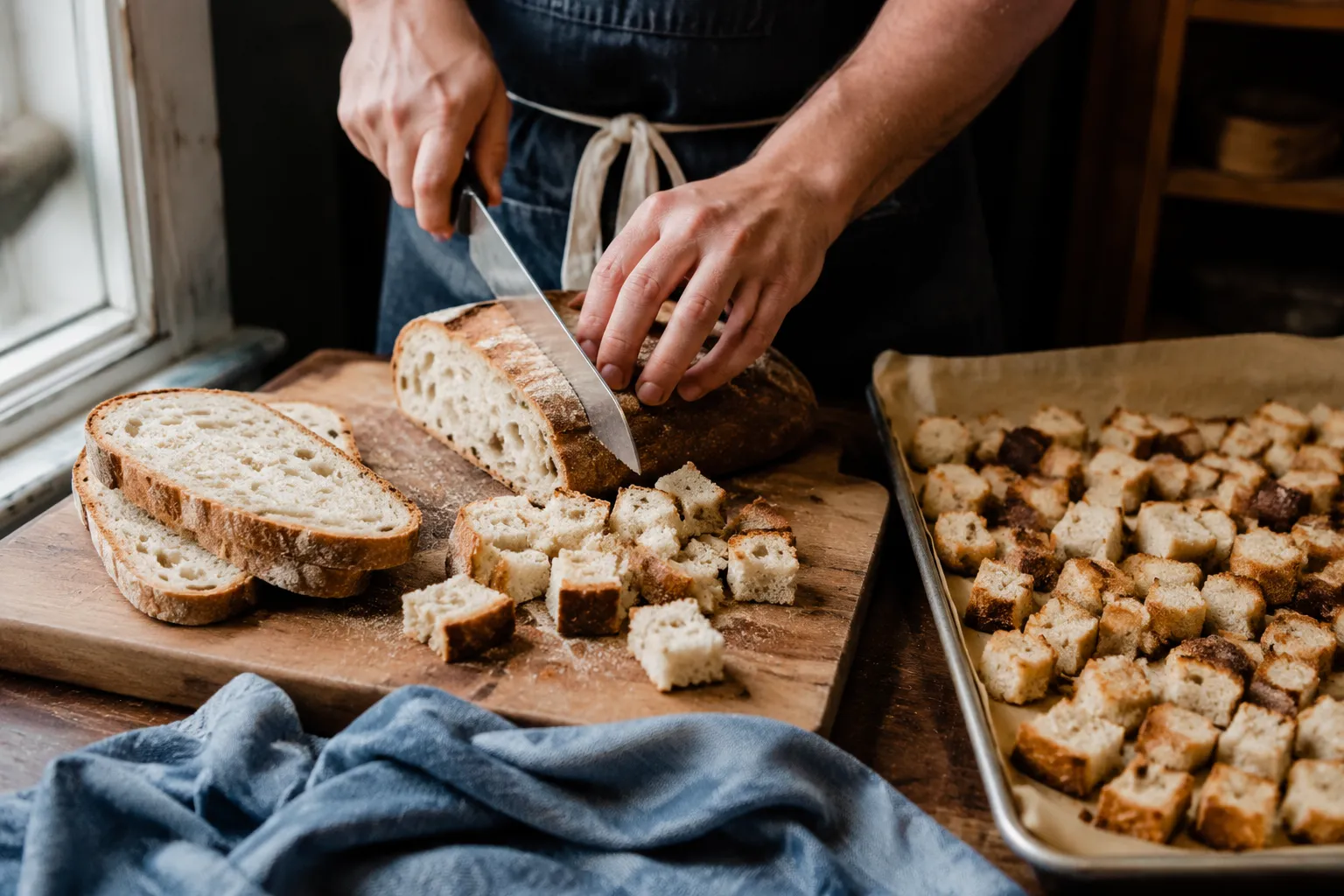
Use about 8 cups of dried, cubed bread, which is roughly one large loaf. Sturdy options like sourdough, French bread, or country white hold up beautifully. Avoid soft sandwich bread, which turns to paste once the broth hits. Day-old bread is ideal, but you can dry fresh cubes in a 250F oven for 20 minutes until they feel light and crisp.
Six tablespoons of unsalted butter give you that rich, savory backbone, and 2 1/2 cups of low-sodium chicken broth do the heavy seasoning. A medium yellow onion, two celery stalks, and three garlic cloves are the classic aromatic trio. Use vegetable broth for a meatless version, and feel free to swap in a splash of dry white wine for a more grown-up flavor.
Fresh sage and thyme are non-negotiable for that traditional Thanksgiving flavor. A half teaspoon of poultry seasoning rounds it out, and a finishing handful of fresh parsley wakes the whole skillet up. If all you have is dried herbs, use one-third the amount and add them earlier so they have time to soften.
The full numbered method lives in the recipe card below, but here's the rhythm so you can picture it before you start. Three simple stages, all in one skillet, all on the stovetop.
Cut your loaf into roughly 1/2-inch cubes. If they're not already stale, spread them on a sheet pan and bake at 250F until dry to the touch but not browned, about 20 minutes. Properly dry bread is the single biggest factor in stuffing that's tender but never mushy.
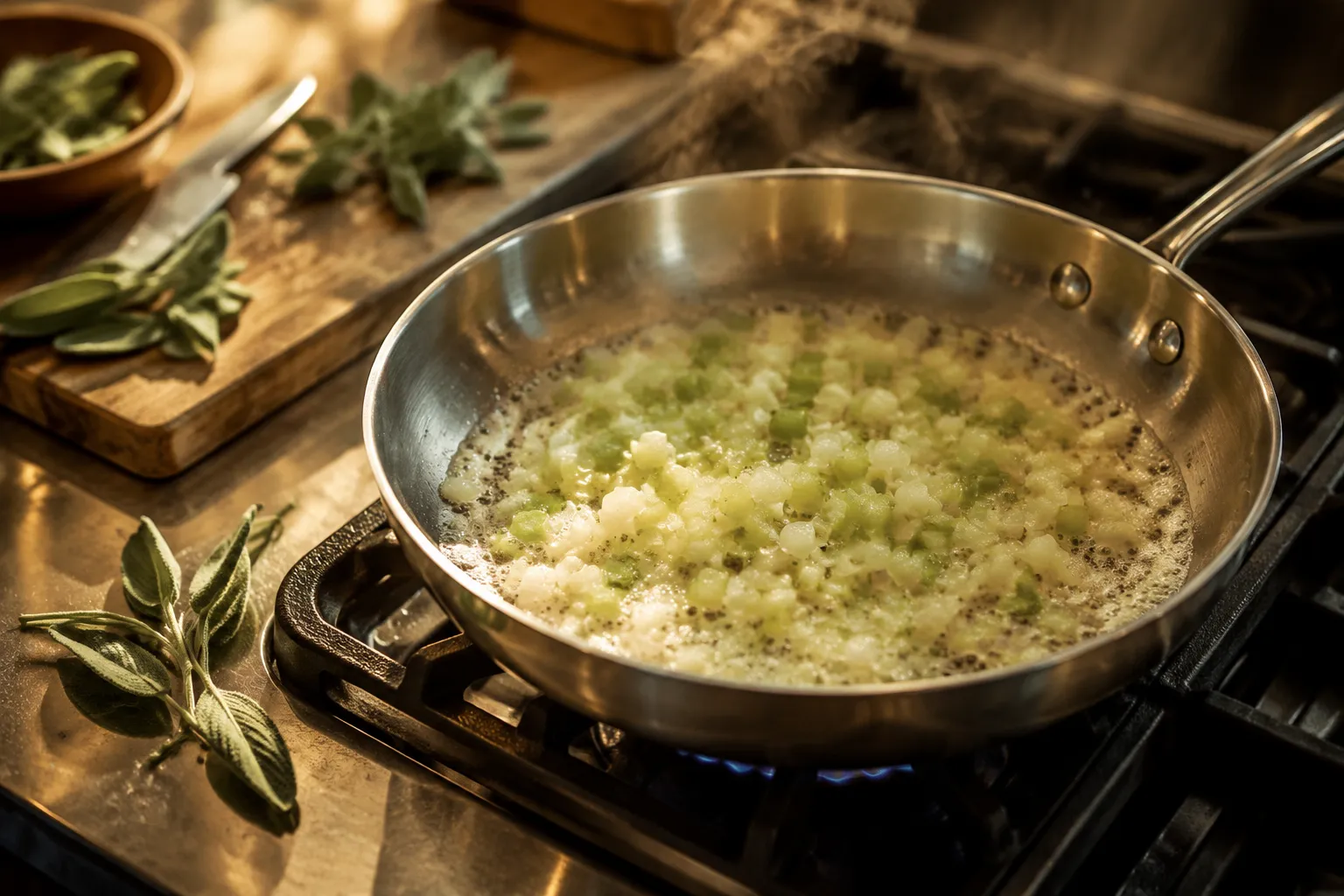
Melt the butter in a large skillet over medium heat. Add the onion and celery and cook until softened and translucent, about 6 to 7 minutes. Stir in the garlic, sage, thyme, and poultry seasoning during the last minute. You want the kitchen to start smelling like Thanksgiving morning.
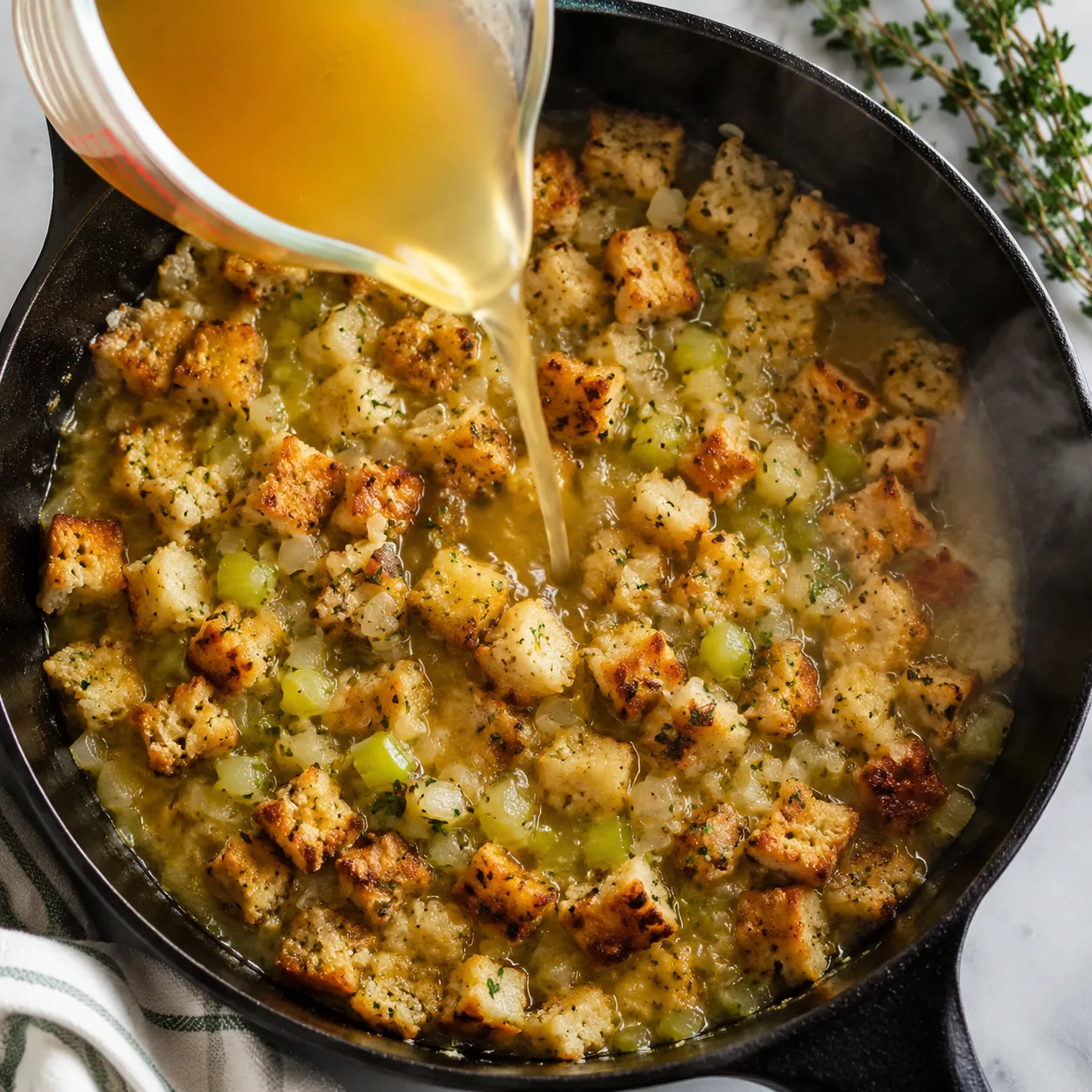
Pour in the warm broth and bring it to a gentle simmer. Add the bread cubes, fold gently to coat, then cover and remove from the heat. Let it rest 5 minutes so the bread drinks in the liquid. Fluff with a fork, taste for salt and pepper, and finish with parsley.
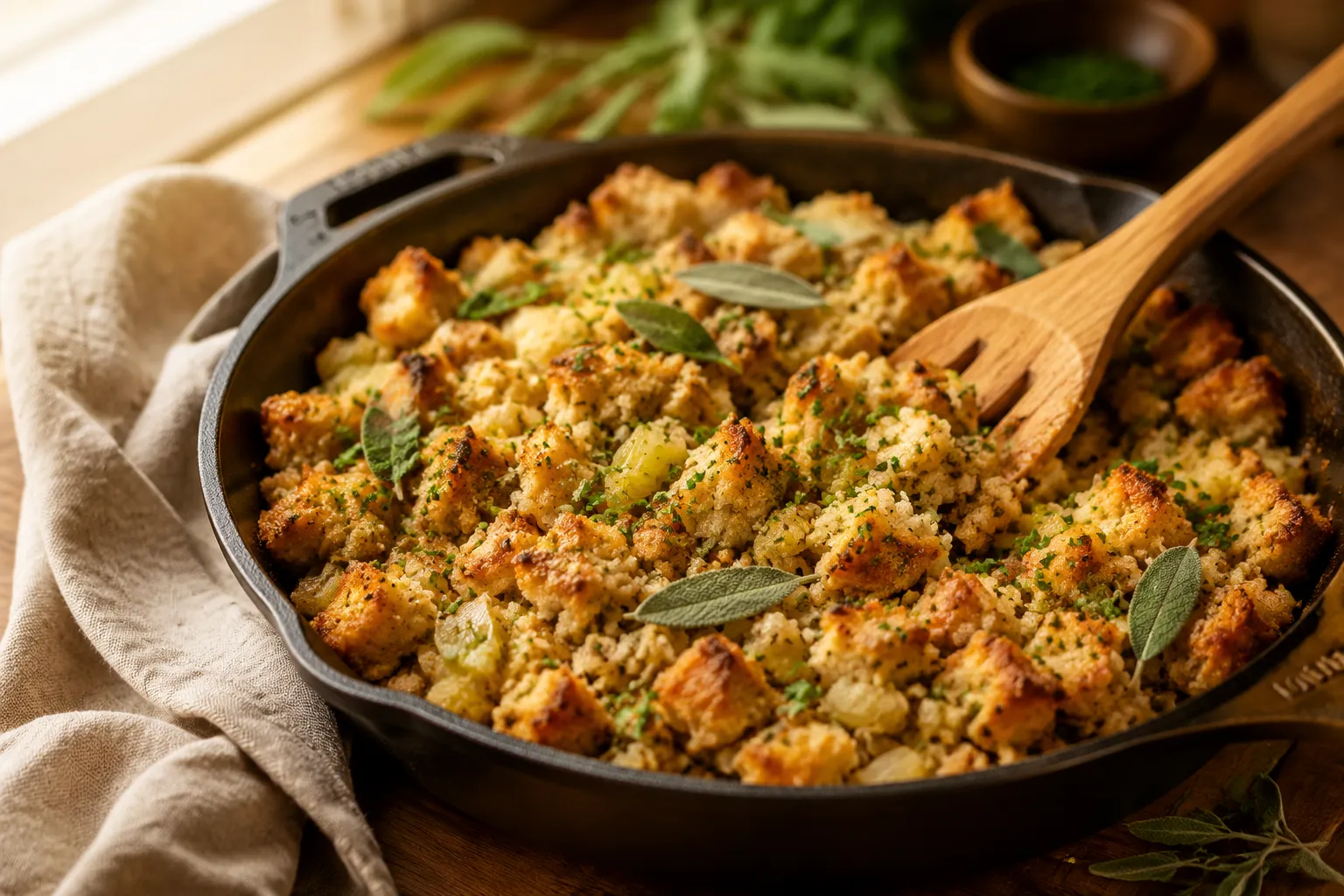
That's it. No casserole dish, no second oven rack, no wondering if the middle is set. The skillet does all the work, and the lid traps just enough steam to leave the cubes plush instead of waterlogged.
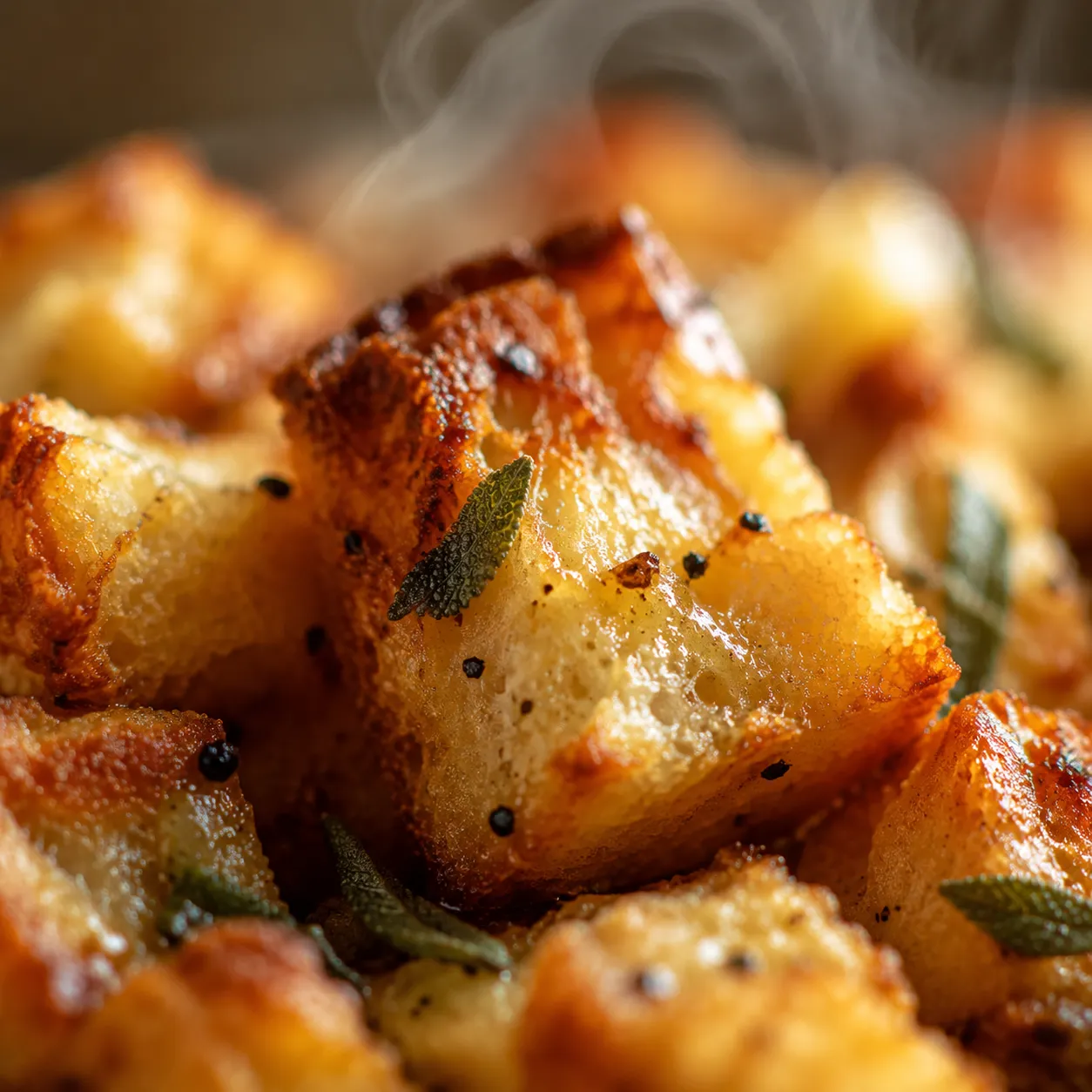
This skillet plays well with everything from a holiday spread to a fast weeknight plate. Its job is to soak up sauces and round out the protein, so let it lean into that role.
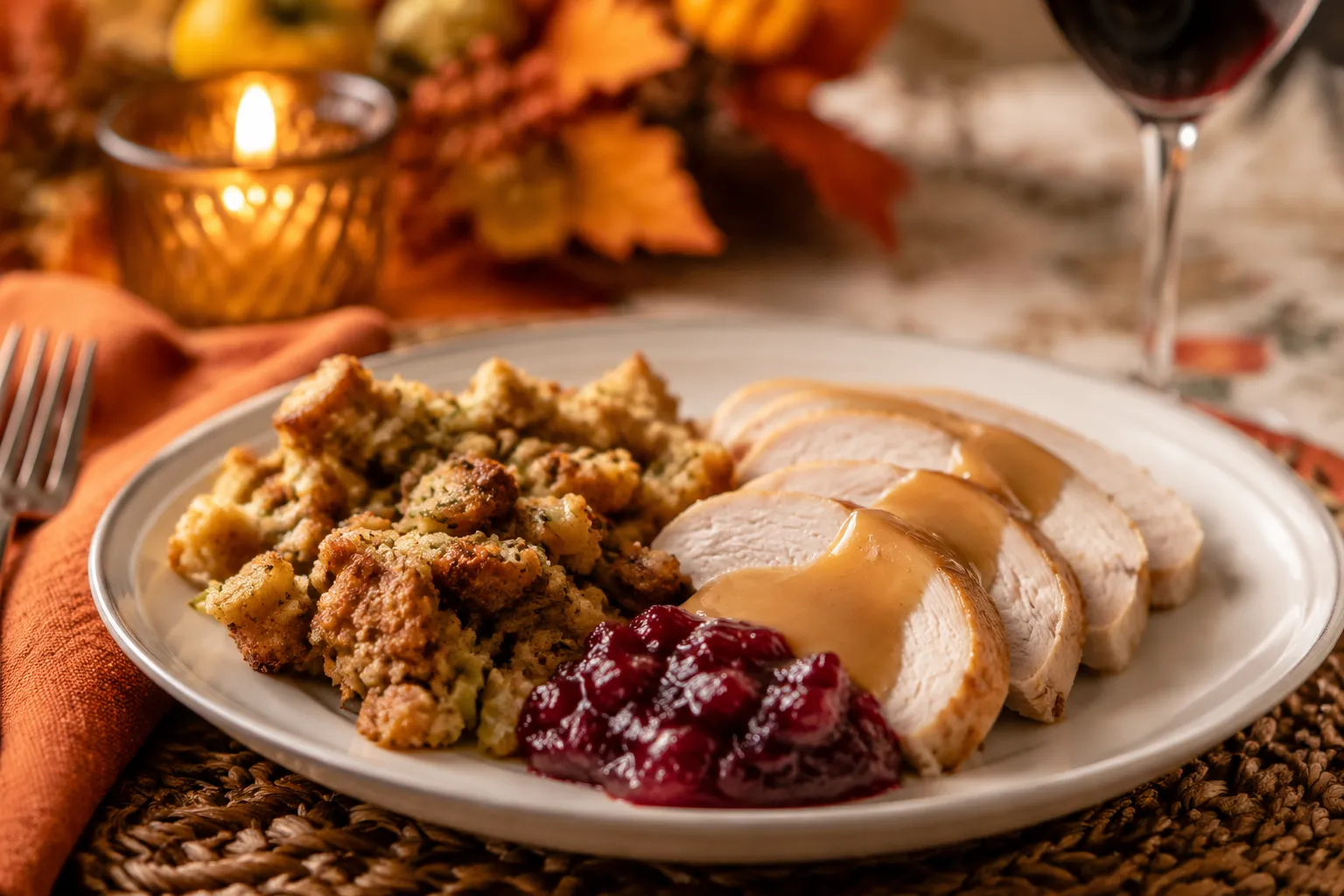
For the holidays, build the full plate around it. A juicy roast turkey breast is the obvious pairing, especially when you're feeding a smaller crowd and don't want to wrangle a whole bird. Add creamy mashed potatoes recipe favorites, a bubbly green bean casserole, and a spoonful of bright cranberry sauce, and you've got a true classic Thanksgiving sides lineup. A ladle of homemade turkey gravy poured right over the top is what makes leftovers worth fighting over.
For weeknights, this stuffing pairs beautifully with simpler proteins. Try it next to a roast chicken thigh, pan-seared pork chops with apples, or even a quick rotisserie chicken on a busy Wednesday. Add a crisp green salad or a bowl of roasted Brussels sprouts and dinner is on the table in under an hour.
Don't forget the sauce factor. A drizzle of pan gravy, a spoon of mushroom sauce, or even a quick brown-butter drizzle can take the skillet from side dish to main event. If you have leftover gravy in the fridge, this is its calling.
The genius of this stovetop method is how friendly it is to a packed holiday schedule. You can chop the onion, celery, and herbs the night before and store them in the fridge. The bread can be cubed and dried up to three days ahead and kept in a paper bag at room temperature. On the day, you're really just sautéing and simmering, which buys you back precious oven space and counter time.
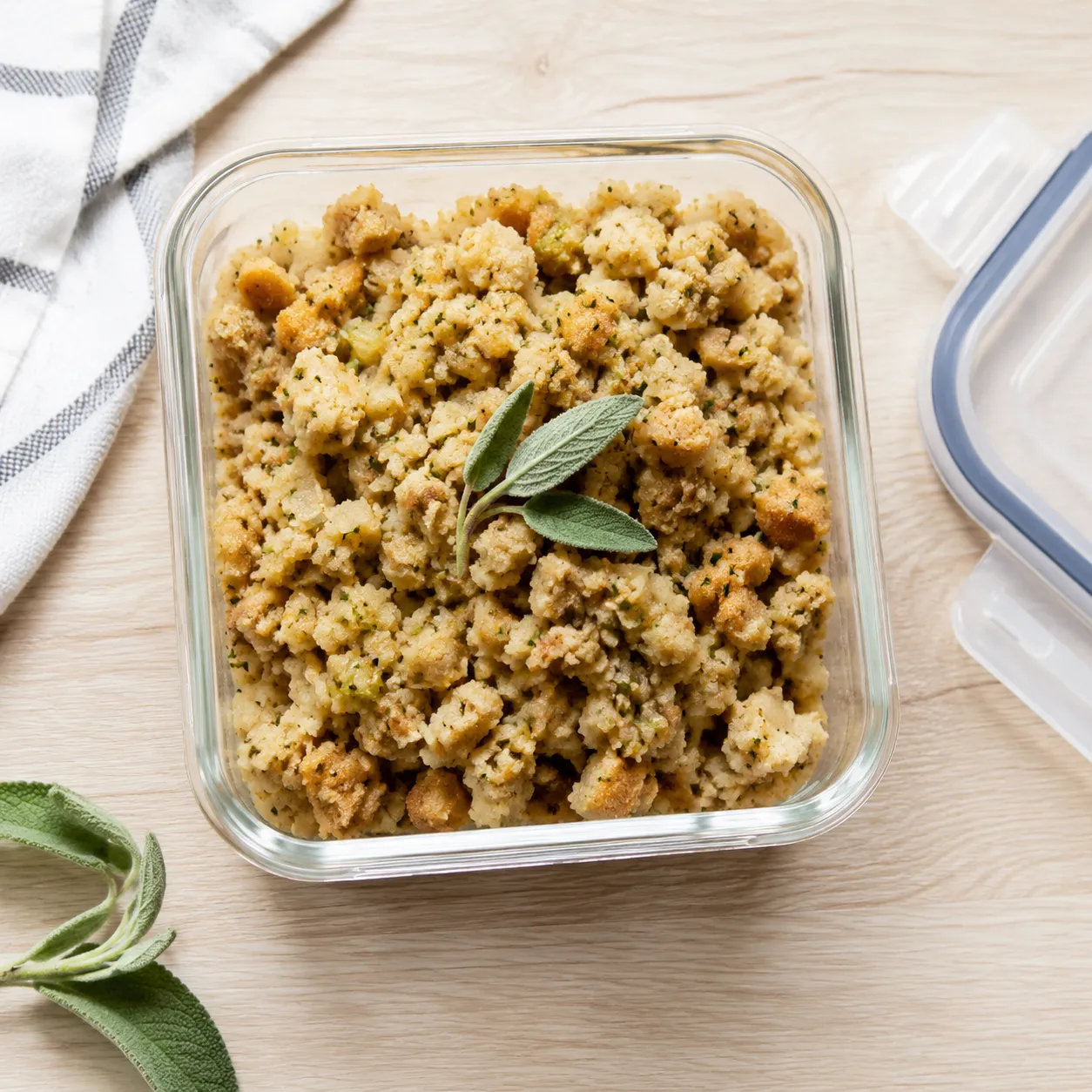
You can even cook the entire skillet a day in advance, cool it, and refrigerate. A gentle reheat with a splash of broth wakes everything right back up, and the flavor actually deepens overnight. It's the kind of recipe that rewards a little planning without demanding it.
Once you have the base technique down, this skillet becomes a blank canvas. Here are four favorite directions to take it, all using the same method with small swaps and additions.
Refrigerator: Cool the stuffing completely, then transfer to an airtight container and refrigerate for up to 4 days. The flavor actually improves overnight as the herbs and broth meld.
Freezer: Pack cooled stuffing into a freezer-safe container or zip-top bag, press out the air, and freeze for up to 2 months. Thaw overnight in the fridge before reheating. To reheat: Add the stuffing to a skillet with 2 to 3 tablespoons of broth, cover, and warm over medium-low heat for 5 to 7 minutes, stirring once or twice. The splash of broth restores moisture so the bread comes back tender, not dry. You can also reheat covered in a 325F oven for about 15 minutes.