Quesabirria Tacos: Juicy Birria Cheese Tacos Recipe
Ingredients
Scale
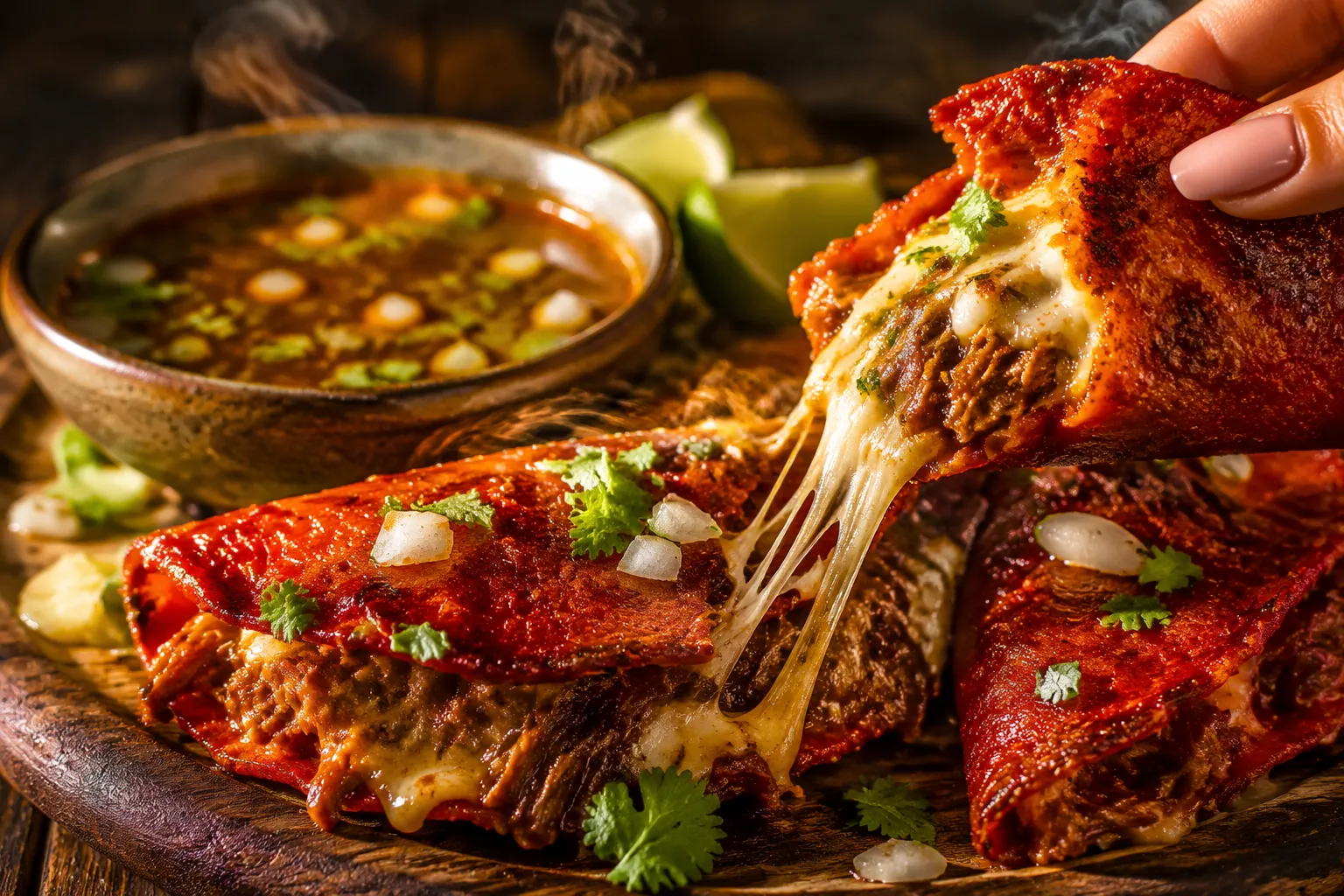
Quesabirria tacos are the crispy, cheesy, consomé-dipped love child of birria and quesadillas — and this recipe nails the deep, smoky flavor that made them go viral.
Quesabirria tacos are the kind of recipe that ruins all other tacos for you — crispy, ruby-edged corn tortillas folded around stretchy melted cheese and slow-braised chile beef, served with a small bowl of dark consomé for dunking. If you've watched the viral videos and wondered whether you can really pull this off at home, the answer is yes, and it isn't even that hard. It's mostly a matter of patience, a good braise, and a hot skillet.
I learned to love these at a strip-mall taqueria in San Diego where a guy in a Padres cap fried them on a flat-top while a line of us watched, mesmerized, as the tortillas turned bright orange in the chile-stained fat. That's the standard I aimed for here — restaurant texture, deeply layered flavor, and a consomé you'll want to drink straight from the bowl.
The version below is rooted in classic Tijuana-style technique: a trio of dried chiles, a long, gentle braise, and tortillas dipped in birria fat before they hit the griddle. Block out an afternoon, pour something cold, and let the kitchen smell incredible for a few hours.
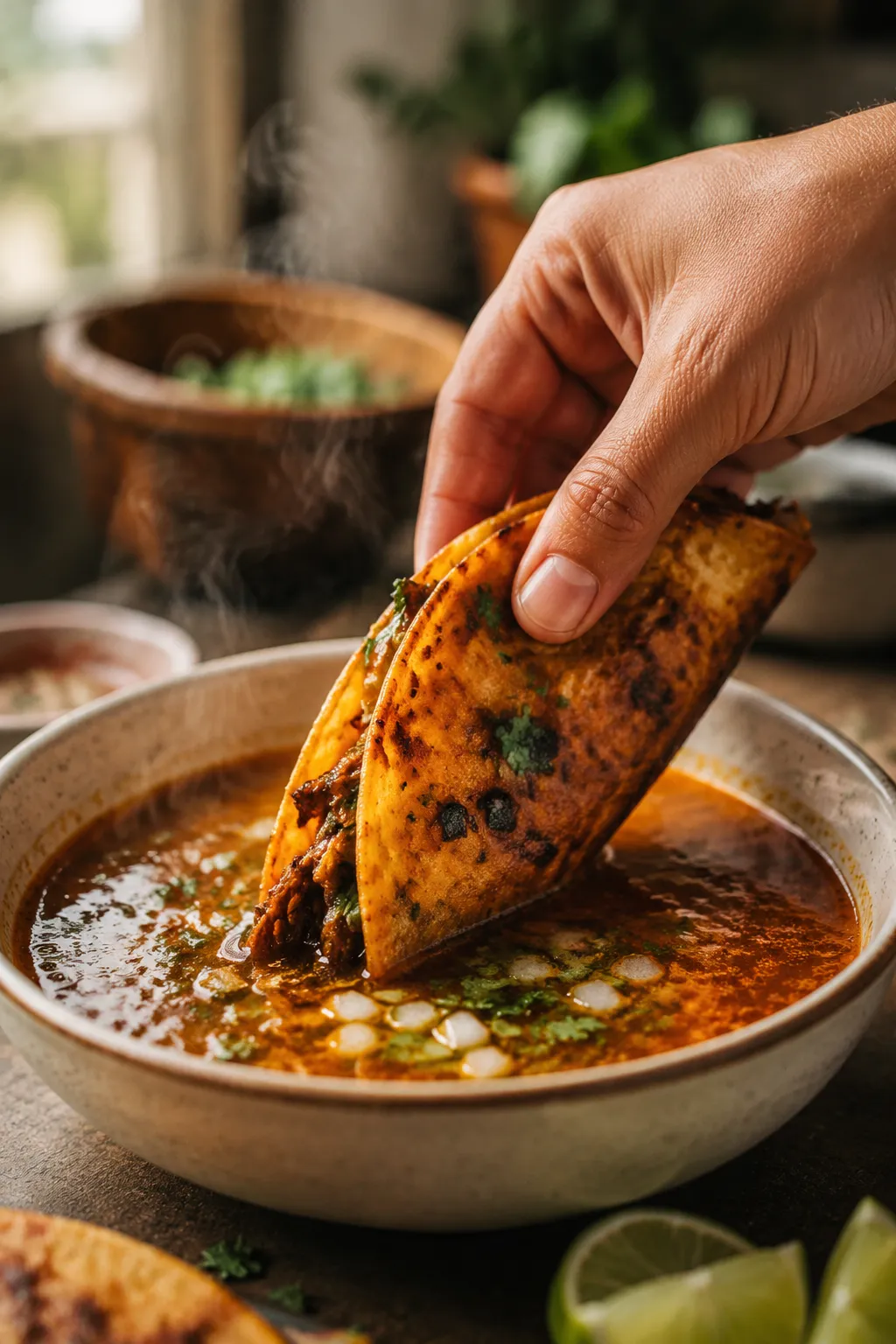
Quesabirria is what happens when birria — a slow-braised Mexican stew traditionally made with goat or beef — meets a quesadilla. The shredded meat and a generous handful of melty cheese get tucked inside a corn tortilla that's been dipped in the rust-red fat skimmed off the braise, then crisped on a hot griddle until the edges shatter and the cheese oozes. Each taco comes with a small bowl of consomé — the strained braising liquid — for dipping. It's part stew, part taco, part magic trick.
Plain birria tacos are simpler: warmed corn tortillas filled with the shredded meat, finished with onion, cilantro, and lime. Quesabirria tacos add two crucial moves — cheese and a tortilla bath in the chile fat. The result is crispier, richer, and more dramatic on the plate. Think of it as the difference between a flour tortilla wrap and a properly griddled quesadilla. If you love shredded beef tacos in any form, this is the upgrade you've been looking for.
While birria itself hails from the state of Jalisco, the quesabirria phenomenon was born in Tijuana around 2010 at a stand called Tacos El Yaqui. Their tortilla-in-the-fat trick traveled north with food trucks like Teddy's Red Tacos in Los Angeles, and from there straight onto every food feed on the internet. So while the trend feels recent, it sits squarely inside a long Mexican tradition of frying tortillas in flavored fat — the same instinct behind enchiladas and entomatadas.
You don't need much, but each ingredient earns its place. The dried chile trio is non-negotiable — those are the soul of the braise — and good corn tortillas make the textural difference between a great taco and a soggy one. Here's a quick walk-through, and the full list with measurements lives in the recipe card below.
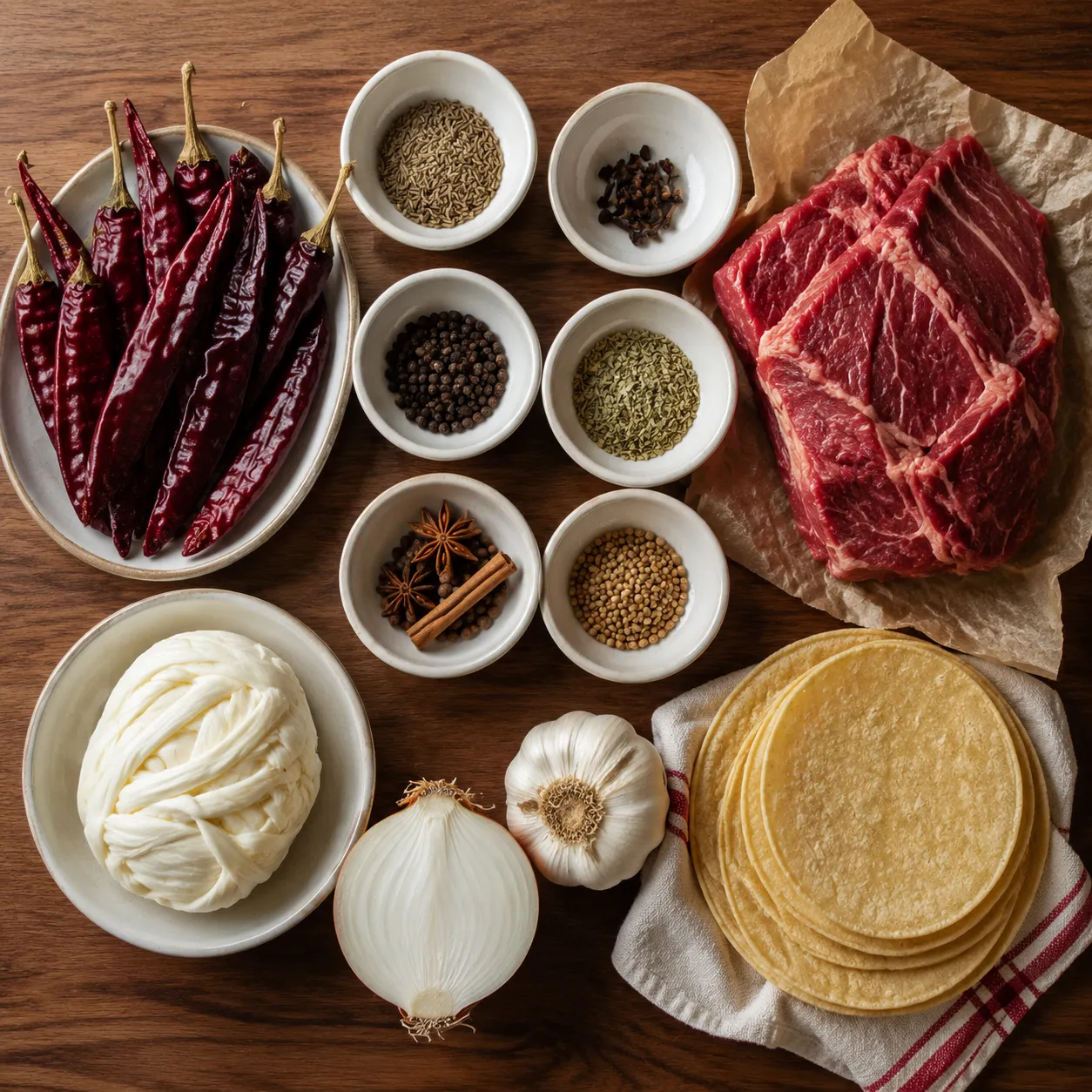
Beef chuck roast is the workhorse here — well-marbled, collagen-rich, and built for low-and-slow cooking. For an even deeper, more luxurious consomé, swap a pound of the chuck for bone-in short ribs or a piece of beef shank with the bone in. The bones add gelatin and body that turn the broth almost silky as it cools. Avoid lean cuts like sirloin or round; they'll go dry and stringy by hour two. This same approach is what makes a great birria de res so impossibly tender.
Guajillo chiles bring bright, slightly tangy red-fruit flavor and that famous ruby color. Anchos add a subtle sweetness and earthy depth, like raisins and cocoa. A couple of chiles de árbol kick in just enough heat without going scorched-tongue. Look for chiles that are still pliable, not brittle — a flexible chile is a fresh chile. This is the same backbone you'd use in any serious guajillo chile sauce, and it pays dividends across all kinds of stews and adobos once you know how to handle it.
Oaxaca cheese is the traditional pick for its long, stretchy melt — the kind you see pulled into ropes on every viral video. Low-moisture mozzarella or Monterey Jack are great substitutes and easier to find in most grocery stores. For tortillas, use thick, fresh corn tortillas; they hold up to the dip and the griddle without tearing. If you have time, homemade corn tortillas are absolutely worth it for the chew alone, but a good store-brand white or yellow corn tortilla works just fine.
The full numbered steps live in the recipe card, but here's the lay of the land so you understand what you're doing and why. The whole process breaks into three movements: build the chile sauce, braise the beef, and crisp the tacos. None of it is hard, but each step has one or two details worth getting right.
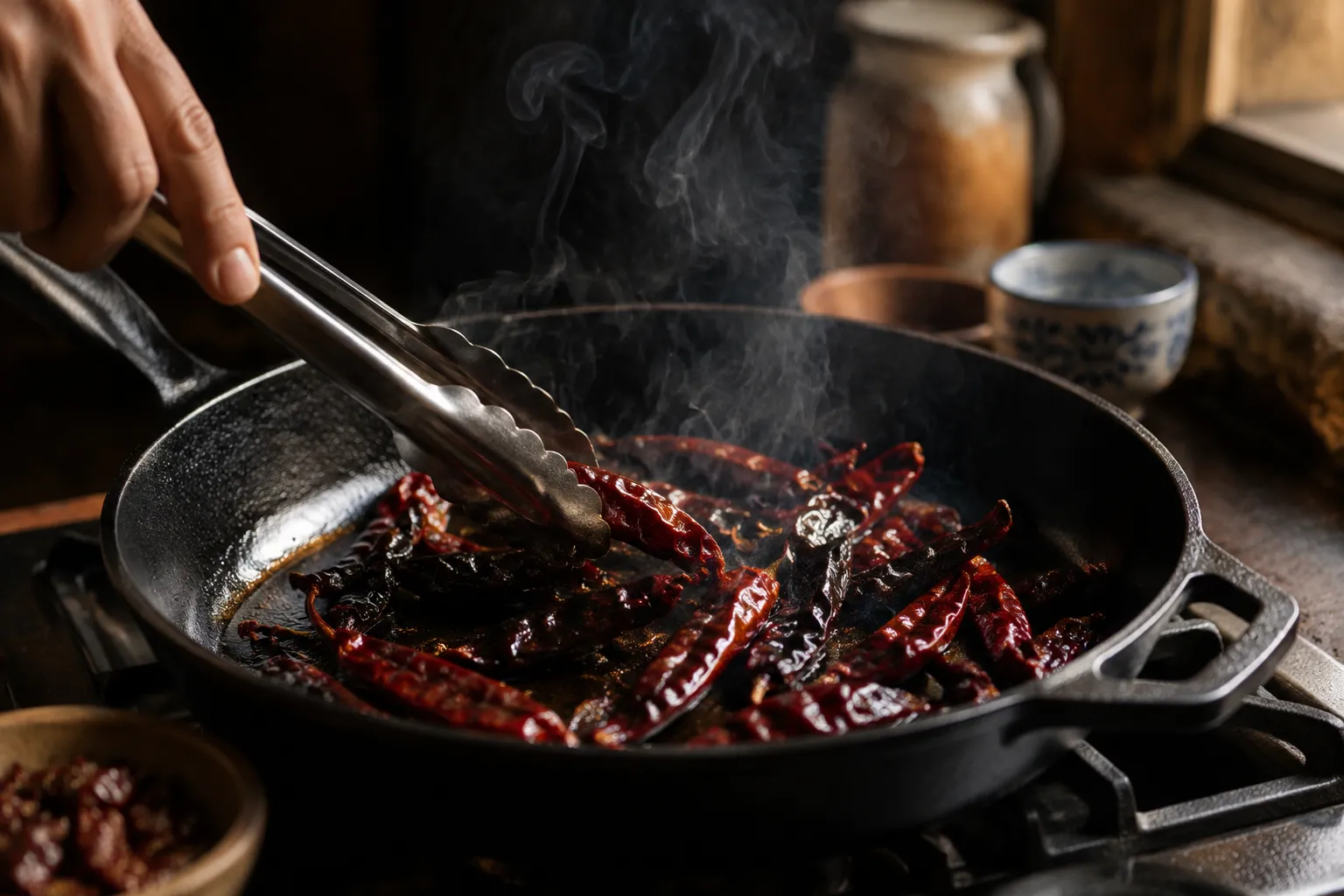
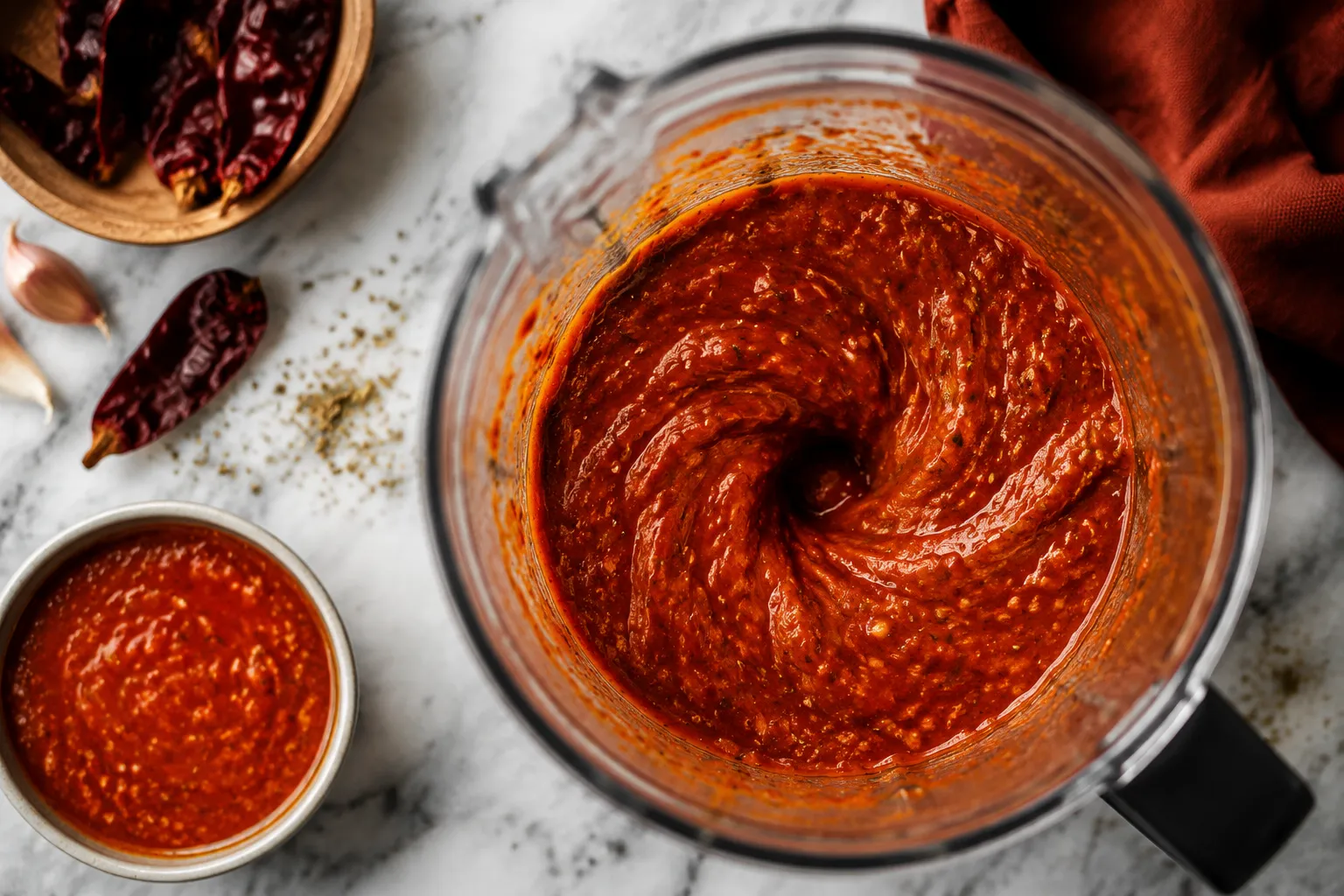
Stem and seed the dried chiles, then toast them in a dry cast iron skillet for about 30 seconds per side, just until they puff slightly and smell like warm tobacco and dried fruit. Don't let them burn or the sauce turns bitter and acrid. Soak the toasted chiles in hot water with the tomatoes, garlic, onion, vinegar, and spices for about 15 minutes, then blend until silky.
Strain the sauce through a fine-mesh sieve to catch any stubborn skins or seeds. You want it pourable and glossy, somewhere between thick tomato sauce and a loose ketchup.
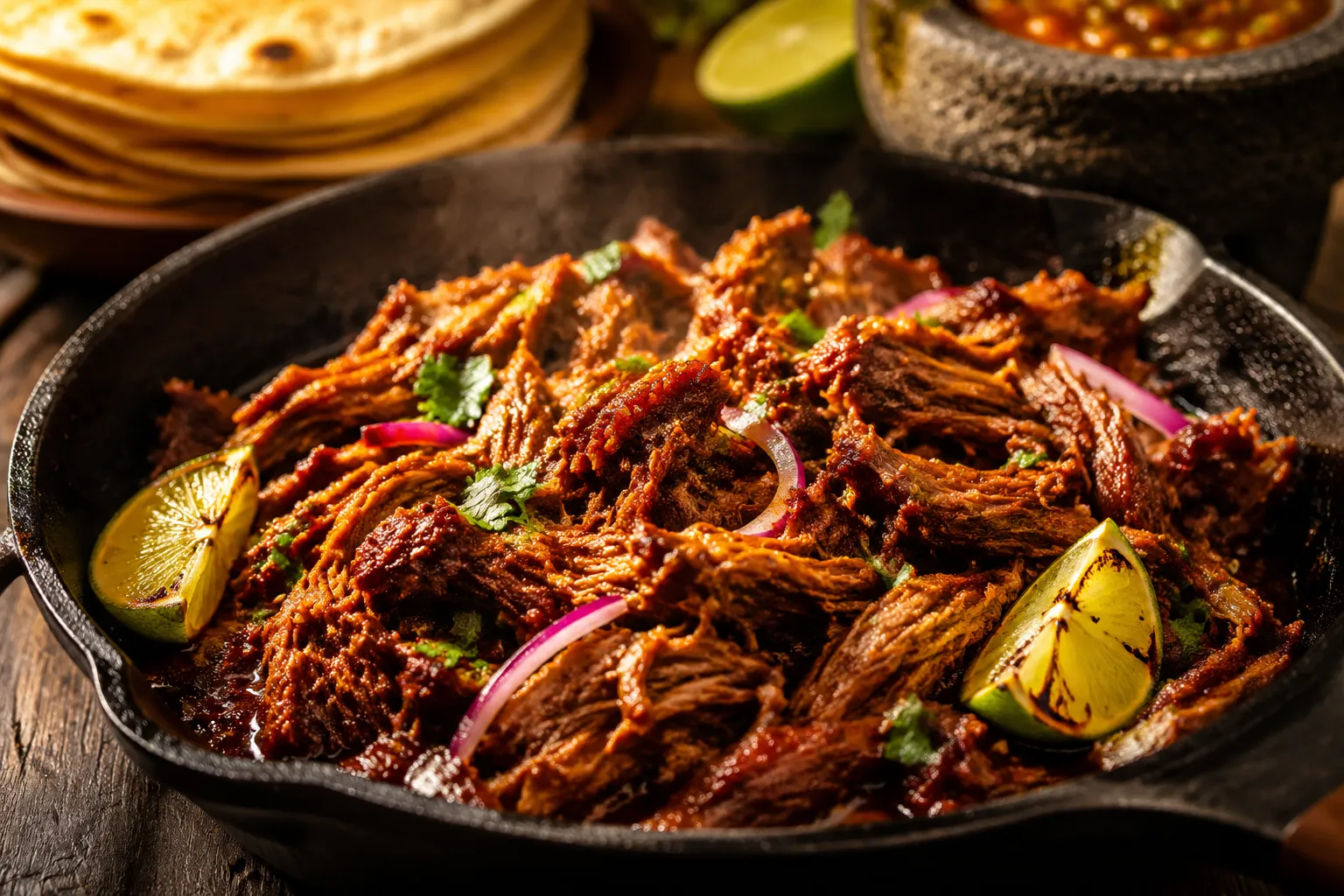
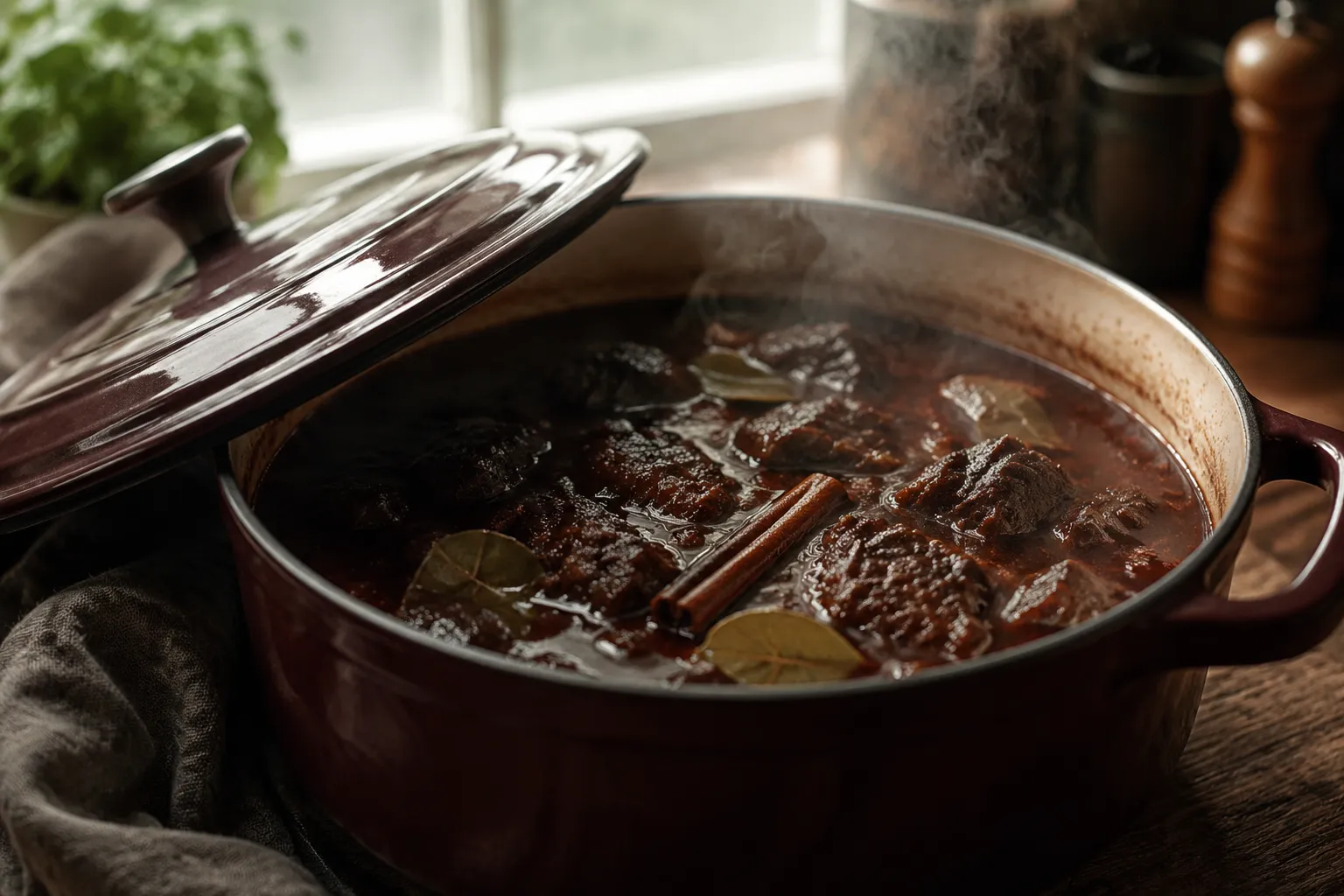
Sear the seasoned beef chunks hard on all sides in a Dutch oven — this is non-negotiable for depth of flavor. Pour the strained chile sauce over the beef along with beef broth, bay leaves, and a stick of cinnamon. Cover and slide into a 325°F oven for about three hours, until the meat shreds at the touch of a fork.
Pull the meat out, shred it on a cutting board, and skim that gorgeous orange-red fat off the top of the braising liquid into a small bowl. That fat is liquid gold — it's exactly what makes the tortillas crispy and red.
Heat a flat griddle or large skillet over medium-high until it's properly hot — a drop of water should bounce, not sizzle. Dip each corn tortilla in the reserved birria fat, lay it on the griddle, and immediately top one half with a handful of cheese and a generous pile of shredded beef. Once the cheese starts to melt, fold the empty side over and press gently until both sides are crisp and the tortilla is stained that signature ruby color.
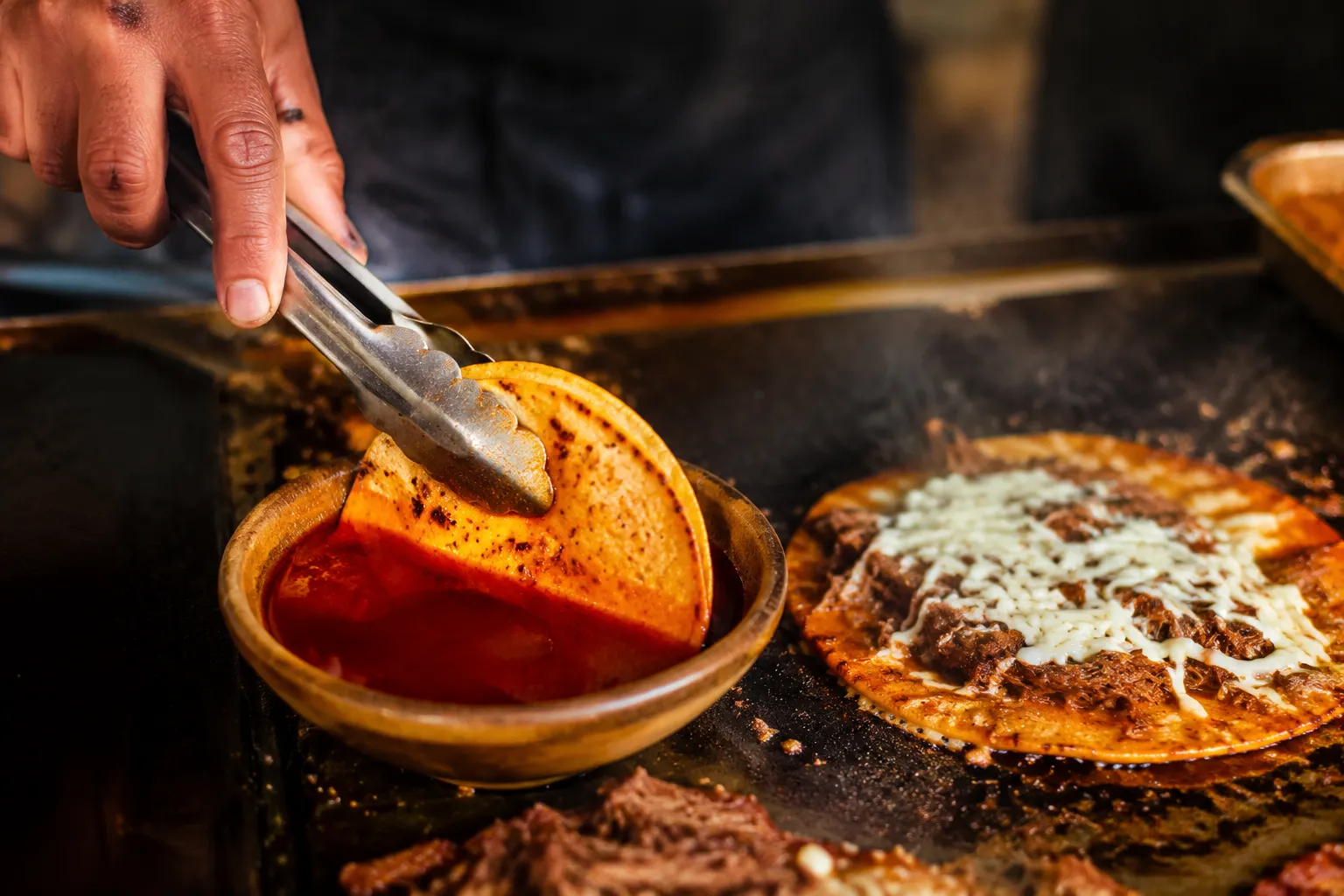
Work in batches and resist the urge to crowd the pan. Two or three at a time is plenty — you want crisp edges, not steamed ones. The cheese pull when you tear one in half is the whole reward.
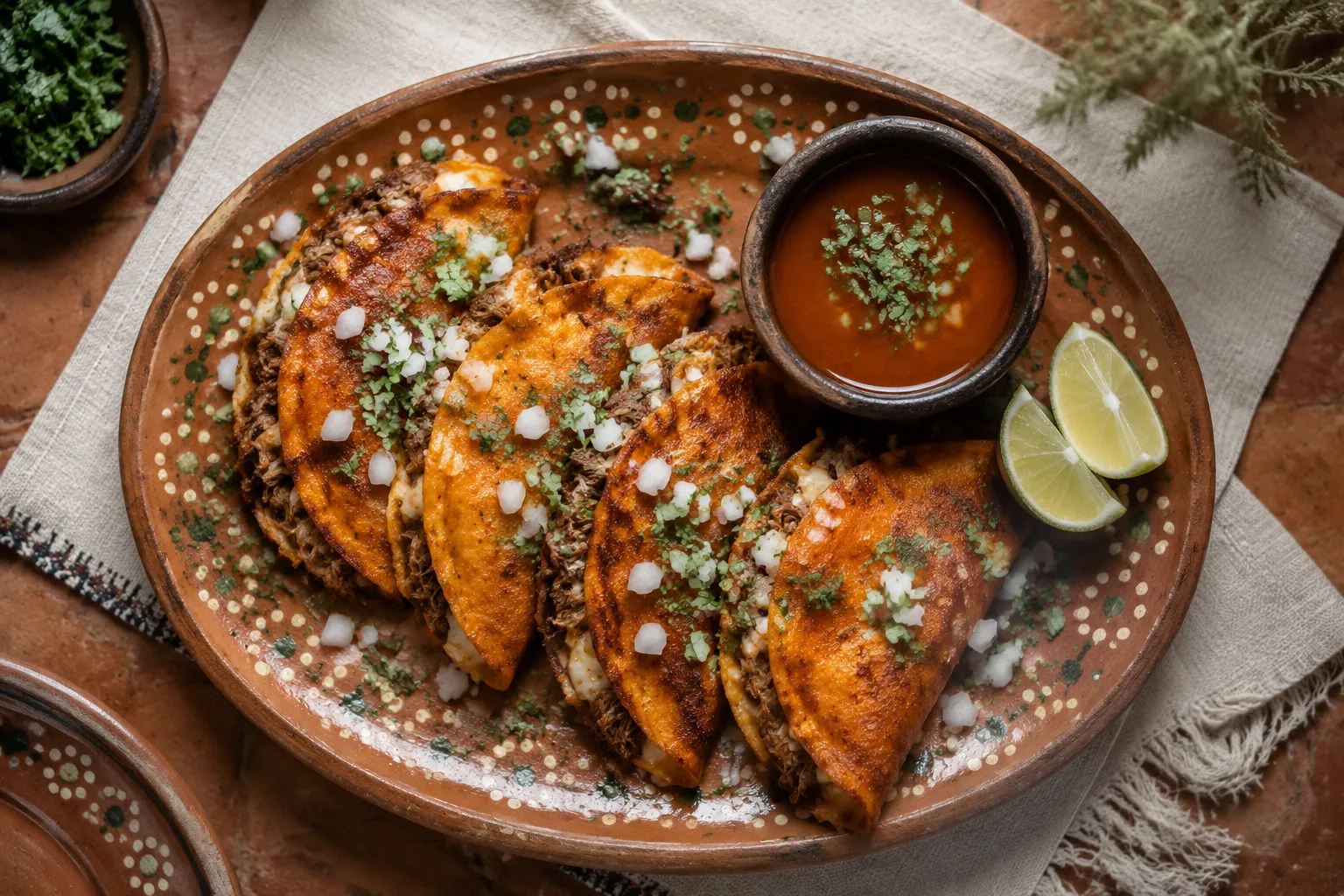
The consomé is simply the strained braising liquid, brought back to a gentle simmer and seasoned to taste with salt, lime, and a pinch of extra ground chile if it needs more punch. Ladle it into small bowls and finish with chopped onion and cilantro. A proper Mexican consomé should taste deep, slightly tangy, and a little fatty — that richness is the whole point, and it's why the dunk is the part you'll remember.
Quesabirrias are dramatic enough on their own, but a few well-chosen sides round out the meal and balance all that rich, cheesy beef.
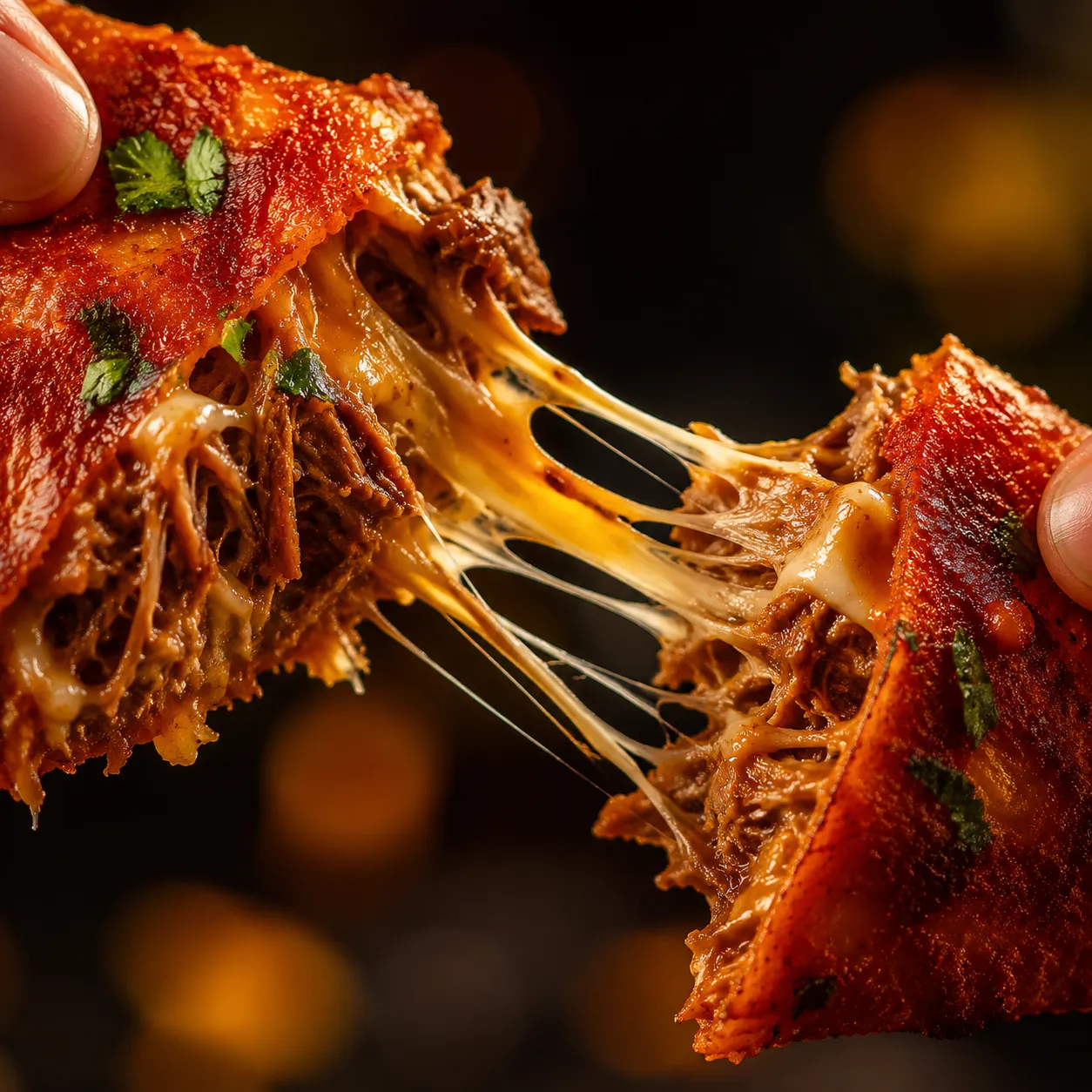
Finely chopped white onion, fresh cilantro, and a squeeze of lime are the holy trinity. Many street vendors also offer a quick salsa verde, pickled red onions, or sliced radishes for crunch. Keep the toppings sharp and bright — their job is to cut through the richness of the cheese and chile fat. A little hot sauce on the side never hurts either.
Mexican rice, refried black beans, or a simple cucumber-jicama salad with chile-lime salt all work beautifully here. If you're feeding a crowd, set up a taco bar alongside other Mexican tacos — maybe a tray of carne asada tacos for variety, plus a pitcher of agua fresca or a few cold Mexican lagers with lime. The contrast between the crispy quesabirria and a clean, citrusy side dish is what keeps people coming back for taco number three.
Once you've made these once, you'll understand why the line at every quesabirria spot in the country stretches around the block. The technique is simple, the payoff is huge, and the leftovers might be even better than dinner. Make extra consomé. You'll be glad you did.
This recipe is firmly Tijuana-style, but birria is a deep tradition with plenty of room to play. Once you've nailed the base technique, try one of these riffs to keep things interesting.
The shredded beef and consomé both store like a dream, which is part of what makes this recipe so practical. Cool the meat in some of its strained broth (this keeps it juicy) and refrigerate in airtight containers for up to 4 days. Store the consomé separately, then reheat each gently on the stovetop with a splash of broth to loosen things up. Assemble fresh quesabirrias to order — the crispy tortilla doesn't survive overnight in the fridge, so always griddle the tacos at the moment of serving.
For longer storage, freeze the cooked, shredded beef and the consomé in separate freezer-safe containers for up to 3 months. Thaw overnight in the fridge before reheating. The flavor actually deepens after a freeze-thaw, so a big batch of birria is one of the best meal-prep moves in the Mexican repertoire. Don't freeze assembled tacos; they'll go soggy on the reheat.