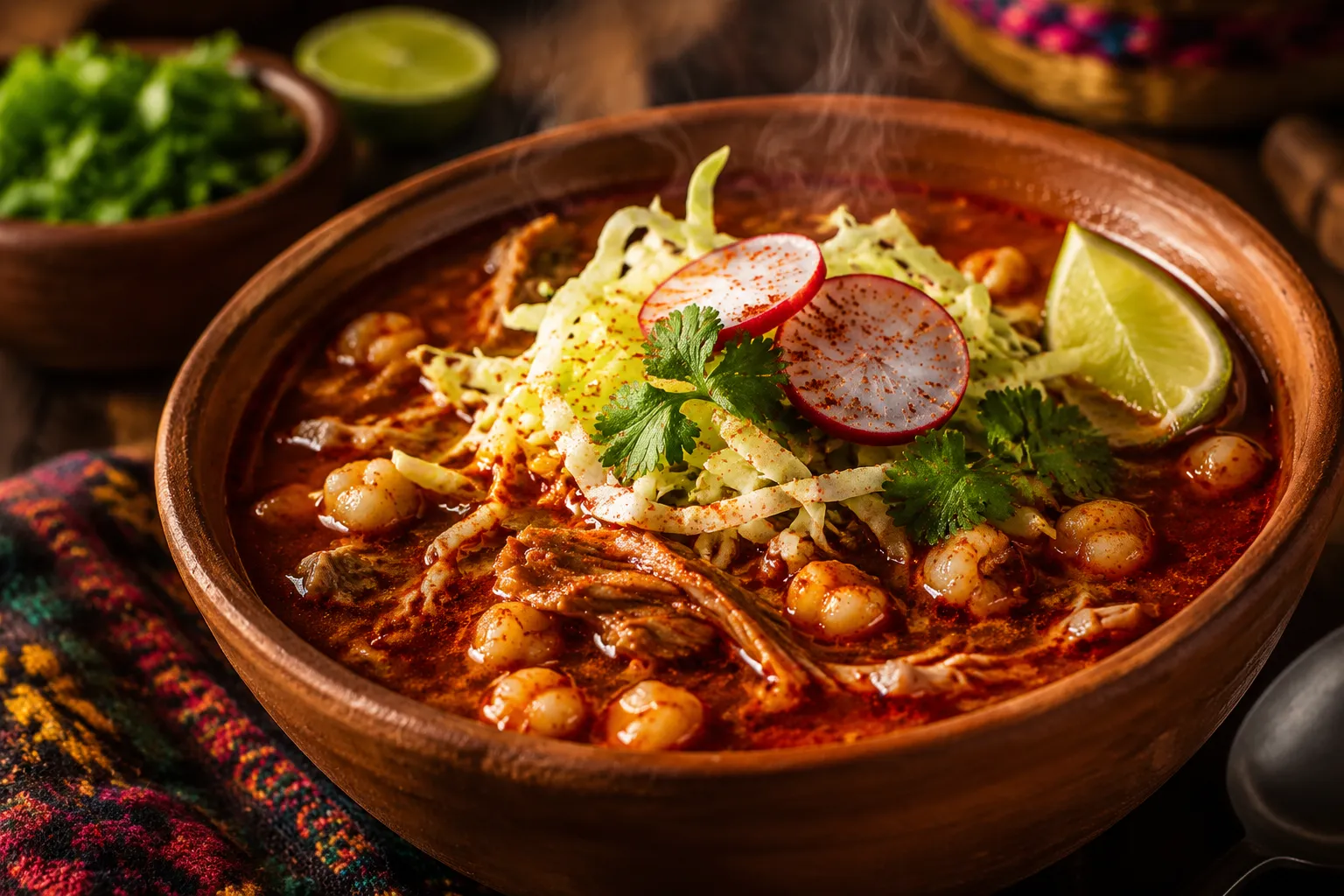
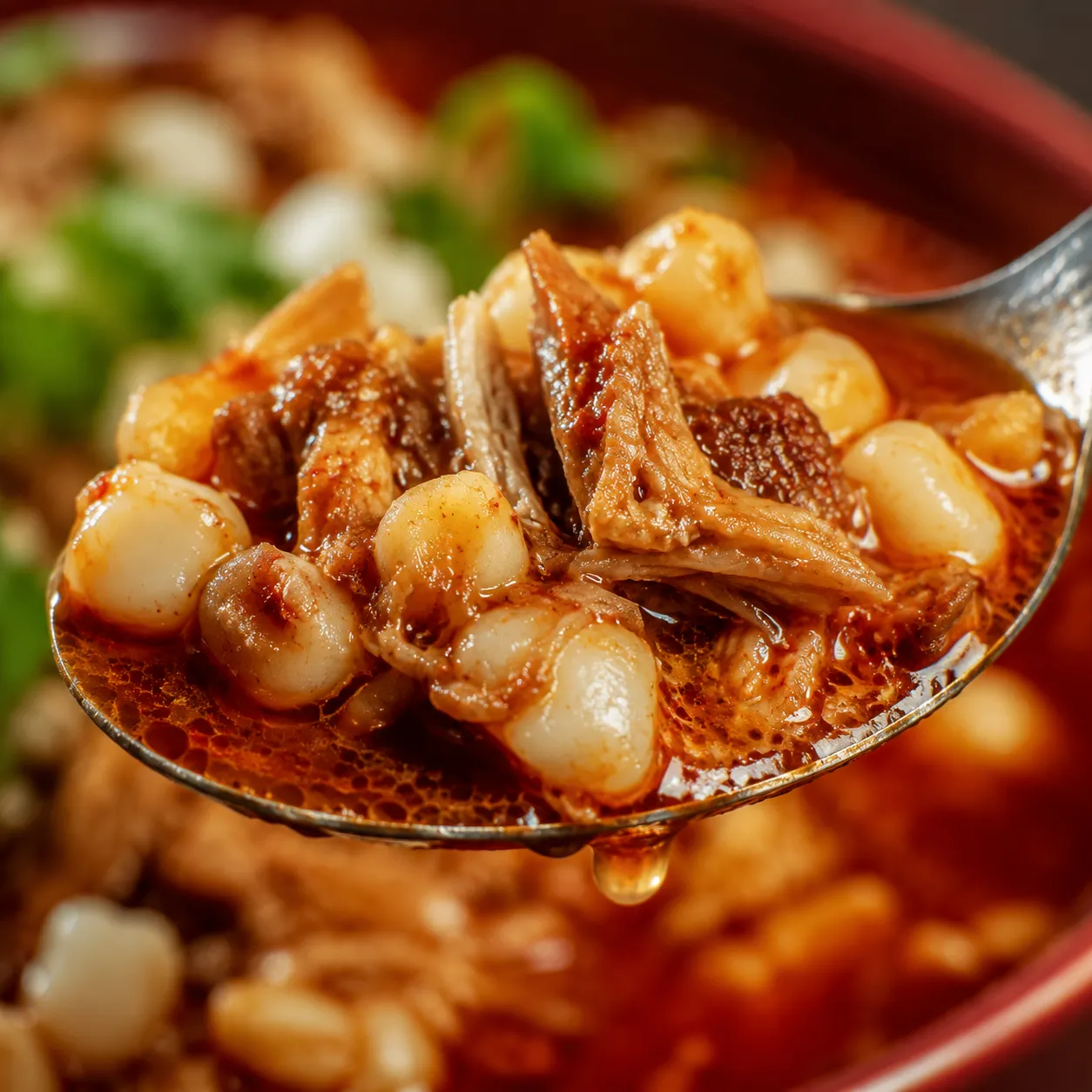
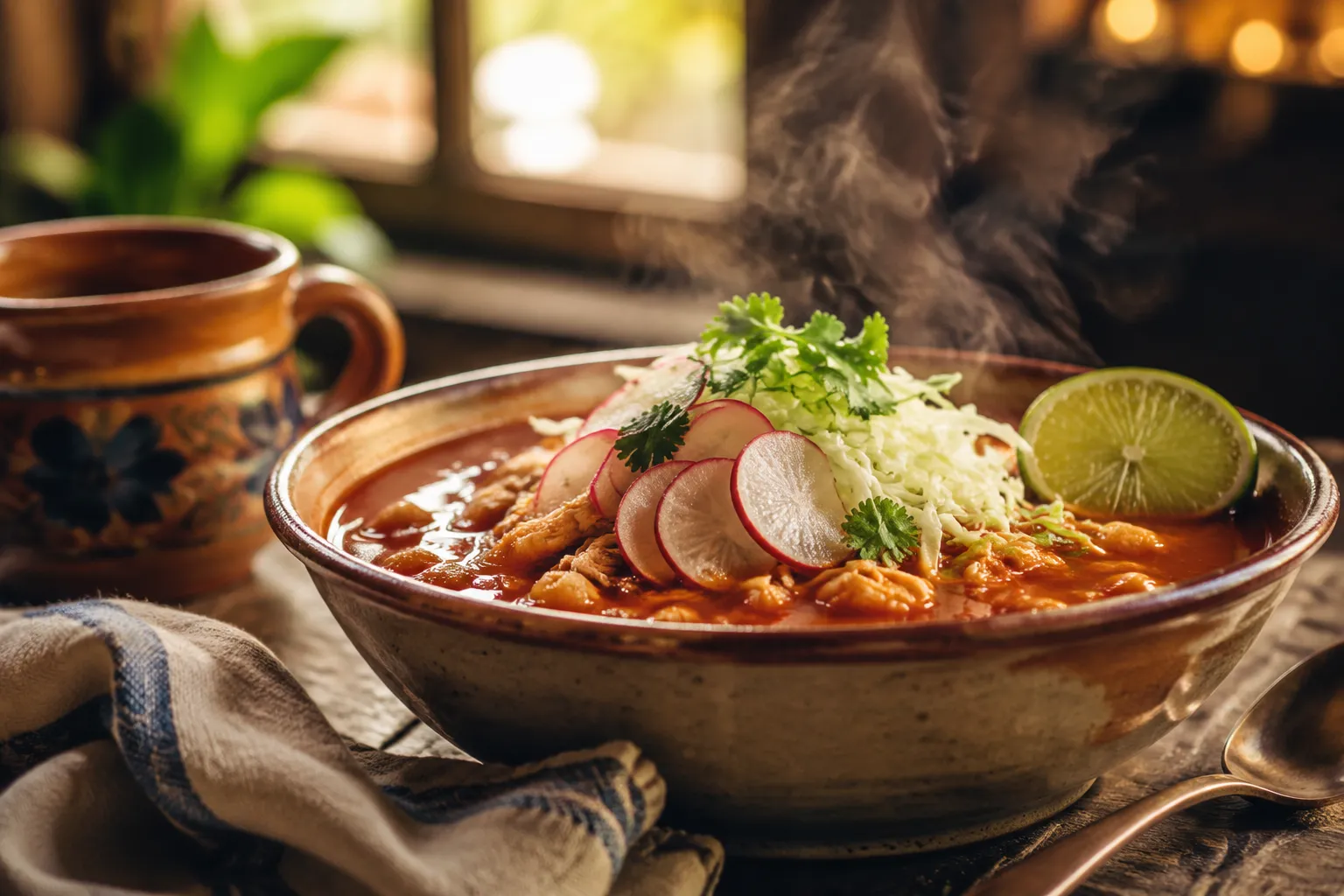
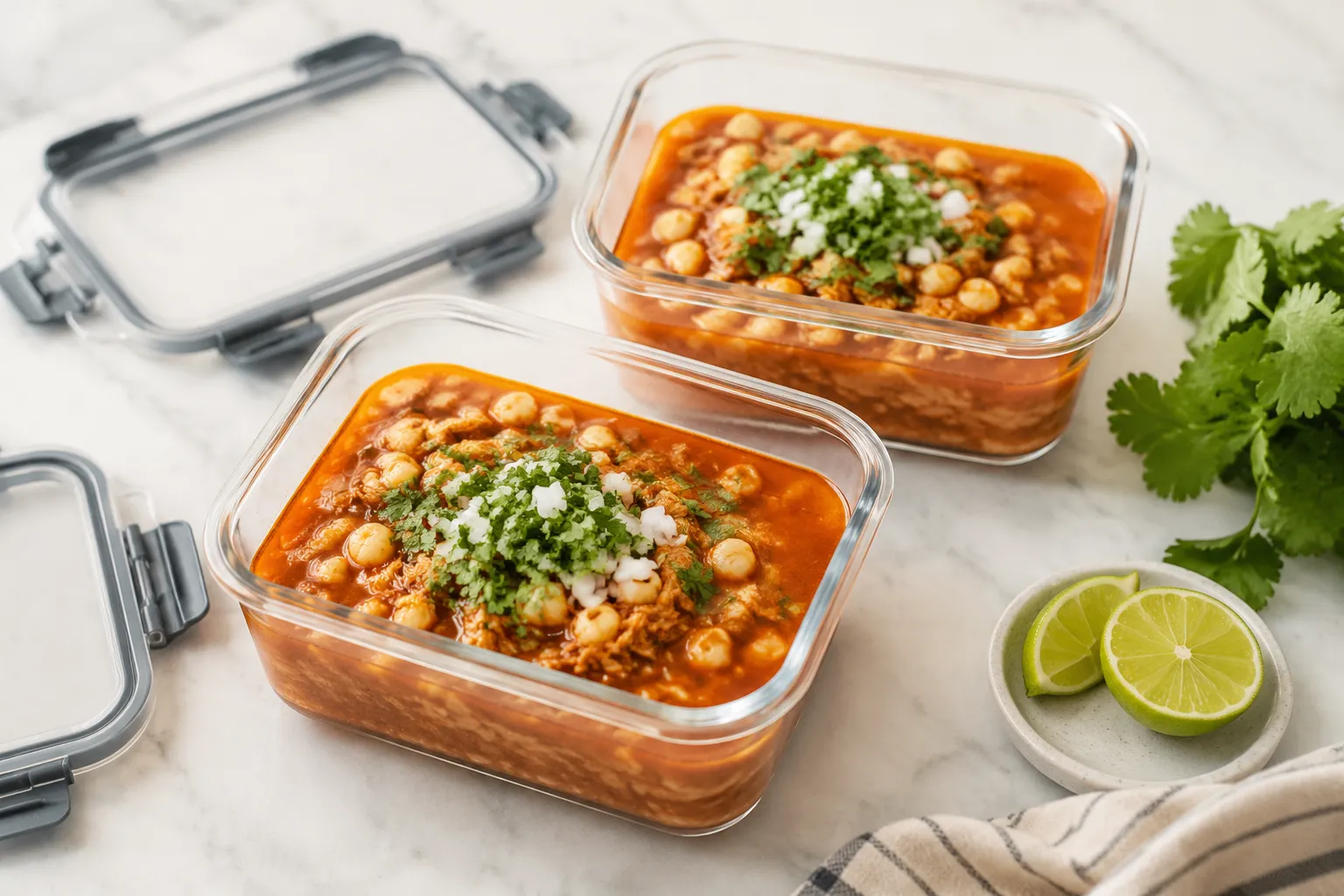
A soul-warming bowl of posole with tender pork, plump hominy, and deep red chile broth, finished with crisp cabbage, radish, and lime.
Why You'll Love This Recipe
- Rich, layered broth made with real dried chiles for deep flavor without complicated steps.
- Tender pork shoulder and plump hominy make every bowl hearty enough for dinner.
- Pantry-friendly ingredients keep the recipe practical for weeknights or weekends.
- Naturally gluten-free, so it works well for mixed-diet gatherings.
- Easy to customize with toppings, from cabbage and radishes to extra lime and cilantro.
Posole is the kind of dinner that makes a regular Tuesday feel like a small celebration. It is hearty, deeply savory, and full of the kind of slow-cooked chile flavor that tastes far more complicated than it really is. If you have ever wanted a bowl of comfort that lands somewhere between a rustic stew and a brothy soup, this is it.
This version keeps the spirit of classic pozole rojo while making the process practical for a home kitchen. Instead of a whole afternoon over the stove, you get tender pork, plump hominy, and a vivid broth in about two hours using pantry staples and real dried chiles. It is the kind of meal I love when I want something special but still doable, especially if I am feeding a crowd or planning ahead for leftovers.
## What Is Posole?
### A Brief History of Posole
At its heart, the dish is a traditional Mexican pork stew built around hominy, meat, and chile broth. The word refers to a comforting, celebratory bowl that has long been served for gatherings, holidays, and family meals. In many homes, the pot is set in the center of the table and everyone dresses their own bowl with toppings. That mix-and-finish style is part of the fun, and it is one reason the dish feels so warm and communal.
### Posole vs. Pozole: Spelling Explained
Both spellings show up in cookbooks and restaurant menus, and both are acceptable. Pozole is the original Spanish spelling used in Mexico, while posole is the Anglicized version common in the United States, especially in the Southwest. I use the more familiar American spelling here, but the soul of the dish stays the same either way. If you have searched for pozole rojo, you are in exactly the right place.
### Red, Green, and White: The Three Main Styles
There are three classic styles, and each has its own personality. Red versions use dried chiles for a rich, earthy base, green versions lean on tomatillos and fresh green chiles, and white versions keep the broth simple so the toppings really shine. This recipe is all about the red style, which gives the broth a beautiful color and a deep, smoky sweetness. It is the version many people think of when they picture a cozy bowl of hominy soup.
## Ingredients You'll Need
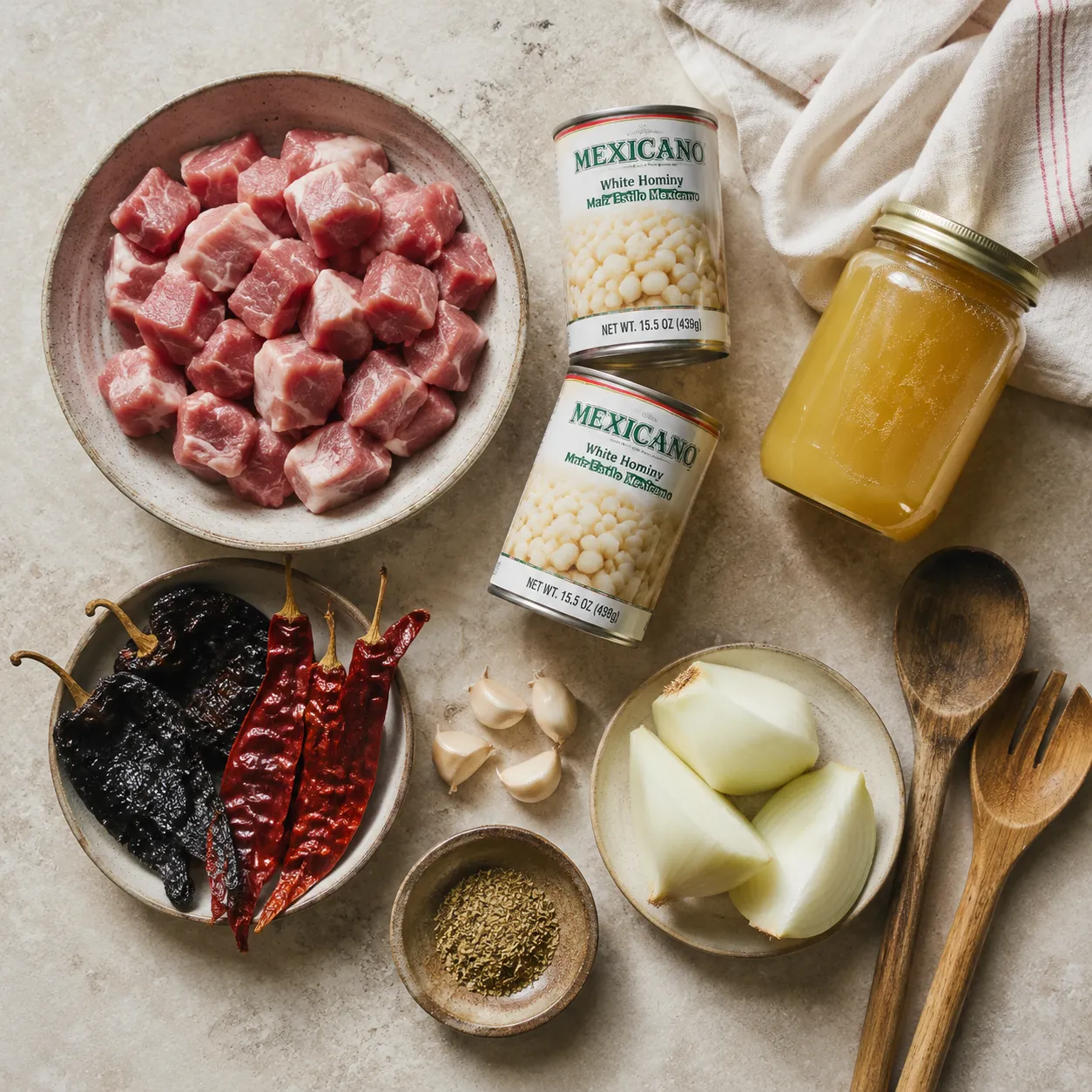
The ingredient list is short, but each piece matters. You are layering pork, hominy, dried chiles, onion, garlic, broth, and Mexican oregano into something that tastes much bigger than the sum of its parts. Think of it as a streamlined path to a traditional bowl without cutting corners on flavor. This is the kind of Mexican pork stew that rewards a little attention up front and then mostly takes care of itself.
### The Pork: Shoulder vs. Loin
Boneless pork shoulder is the best choice here because it turns tender and juicy as it simmers. It has enough fat and connective tissue to stay succulent, which keeps the broth rich instead of lean and dry. Pork loin can work in a pinch, but it cooks faster and is much easier to overdo. For the most satisfying texture, shoulder is the one to buy.
### Hominy: Canned vs. Dried
Hominy is what gives the stew its signature bite and chew. Canned hominy is the easiest option and is perfect for a weeknight-friendly version, which is why I use it here. If you have dried hominy on hand, you can absolutely cook it separately first, but the canned route keeps this recipe practical. Rinse it well so the broth stays clean and the corn flavor stays bright.
### Dried Chiles for Red Posole
The chiles are what make the broth sing. Dried guajillo chiles bring a bright, raisin-like tang, while ancho chiles add deeper color and a mellow, almost smoky sweetness. Together they make a balanced red chile sauce that tastes layered and authentic without being overly spicy. [note] If you want a little more heat, you can add a dried chile de árbol or two, but the classic flavor comes from guajillo and ancho.
## How to Make Posole Step by Step
The method is simple: toast the chiles, simmer the pork, blend the sauce, then bring everything together. Once you see the rhythm, it feels very approachable, and the best part is that most of the cook time is hands-off. The key is building flavor in layers so the final bowl tastes clear, rich, and balanced instead of muddy. [tip] If your broth ever looks too thick while simmering, add a splash more stock so the texture stays brothy and inviting.
### Step 1: Toast and Soak the Chiles
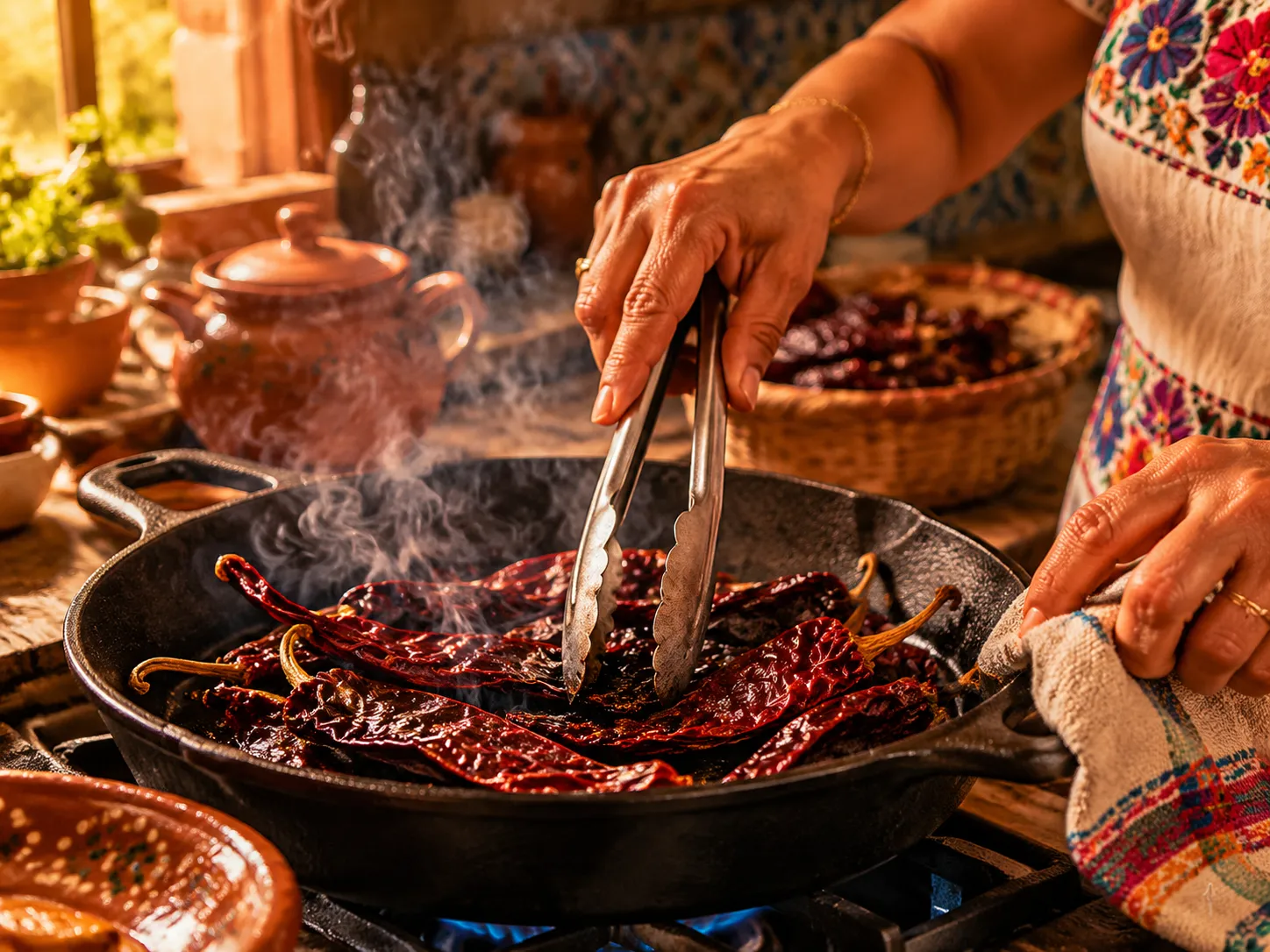
Start by lightly toasting the dried guajillo chiles and ancho chiles in a dry skillet until they smell fragrant. You are not trying to char them; a brief toast wakes up their oils and makes the broth taste fuller. After that, soak them in hot broth or water until soft enough to blend. This is the first place where the deep red color begins to develop.
### Step 2: Simmer the Pork
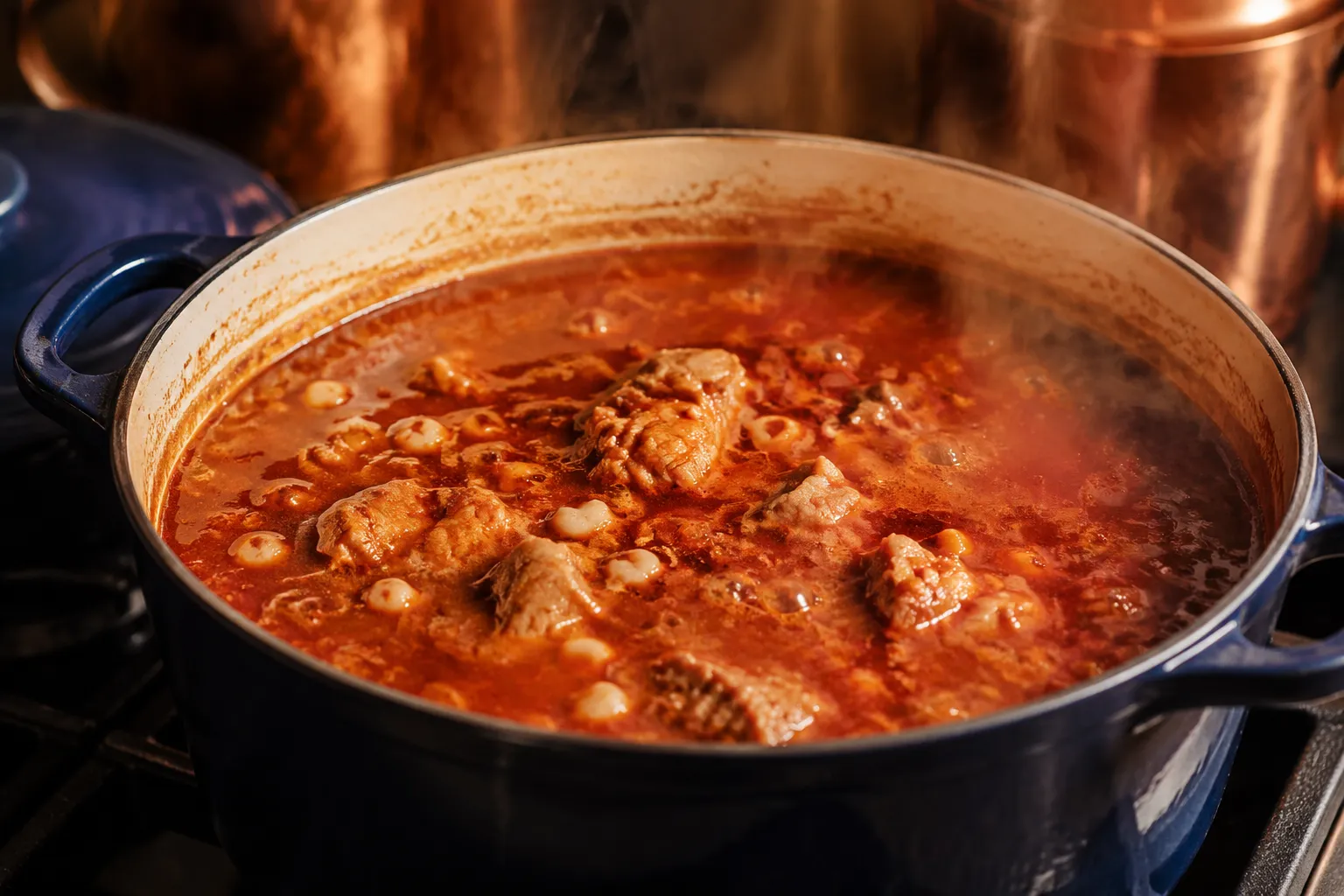
While the chiles soften, simmer the pork shoulder with onion, garlic, broth, and Mexican oregano until the meat is tender. The pot should have a gentle bubble rather than a hard boil so the broth stays clear and the pork turns silky. Skim any foam that rises in the first part of cooking if you want a cleaner-tasting base. By the time the pork is ready, the kitchen will smell incredible.
### Step 3: Blend the Red Chile Sauce
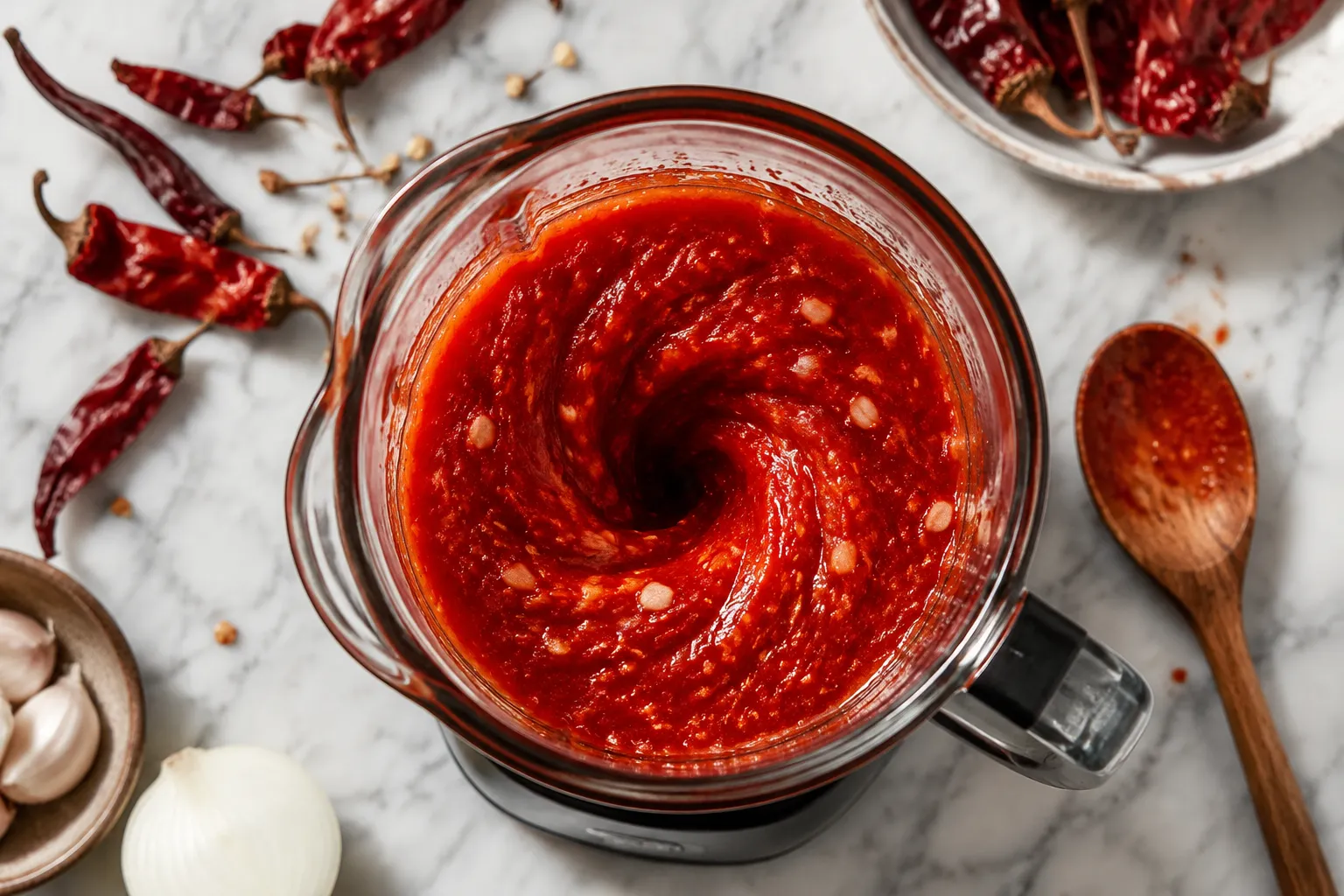
Once the chiles are soft, blend them with the onion, garlic, and a little cooking liquid until smooth. This is your red chile sauce, and it should look glossy, brick-red, and deeply aromatic. If you want an especially refined broth, strain it through a fine mesh sieve before adding it to the pot. That extra step takes only a minute and gives the finished stew a more luxurious texture.
### Step 4: Combine and Finish the Stew
Add the blended chile sauce back into the pot with the pork, then stir in the hominy and let everything simmer together until the flavors meld. This final simmer is where the broth turns from good to truly crave-worthy, because the corn picks up the chile flavor and the pork seasons the whole pot. Taste and adjust with salt, more oregano, or a squeeze of lime if needed. The goal is a broth that tastes lively, not flat, and a little lime at the end makes a big difference.
## Toppings and Garnishes
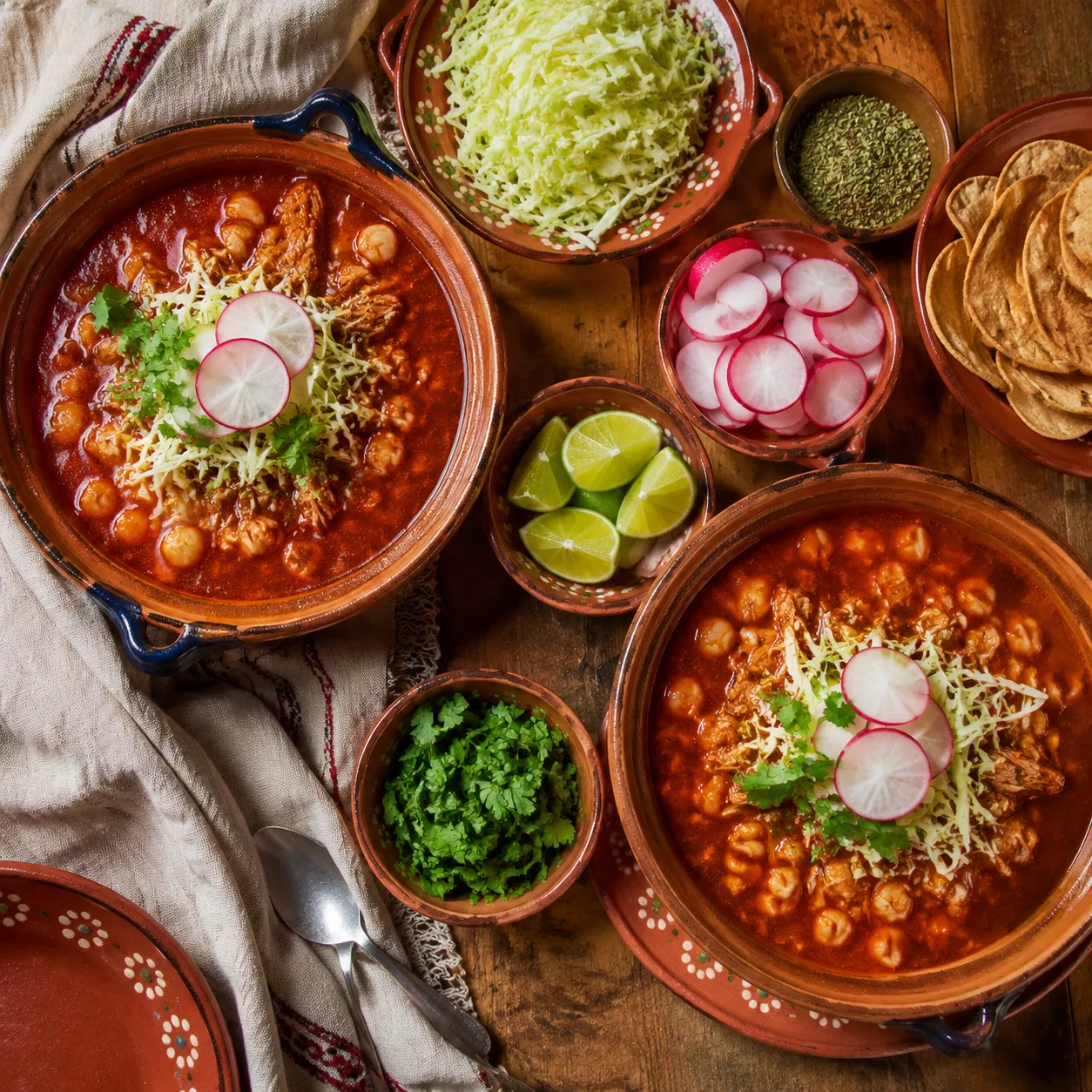
The toppings are not optional in the sense that they are what make each bowl feel complete. Crisp shredded cabbage adds freshness, radishes bring crunch and peppery bite, cilantro brightens the top, and lime wakes everything up. A little chopped onion or extra oregano can be nice too, but the classic trio of cabbage, radish, and lime is hard to beat. If you are serving a table full of people, set everything out family-style so everyone can build their own bowl.
### Classic Posole Toppings
Shredded cabbage is the traditional crunch that balances the rich broth, and it stays crisp even after a few minutes in the bowl. Sliced radishes bring a clean snap and a pop of color, while cilantro adds freshness that keeps the stew from feeling heavy. Lime wedges are essential because a squeeze right before eating sharpens every flavor in the pot. If you like, you can add diced onion, avocado, or crushed oregano between bites.
### Building the Perfect Bowl
Start with a generous ladle of broth, pork, and hominy, then add toppings in layers rather than all at once. A small mound of shredded cabbage on top gives the bowl height, and a few radish slices make it look as good as it tastes. Warm corn tortillas or homemade tortillas on the side are the perfect companion for soaking up the broth. For a more festive spread, add tostadas, a simple avocado salad, or a second squeeze of lime at the table.
This is the kind of bowl that belongs in your regular rotation, especially when you want something comforting without reaching for a heavy casserole. The broth is brothy and bright, the pork is tender, and the hominy gives every spoonful a satisfying chew. If you love exploring Mexican soup recipes, this one earns a permanent spot in the cold-weather lineup. And if there are leftovers, they only get better the next day, which is exactly what I want from a meal like this.
Serve it hot, pile on the toppings, and let everyone customize their bowl the way they like. That is the simple joy of posole: it is rustic, generous, and completely satisfying from the first spoonful to the last.
💡 Expert Tips
- Toast the chiles just until fragrant. A quick toast wakes up their oils, but too much heat can make the broth taste bitter.
- Skim the pot early in the simmer if you want a cleaner broth. It is not mandatory, but it gives the finished stew a more polished look.
- Use shoulder, not lean pork. The extra fat keeps the meat tender and helps the broth taste fuller.
- Taste again right before serving. A final pinch of salt or squeeze of lime can make the flavors feel brighter and more balanced.
🔄 Variations & Substitutions
Once you know the base method, it is easy to adapt this bowl to your table. Keep the same chile broth and hominy, then swap the protein or adjust the heat to suit the people you are feeding. If you prefer a lighter version, you can make it with chicken instead of pork, though the flavor will be slightly different.
- Chicken: Use bone-in chicken thighs and simmer until tender.
- Spicier: Add a dried chile de árbol or a pinch of crushed red pepper.
- Milder: Remove every seed from the guajillo and ancho chiles and use a little extra broth.
- Vegetarian: Replace the pork with extra hominy, mushrooms, and vegetable broth.
- Extra smoky: Add a small piece of chipotle chile or a spoonful of adobo.
- Brighter: Serve with extra lime and a spoonful of diced onion on top.
🧊 Storage & Leftovers
Leftover stew keeps very well, and the flavor often gets even better after a day in the refrigerator. Store it in airtight containers once it has cooled, and keep the toppings separate so the cabbage and radishes stay crisp.
For longer storage, freeze the broth, pork, and hominy without the fresh garnishes. Thaw overnight in the refrigerator before reheating, then top with fresh cabbage, cilantro, and lime just before serving. If the broth thickens in the fridge, add a splash of broth or water while reheating to bring it back to a spoonable consistency.
Frequently Asked Questions
What is posole made of?
Traditional pozole is built on three pillars: hominy, a protein such as pork shoulder or chicken, and a chile-based broth. The hominy gives the dish its signature chew, while the meat and broth make it hearty and deeply savory. Fresh garnishes like cabbage, radishes, onion, cilantro, and lime are added at the end so each bowl tastes bright and balanced. That combination is what gives the dish its classic comfort-food appeal.
Is it spelled posole or pozole?
Both spellings are correct. Pozole is the original Spanish spelling used in Mexico, while posole is the Anglicized version that became common in the American Southwest. You will see both on menus, in family recipes, and in cookbooks, so either one is perfectly acceptable. The spelling changes, but the comforting bowl of hominy and chile broth stays the same.
What's the difference between red, green, and white posole?
Red posole gets its color and depth from dried red chiles such as guajillo and ancho. Green versions are made with tomatillos, fresh green chiles, and herbs, which give them a brighter flavor. White pozole keeps the broth plain and lets the toppings take center stage. If you like a rich, earthy bowl, the red style in this recipe is the one to make first.
Can I make posole in a slow cooker or Instant Pot?
Yes, this dish adapts nicely to both appliances. For a slow cooker, brown the pork and prepare the chile sauce first, then cook everything on low for 6 to 8 hours until tender. In an Instant Pot, pressure cook the pork with the broth and aromatics for about 35 minutes, then do a natural release before adding the hominy and chile sauce. Either method gives you a tender, flavorful result with very little hands-on work.
What do you serve with posole?
Posole is a complete meal on its own, but it also pairs beautifully with simple sides. Warm corn tortillas, tostadas, Mexican rice, or a light avocado salad all work well without competing with the broth. If you want the most authentic-feeling spread, set out extra lime, chopped onion, cabbage, and a basket of warm tortillas so everyone can build their own bowl. That casual, customizable style is part of the fun.