Albondigas Soup: Authentic Mexican Meatball Soup Recipe
Ingredients
Scale
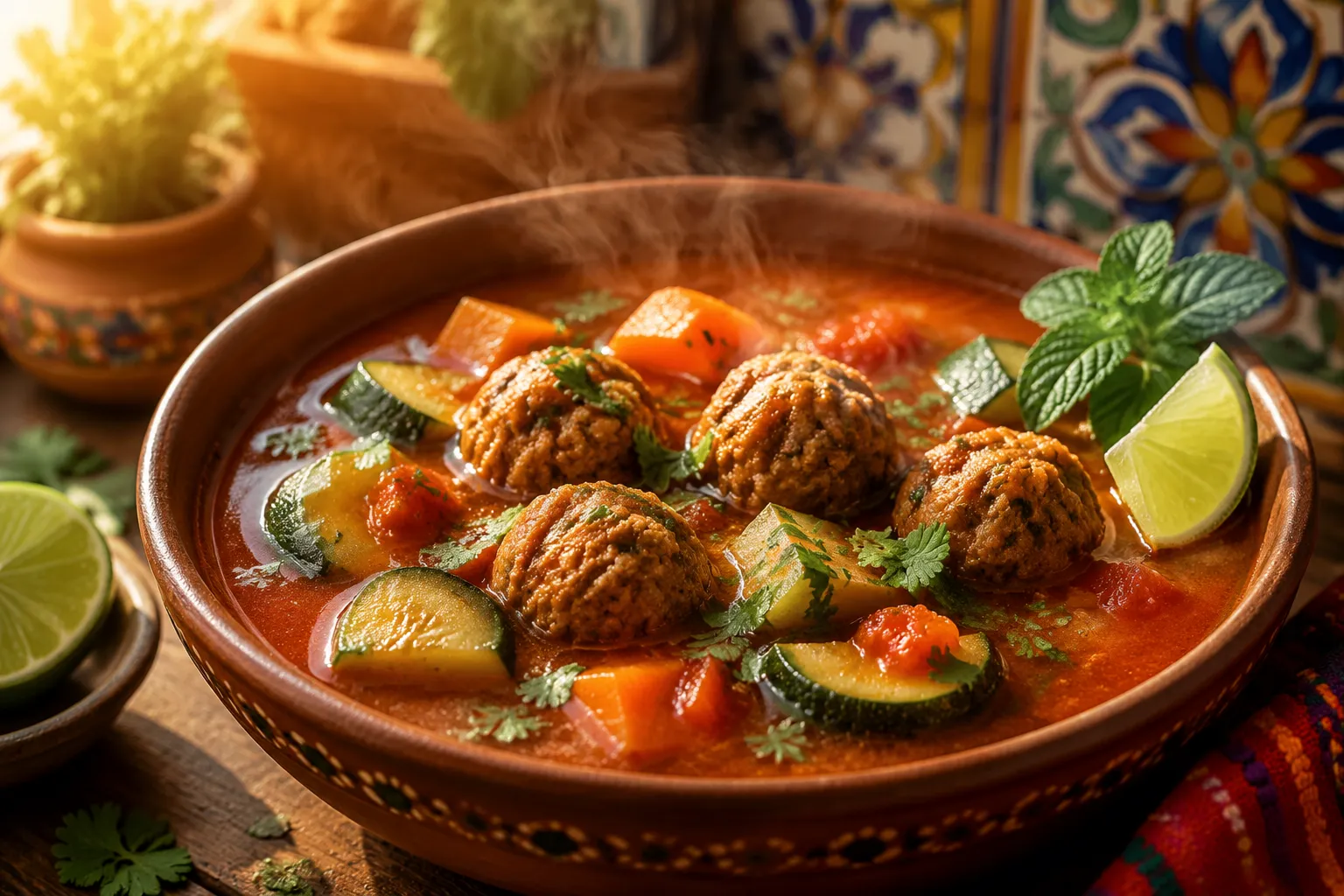
Albondigas is the Mexican meatball soup abuela makes on chilly nights — tender rice-studded meatballs in a brothy tomato base loaded with vegetables.
Albondigas is the kind of cozy, brothy, deeply comforting Mexican soup that tastes like someone loves you very much. Tender rice-studded meatballs simmer in a tomato broth with carrots, zucchini, onion, garlic, cumin, oregano, cilantro, and a little fresh mint tucked into every bite. It is humble food, but in the best way: generous, fragrant, family-style, and made to be ladled into big bowls with lime on the side.
This recipe leans traditional and homey, with a beef-and-pork meatball mixture that stays juicy while the raw rice cooks right inside the meat. The broth starts with onion, garlic, tomato sauce, and good beef broth, then becomes richer as the meatballs gently simmer. If you love Mexican meatball soup but have only made very basic versions, this one gives you that abuela-style depth without making the process fussy.
What makes this pot special is the fresh mint. It may sound like a small detail, but it is the ingredient that makes the meatballs taste bright, tender, and unmistakably classic. Serve it with warm tortillas, a squeeze of lime, and maybe a spoonful of chipotle salsa if your table likes a little smoky heat.
In Mexico, albondigas usually refers to a beloved meatball soup made with seasoned ground meat, rice, herbs, and a light but flavorful broth. The word itself means meatballs in Spanish, with roots that reach back through Arab-Andalusian cooking, but the Mexican version has become its own beautiful comfort food tradition. Each family has a slightly different way of making it: some use beef only, some add pork, some include potatoes, and some make the broth extra tomato-rich.
The version here is built around tender, herb-flecked meatballs and a clear red tomato broth that tastes simmered, not heavy. It is less thick than a stew and more substantial than a simple caldo, with vegetables floating alongside the meatballs so every spoonful has texture. If you already love caldo de pollo for its cozy simplicity or pozole rojo for its deep chile warmth, this soup sits right in that same family of bowls you crave when the weather turns cool.
The meatballs start with a blend of ground beef and ground pork, which gives the best balance of savory flavor and tenderness. Long-grain white rice is mixed in raw, then slowly cooks as the soup simmers, swelling just enough to soften the meat without making it dense. An egg helps bind the mixture, while onion, garlic, cilantro, fresh mint, cumin, oregano, salt, and pepper season it all the way through.
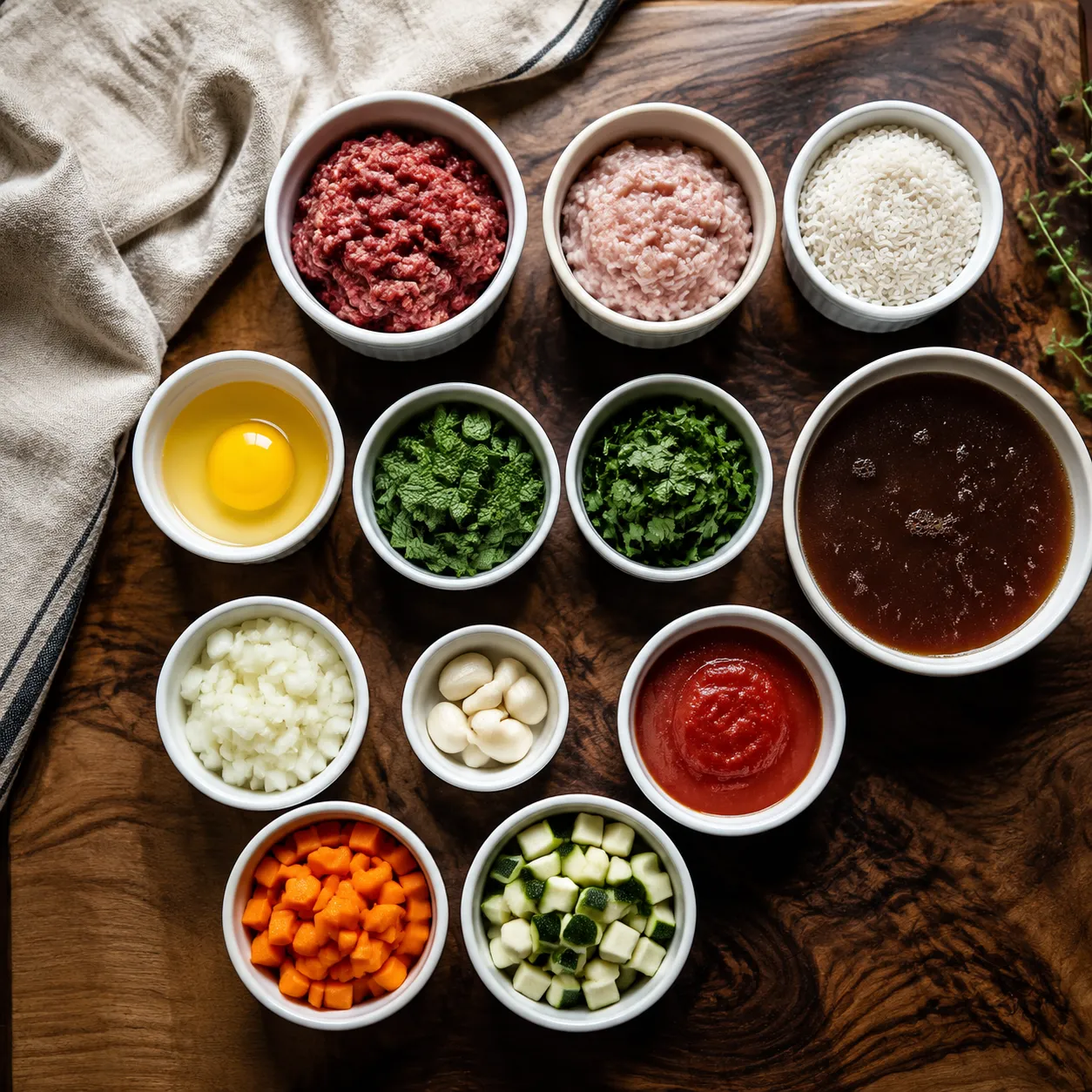
For the broth, use the best beef broth you can find, or homemade beef broth if you have a stash in the freezer. Tomato sauce gives the soup its ruby color and mellow acidity without turning it into pasta sauce. Carrots bring sweetness, zucchini adds freshness, and the onion-garlic base makes the whole pot smell like dinner before the meatballs even go in.
If you need to make a small substitution, this recipe is forgiving. All-beef meatballs work, though they are slightly leaner, and ground turkey can be used if you are careful not to overmix. Short-grain rice is not ideal because it can get sticky, but long-grain white rice or jasmine rice both cook nicely inside the meatballs. For a fuller meal, serve bowls with a scoop of Mexican rice on the side instead of adding extra starch to the soup itself.
The most important moment in this recipe happens before the pot ever comes to a simmer: mixing the meat. Combine the beef, pork, rice, egg, herbs, onion, garlic, and spices with a gentle hand, stopping as soon as everything looks evenly distributed. Overworking ground meat can make the finished meatballs firm and bouncy rather than soft and juicy.
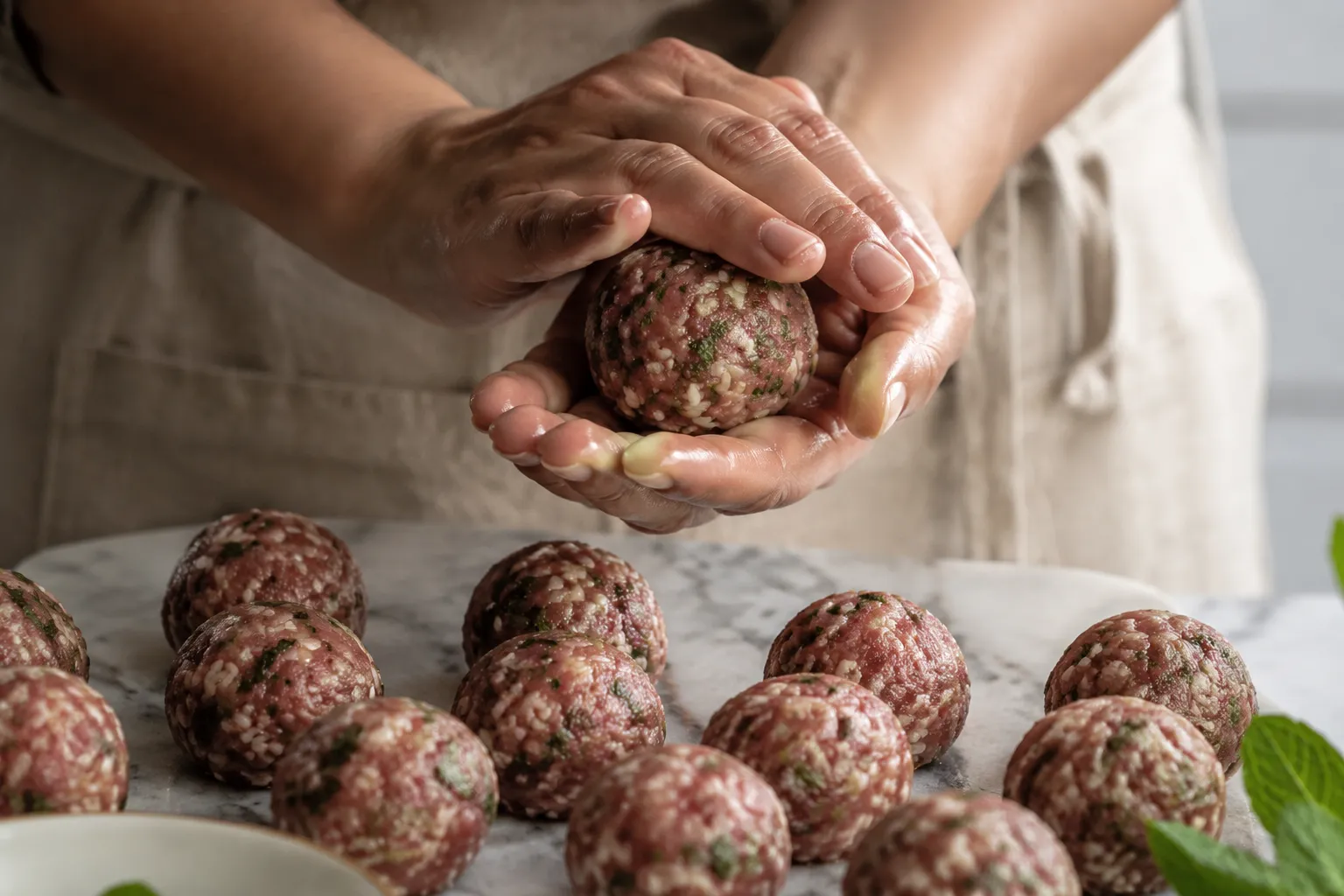
Aim for meatballs that are about 1 1/2 inches wide, large enough to feel hearty but not so big that the rice struggles to cook through. Wetting your hands with a little water makes rolling easier and keeps the mixture from sticking. Set the shaped meatballs on a plate or tray while you start the broth so they are ready to slip into the simmering pot.
A good tomato broth should taste rounded and savory, not sharp or watery. Start by softening onion in a little oil until it turns translucent, then stir in garlic, cumin, and oregano so the spices bloom in the warm fat. Once the tomato sauce hits the pot, let it cook briefly with the aromatics before adding broth; that short step deepens the color and softens the canned tomato edge.
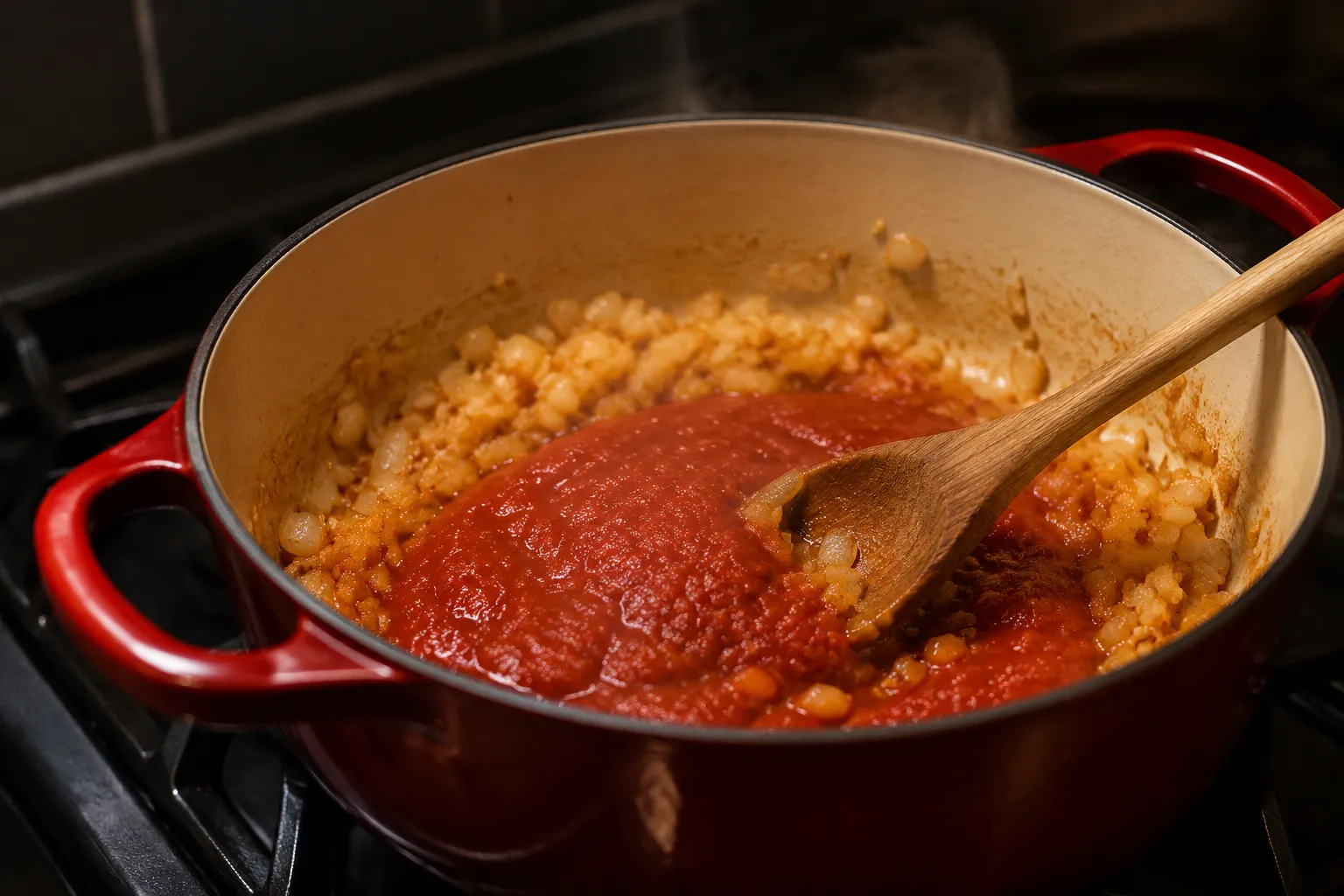
After the beef broth is added, bring everything to a steady simmer rather than a hard boil. A gentle simmer keeps the broth clear and protects the meatballs from breaking apart. This is also the moment to taste the base for salt, remembering that the meatballs will season the soup a bit more as they cook.
If your broth tastes flat, it usually needs either salt or acidity. A pinch more salt can wake up the beef and tomato, while a squeeze of lime at the end brightens the entire bowl. The finished soup should taste savory first, tomato-rich second, with the herbs lifting everything at the end.
Once the broth is gently bubbling, lower the meatballs in one at a time. Do not stir aggressively at first; let them set for several minutes so the exterior firms up. After that, you can nudge the pot gently with a spoon to make sure nothing is sticking to the bottom.
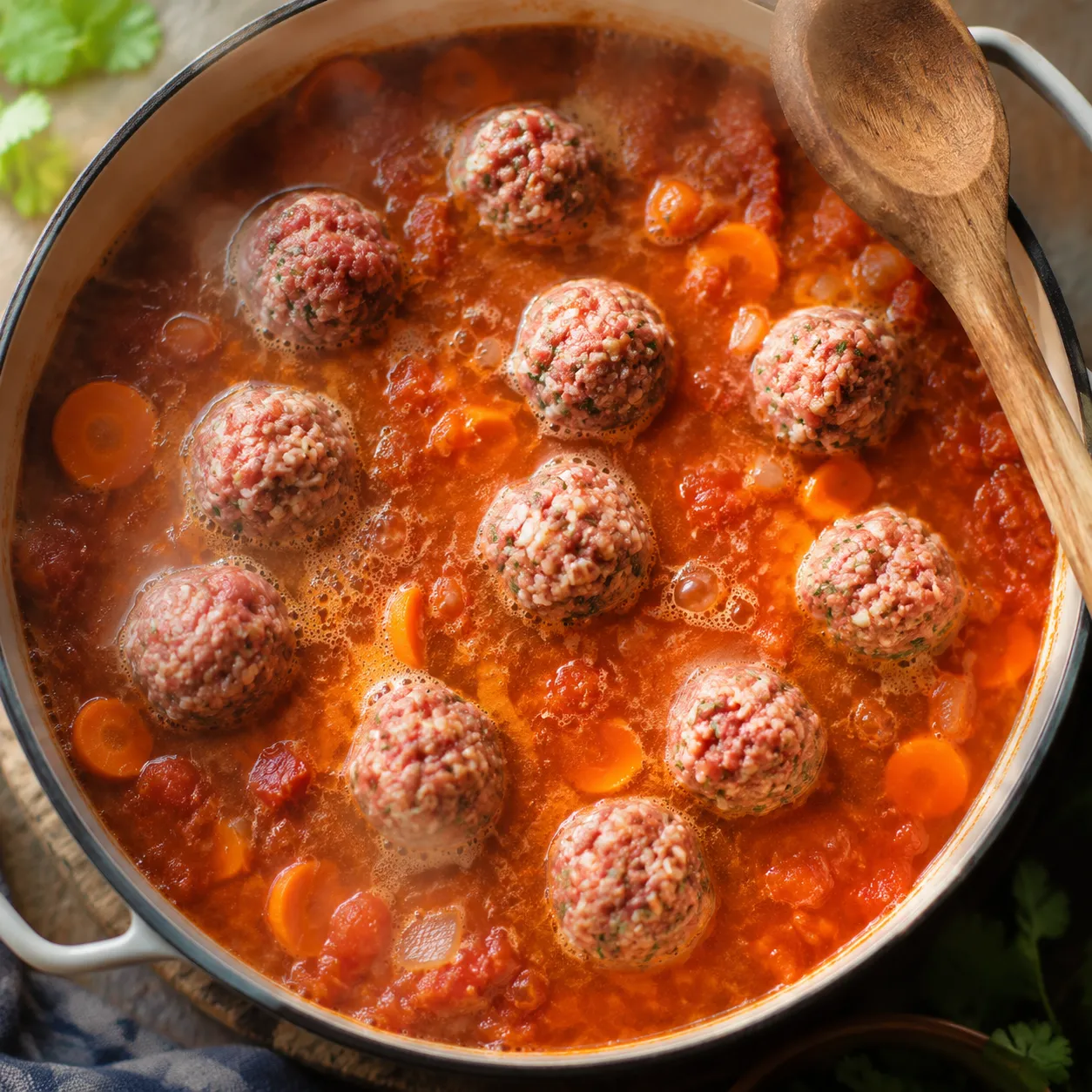
The meatballs need time for both the meat and the rice to cook through, so keep the heat moderate and patient. After about 20 minutes, add the carrots and continue simmering until they begin to soften. Zucchini goes in later because it cooks quickly and tastes best when it is tender but still green and fresh.
By the end, the broth will be a little more savory from the meat, the rice will be tender inside the meatballs, and the vegetables will have soaked up all that tomato-garlic flavor. This is when the soup becomes more than its parts. It is brothy, cozy, and hearty enough for dinner without feeling heavy.
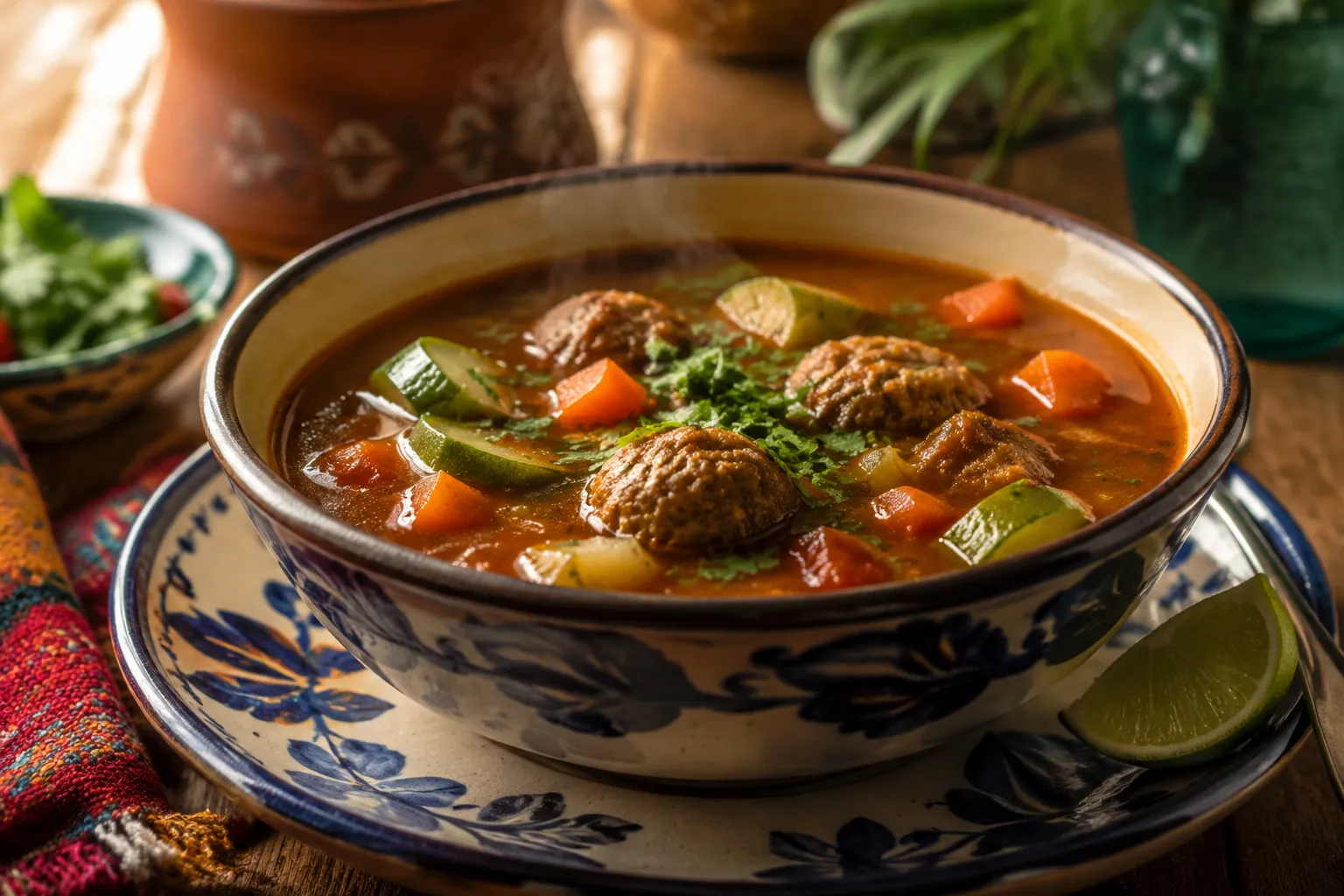
To make sure the soup is ready, cut one meatball open and check that the rice inside is soft and the meat is cooked through. The inside should look juicy, with little white grains and green flecks of cilantro and mint throughout. If the rice still has a firm center, simmer the pot a few minutes longer and check again.
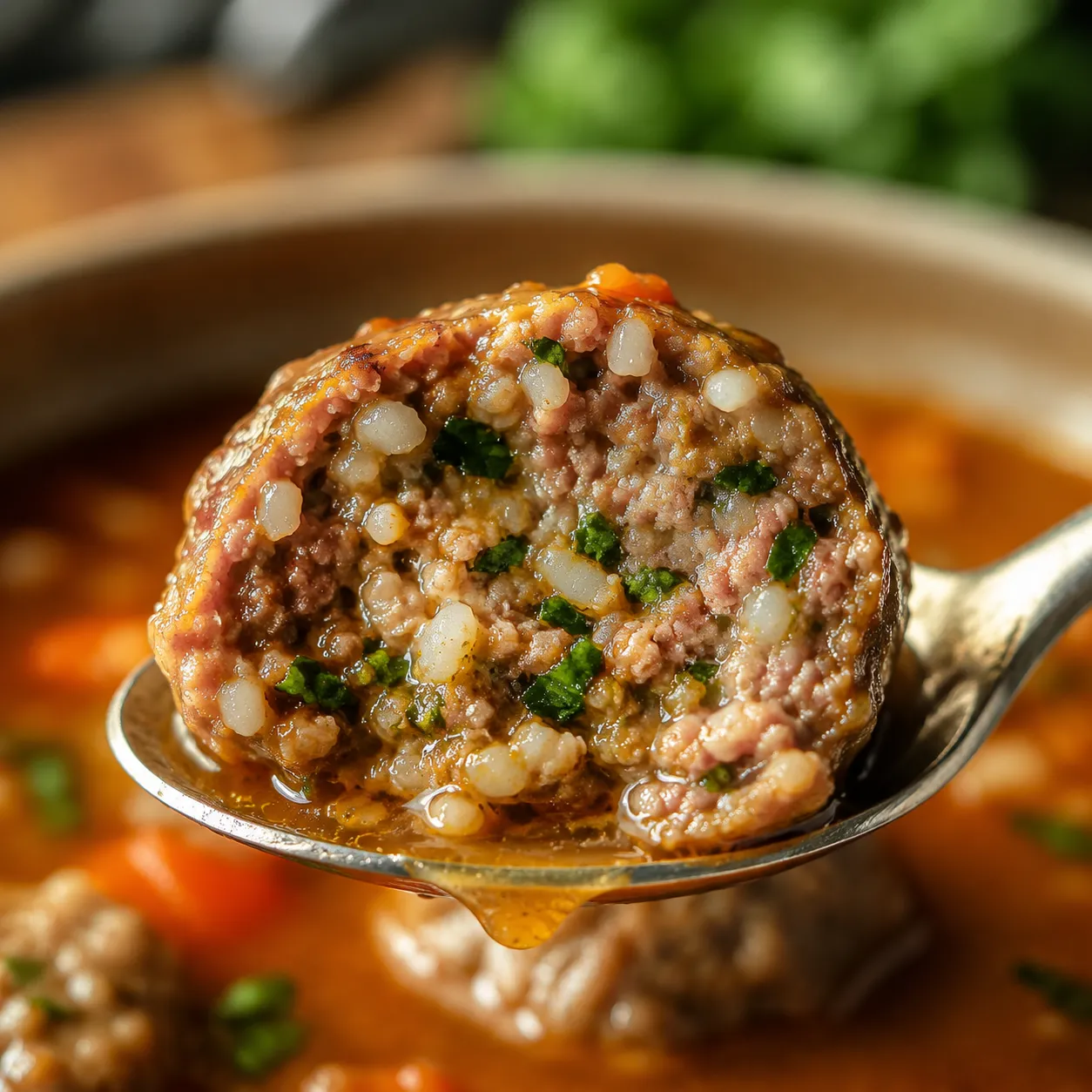
The broth should be fluid and spoonable, not thick like chili. If too much liquid evaporates while the soup cooks, add a splash more broth or water and adjust the seasoning. If you prefer a heartier bowl, add an extra carrot or zucchini next time rather than packing in too many meatballs, which can crowd the pot.
Albondigas soup is best served steaming hot with fresh cilantro, lime wedges, and warm corn tortillas. The lime is not just garnish; it sharpens the tomato broth and makes the herbs pop. A few slices of avocado are lovely too, especially if you want the bowl to feel a little more luxurious.
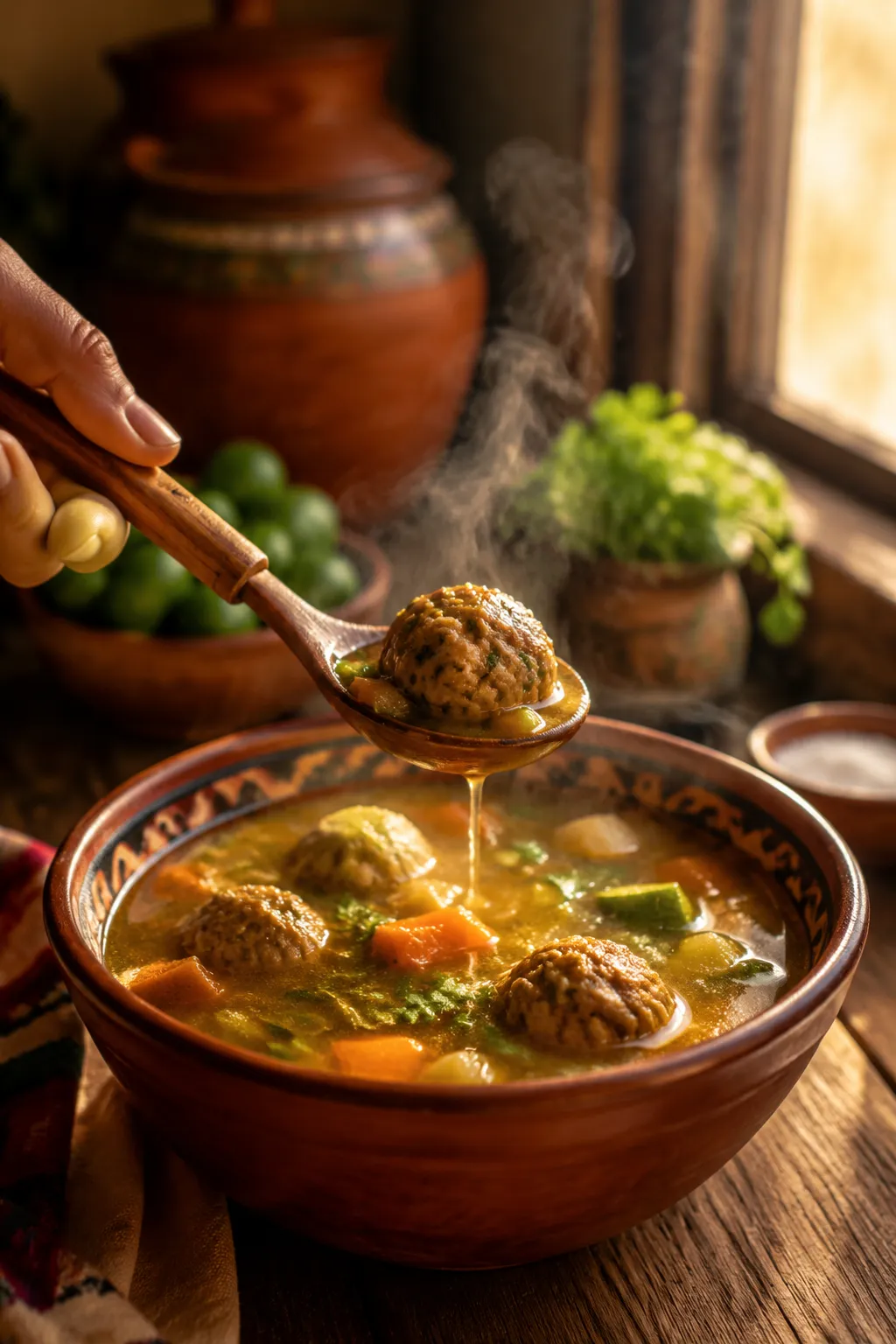
For a family-style dinner, set the pot in the center of the table with tortillas, lime, chopped cilantro, and a small bowl of salsa. A smoky chipotle salsa is especially good if you like heat, while a mild salsa verde keeps things bright. If you are building a larger Mexican-inspired meal, pair it with Mexican rice, a crisp cabbage slaw, or a simple pot of beans.
This soup also works beautifully as part of a cozy weekend spread. Serve it before enchiladas, alongside quesadillas for the kids, or as the main event with nothing more than tortillas and a cold agua fresca. It has the same generous spirit as the best homemade soups: easy to share, easy to stretch, and even better when everyone goes back for another ladle.
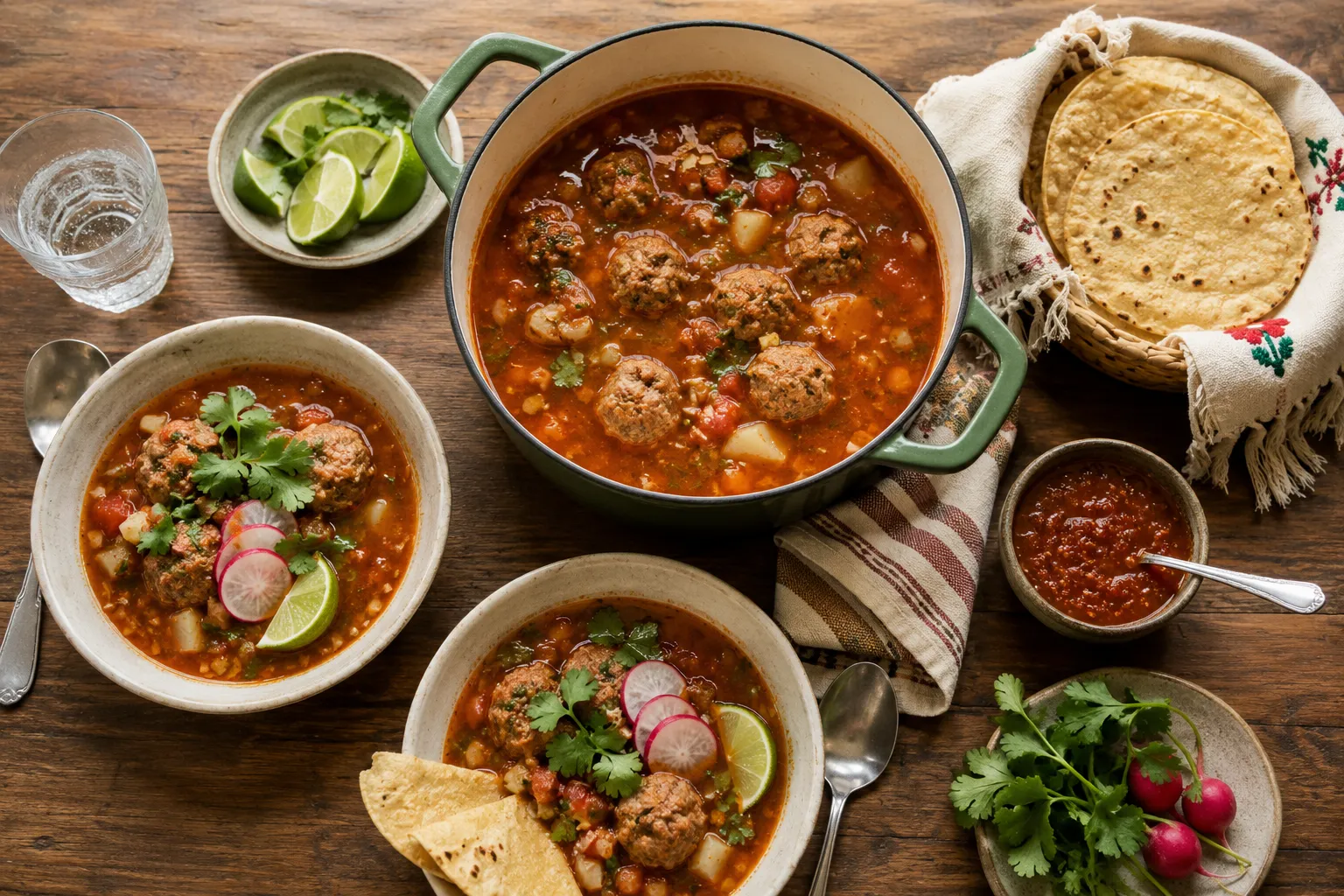
The beauty of albondigas is that it feels both practical and special. A few everyday ingredients become a pot of soup with real depth: tender meatballs, sweet carrots, delicate zucchini, and a tomato broth that tastes like it has been simmering longer than it has. The fresh mint gives the meatballs their signature lift, while cilantro and lime bring freshness at the table.
Make it once and you will quickly learn how your family likes it best: extra carrots, more broth, a hotter salsa, or a bigger handful of herbs. However you serve it, keep the simmer gentle and the meatball mixture light. That is the simple secret to a bowl that tastes warm, traditional, and completely satisfying.