Smoked Chicken Breast: Juicy, Tender BBQ Recipe
Ingredients
Scale
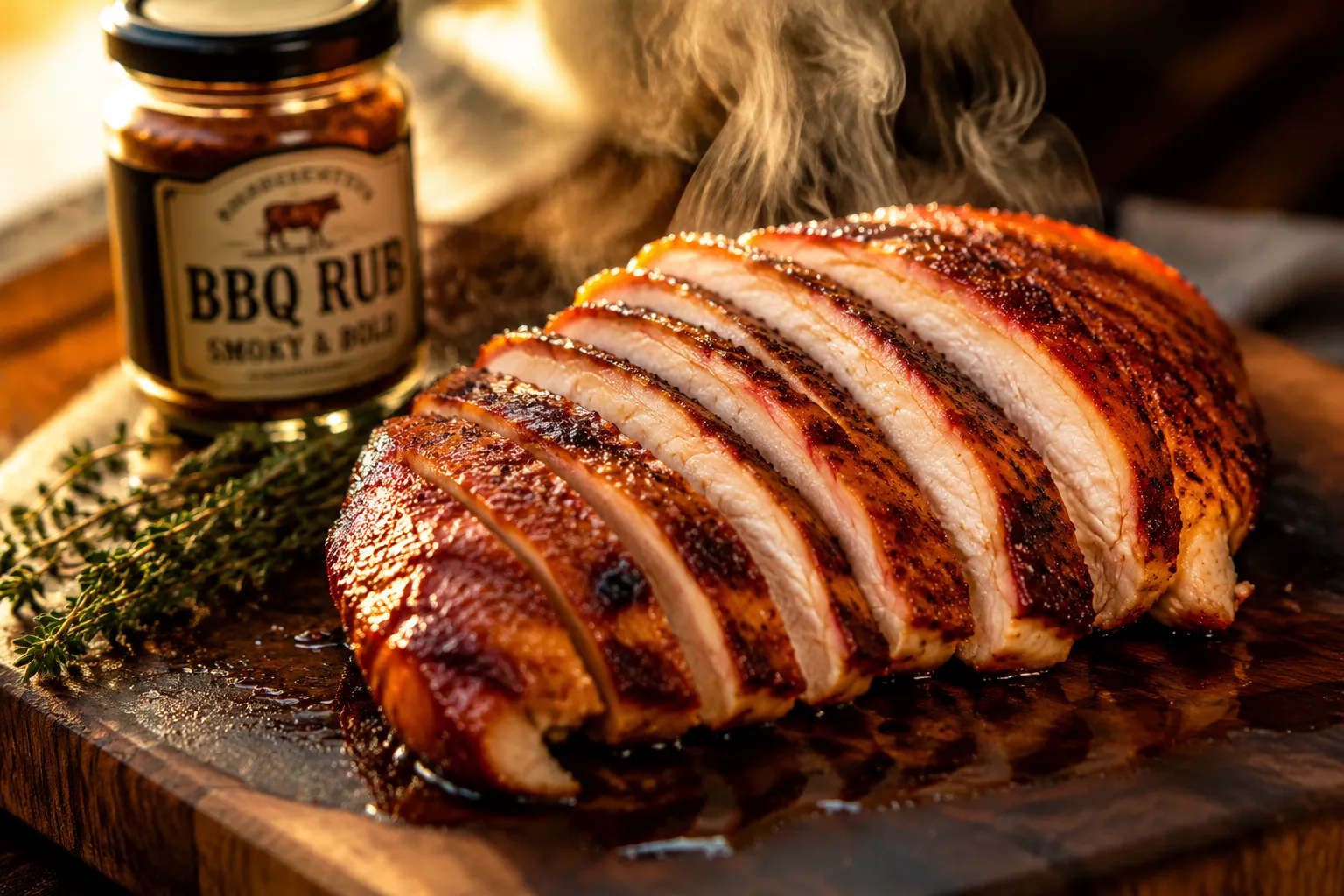
This smoked chicken breast comes off the smoker juicy, tender, and packed with deep wood-smoke flavor, thanks to a quick dry brine and a foolproof temperature method.
If there's one cookout staple that separates pellet smoker veterans from beginners, it's a perfectly cooked smoked chicken breast. Get it right and you walk away with juicy, smoke-kissed white meat ringed with that gorgeous pink smoke ring and crowned with mahogany skin. Get it wrong and you end up with the dry, rubbery, sad chicken that gives white meat a bad name. The good news is that the fix is almost entirely about temperature, not technique.
I've been smoking chicken on my pellet smoker every other weekend for three Wisconsin summers, and the method below is the one that finally stopped giving me leathery results. It leans on two simple ideas: a quick dry brine to season the meat all the way through and lock in moisture, and a temperature-driven finish that pulls the chicken at 160°F so carryover cooking lands it at a perfectly safe, perfectly juicy 165°F. No injections, no spritzing every twelve minutes, no babysitting.
Whether you're working with a Traeger, a Pit Boss, an offset, or a simple electric smoker, this approach works. I'll walk you through bone-in versus boneless, the rub I keep coming back to, the woods that flatter chicken (and the one to skip entirely), and how to turn the leftovers into three different meals during the week.
The beauty of a great smoked chicken recipe is that the pantry list is short. Most of what you need is already in your spice drawer, and the chicken itself is whatever your butcher had on sale this week. Here's what each component is doing in the mix.
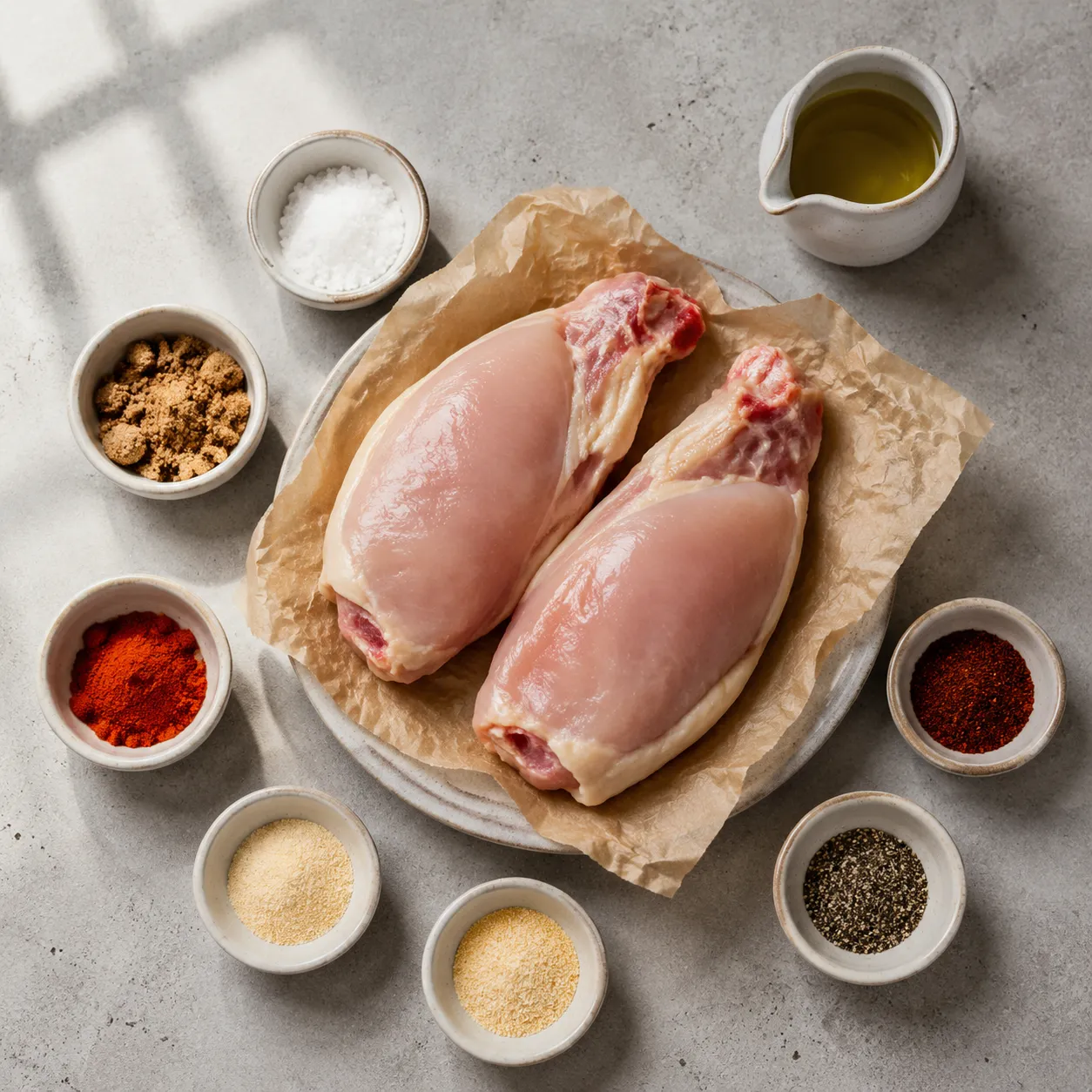
Bone-in, skin-on split breasts are my first choice because the bone insulates the meat and the skin protects against moisture loss. They also give you something to render and crisp at the end of the cook. Boneless skinless breasts work well too, especially for meal prep, but they cook faster and need a closer eye. Whichever you choose, look for breasts that are roughly the same size so they finish together.
Twenty-four hours is ideal, but even a one-hour dry brine with kosher salt makes a noticeable difference. Salt draws moisture to the surface, then reabsorbs it back into the muscle, seasoning the meat from edge to center. Skip the wet brine here. Wet brines waterlog the skin and prevent it from crisping, which is exactly what you don't want when smoking chicken breasts.
A balanced rub for chicken leans sweet, smoky, and slightly hot, with enough sugar to help the bark form without burning. Brown sugar, smoked paprika, garlic powder, onion powder, black pepper, and chili powder is the formula I keep going back to. If you want to scale this up for the freezer, mix a big batch of homemade BBQ rub and store it in a jar. It'll keep for six months and works on pork shoulder and ribs too.
Applewood is the gentlest option and gives the meat a sweet, fruity smoke that doesn't overpower the bird. Cherry adds beautiful color and a subtle fruity note. Hickory is bolder but still complementary; just don't go heavy. Mesquite is the one to avoid here because it's too aggressive for poultry and can leave a bitter, almost acrid finish. I usually run a 70/30 blend of applewood and hickory pellets for the best of both worlds.
This is the part where temperature beats time, every single time. Set your smoker, set your thermometer, and let the meat tell you when it's ready. Resist every temptation to make this more complicated than it is.
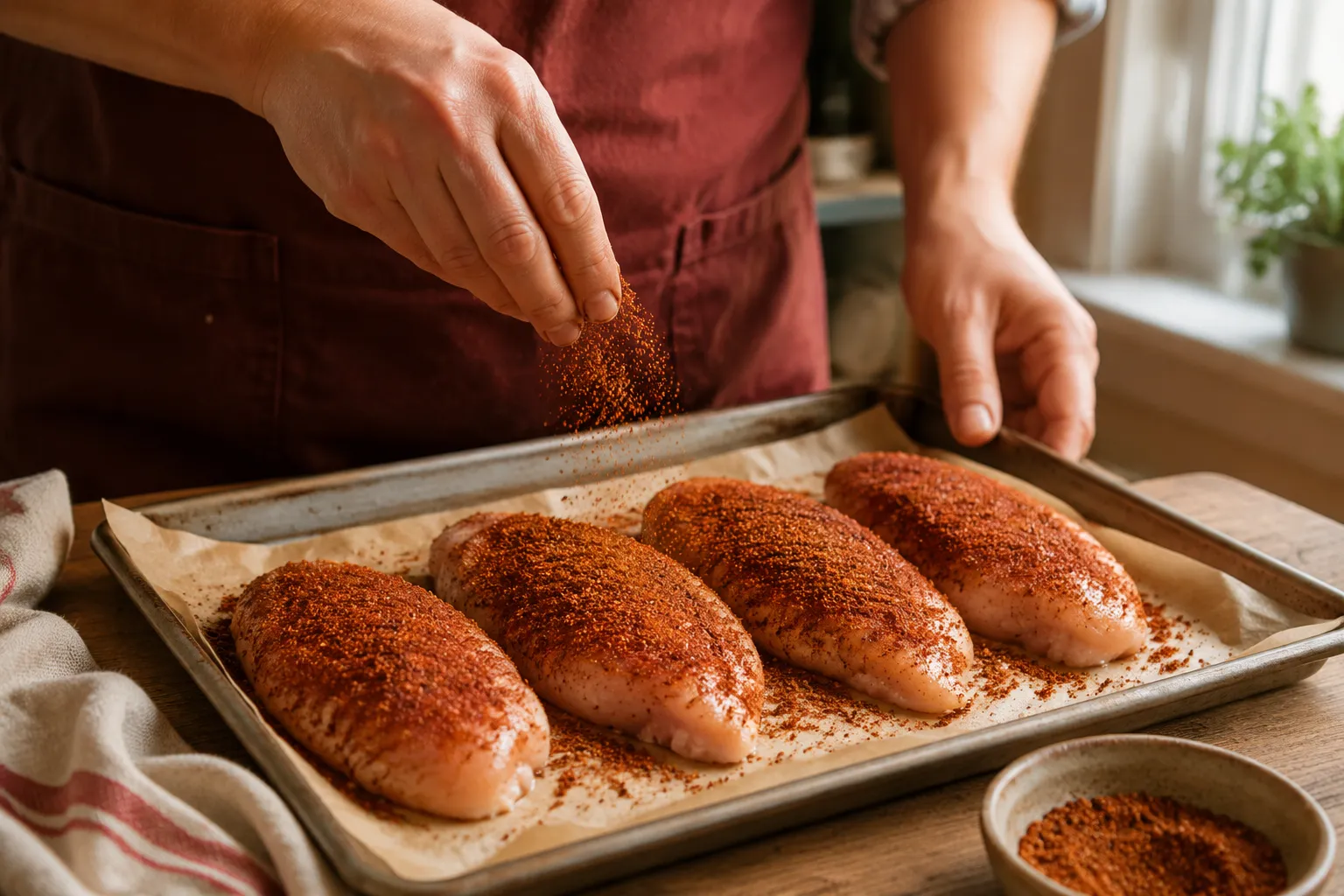
The night before, pat the breasts dry and sprinkle them all over with kosher salt — about half a teaspoon per pound. Set them uncovered on a rack in the fridge so the surface dries out. That dry surface is what lets smoke adhere and skin crisp later. The next day, brush each breast lightly with olive oil and season generously on all sides with the rub, pressing it into the skin so it really sticks.
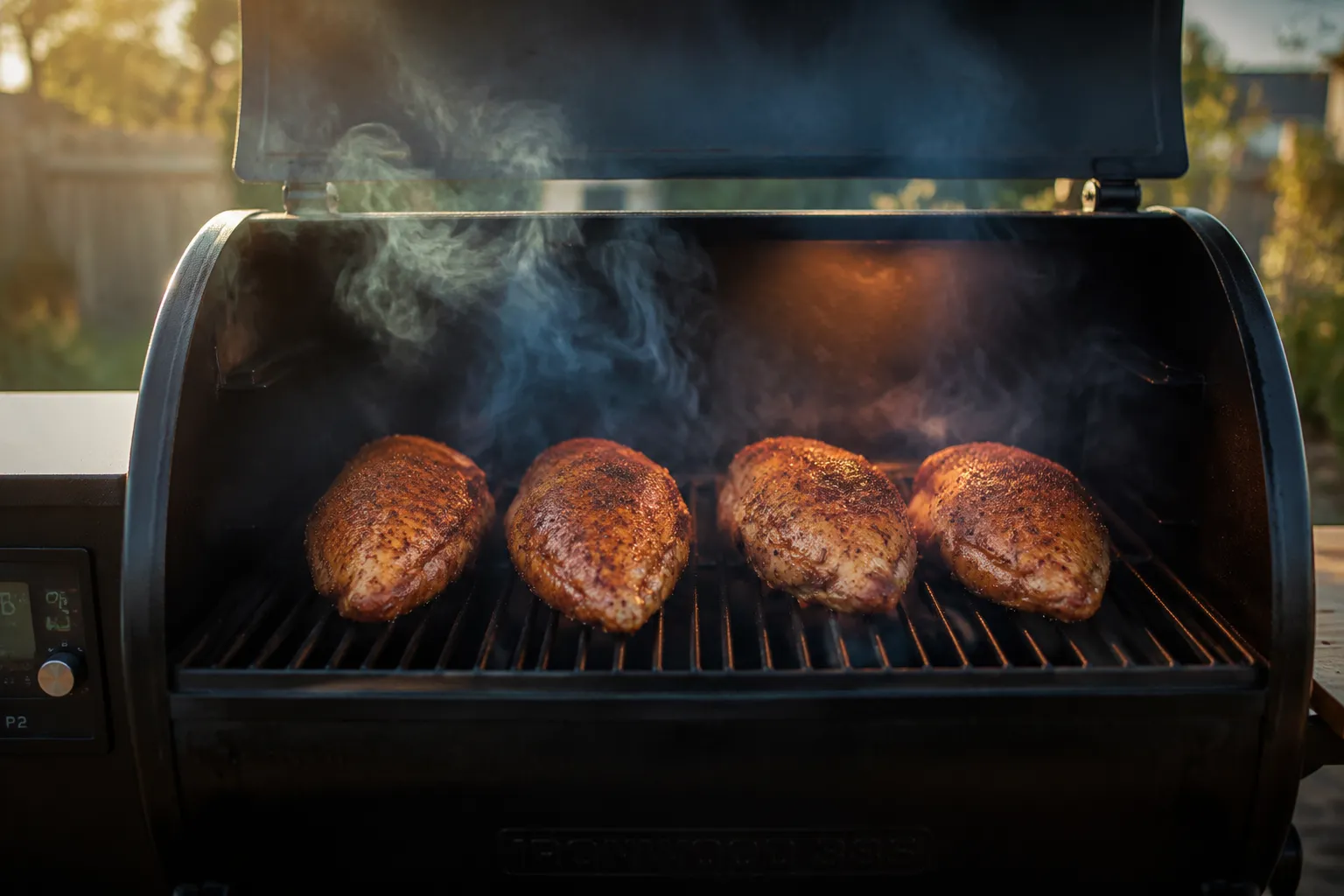
Preheat your pellet smoker to 225°F with the lid closed for at least ten minutes. You want stable temps and clean, thin blue smoke before the chicken goes on. Place the breasts skin-side up directly on the grates, leaving a couple inches of space around each so smoke can circulate. Close the lid and resist the urge to peek. Every time you open the smoker you lose heat and add another fifteen minutes to the cook.
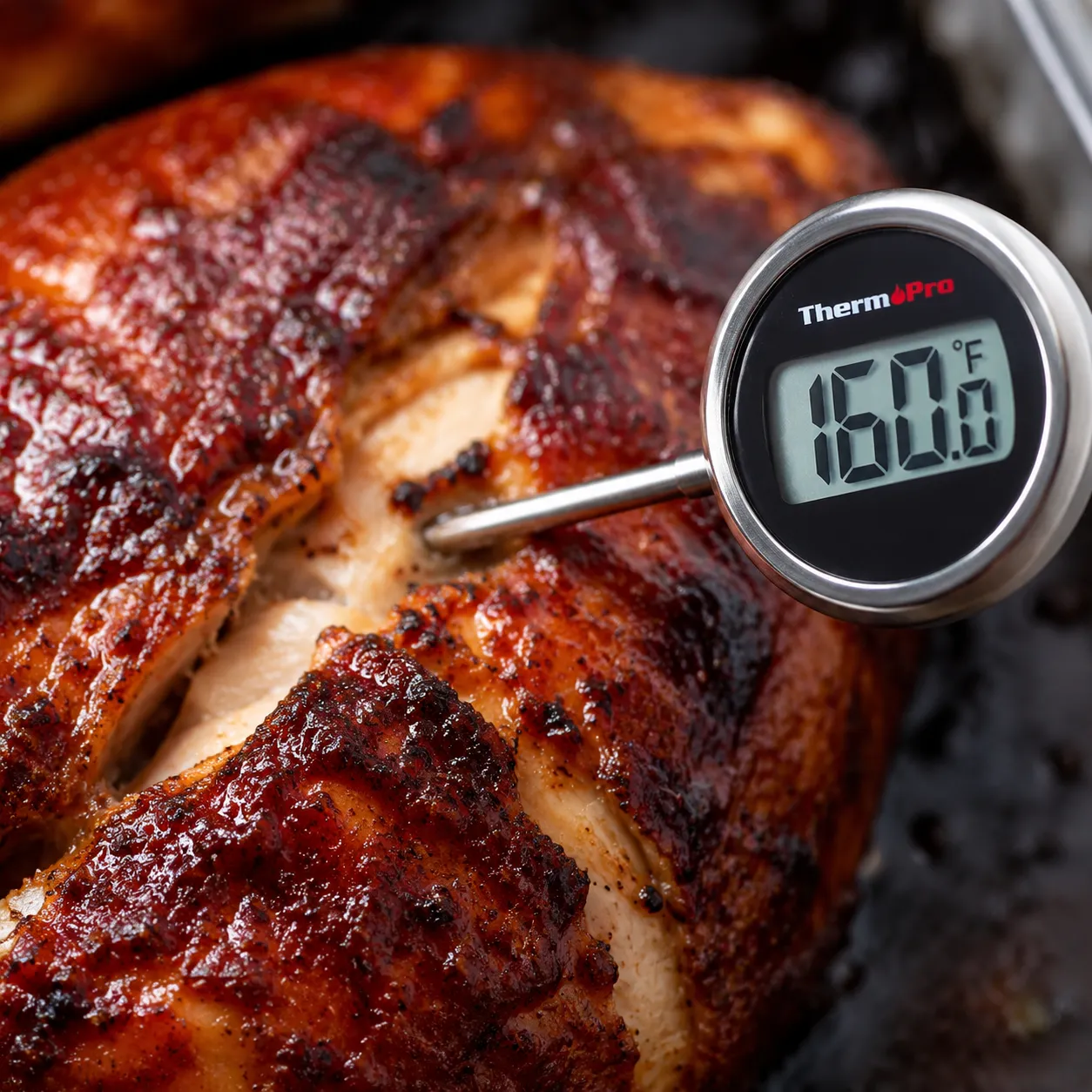
Insert a leave-in probe thermometer into the thickest part of one breast (avoiding bone) and walk away. Most bone-in breasts will hit 160°F in about an hour and twenty to an hour and a half at 225°F. When the probe reads 160°F, pull the chicken — yes, even though the USDA target is 165°F. Carryover cooking will take it the rest of the way as it rests, and pulling at 160°F is the single biggest difference between juicy chicken and chalky chicken.
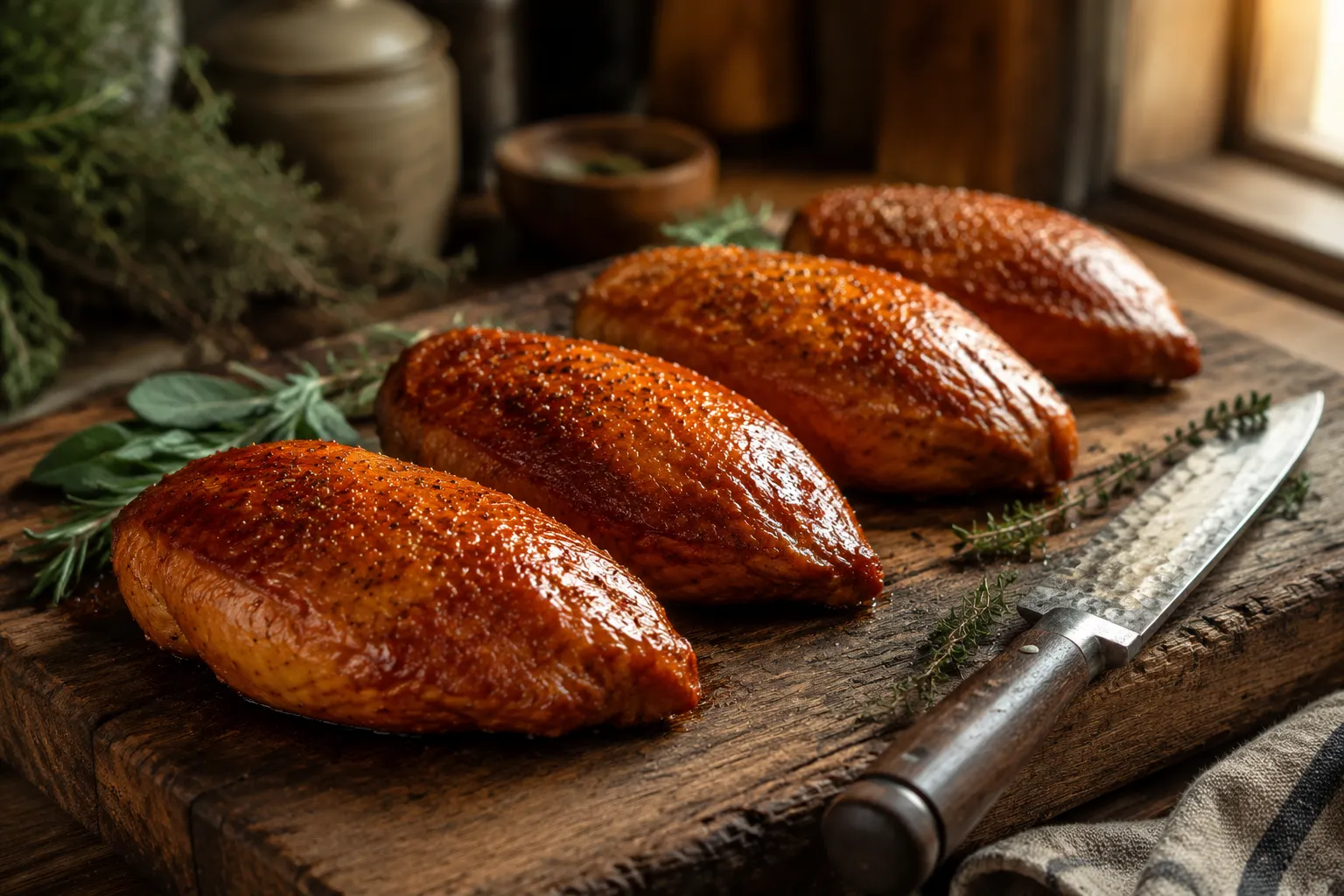
Tent the breasts loosely with foil and rest for 10 minutes. Slice against the grain on a slight bias to show off the smoke ring and to keep each slice tender. If you want crispier skin, see the hot-finish trick mentioned in the next section.
Time is a guideline. Internal temperature is the law. That said, here are the windows you can plan around when you're prepping dinner around a cook.
Boneless skinless breasts cook in 60 to 90 minutes at 225°F, depending on thickness. They have less margin for error, so probe them at the 45-minute mark and check every 10 minutes after. Bone-in split breasts run 90 minutes to 2 hours at 225°F. The bone slows things down but also protects the meat, which is why I prefer them for low-and-slow cooks.
If you're choosing between 225°F and 275°F, here's the trade-off: 225°F gives you longer exposure to smoke and a deeper, more pronounced smoke ring. 275°F shaves 20 to 30 minutes off the cook and renders the skin much better, so the bite-through is crisp instead of rubbery. Internal temperature 165°F is the finish line either way — no exceptions for poultry.
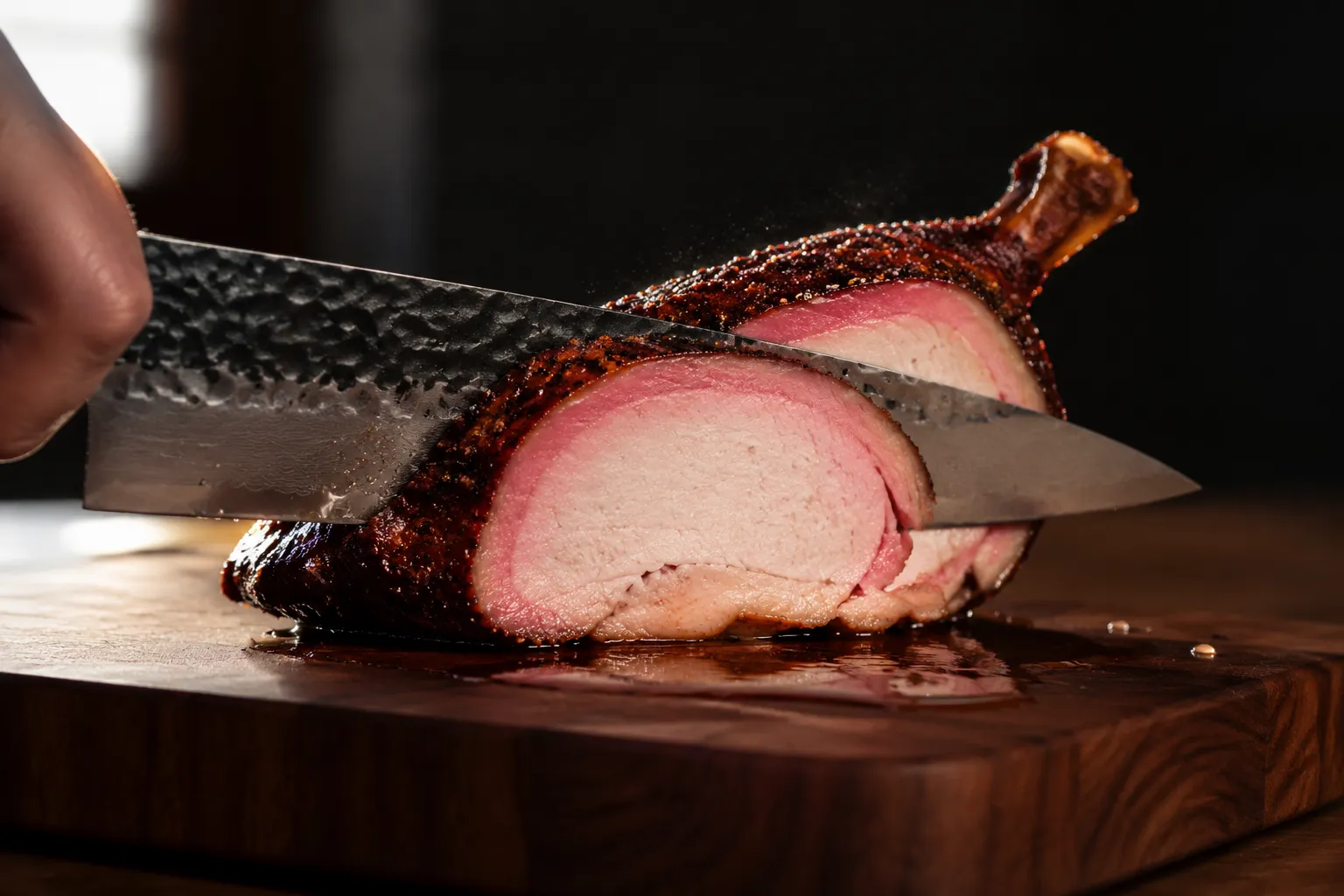
A four-breast cook feeds four people for dinner with enough left over for two more meals. That's the whole reason I default to a full pan instead of just cooking what we'll eat tonight.
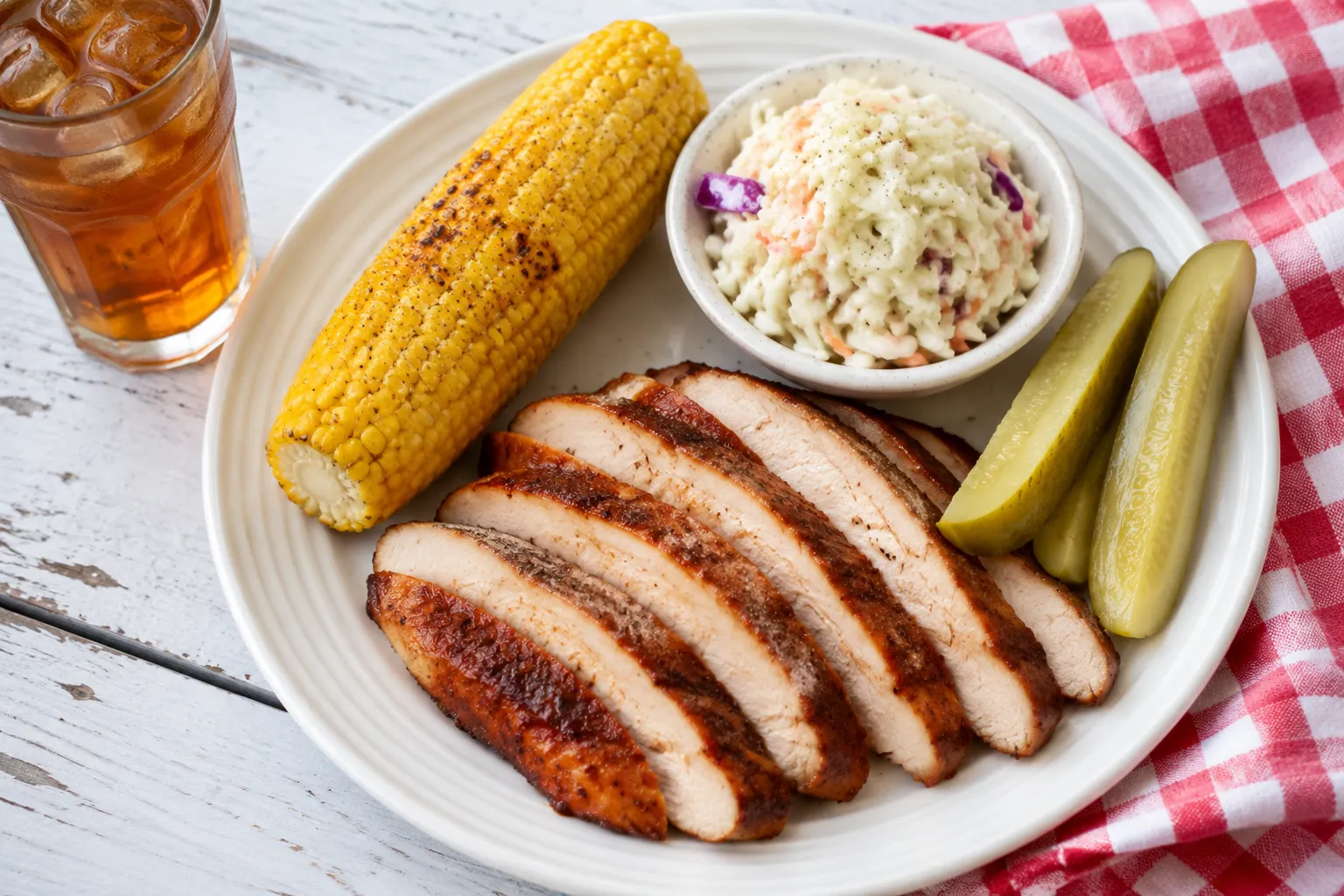
For the main event, slice the breasts against the grain and plate them with grilled corn, a creamy coleslaw, and a few dill pickle spears. A drizzle of warm BBQ sauce on the side is optional but never wrong. A cold beer or a tall glass of sweet tea seals the deal, and a slice of buttery cornbread doesn't hurt either.
The next day is where the magic happens. Shred the leftover meat with two forks, toss it with a splash of cider vinegar and a spoonful of BBQ sauce, and you've got smoked pulled chicken for sandwiches piled onto toasted brioche buns. Or chop it cold and fold it into mayo, celery, red onion, and fresh dill for a smoked chicken salad that beats any deli version. Dice it small and you've got the filling for BBQ tacos, smoky quesadillas, or grain bowls with rice and roasted veg.
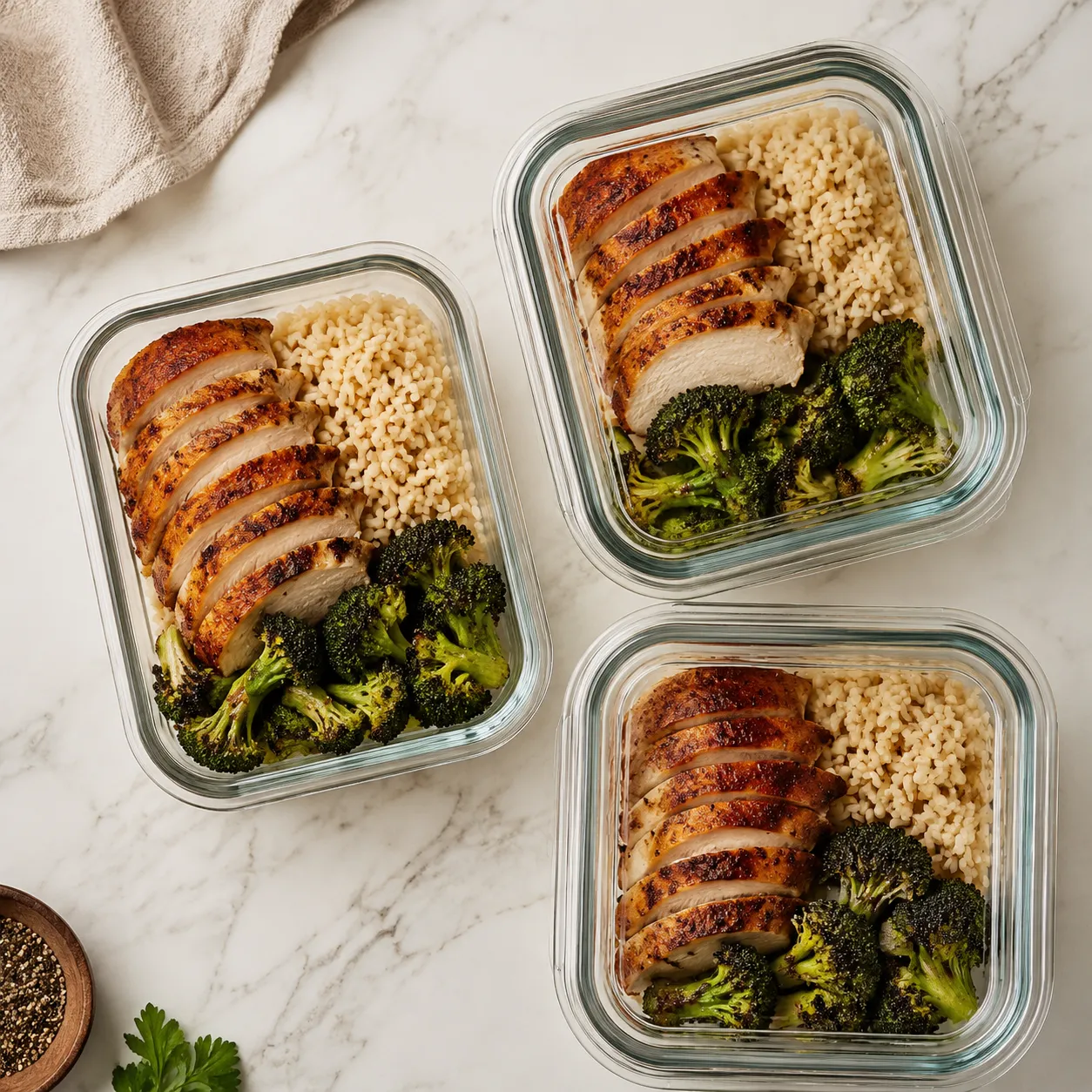
If you've gone all in on a full bird before, you'll recognize this pattern from smoked chicken drumsticks and other backyard cooks: buy big, cook once, eat well for a week. Portion the leftovers into glass containers right after slicing and you're set for lunches through Thursday.
That's the whole method. A smart dry brine, a balanced rub, clean smoke from the right wood, and a thermometer pulled at the right moment. Do those four things and your bird will turn out tender, juicy, and so much better than anything you'd grab from a chain BBQ joint on the way home. Fire up the smoker this weekend.
The base recipe is a blank canvas. Once you've nailed the temperature method, you can swing the flavor profile in just about any direction. Try one of these riffs next time you fire up the smoker.
Cool the chicken to room temperature within two hours of cooking, then refrigerate whole or sliced in airtight containers for up to four days. For longer storage, vacuum-seal or wrap tightly in plastic and foil, then freeze for up to three months. Frozen smoked chicken thaws best overnight in the fridge — never on the counter.
To reheat without drying out, the low-and-slow approach wins every time. Place sliced chicken in a covered baking dish with a splash of chicken broth or water, cover tightly with foil, and warm at 300°F for 10 to 15 minutes until heated through. The microwave works in a pinch (50% power, covered, 30 seconds at a time), but you'll lose some bark texture. Cold smoked chicken straight from the fridge is also fantastic on salads or in sandwiches without any reheating at all.