Gluten Free Cornbread (Moist, Fluffy + Dairy-Free Option)
Ingredients
Scale
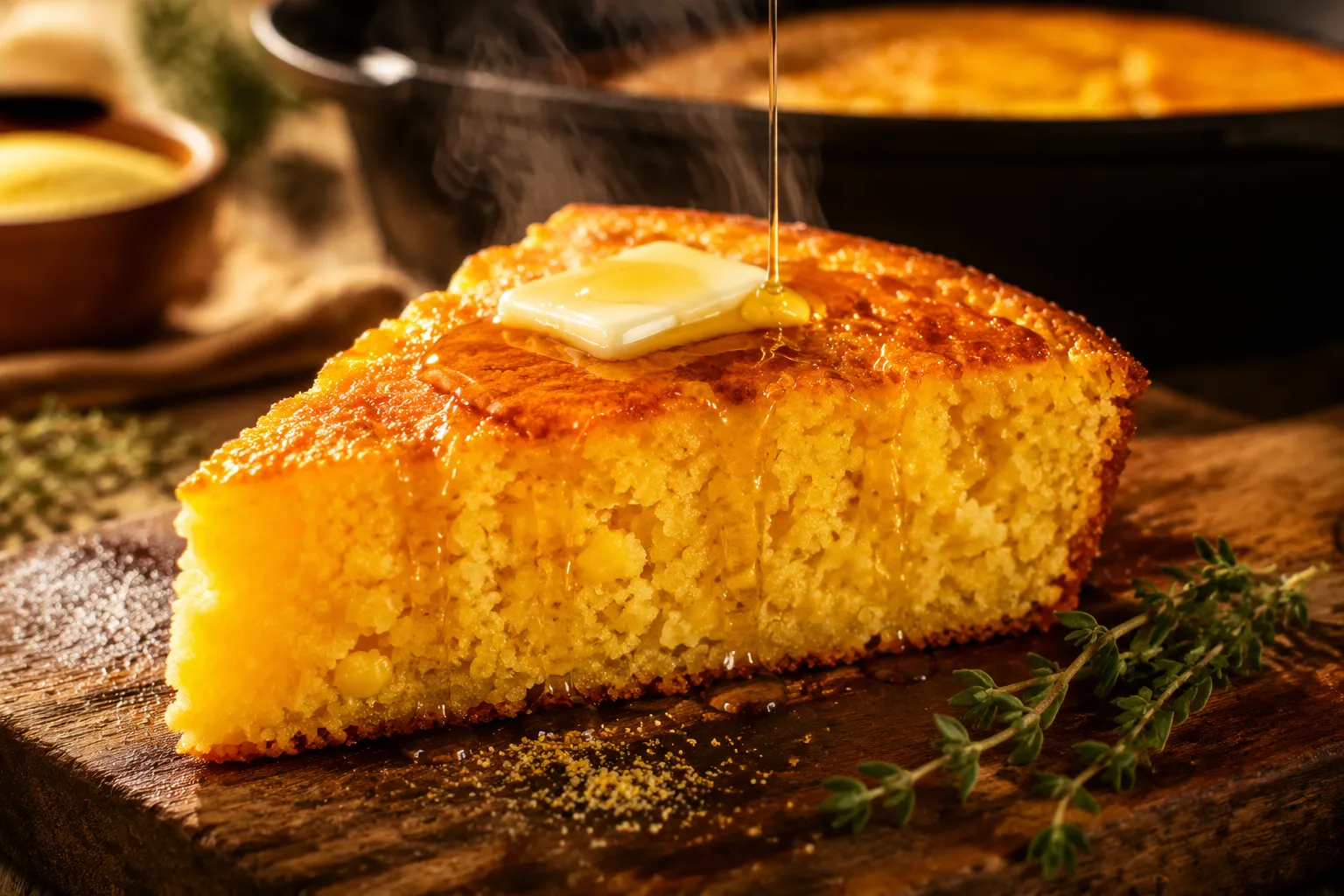
Tender, golden, and lightly sweet — this gluten free cornbread bakes up moist with crisp buttery edges in just 30 minutes, with an easy dairy free swap.
Gluten free cornbread should be everything classic cornbread promises: golden on top, lightly crisp around the edges, and tender enough to split open with a pat of butter melting right into the crumb. This version keeps the old-school flavor of Southern-style cornbread while using a simple 1-to-1 flour blend so the texture bakes up soft, sturdy, and never sandy. It is the kind of quick bread you can pull together on a weeknight for chili, but it also feels right at home on a holiday table.
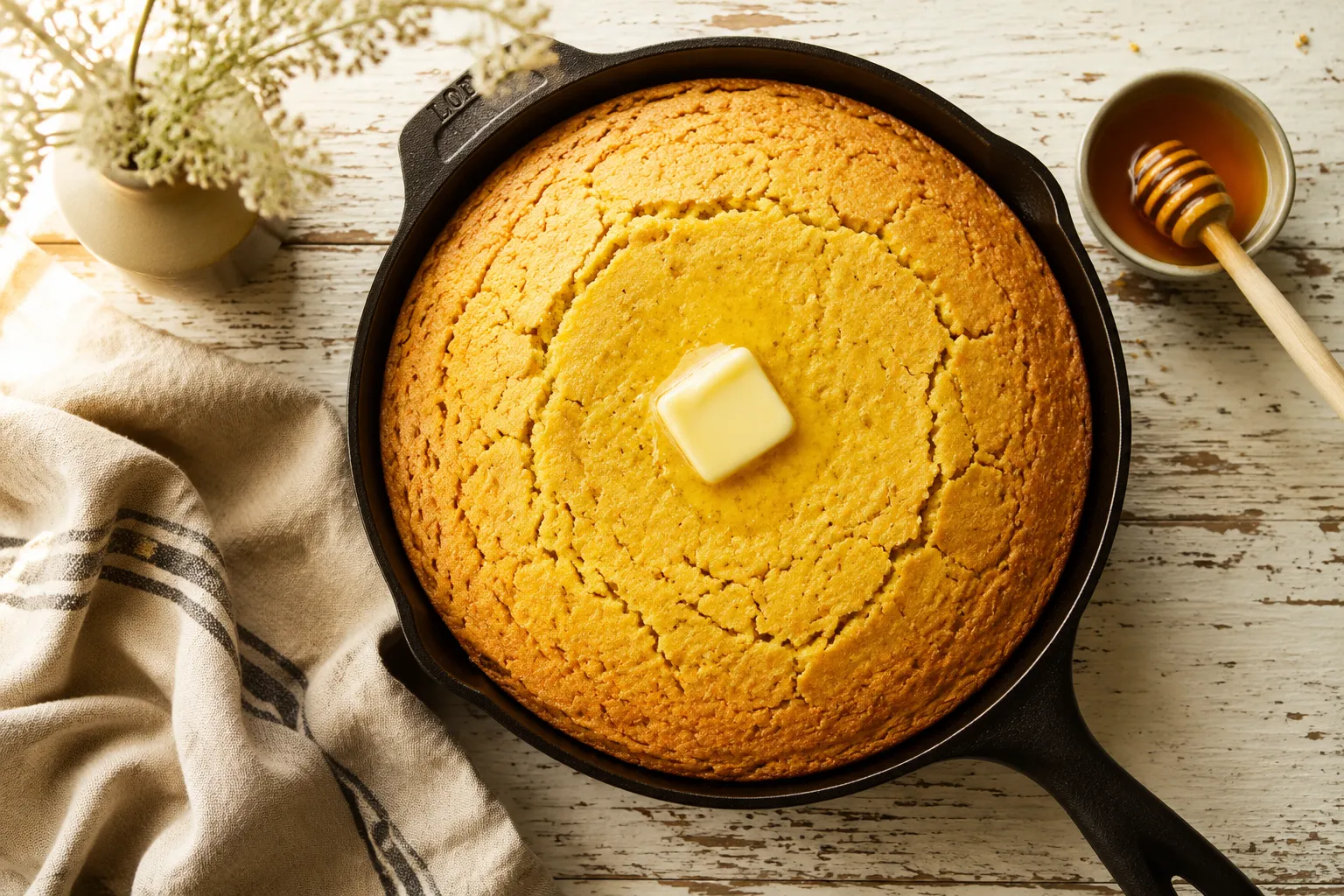
The secret is a balanced mix of fine yellow cornmeal and gluten-free baking flour, plus enough eggs and fat to keep each square moist and fluffy. You can bake it in a hot cast iron skillet for those irresistible buttery edges, or use an 8-inch square pan if that is what you have. There is also an easy swap for dairy free cornbread, so everyone at the table can reach for a warm slice.
This gluten free cornbread recipe leans just lightly sweet, with honey or maple syrup in the batter and a little sugar for that familiar bakery-style tenderness. It is not cake, but it is also not dry, crumbly diner cornbread. Think golden, rustic, and spoonbread-soft in the center, with a crisp edge that practically begs for honey butter.
The backbone of this recipe is fine yellow cornmeal, and the word “fine” really matters here. Coarse or stone-ground cornmeal can taste wonderful, but in a gluten-free bake it often makes the crumb gritty or fragile. Fine cornmeal gives you that sunny corn flavor and classic golden color while still slicing cleanly into wedges or squares.
You will also need a gluten free flour blend, ideally a cup-for-cup or 1-to-1 baking blend that already contains xanthan gum. That little bit of structure helps replace the stretch usually provided by wheat flour, giving the bread a tender bite instead of a pile of crumbs. If you are new to this style of baking, reading a few gluten free baking tips can make a big difference, especially when it comes to measuring flour and avoiding overmixing.
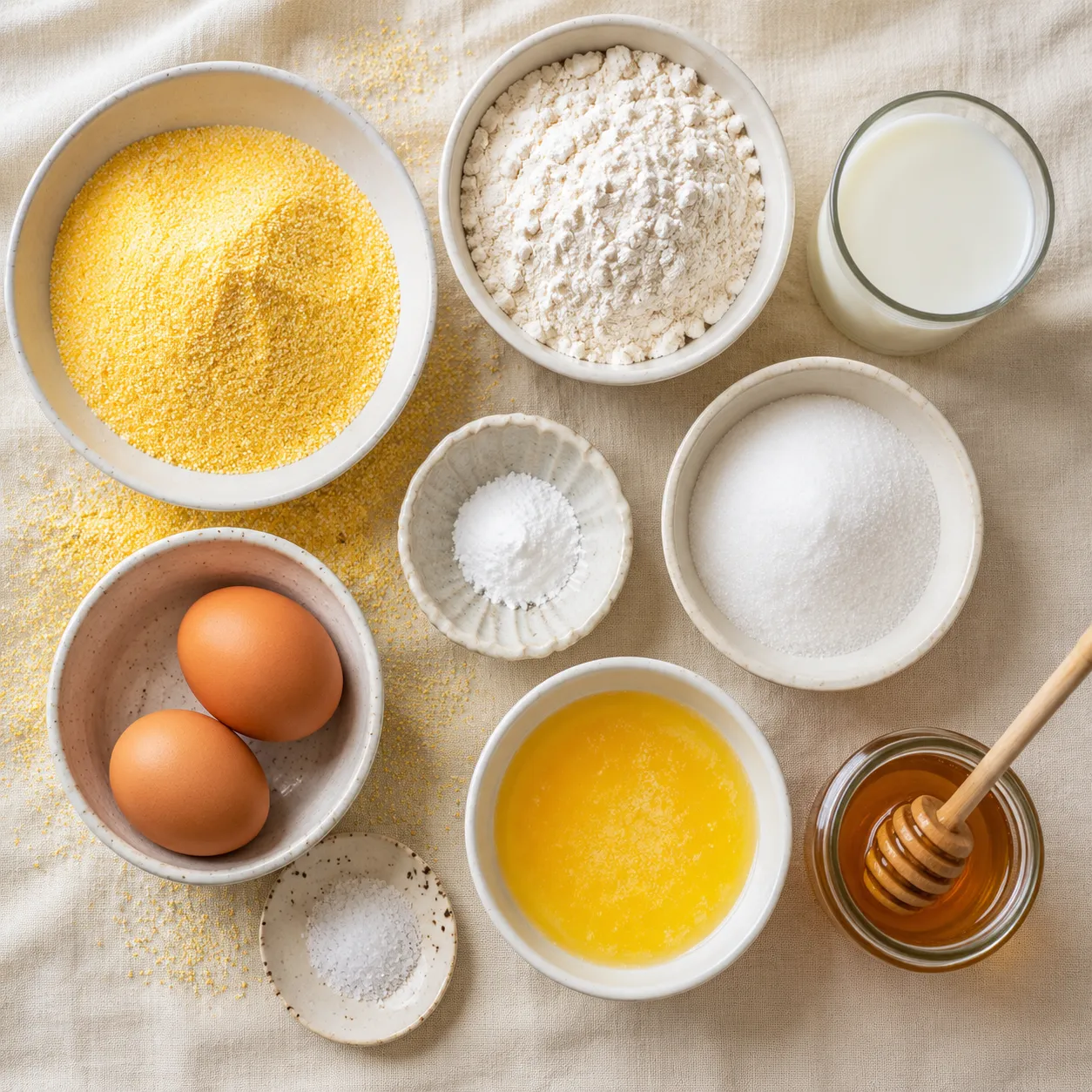
For the wet ingredients, eggs add lift and richness, while milk loosens the batter and helps the cornmeal hydrate. Whole milk gives a classic flavor, but unsweetened almond milk, oat milk, or soy milk all work beautifully if you are making the dairy-free version. If you want a tangier flavor, a dairy free buttermilk substitute made with plant milk and a splash of vinegar also fits right in.
The sweetener is flexible. Granulated sugar gives the most consistent crumb, honey adds a floral warmth, and maple syrup makes the bread feel cozy and autumnal. Butter brings that unmistakable skillet-cornbread flavor, but melted coconut oil or vegan butter can step in without making the finished loaf taste “alternative.” For gluten free corn bread that tastes traditional, the key is not one single ingredient but the balance: equal parts cornmeal and flour, enough moisture, and a hot pan.
Great cornbread is all about hydration. Cornmeal needs a little time in the batter to absorb liquid, and the gluten-free flour needs enough moisture to avoid a dusty finish. Whisking the dry ingredients well before adding the wet ingredients keeps the baking powder, salt, and flour evenly distributed, so the bread rises evenly from edge to center.
The batter should be thick but pourable, almost like a soft pancake batter. If it looks stiff enough to mound heavily in the bowl, it may need a tablespoon or two more milk, especially if your flour blend is starch-heavy. On the other hand, do not try to make it thin and runny; cornbread needs enough body to hold its crumb once sliced.
The combination of eggs, melted fat, and liquid sweetener gives the finished bread a tender interior. Honey and maple syrup both help hold onto moisture, which is especially useful in gluten-free baking. That is why a small amount of sweetness here is not just about flavor—it also helps the texture stay soft after cooling.
The pan matters, too. A preheated cast iron skillet gives the batter a head start the second it hits the surface, creating that sizzling edge and deeper golden crust. If you use a square metal baking pan, you will still get a lovely loaf, just with a slightly softer edge and a more even, cake-like shape.
Start by heating the oven to 400°F and placing your skillet inside while the oven warms. This is the moment that sets up the crisp edge, especially if you add a little butter or oil to the hot pan just before the batter goes in. If you are using a glass or ceramic baking dish, do not preheat it empty; simply grease it well and pour the batter in once mixed.
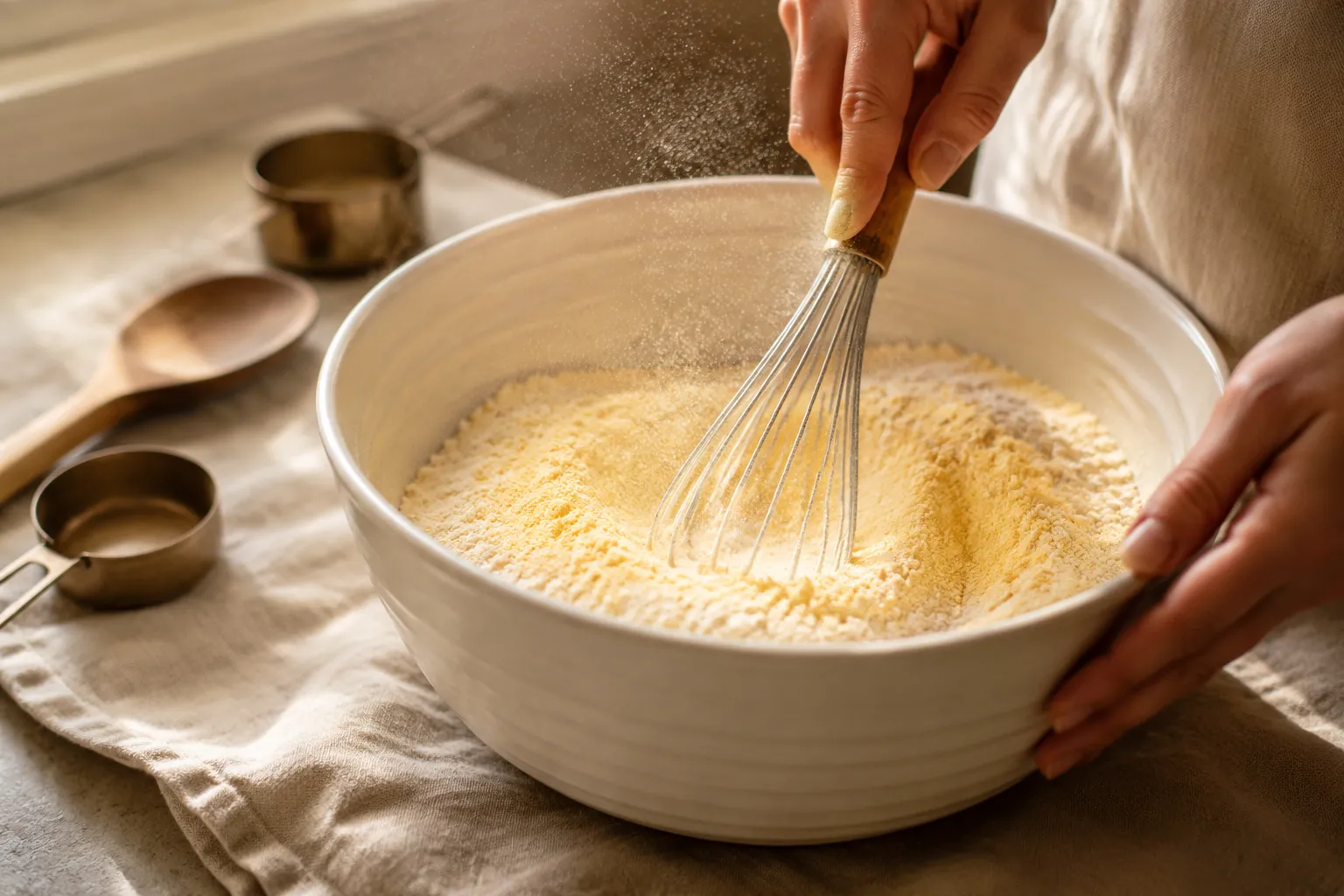
In a large bowl, whisk together the cornmeal, gluten-free flour, sugar, baking powder, and salt. This quick step prevents salty or bitter pockets and ensures the baking powder is spread throughout the batter. In a separate bowl or large measuring cup, whisk the eggs, milk, melted butter or oil, and honey or maple syrup until smooth.
Pour the wet mixture into the dry ingredients and stir gently until no dry streaks remain. A few small lumps are completely fine, and in fact, they are better than an overworked batter. When the gluten free cornbread batter is mixed just enough, it will bake up tender instead of dense.
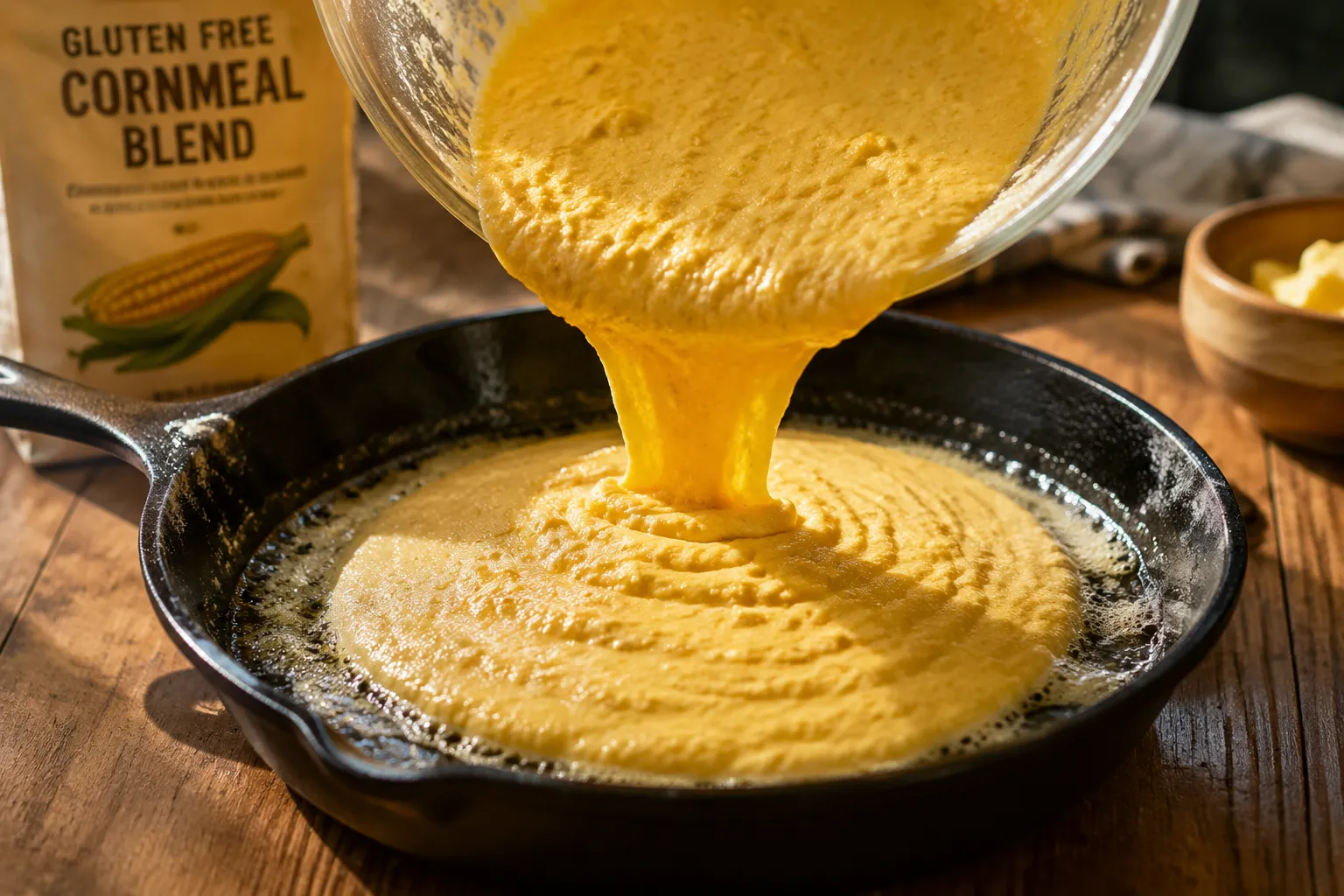
Carefully remove the hot skillet from the oven, swirl in a little butter or oil if needed, and pour in the batter. You should hear a faint sizzle around the edges, which is exactly what you want. Smooth the top lightly, then bake until the center is set, the top is golden, and a toothpick comes out clean or with a few moist crumbs.
Let the bread rest in the pan for at least 10 minutes before slicing. This short pause helps the crumb finish setting and makes the wedges easier to lift without breaking. The aroma will tempt you to cut in immediately, but a little patience gives you cleaner slices and a softer interior.
The finished bread should have a gently crackled top, a deep golden base, and a crumb that looks tender rather than tight. When you press the center lightly, it should spring back without feeling wet or mushy. Around the edge, the crust will be darker and slightly crisp, especially if you used cast iron.
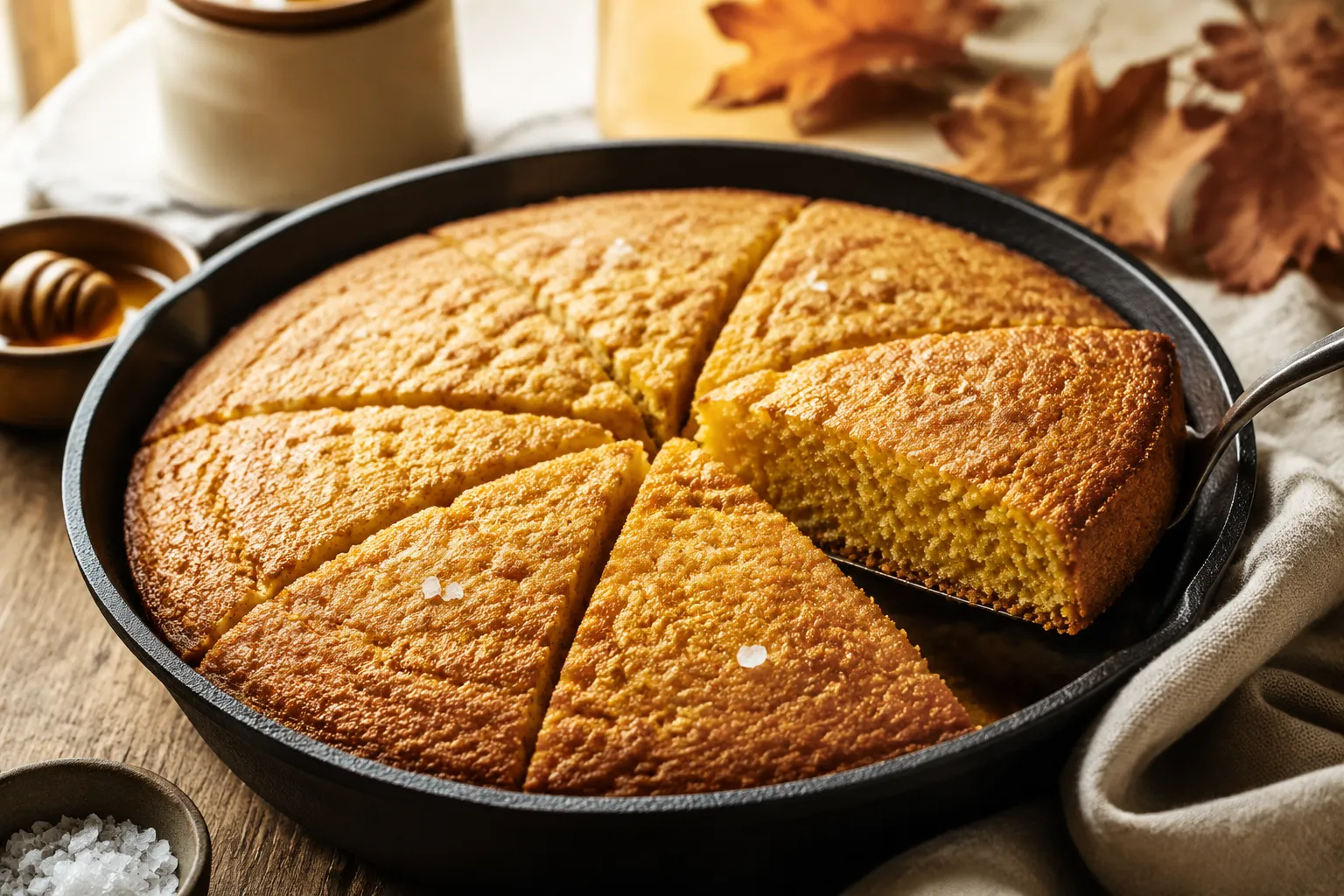
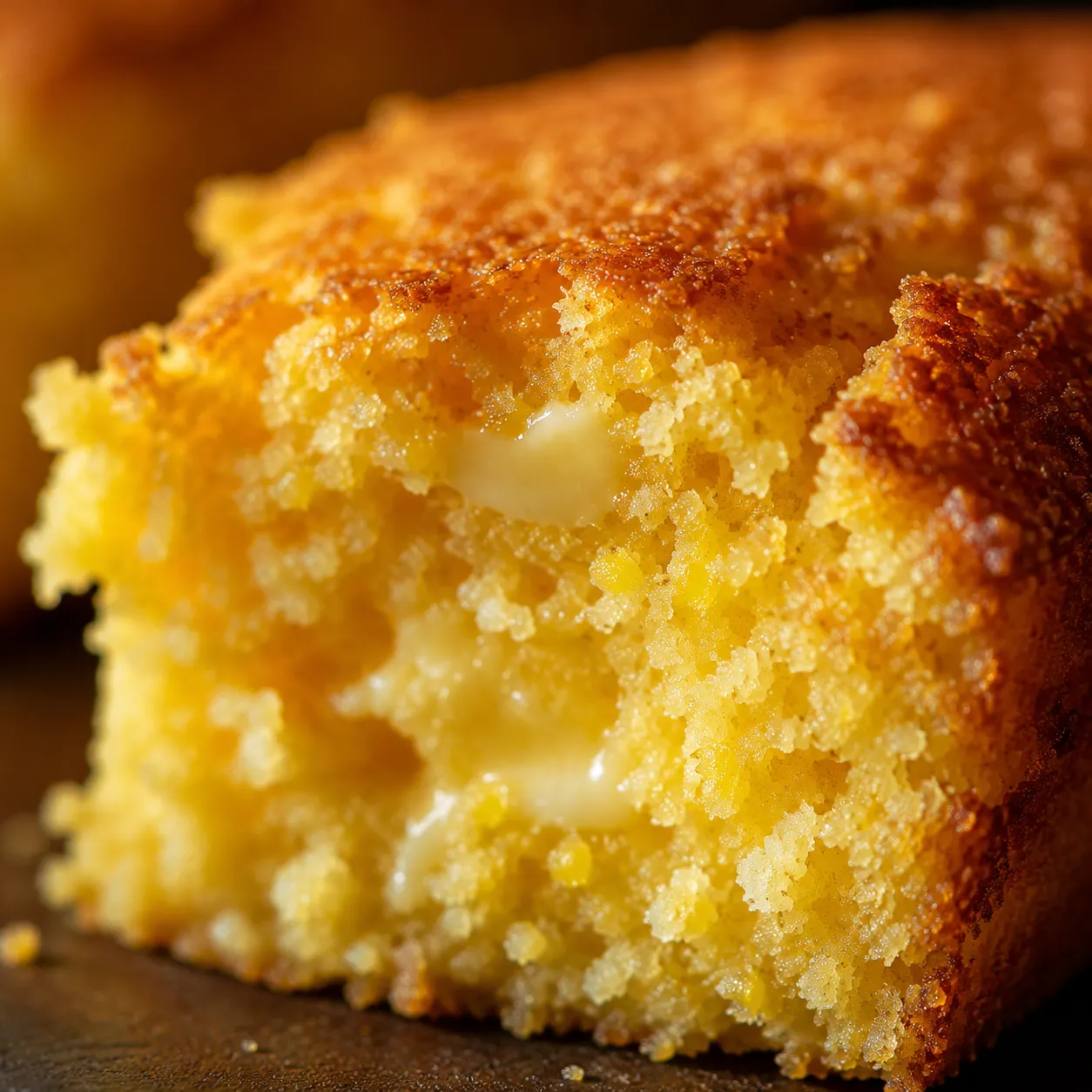
Inside, the crumb should be soft, sunny, and speckled with tiny cornmeal grains. It should hold together when lifted, but still break apart easily with a fork. This is where the 1-to-1 ratio of cornmeal to flour blend really shines, giving you enough corn flavor without tipping the bread into dry or crumbly territory.
If you love a more savory slice, you can reduce the sugar slightly and keep the honey or maple syrup for moisture. If you prefer a sweeter, brunch-style bread, serve it warm with salted butter and jam. Either way, the base recipe stays close to the flavor of classic Southern-style cornbread while making room for modern gluten-free needs.
Serve gluten free cornbread warm from the skillet with soups, stews, and anything saucy enough to swipe through the crumbs. It is especially good with a smoky bean soup, a pot of chicken stew, or a rich gluten free chili recipe on a chilly night. The bread soaks up broth without falling apart immediately, which is exactly what you want from a dinner-table cornbread.
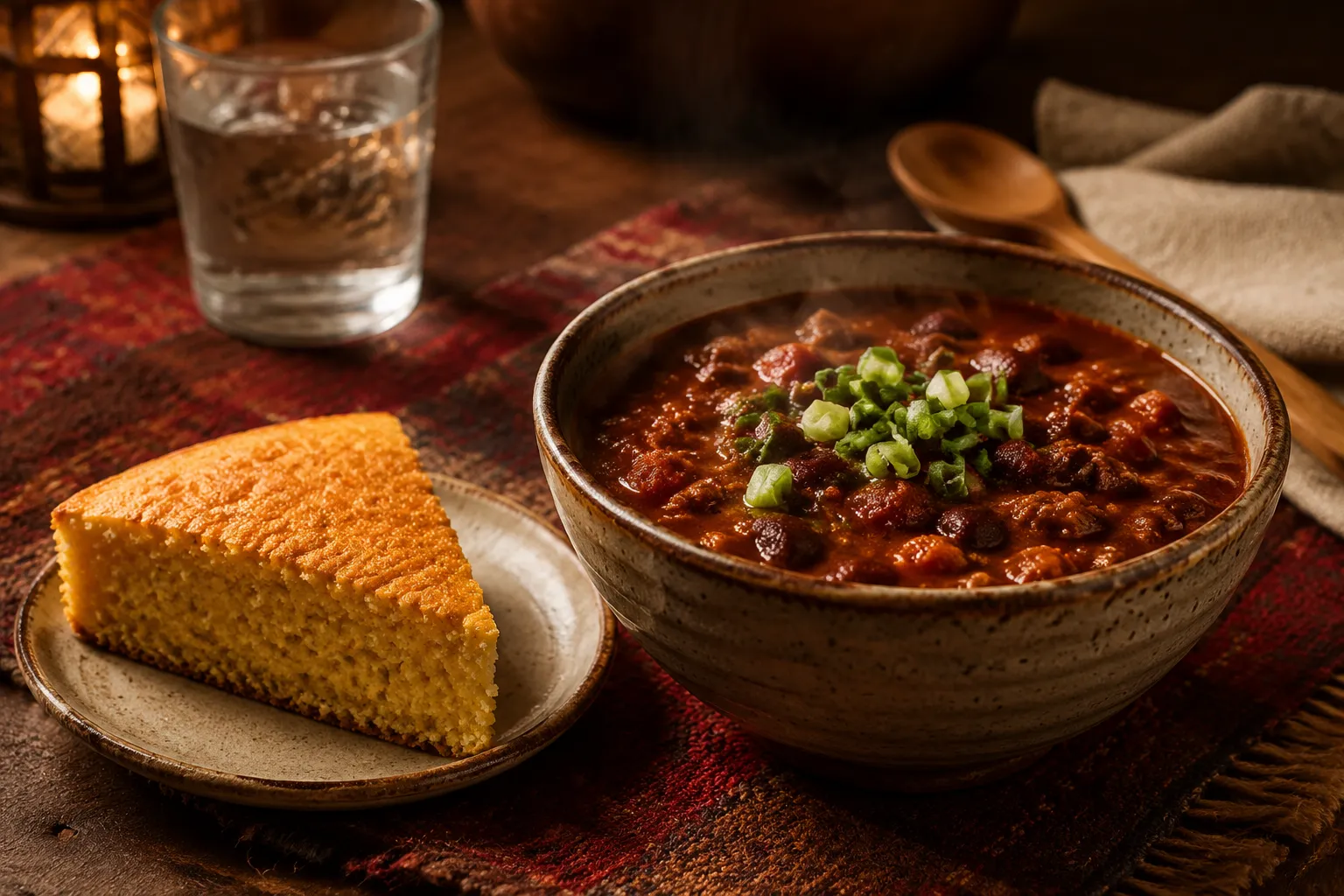
For holidays, slice it into squares and add it to a basket with salted butter, cranberry jam, or whipped maple butter. It fits beautifully alongside gluten free Thanksgiving sides because it brings that familiar bread-basket comfort without requiring wheat flour. Leftover pieces can also be cubed and dried for cornbread dressing, which is one of the best reasons to bake an extra pan.
If you are serving this as a brunch or snack, pair it with soft scrambled eggs, crispy bacon, or a bowl of berries. For something extra cozy, a honey butter recipe turns each warm wedge into the kind of thing people hover around the kitchen island for. A little flaky salt on top of the butter is never a bad idea.
This bread is best the day it is baked, when the edges are crisp and the center is plush, but it also holds up well for meal prep. If you are planning a dinner party, you can whisk the dry ingredients together in the morning and keep the wet ingredients measured separately in the fridge. Right before baking, combine the two and pour the batter into the hot skillet.
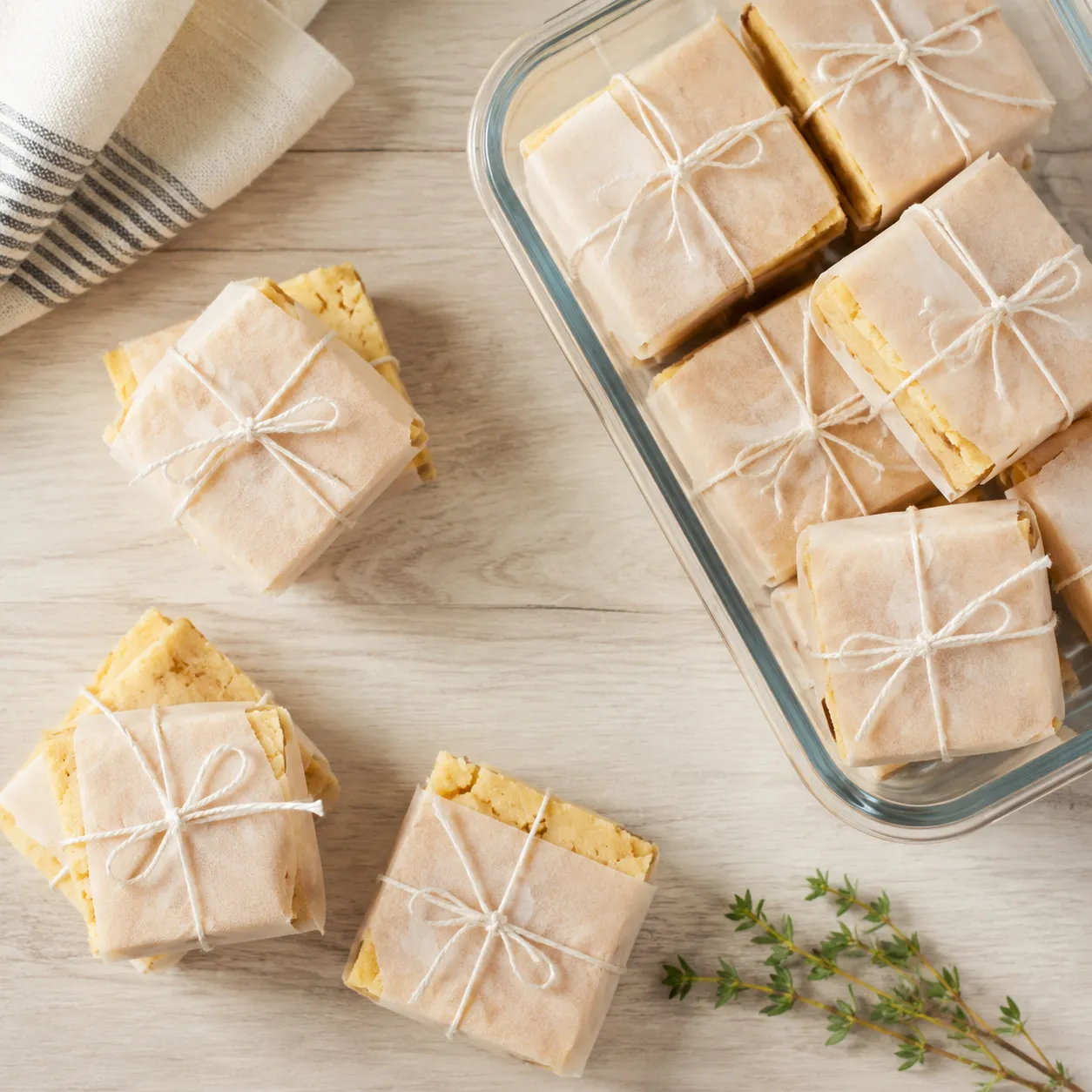
For a lunchbox-friendly option, bake the batter in a square pan and cut it into tidy pieces once cooled. The texture stays soft enough to enjoy at room temperature, especially when the recipe is made with honey or maple syrup. It is also wonderful split and warmed in a toaster oven, then served with butter, jam, or a drizzle of maple syrup.
Once you have this gluten free cornbread in your back pocket, it becomes one of those reliable recipes you can use all year. It is quick enough for weeknights, special enough for holidays, and flexible enough for dairy-free guests without changing the heart of the recipe. Golden, cozy, and beautifully simple—that is exactly what a good pan of cornbread should be.
This recipe is flexible enough to fit different tables while keeping the classic cornbread flavor intact. Keep the base ratio the same, then adjust the milk, fat, and sweetener as needed.
Store cooled cornbread in an airtight container at room temperature for up to 2 days, or refrigerate for up to 5 days. To keep it from drying out, place a small piece of parchment between slices and avoid storing it uncovered.
To freeze, wrap individual squares or wedges tightly in plastic wrap or parchment, then place them in a freezer-safe bag for up to 2 months. Reheat in a 300°F oven or toaster oven until warm, adding a small pat of butter or a light brush of milk if you want to refresh the crumb.