Authentic Chicago Dog Recipe (Dragged Through the Garden)
Ingredients
Scale
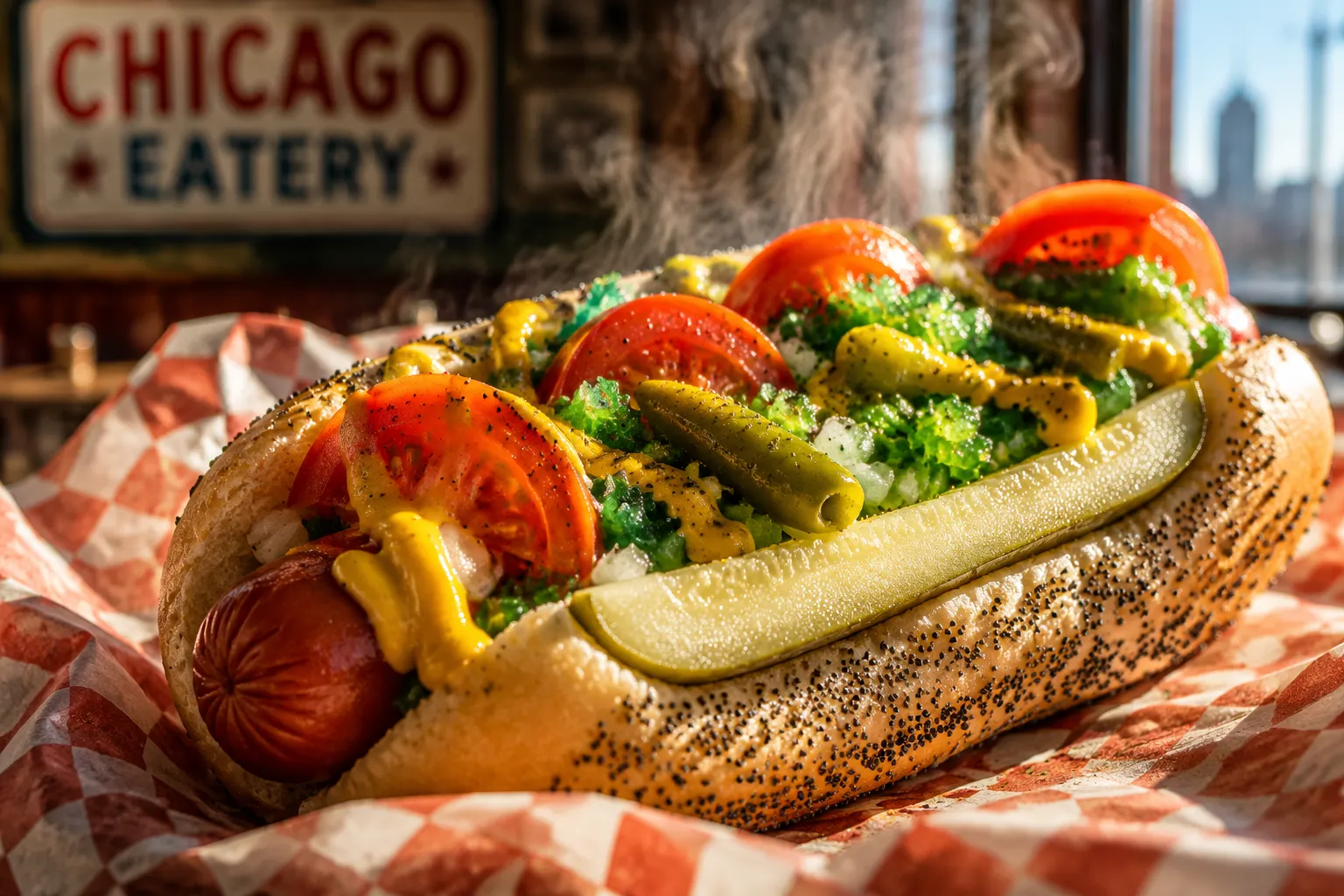
A true Chicago hot dog recipe done right — Vienna beef, neon green relish, sport peppers, and a poppy seed bun, all dragged through the garden. No ketchup allowed.
This chicago dog recipe is the real deal: a snappy Vienna beef hot dog tucked into a warm poppy seed bun, then piled high with yellow mustard, neon green relish, chopped onion, tomato wedges, a dill pickle spear, sport peppers, and that final whisper of celery salt. It is bold, crunchy, tangy, salty, juicy, and just a little chaotic in the best possible way.
If you have ever stood at a Chicago hot dog stand and watched a dog get “dragged through the garden,” you know the magic is in the build. Every topping has a job, and when they are layered in the right order, each bite gives you soft bun, beefy snap, pickle-bright crunch, sweet relish, peppery heat, and fresh tomato all at once. This is street food with rules, history, and personality.
At Forty Flavors, we love recipes that feel like a place, and this one tastes like summer in the Windy City. You do not need a plane ticket or a corner stand to make a great chicago hot dog recipe at home—you just need the right ingredients, a steamer setup, and the confidence to keep the ketchup far, far away.
A Chicago style hot dog is an all-beef frank served in a steamed poppy seed bun and topped with seven classic garnishes: yellow mustard, neon green relish, chopped white onion, tomato wedges, a dill pickle spear, sport peppers, and celery salt. The phrase “dragged through the garden” comes from the fresh, colorful pile of toppings that make the dog look almost more like a salad than a sandwich. But this is no random topping situation; the balance is intentional, and the order helps keep everything tucked into the bun.
Traditionally, the hot dog itself is made with Vienna beef, which gives that signature snap and savory depth. The bun is steamed, not toasted, so it stays soft enough to cradle the toppings without cracking. If you are exploring classic American hot dog recipes, this is one of the most iconic regional styles, right up there with New York street-cart dogs, Detroit coneys, and Sonoran dogs—but Chicago’s version may be the most specific about what belongs on top.
And yes, the ketchup rule is real. In Chicago hot dog culture, ketchup is considered too sweet and heavy for the carefully balanced toppings. The relish brings sweetness, the tomato brings freshness, the pickle and peppers bring acidity, and the mustard adds sharpness, so ketchup simply has no job here.
The soul of this chicago dog recipe is the topping lineup. Start with a generous zigzag of yellow mustard directly on the hot dog, then add neon green relish along one side. Finely chopped white onion comes next, followed by tomato wedges tucked between the dog and the bun, a dill pickle spear nestled on the opposite side, and two sport peppers placed on top like little briny exclamation points.
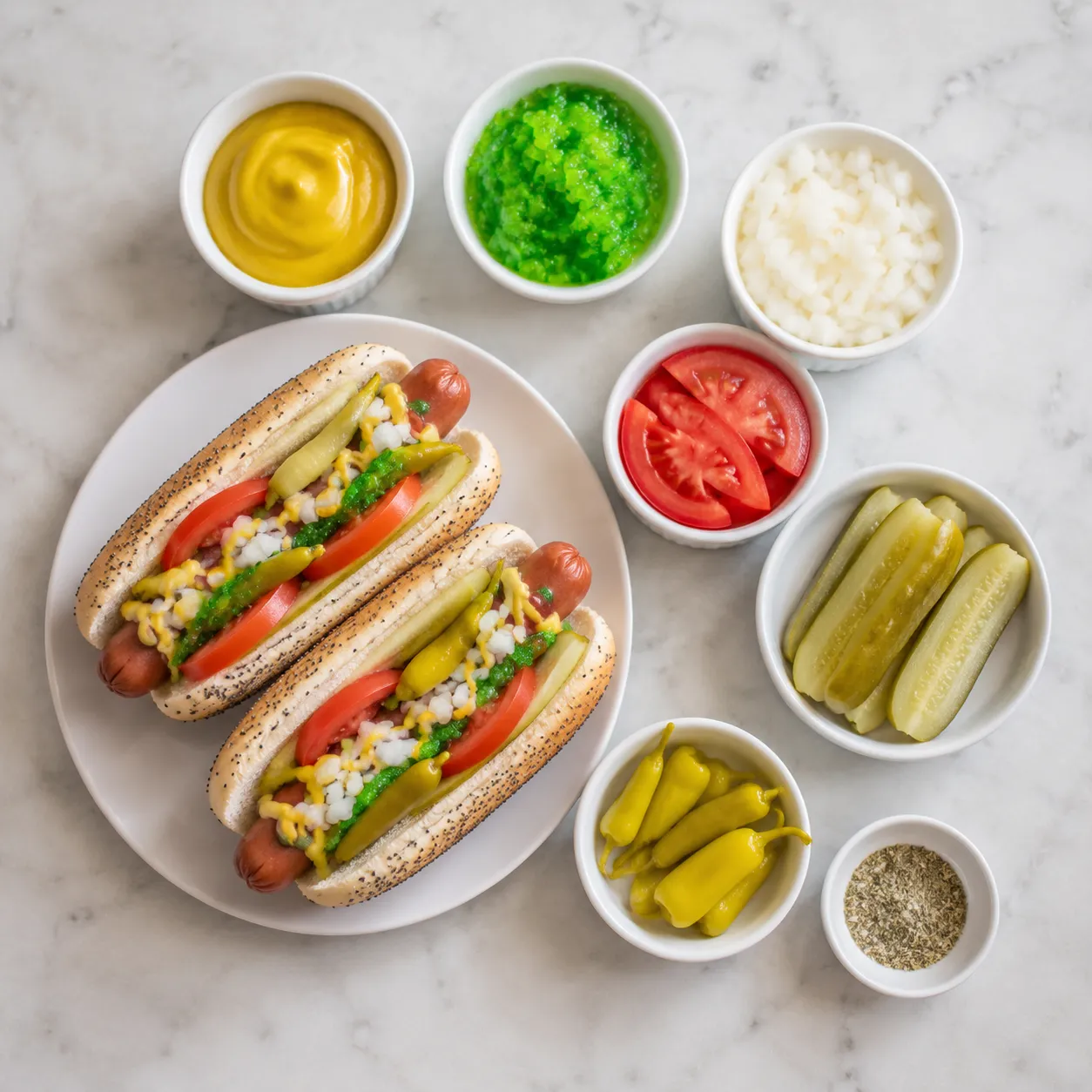
The finishing touch is celery salt, and it matters more than you might think. That savory, herbal sprinkle ties the tomato, pickle, onion, and peppers together and gives the hot dog its unmistakable Chicago-stand aroma. Do not swap it for plain salt; celery salt is one of the defining flavors here.
Neon green relish is another signature. It is sweet pickle relish with its color turned all the way up, giving the dog that instantly recognizable, almost electric look. If you make homemade pickle relish often, you can use it in a pinch, but for the full visual effect, the bright Chicago-style relish is worth seeking out.
For the most authentic flavor, look for Vienna beef hot dogs, especially the natural casing version if you can find it. The casing gives a satisfying pop when you bite in, while the all-beef interior stays juicy and well-seasoned. Many grocery stores carry Vienna beef in the refrigerated hot dog section, and you can also order it online if you want the full Chicago experience.
The bun should be soft, fresh, and speckled with poppy seeds. True poppy seed buns are a Chicago dog essential, but if your store only carries plain buns, you still have options. Brush the tops lightly with melted butter, sprinkle with poppy seeds, then steam them gently so the seeds cling and the buns warm through.
This is one of those recipes where freshness makes a noticeable difference. Use ripe but firm tomatoes so the wedges hold their shape, crisp dill pickle spears with plenty of crunch, and white onion chopped fine enough to scatter evenly. Sport peppers should taste tangy, spicy, and bright rather than flat or overly salty.
The method is simple, but it rewards a little care. The first move is to steam the hot dogs until they are plump and hot all the way through. Steaming keeps the beef juicy and helps preserve that snappy texture, which is why this method is preferred for a traditional Chicago-style build.
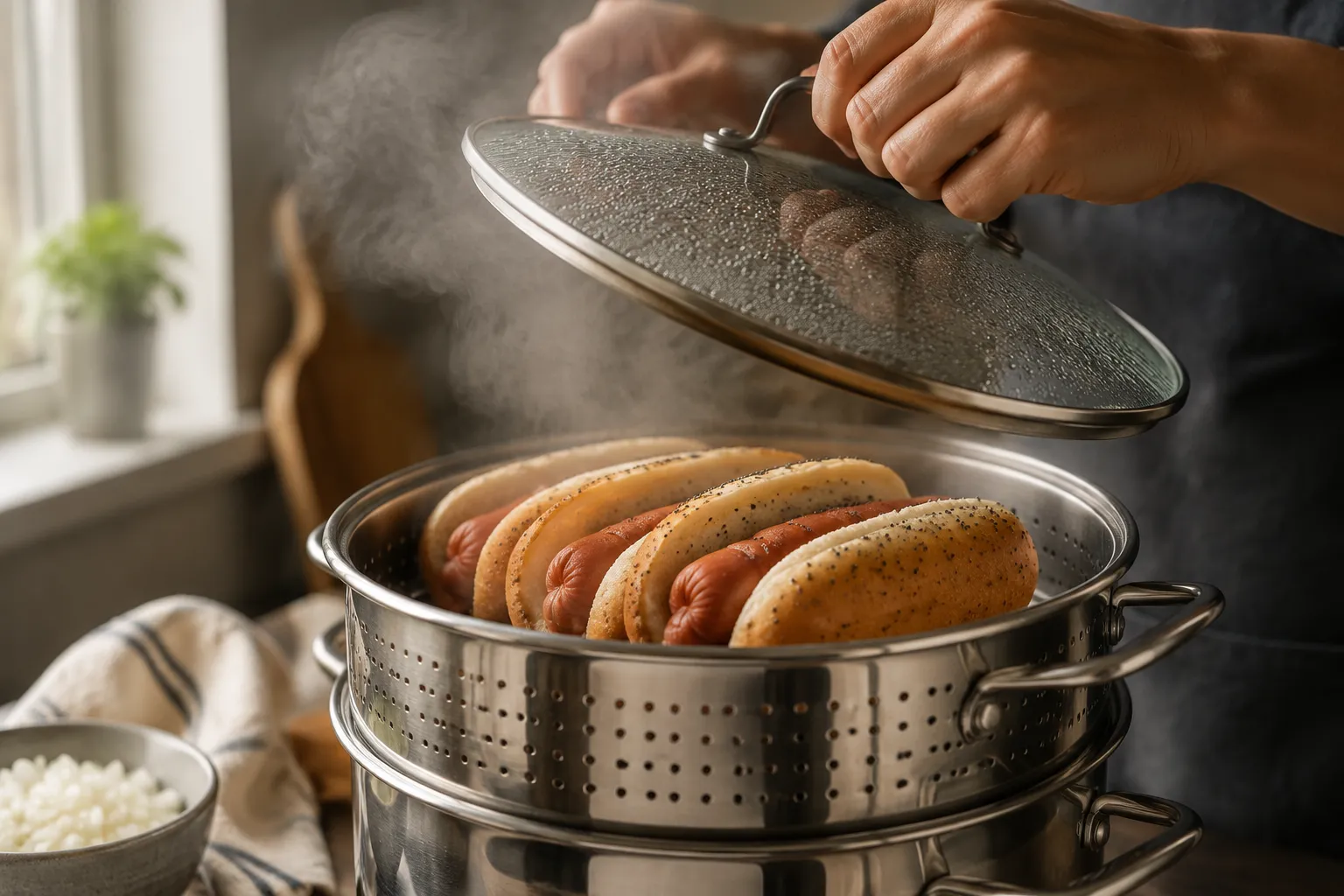
You can use a steamer basket set over simmering water, a dedicated hot dog steamer, or even a heatproof colander set inside a pot with a lid. Add the hot dogs first, then tuck the buns in for just the last minute or two so they warm without becoming soggy. The goal is a pillowy bun that bends around the hot dog rather than splitting apart.
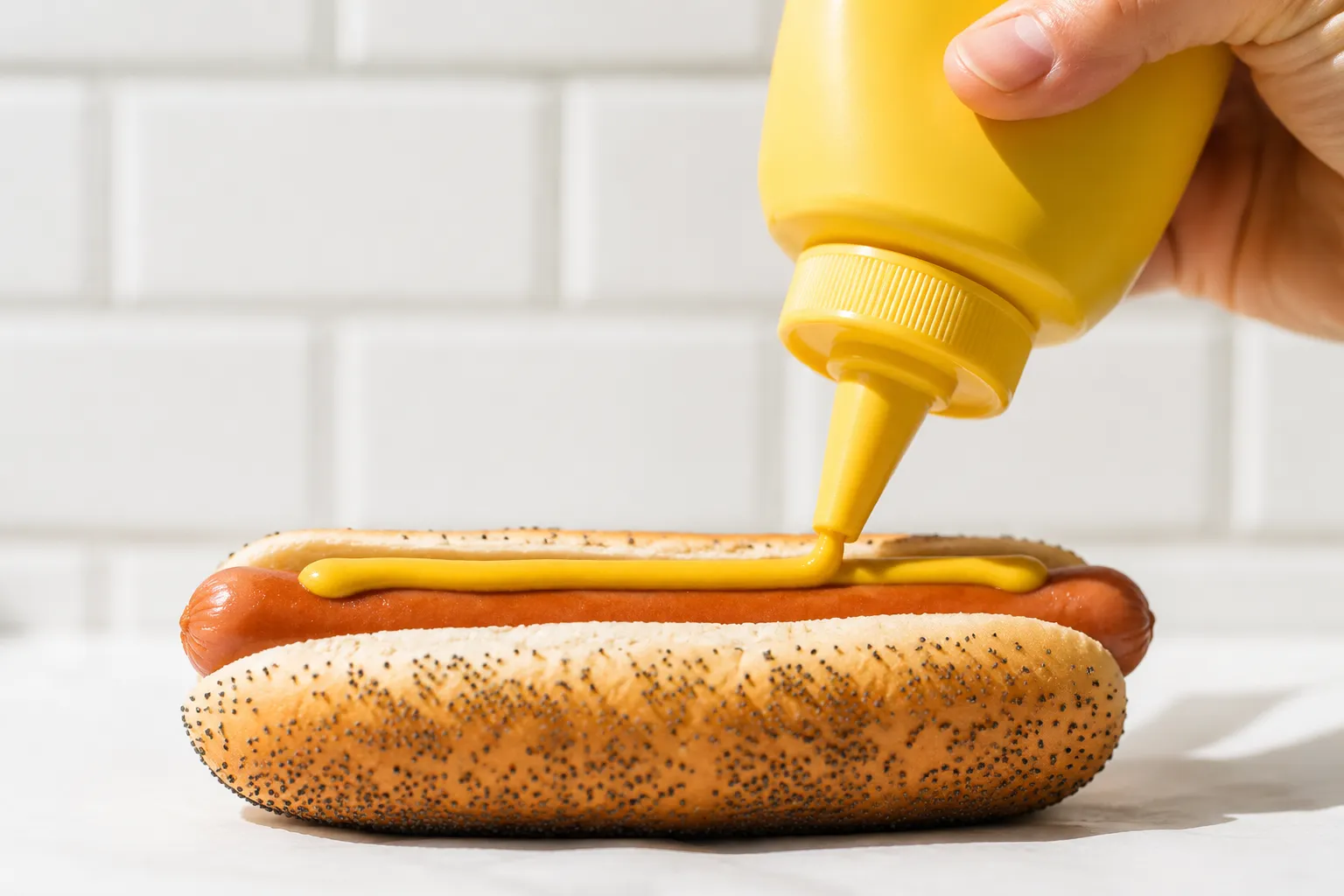
Once the hot dog is hot and the bun is soft, place the frank in the bun and begin with mustard. A clean stripe of yellow mustard along the length of the dog gives each bite sharpness and helps some of the toppings cling. This is the backbone of the build, so do not be shy.
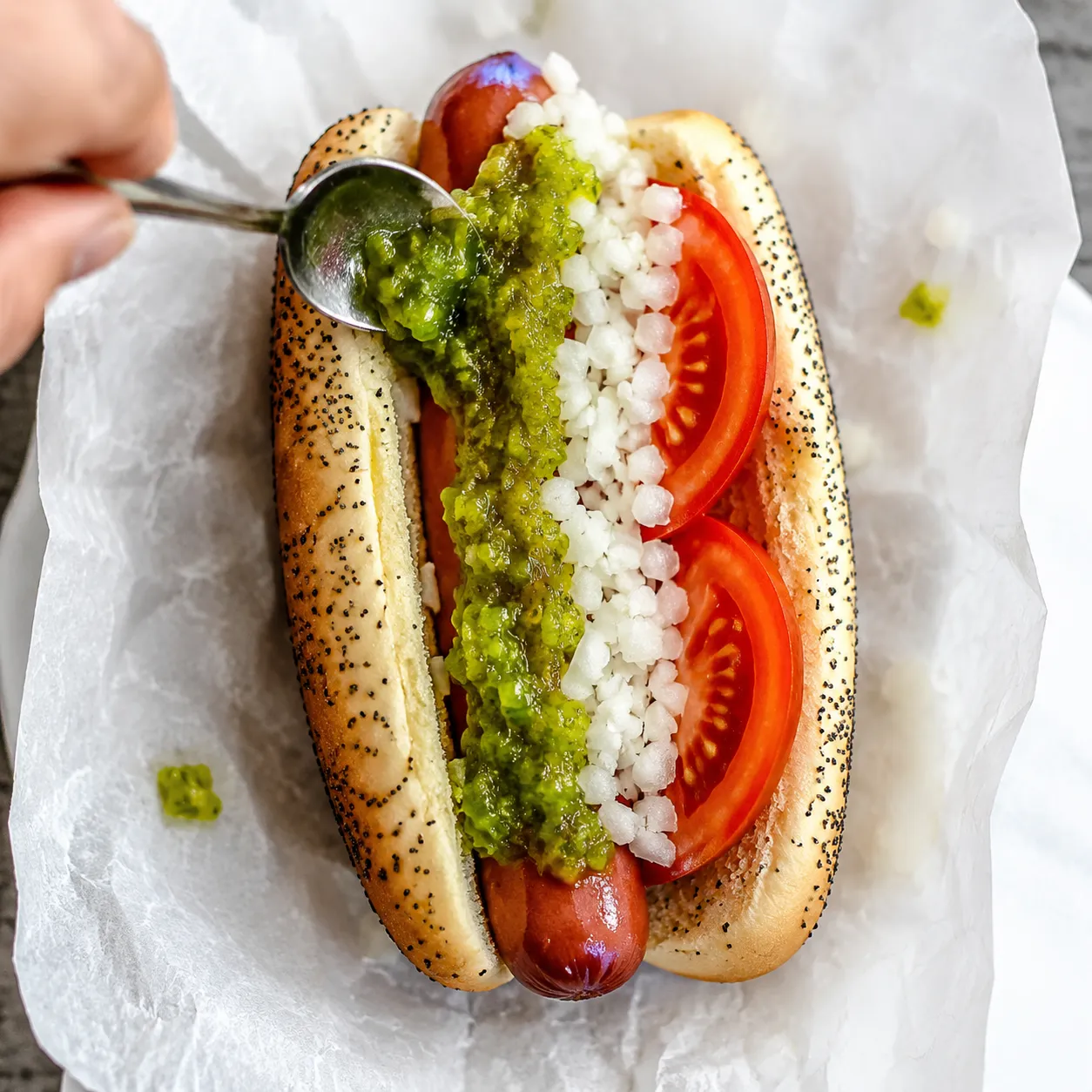
Next comes the relish, onion, and tomato. Spoon the neon green relish in a line beside the mustard, sprinkle the onion over the top, and tuck two tomato wedges along one side of the bun. At this point, the dog already looks bright and abundant, but the pickle and peppers are what make it fully Chicago.
Add one dill pickle spear on the opposite side of the tomatoes, pressing it gently into the bun so it stays put. Place two sport peppers over the top, angled slightly so they are easy to see and easy to bite. Finally, dust everything with celery salt, letting it land on the tomato, pickle, onion, and peppers for that unmistakable finish.
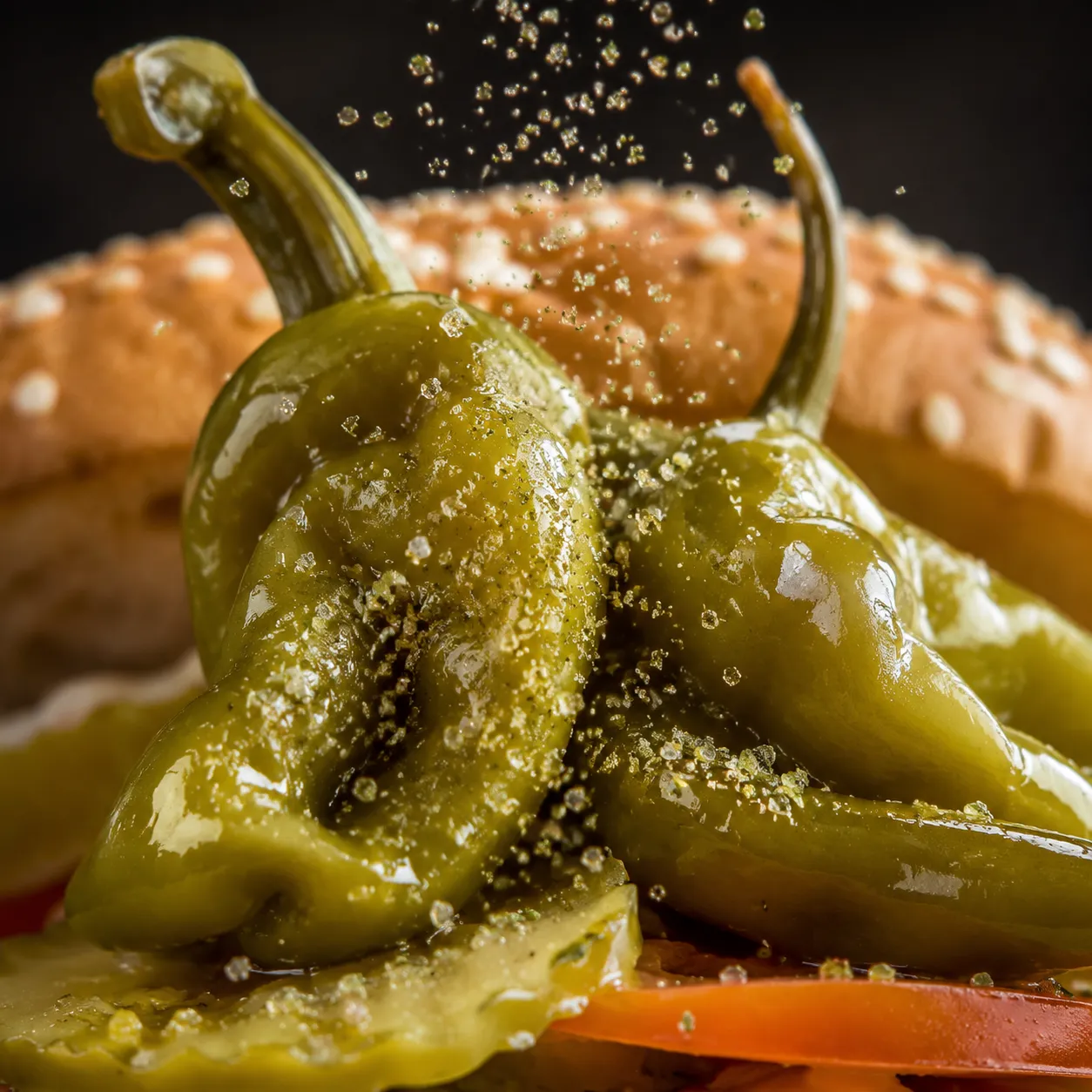
This topping order is part tradition, part practicality. Wet ingredients go where they can cling, larger pieces brace against the bun, and the celery salt floats over everything like seasoning on a fully assembled salad. When done right, this chicago dog recipe holds together surprisingly well, even with all that garden on top.
The easiest way to make this feel like it came from a neighborhood stand is to set up your counter like a topping station. Put the onions, relish, tomato wedges, pickle spears, sport peppers, mustard, and celery salt in small bowls so you can build quickly while the buns and hot dogs are still warm. This keeps the process fun and lets everyone see the colors before they land on the bun.
If you are serving a crowd, steam the hot dogs in batches and keep them covered over very low heat. Buns should be steamed right before serving, because they can turn too soft if they sit in the steamer too long. A paper-lined tray or basket also helps capture that diner feeling, especially when the toppings tumble a bit as they inevitably will.
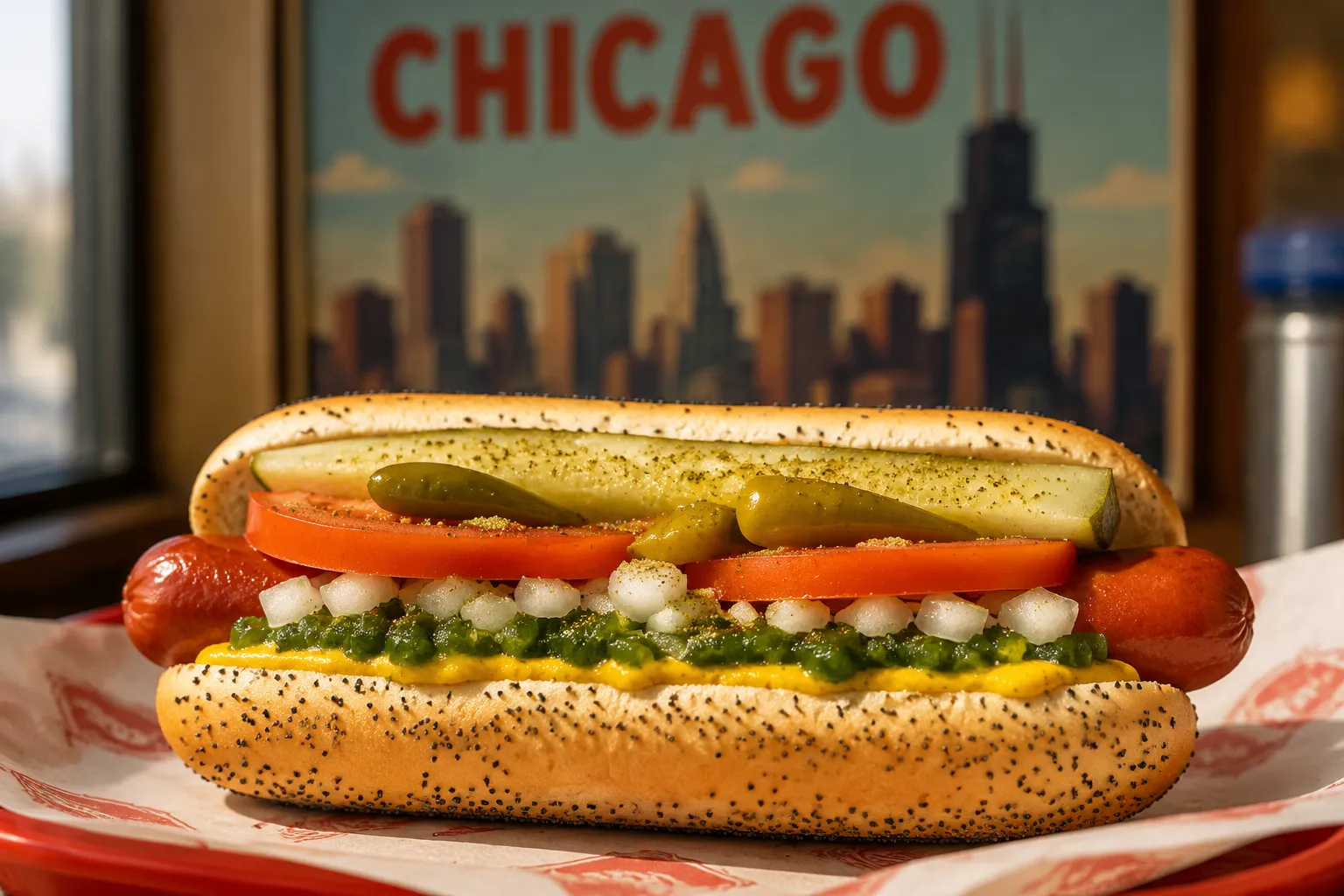
The finished dog should be colorful, over-the-top, and balanced. You want the mustard and relish visible, the tomato and pickle acting like rails on either side, and the peppers perched on top. A final pinch of celery salt should make the whole thing smell savory, fresh, and just a little briny.
A Chicago dog is satisfying on its own, but it really shines with simple sides. Crinkle-cut fries are the classic choice, especially if you serve them diner-style in a basket with a little extra celery salt or a side of pickled peppers. Potato chips, a crunchy slaw, or a cold pasta salad also work well if you are making this for a backyard lunch.
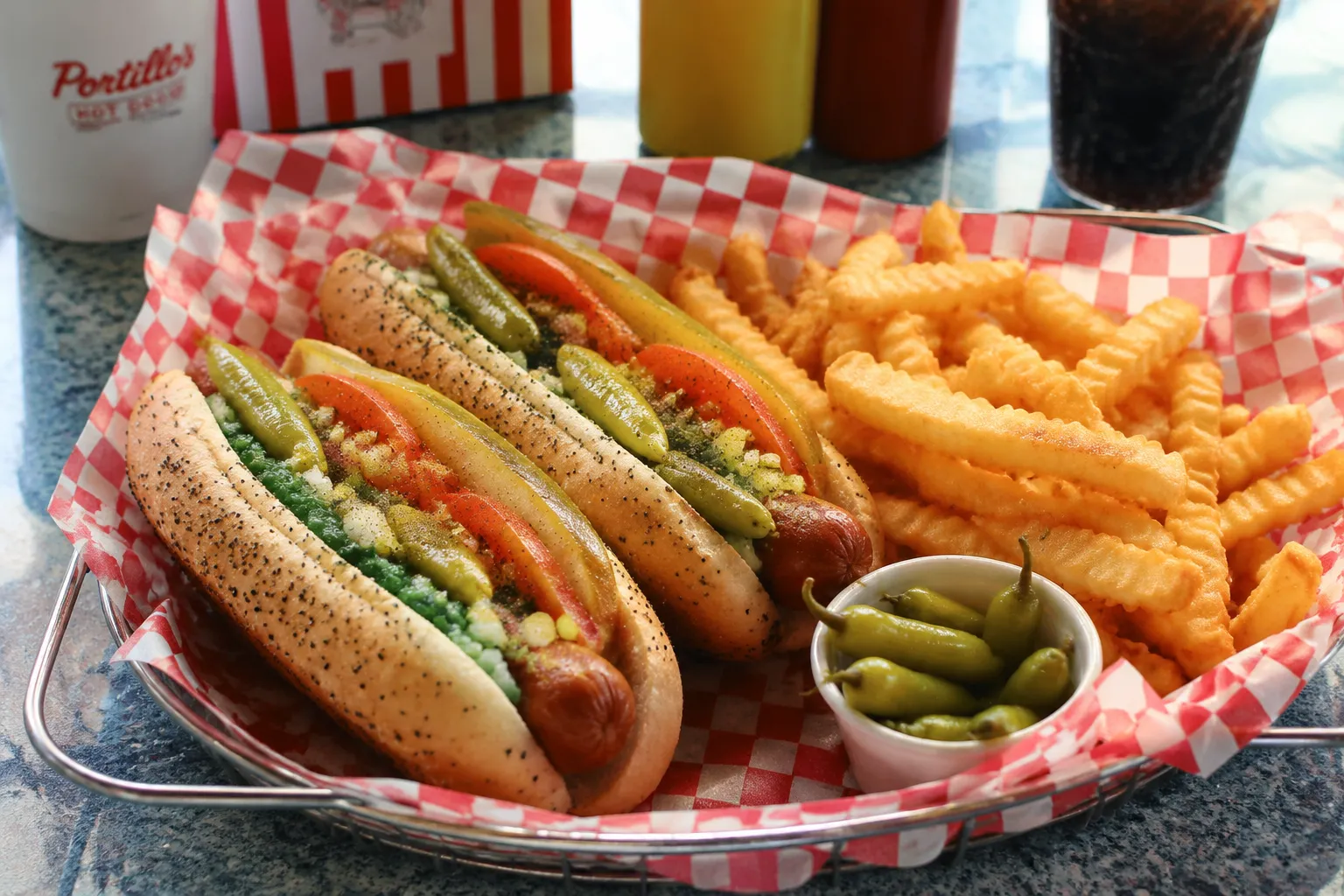
For a bigger Chicago-inspired spread, pair these dogs with Italian beef sandwiches, giardiniera, or a simple chopped salad. I also like setting out extra pickles and peppers so guests can adjust their heat and tang. If your crowd includes fans of grilled hot dogs, you can offer them alongside the steamed version, but the classic build is at its best when the dog is steamed and the bun is soft.
Cold drinks are a must here. Lemonade, iced tea, root beer, or a crisp lager all play nicely with the salty, tangy toppings. This chicago dog recipe is especially fun for game days, summer cookouts, neighborhood block parties, or anytime you want a low-effort meal that still feels like an event.
If you are not in Illinois, do not worry—most of the key ingredients are easier to find than they used to be. Vienna beef hot dogs can often be ordered online, and many well-stocked supermarkets carry them regionally. If you cannot find Vienna beef, choose a high-quality all-beef frank with a natural casing for the closest texture and flavor.
Sport peppers are usually near the pickles, olives, and jarred peppers. If your store does not carry them, pickled serrano peppers or small pickled banana peppers can bring a similar tangy heat, even if they are not exactly traditional. Neon green relish is sometimes stocked with hot dog toppings, but regular sweet relish works if you care more about flavor than the iconic color.
The bun can be the trickiest part, because not every bakery makes poppy seed buns. A plain, soft hot dog bun can be upgraded with a little butter and poppy seeds, then steamed just before serving. The result will not be exactly the same as a Chicago stand bun, but it gets you close enough to enjoy the full dragged through the garden experience.
The biggest mistake is treating the toppings like a free-for-all. A Chicago dog is abundant, but it is not random; each ingredient contributes sweetness, sharpness, crunch, heat, freshness, or aroma. Too much of one topping can throw the balance off, especially relish or onion.
Another mistake is overheating the buns. They need only a brief steam to soften, and if they sit too long, they can become gummy and difficult to handle. Keep the hot dogs hot, then steam the buns at the end for the best texture.
Finally, remember that this is a recipe built for immediate eating. Assemble the dog, admire it for a second, then dig in while the bun is warm and the toppings are cool and crisp. That hot-cold contrast is one of the quiet pleasures of this chicago dog recipe, and it is exactly what makes it taste like a proper Chicago stand dog.
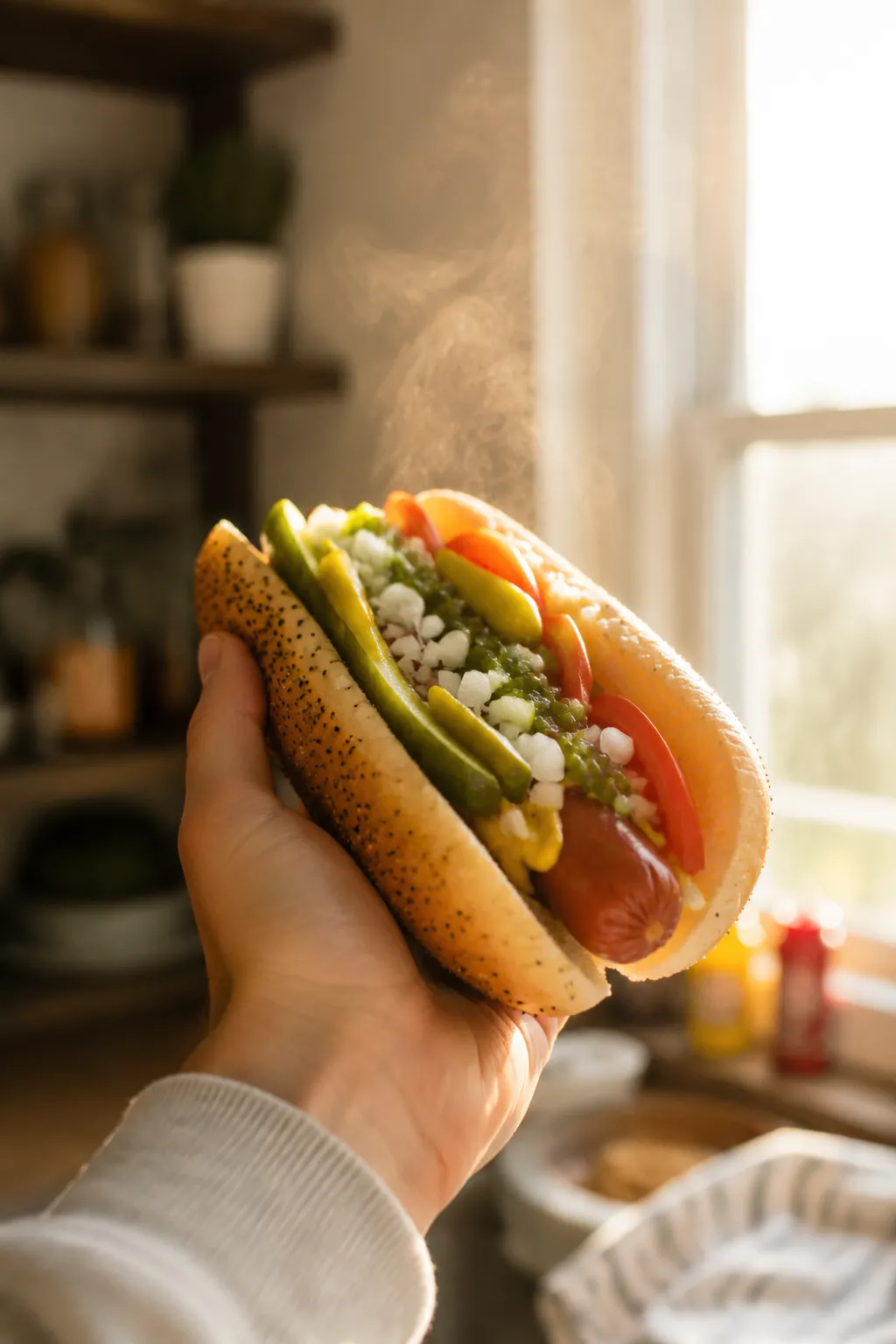
Once you make the classic version, you will understand why Chicagoans are so protective of it. It is not just a hot dog with a lot of toppings; it is a carefully stacked bite of city history, neighborhood pride, and summer appetite. Keep the ingredients fresh, follow the order, finish with celery salt, and enjoy every messy, crunchy, perfectly loaded bite.
Chicago dogs are best assembled right before eating, because the warm bun and cool, juicy toppings do not hold well once combined. For make-ahead prep, chop the onion, slice the tomatoes, drain the sport peppers, and portion the relish and pickles into small containers up to 24 hours in advance.
Store leftover cooked hot dogs separately in an airtight container in the refrigerator for up to 3 days. Reheat them gently by steaming or microwaving with a damp paper towel, then steam fresh buns and add the toppings just before serving.