Easy Miso Soup Recipe (Authentic 15-Minute Japanese)
Ingredients
Scale
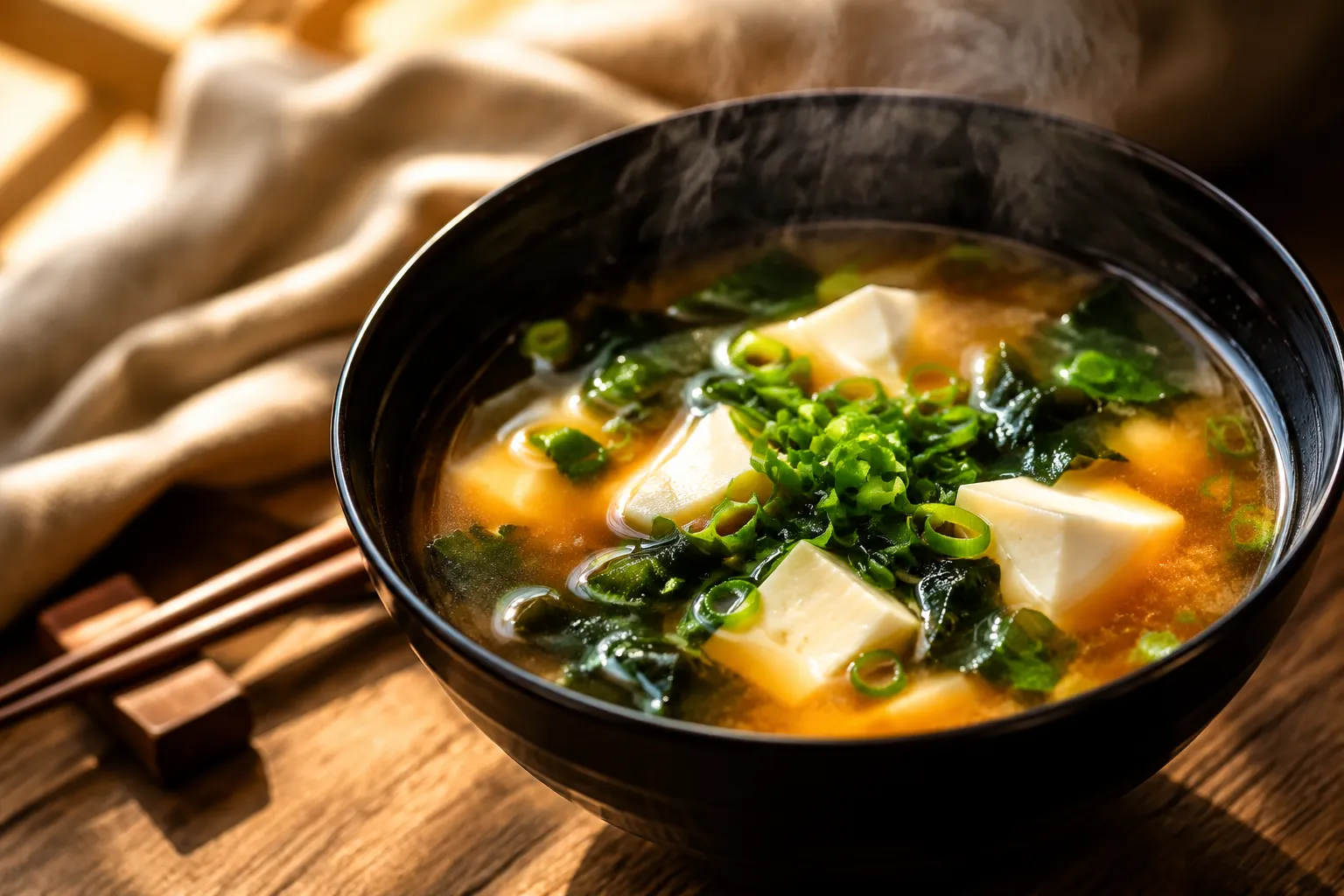
A cozy 15-minute miso soup recipe with silky tofu, tender wakame, and a savory dashi broth. Better than takeout and easy enough for a weeknight.
miso soup recipe cravings usually hit when you want something warm, soothing, and deeply savory without spending all night in the kitchen. This version keeps things simple, but it still tastes like the kind of bowl you’d happily order at a great Japanese restaurant. With a quick homemade dashi, tender tofu, and a shower of scallions, it’s the kind of easy miso soup you’ll want to keep in your weeknight rotation.
What makes this bowl special is the balance: the broth is light but full of umami, the miso paste brings a gentle salinity, and the wakame adds that signature briny note. If you’ve only had packaged versions before, this one will show you why a few simple Japanese pantry staples can create something far more satisfying. And yes, if you’re looking for a comforting vegan miso soup, there’s an easy swap built right in.
Miso soup is one of the great everyday foods of Japan: humble, comforting, and endlessly adaptable. At its core, it’s a broth made with dashi and seasoned with miso paste, then finished with small additions like tofu, seaweed, and green onion. It’s not heavy or creamy; instead, it’s clean and savory, with a quiet depth that makes it feel restorative.
The foundation of any good bowl is the broth, which is why learning homemade dashi broth makes such a difference. Dashi adds the subtle ocean-like umami that gives miso soup its signature flavor, and it’s much more nuanced than simply stirring miso into hot water. Once you understand that balance, you’ll find the whole dish surprisingly intuitive.
miso soup recipe or not, this is one of those recipes that feels more like a kitchen technique than a fixed formula. That’s part of its charm: once you know the base, you can dress it up or keep it bare-bones depending on what’s in your fridge. 📷 Miso soup ingredients flatlay with miso paste, tofu, wakame, and dashi
The ingredient list is short, but each item matters. The broth starts with kombu and bonito flakes for an authentic-leaning version, and you can easily make a vegan version by skipping the fish and adding dried shiitake. The result is still beautifully savory, and it’s a great way to use ingredients you may already stock if you cook with Japanese flavors often.
When choosing white miso vs red miso, think about the mood you want in the bowl. White miso is the classic everyday choice because it’s mild, slightly sweet, and easy to love. Red miso is bolder and saltier, while awase sits somewhere in the middle, making it a flexible pick if you like a more rounded flavor.
The rest of the bowl is all about texture. Silken tofu makes the soup feel delicate, wakame brings a soft oceanic bite, and scallions add freshness at the end. If you enjoy silken tofu recipes, this one is a great place to start because the tofu stays plush and custardy in the hot broth.
If you’ve never worked with seaweed before, this is the moment to get comfortable with how to use wakame seaweed. A little goes a long way, and it quickly expands into tender ribbons once it hits water or broth. That single ingredient gives the soup its familiar Japanese character without requiring much effort.
Knowing how to make miso soup is really about understanding timing. The broth should be hot and flavorful before the miso goes in, but it should never be boiled once the miso is added. That gentle approach preserves the delicate aroma and keeps the soup tasting clean instead of harsh.
📷 Making homemade dashi broth for miso soup with kombu
First, build the dashi base in a small saucepan. Kombu infuses the water with mineral-rich savoriness as it heats, and the bonito flakes deepen the flavor in just a few minutes. This is where the soup gets its backbone, so don’t rush the steeping step even though the recipe is fast overall.
Next, rehydrate the wakame in a little water until it softens and unfurls into glossy green ribbons. That tiny prep step matters because dried wakame can look like almost nothing in the package, then suddenly bloom into something lush and tender. Stir it into the broth once it’s ready so it distributes evenly.
📷 Rehydrating wakame seaweed for miso soup
Now add the tofu and dissolve the miso separately before combining. The easiest way is to place the miso in a ladle or small bowl with a bit of hot broth, then whisk until smooth before returning it to the pot. This gives you the silky texture you want and avoids clumps hiding at the bottom of the bowl.
📷 How to make miso soup by whisking miso paste into dashi
Finally, turn off the heat and finish with scallions. Their bright, oniony bite wakes up the whole bowl and makes the soup feel fresh instead of one-note. If you’re serving this as a light lunch or alongside rice, it’s a lovely finishing touch.
📷 Adding silken tofu to miso soup with wakame
miso soup recipe success really comes down to restraint: a handful of ingredients, gentle heat, and just enough seasoning to let the broth shine. Once you’ve made it this way, you’ll probably never go back to the instant packet version.
This soup works beautifully as a starter, but it can also be part of a simple Japanese-style meal. Serve it with steamed rice, grilled salmon, a crisp cucumber salad, or even a small plate of vegetables for a light weeknight dinner. If you’re building a fuller spread, it pairs naturally with dishes that celebrate clean, savory flavors.
It also makes a wonderful reset meal when you want something nourishing but not heavy. Because the broth is so aromatic, a bowl feels more substantial than its ingredient list suggests. On busy nights, it’s one of those recipes that quietly solves dinner without much fuss.
📷 Easy miso soup recipe served with steamed rice
miso soup recipe leftovers are best enjoyed in the same spirit: gently warmed, never boiled, and treated with care. That keeps the tofu tender and the broth balanced, so every spoonful tastes as fresh as possible.
If you want a vegan miso soup, simply skip the bonito flakes and build your broth with kombu plus dried shiitake mushrooms. The mushrooms add a round, savory depth that stands in beautifully for fish-based dashi, and the soup still tastes complete. It’s a smart swap for anyone looking for a fully plant-based bowl without losing the traditional feel.
This recipe also welcomes small pantry substitutions. If you don’t have scallions, chives can work in a pinch. If your fridge is running low, this is the kind of adaptable soup that can still come together with ingredients you likely already have on hand from Japanese pantry staples.
📷 Close-up of silken tofu in miso soup with chopsticks
However you make it, the goal is the same: a gentle, satisfying bowl with clear flavor and a little warmth in every sip. That’s the magic of a truly good miso soup recipe—simple ingredients, handled with care, turning into something that feels greater than the sum of its parts.
This soup is wonderfully adaptable, which is part of its everyday appeal. You can keep it classic, make it fully plant-based, or bulk it up with vegetables depending on what you have in the fridge. The key is to preserve the delicate balance of the broth while layering in ingredients that make sense with the savory miso base.
Store leftover miso soup in an airtight container in the refrigerator for up to 3 days. For the best texture, keep the soup chilled promptly and reheat only what you plan to eat. The tofu is most delicate when fresh, so it’s normal for the texture to soften a bit after storage.
Reheat gently on the stovetop over low heat until warmed through. Avoid boiling, and if possible, skip the microwave for tofu-heavy portions, which can turn rubbery. If you’re planning ahead, you can make the dashi base in advance and add the miso, tofu, and wakame just before serving.