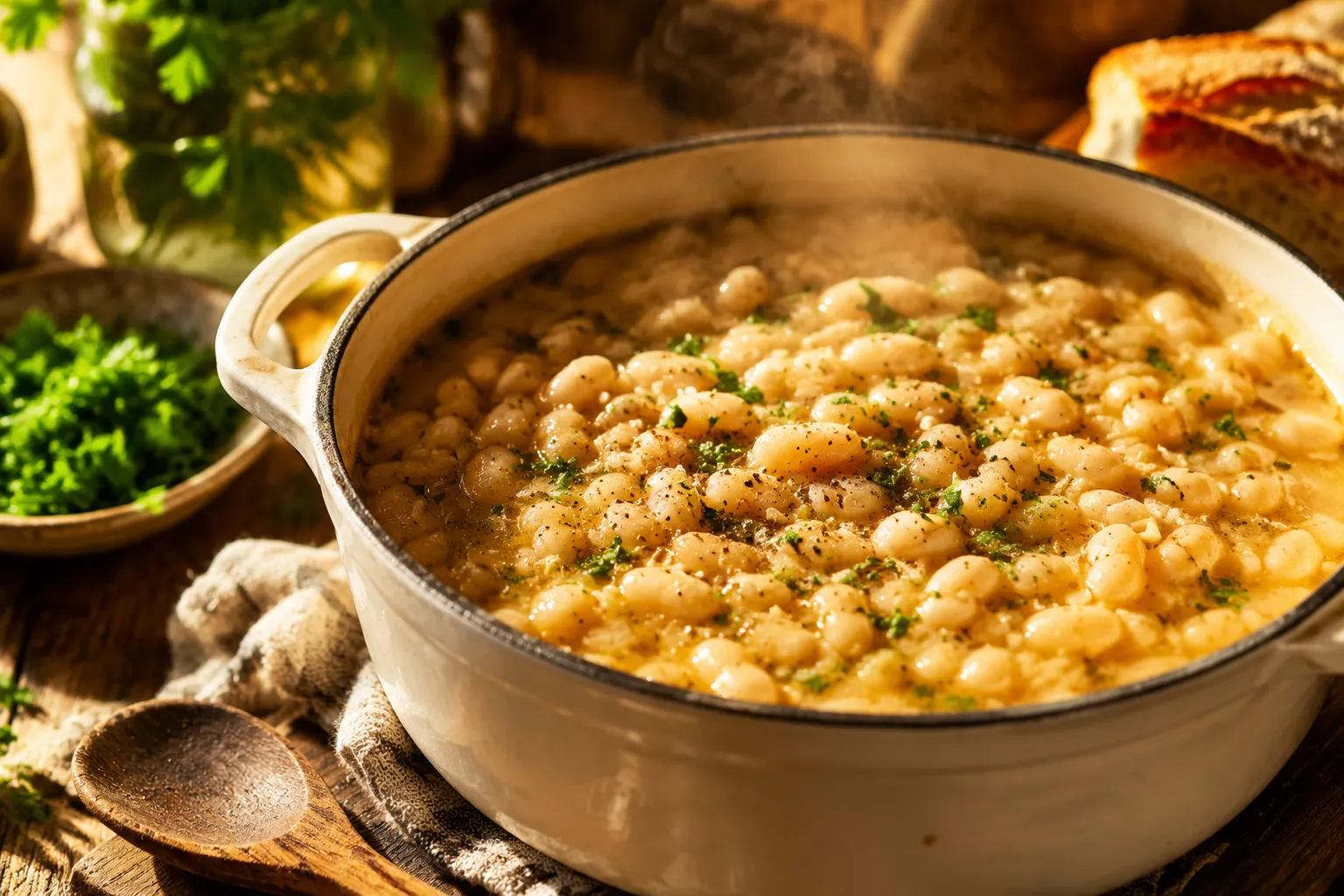
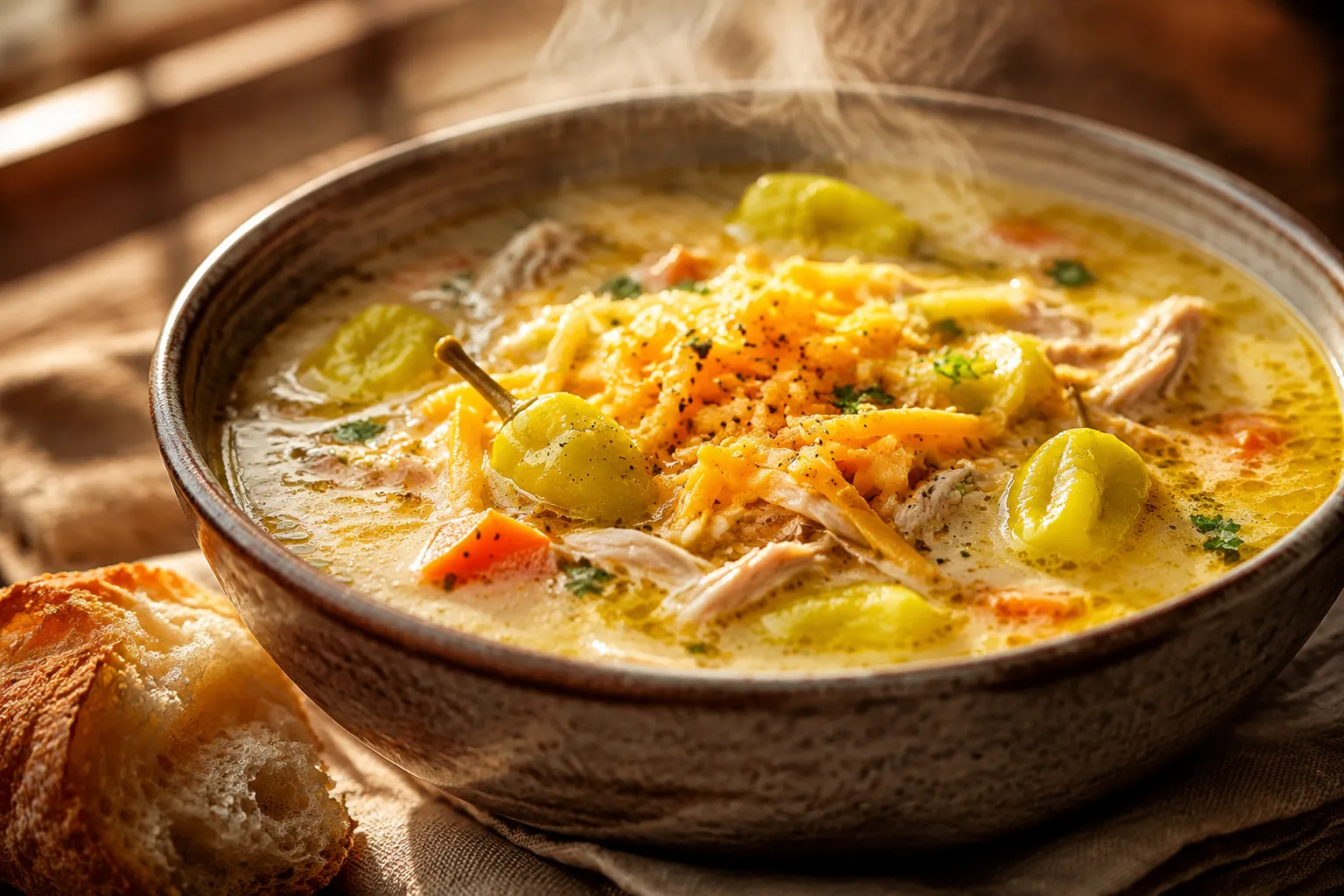
Mulligatawny Soup: Creamy Curry Chicken Soup Recipe
Ingredients
Scale

Warm, creamy, curry-spiced mulligatawny soup with tender chicken, sweet apple, and rice in a silky coconut broth. One pot, big flavor, weeknight-ready.
This mulligatawny soup is the kind of cozy, golden-hued bowl that turns a regular Tuesday into a small event. It begins with a fragrant base of onion, carrot, and celery, gets bloomed in butter with warming curry powder until your whole kitchen smells like a spice market, then simmers down with tender chicken thighs, sweet Granny Smith apple, and basmati rice in a silky coconut broth. A finishing squeeze of lemon and a generous shower of fresh cilantro pull everything into focus.
If you've never had a bowl before, think of it as somewhere between a chicken curry soup and a classic creamy chicken soup — warm-spiced, gently sweet, lightly tangy, and rich without feeling heavy. It's the kind of dish you'd order at a tiny neighborhood bistro and immediately wish you could replicate at home. The good news: this version comes together in one pot in about 50 minutes, with pantry-friendly ingredients and very forgiving technique.
I've cooked this Indian-inspired soup more times than I can count, tinkering with the spice ratios and the rice-to-broth balance until it landed in real scroll-stopping territory. This is the version I make for friends who claim they "don't usually like curry," and it always wins them over by the second spoonful.
## What Is Mulligatawny Soup?Mulligatawny is one of those dishes with a story almost as rich as its broth. The name comes from the Tamil words milagu (pepper) and thanni (water), referring to a peppery South Indian rasam that British colonial cooks adapted in the 18th century into something heartier — a soup course they could serve before a Western-style meal. Over time, it picked up chicken, apple, rice, cream or coconut milk, and a more rounded curry profile, and it eventually traveled with British ex-pats around the world. Today it shows up everywhere from Anglo-Indian cookbooks to deli chalkboards.
### A Brief History of MulligatawnyThe dish is often called Anglo-Indian for good reason. It was born in cross-cultural kitchens, where Indian cooks were asked to translate familiar flavors into a soup format that felt unfamiliar to them. Some early recipes used mutton; others relied on lentils. The ingredient that nearly always made the cut was curry powder, a British invention that bundled garam masala-style spices into one convenient jar. This version leans into that history — modern, spice-forward, and unfussy.
### How It Tastes: Curry, Coconut & AppleSo what does it actually taste like? Imagine the cozy savoriness of a roasted chicken, deepened by curry and turmeric, mellowed by full-fat coconut milk, and pulled bright by Granny Smith apple and lemon. There's gentle warmth, never aggressive heat, and the texture lands somewhere between brothy and stew-like, with shredded chicken and rice in every spoonful.
## Ingredients You'll NeedMost of what goes into this mulligatawny soup recipe lives in a well-stocked pantry, with a quick produce-aisle stop for apple, ginger, and cilantro. Here's what each ingredient brings to the bowl, and a few notes on swaps.
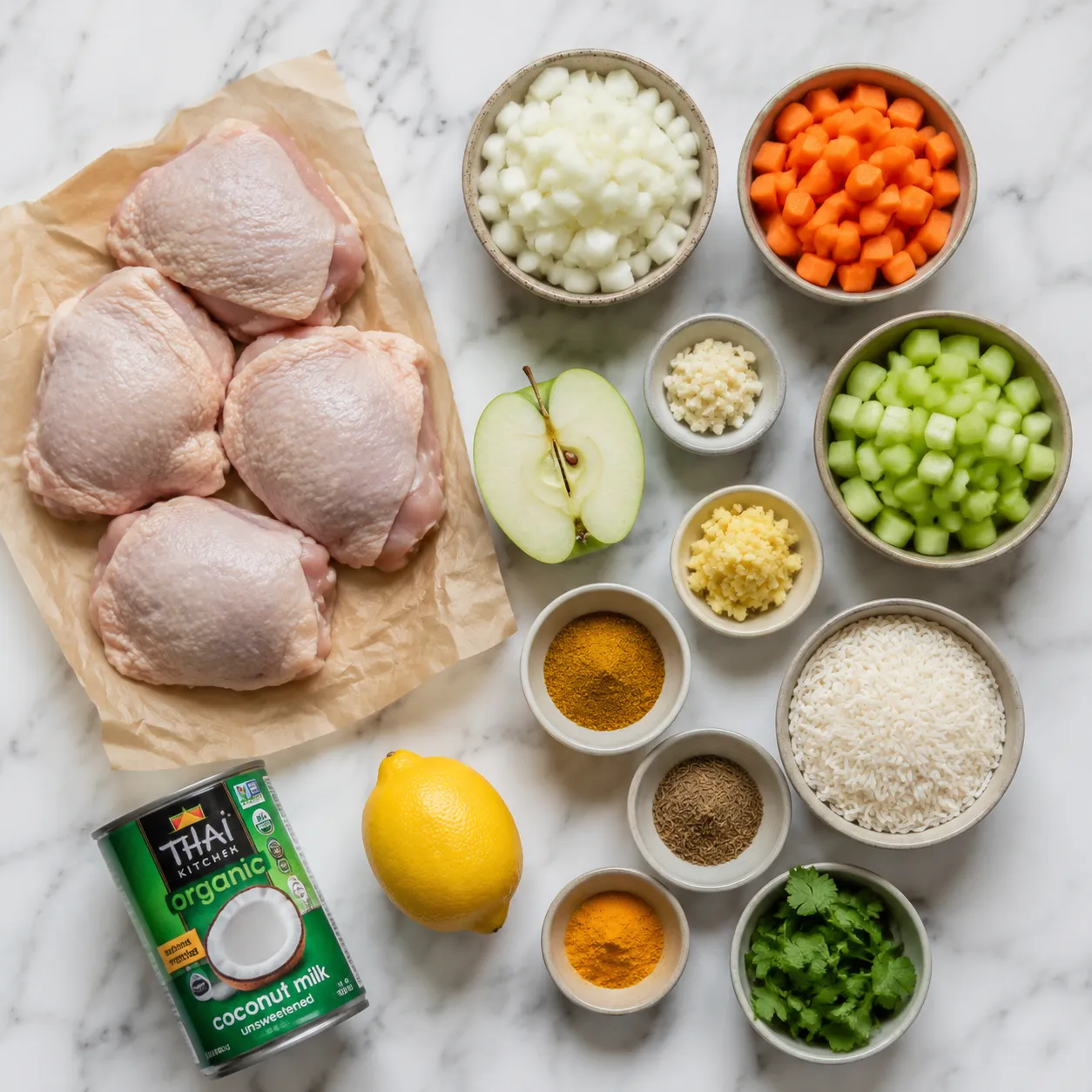
Yellow onion, carrot, and celery — the classic mirepoix — give the soup its sweet, savory backbone. Garlic and a generous knob of fresh ginger turn up the volume, while butter (instead of plain oil) adds a rich, almost nutty undertone that plays beautifully with the spices. If you have ghee on hand, it's a wonderful one-for-one swap.
### Chicken, Apple & RiceBoneless, skinless chicken thighs are the move here — they stay juicy through a long simmer, shred easily, and bring far more flavor than breasts. One peeled and diced Granny Smith apple melts into the broth, lending a soft sweetness and a whisper of tartness that keeps the curry from going one-note. Half a cup of basmati rice cooks right in the pot, picking up flavor as it goes and giving the soup just enough body. If you'd rather use leftover roast chicken, stir it in at the end and lean on a good homemade chicken broth (or a quality boxed broth) to keep things rich.
### Coconut Milk & Curry SpicesFull-fat canned coconut milk is what carries this from "good soup" to "I'm getting another bowl." A solid curry powder is the workhorse — look for one with both yellow and red spices listed, like coriander, turmeric, cumin, fenugreek, and chili. A little extra ground cumin and turmeric reinforce the warm, golden flavor. A final squeeze of fresh lemon juice and a handful of cilantro keep everything bright on the finish.
## How to Make Mulligatawny Soup Step by StepIf you can saute, simmer, and stir, you can make this. The whole thing is genuinely an easy weeknight soup with maybe 15 minutes of hands-on prep, and the rest is the pot doing its thing while you set the table or pour a glass of wine.
### Step 1: Build the Aromatic BaseMelt a couple of tablespoons of butter in a large Dutch oven or heavy pot over medium heat. Add the diced onion, carrot, and celery with a generous pinch of salt and cook, stirring occasionally, until the onion is translucent and the vegetables are softened — about 6 to 8 minutes. You're not looking for browning here; you want them sweet and tender. Stir in the garlic and ginger and cook for another minute until fragrant.
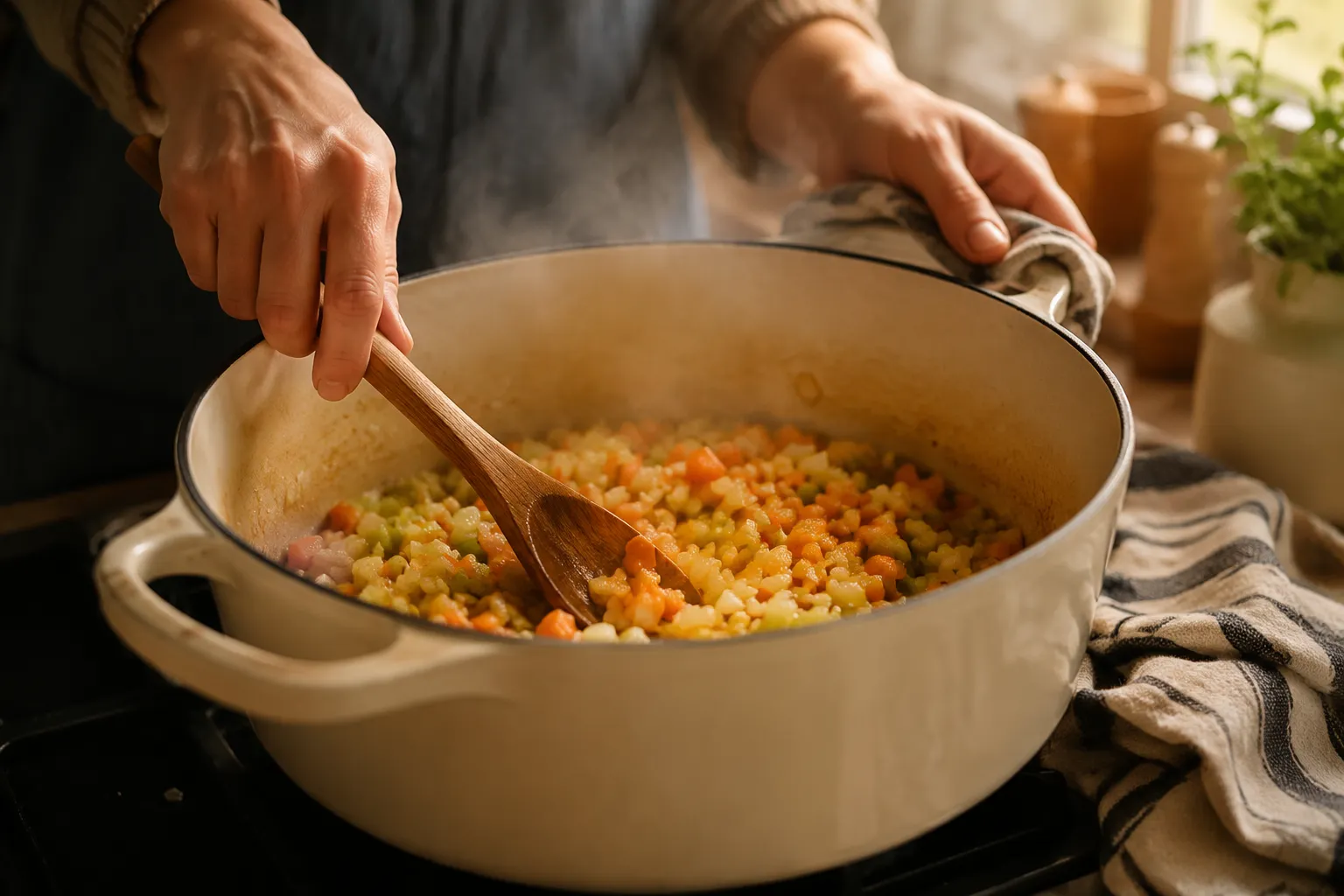
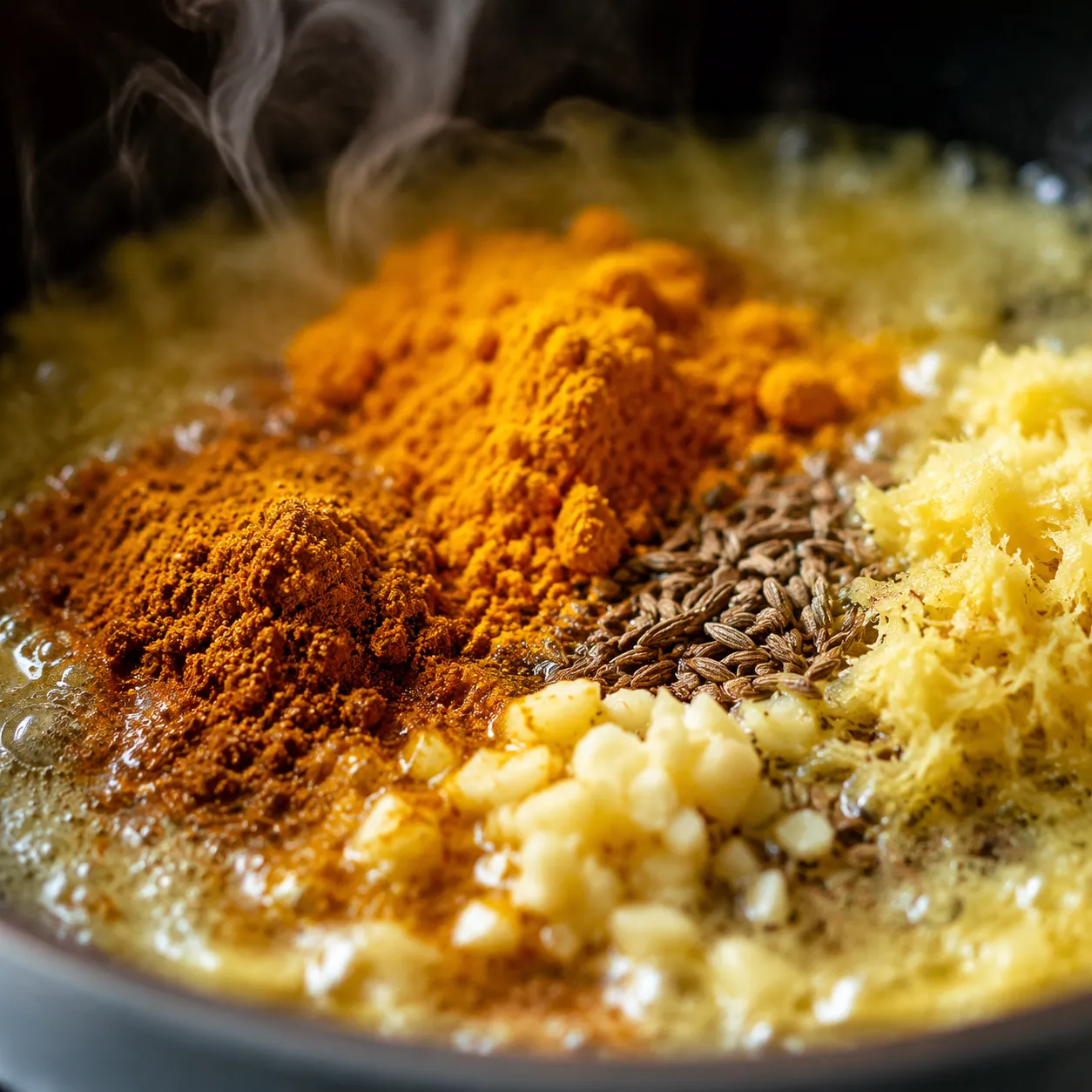
This is the step that separates a flat curry soup from a memorable one. Sprinkle in the curry powder, cumin, and turmeric, and stir constantly for about 60 to 90 seconds. The spices will darken slightly, the butter will turn a deep golden orange, and your kitchen will smell unreal. Blooming releases the fat-soluble flavor compounds in the spices, so don't skip it.
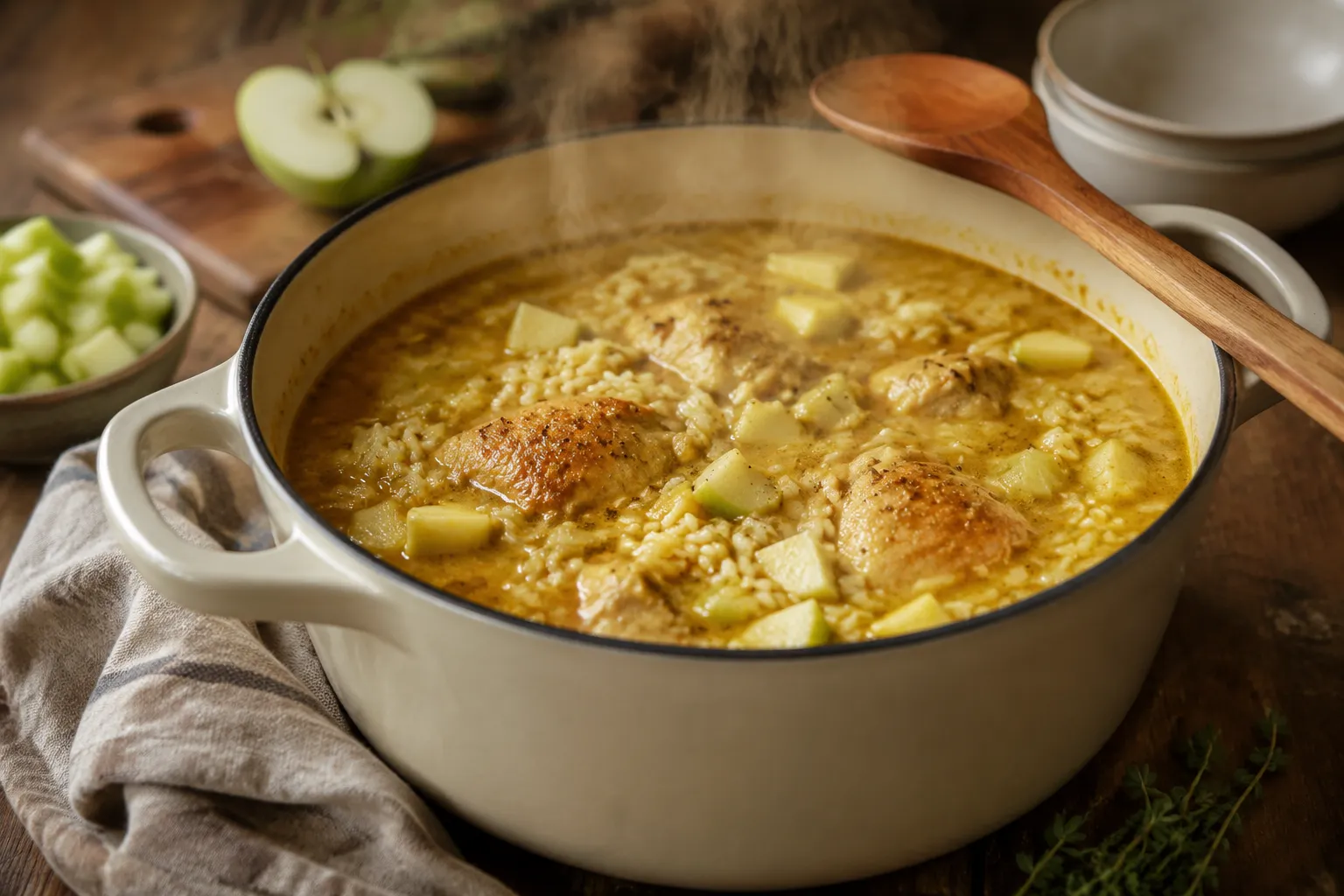
Pour in the broth and scrape up any spice paste stuck to the bottom of the pot. Add the chicken thighs whole, the diced apple, and the basmati rice. Bring to a low boil, then drop the heat to maintain a gentle simmer. Cook uncovered for about 20 to 25 minutes, until the chicken is fully cooked through and the rice is tender. Lift the chicken out, shred it with two forks, and return it to the pot.
Reduce the heat to low and stir in the full can of coconut milk. Let everything warm through for 3 to 5 minutes — you don't want a hard boil here, which can break the coconut milk into oily pools. Squeeze in fresh lemon juice, taste, and adjust salt and pepper. The soup should taste warm, creamy, lightly sweet, and bright all at once. If it tastes a little flat, it almost always wants more salt or more lemon.
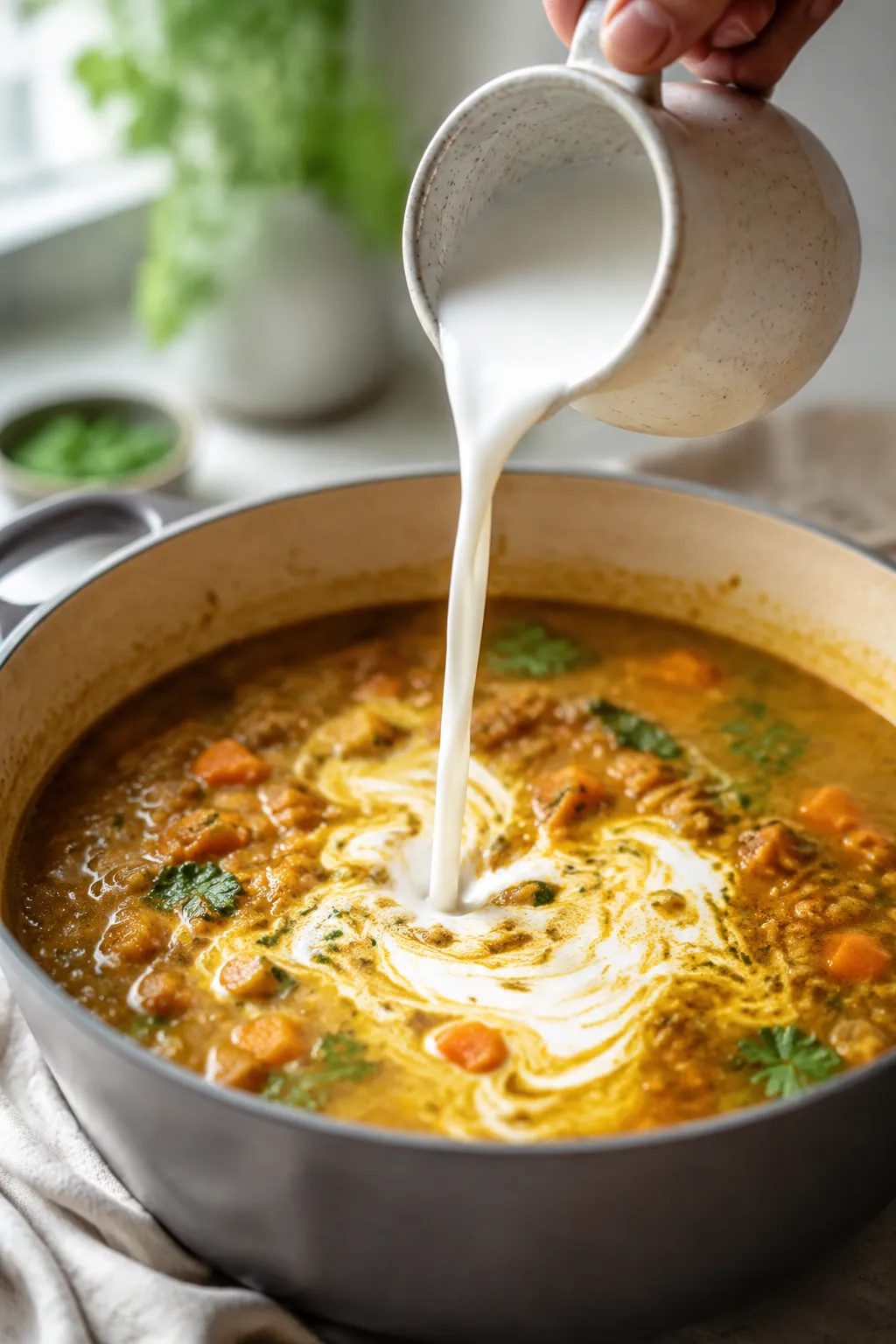
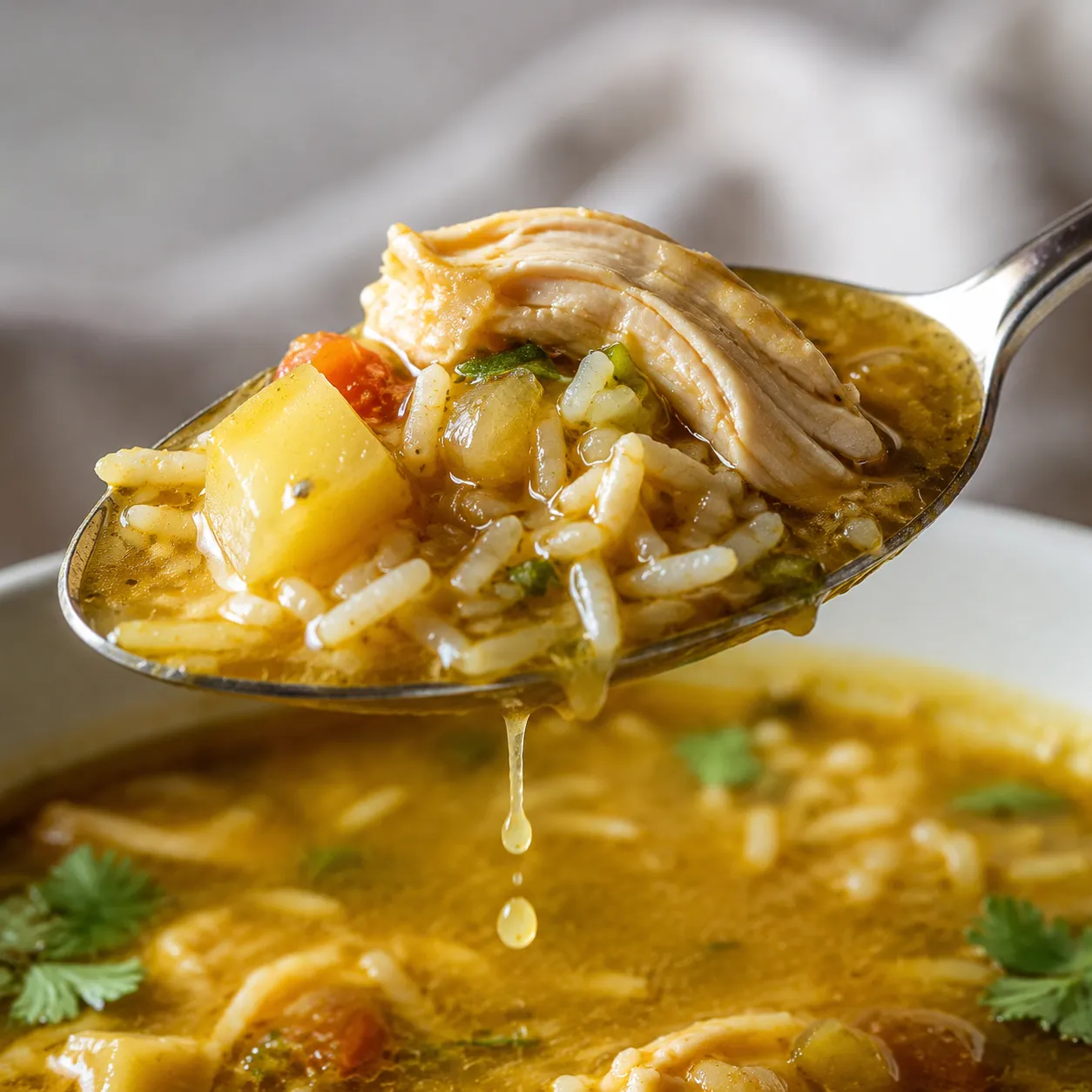
Ladle the finished soup into deep bowls and finish each with a swirl of extra coconut milk, a generous pinch of fresh cilantro, and a wedge of lemon on the side. A grind of black pepper or a few chili flakes are great for anyone who wants extra heat. Warm naan or a torn-up flatbread is almost mandatory — perfect for soaking up the last bits of broth at the bottom of the bowl.

A simple cucumber and herb salad with yogurt dressing is a great cooling counterpoint, and a small side of basmati rice on the table lets people stretch the soup further if they're hungry. This dish is also one of those rare soups hearty enough to be the whole dinner — the chicken, rice, and coconut milk make it filling without being leaden, landing somewhere between a chicken curry soup and a classic creamy chicken soup in terms of how satisfying a single bowl is.
Few soups get better overnight quite like this one. The curry spices keep developing, the coconut milk settles into the broth, and the rice plumps up to give the whole pot a thicker, almost stew-like body by day two. That's why this coconut curry soup has become a staple in my weekly meal-prep rotation — it's the kind of thing you cook on Sunday and look forward to all week.
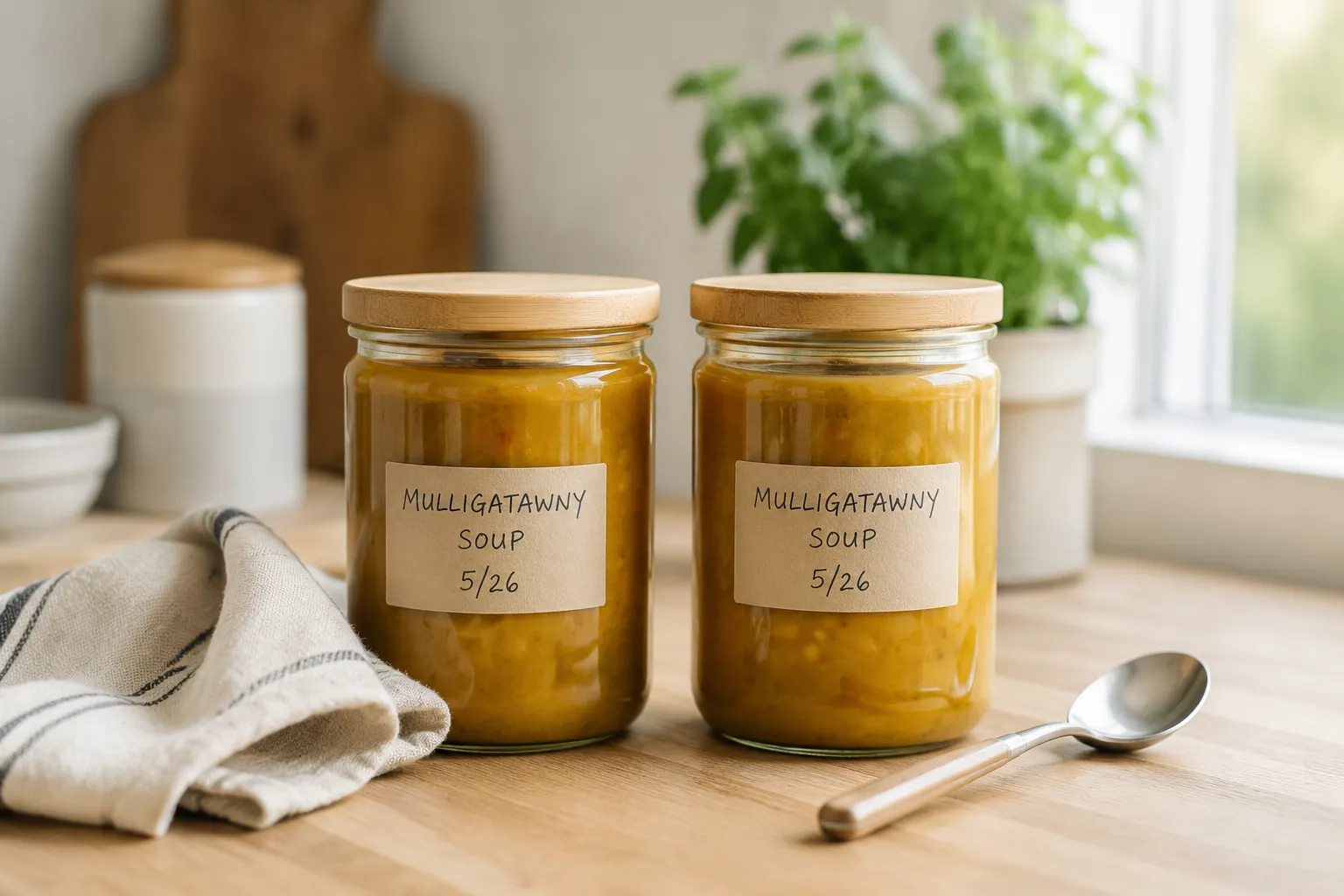
I like to portion it into wide-mouth glass jars right after it cools, so I can grab one for lunch and reheat it in minutes. Cooking with low-sodium broth (or a homemade chicken broth if you have a stash in the freezer) means you can adjust the salt later if the flavors concentrate as the soup sits. It's batch cooking that genuinely earns its place on the menu.
Once you've made this version of the classic mulligatawny soup, it's easy to see why it has stood up to hundreds of years of reinvention. It's spiced but approachable, comforting but interesting, and adaptable to whatever you've got in the fridge. Make a pot, ladle into bowls, tear off a piece of warm naan, and let dinner be that simple.
One of the best things about mulligatawny is how forgiving it is to adapt. The spice base, the coconut milk, and the apple do most of the heavy lifting, so you can swap proteins, grains, and cooking methods without losing the soul of the dish.
This soup keeps beautifully in an airtight container in the refrigerator for up to 4 days. Many people swear it tastes even better on day two, as the curry spices mellow and meld with the coconut milk and apple. The rice will continue to absorb broth as it sits, so the texture thickens noticeably overnight — that's a feature, not a bug.
For longer storage, the soup freezes well for up to 3 months. Cool it completely before transferring to freezer-safe containers or jars, leaving an inch of headspace for expansion. To reheat, warm gently on the stovetop over medium-low heat, adding a splash of broth or water as needed to loosen things up. Avoid microwaving on high power, which can cause the coconut milk to break. Taste before serving and adjust salt and lemon — flavors can mute slightly after freezing and benefit from a quick refresh.