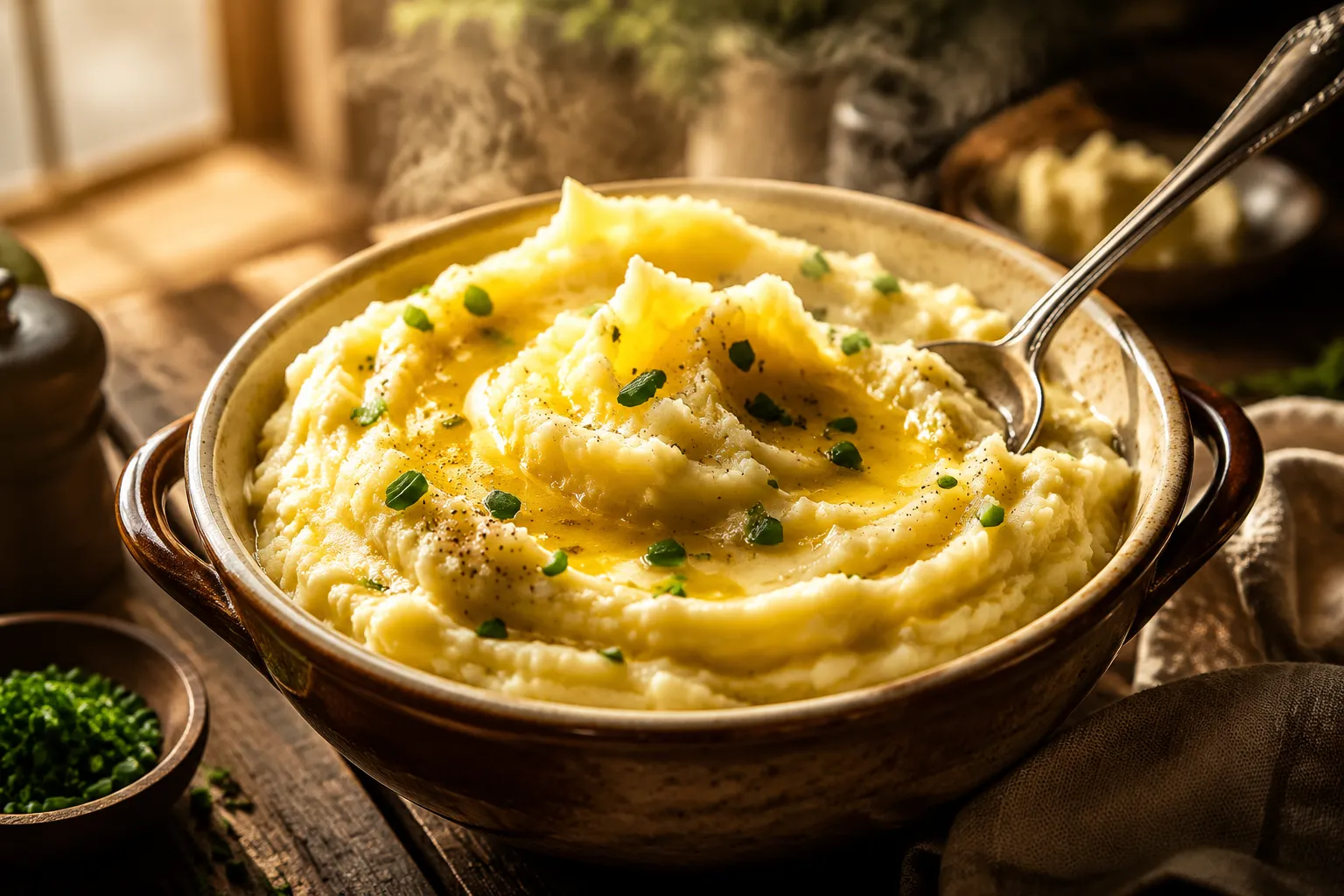
How to Cook Sweet Potatoes: 5 Easy Methods That Work
Ingredients
Scale
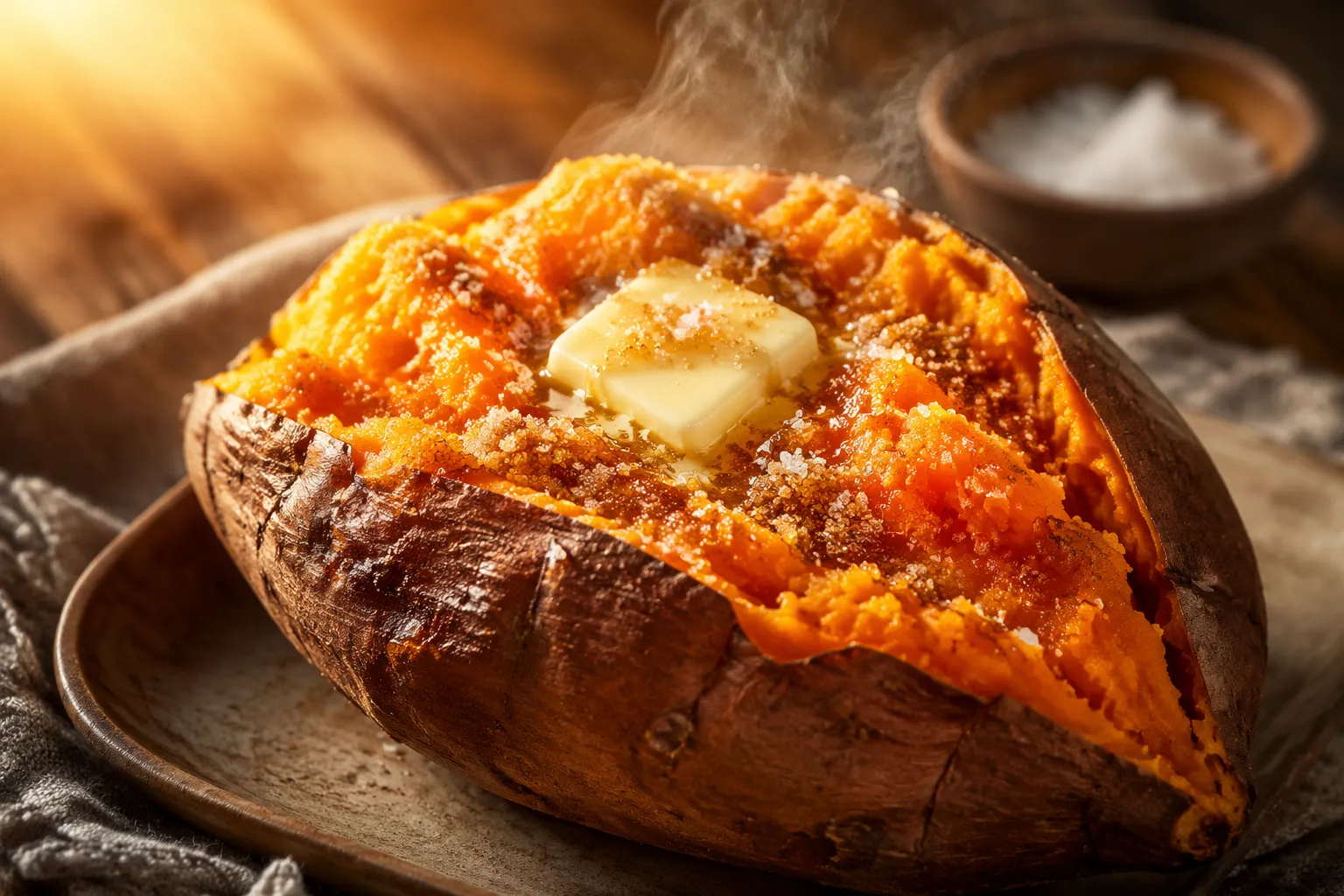
The complete guide to how to cook sweet potatoes—oven, microwave, stovetop, or air fryer—plus 10 recipes with sweet potatoes you'll actually crave.
If you've ever wondered how to cook sweet potatoes so they actually taste like the side dish you remember from your favorite restaurant, this is the only guide you'll need. After years of testing every method our oven, microwave, stovetop, and air fryer can throw at a humble orange tuber, I've landed on five reliable techniques that handle everything from a quick weeknight baked sweet potato to glossy, caramelized cubes for a holiday spread.
This isn't a single recipe — it's the master reference. You'll get exact times and temps for whole spuds, cubes, wedges, and fries, plus a doneness test you can trust and ten genuinely good ideas for what to make with sweet potatoes once they're cooked. Whether you're meal prepping bowls, building a Thanksgiving spread, or just trying to eat more vegetables, you'll find your method here.
I cook sweet potatoes nearly every week year-round, and the difference between a fluffy, sweet, deeply flavored result and a watery, bland one almost always comes down to two things: the method and the temperature. Master how to cook sweet potatoes once and you'll reach for that bag in the pantry all year long.
Great results start at the produce aisle. Look for sweet potatoes that feel heavy for their size, with smooth, taut skin and no soft spots, sprouts, or wrinkly ends. Medium potatoes — about 8 to 10 ounces each — cook the most evenly and are the size most recipes for sweet potatoes are written around. Avoid anything cracked or showing dark, sunken patches, since those are signs of decay underneath.
The orange-fleshed variety (often labeled "yams" in U.S. stores, even though they aren't true yams) is what most American recipes call for. White-fleshed Hannah and purple Japanese sweet potatoes are drier and nuttier — fantastic for roasting, less ideal for pies and mashes. Pick whichever variety suits your dish, but know that cooking times can run 5 to 10 minutes longer for the denser, drier kinds.
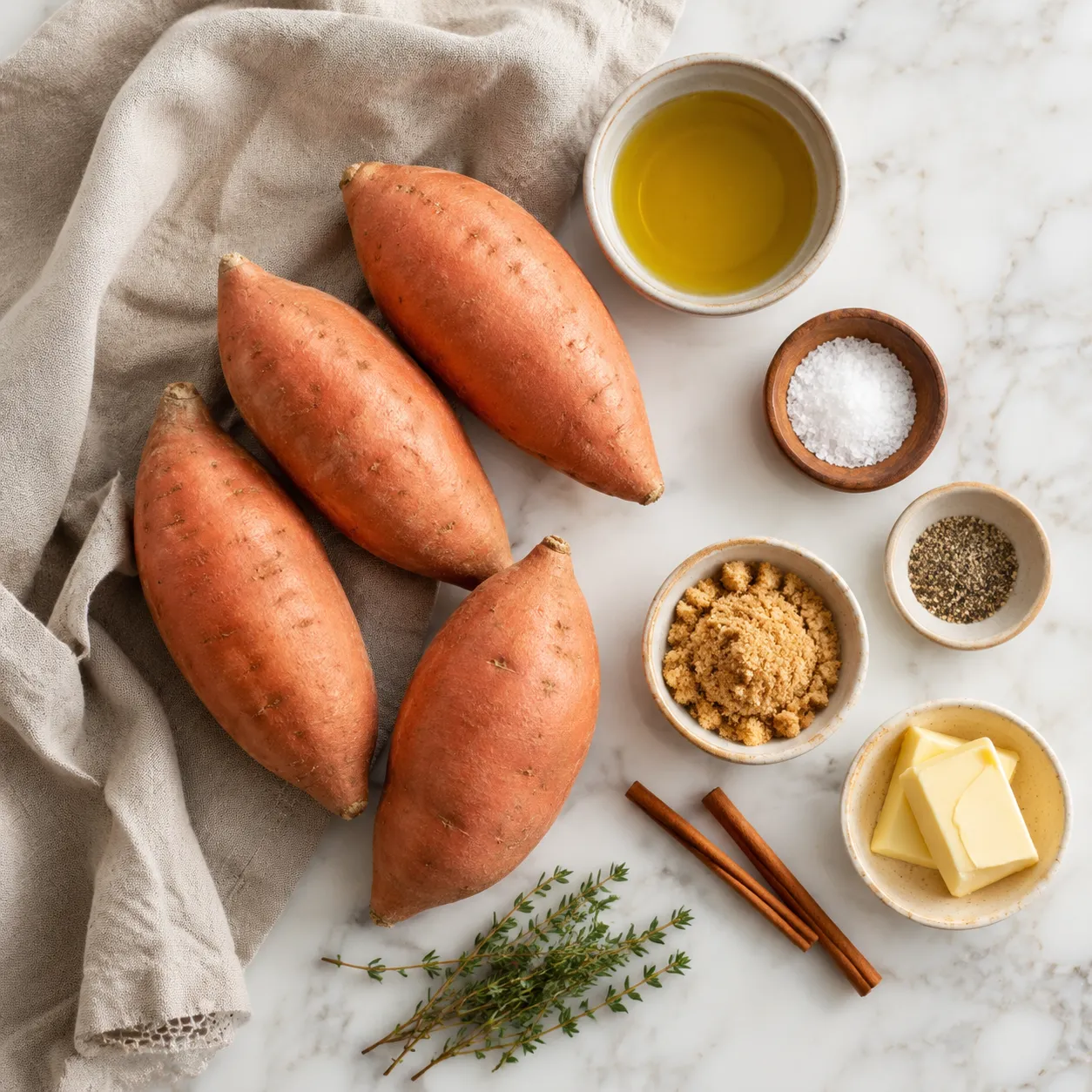
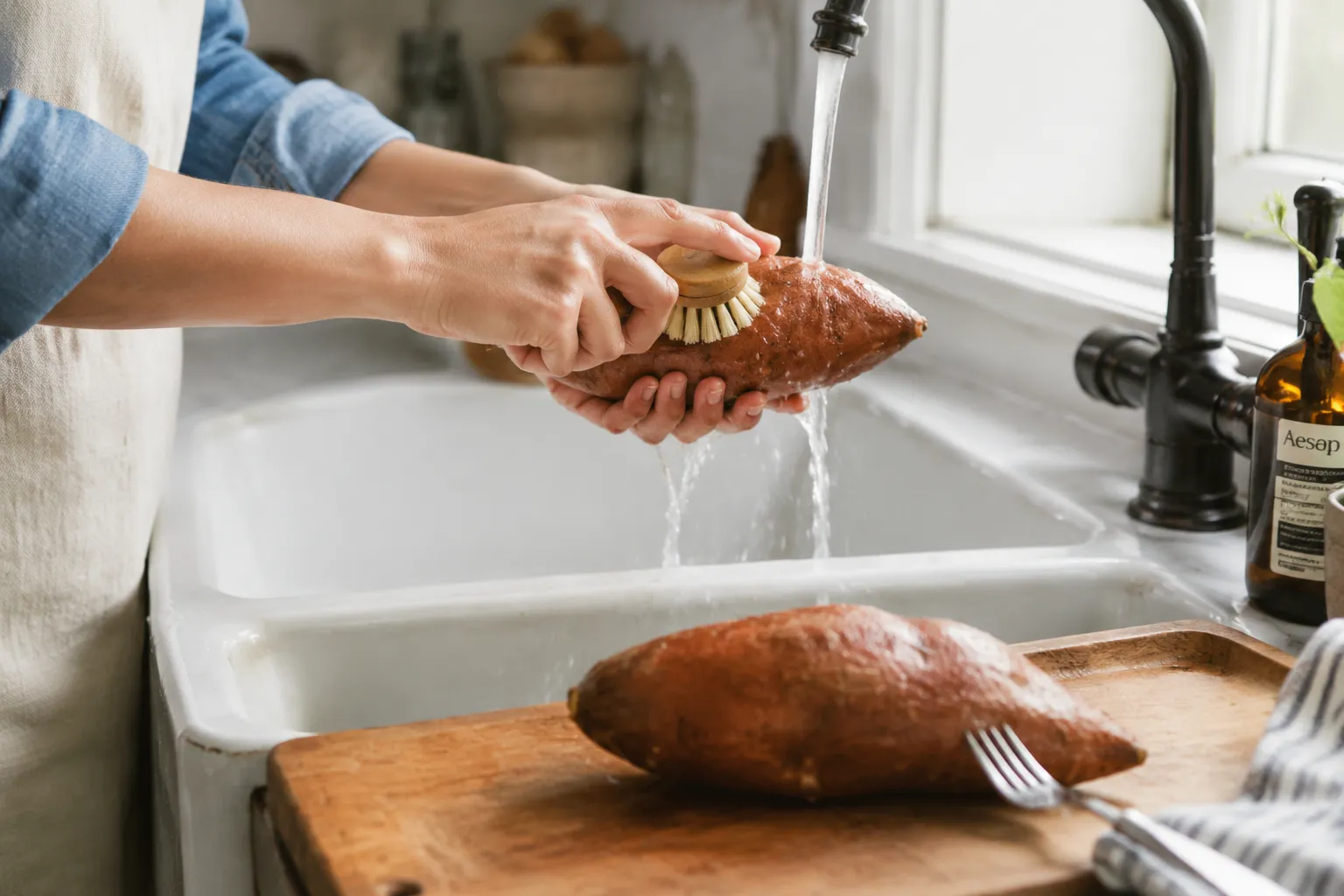
Before cooking, give the skins a hard scrub under running water with a vegetable brush — the peel is edible, full of fiber, and crisps beautifully in the oven. Pat them dry, then pierce each one four or five times with a fork to let steam escape. For roasted cubes, peel only if you prefer a softer texture; otherwise leave the skin on for color and bite. Cut cubes the same size — about 3/4 inch — so they finish at the same time.
Store raw sweet potatoes in a cool, dark, well-ventilated spot like a pantry, never the fridge. Cold temperatures turn them gritty and unpleasant. They'll keep three to four weeks at room temperature, which is plenty of buffer for an impulse 5-pound bag from the market.
The oven is the gold-standard answer to how long to cook sweet potato in oven situations, and 425°F is the magic temperature for almost every cut. It's hot enough to caramelize the natural sugars and crisp the skin without burning the outside before the middle softens.
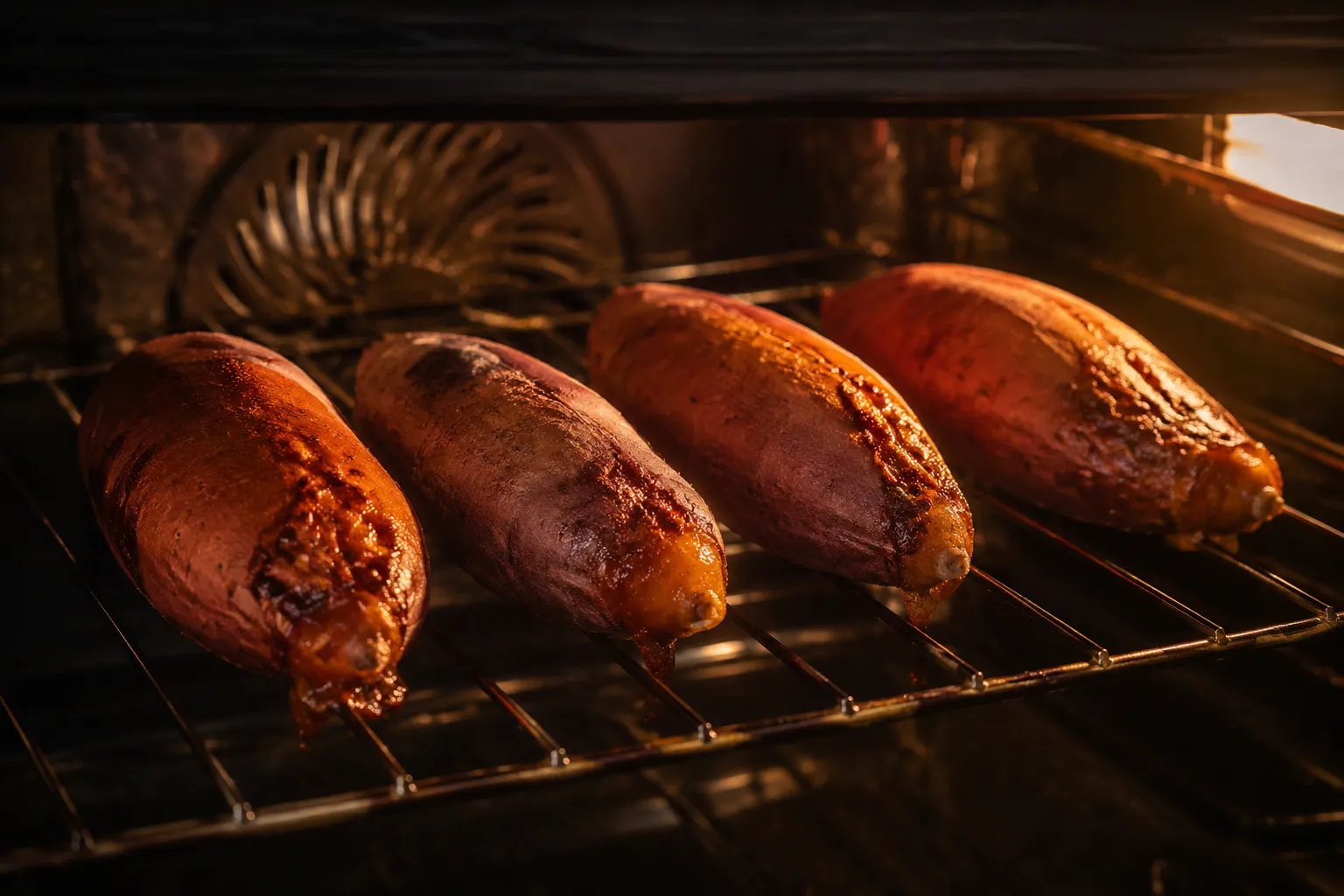
For a whole baked sweet potato, place pierced potatoes directly on a foil-lined rack at 425°F and bake 45 to 55 minutes, depending on size. You'll know they're done when the sugars start to ooze from the pierce holes and the skin gives easily under your thumb. Skip the foil wrap — it traps steam and gives you a soggy, less-sweet result. The dry heat is what concentrates that signature flavor.
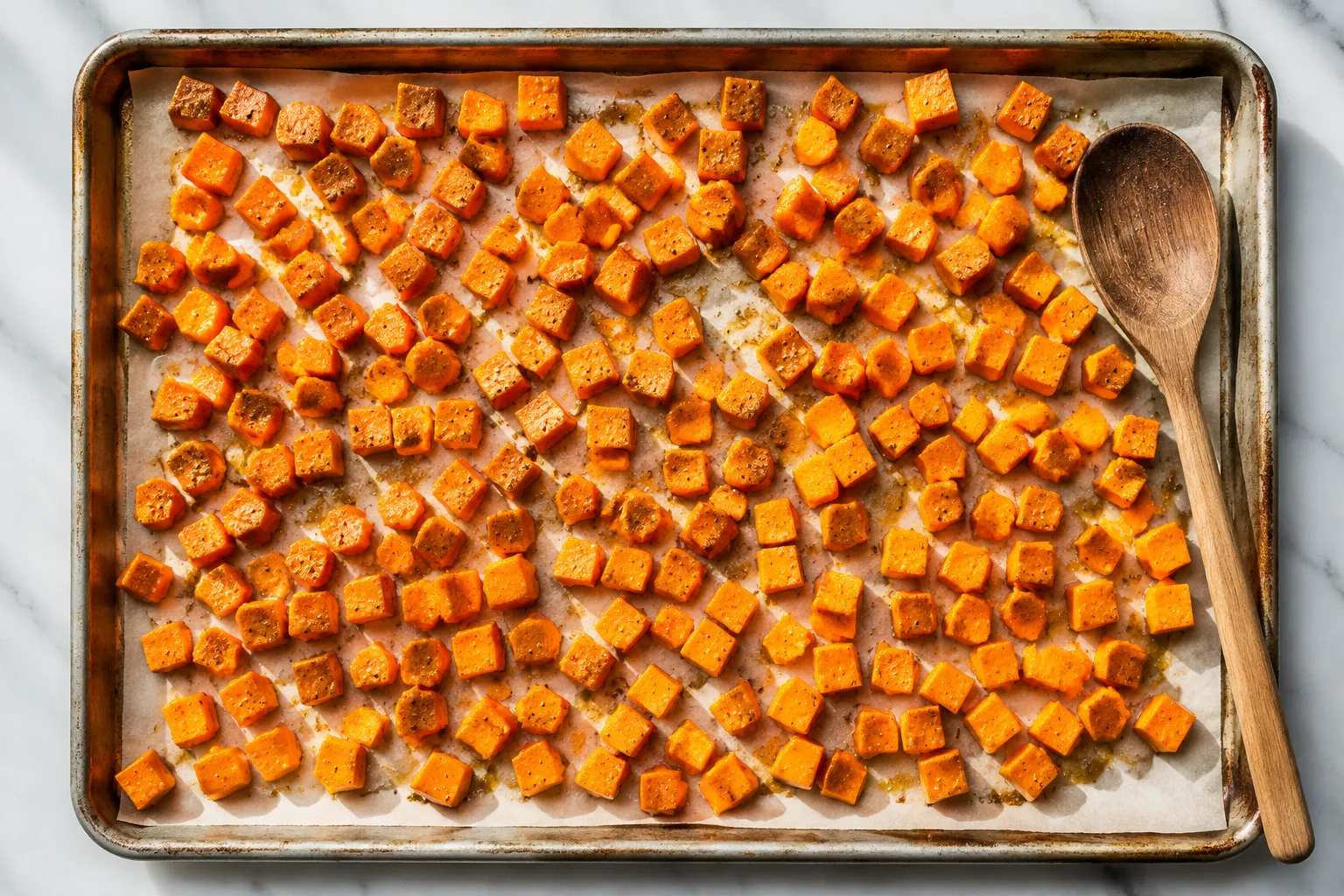
For roasted sweet potatoes, toss 3/4-inch cubes with 2 tablespoons of olive oil, 1 teaspoon of kosher salt, and a generous crack of black pepper. Spread them on a parchment-lined sheet pan in a single layer with space between each cube — crowding is the enemy of caramelization. Roast at 425°F for 25 to 30 minutes, flipping halfway, until the corners are deep amber and the centers are fork-tender.
Sweet potato wedges and sweet potato fries follow the same logic but want a little more space and a slightly longer cook. Cut into 1/2-inch fries or 3/4-inch wedges, toss with oil and salt (I love adding smoked paprika and garlic powder), and roast at 425°F for 30 to 35 minutes, flipping once. For extra crispy fries, soak the cut potatoes in cold water for 20 minutes first, then dry them thoroughly — this draws out surface starch so they crisp instead of steam.
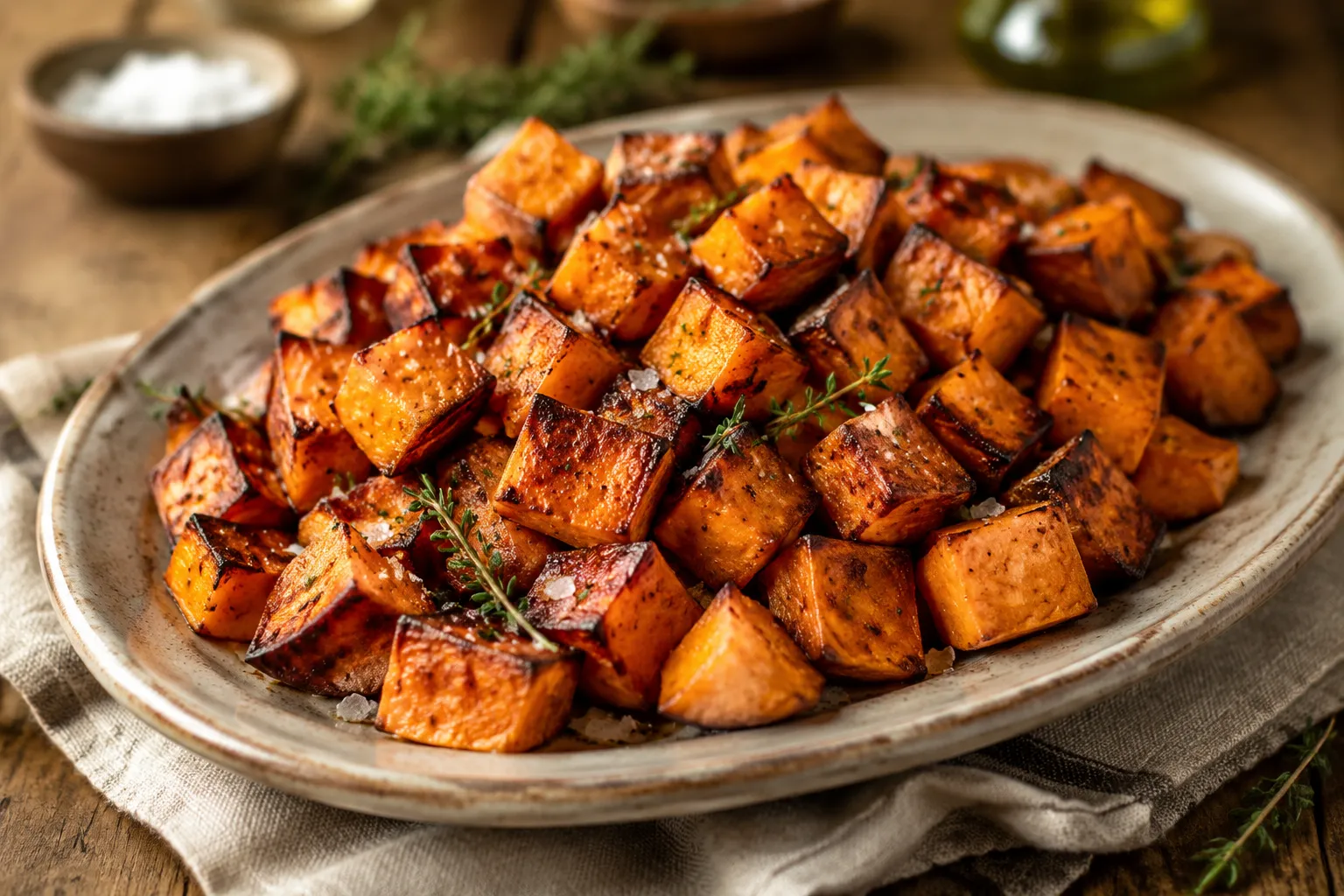
A few quick rules of thumb: high heat caramelizes, low heat just softens; one layer always beats two; and a hot sheet pan (preheated for 5 minutes) gets you crispier bottoms than a cold one. These are the small details that separate restaurant-quality results from the pale, steamed pieces most home cooks settle for.
Sometimes you don't have 50 minutes, and that's where these three methods earn their keep. Each one has a sweet spot, and once you know what they're best at, you'll never feel stuck with a hungry household and uncooked spuds again.
For the microwave, scrub and pierce a medium sweet potato, set it on a microwave-safe plate, and zap on high for 5 minutes. Flip it, then continue in 1-minute bursts until a fork slides easily through the center — usually 7 to 9 minutes total. The texture won't have the deep, dry sweetness of an oven-baked one, but it's perfectly good for a quick lunch or for mashing into baked goods.
Boiling is the right call when you're making mashed sweet potatoes, sweet potato casserole, or a smooth puree for soup or pie. Peel and cube the potatoes, drop them into a pot of cold salted water, bring to a boil, and simmer 12 to 15 minutes until fork-tender. Drain well and let them steam-dry in the colander for a minute before mashing — extra moisture is the enemy of a fluffy mash.
The air fryer is my secret weapon for weeknight sides. Whole potatoes (poked and rubbed with a little oil and salt) cook at 400°F for 35 to 40 minutes. For air fryer sweet potatoes cut into cubes or wedges, toss with oil and seasonings and air-fry at 400°F for 18 to 22 minutes, shaking the basket halfway. The hot circulating air gives you crispy edges in roughly half the time of the oven, which is why this method has become my default after a long day.
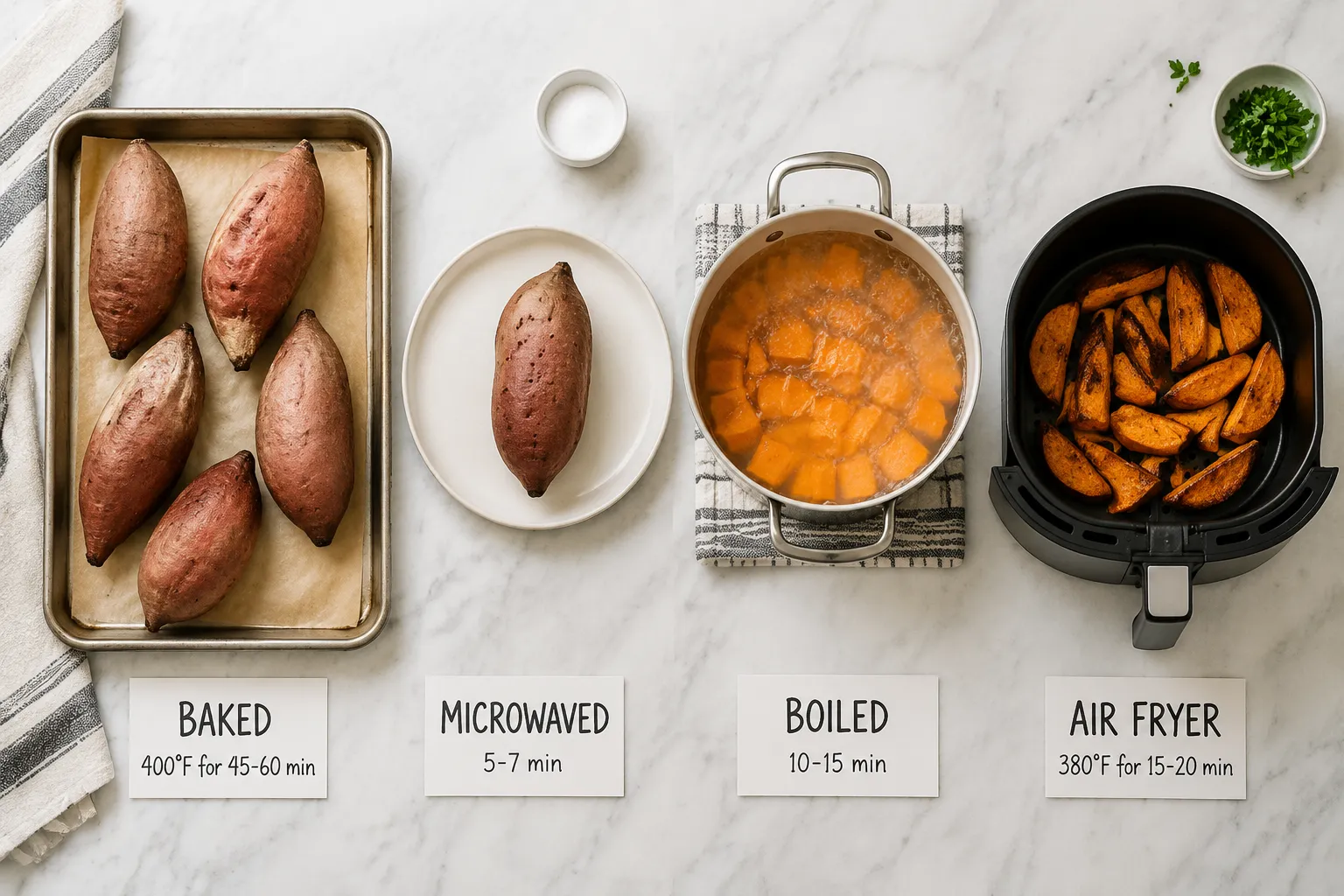
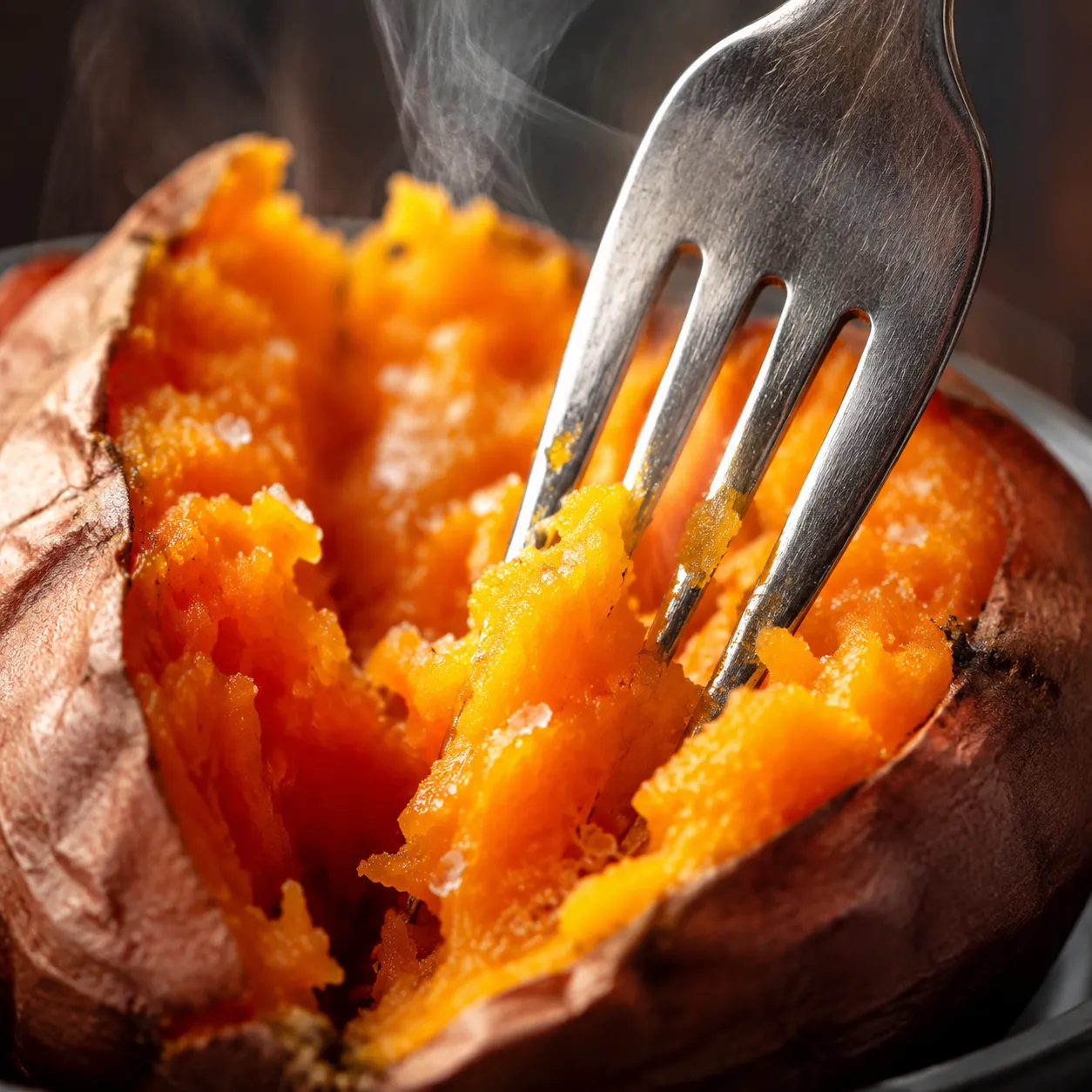
The doneness test for sweet potatoes is refreshingly simple, but it's worth knowing exactly what to look for so you don't pull them too early. The classic fork test is the most reliable: a fork or thin paring knife should slide into the thickest part with zero resistance. If it catches or you have to push, give them another 5 minutes and check again.
For internal temperature lovers, an instant-read thermometer should hit 205 to 210°F at the center of a whole potato. That's the range where the starches have fully gelatinized and the natural sugars have caramelized — anything lower and you'll get a chalky, undercooked middle, especially with larger spuds.
Common mistakes to dodge: mixing undersized and oversized potatoes on the same pan (cook similar sizes together), pulling whole potatoes the moment a fork slides in only at the tip (test the fattest part), and skipping the flip on cubes and wedges. Caramelized corners only happen when each face touches the hot pan. If your roasted pieces look pale, give them an extra 5 minutes — fork-tender plus deeply browned is the goal of how to cook sweet potatoes well.
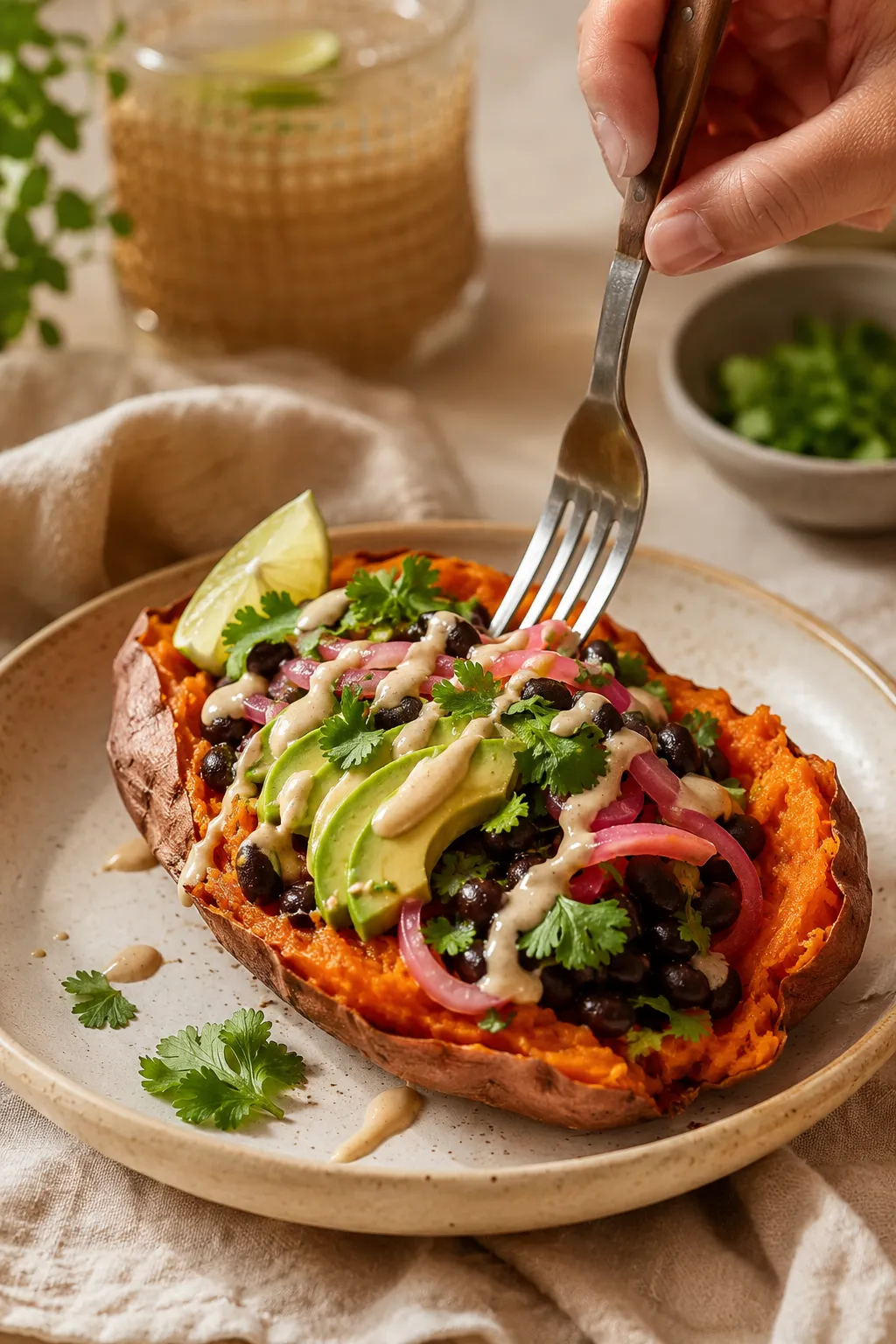
Once you've nailed the cooking part, the real fun starts. Here are ten of my most-made recipes with sweet potatoes, organized by mood and meal — perfect inspiration when you're staring at a bag from the farmers market wondering what to do with sweet potatoes.
Start with a loaded burrito bowl: roasted cubes layered with black beans, avocado, lime, and tahini drizzle. A sheet-pan dinner with chicken thighs, sweet potato chunks, and red onion is a 30-minute weeknight hero. Sweet potato and black bean tacos with chipotle crema take leftover roasted cubes to a new place. And a creamy sweet potato coconut curry with chickpeas is the ultimate cozy one-pot.
For holiday tables, the classics earn their reputation. A bubbling sweet potato casserole with a pecan-streusel top is my Thanksgiving non-negotiable, and a bowl of buttery mashed sweet potatoes with a hit of maple and brown butter is the side that always disappears first. Crispy sweet potato fries with a smoky aioli are the simple counterpoint to a holiday roast and double as the best kid-friendly side I know.
For breakfast and dessert, leftover roasted cubes belong in a hash with eggs and crumbled sausage. A spiced sweet potato muffin (think pumpkin muffin's underrated cousin) is the meal-prep snack you didn't know you needed. And classic sweet potato pie, silky and warmly spiced, is one of those desserts that converts skeptics on the first bite.
Knowing how to cook sweet potatoes for each specific dish — boiled for the casserole and pie, roasted for the bowls and tacos, microwaved for a quick muffin batter — is half the battle, and that's exactly the cheat sheet you've now got.
A perfectly cooked sweet potato is a blank canvas, and how you finish it changes the entire meal. For sweet pairings, a pat of salted butter, a drizzle of maple syrup or honey, a sprinkle of brown sugar, and a dusting of cinnamon is the iconic combo for a reason — the warm spice and butter melt into the flesh in a way that feels indulgent without much effort. Toasted pecans, mini marshmallows, or a pinch of flaky sea salt take it further.
For savory finishes, I lean on tangy and creamy: Greek yogurt or labneh, harissa or chipotle in adobo, crumbled feta or goat cheese, fresh herbs like cilantro or thyme, a squeeze of lime, and toasted seeds. A baked sweet potato split open and stuffed with chili, black beans, or shredded chicken makes a complete weeknight dinner in under 10 minutes of hands-on time.
Once you've worked through this guide once, you'll find sweet potatoes go from a vegetable you cook occasionally to one you reach for nearly every week. Now that you've got the methods, temps, and recipes for how to cook sweet potatoes locked in, the cooking is forgiving, the results are crowd-pleasing, and the leftovers are arguably better than the original. Save this page and let me know in the comments which method became your new default.
The same 425°F oven method handles dozens of flavor directions with just a swap of seasoning before the potatoes go in. Once the base technique is locked in, the variations practically write themselves — keep these flavor combos taped inside a cabinet door and you'll never get bored.
Let cooked sweet potatoes cool to room temperature, then transfer to an airtight container and refrigerate for up to 5 days. Whole baked potatoes hold up best when left whole and split open just before reheating. Cubes, wedges, and fries reheat best in a 400°F oven or air fryer for 5 to 8 minutes — the microwave works in a pinch but tends to soften the texture and you'll lose those crispy edges.
For longer storage, sweet potatoes freeze beautifully when fully cooked and mashed: portion into freezer bags or muffin tins for up to 3 months and thaw overnight in the fridge. Roasted cubes can also freeze on a sheet pan, then transfer to bags once solid. Reheat directly from frozen at 425°F for 12 to 15 minutes to bring back the caramelized edges without turning the centers mushy.