How to Cook Rice on Stove: Foolproof Fluffy Method
Ingredients
Scale
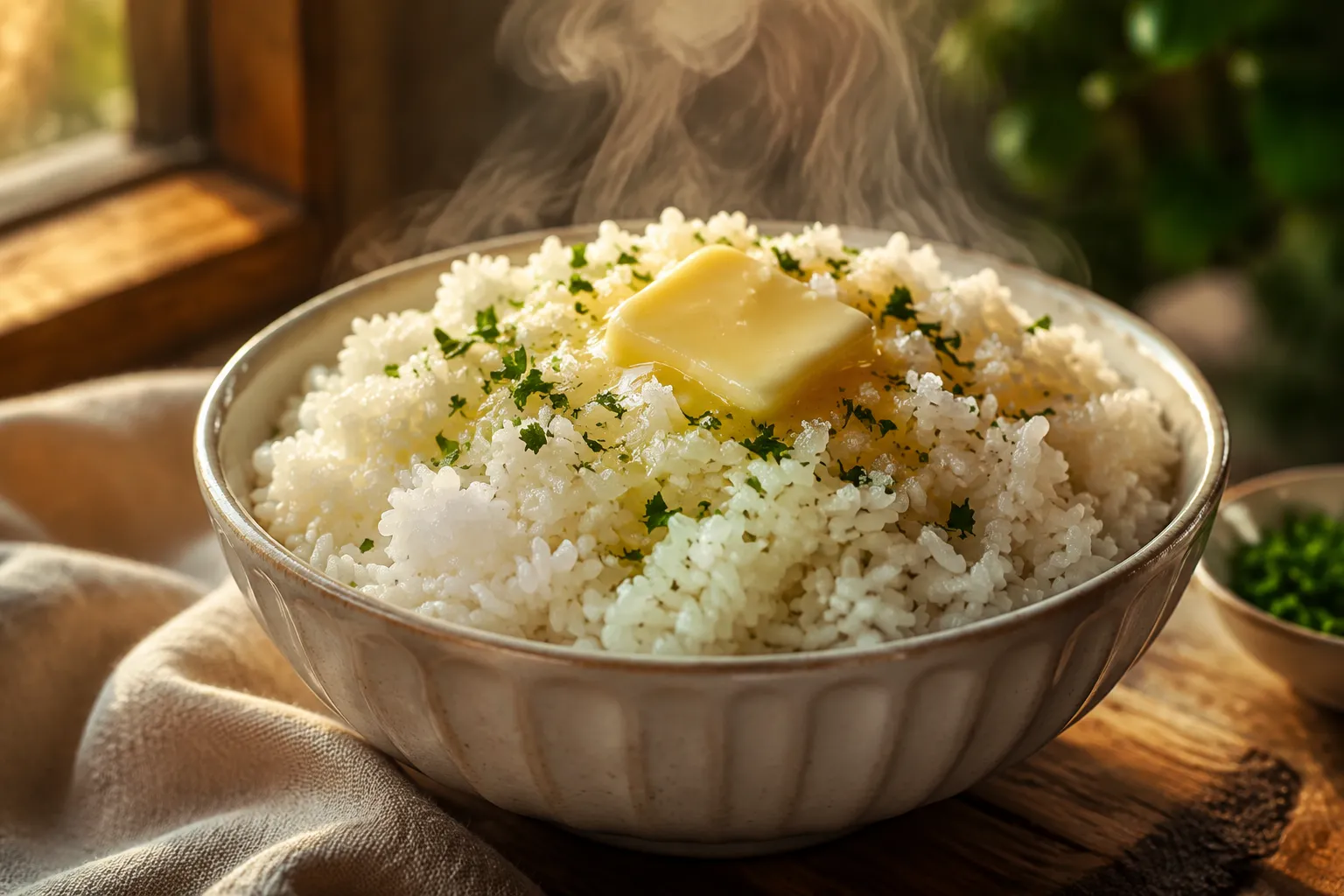
Master how to cook rice on the stove with a simple 2-to-1 water ratio, a tight lid, and a 10-minute rest. Fluffy, separate grains every single time.
How to cook rice on stove is one of those back-pocket kitchen skills that makes dinner feel instantly easier, whether you are spooning it under saucy chicken, folding it into a burrito bowl, or serving it simply with butter and salt. The good news is that fluffy rice does not require a rice cooker, a special setting, or guesswork. You need a reliable ratio, a pot with a tight lid, and the discipline to let the steam do its quiet magic.
This method is built for long-grain white rice: tender, separate grains with just enough structure to hold up on a dinner plate. If you have ever ended up with rice that is gummy on the bottom, dry in the center, or mysteriously both at once, this guide will walk you through the small details that make the difference. We will cover rinsing, boiling, simmering, resting, and the exact visual cues to look for.
Think of this as your no-fuss, weeknight-friendly lesson in cooking rice on stove without hovering. Once you learn the pattern, you can use it for meal prep, cozy bowls, stir-fries, simple sides, and all the little dinners that need something soft and comforting to catch the sauce.
Great stove top rice works because the process is simple but precise: water heats, starches hydrate, steam builds, and the grains finish cooking in a covered environment. The initial boil brings the pot up to temperature quickly, while the low simmer prevents the bottom from scorching before the center is tender. Then the covered rest allows moisture to redistribute, which is the step many cooks skip and the reason restaurant-style rice tastes so light.
The science behind fluffy grains starts with surface starch. Dry rice is naturally dusty with starch, and when that starch remains on the outside of the grains, it can turn the pot sticky or cloudy. A quick rinse removes the excess so each grain has room to swell without clinging tightly to its neighbor. This is especially helpful when making white rice on stove, where the cooking time is short and every minute counts.
You also do not need a rice cooker because the stovetop gives you the same three essentials: measured liquid, controlled heat, and trapped steam. A heavy saucepan and a snug lid create a small steaming chamber. As long as you do not lift the lid too often, the rice cooks evenly from the surrounding heat and the steam above it. That is the heart of how to cook rice on stove in a dependable way.
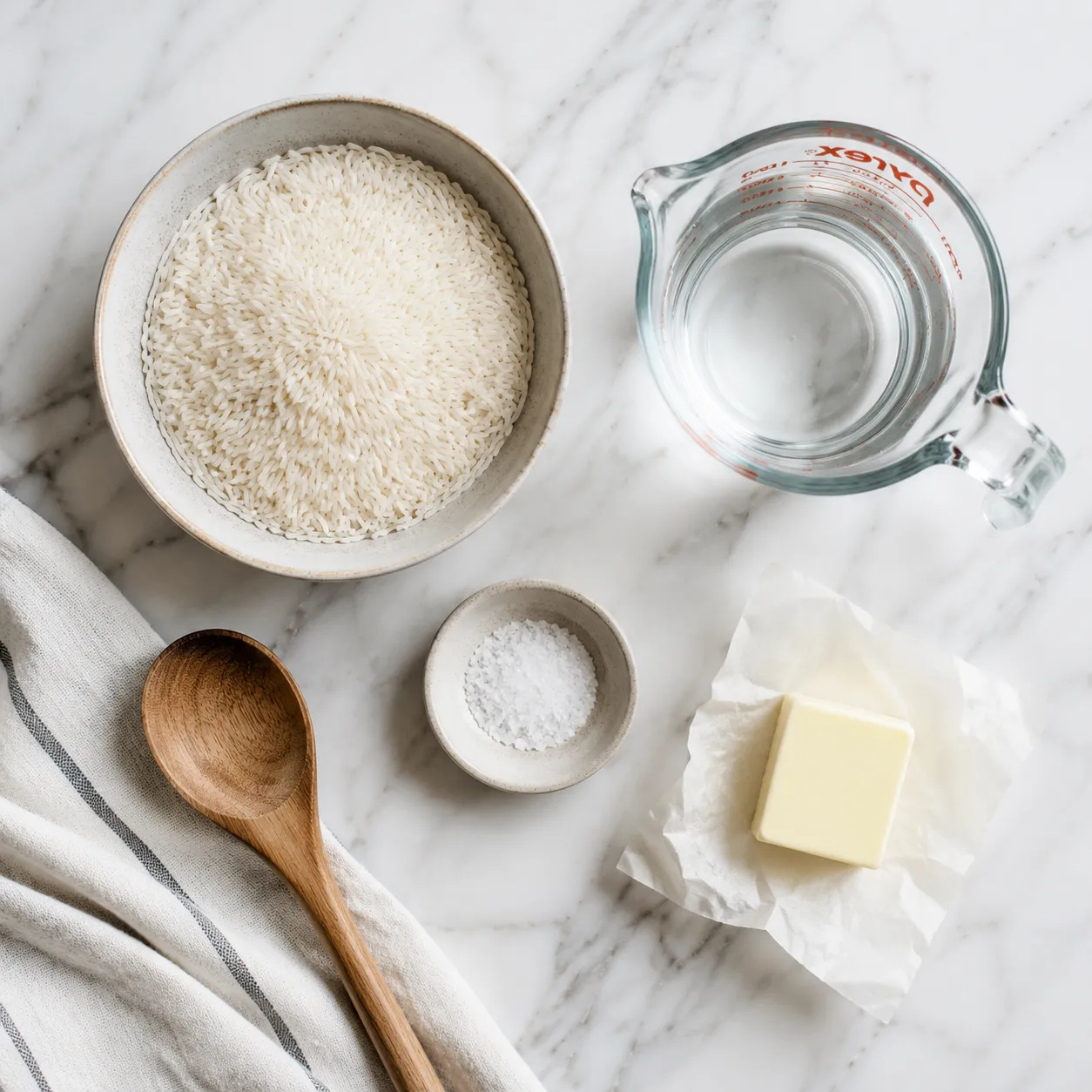
The ingredient list is beautifully short: long-grain white rice, water, kosher salt, and a little butter or olive oil if you like a richer finish. Long-grain rice is the classic choice because it cooks into separate, fluffy grains instead of a soft, sticky mound. The salt seasons the water from the inside out, and the optional fat adds a subtle gloss that makes the rice feel more rounded and satisfying.
For the best rice varieties, start with standard long-grain white rice if you are a beginner. Jasmine rice also works well, though it is naturally more aromatic and slightly softer, so it usually prefers a touch less water. Basmati is long, fragrant, and elegant, and it often benefits from a short soak or a slightly adjusted ratio depending on the brand. If you are searching for how to cook white rice on stove, long-grain white rice is the easiest place to begin.
Your pot matters more than you might think. Choose a 2-quart saucepan for 1 cup of rice, ideally with a heavy bottom that distributes heat evenly. A glass lid is nice because you can watch the simmer without opening the pot, but any tight-fitting lid will work. Avoid a pot that is too wide and shallow, since the water evaporates faster and can leave the rice undercooked.
A fine-mesh strainer is helpful for rinsing, and a fork is the best tool for fluffing. A spoon can mash the grains together, while a fork gently lifts and separates them. If you cook rice often, keep the same pot, measuring cup, and brand of rice in rotation; consistency makes the method feel almost automatic.
For classic long-grain white rice, the standard stovetop ratio is 1 cup rice to 2 cups water. That 2-to-1 ratio gives the grains enough moisture to cook through while leaving a little room for evaporation during the boil and simmer. It is simple, memorable, and reliable for most American supermarket long-grain white rice. When people ask how to cook rice on stove without a rice cooker, this is the ratio I tell them to memorize first.
Jasmine rice is softer and more delicate, so it can become a little too plush if cooked with the full 2 cups of water. For jasmine, try 1 cup rice to 1 3/4 cups water, especially if you rinsed it well and drained it thoroughly. Basmati can vary by brand; many cooks like 1 cup rice to 1 3/4 cups water after rinsing, while others prefer closer to 2 cups for a softer texture. If the package gives a ratio, use that as a clue, but let the final texture guide your future batches.
Brown rice is a different story because the bran layer is still intact. It needs more water and a longer cooking time, usually about 2 1/2 cups water for 1 cup rice, simmered until tender. This article focuses on white rice because it is the fastest and most beginner-friendly, but the same principles still apply: rinse if needed, simmer gently, keep the lid on, and rest before fluffing.
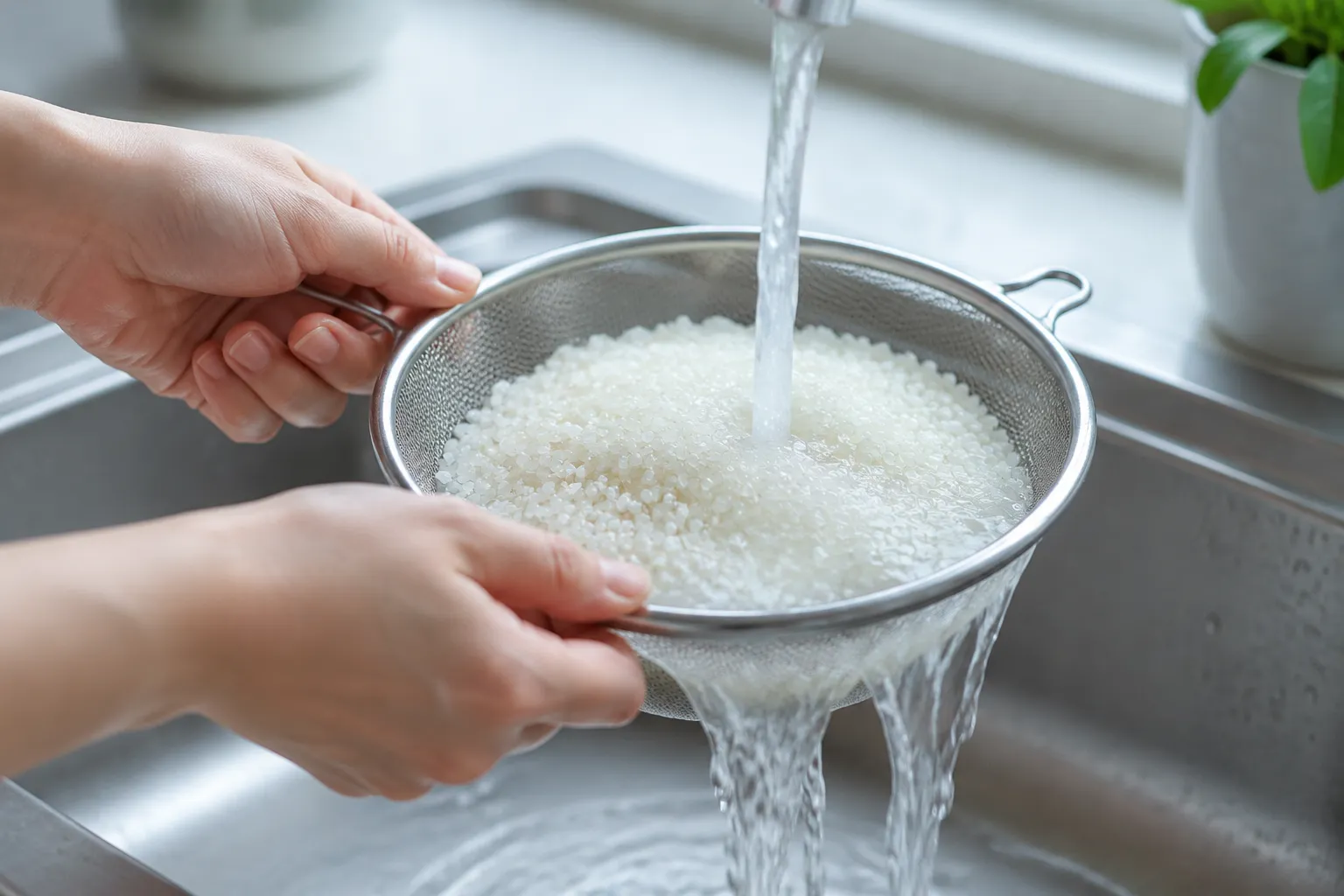
Begin by rinsing the rice under cool running water until the water looks much clearer than when you started. It does not have to run perfectly transparent, but you should see the cloudy starch fade. Shake the strainer well so you are not adding a hidden puddle of extra water to the pot. This one-minute habit is the easiest upgrade if you want clean, separate grains.
Next, combine the rinsed rice, measured water, salt, and optional butter or oil in your saucepan. Set it over medium-high heat and bring it to a full, confident boil. You want bubbles breaking across the surface, not just tiny simmering movement around the edges. This stage ensures the pot is hot enough before you turn the heat down.
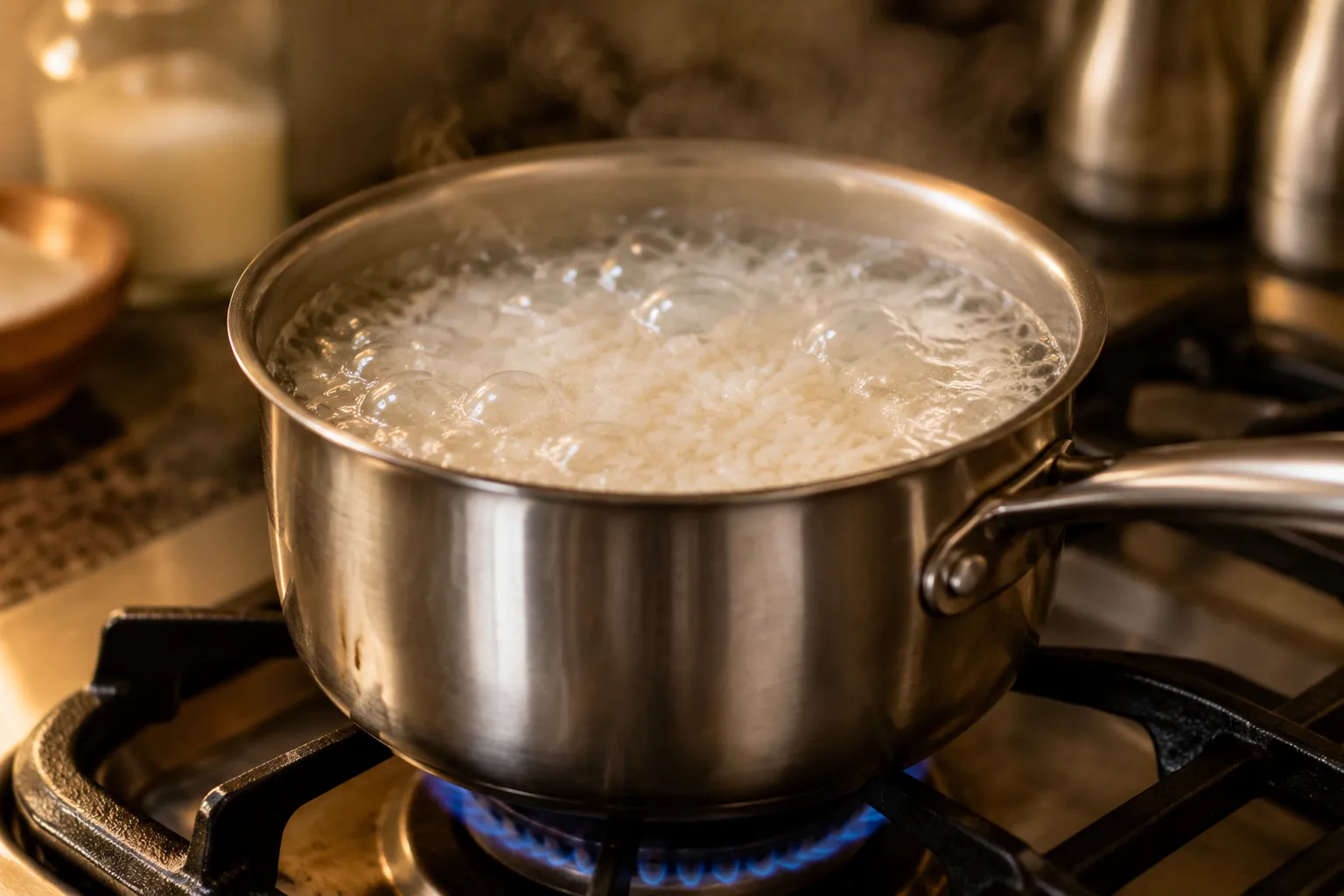
Once the water boils, give the rice one gentle stir to prevent grains from sticking to the bottom, then immediately cover the pot. Reduce the heat to low, aiming for the quietest simmer your burner can maintain. If the flame or heat is too high, the water evaporates before the rice has time to absorb it. If the heat is too low and the pot stops steaming completely, the grains may cook unevenly.
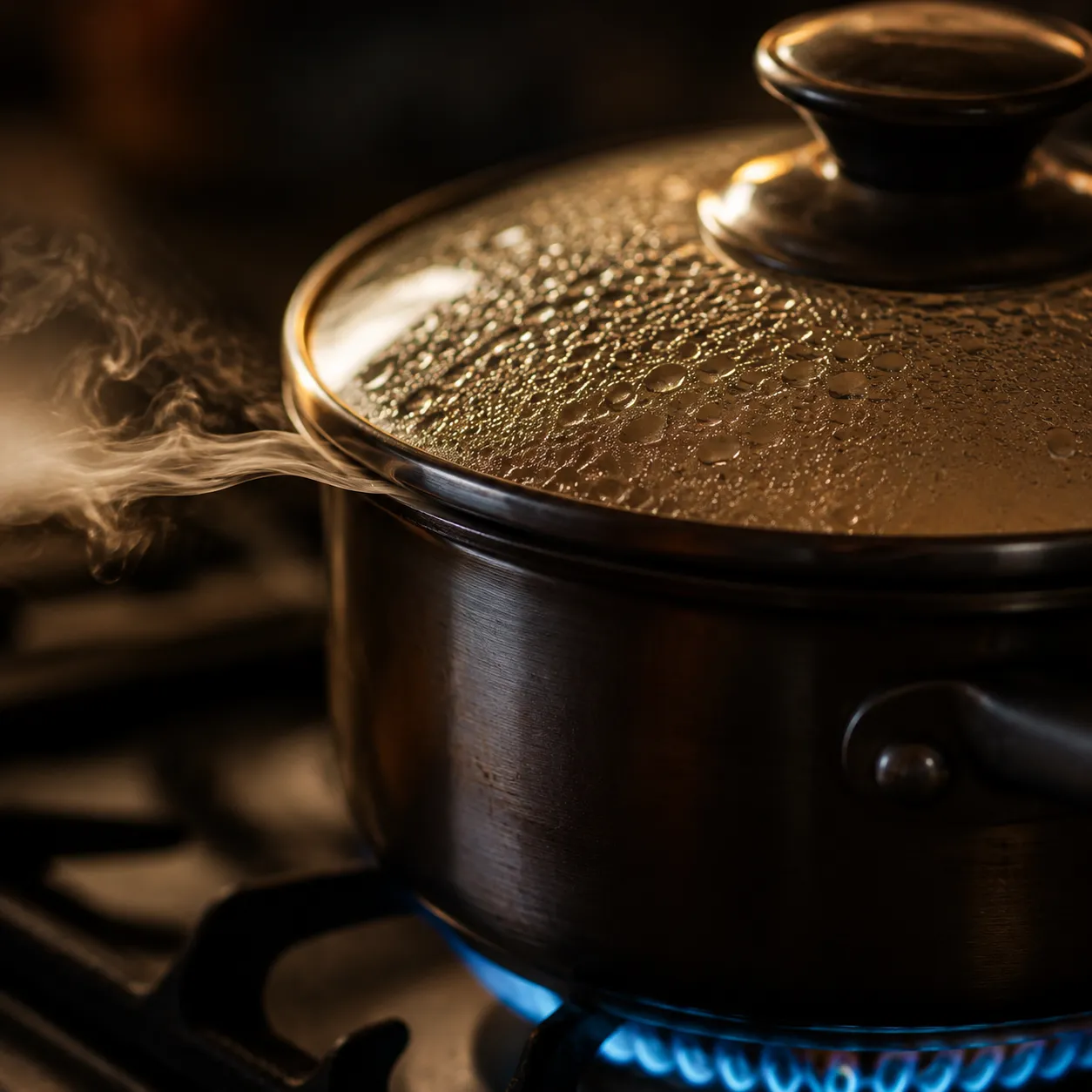
Keep the lid closed while the rice cooks. Every peek releases steam, drops the temperature, and changes the moisture balance inside the pot. If you have a glass lid, you may see condensation form and a few gentle bubbles at the edges, which is exactly what you want. This is where how to make white rice on the stove becomes more about patience than stirring.
After the simmer time, turn off the heat but leave the pot covered for 10 minutes. This rest is not optional if you want fluffy rice. The residual steam finishes hydrating any firm centers, while the surface moisture settles back into the grains. When you finally lift the lid, the rice should look plump, matte rather than wet, and slightly dimpled on top.
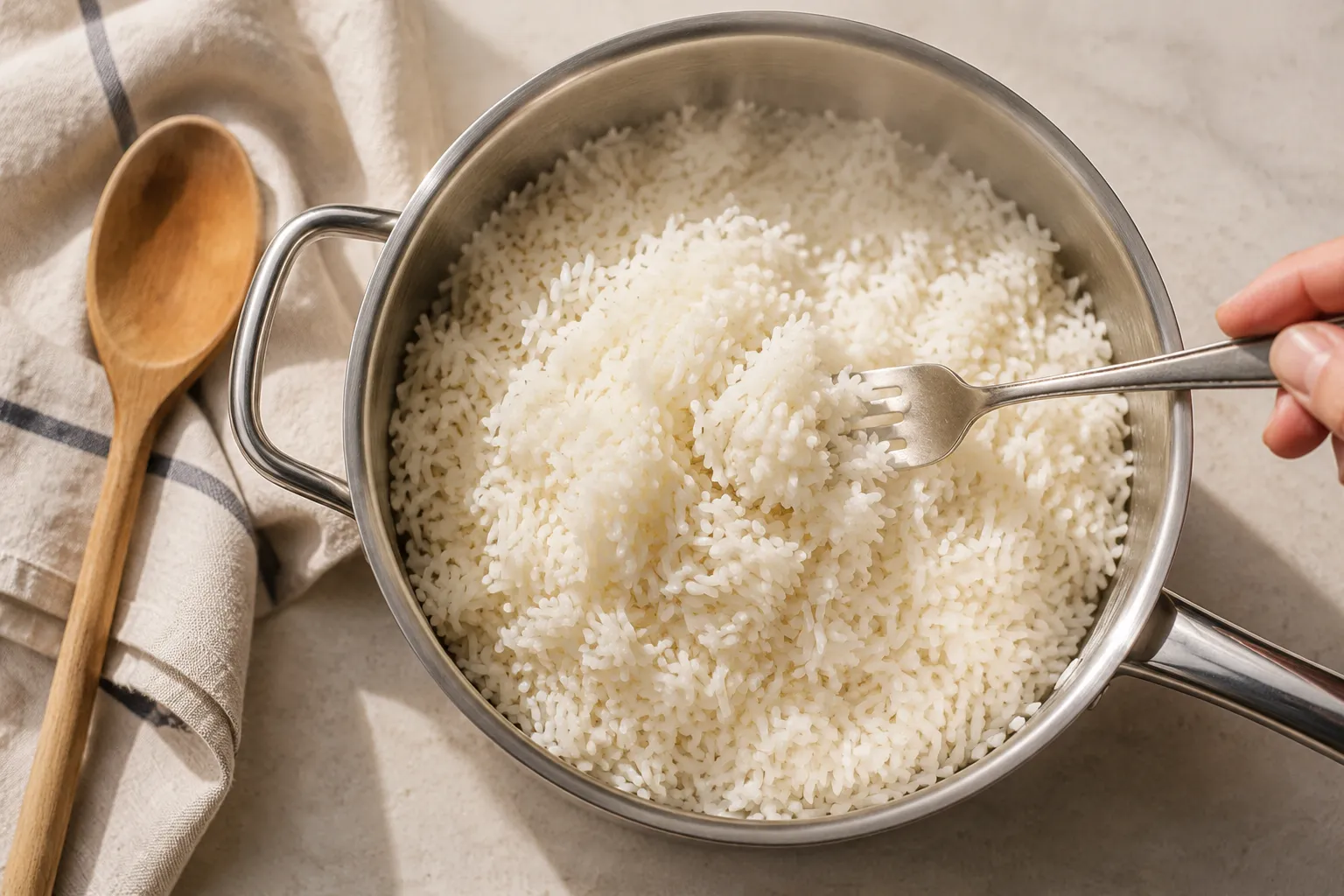
Use a fork to fluff from the edges toward the center, lifting instead of pressing. The grains should separate easily and release a little steam. Taste a small bite; it should be tender all the way through, with no chalky center and no watery pooling at the bottom. That final fork-fluff is the finishing touch that makes the pot look as good as it tastes.
If you are wondering how long to cook rice on stove, plan on 18 to 20 minutes of covered low simmer for long-grain white rice, followed by a 10-minute covered rest. The simmer softens the grain, but the rest perfects the texture. For a small 1-cup batch, 18 minutes is often enough; for a slightly heavier pot or a weaker burner, 20 minutes may be better. The goal is tender rice with no visible water left in the bottom of the pan.
Jasmine rice often cooks in about 15 to 18 minutes, depending on the ratio and the brand. Basmati usually lands around 15 to 20 minutes, especially if it has been rinsed well and drained. Brown rice takes much longer, usually 40 to 45 minutes, because the outer bran layer slows absorption. These timing ranges are why visual cues matter as much as the clock.
Look for three signs that your rice is ready to rest: the bubbling has quieted, steam is still trapped under the lid, and the top surface of the rice has small holes or dimples where steam escaped upward. If you tilt the pot slightly and hear water sloshing, it needs a few more minutes. If it smells toasty or dry before the timer ends, your heat may be too high, and you can add a tablespoon or two of water before covering it again.
Perfect rice is tender, but it should not look saturated. When you lift the lid after the rest, the surface should be fluffy and slightly uneven, with individual grains visible. If the top is glossy and wet, it may need a few more minutes covered off the heat. If the rice is tender but a little compacted, fluffing with a fork and letting it sit uncovered for a minute can help release excess steam.
Crunchy rice usually means there was not enough water, the lid did not seal, or the heat was too high and moisture escaped too quickly. Add a few tablespoons of hot water, cover, and cook on low for another 5 minutes, then rest again. Mushy rice usually points to too much water, too much stirring, or skipping the rinse. Taking notes on your pot, burner, and rice brand can make your next batch nearly perfect.
The bottom of the pot tells a story too. A thin layer of lightly stuck grains can happen, especially in stainless steel, but a browned or scorched layer means the burner was too hot. A heavy-bottomed saucepan helps, as does moving the pot to a smaller burner once it is covered. With a little repetition, you will know exactly how your stove behaves.
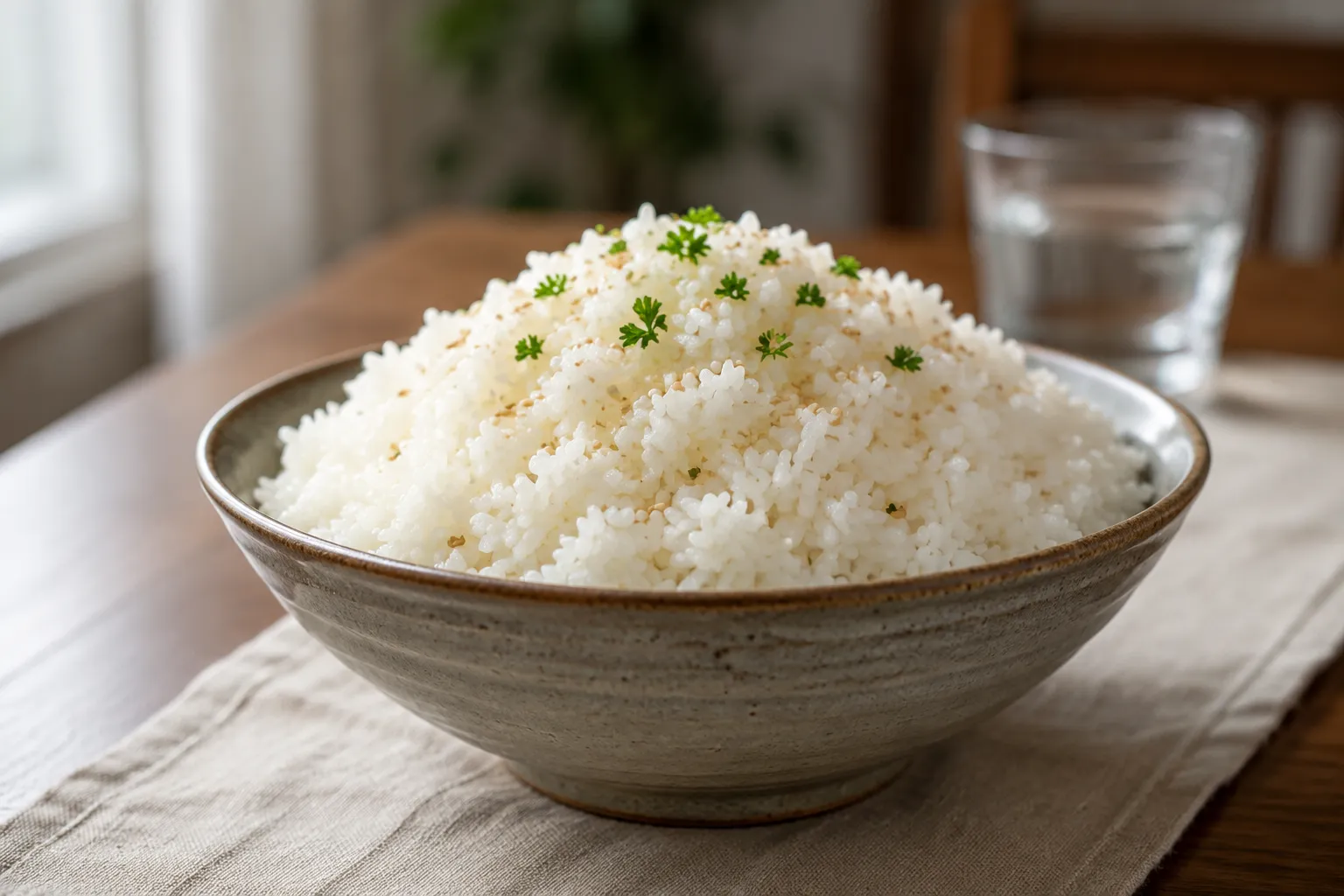
A pot of fluffy rice turns almost anything into dinner. Spoon it under saucy chicken, beef and broccoli, coconut curry, chili crisp eggs, or garlicky shrimp. It is also perfect with roasted vegetables and a drizzle of soy sauce, sesame oil, or pan juices. Because the flavor is clean and gentle, rice can move from comfort food to meal prep base without missing a beat.
For simple weeknights, I love rice next to grilled chicken and steamed broccoli, where it catches every drop of butter, lemon, or sauce on the plate. It also works beautifully with beans, salmon, tofu, stir-fried vegetables, or a fried egg with scallions. If you are building a bowl, add something saucy, something crisp, and something fresh. That combination makes plain rice feel like the cozy foundation of a complete meal.
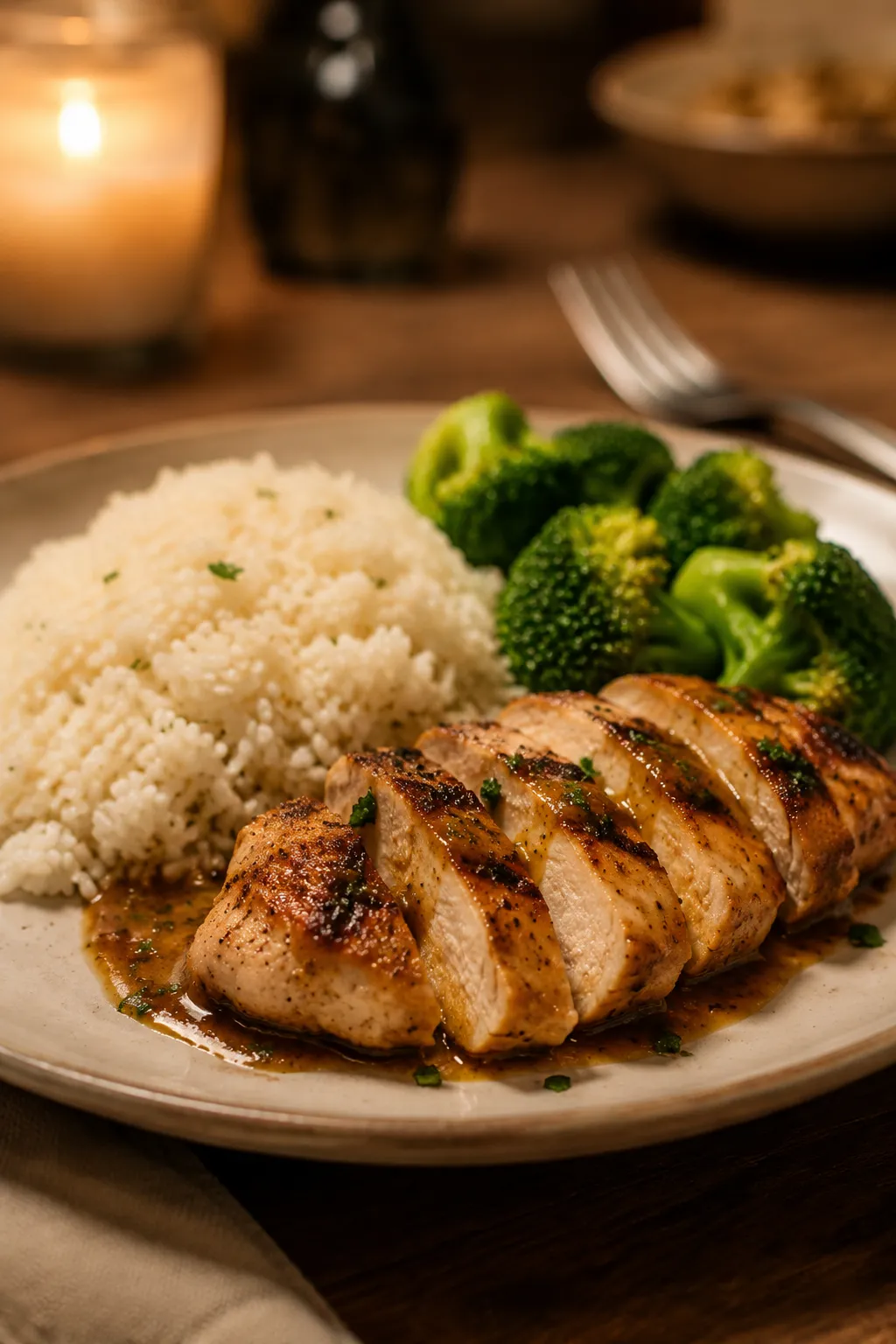
This is also the kind of staple that makes leftovers easier. A container of cooked rice can become fried rice, soup filler, stuffed pepper filling, or a quick side for tomorrow's lunch. Just remember that rice should be cooled and handled thoughtfully if you are saving it for later. The storage block below walks through the safest way to chill, refrigerate, freeze, and reheat it.
Once you learn how to cook rice on stove, it becomes less of a recipe and more of a rhythm: rinse, boil, cover, simmer, rest, fluff. The 2-to-1 ratio is your starting point, and the lid is your best friend. Keep the heat low, trust the steam, and resist the urge to stir while it cooks.
Most importantly, do not judge the rice before it has rested. Those 10 quiet minutes are what turn a pot of hot grains into a fluffy side dish that scoops beautifully. Make it once or twice, adjust for your favorite rice variety, and you will always know how to cook rice on stove for the kind of simple, dependable bowl that makes dinner feel complete.
Once you have the basic stovetop method down, it is easy to add flavor without changing the technique too much. Keep the rice-to-liquid ratio steady, then layer in aromatics, broth, herbs, or spices depending on what you are serving.
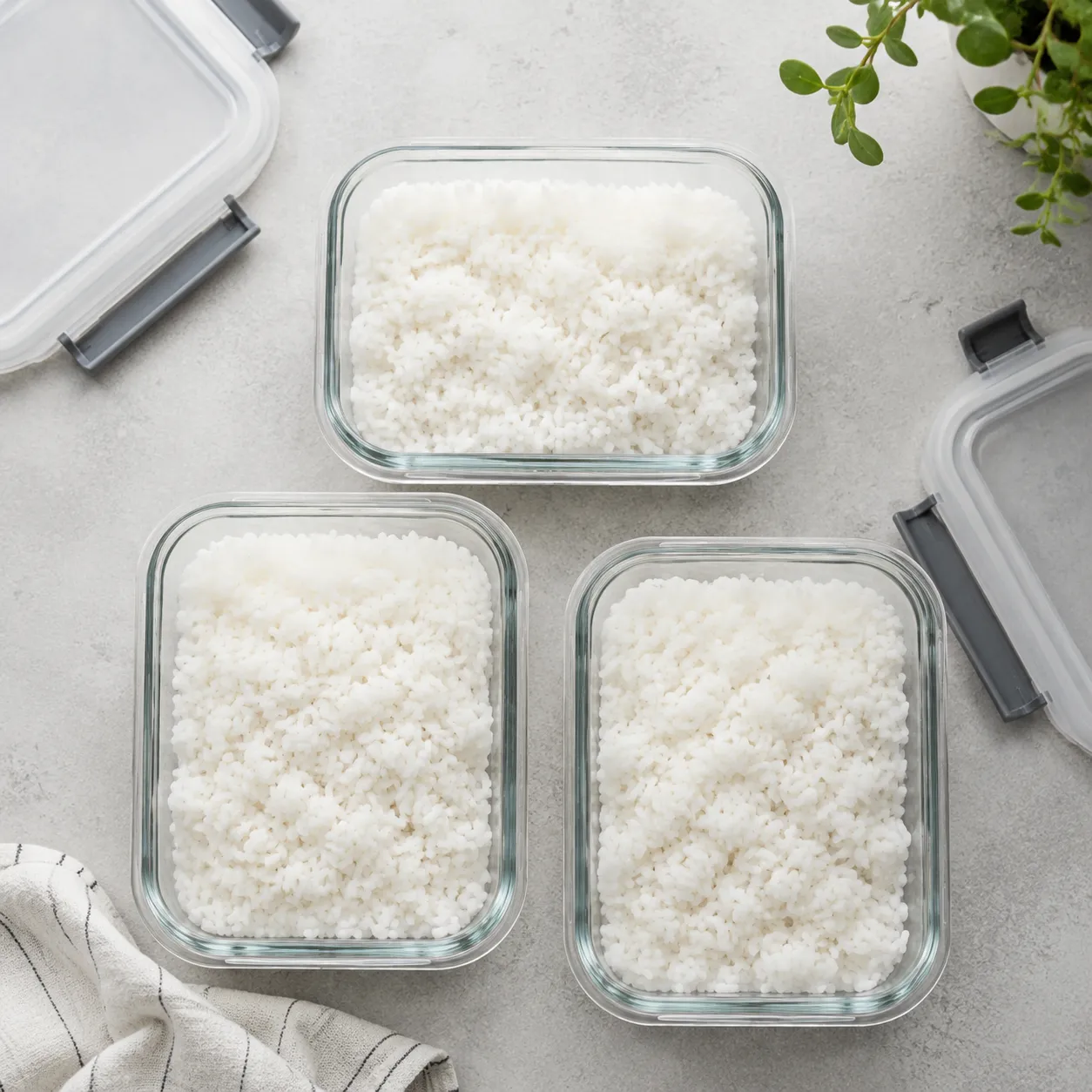
Cool cooked rice quickly, then transfer it to shallow airtight containers and refrigerate within 2 hours. Stored properly, cooked white rice keeps well in the refrigerator for 3 to 4 days. For longer storage, freeze portions in freezer-safe containers or bags for up to 2 months.
To reheat, sprinkle the rice with a tablespoon or two of water, cover, and microwave until steaming hot, fluffing halfway through. You can also reheat it in a covered saucepan over low heat. Always reheat rice until hot throughout and discard any rice that smells off or has been left at room temperature too long.