Can You Microwave Styrofoam? The Safe Answer
Ingredients
Scale
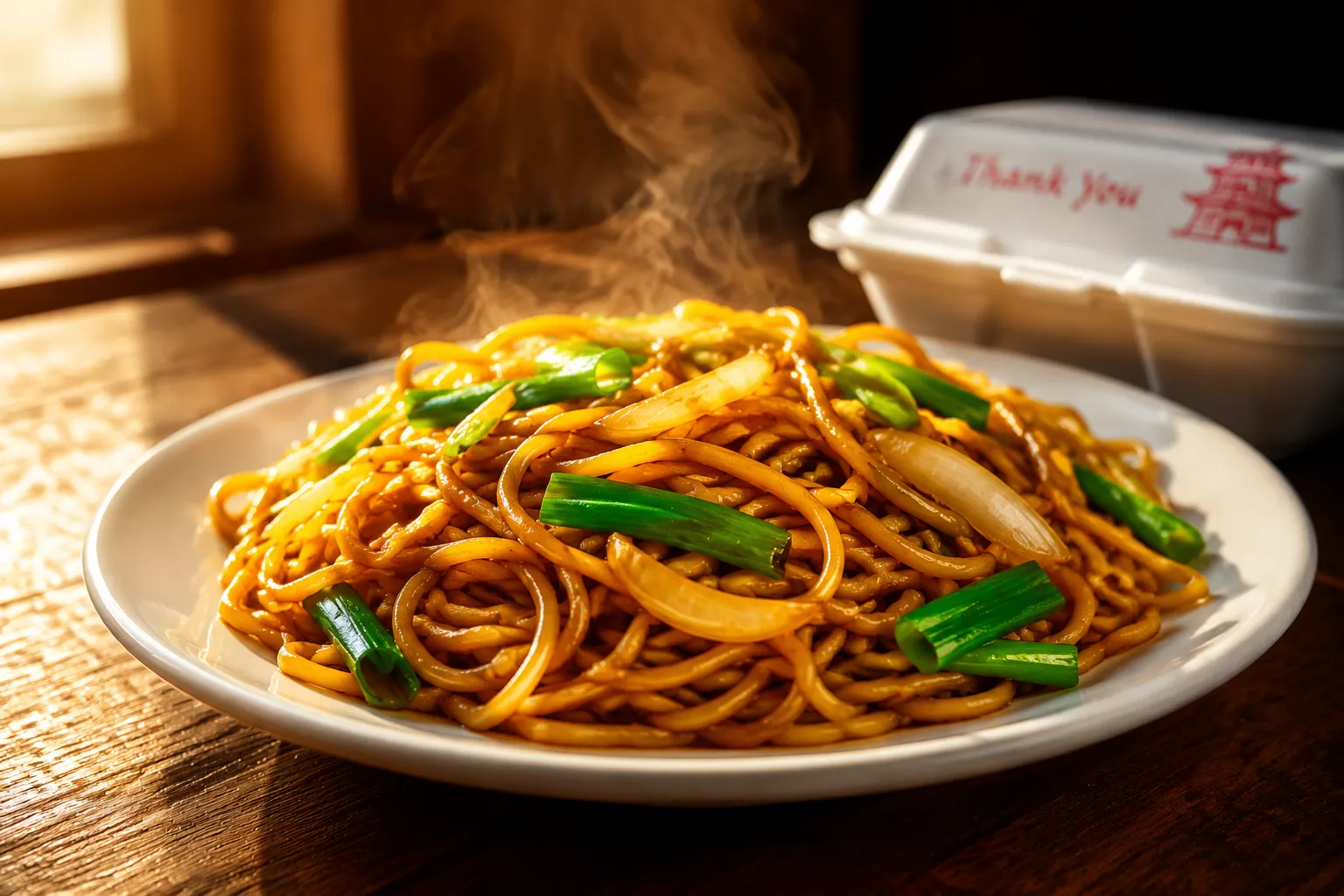
Wondering if you can microwave styrofoam? Here's the straight answer on foam takeout boxes, hidden safety risks, and a smarter way to reheat leftovers.
Can you microwave styrofoam? That's the question staring back at you at 9 p.m. when the takeout containers are still warm from the delivery bag and the only thing standing between you and dinner is the start button. The honest answer is more nuanced than a flat yes or no, and that nuance matters because the wrong choice can melt your container, ruin your food, and potentially leach chemicals into your meal.
Most foam takeout containers you get from restaurants are not labeled microwave-safe, and that single fact answers the question for the majority of leftovers in your fridge tonight. There's a small subset of foam packaging that is specifically engineered and tested for microwave use, and learning to spot the difference takes about three seconds once you know where to look.
I've reheated more late-night Chinese, Thai, and pizza than I can count in every kitchen I've lived in, and the routine I'm sharing below is the one I default to every single time. It's faster than waiting on the oven, safer than gambling on a foam clamshell, and it gets food hot and even instead of mouth-burning on the edges and ice-cold in the middle.
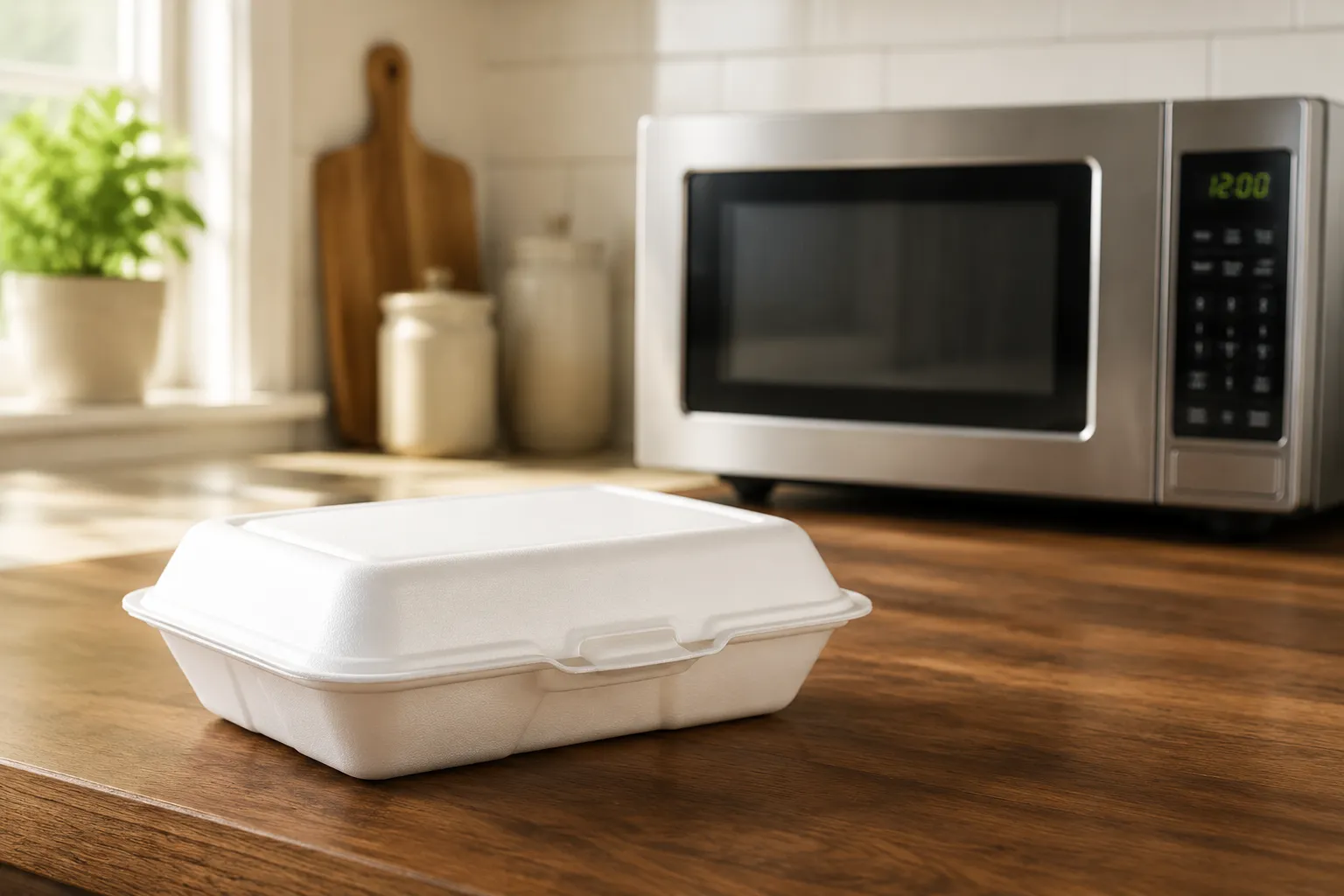
Here's the short version: only foam containers stamped with a microwave-safe symbol on the bottom are safe to put in your microwave. Generic white clamshells, drink cups, and noodle bowls from your favorite takeout spot are almost never tested or rated for microwave use, which means they fall into the "transfer it out" category by default.
The reason the answer hinges on the label comes down to FDA testing. When a manufacturer prints that little wavy-lines icon, they've verified the foam holds its shape and doesn't transfer harmful amounts of any compound into food at typical reheating temperatures. Without that stamp, you're guessing, and hot, oily, or acidic leftovers are exactly the conditions that push foam past its limits.
So before you press start on tonight's leftovers, flip the container over for two seconds. If you see the microwave icon, you're cleared. If you don't, grab a plate. It's that simple, and it's the foundation of every other piece of microwave safety tips I follow.
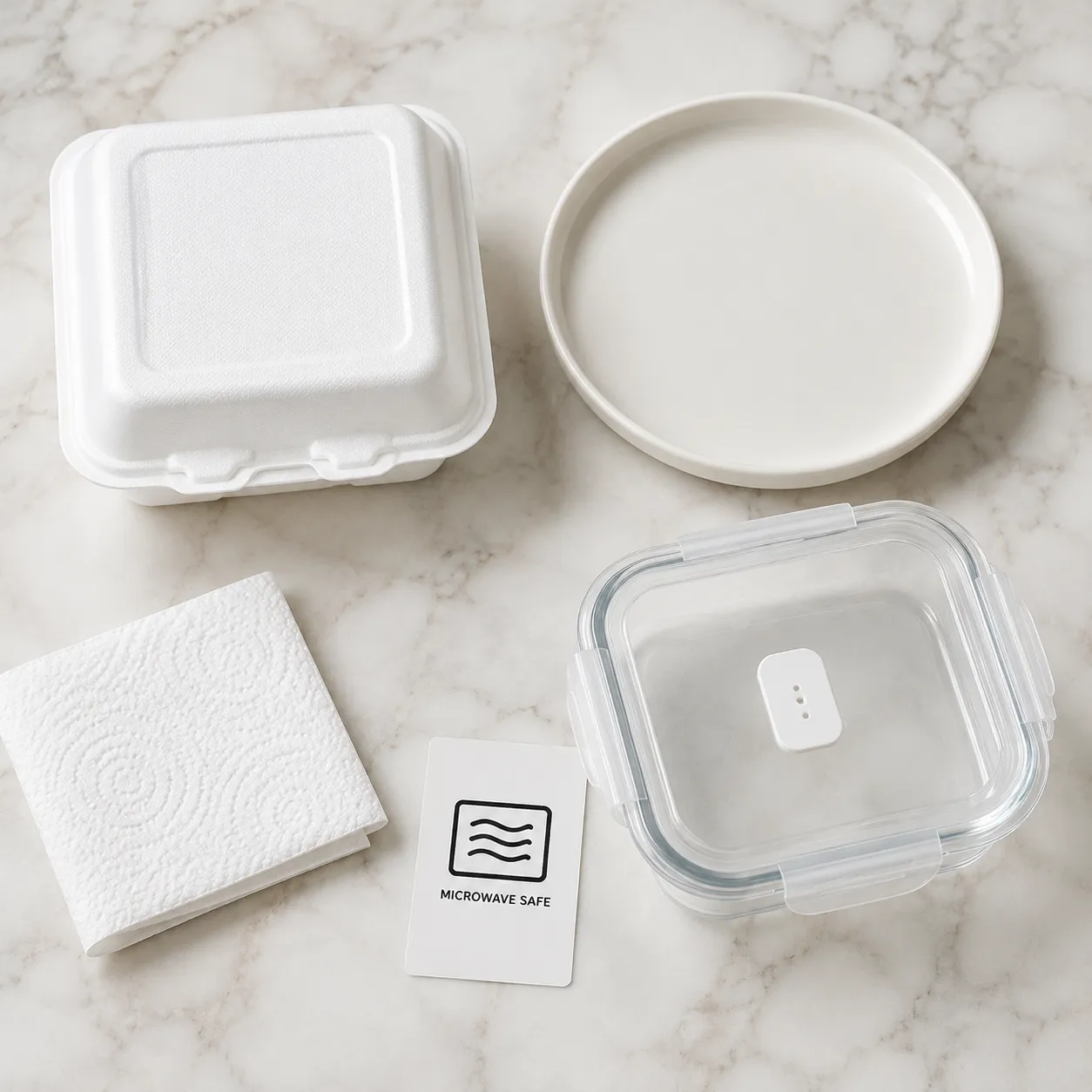
The word "Styrofoam" gets used like Kleenex or Velcro, but it's technically a Dow Chemical brand name for a specific blue extruded polystyrene insulation product used in construction, not food packaging. The white stuff your pad thai comes in is technically expanded polystyrene foam, or EPS. Both are made from the same base polymer, polystyrene, but the manufacturing and intended use are different.
Foam takeout containers are made by expanding polystyrene beads with steam until they fuse into a lightweight, insulating shell. That's why they keep food hot on the drive home and why they're so cheap for restaurants to use. The same insulating property that's great for transport, though, is what makes polystyrene foam risky in a microwave: the material softens at temperatures well below what hot food can reach in two minutes of high-power reheating.
You'll run into polystyrene foam most often as clamshell takeout boxes, hot drink cups, instant noodle bowls, and disposable plates at picnics. A few specialty cups and bowls, especially some instant ramen brands, are engineered with thicker walls and additives so they can survive boiling water and microwave heat. Those will say so right on the label, usually with bold microwave-friendly text near the directions.
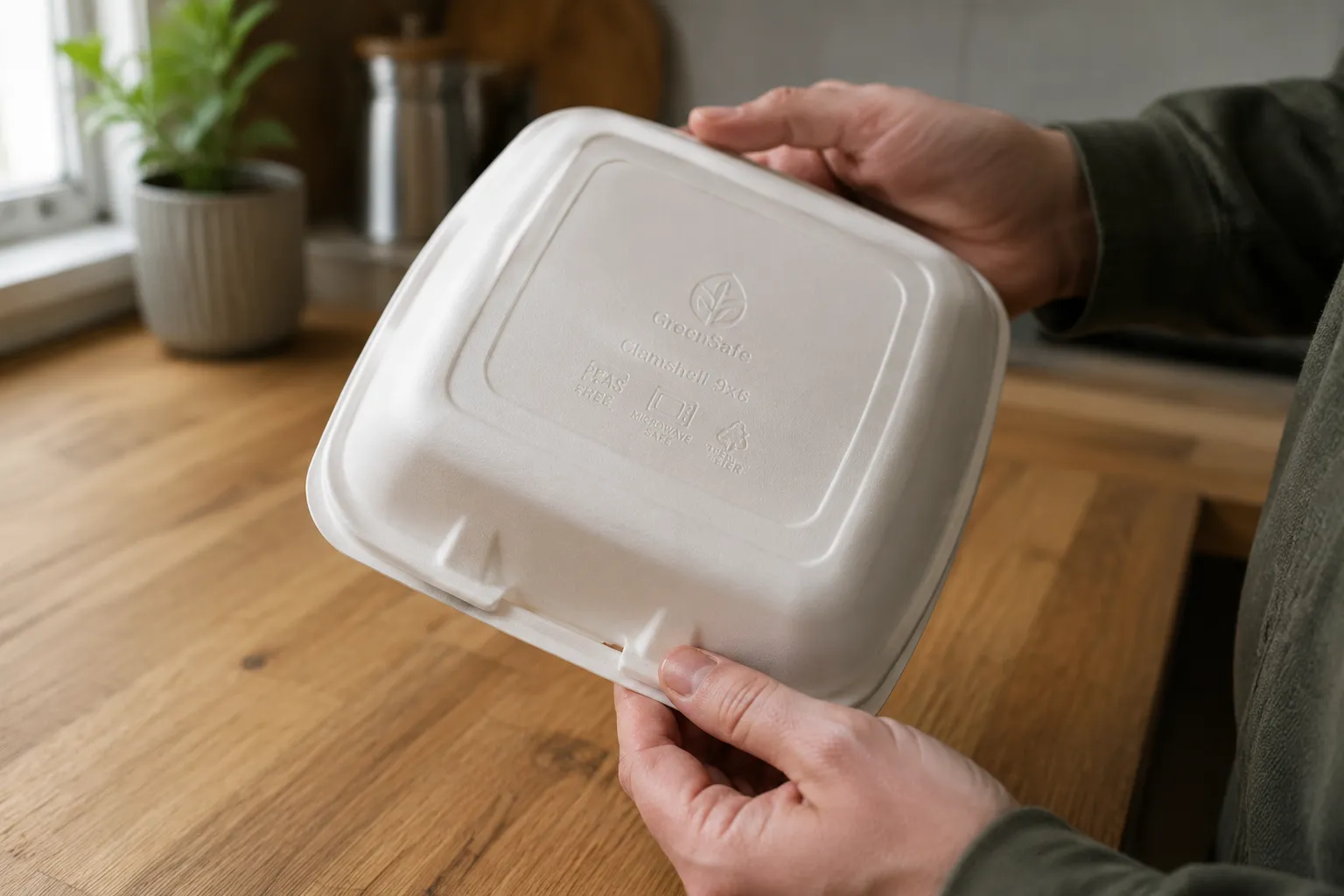
The single most reliable test is to flip the container upside down and read the bottom. Manufacturers are required to disclose what their packaging is rated for, and microwave-safe ratings show up as one of two markings: a small icon of wavy lines (sometimes inside a square or with a tiny dish shape), or printed text that reads "microwave-safe" or "microwavable."
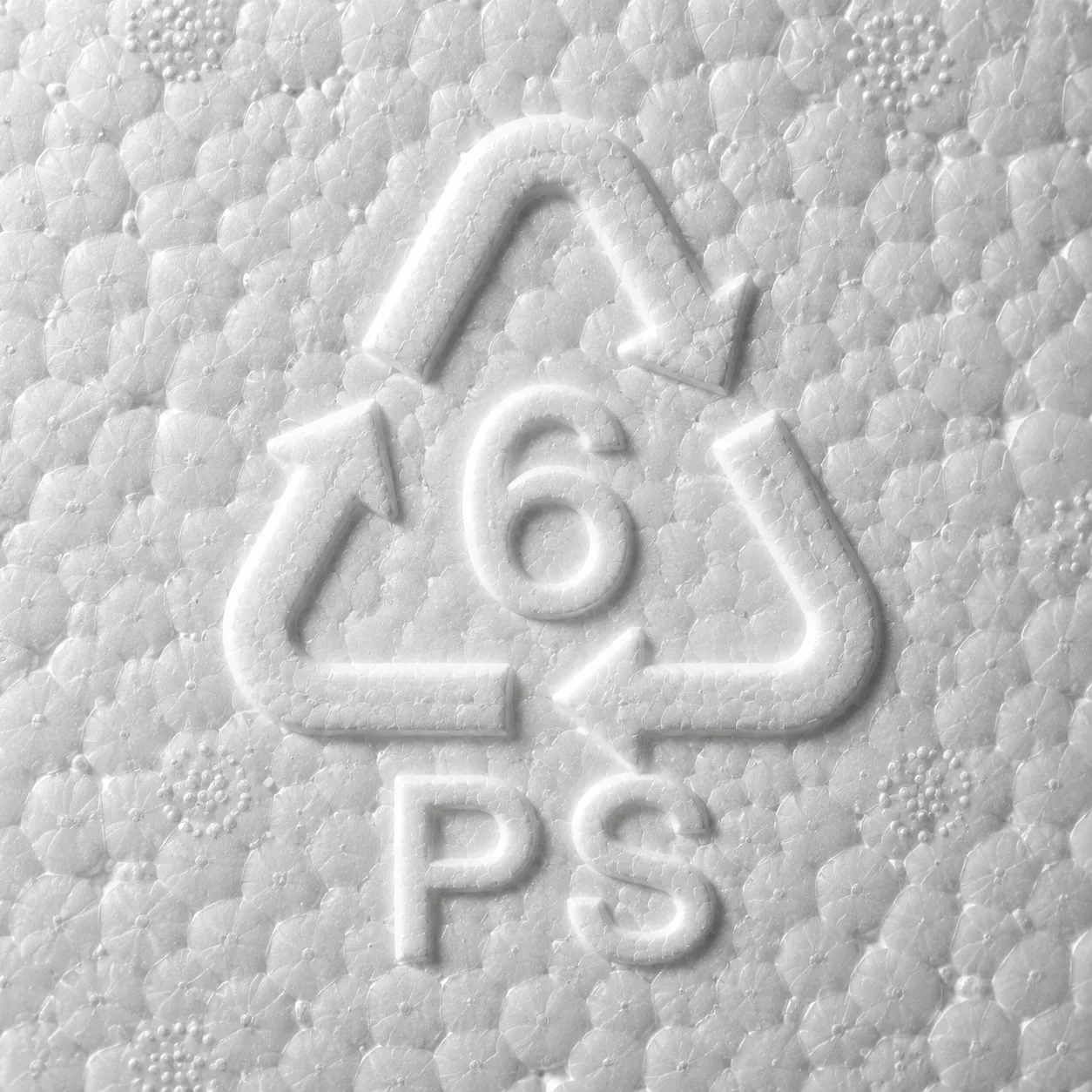
You'll often also see a recycling triangle with a number inside. For foam takeout containers, that number is almost always resin code 6 with the letters PS, identifying the plastic as polystyrene. Important note: resin code 6 alone does not mean microwave-safe. It only tells you what the material is. You still need the wavy-lines microwave-safe symbol or explicit text confirming heat tolerance. This is one of the most common mix-ups in microwave safety tips floating around online, and it's the reason the question can you microwave styrofoam keeps generating different answers from different sources.
When you can't find any marking at all, treat it as not safe. The default for unmarked foam takeout containers is the same as for unmarked plastic: assume the worst and transfer your food to a known microwave-safe container. That ten-second move costs you nothing and protects against every scenario where the manufacturer simply didn't print clear labeling.
When you heat unrated polystyrene foam, the first thing you'll usually notice is the bottom of the container starting to warp or the side walls slumping. In mild cases that means a misshapen box. In worse cases, the foam thins out enough that hot soup or sauce burns through and dumps onto the turntable, which is both messy and a real burn hazard when you reach in to pull it out.
The bigger concern most people are asking about is chemical leaching. Polystyrene contains styrene, a compound the National Toxicology Program lists as "reasonably anticipated to be a human carcinogen" based on long-term exposure data. Hot, fatty, or oily foods sitting against softening foam create the exact conditions that increase how much styrene migrates into your meal. The amounts from a single reheat are small, but it's a totally avoidable exposure if you just use a plate.
There's also a fire and burn angle that doesn't get talked about enough. Foam can ignite if it gets hot enough or contacts a metallic accent on a container, and even short of fire, melted foam fused to hot food is impossible to clean off and ruins the meal. None of these risks exist when you transfer to glass or ceramic, which is why every time you wonder can you microwave styrofoam, the default safer answer is just don't.
This is my standard play, and it works for noodles, fried rice, curries, pizza, roasted vegetables, and pretty much any leftover that isn't deep-fried (those need a skillet or air fryer to crisp back up). It takes five minutes start to finish and gives you better, more even heat than nuking food in its original container ever will. If you've been searching for the best way to reheat takeout without a soggy or burnt result, this is it.
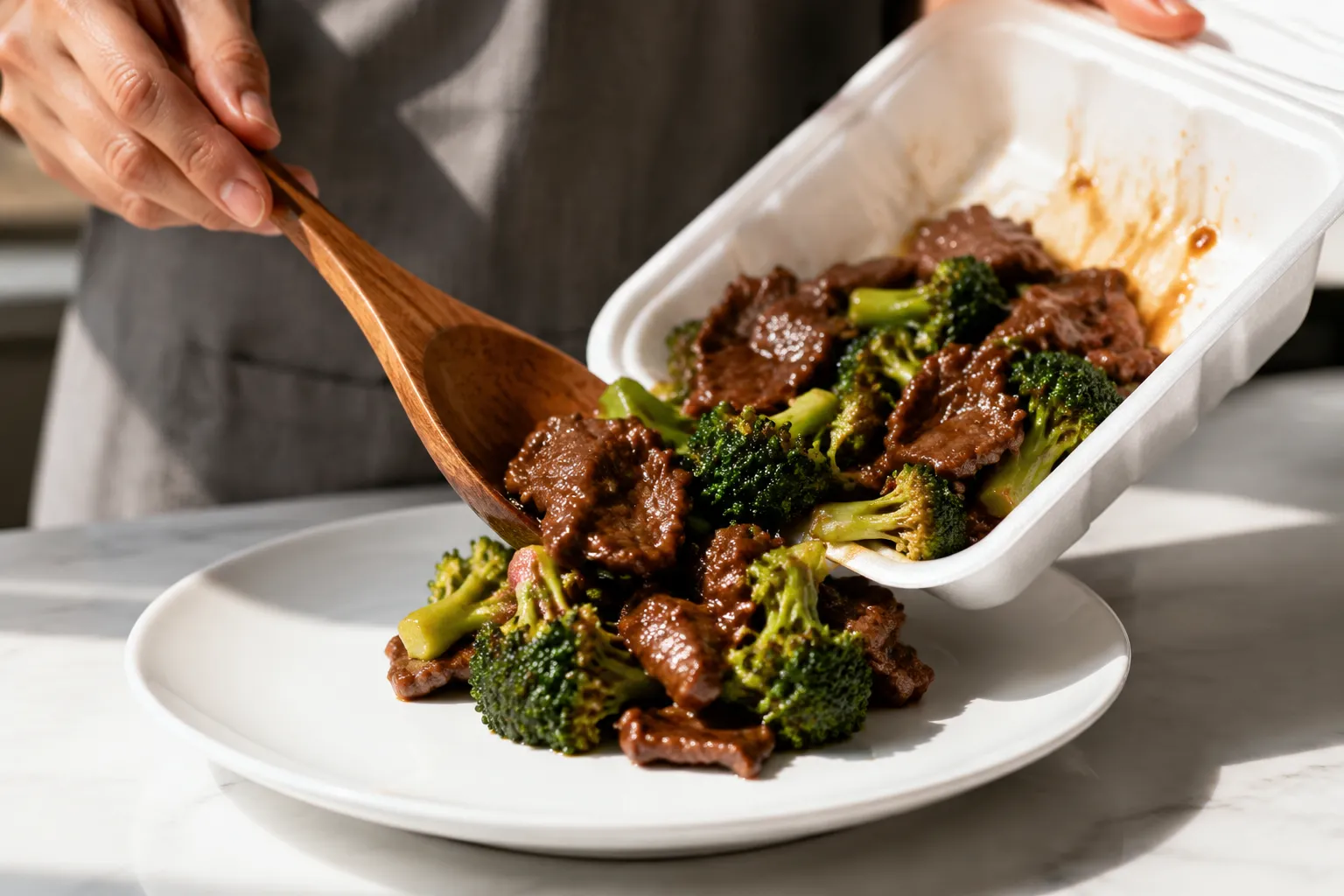
Start by transferring your food to a flat ceramic or glass plate. Spread it into an even, single layer rather than piling it high. Microwaves heat unevenly, and a thin layer means every bite hits the same temperature at the same time. Add a tablespoon of water to anything starchy or vegetable-based to create steam and protect against drying out.
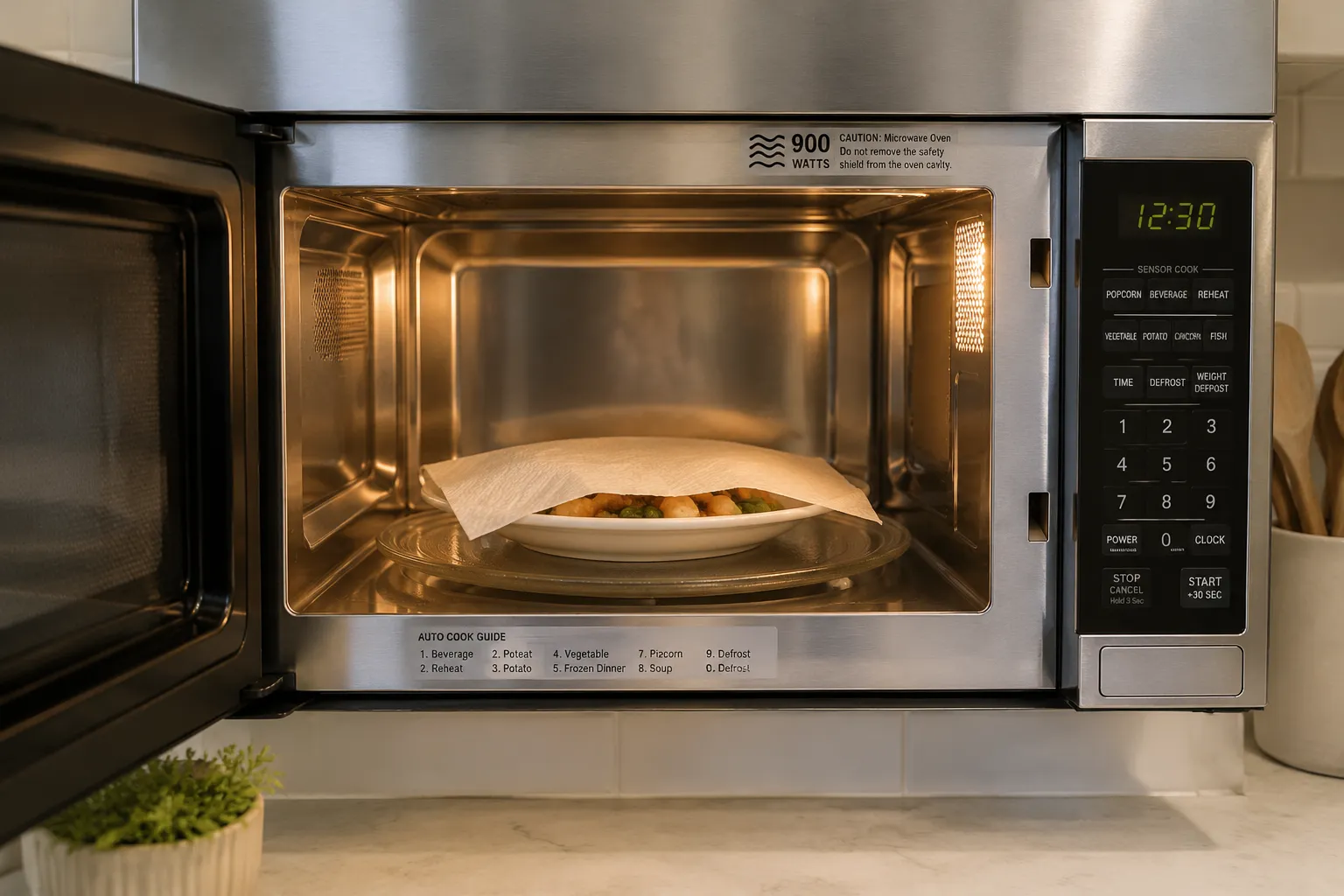
Cover the plate loosely with a paper towel or a microwave-safe vented lid. The cover traps just enough steam to keep food from drying out while letting excess moisture escape so nothing turns gummy. Microwave on 70 percent power, not full blast, in 60-second intervals, stirring or rotating between rounds. Lower power gives the heat time to spread through the food instead of scorching the edges.
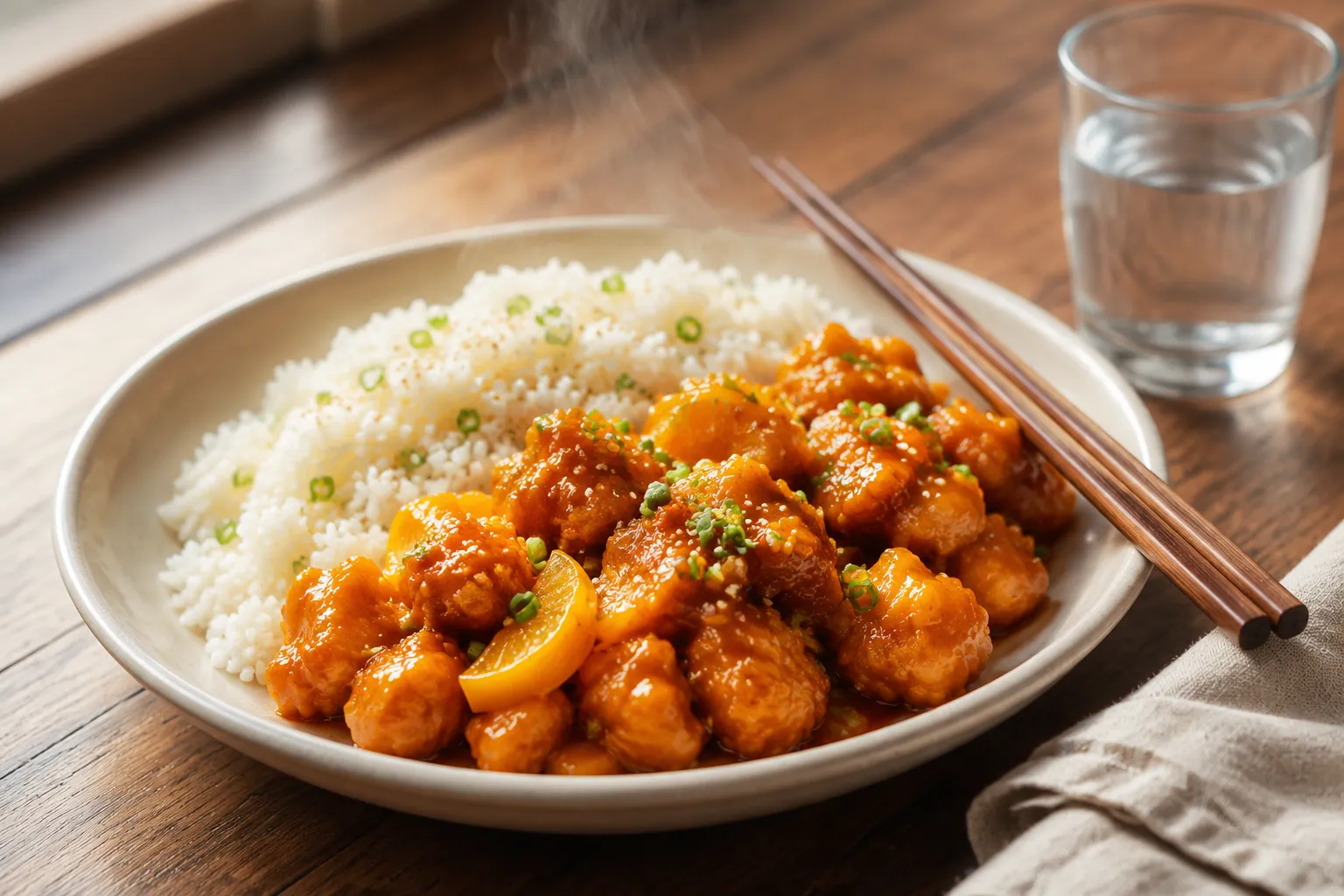
Most takeout portions hit eating temperature in about three minutes total this way. Pizza is the one exception: skip the water and use a paper towel underneath the slice to absorb moisture and keep the crust from going limp. The same general approach is exactly how to reheat leftovers from any home-cooked meal, so it's worth burning into muscle memory.
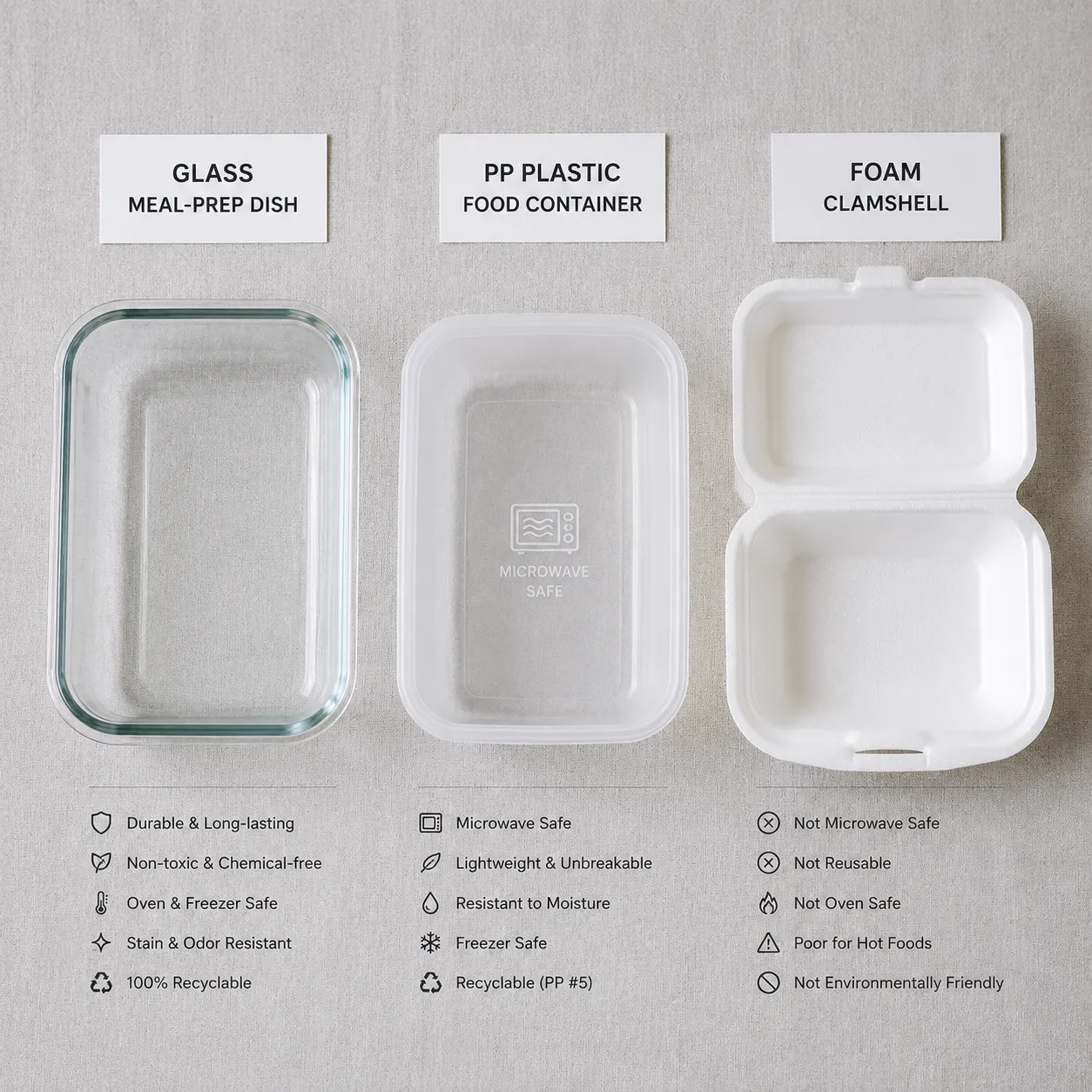
If you do any amount of weeknight reheating, having a small stack of dedicated microwave-safe containers in the cabinet pays for itself in convenience and peace of mind. My ranking for what to reach for, in order:
Glass and ceramic come first. Tempered glass meal-prep containers and any plain ceramic plate or bowl without metallic paint are essentially failproof. They don't leach anything, they hold heat well, and they go straight from microwave to table. A simple 4-cup Pyrex round is the most useful single purchase you can make for leftovers.
Microwave-safe plastic comes second. The question are plastic containers microwave safe is the same one we've been asking about foam: only when labeled. Look for polypropylene tubs (resin code 5) marked with the wavy-lines icon. Those are engineered to handle heat without warping or leaching. Older or unmarked plastics, especially anything thin and clear like deli soup cups, should not go in.
Containers to never microwave include any foam without a microwave-safe stamp, anything with metal trim or twist ties, paper bags and most coffee cups, single-use yogurt or butter tubs, and Chinese takeout boxes with the wire handle. When in doubt, the plate trick from the previous section bypasses every container question entirely.
The next time you find yourself asking can you microwave styrofoam, you'll have the answer before you finish the question: only with the icon, and when in doubt, plate it out. Five extra seconds of inspection and one extra dish to wash is a small trade for hot food that tastes the way it should and zero worry about what's leaching into dinner. Save this routine and your future self at 9 p.m. will thank you.
The plate-and-paper-towel method is endlessly adaptable. Once you've locked in the basic technique, dial it up or down based on what's in the box.
Once takeout is home, transfer leftovers from foam containers into airtight glass or microwave-safe plastic within two hours of pickup. Refrigerated leftovers stay good for 3 to 4 days at 40°F or below, and storing them in the container you'll reheat in cuts down on dishes and skips the foam question entirely the second time around.
For longer storage, most takeout freezes well for up to 2 months in tightly sealed glass or freezer bags. Thaw overnight in the fridge before reheating with the method above for best texture. Never refreeze food that's already been thawed, and reheat only the portion you plan to eat at one sitting since repeated heating cycles dry food out and degrade flavor fast.