Garlic Penne Pasta Recipe: Easy 30-Minute Weeknight Dinner
Ingredients
Scale
Buttery, garlicky penne pasta tossed in a silky parmesan sauce. Ready in 30 minutes with pantry staples — the easiest weeknight pasta you'll ever make.
This pasta penne pasta recipe is the kind of dinner I make when the day has gotten away from me and I need something hot, comforting, and on the table in under 30 minutes. It's buttery, deeply garlicky, finished with a snowfall of parmesan, and built almost entirely from pantry staples. There's no cream, no fancy technique, no specialty ingredients — just a smart pasta-water emulsion that turns butter and extra virgin olive oil into a silky, restaurant-style sauce that clings to every ridge of the penne.
I first learned this version from a tiny trattoria in Bologna where the cook tossed the noodles in a battered skillet for maybe forty-five seconds and somehow the sauce tightened around each piece like glaze on a doughnut. The trick, it turns out, isn't the cheese or even the garlic. It's the starchy water you save from the pasta pot. Once you understand that one move, you can riff on this dish forever — different fats, different aromatics, different cheeses, same glossy magic.
If you're looking for an easy Italian dinner that feels just a little fancier than it has any right to, you're going to make this on repeat. Keep reading for the why behind the technique, the smartest add-ins, and a few professional tricks for nailing the texture every single time.
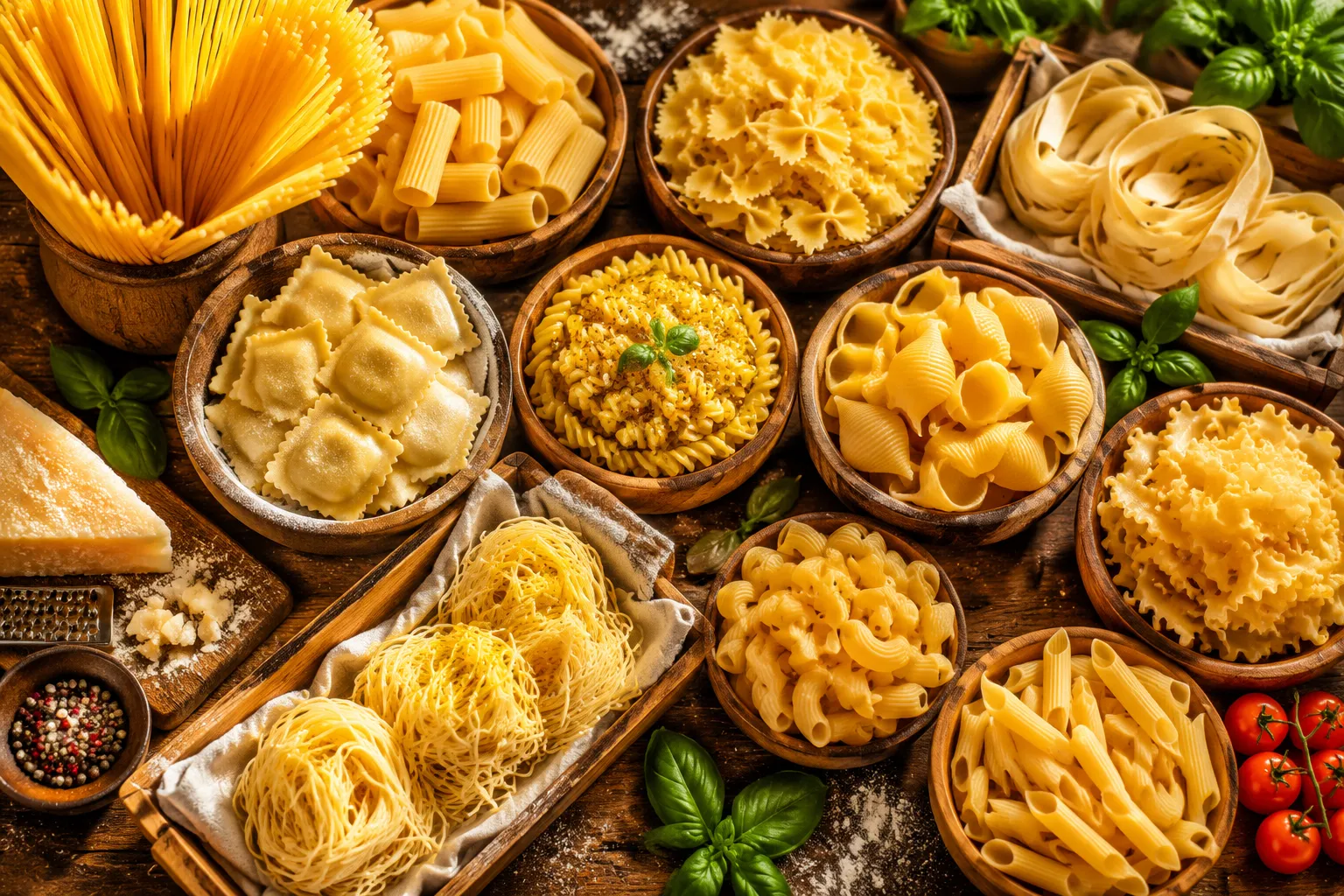
Penne is a tube-shaped pasta cut on a sharp diagonal, with hollow centers that catch sauce and ridged exteriors that drag the good stuff along for the ride. The name comes from the Italian word for "quill" because the angled ends look like the nib of an old fountain pen. It's one of the most versatile shapes in any pantry — sturdy enough to stand up to chunky meat ragùs, graceful enough to swim in a buttery garlic sauce like the one we're building today. You'll find boxes in nearly every American grocery store, and the price barely breaks two dollars.
When you grab a box at the store, look closely: penne rigate has visible ridges running the length of each tube, while penne lisce is perfectly smooth. For this dish, you absolutely want rigate. Those grooves are tiny sauce reservoirs, and they're the difference between pasta that tastes coated and pasta that tastes glossed-over. Lisce tends to slide; rigate grips. Save the smooth version for baked casseroles where the sauce surrounds the noodles anyway.
Long strands like spaghetti are gorgeous, but they don't always cooperate with chunky aromatics. Minced garlic, fresh parsley, and red pepper flakes get caught inside penne tubes and tucked into the ridges, so you get a perfect balance of sauce and pasta in every bite. The relationship between penne and pasta sauce is one of the great pairings in Italian cooking — it's why this shape shows up on weeknight tables from Naples to New Jersey. Tubes hug texture; strands chase it.
The beauty of this garlic butter pasta is that you probably already have everything for it. Eight ingredients, no special shopping trip required, and almost no prep beyond mincing the garlic and chopping a small handful of parsley. Quality matters more than quantity here, so reach for the best parmesan and olive oil you keep around — they make a real difference in a sauce this minimal.
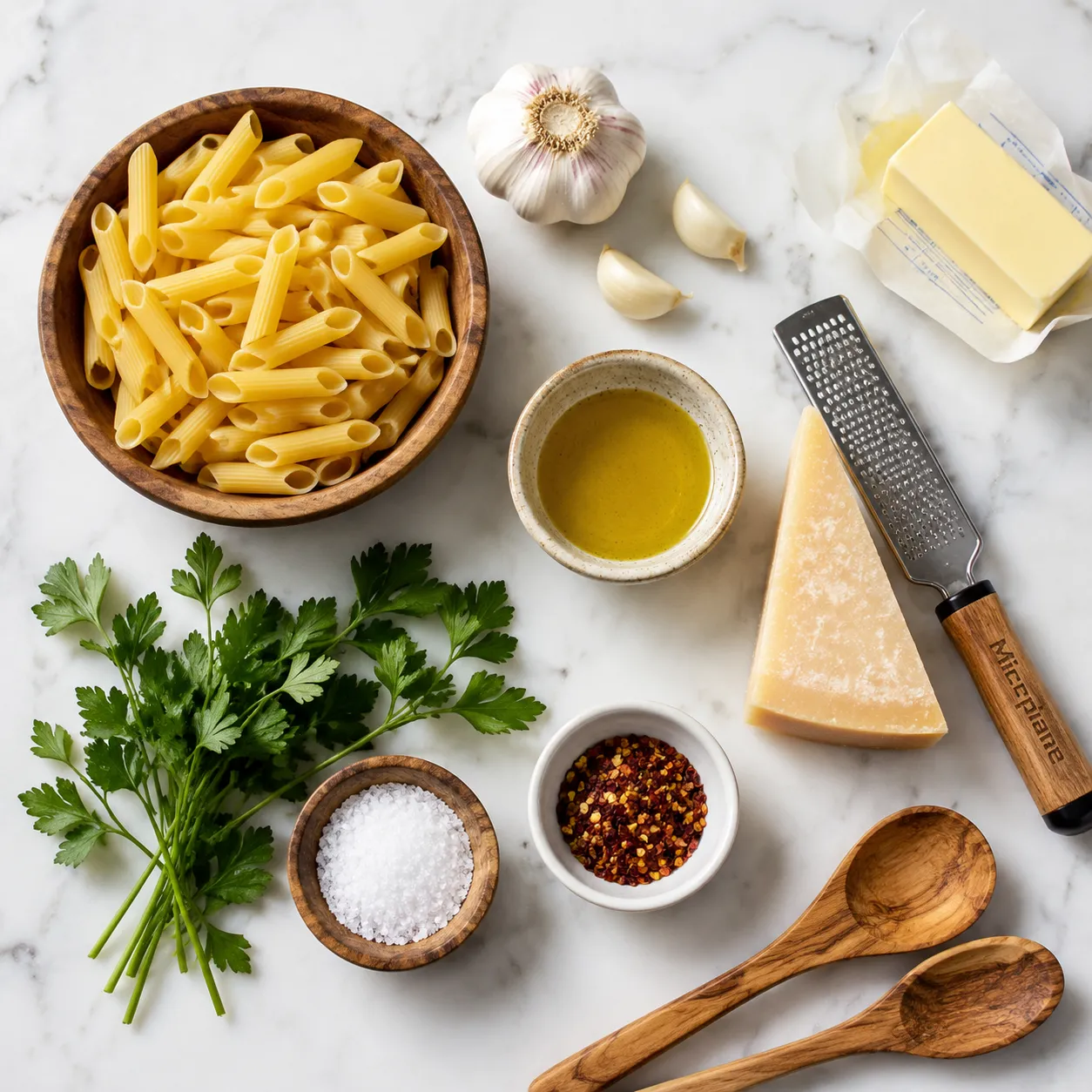
Use a 12-ounce box of penne rigate and cook it in a generous pot of well-salted water — I mean really salted, like a tablespoon of kosher salt for every four quarts. That seasoned water is your first sauce ingredient, so don't skimp. Pasta cooked in under-salted water tastes flat, no matter what you do to it later.
Use real unsalted butter and a good extra virgin olive oil. The butter brings richness and that toasty, nutty depth; the oil raises the smoke point and adds a peppery, fruity backbone that pure butter alone can't deliver. Six cloves of fresh garlic might sound like a lot — it isn't. We're cooking it gently in the fat, which mellows the bite and turns it almost sweet. Skip the jarred minced stuff; it tastes muted and slightly metallic.
Grate your own parmesan from a wedge if you can. The pre-shredded stuff is coated with anti-caking powder that fights against a smooth emulsion. Fresh flat-leaf parsley brightens the whole dish — curly works in a pinch, but flat-leaf has more flavor — and a half teaspoon of red pepper flakes adds just enough heat to wake everything up without making it spicy. Finish with cracked black pepper and a flaky sea salt at the table.
Here's where the magic happens. The whole process takes about 20 minutes once your water is boiling, and the steps overlap, so read through once before you start. Have your garlic minced, your parsley chopped, and your parmesan grated before you turn on a single burner — the sauce comes together fast and won't wait for you.
Bring a large pot of salted water to a rolling boil and add the penne. Stir for the first thirty seconds so nothing sticks together. You're aiming for al dente — tender on the outside with a barely-there bite at the center, usually a minute less than the box recommends.
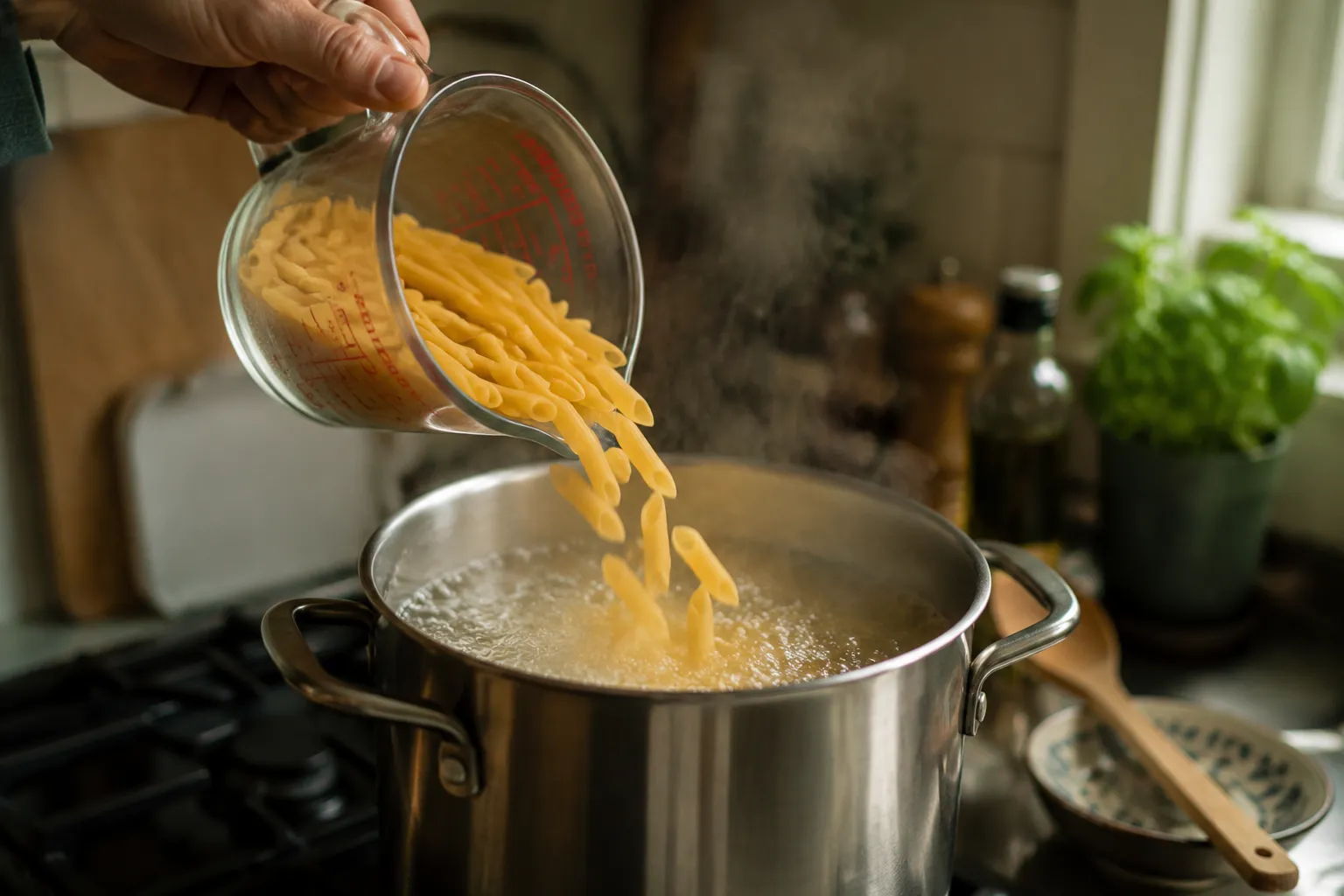
If you've never been totally sure about how to cook al dente pasta, the easiest test is to bite a piece in half: you should see a tiny pale dot of starch right in the very middle. That's the residual cooking you want, because the noodles will finish in the hot sauce and absorb its flavor.
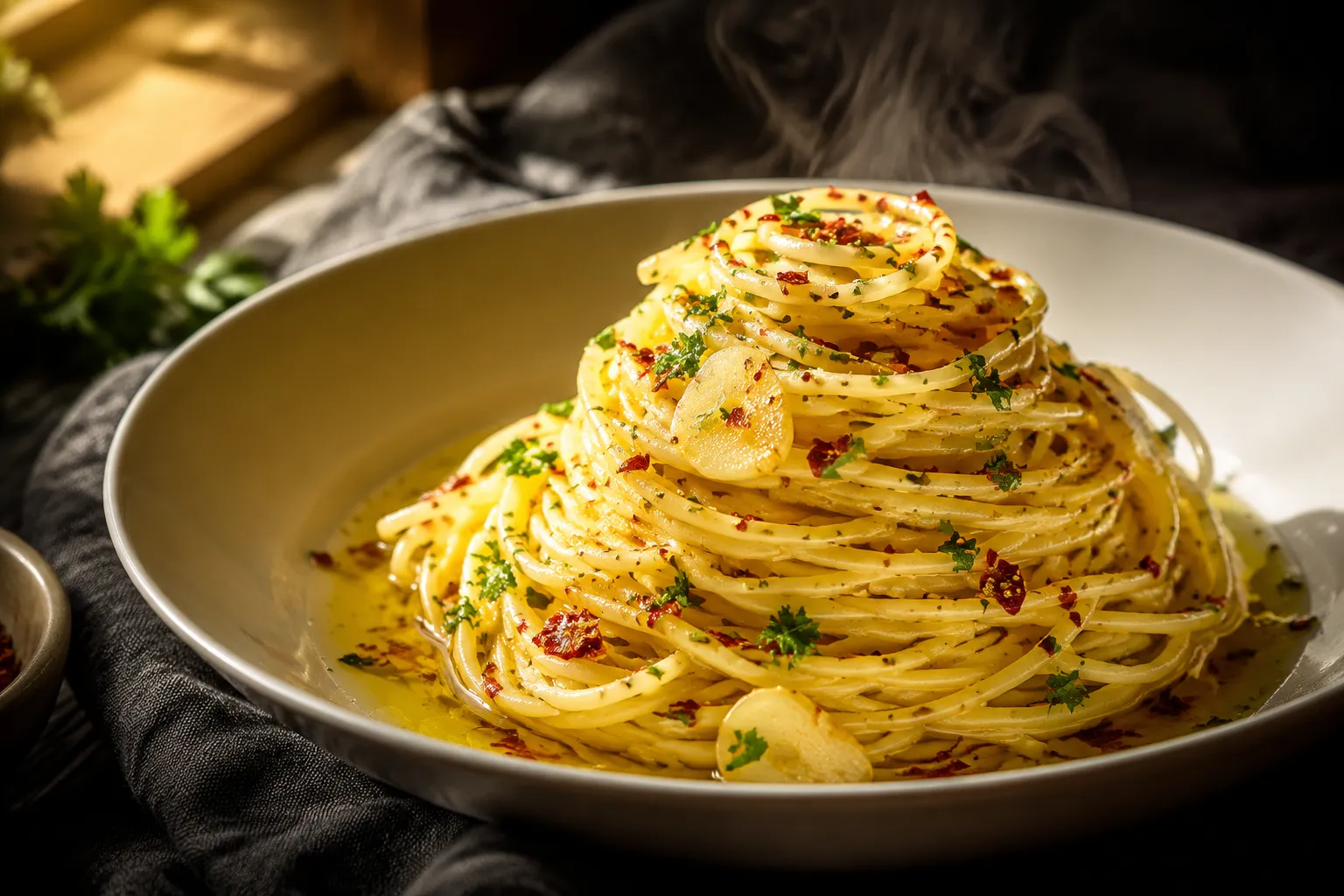
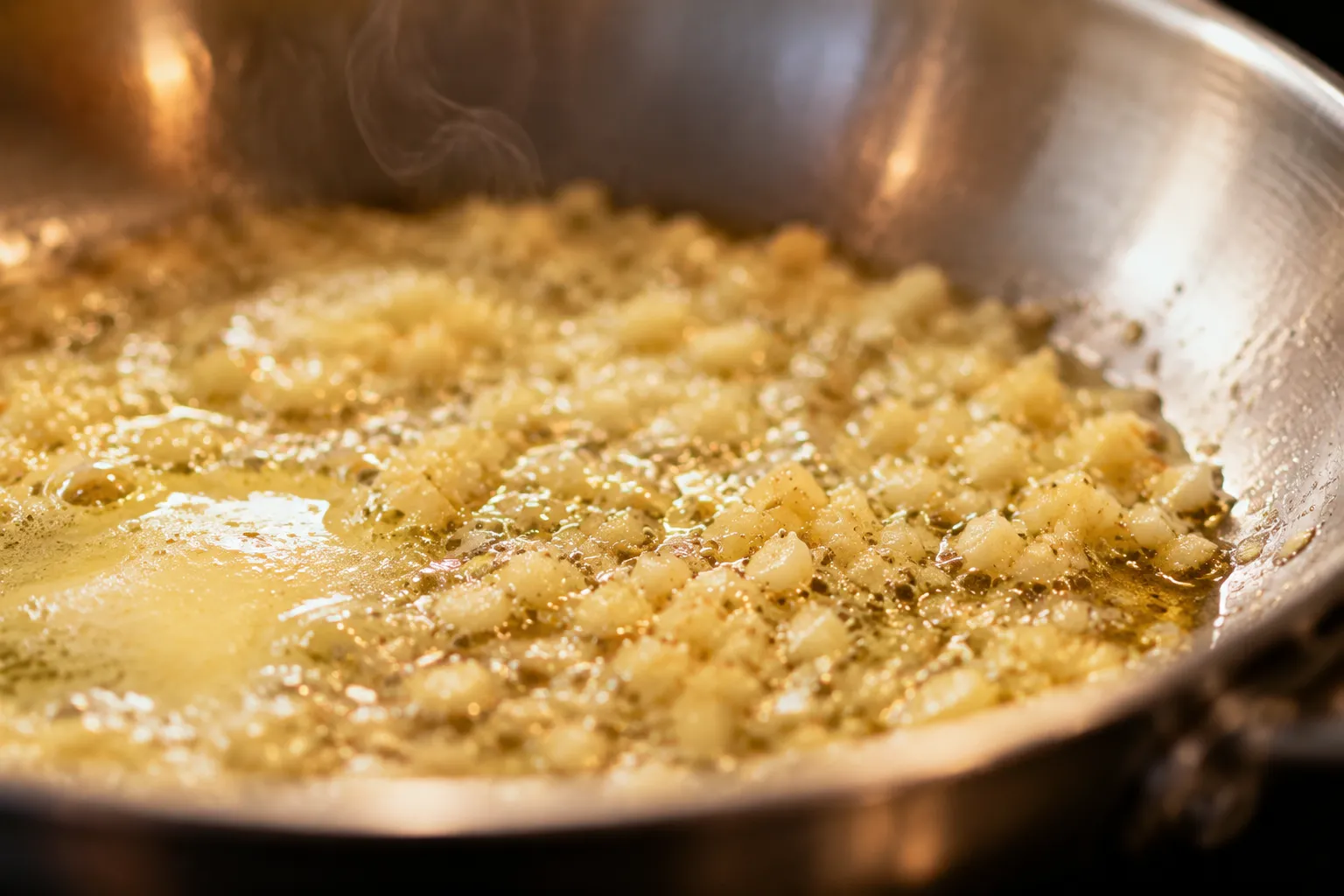
While the water comes up, melt the butter and olive oil together in a wide skillet over medium-low heat. Add the minced garlic and the red pepper flakes and cook gently for two to three minutes, stirring often, until the garlic is fragrant and just barely golden at the edges. Do not walk away from this pan. Burnt garlic tastes acrid and there's no rescuing it once it crosses that line.
Before you drain, scoop out a full cup of the starchy pasta water — set it aside, you'll need it. Drain the penne but don't rinse it; that surface starch is what makes the sauce stick. Add the hot pasta directly to the skillet with the garlic butter, pour in about a half cup of the reserved pasta water, and sprinkle the parmesan over the top. Toss vigorously for thirty to sixty seconds. The starch will bind with the fat and cheese to create a creamy, glossy parmesan pasta sauce that coats every tube. If it looks dry, splash in more pasta water a tablespoon at a time until you hit that loose-but-clinging consistency.
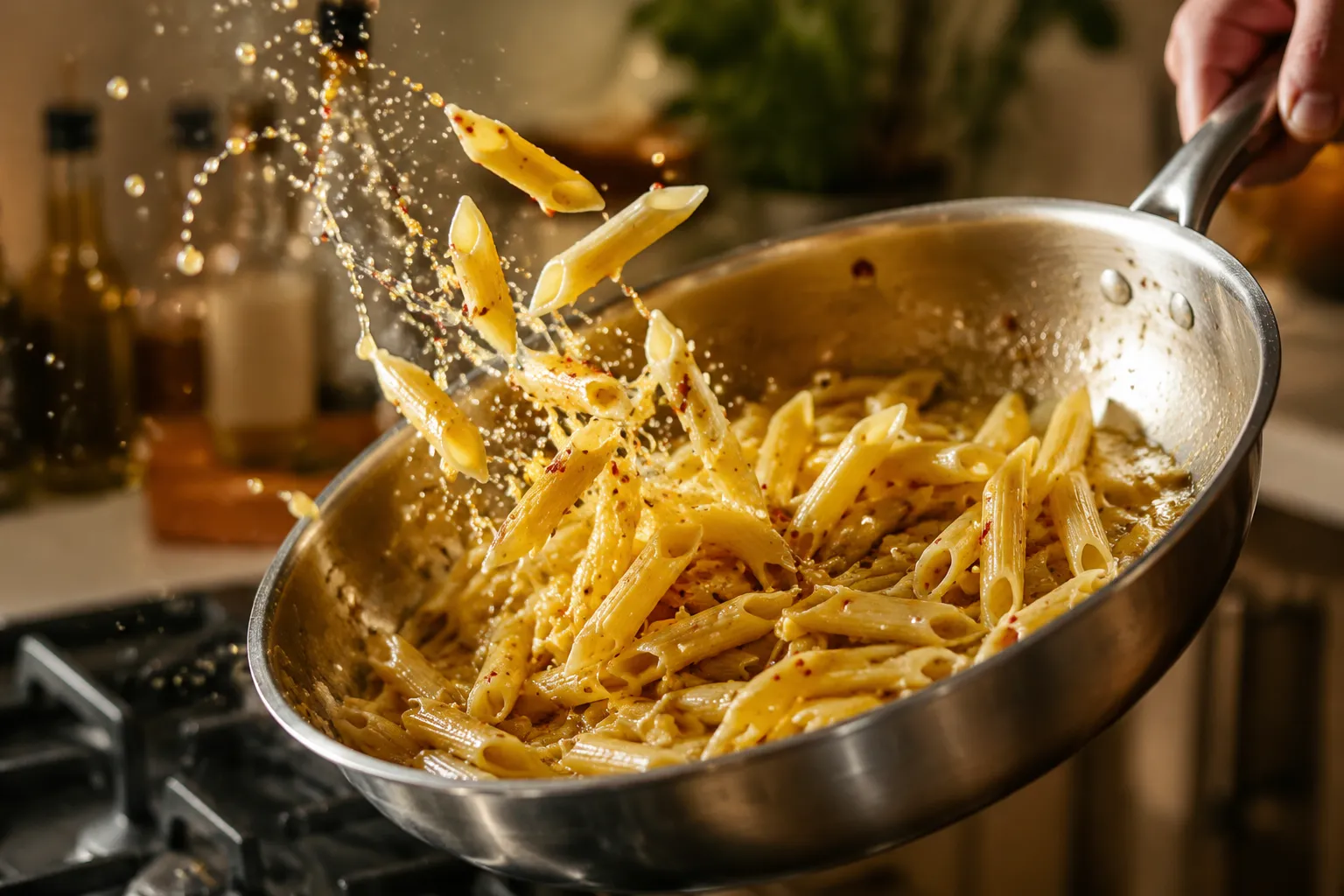
Pull the pan off the heat, scatter the chopped parsley across the top, and give it one final gentle toss. Taste for salt — you'll probably want a generous pinch — and crack on plenty of fresh black pepper. Serve immediately, while the sauce is still glossy and the pasta is still steaming.
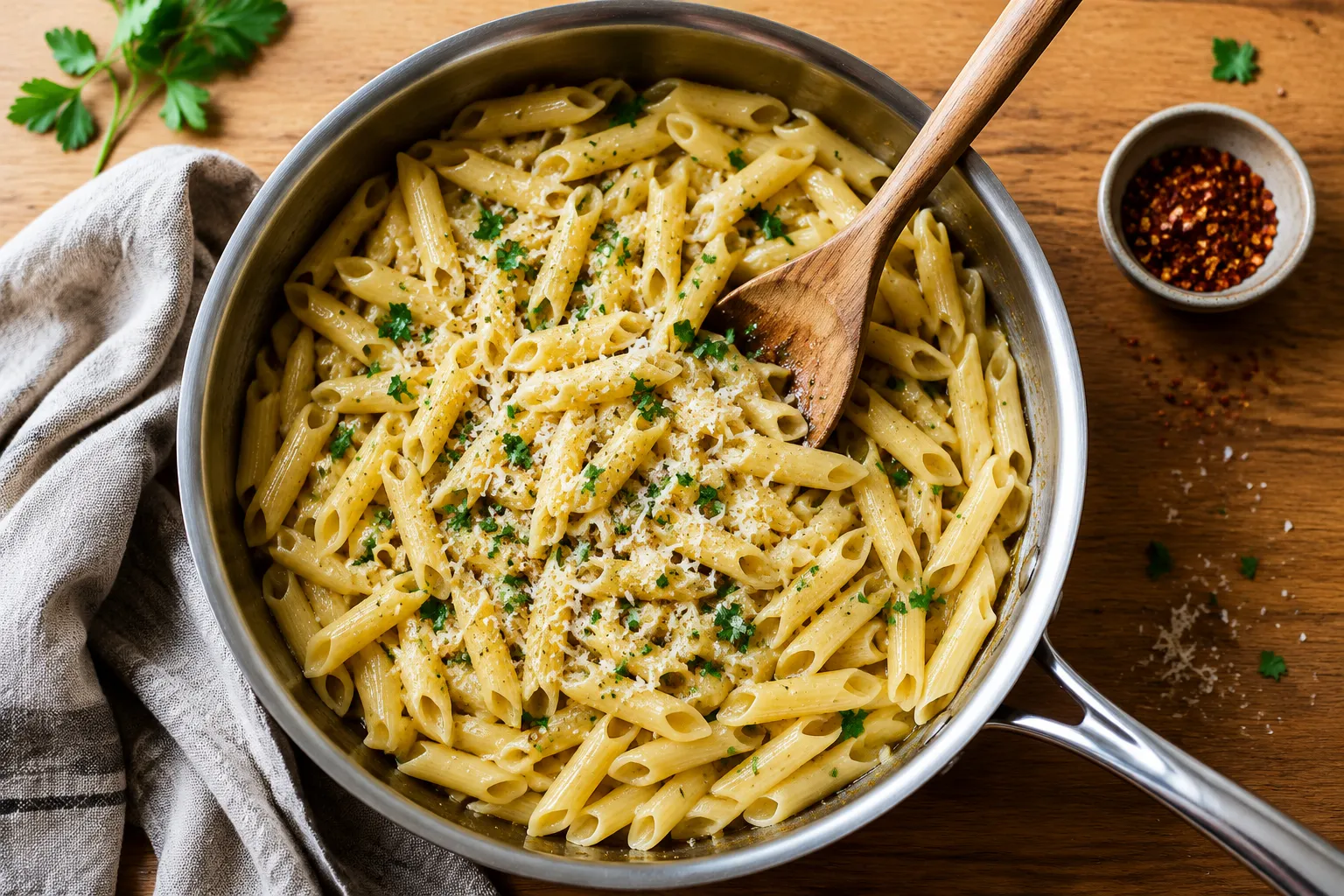
This dish is rich and garlicky enough to anchor a dinner on its own, but a few simple sides turn it into a real spread. A crisp green salad with lemon vinaigrette cuts through the butter beautifully. Roasted broccolini, blistered cherry tomatoes, or a plate of garlicky sautéed greens are all solid picks. And yes, please serve it with crusty bread — you'll want something to mop up the sauce at the bottom of the bowl.
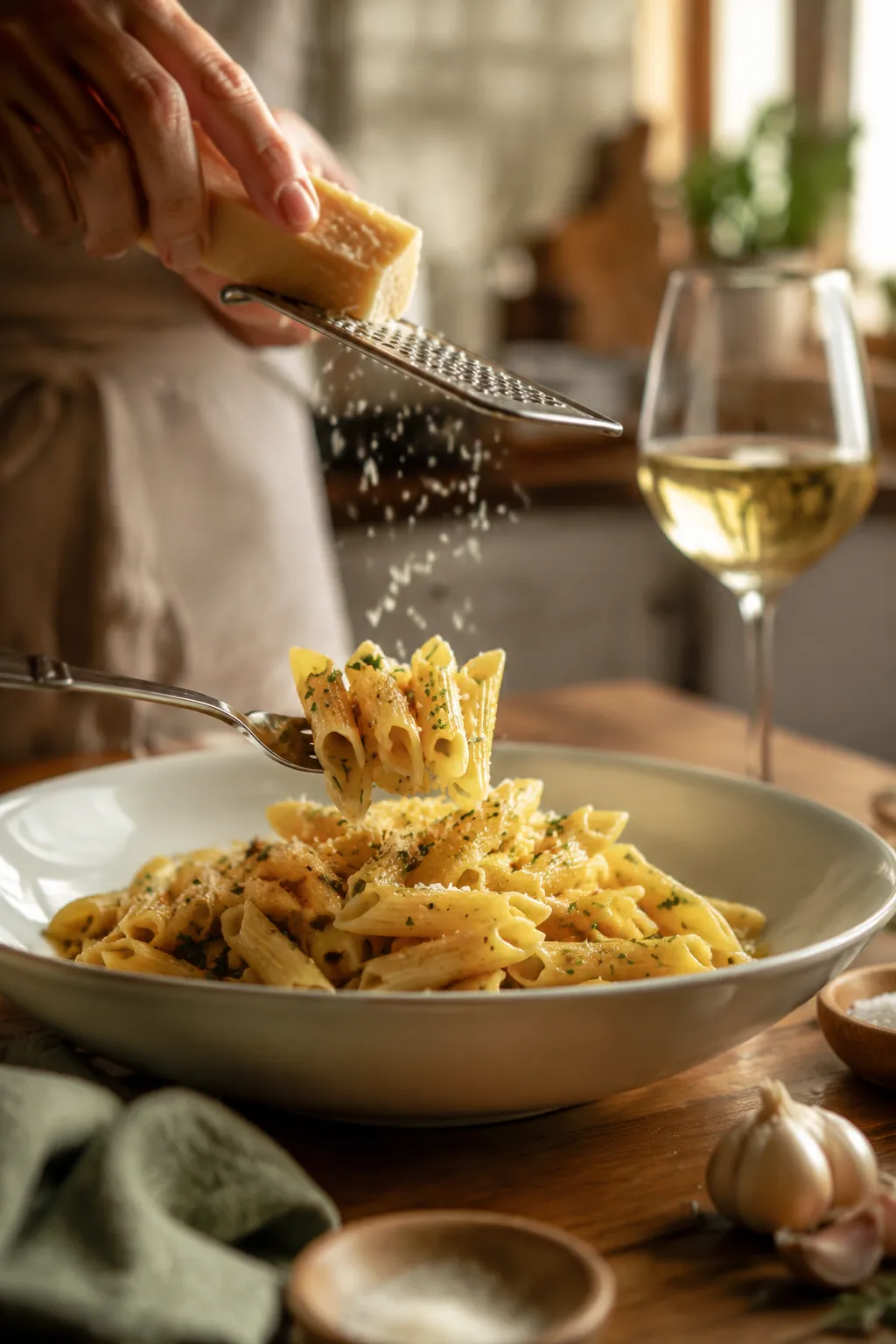
For a heartier plate, lean into the protein possibilities. Grilled chicken thighs, pan-seared shrimp, crumbled Italian sausage, or even a few flaked pieces of leftover salmon all turn this into a one-bowl meal. A glass of crisp pinot grigio or a chilled rosé is the move if you're feeling celebratory. Honestly, this is the kind of weeknight pasta dinner that doesn't need much help — but it plays well with whatever you've got in the fridge.
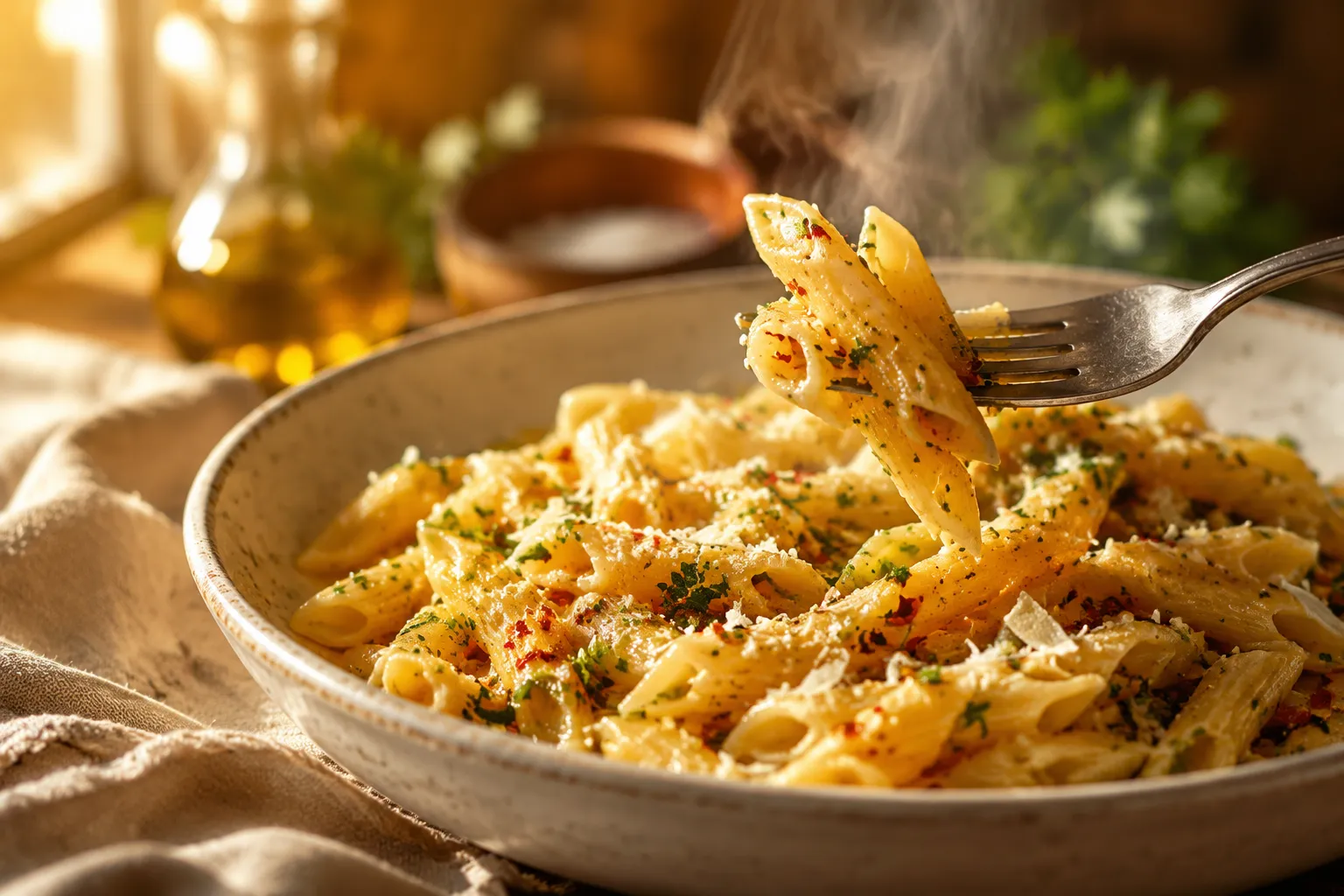
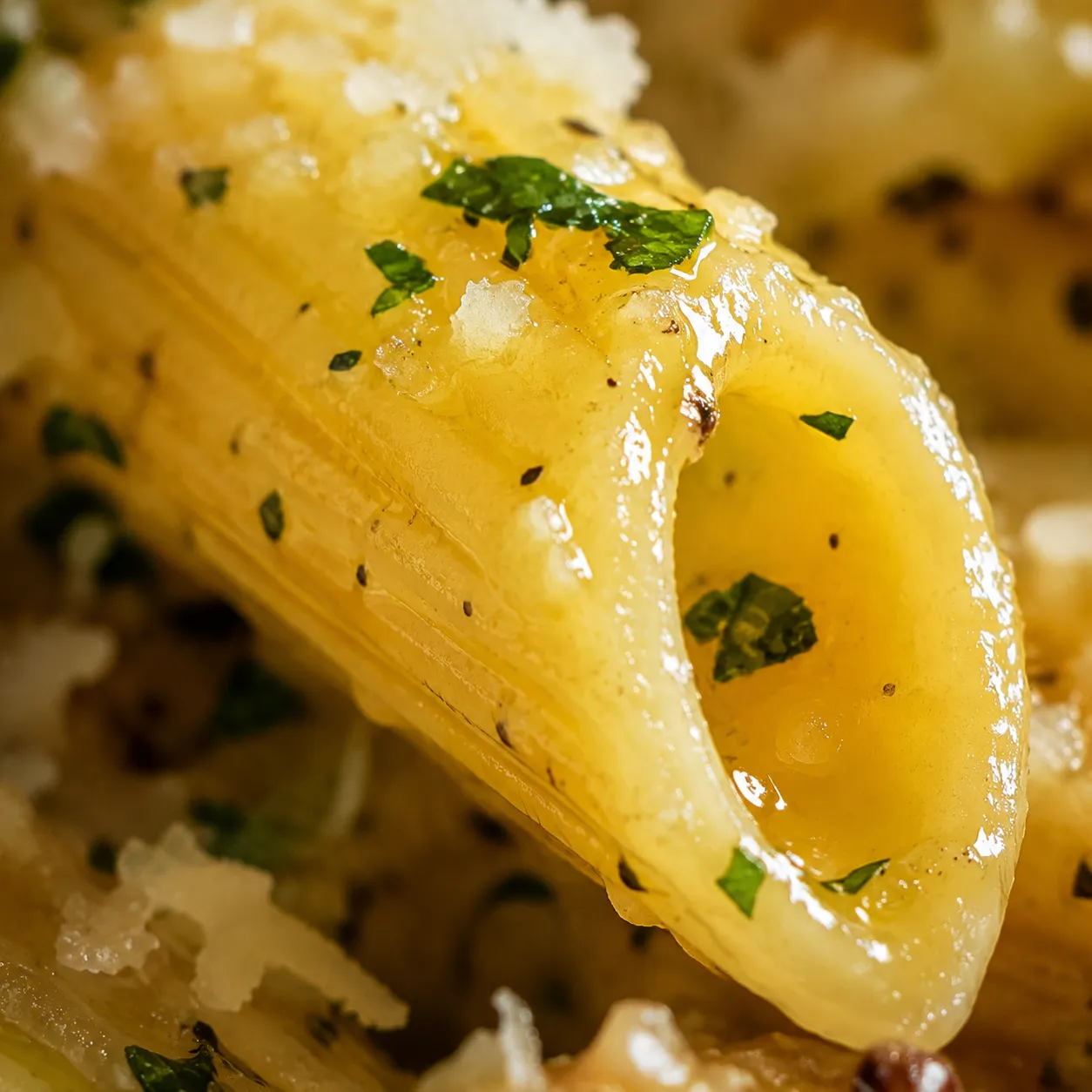
If you look closely at a forkful, you'll see exactly why this dish works so well. Each ridge on the penne holds a tiny pool of golden sauce, and every hollow tube has its own little reservoir of butter, garlic, and cheese. That's not an accident — it's the entire reason penne rigate exists as a shape, and it's why the right box of pasta matters as much as any other ingredient.
This pasta penne pasta is the recipe I keep coming back to when I want maximum flavor for minimum effort. It scales up easily for a crowd, reheats reasonably well for next-day lunches, and never gets boring because the formula — pasta, fat, garlic, starch water, cheese — is endlessly remixable. Swap olive oil for brown butter, basil for parsley, pecorino for parmesan, and you've got a brand new dish without thinking too hard about it.
Make it once exactly as written, and by the next round you'll be improvising with whatever's in the fridge. That's the whole point of a great pasta penne pasta recipe: it teaches you a technique, not just a list of ingredients. Once that pasta-water-and-fat emulsion clicks for you, half the Italian cookbook opens up.
The garlic butter base is a starting point, not a destination. Once you've nailed the technique, treat this recipe as a template and remix it however your fridge allows. A few of my favorite directions:
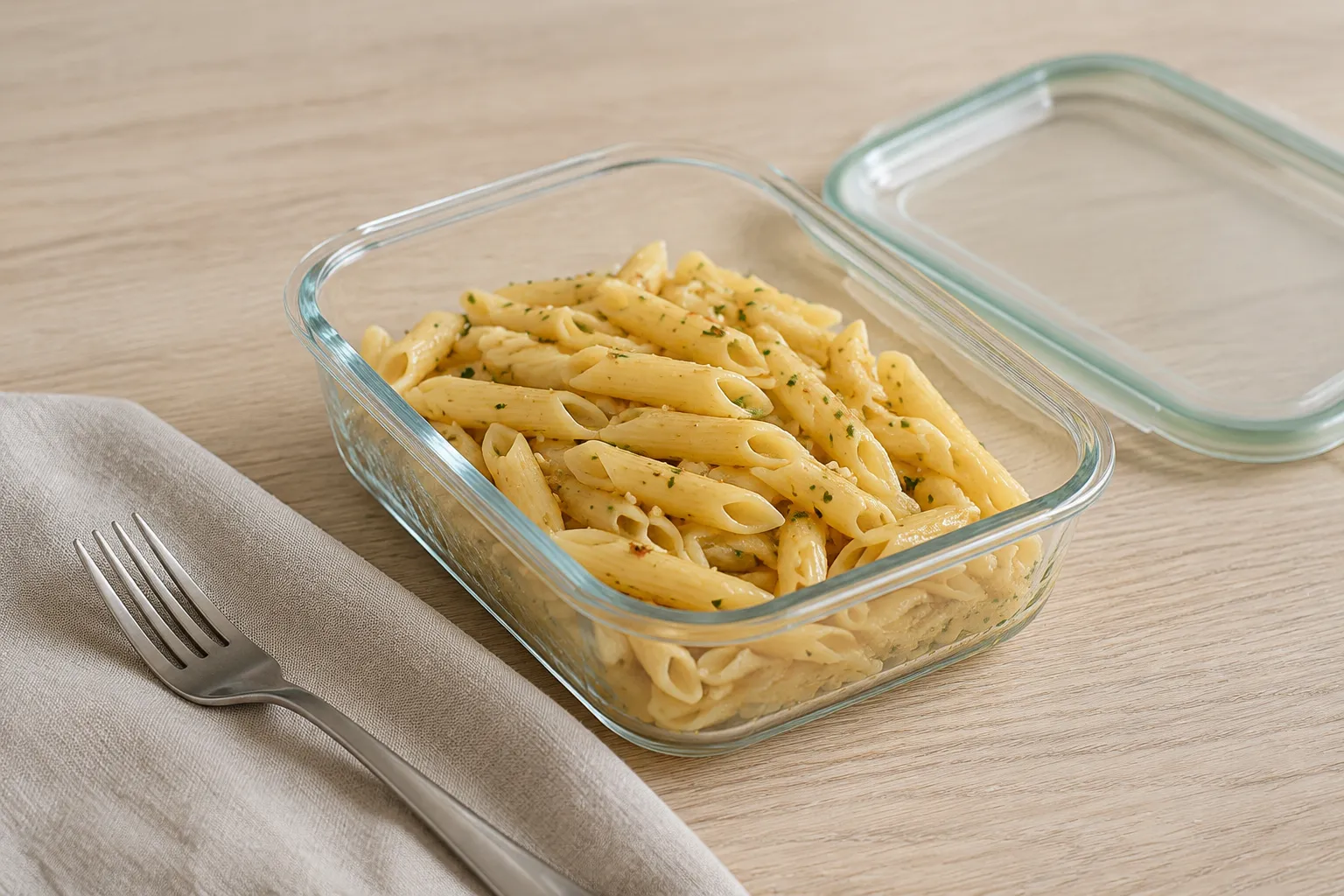
Leftovers will keep in an airtight container in the refrigerator for 3 to 4 days. The sauce thickens and absorbs into the pasta as it sits, so don't be alarmed when it looks drier the next morning — that's normal and completely reversible with a splash of liquid.
To reheat, transfer a portion to a skillet over medium-low heat with 2-3 tablespoons of water or chicken broth. Toss gently for 2-3 minutes until heated through, then finish with a small splash of olive oil and a fresh grating of parmesan to bring back the gloss. The microwave works in a pinch — cover the bowl, heat in 30-second bursts, and stir between each — but the stovetop method gives you noticeably better texture. I don't recommend freezing this pasta; the butter sauce tends to break and the noodles turn gummy on thaw.