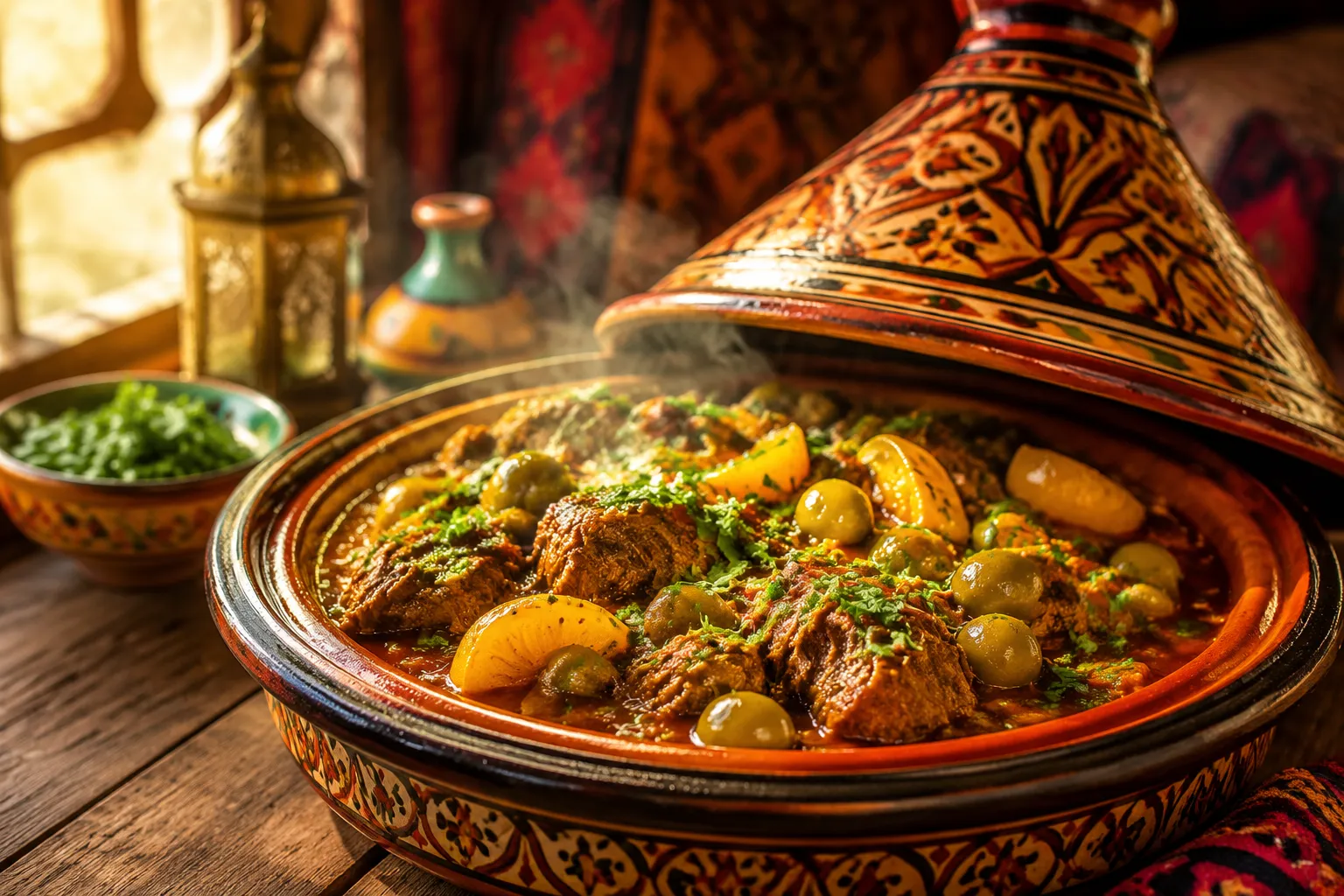
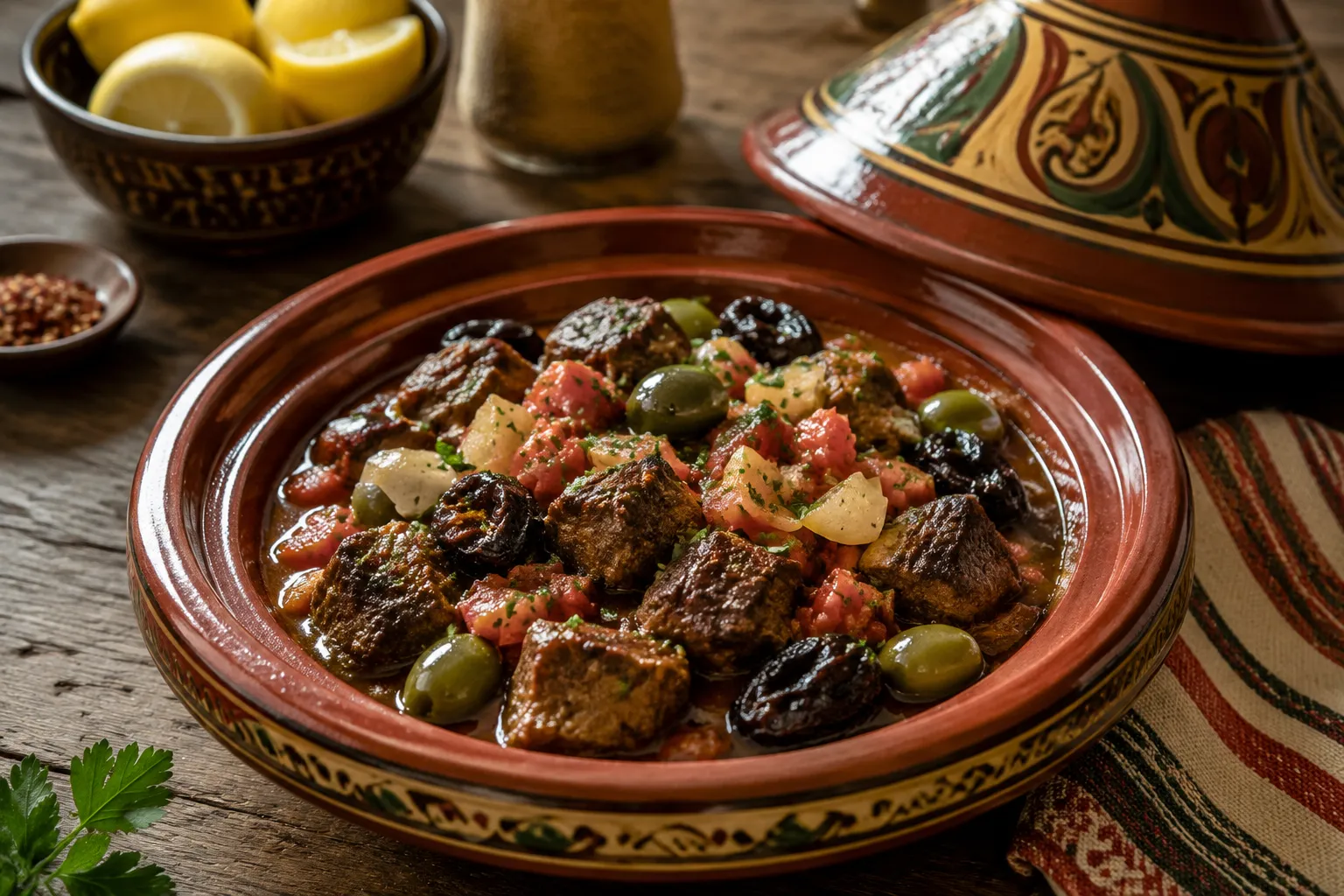
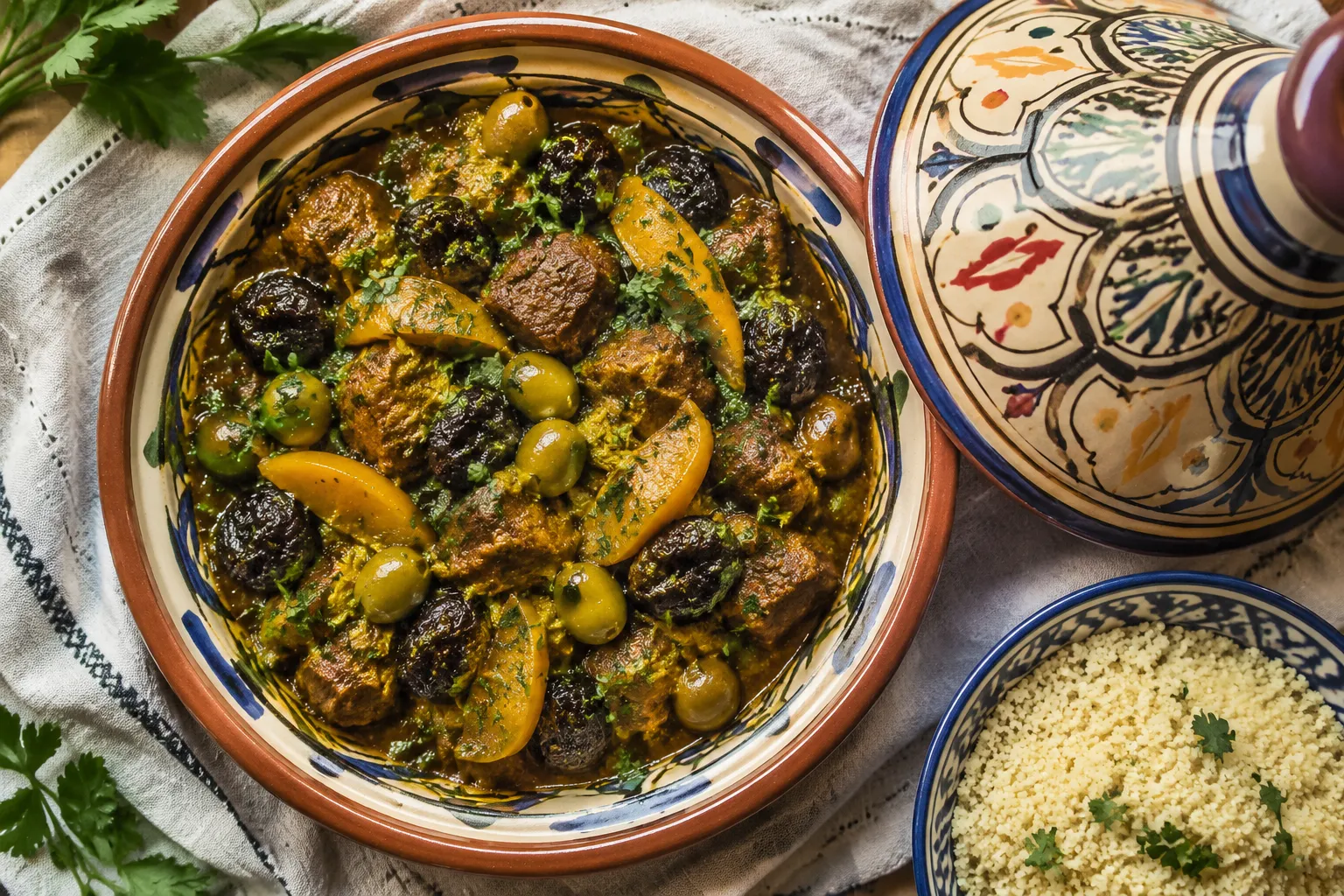
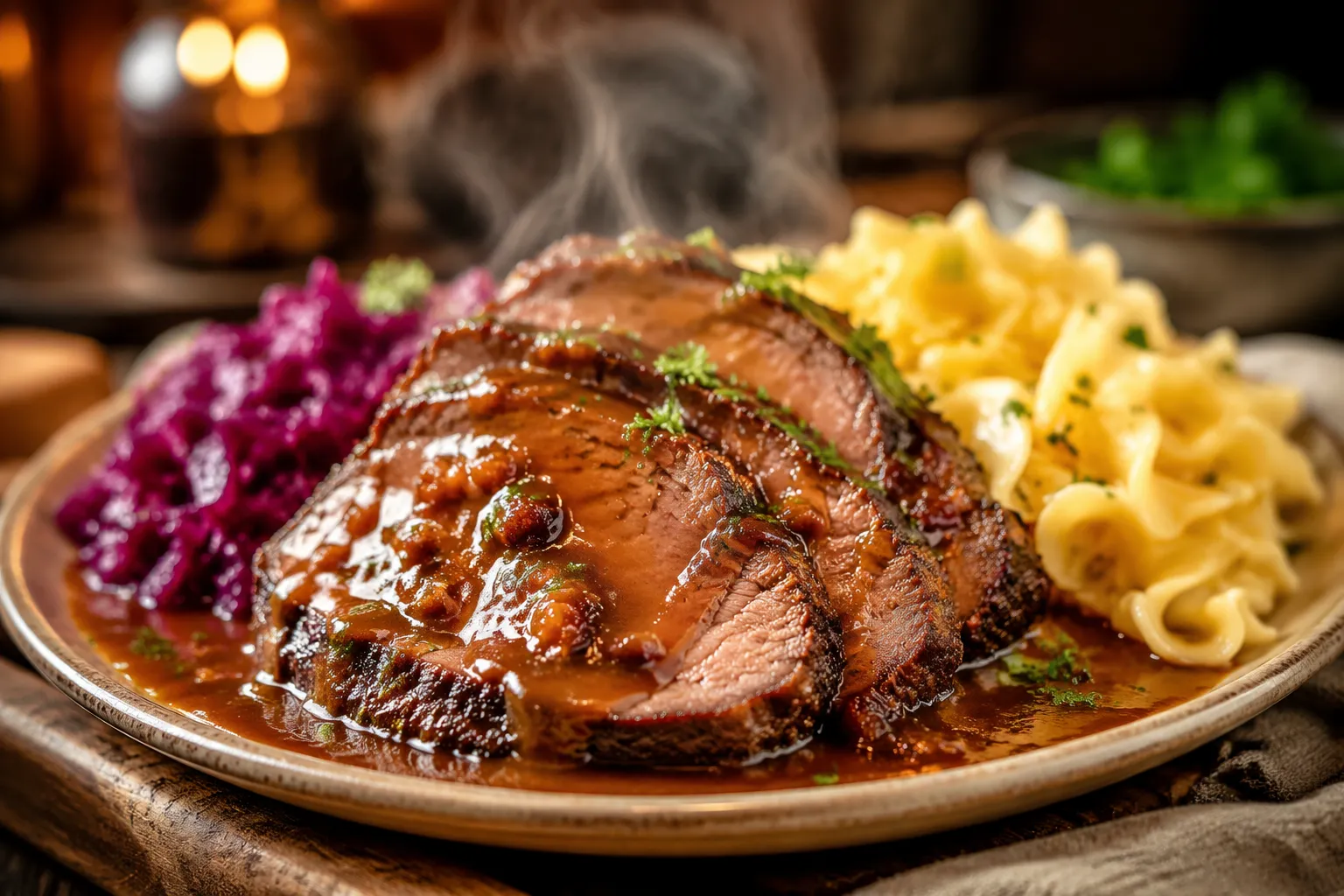
A true Moroccan tagine layers warm spices, tender beef, and silky vegetables into one pot of pure comfort. Here is how to make it like a pro at home.
Why You'll Love This Recipe
Deep, layered flavor: Warm spices, tender beef, briny olives, dried fruit, and preserved lemon create a rich balance of savory, sweet, and bright.
Mostly hands-off cooking: After browning and building the base, the stew simmers gently while the pot does the work.
No special pot required: A traditional tagine is beautiful, but a heavy Dutch oven makes an excellent substitute.
Naturally gluten-free: The stew itself contains no flour or wheat; just serve it with rice, potatoes, or gluten-free flatbread if needed.
Perfect for guests: It looks dramatic, reheats beautifully, and tastes even better when made ahead.
A tagine is the kind of dinner that feels like it has been quietly taking care of itself all afternoon: tender beef, warm spices, glossy olives, and that unmistakable brightness from preserved lemon. This version is cozy and deeply savory, with just enough sweetness from prunes or apricots to make every spoonful feel layered and generous.
If you are new to Moroccan cooking, think of this as a slow-stewed masterclass you can absolutely pull off at home. You can use a traditional clay or ceramic vessel if you have one, or make the whole dish in a heavy Dutch oven with excellent results. Either way, the goal is the same: low heat, patient cooking, and a sauce that tastes like it has gathered flavor from every corner of the pot.
What Is a Tagine?
The word refers to both the cooking vessel and the dish cooked inside it, which is why you will hear people use it in two slightly different ways. The pot has a shallow base and a tall conical lid that encourages steam to rise, condense, and fall back down over the food. The finished Moroccan tagine is usually a tender stew of meat, poultry, or vegetables, scented with spices and balanced with briny, sweet, and citrusy elements.
In Morocco, this style of cooking is rooted in everyday hospitality, not restaurant fussiness. A bubbling pot may hold lamb with apricots, chicken with olives and preserved lemons, or a hearty tagine of beef like the one we are making here. It is often served communally, with bread used to scoop up the sauce, which is every bit as important as the meat.
The conical lid matters because it creates a small, efficient steam cycle. Instead of adding lots of liquid, the pot helps keep moisture circulating, which gently softens onions, breaks down connective tissue, and concentrates flavor. If you are cooking in a Dutch oven, the same principle applies: keep the lid tight, the heat gentle, and resist the urge to rush.
Building Deep Moroccan Flavor
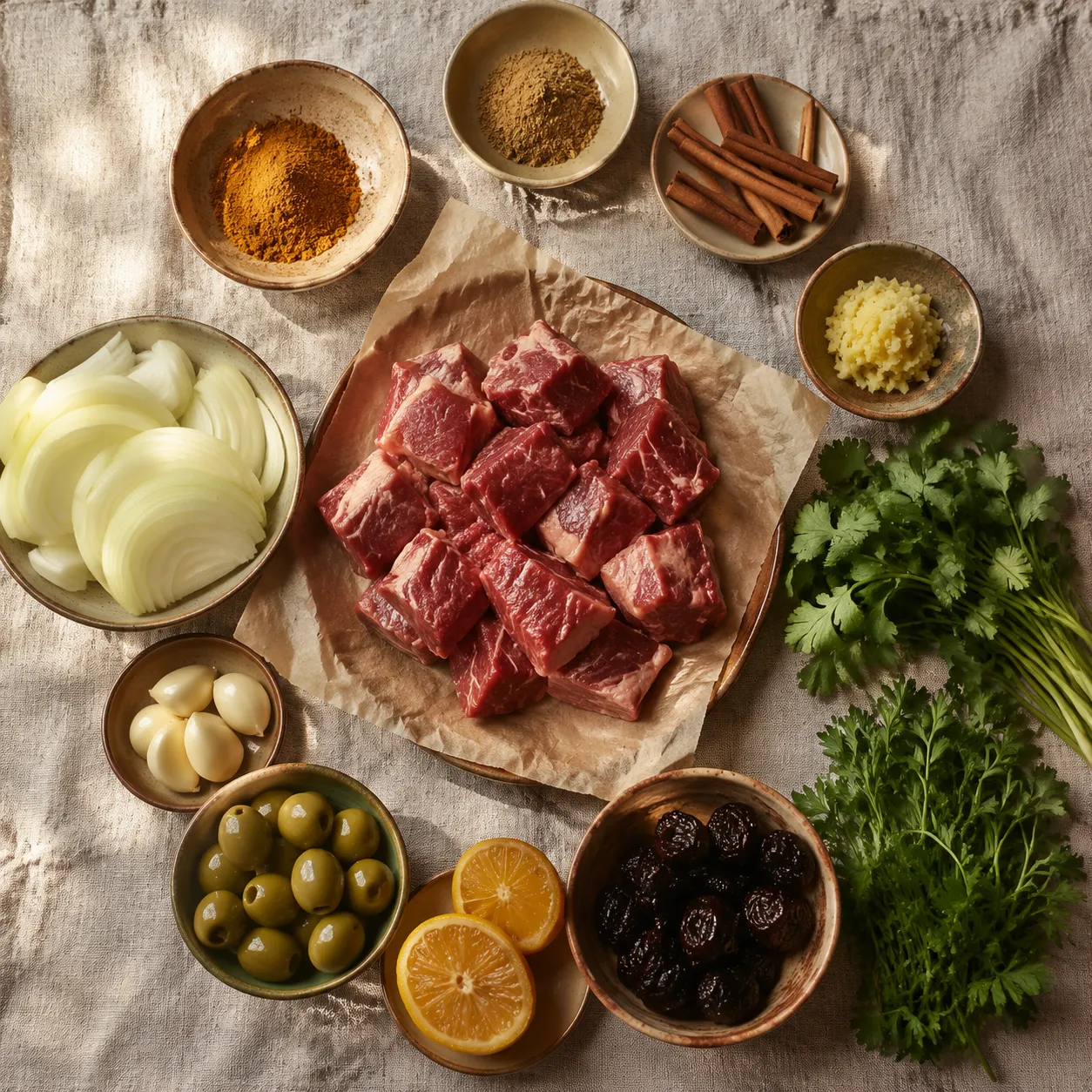
Great flavor starts before the beef ever touches the pot. The best base is a fragrant combination of onion, garlic, olive oil, and warm spices that bloom together until the kitchen smells toasty and inviting. Ras el hanout is the signature spice blend here, bringing complexity from ingredients that may include cardamom, turmeric, ginger, cinnamon, coriander, and allspice.
If your pantry is still growing, a good Moroccan spice blend is worth seeking out because it does a lot of heavy lifting. You will also see ras el hanout in many North African dishes, and it is especially good with slow-cooked meats because its perfume mellows as it simmers. Cumin adds earthiness, ginger gives lift, and cinnamon threads warmth through the sauce without turning it sweet.
The finishing ingredients are just as important as the spices. Green olives bring salt and bite, while preserved lemon adds a citrusy depth that fresh lemon alone cannot replicate. If you keep preserved lemons in your fridge, this is one of the most beautiful ways to use them; rinse them lightly, chop the peel, and let their floral tang brighten the whole pot.
Choosing the Right Beef and Pot
For this recipe, beef chuck is the cut to buy. It has enough marbling and connective tissue to become silky after a long simmer, while leaner cuts can turn dry before the sauce has time to develop. Cut the beef into large two-inch cubes so it can brown well and still hold its shape through the long cook.
A traditional vessel gives the dish a beautiful presentation and a gentle cooking environment, but a Dutch oven is the most practical choice for many home kitchens. It holds heat evenly, goes from stovetop to oven if needed, and is sturdy enough for browning meat in batches. If you love the comfort of Dutch oven beef stew, this recipe follows a familiar rhythm but leans into Moroccan aromatics, olives, dried fruit, and preserved citrus.
How to Make Beef Tagine Step by Step
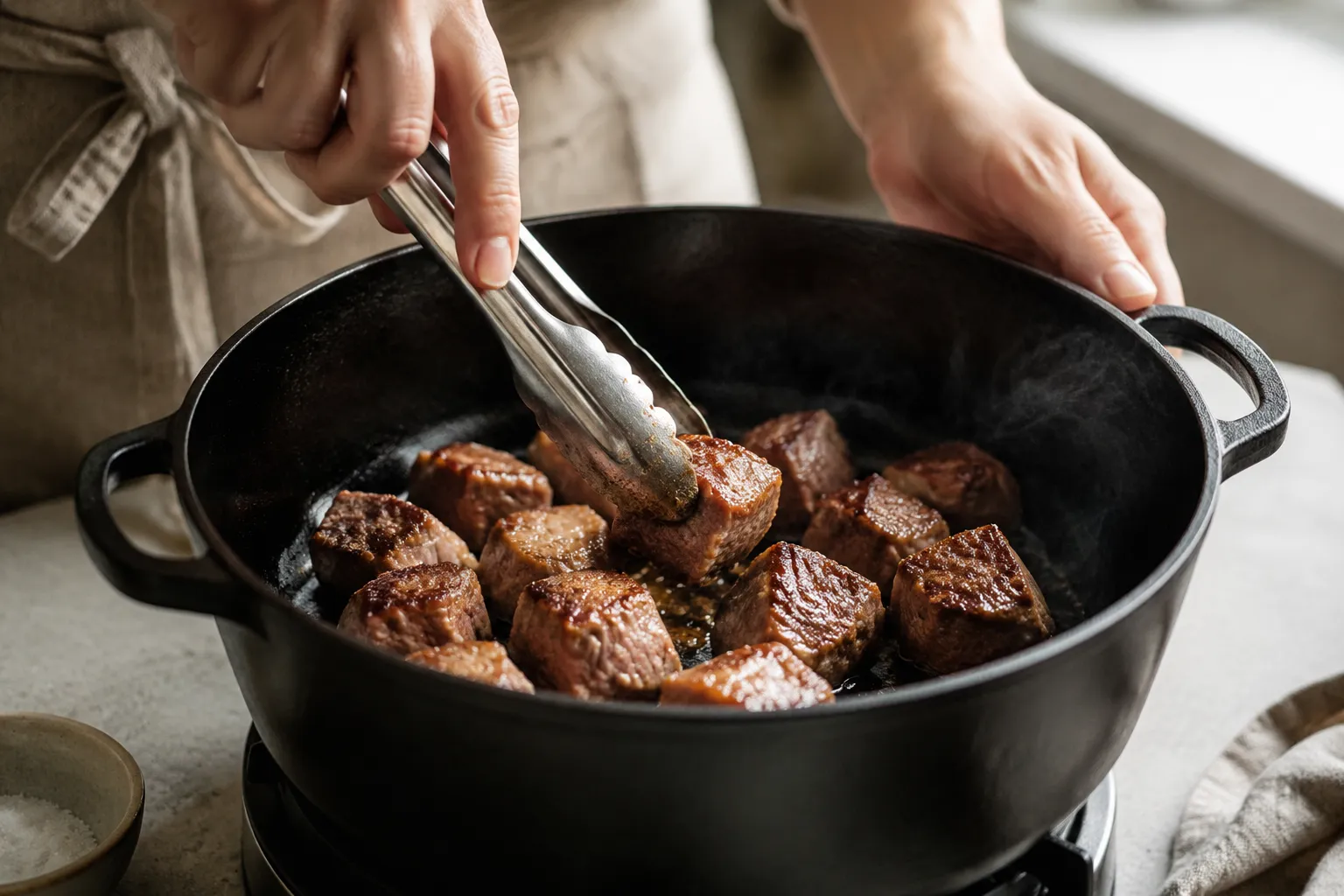
Begin by patting the beef very dry, then season it well with salt and pepper. Browning is not just about color; it creates the savory foundation that makes the final sauce taste rounded and restaurant-level. Work in batches so the meat sears instead of steams, and let each piece form a deep golden crust before turning.
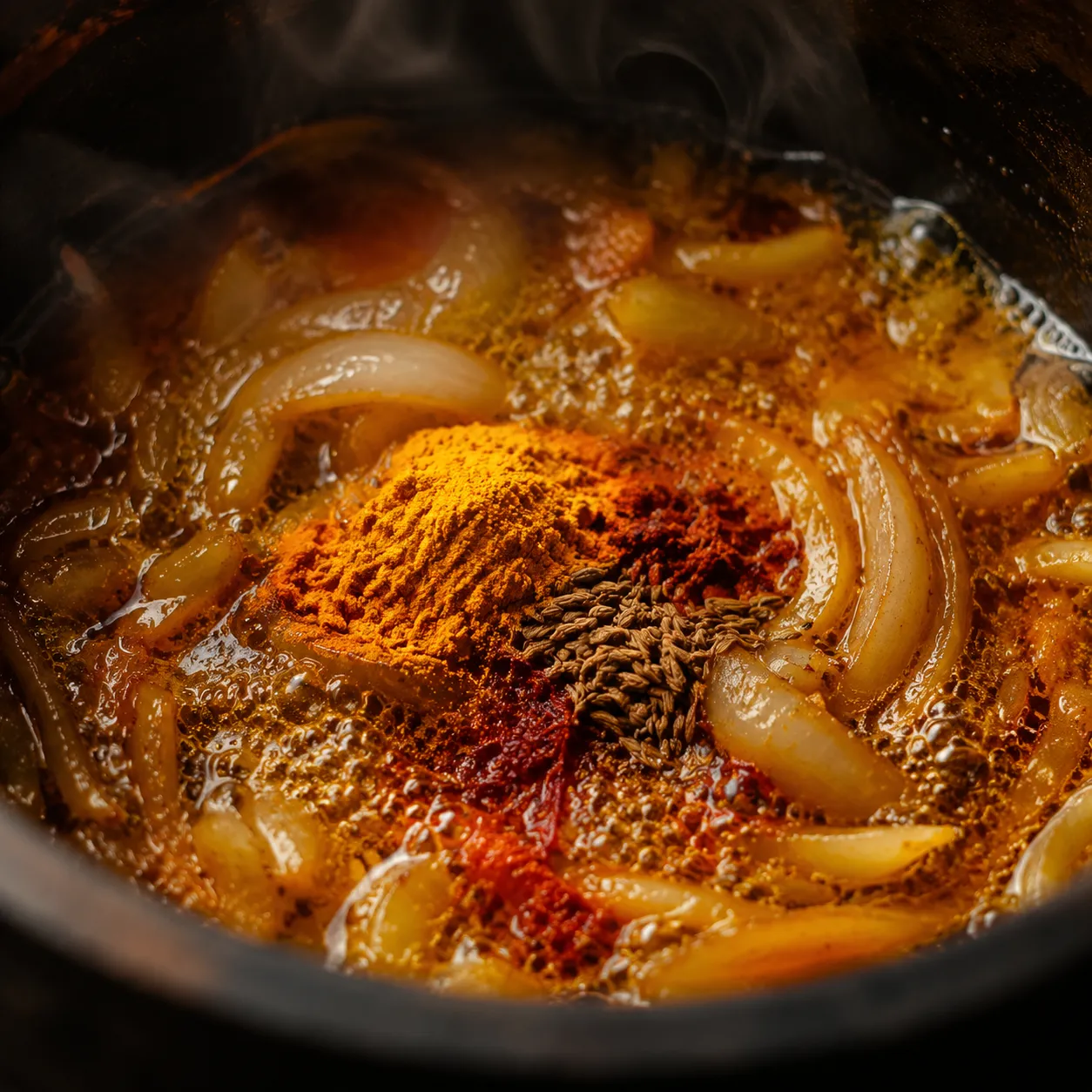
Once the beef is browned, the onions go into the same pot to soften in all those browned bits. Garlic follows, then the spices, which should sizzle briefly in the oil until fragrant. This blooming step is small but powerful, because spices taste fuller and less dusty when they meet heat and fat before the liquid is added.
Next, add tomatoes and broth, scraping the bottom of the pot so every caramelized bit dissolves into the sauce. The beef returns with dried prunes or apricots, olives, and preserved lemon, creating that classic balance of savory, sweet, salty, and bright. The liquid should come partway up the meat, not drown it; a slow braise is more concentrated than a soup.
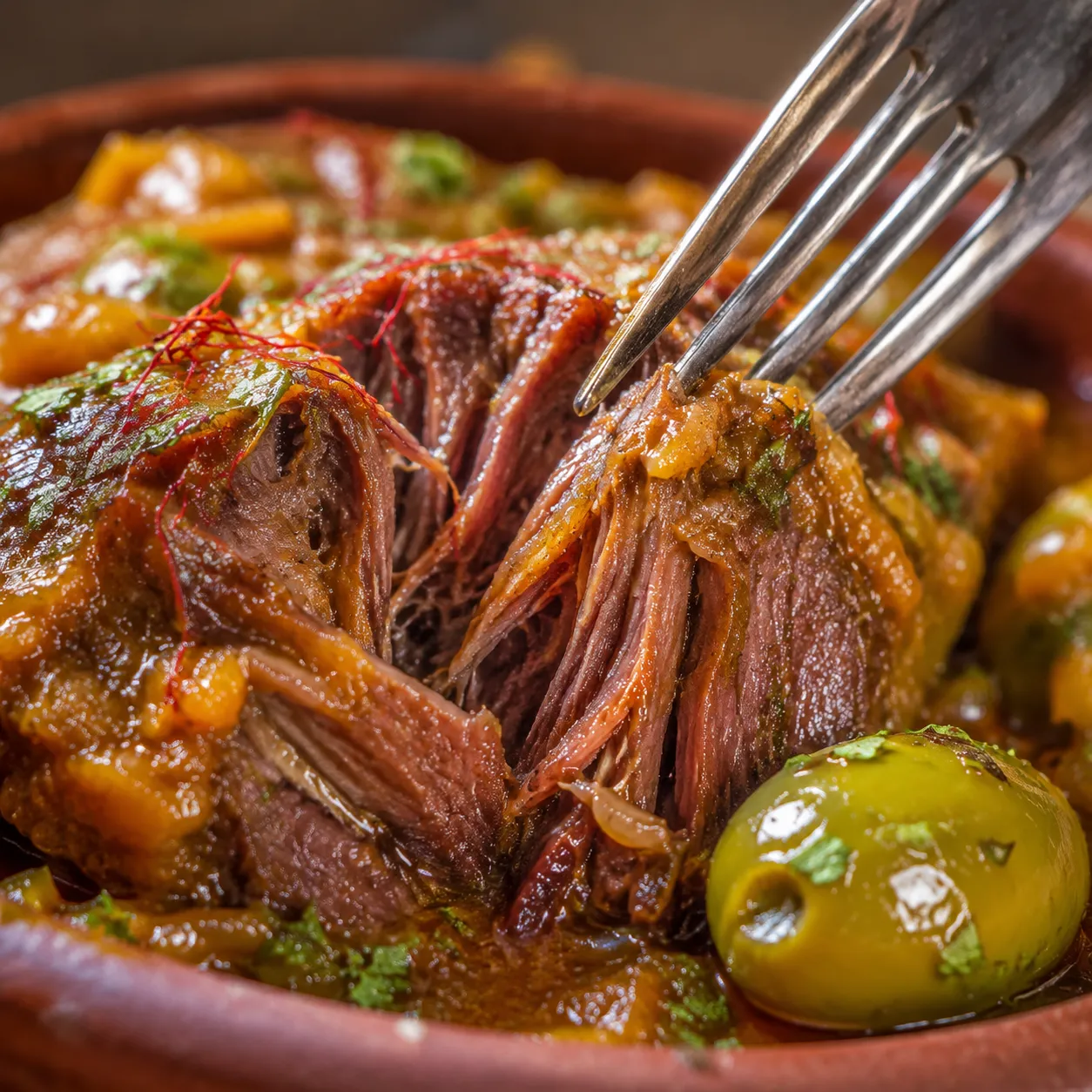
Cover the pot and keep the heat low enough that the surface barely murmurs. This is the heart of tagine stewing: gentle heat, enough time, and no impatience. After about two and a half hours, the beef should yield easily to a fork, the onions should have nearly melted, and the sauce should be glossy and rich.
To finish, taste the sauce before adding more salt, since olives and preserved citrus can vary in intensity. A final shower of cilantro and parsley wakes everything up and makes the pot look as vibrant as it tastes. Serve it warm, with plenty of sauce spooned over each portion.
Serving Suggestions for a Complete Moroccan-Inspired Meal
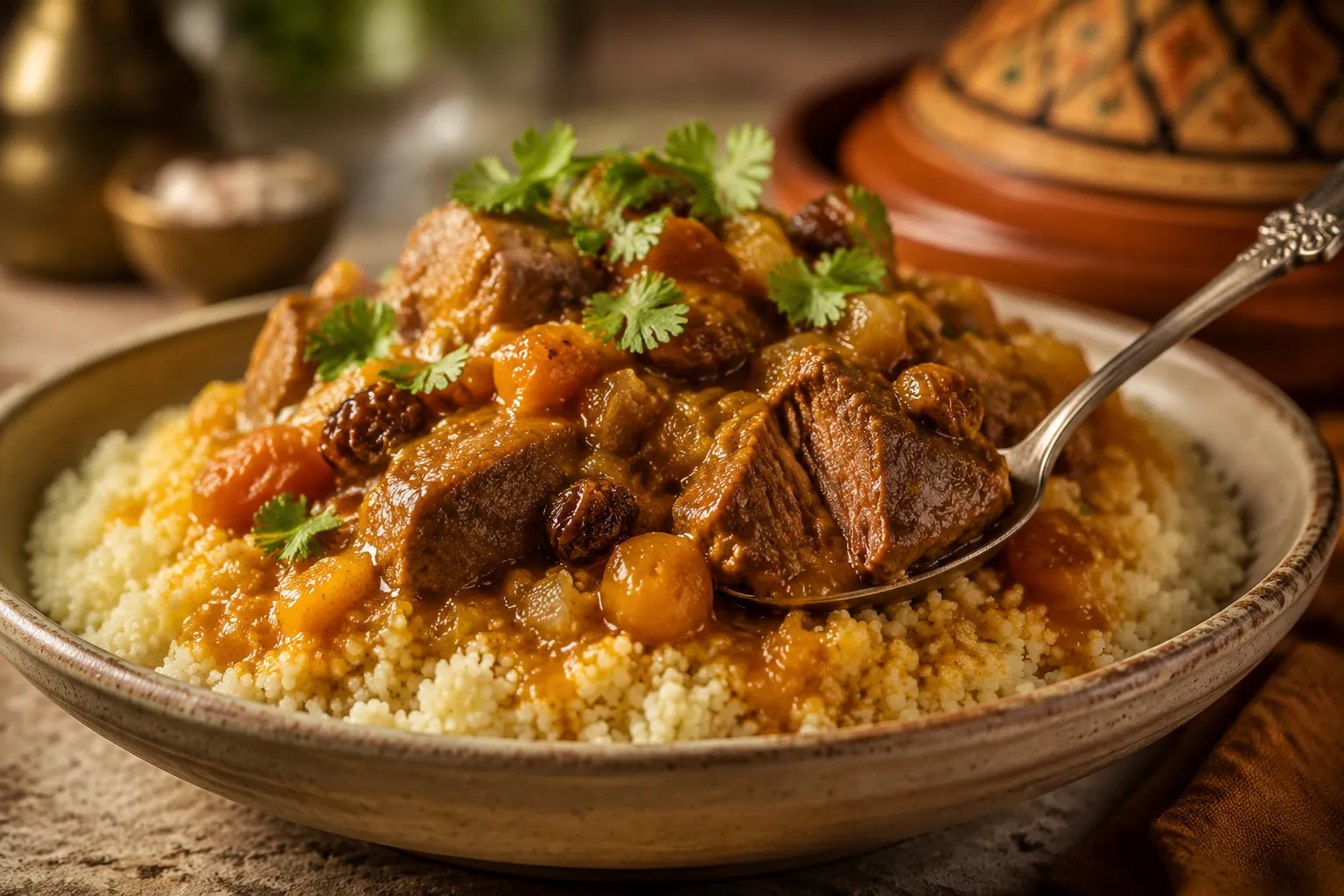
The classic choice is fluffy couscous, which catches every drop of the sauce and makes the meal feel abundant without being heavy. If you already have a favorite couscous recipe, keep it simple so the stew can shine: a little butter or olive oil, a pinch of salt, and fresh herbs are plenty. Warm flatbread is just as welcome, especially if you like tearing pieces and swiping them through the sauce.
For something fresh on the side, add a crisp carrot salad with lemon, parsley, cumin, and a touch of honey. The brightness cuts through the richness of the beef and echoes the citrus notes in the pot. A spoonful of homemade harissa on the table is lovely for anyone who wants heat, but keep it optional so the gentle sweetness and spice balance remain intact.
Mint tea is a beautiful way to close the meal. Its sweetness and herbal fragrance feel especially right after a slow-cooked dinner, and it turns a simple bowl of stew into a more memorable spread. If you are hosting, set the pot in the center of the table, scatter extra herbs over the top, and let everyone build their own plate.
What Makes This Slow-Stewed Dinner Special
This dish stands out because it is not just beef in sauce; it is a careful layering of texture and contrast. The meat becomes tender and savory, the dried fruit softens into little pockets of sweetness, the olives stay pleasantly briny, and the preserved citrus lifts the whole dish. Every ingredient has a job, and together they create a stew that tastes both comforting and lively.
It is also wonderfully forgiving once you understand the rhythm. Brown deeply, bloom the spices, keep the simmer low, and let time do the work. That is why this recipe is ideal for a weekend dinner, a make-ahead meal, or a cozy holiday table when you want something a little unexpected but still deeply familiar.
Make-Ahead Meal Prep Notes
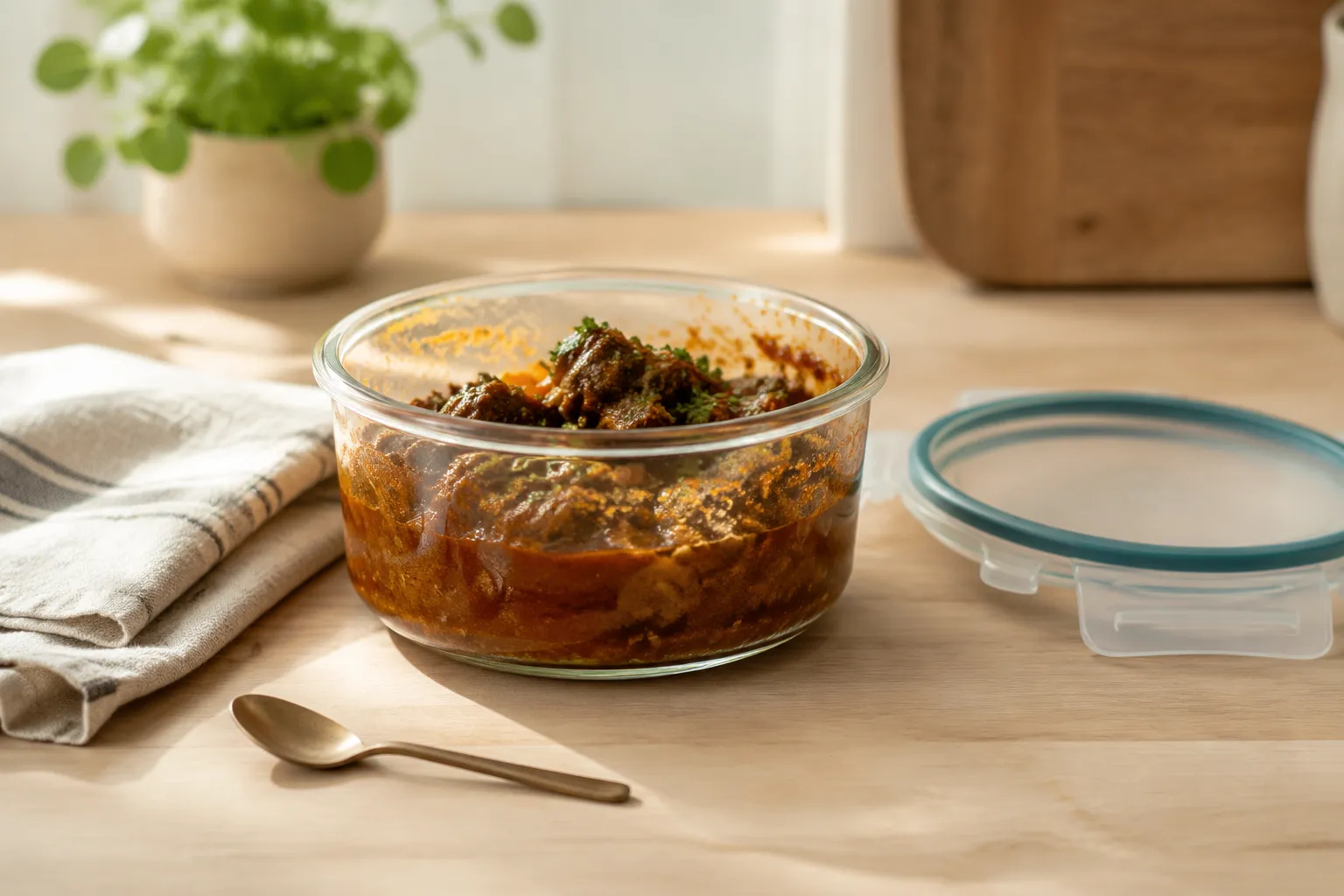
Because the flavors deepen as they rest, this is one of those rare dishes that may taste even better after a night in the refrigerator. Let the pot cool until warm, then transfer the beef and sauce into shallow containers so it chills quickly and evenly. Keep extra herbs separate until serving so they stay fresh and green.
When reheating, use gentle heat and add a splash of broth or water if the sauce has thickened too much. Avoid boiling hard, which can tighten the meat and dull the brightness of the preserved citrus. A slow warm-up on the stovetop brings the sauce back to its glossy, spoonable texture and makes leftovers feel like a brand-new dinner.
💡 Expert Tips
Brown the beef in batches. Crowding the pot traps steam and prevents the deep crust that gives the sauce its backbone.
Keep the simmer gentle. A quiet bubble makes the beef tender; a hard boil can make it tough and reduce the sauce too aggressively.
Rinse preserved lemon before chopping. This removes excess salt while keeping the floral citrus flavor.
Taste before salting at the end. Olives, broth, and preserved lemon all add salt, so final seasoning should happen after the stew has reduced.
Let it rest before serving. Even 10 to 15 minutes off the heat helps the sauce settle and the flavors come together.
🔄 Variations & Substitutions
Once you understand the basic method, this recipe is easy to adapt while keeping the same Moroccan-inspired balance of warm spice, savory depth, and bright finish.
Chicken version: Use bone-in chicken thighs and reduce the cooking time to about 45 to 60 minutes.
Lamb version: Swap in lamb shoulder for a richer, more traditional-feeling stew.
Vegetable version: Use chickpeas, carrots, sweet potatoes, cauliflower, and vegetable broth; simmer until tender.
Spicier finish: Stir in a spoonful of harissa at the end or serve it alongside the finished dish.
Fruit swaps: Use dried apricots, golden raisins, dates, or figs in place of prunes.
🧊 Storage & Leftovers
Store leftovers in an airtight container in the refrigerator for up to 4 days. The flavor will continue to deepen as it rests, making this a wonderful make-ahead dinner for busy weeks or entertaining.
For longer storage, freeze cooled portions for up to 3 months. Thaw overnight in the refrigerator, then reheat gently on the stovetop with a splash of broth or water to loosen the sauce.
Frequently Asked Questions
Do I need a tagine pot to make tagine?
No, you do not need a traditional pot to make a delicious version at home. A heavy Dutch oven works beautifully because it holds steady heat and has a tight-fitting lid that traps moisture. The conical lid of a traditional vessel is designed to circulate steam back into the food, but a sturdy lidded pot can achieve very similar tenderness. If using ceramic or clay cookware, always follow the manufacturer’s heat guidelines to avoid cracking.
What is the best cut of beef for tagine stewing?
Beef chuck is the best choice because it has enough marbling and connective tissue to become tender during long, slow cooking. As it simmers, the collagen breaks down and enriches the sauce, giving you succulent meat rather than dry cubes. Brisket, boneless short ribs, or well-trimmed beef shank can also work well. Avoid very lean cuts like sirloin, which can become tough before the sauce develops its full flavor.
Can I make tagine in a slow cooker or Instant Pot?
Yes. For the best flavor, still sear the beef and bloom the spices on the stovetop first, then transfer everything to the slow cooker and cook on low for 7 to 8 hours. For an Instant Pot, use the sauté function for browning and aromatics, then pressure cook for about 45 minutes with a natural release. In both cases, add olives and preserved lemon near the end if you want their flavors to stay brighter.
What does tagine taste like?
It tastes warm, savory, aromatic, and lightly sweet, with a beautiful balance of contrasts. Cumin, ginger, cinnamon, and ras el hanout create the spiced backbone, while olives add briny depth and preserved lemon brings tangy brightness. Dried fruit, such as prunes or apricots, softens into the sauce and gives just enough sweetness to round out the beef. The overall effect is rich and cozy, but not heavy.
How long can I store leftover tagine?
Leftovers keep well in an airtight container in the refrigerator for up to 4 days. In fact, the flavor often improves overnight as the spices settle and the sauce deepens. You can also freeze portions for up to 3 months. Thaw in the refrigerator overnight, then reheat gently on the stovetop or in the microwave with a small splash of broth or water to bring the sauce back to life.