Air Fryer Bacon: Crispy, Mess-Free in 10 Minutes
Ingredients
Scale
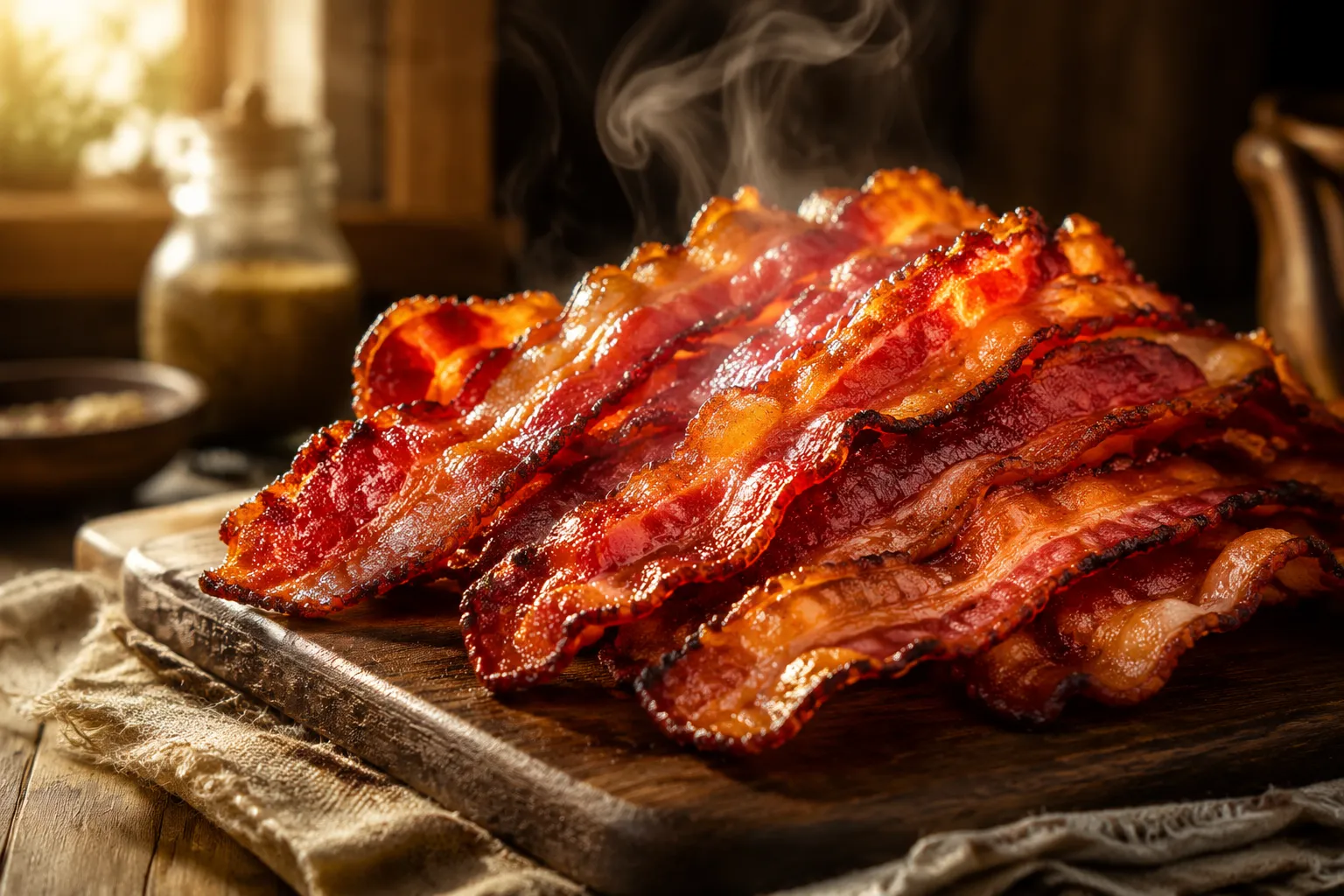
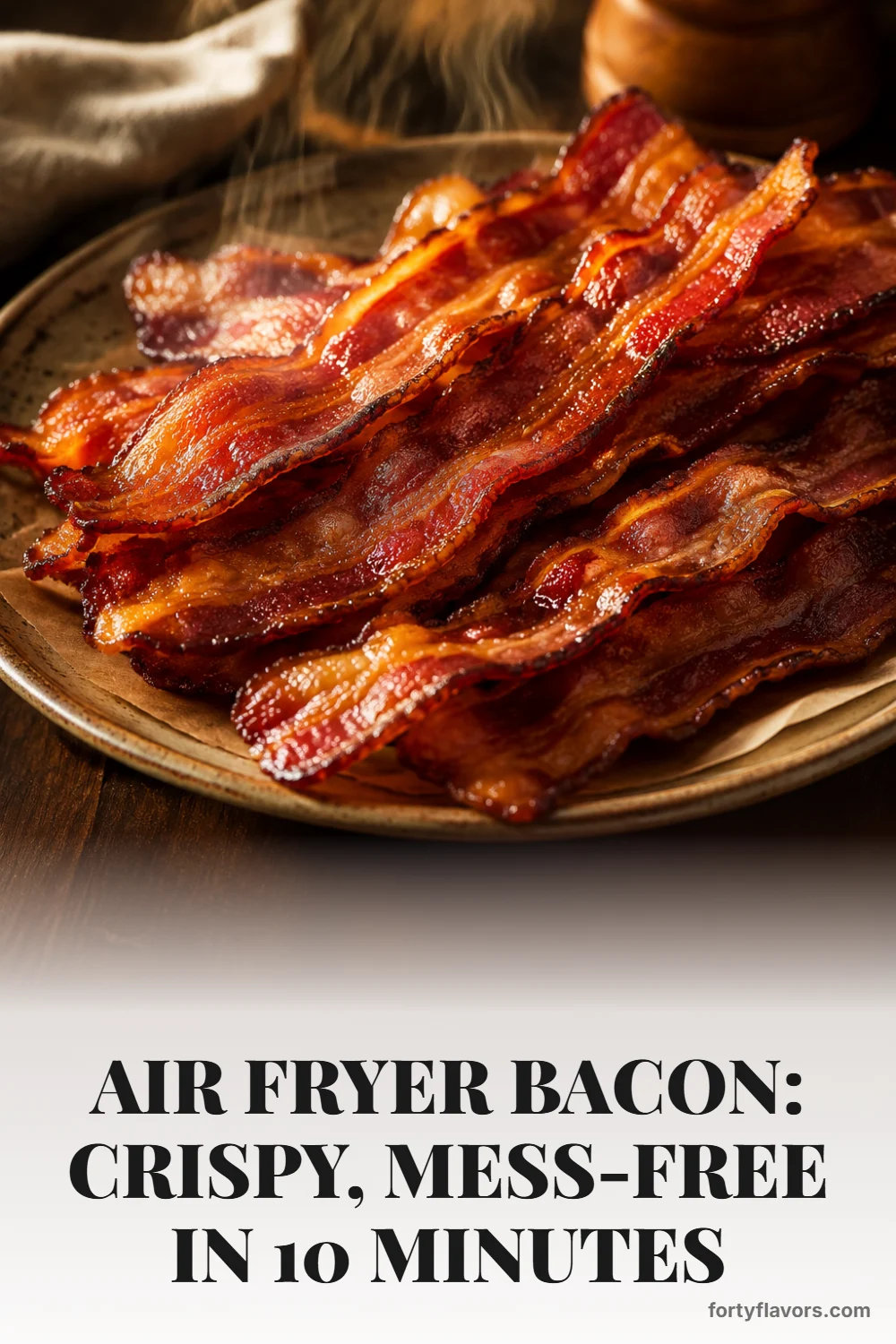
Air fryer bacon is the fastest, cleanest way to get shatter-crisp strips without a greasy stovetop. Ten minutes, no babysitting, no mess.
air fryer bacon is the kind of small kitchen win that makes breakfast feel instantly easier: crisp, deeply golden strips without the splattering skillet, greasy stovetop, or constant hovering. The circulating heat renders the fat quickly and evenly, so the bacon comes out rippled, caramelized, and ready for eggs, sandwiches, salads, or a very casual snack straight from the plate.
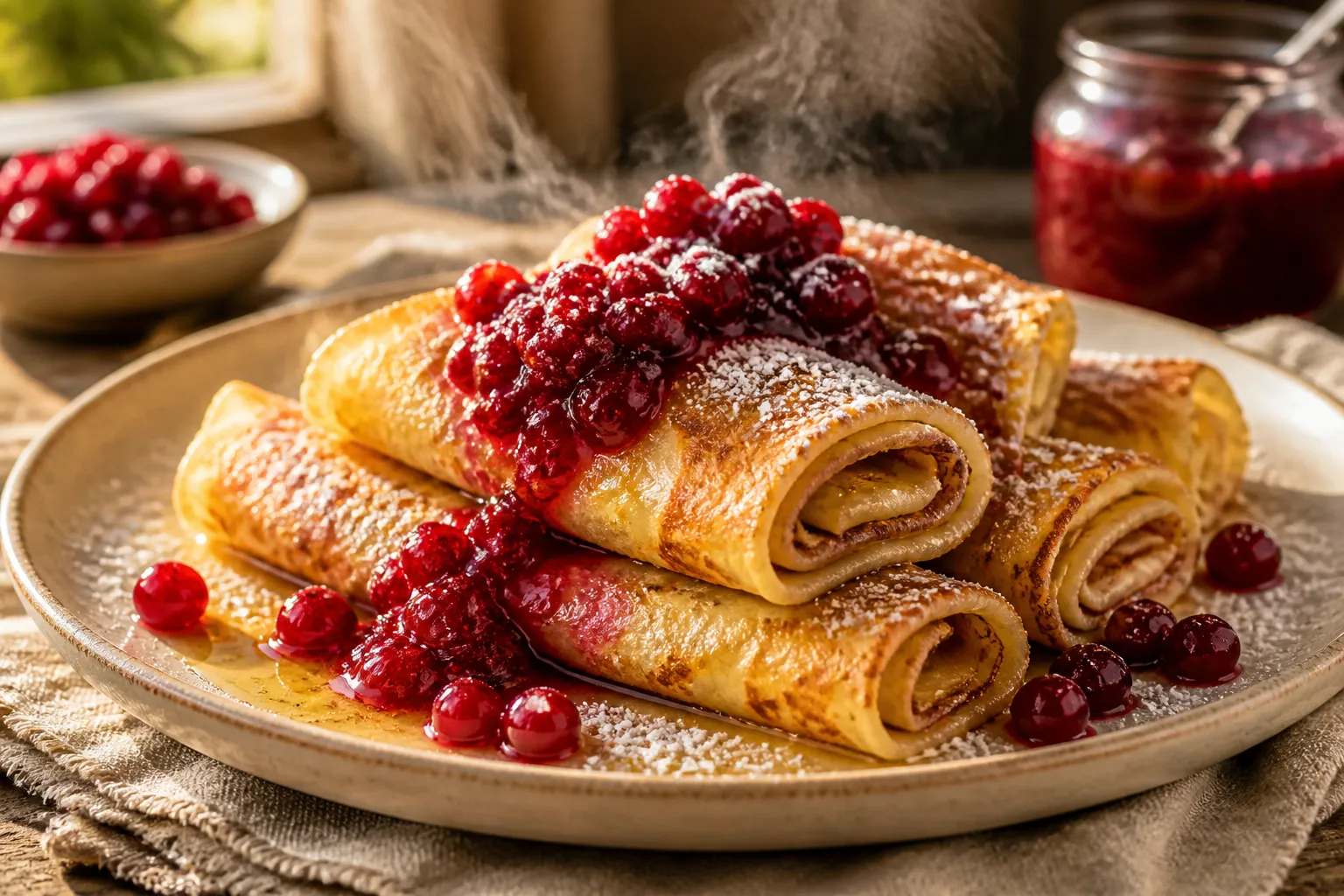
If you have ever stood over a pan flipping bacon while coffee gets cold and toast goes from golden to suspiciously dark, this method is for you. It is fast enough for weekday mornings but tidy enough for brunch, meal prep, and BLTs. Think of it as the gateway recipe for more air fryer breakfast recipes, right alongside air fryer hard boiled eggs, homemade buttermilk pancakes, and air fryer french toast sticks.
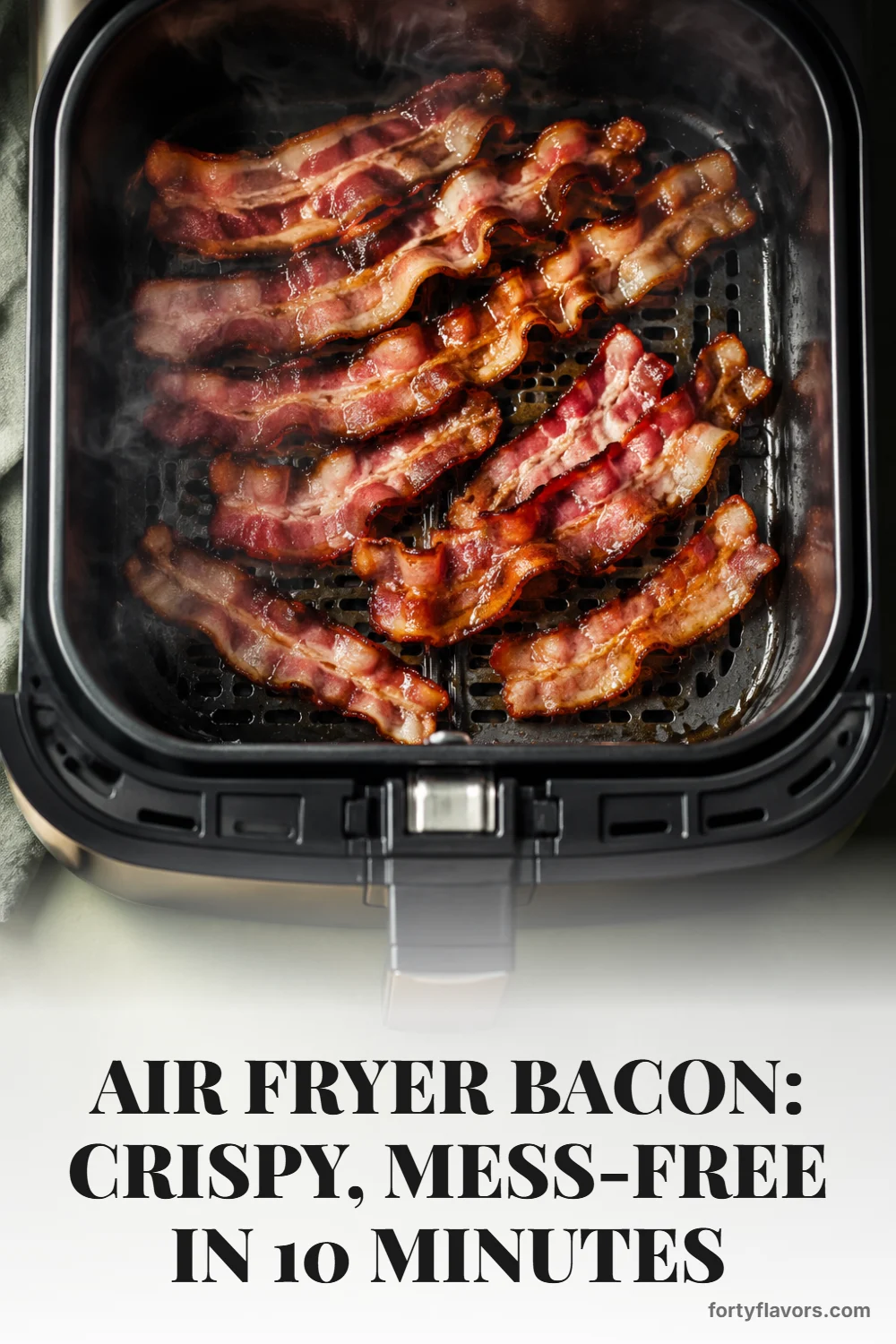
The magic of cooking bacon in the air fryer is the way hot air moves all around each strip. Instead of sitting in a pool of fat, the bacon rests in the basket while the drippings fall below, helping the edges crisp and curl. You still get all the richness of classic bacon, but the texture is lighter, snappier, and less greasy than many skillet batches. Because the temperature stays steady, it is also easier to repeat your results once you know your preferred doneness.
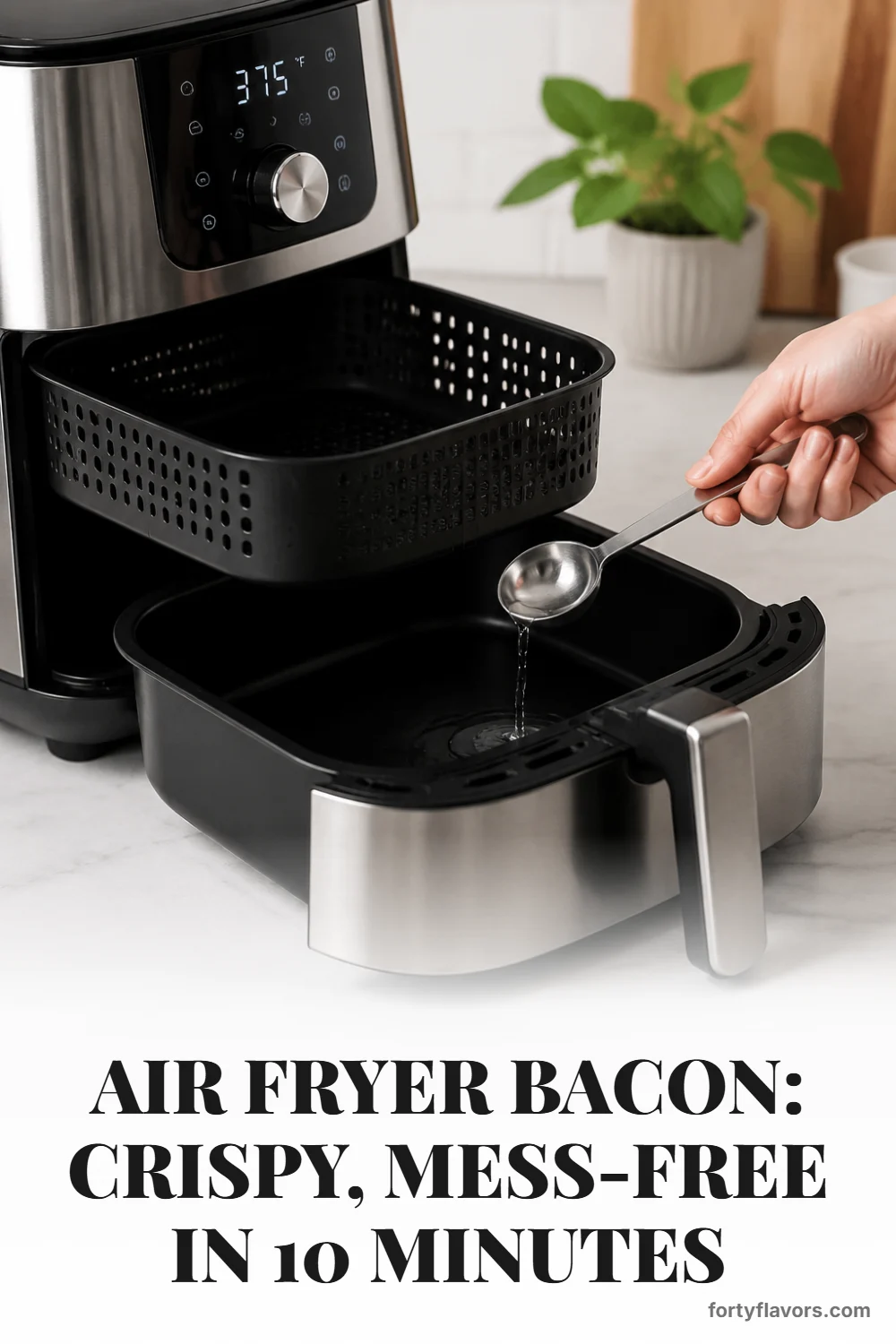
This recipe uses a small but mighty smoke-prevention trick: add 1 tablespoon water to the drawer beneath the basket before cooking. The water helps keep rendered fat from scorching when it drips down, which is especially useful for fatty strips or back-to-back batches. It does not steam the bacon or make it soft; the basket keeps the strips elevated so they can still crisp beautifully.
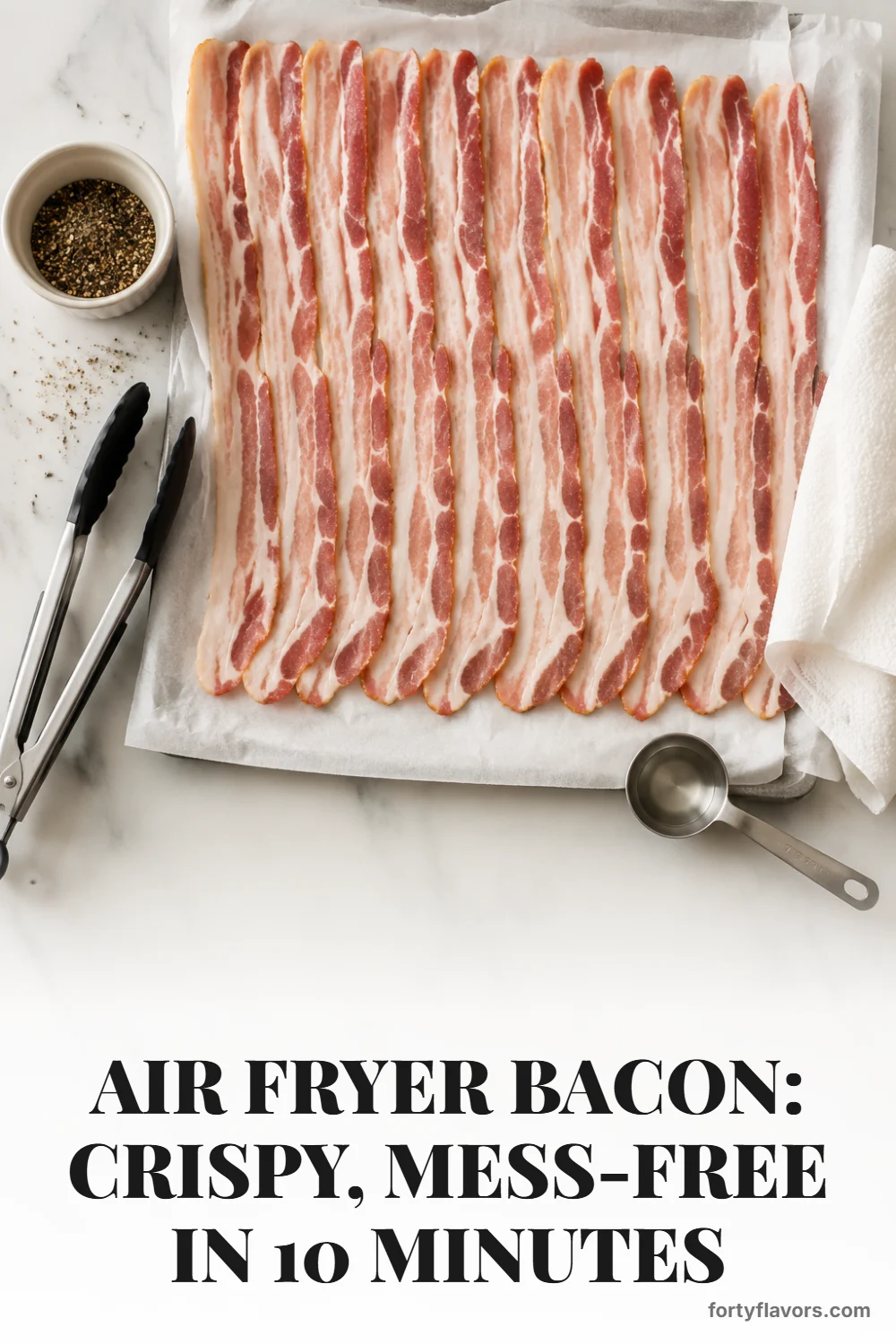
You only need bacon, an air fryer, tongs, and a plate lined with paper towels. Regular-cut bacon is the fastest option and usually cooks in 8 to 10 minutes, while thick-cut bacon needs a little more time to fully render. A sprinkle of cracked black pepper is optional but lovely if you like a peppery, diner-style strip. If your bacon is very long, cut the slices in half so they fit neatly in a single layer without curling up the sides of the basket.
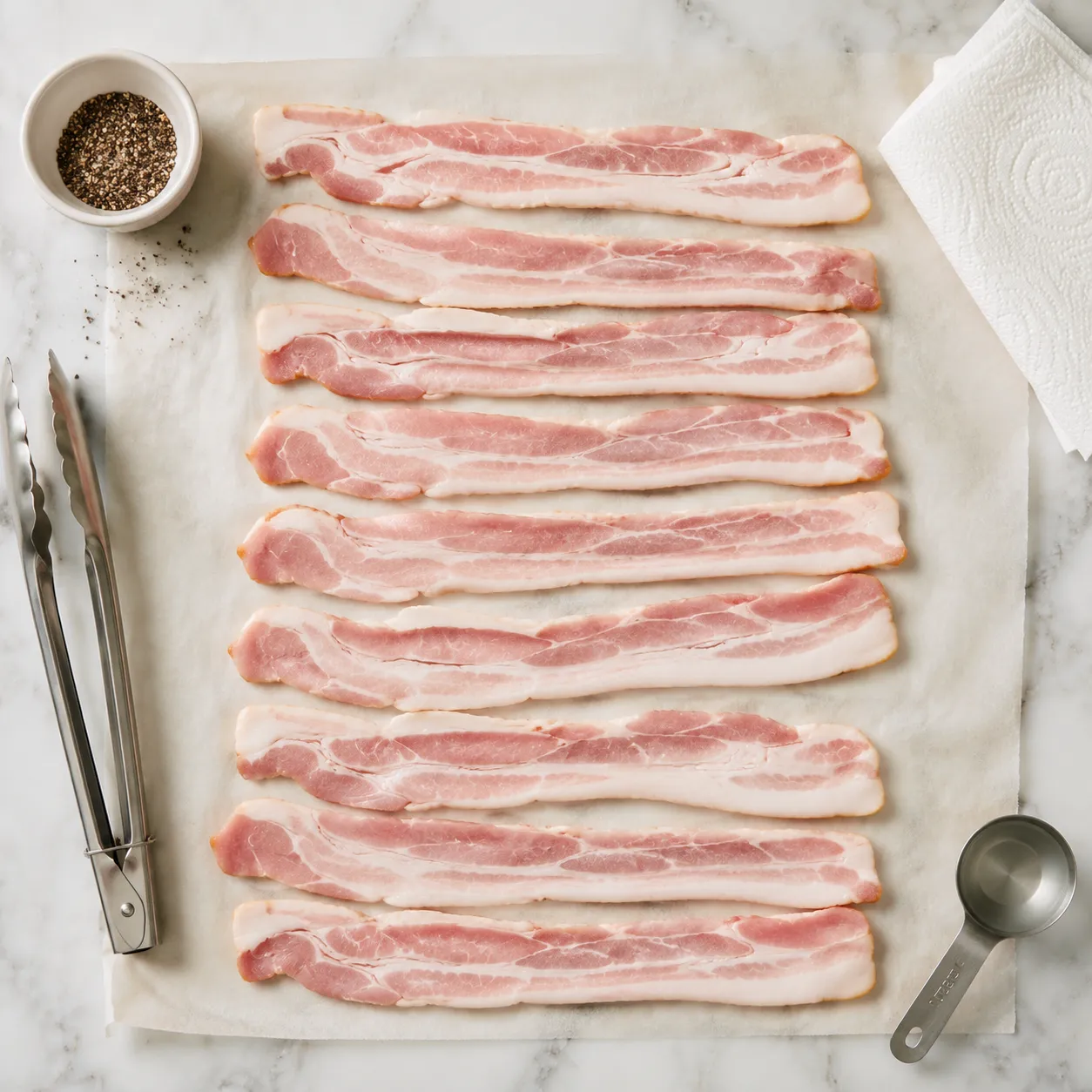
Basket-style air fryers are especially good for this because the fat drains away under the grate. Oven-style air fryers work too, but you may need to rotate the tray and watch more closely because the top heating element can brown the edges quickly. Either way, preheat the air fryer before adding the bacon so the strips begin rendering right away. Keep tongs nearby, because hot bacon fat is no place for fingers.
For classic breakfast plates, regular-cut slices give you that crisp, wavy diner bacon in the least amount of time. Center-cut bacon also works well and tends to shrink a bit less, which is nice for sandwiches. For BLTs, burgers, and meal prep, thick-cut bacon is my favorite because it keeps a chewy center while the edges get crisp. Avoid overly sugary maple bacon for your first batch, since the sugar can darken fast at 400°F.
If you are using turkey bacon, expect a different texture. It is leaner, so it will not render as much bacon grease, and it can go from flexible to dry if overcooked. A light mist of oil can help turkey bacon brown, but keep the layer thin so it does not smoke. For pork bacon, no added oil is needed—the fat does all the work for you.
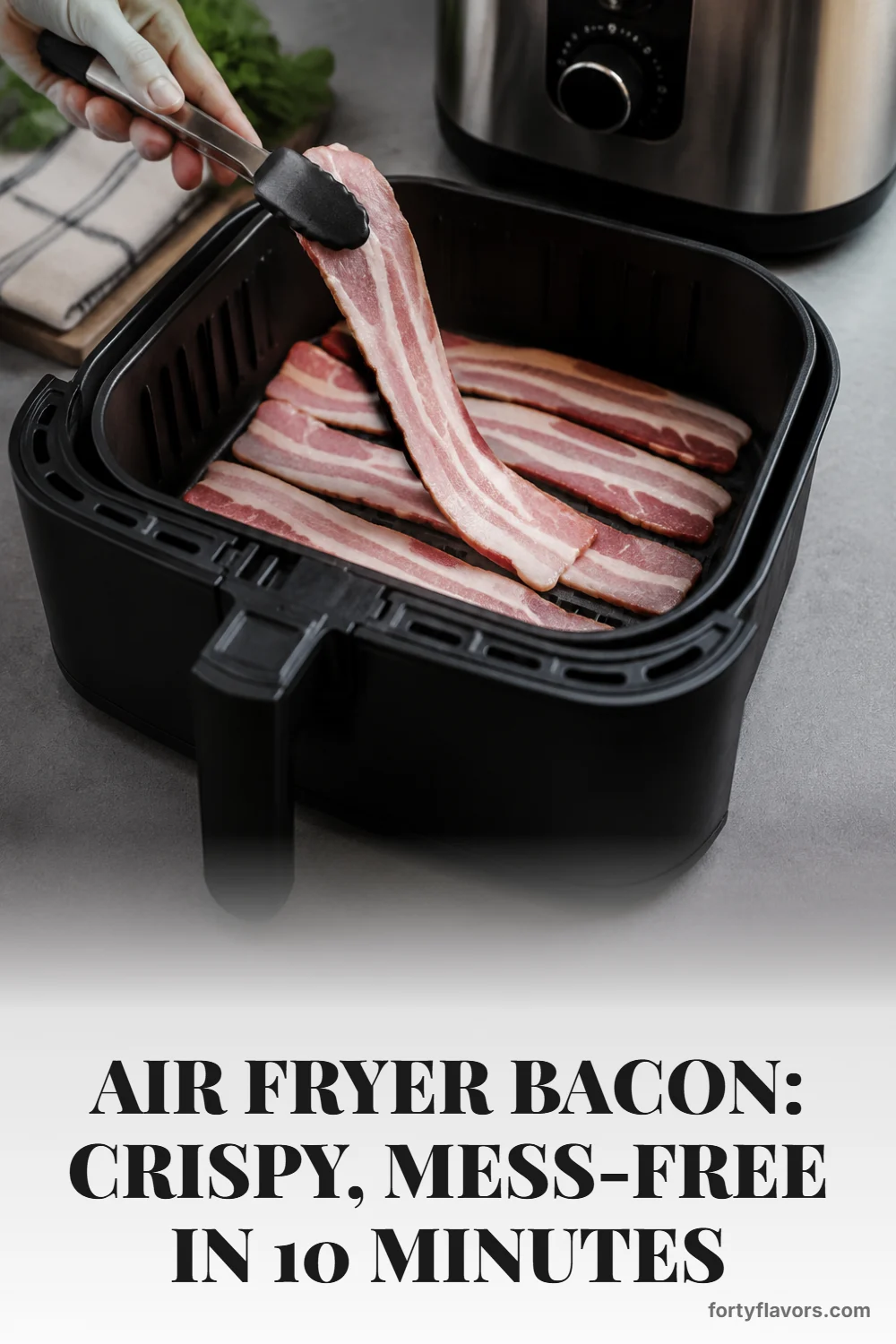
Start by preheating the air fryer for about 3 minutes. That brief head start matters because it helps the fat begin rendering immediately and encourages crisp edges before the lean parts overcook. Add 1 tablespoon water to the drawer under the basket if your model allows it, then lay the bacon flat in one single layer. The slices can touch slightly, but avoid stacking, overlapping, or weaving them together.
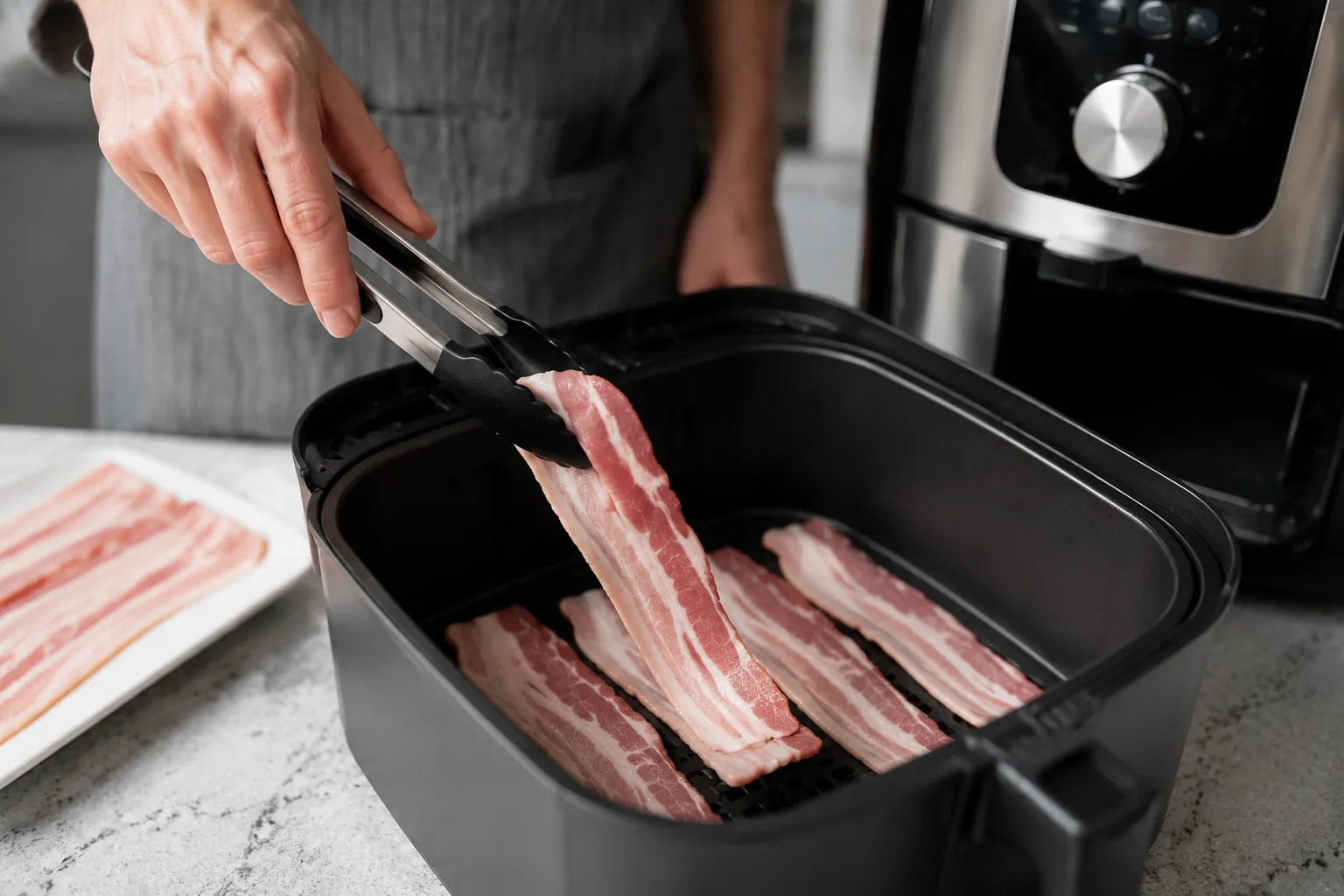
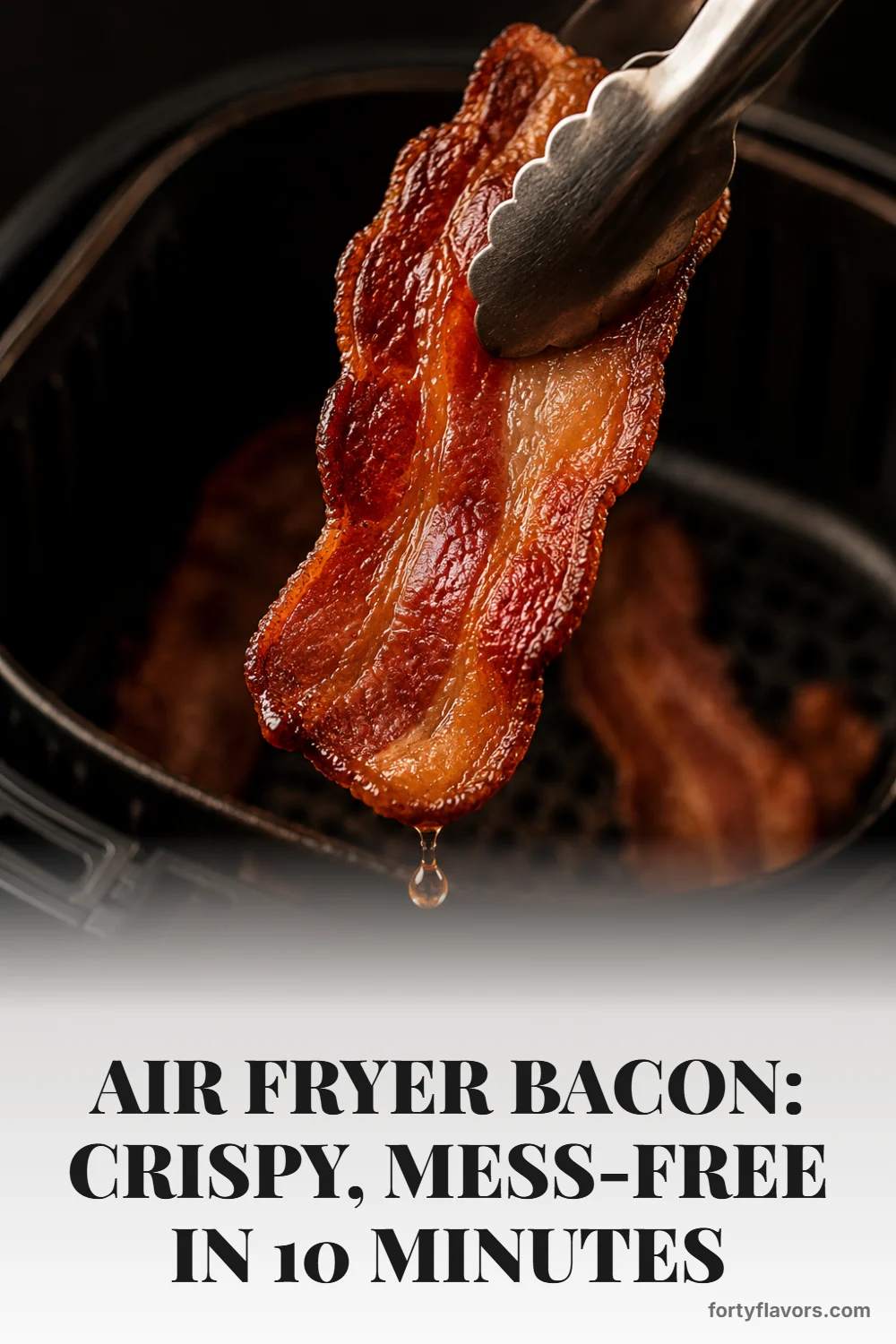
Cook regular-cut bacon at 400°F, flipping halfway through for even browning. For thicker strips, lower the heat slightly to 380°F so the fat has time to render without the edges burning. The bacon will look a touch softer when you first lift it out, then firm up as it cools on paper towels. That resting minute is the difference between hot, floppy strips and true crispy bacon.
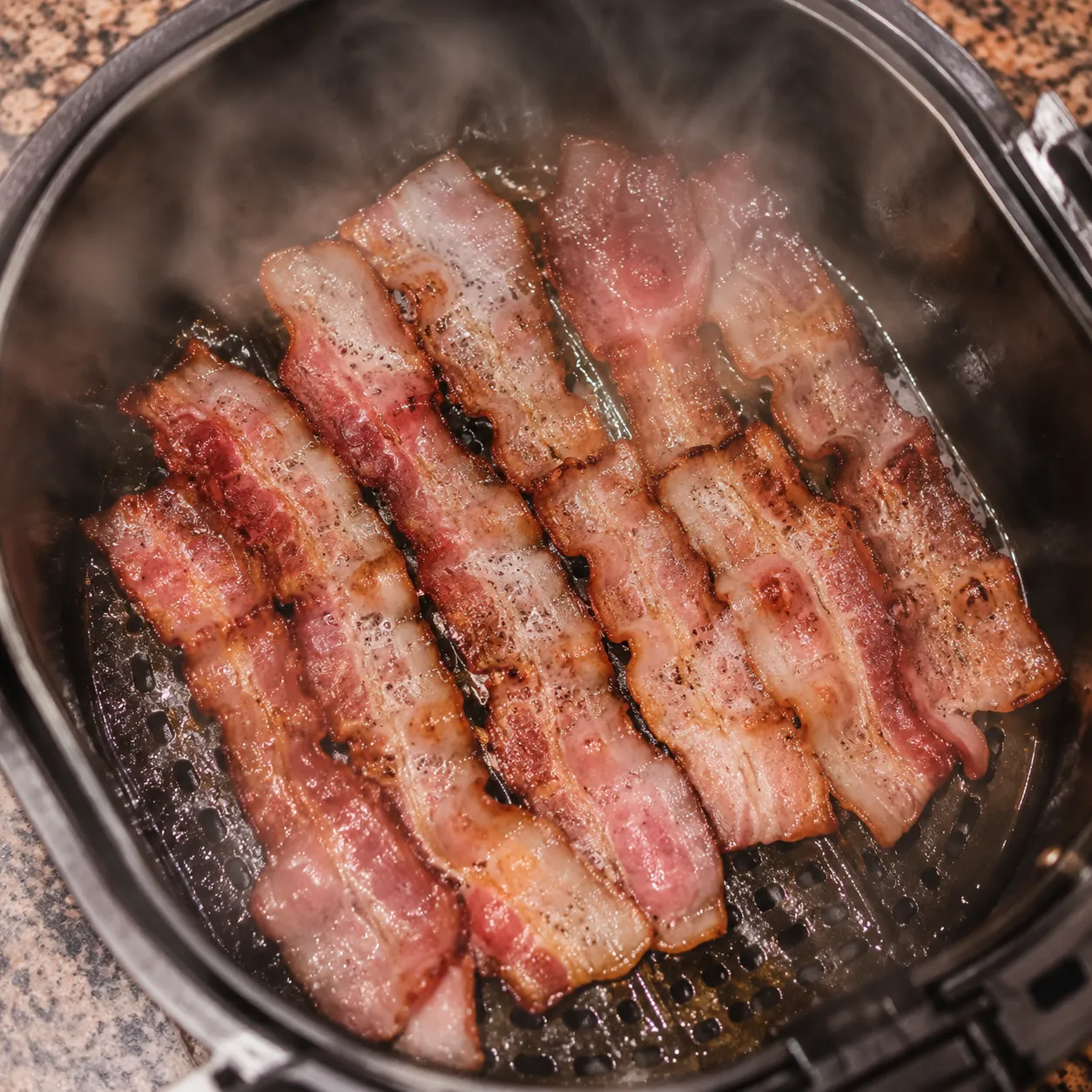
When you air fry bacon, check the last couple of minutes closely. Air fryers are powerful little ovens, and the jump from perfectly caramelized to too dark can happen quickly, especially with thinner slices. Use tongs to transfer the finished strips to a lined plate, then let the grease in the drawer cool slightly before pouring it off. If you are cooking another batch, wipe or carefully drain the drawer first so old drippings do not smoke.
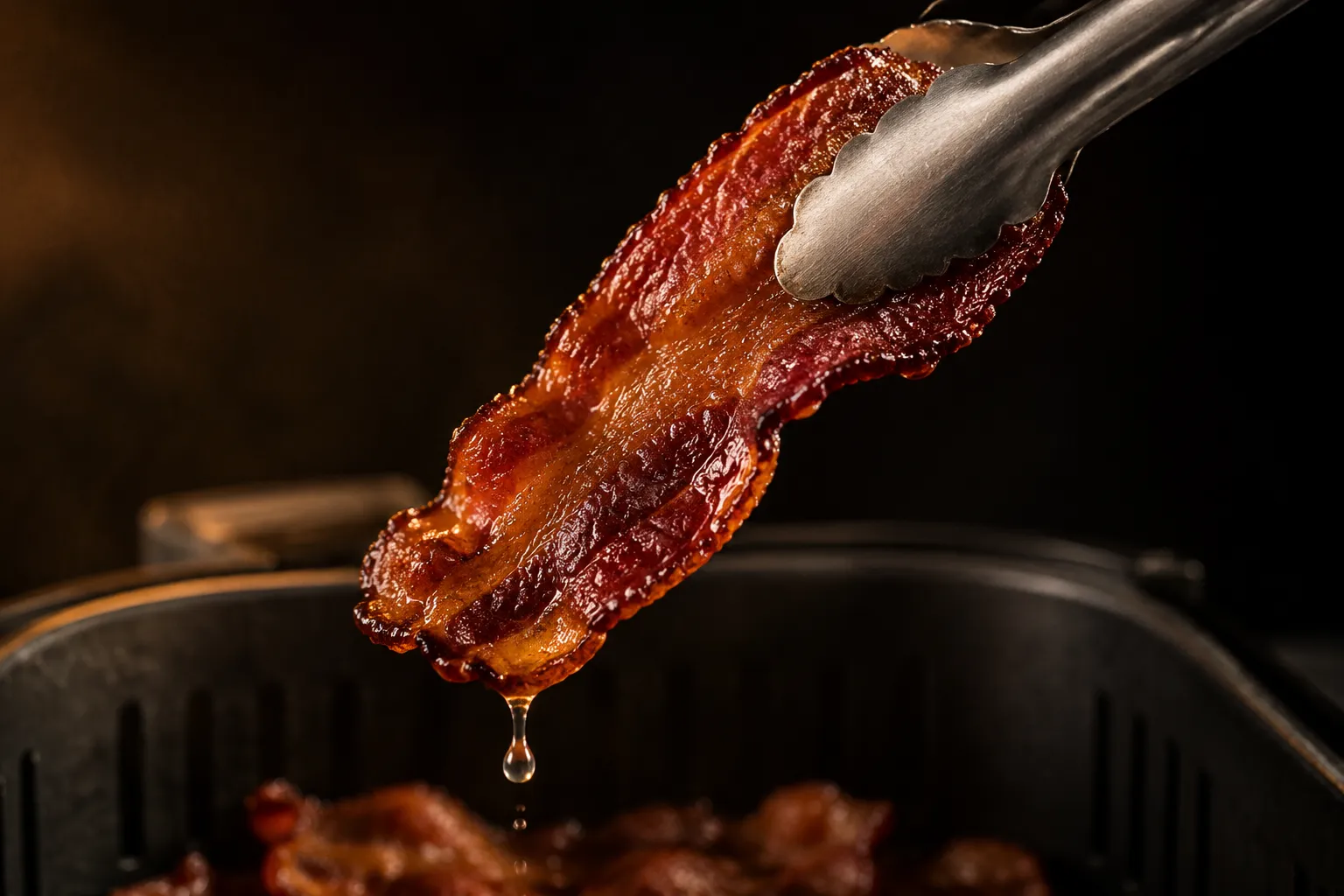
Use this chart as a starting point, then adjust based on your appliance and how crisp you like your strips. Smaller air fryers may cook faster because the food sits closer to the heating element, while larger models may need an extra minute. The most important visual cue is color: look for deep golden edges, bubbling fat, and a slightly darker center line. Remember that bacon crisps more as it rests.
Regular-cut bacon: Cook at 400°F for 8 to 10 minutes, flipping at the halfway mark. Pull it at 8 minutes for lightly crisp strips, or continue to 10 minutes for shatter-crisp edges. This is the best everyday timing for breakfast plates and quick sandwiches.
Thick-cut bacon: Cook at 380°F for 10 to 12 minutes, flipping halfway through. The slightly lower temperature gives the fat time to render before the meaty parts overbrown. If your slices are extra thick, add 1 to 2 minutes and check every 30 seconds near the end.
Turkey bacon: Cook at 380°F for 6 to 8 minutes, flipping once. Because turkey bacon is lean, it will not become quite as rippled or glossy as pork bacon. Remove it when browned at the edges and still slightly flexible in the center.
Bacon is naturally fatty, which means some smoke can happen if drippings hit a very hot surface. The tablespoon of water in the bottom drawer is the easiest prevention step, especially when cooking multiple rounds. If your air fryer has exposed heating elements or a very shallow drawer, pause halfway and carefully pour off excess drippings instead.
Once breakfast is over, let the appliance cool before washing the basket and drawer. For sticky spots, warm soapy water and a soft sponge are usually enough, but if you want a deeper reset, see how to clean an air fryer for a full step-by-step routine. Keeping the drawer free of old grease makes the next batch taste cleaner and reduces smoke. It also helps your air fryer last longer, which is always a win.
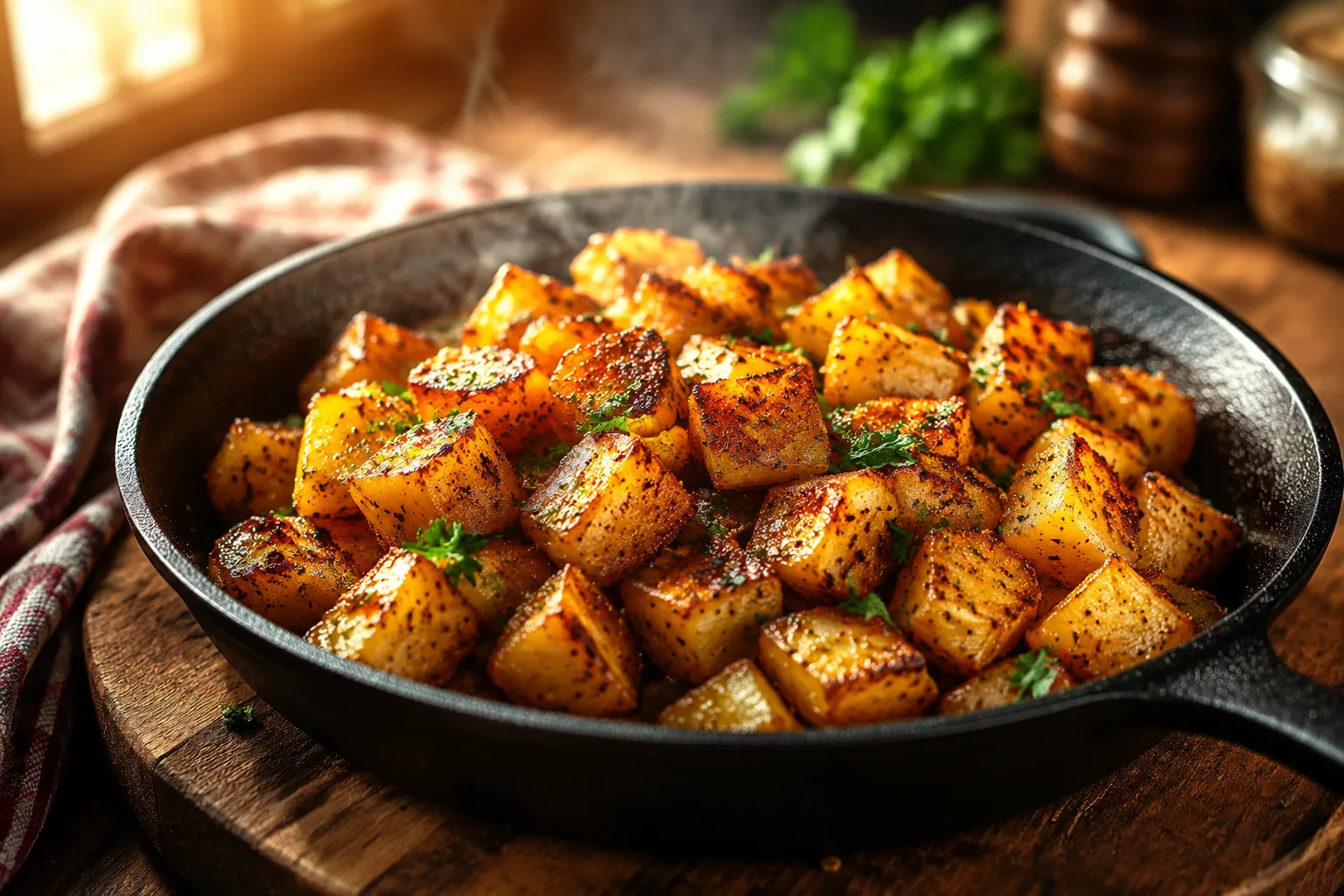
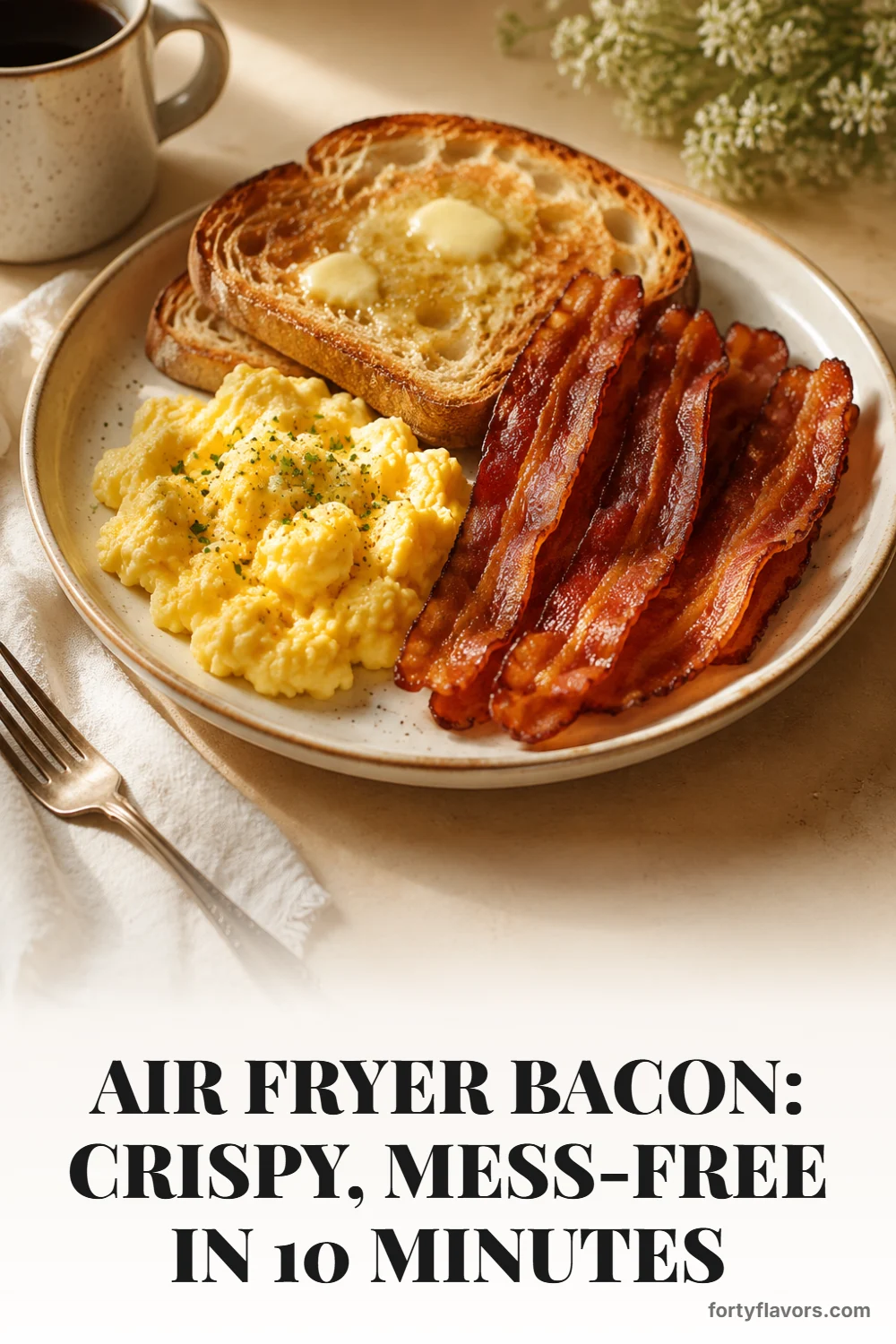
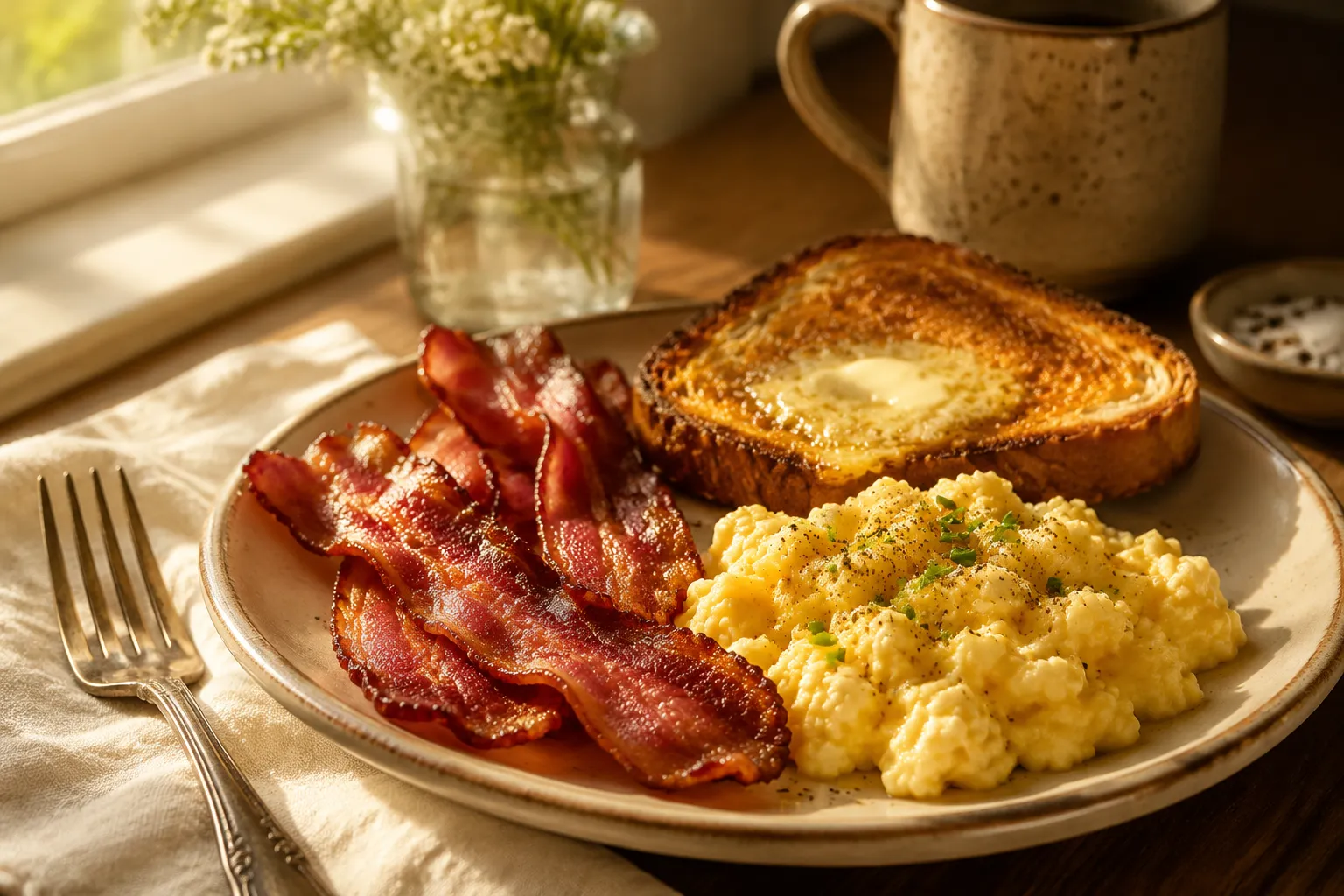
For a classic morning plate, serve the bacon with soft scrambled eggs, buttered toast, and fruit. It is also wonderful next to crispy potatoes, waffles, or a stack of pancakes when you want that salty-sweet brunch balance. If you are feeding a crowd, cook in batches and keep finished strips warm on a sheet pan in a low oven. The air fryer makes it simple to build a generous breakfast without juggling every burner on the stove.

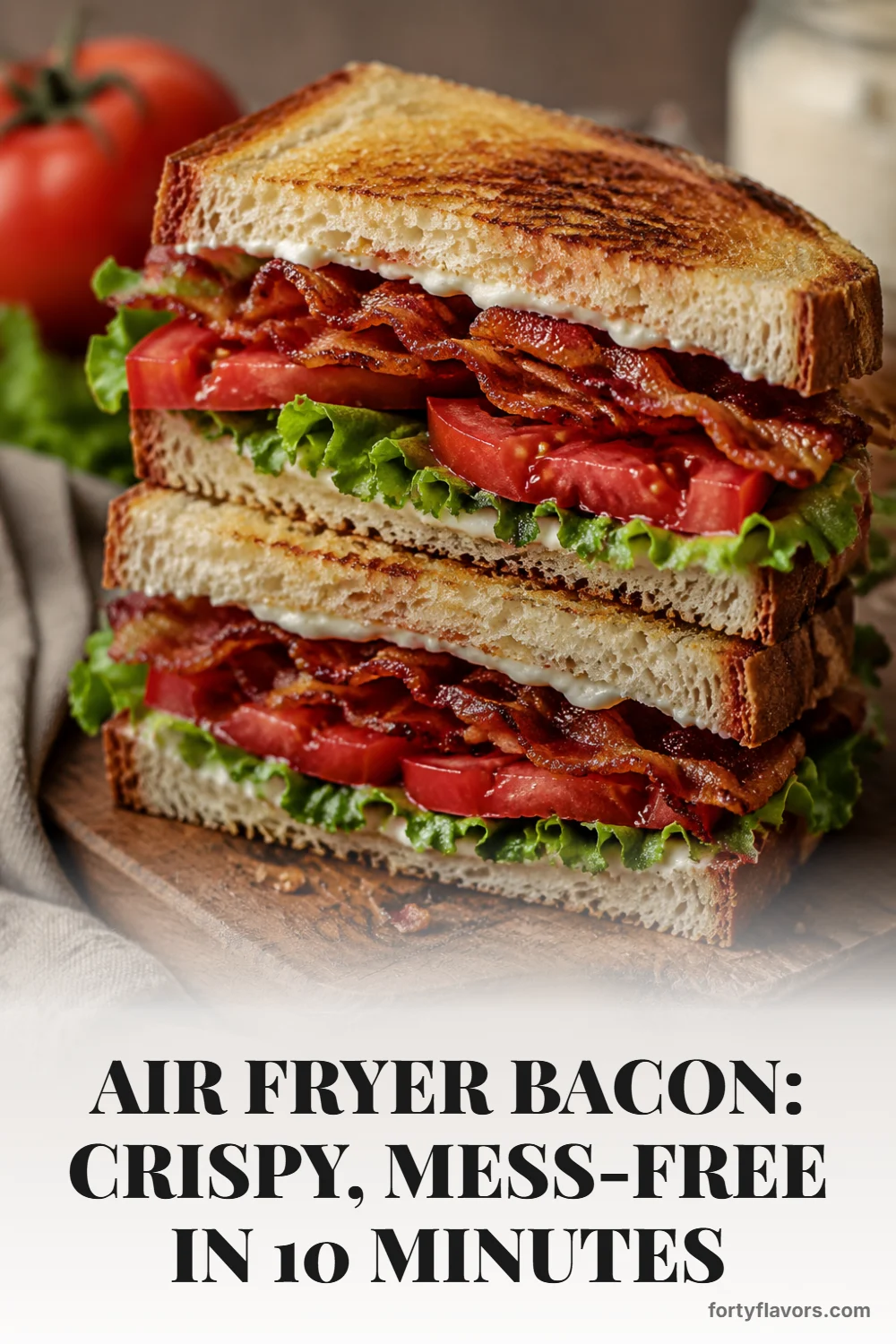
Beyond breakfast, this is my favorite bacon for sandwiches because the strips stay sturdy and crisp. Layer it into a BLT with juicy tomatoes, tuck it into a burger, or crumble it over chopped salads for smoky crunch. It is also fantastic scattered over baked potatoes, creamy soups, mac and cheese, or a quick pasta with peas and Parmesan. Once you have a container ready in the fridge, you will find a dozen reasons to add a strip to lunch.
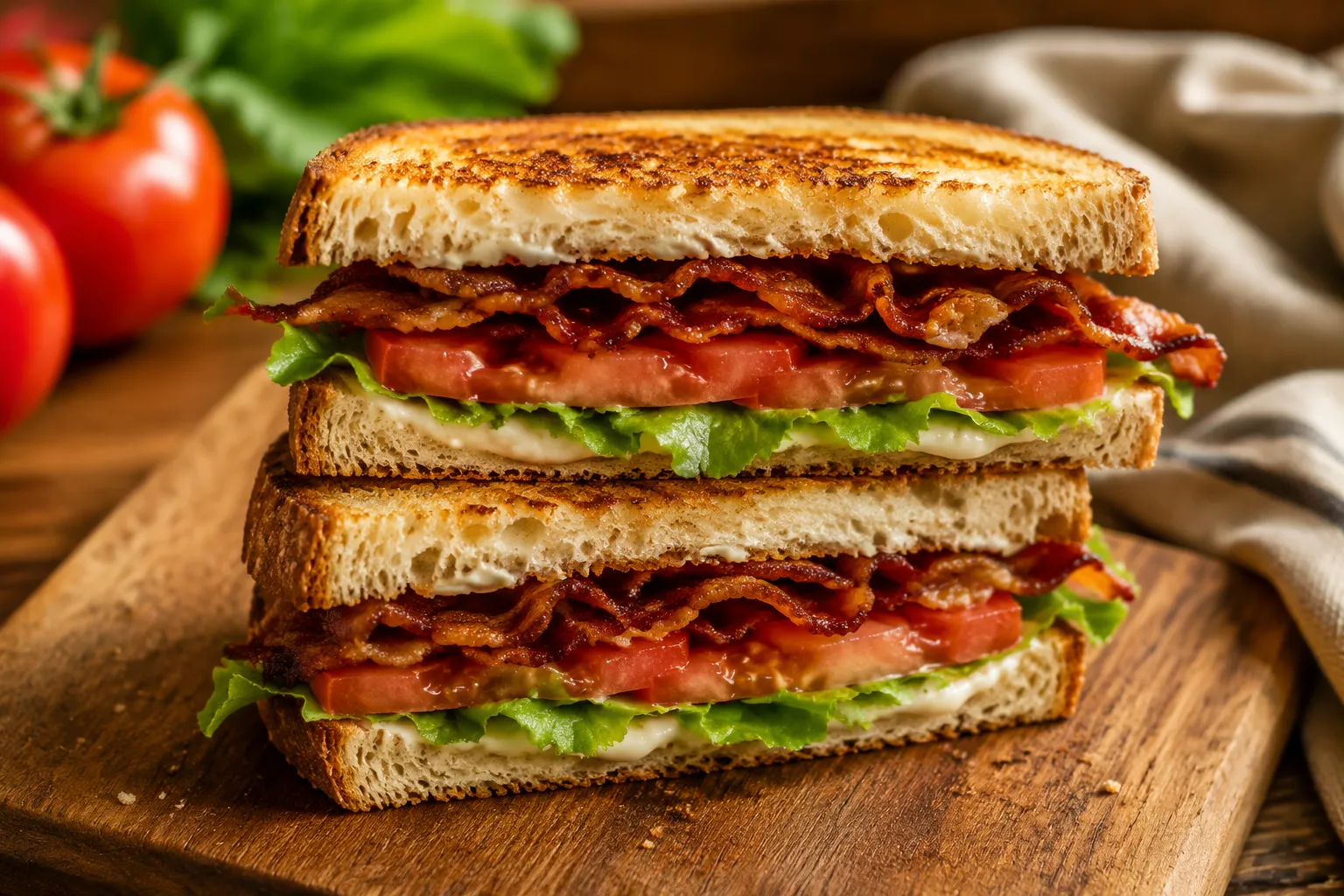
If your mornings are chaotic, cook a batch at the beginning of the week and tuck it into breakfasts as needed. A few strips can turn toast and eggs into something that feels intentionally made, even when you are running on coffee and ten spare minutes. For sandwiches, slightly undercook the bacon by about 1 minute so it can crisp again when reheated. This keeps it from tasting overdone after a second round of heat.
You can also chop cooled strips and keep them ready for salads, soups, grain bowls, and baked potatoes. The texture is best when reheated briefly, but honestly, cold crumbled bacon has its place too—especially over a creamy chicken salad or wedge salad. If you are saving the drippings, strain out any browned bits and refrigerate the fat in a covered jar. A spoonful of bacon grease is incredible for frying eggs, sautéing greens, or crisping breakfast potatoes.
Once you learn the timing for your machine, bacon in the air fryer becomes one of those recipes you make almost on autopilot. It is fast, low-mess, and wonderfully flexible, whether you are building a weekend brunch board or prepping a few strips for weekday lunches. Start with the chart, keep the strips in a single layer, and do not skip the paper towels after cooking. Your reward is glossy, salty, crispy bacon with hardly any cleanup.
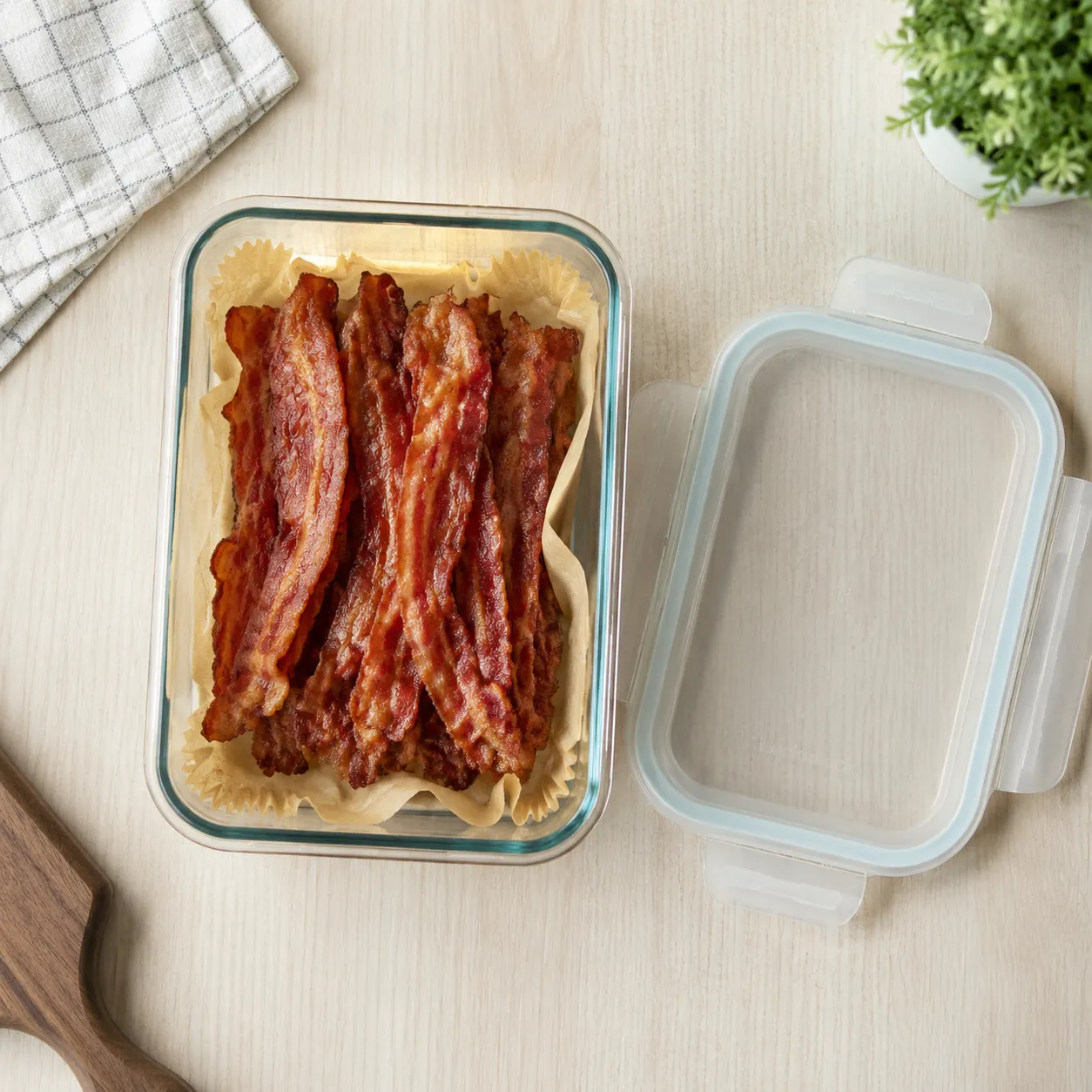
Store leftover cooked bacon in an airtight container in the refrigerator for up to 4 days. For the best texture, layer strips with parchment paper so they do not stick together. You can also freeze cooked bacon for up to 2 months; freeze strips flat first, then transfer them to a freezer bag.
To reheat, place bacon in the air fryer at 350°F for 2 to 3 minutes, just until hot and crisp again. Avoid microwaving if you want the snappiest texture, though it works in a pinch for 15 to 25 seconds on a paper towel-lined plate.
Hover any image and hit “Pin it” to save it to your Pinterest boards.