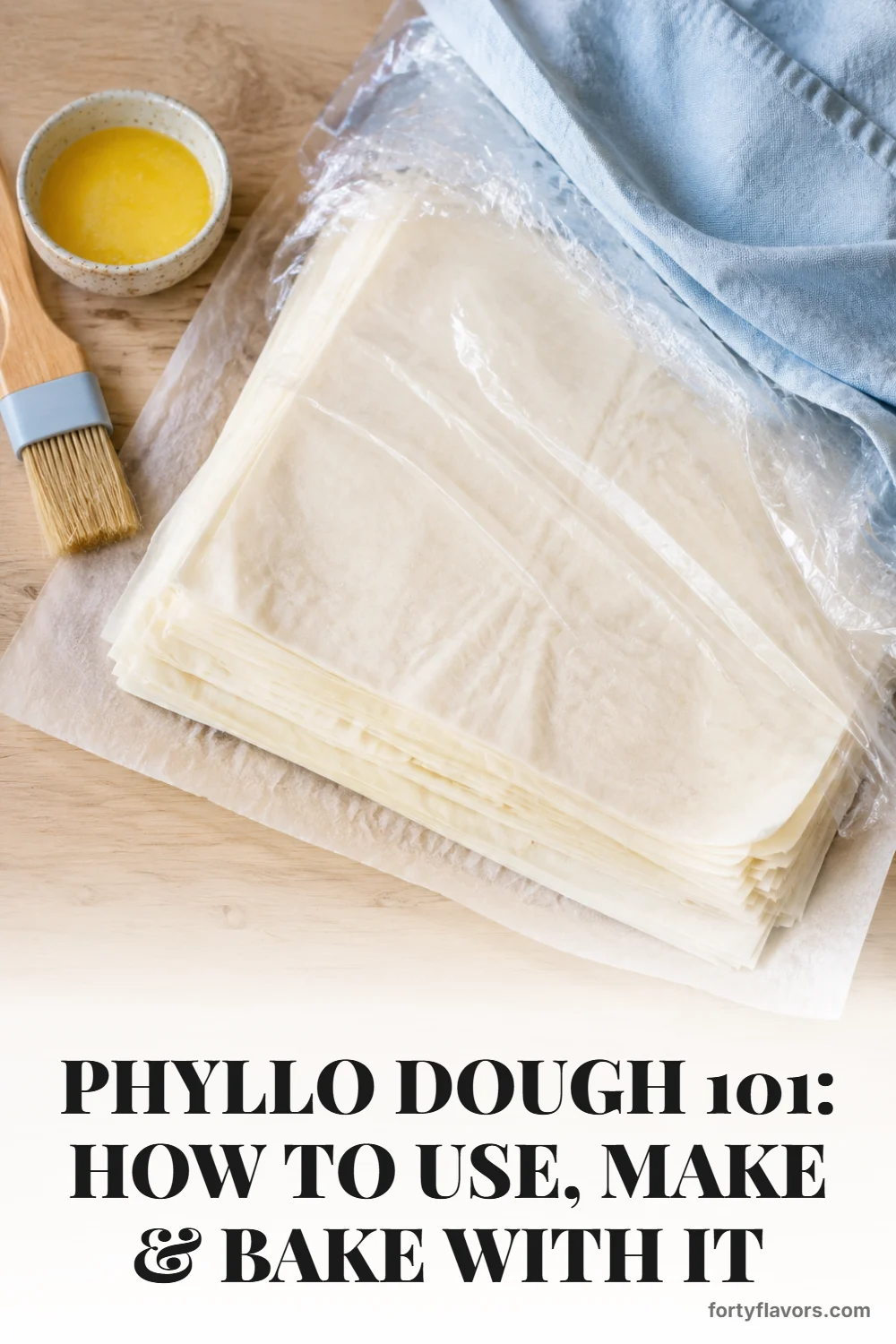
Phyllo Dough 101: How to Use, Make & Bake With It
Ingredients
Scale
Paper-thin, shatteringly crisp, and easier than it looks: here is everything you need to confidently work with phyllo dough at home.
Phyllo dough is the paper-thin pastry behind some of the world’s most irresistible bakes: honey-soaked baklava, savory spinach pies, crisp cheese triangles, and tiny appetizer cups that shatter at first bite. It looks delicate, and it is, but it is not fussy once you understand its rhythm. The secret is less about perfection and more about keeping the sheets covered, lightly brushing the layers, and moving with calm confidence.
This guide is your complete filo phyllo starting point, whether you are opening a frozen box from the grocery store or rolling a batch from scratch on a cotton sheet. We will cover what it is, how it differs from puff pastry, what to buy, how to make it, and the best ways to bake with those impossibly thin layers. Think of it as a cozy pastry-school lesson, only with honey, butter, olive oil, and a very forgiving attitude.
Phyllo, also spelled filo, comes from the Greek word for “leaf,” which is exactly how the pastry behaves: thin, flexible sheets that stack into crisp, flaky layers. Unlike enriched doughs, it is a lean mixture of flour, water, a little oil, vinegar, and salt, rolled or stretched until nearly translucent. Because there is no butter folded into the dough itself, the richness comes from what you brush between the layers before baking. Melted butter gives a golden, nutty finish, while olive oil makes the pastry lighter and especially lovely in savory Mediterranean dishes.
If you have ever wondered whether filo dough and phyllo are different products, here is the easy answer: they are the same thing. “Filo” is the simpler transliteration, while “phyllo” is common on many US grocery labels and recipe sites. You may also see “fillo,” especially on certain frozen pastry boxes. No matter the spelling, the technique is the same: keep the sheets pliable, layer them with fat, and bake until crisp.
The phrase filo dough vs puff pastry comes up often because both live in the freezer aisle and both turn beautifully golden in the oven. Puff pastry is laminated, meaning butter is folded into the dough in many layers; when it bakes, steam lifts the pastry into tall, rich, airy flakes. Filo is unleavened and almost tissue-thin, so it does not puff in the same way. Instead, stacked sheets bake into crisp, crackly layers that are lighter, more shattery, and perfect for syrupy sweets or savory pies.
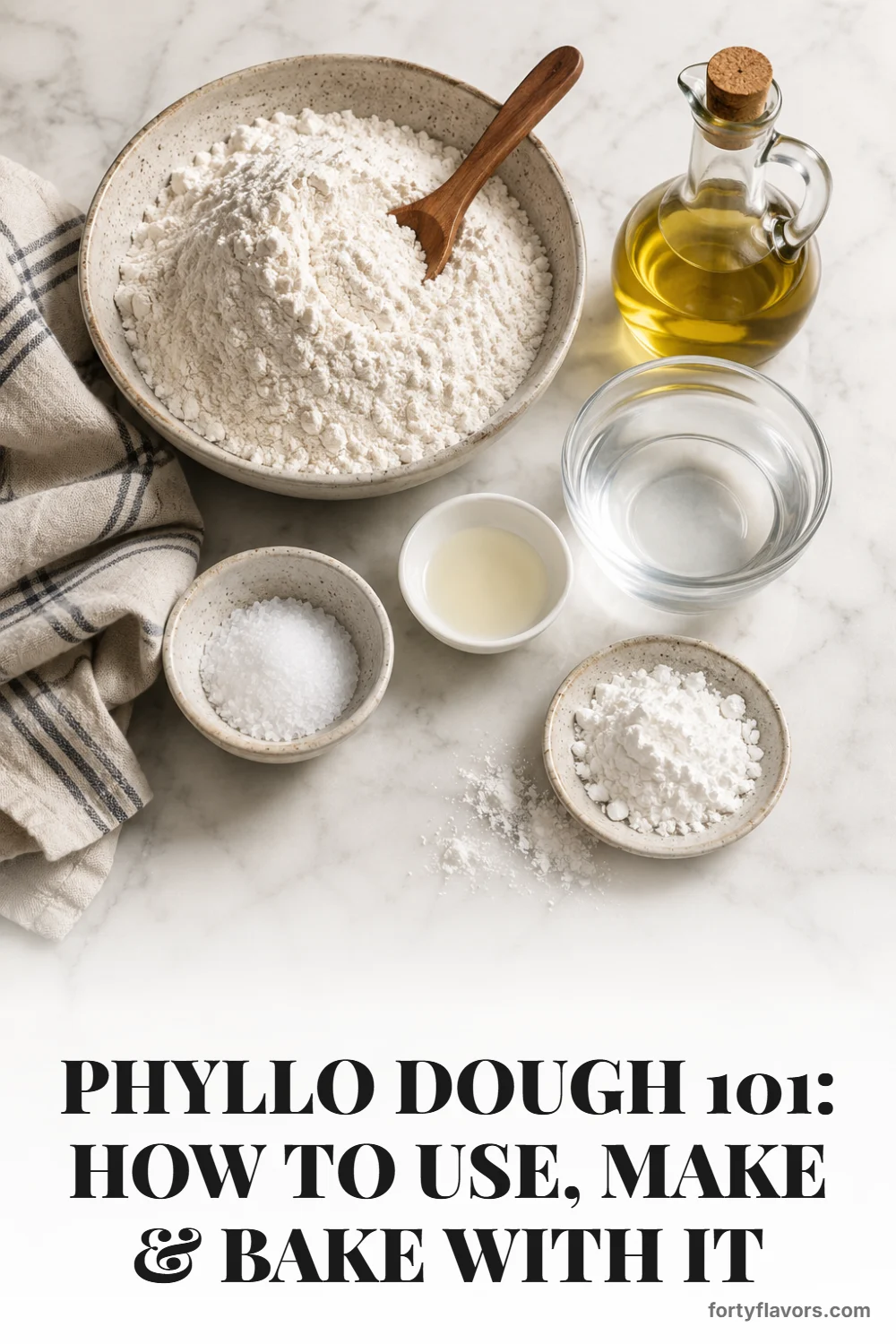
The ingredient list for homemade phyllo dough is wonderfully humble: all-purpose flour, warm water, white vinegar, olive oil, salt, and cornstarch for dusting. The vinegar helps relax the gluten and makes the dough easier to stretch, while olive oil adds flexibility without making the pastry heavy. Cornstarch is the quiet hero here; it keeps rolled sheets from sticking and helps you get to those paper-thin sheets without tearing. A long rest is just as important as the ingredients because it lets the dough soften into something supple and cooperative.
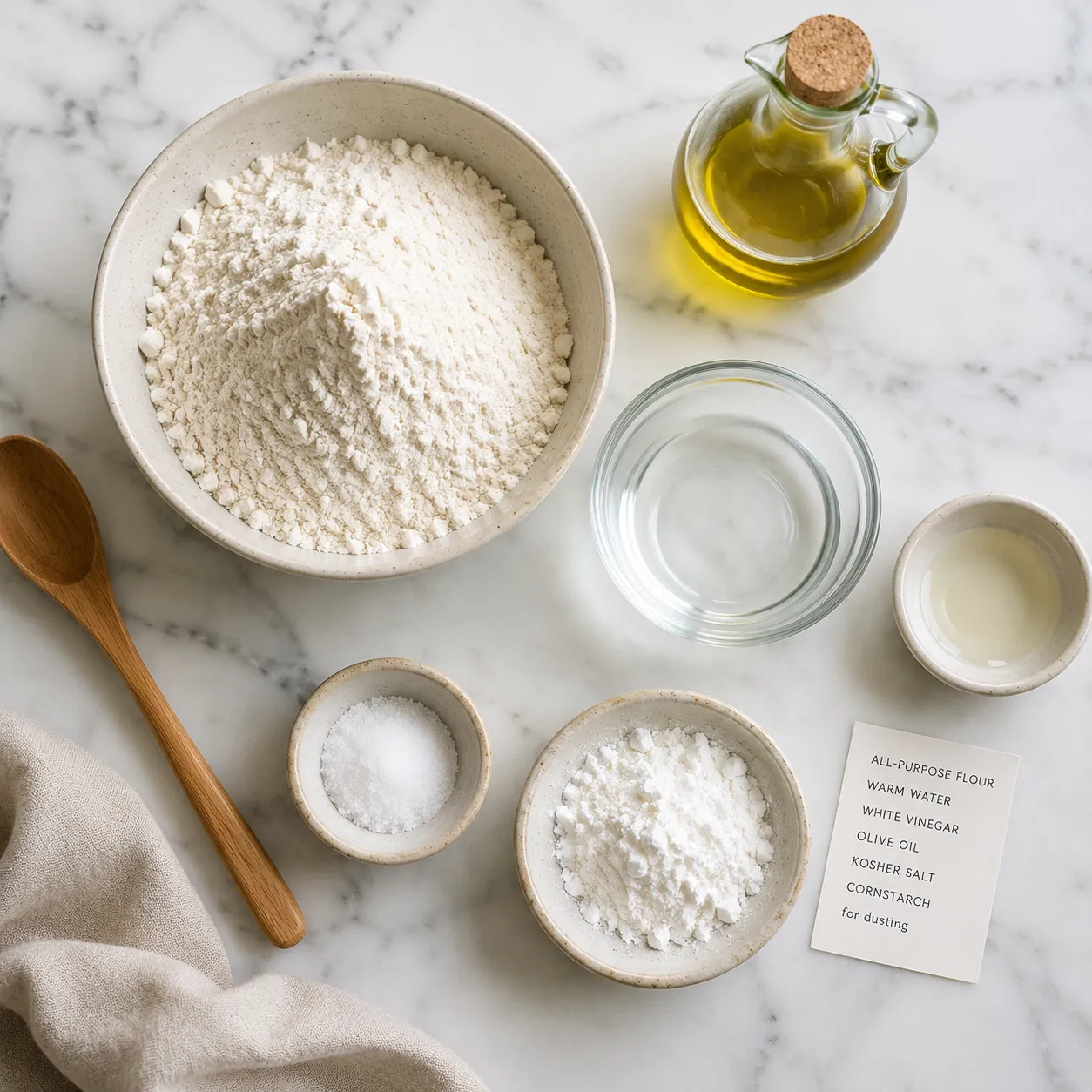
Use regular all-purpose flour rather than bread flour, which can make the dough too elastic and resistant. Warm water should feel pleasantly warm, not hot, so it hydrates the flour without cooking anything. A mild olive oil is ideal if you want a neutral pastry that works for both sweet and savory recipes. If you are making a dessert like baklava, do not worry: the dough itself will not taste strongly of oil once layered with butter, nuts, spices, and syrup.
For everyday cooking, store-bought frozen filo is a gift, and there is no shame in leaning on it. Look for boxes that feel flat and intact, without obvious thawed-and-refrozen warping or crushed corners. Athens and The Fillo Factory are common US brands, though availability varies by store and region. Most boxes contain sheets sized for a 9-by-13-inch pan, and if your recipe calls for smaller pieces, you can trim the stack with a sharp knife or kitchen shears.
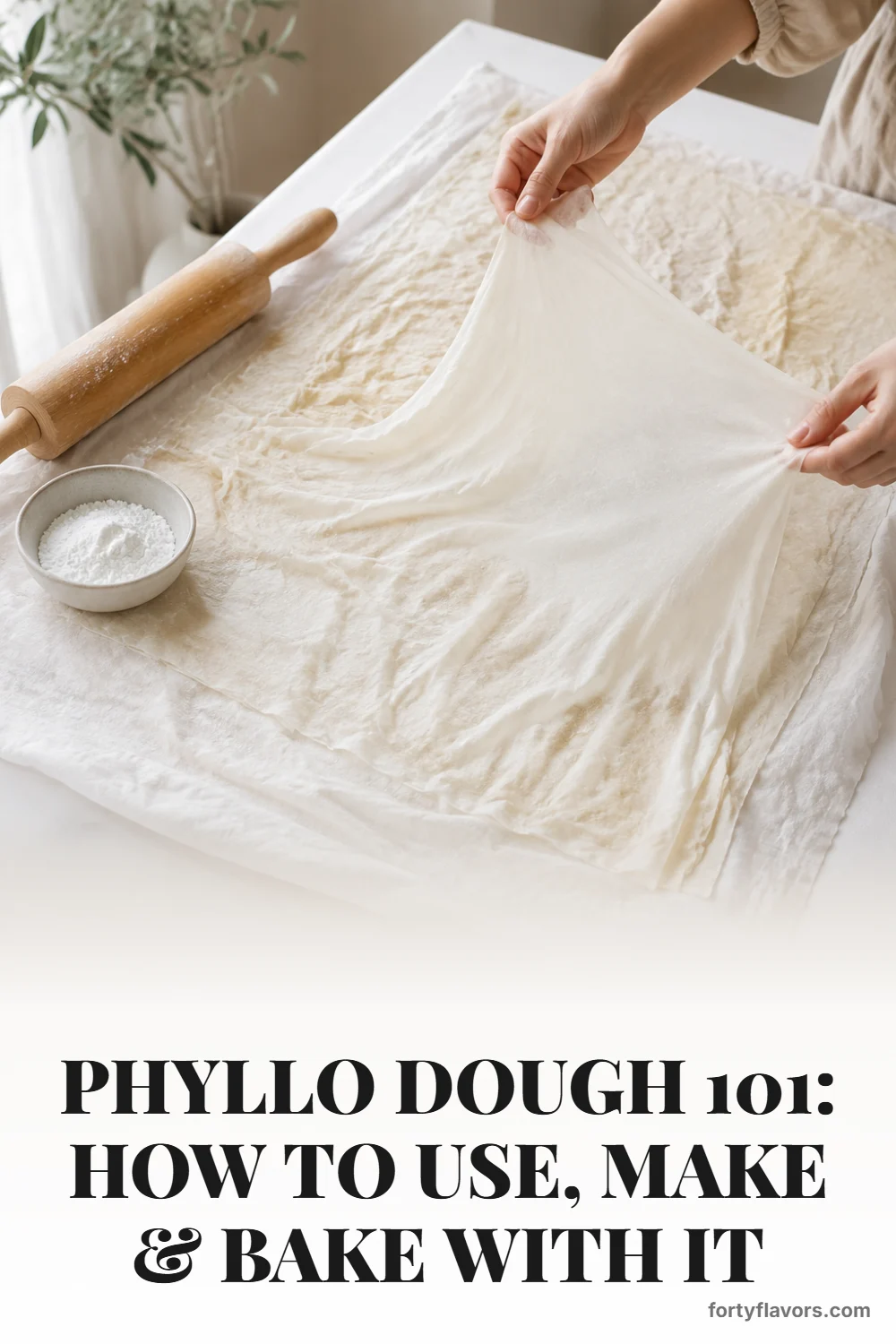
Making this pastry from scratch is less like making pie crust and more like coaxing a soft dough into a silky, stretchy sheet. You start by mixing and kneading until smooth, then resting the dough so the gluten relaxes. After that, small portions are rolled and stretched over a cotton cloth until you can almost see the pattern of the fabric underneath. It is a slow, satisfying project for a weekend afternoon, and the results have a tenderness that feels deeply homemade.
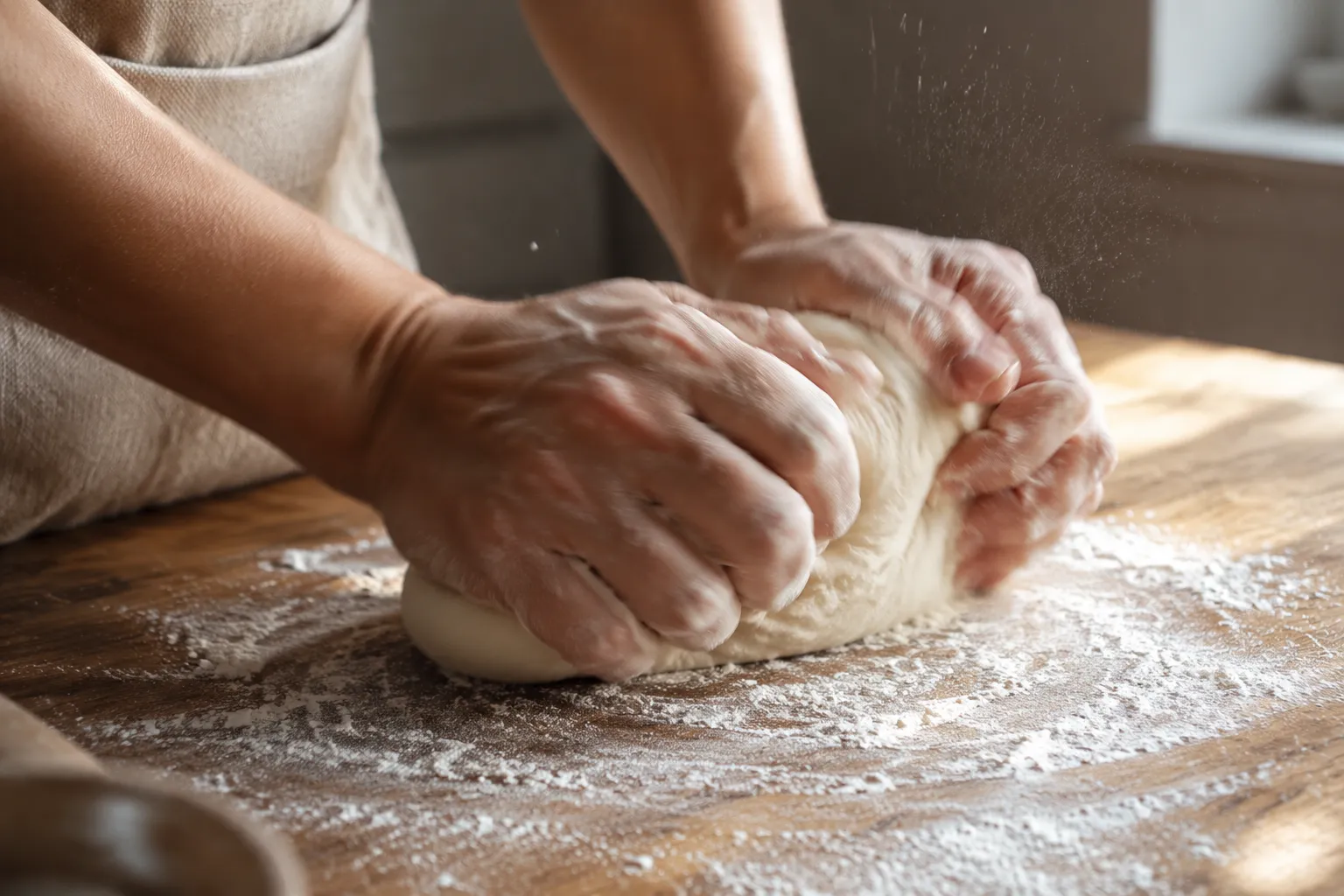
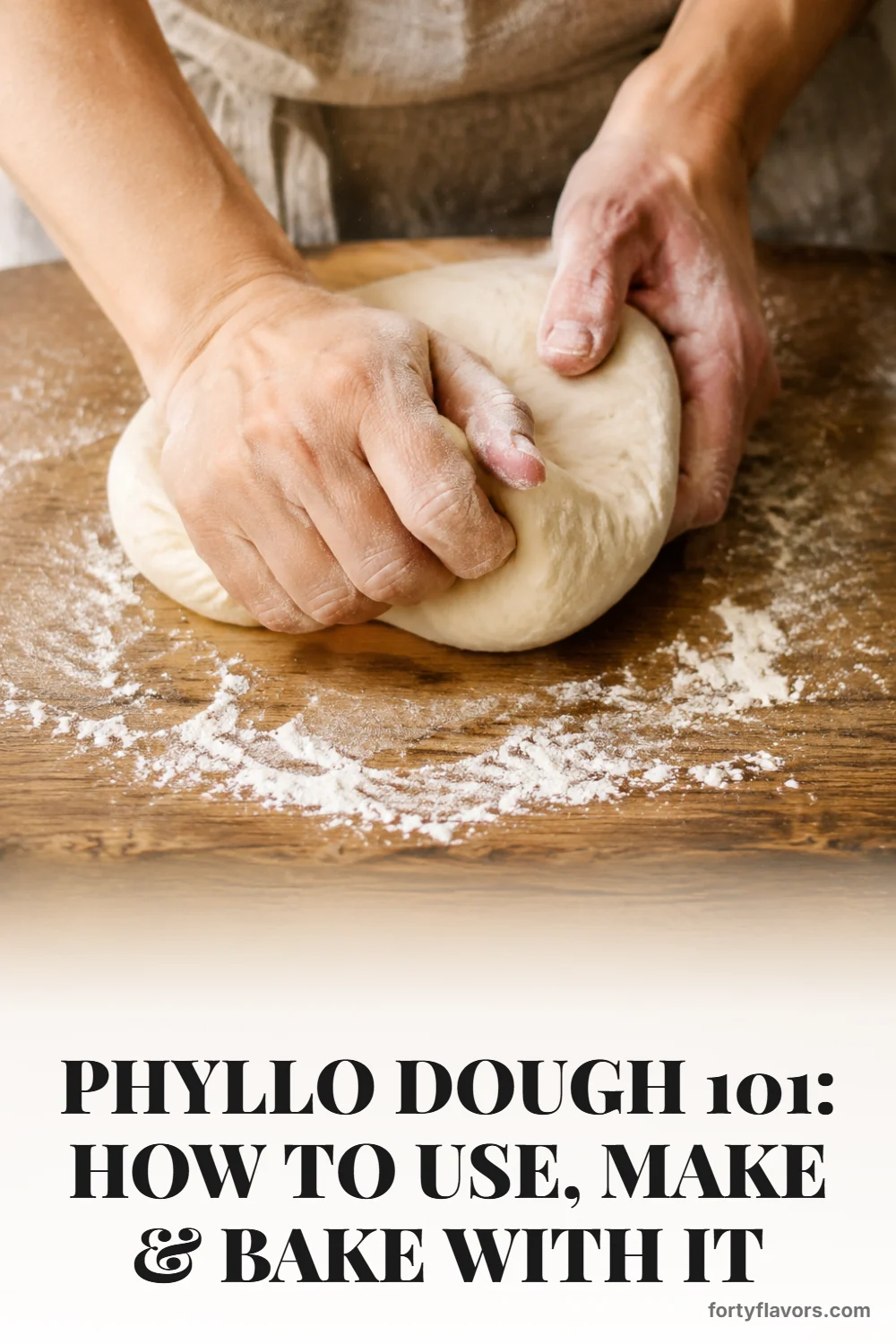
Combine the flour and salt first, then stir in the warm water, vinegar, and olive oil until a shaggy dough forms. Knead until it turns smooth and elastic, adding only enough extra flour to prevent sticking. The dough should feel soft and slightly tacky rather than dry or stiff. If it resists your hands, pause for five minutes and let the flour hydrate before continuing.
Resting is non-negotiable because it transforms a springy dough into one that rolls willingly. Divide the dough into small balls, cover them, and work with one piece at a time on a lightly dusted cotton sheet. Roll from the center outward, rotating often, then gently stretch the edges with the backs of your hands. You are aiming for thinness, not a perfect rectangle, so do not panic if the edges look rustic.
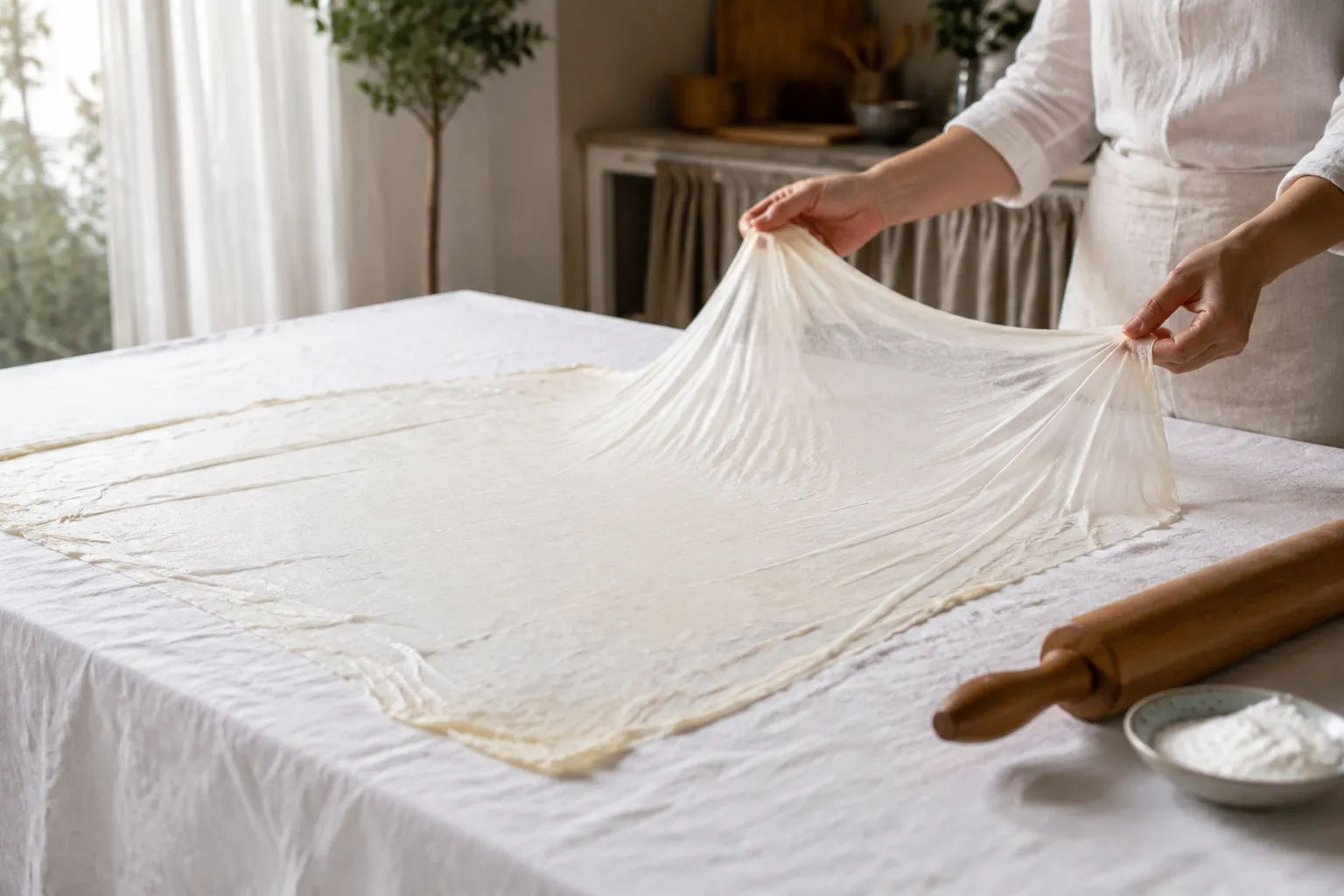
Once a sheet is thin enough, dust it lightly with cornstarch before stacking it with the others. This keeps the layers separate and makes them easier to lift when you are ready to assemble a recipe. If a small tear appears, simply patch it with another piece or place that sheet in the middle of a layered bake. The beauty of this pastry is that once it is stacked and baked, tiny imperfections disappear into the flakes.
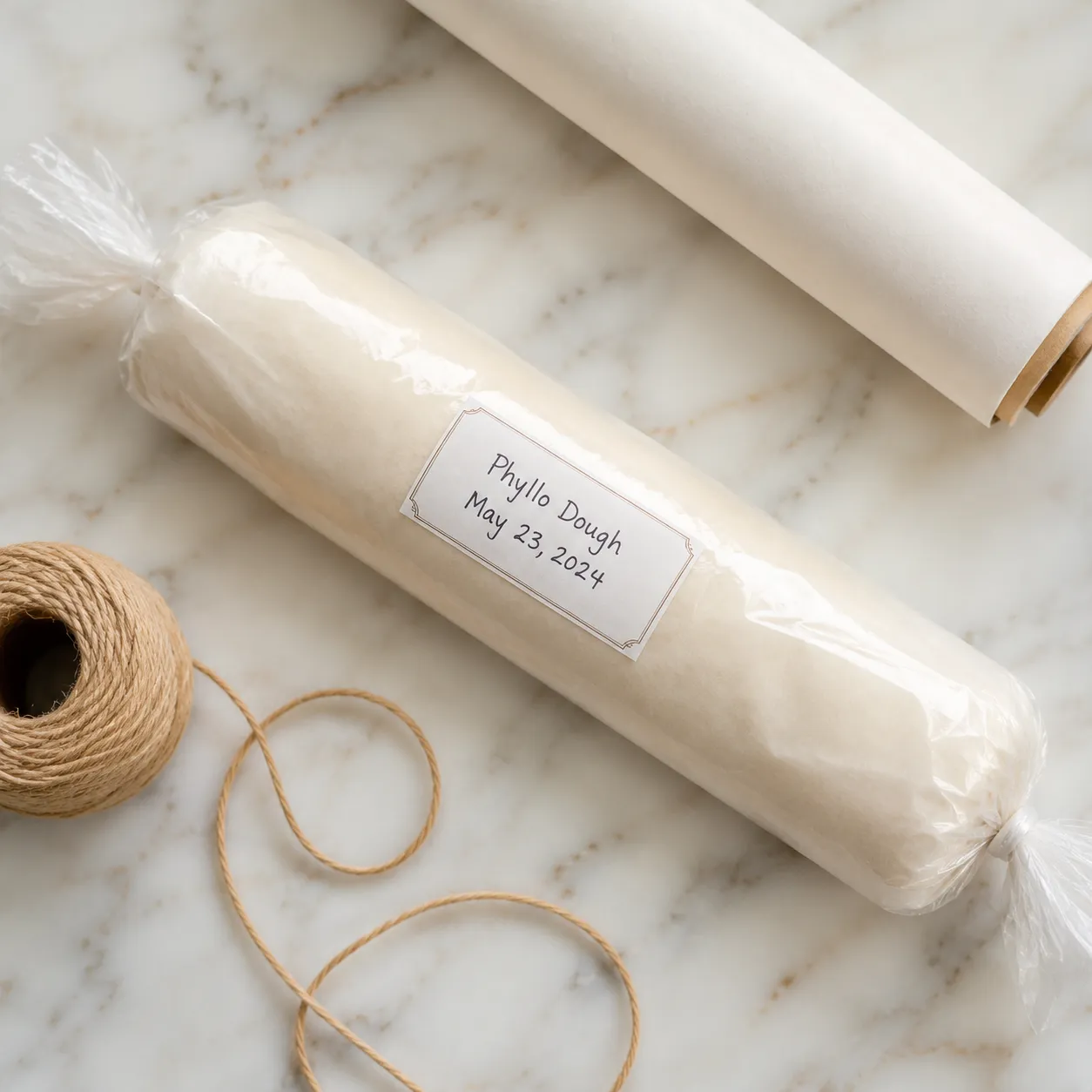
Learning how to thaw phyllo dough is the first big win for store-bought pastry. Move the box from freezer to refrigerator the night before you plan to bake, then let it sit at room temperature while still wrapped until the sheets are flexible but not warm. Sudden temperature changes can create condensation, which makes the sheets gummy and prone to tearing. If you thaw gently, unroll slowly, and cover what you are not using, the pastry becomes much easier to manage.
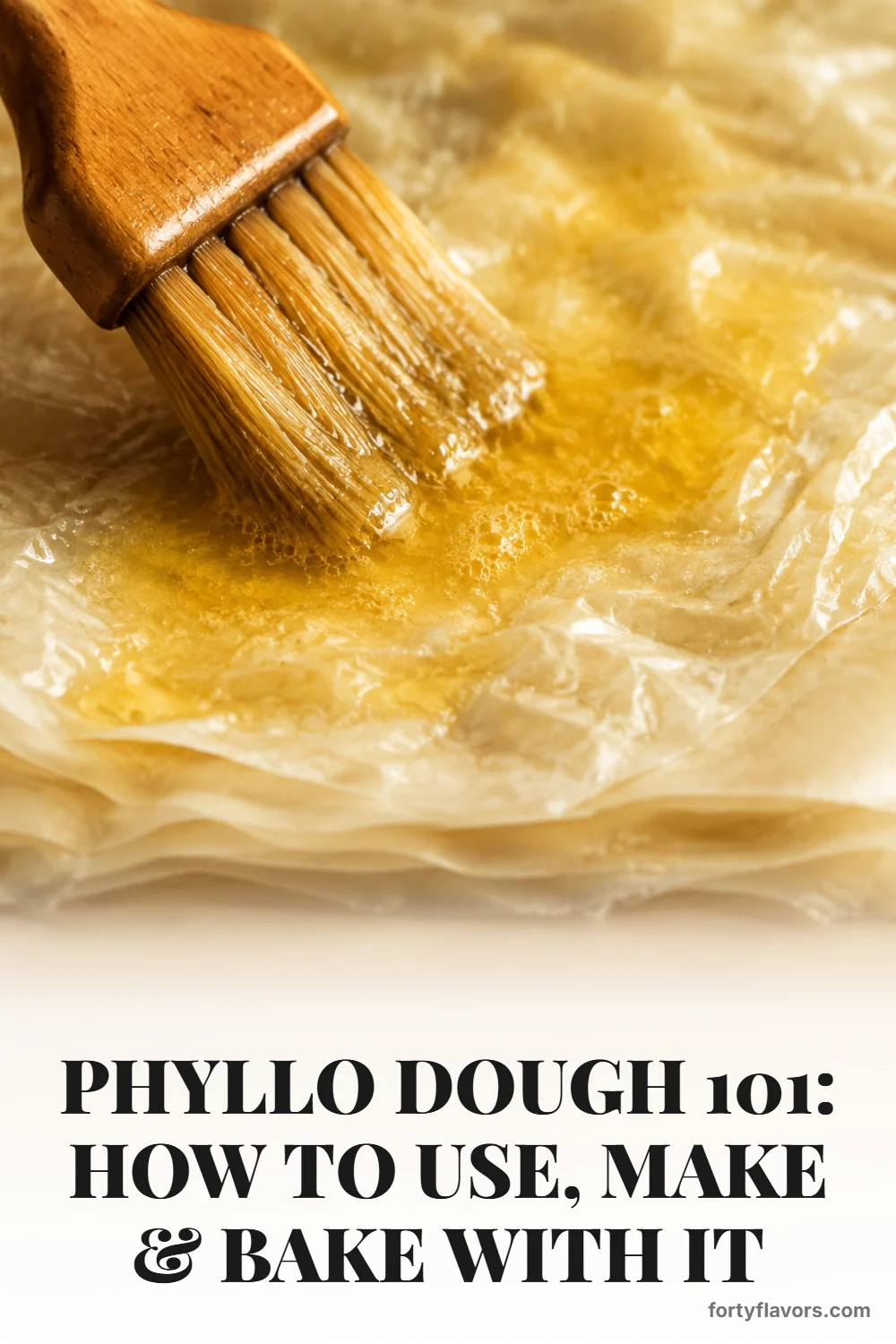
Each layer needs a whisper of fat to separate and crisp in the oven. Melted butter is classic for desserts and gives deep golden color, while olive oil is excellent for savory pies, especially spanakopita. Use a soft pastry brush and dab or sweep lightly rather than dragging hard across the sheet. You do not need to saturate every inch; a light, even gloss is enough.
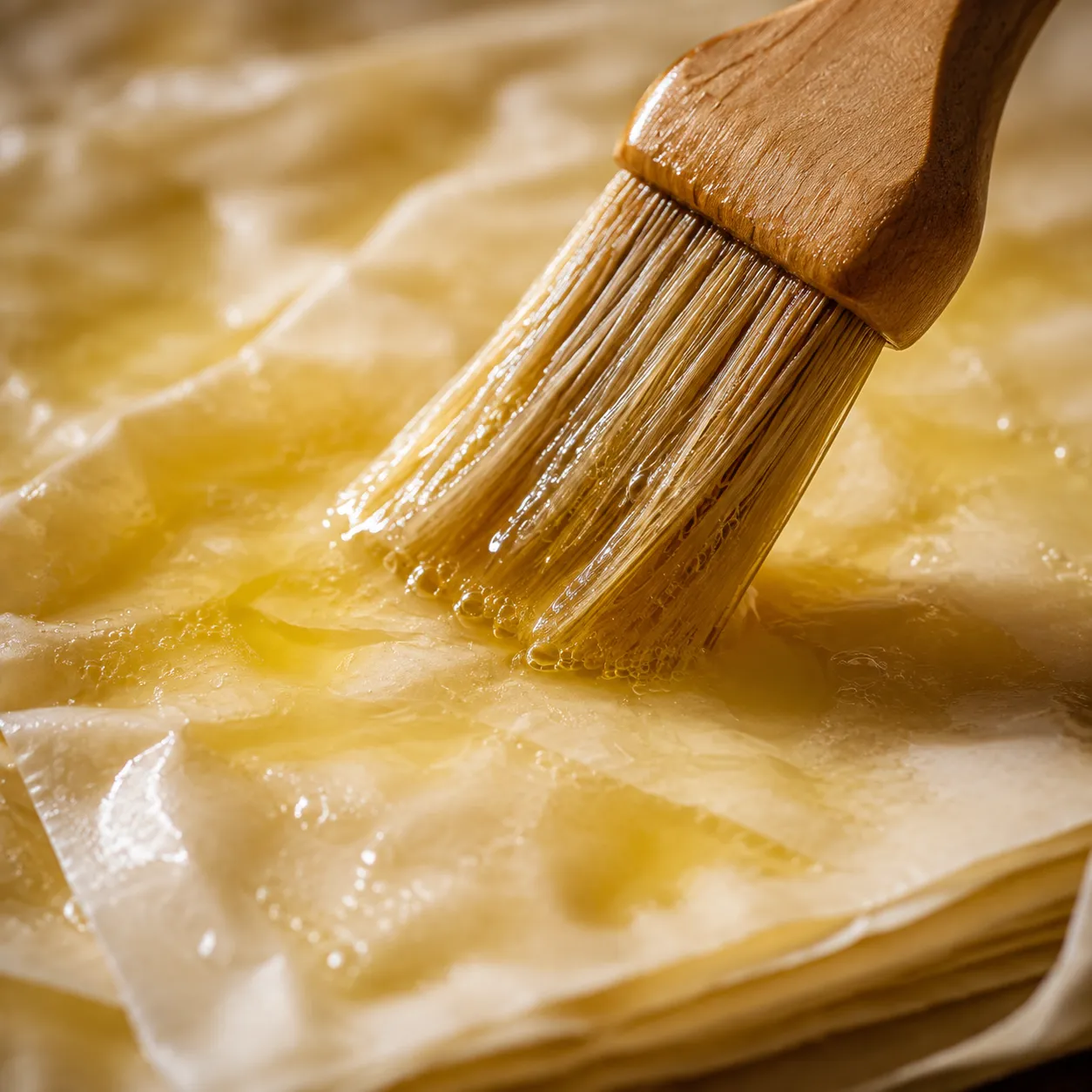
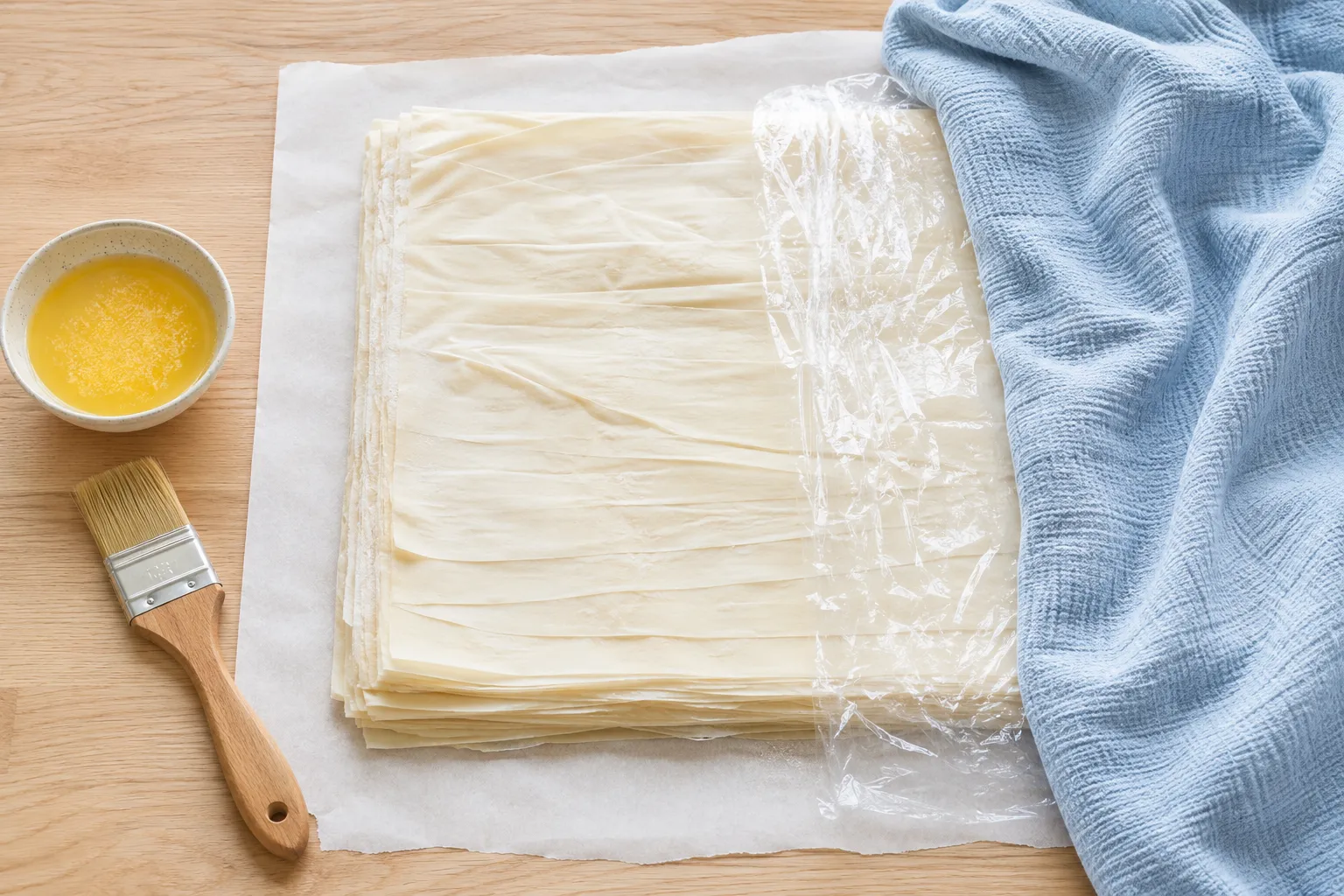
Filo dries out quickly because the sheets are so thin, so set up your station before you open the package. Have your filling ready, your pan greased, your butter or oil melted, and your towel nearby. Work with one sheet at a time and keep the remaining stack covered between layers. This little bit of preparation makes the whole process feel relaxed instead of rushed.
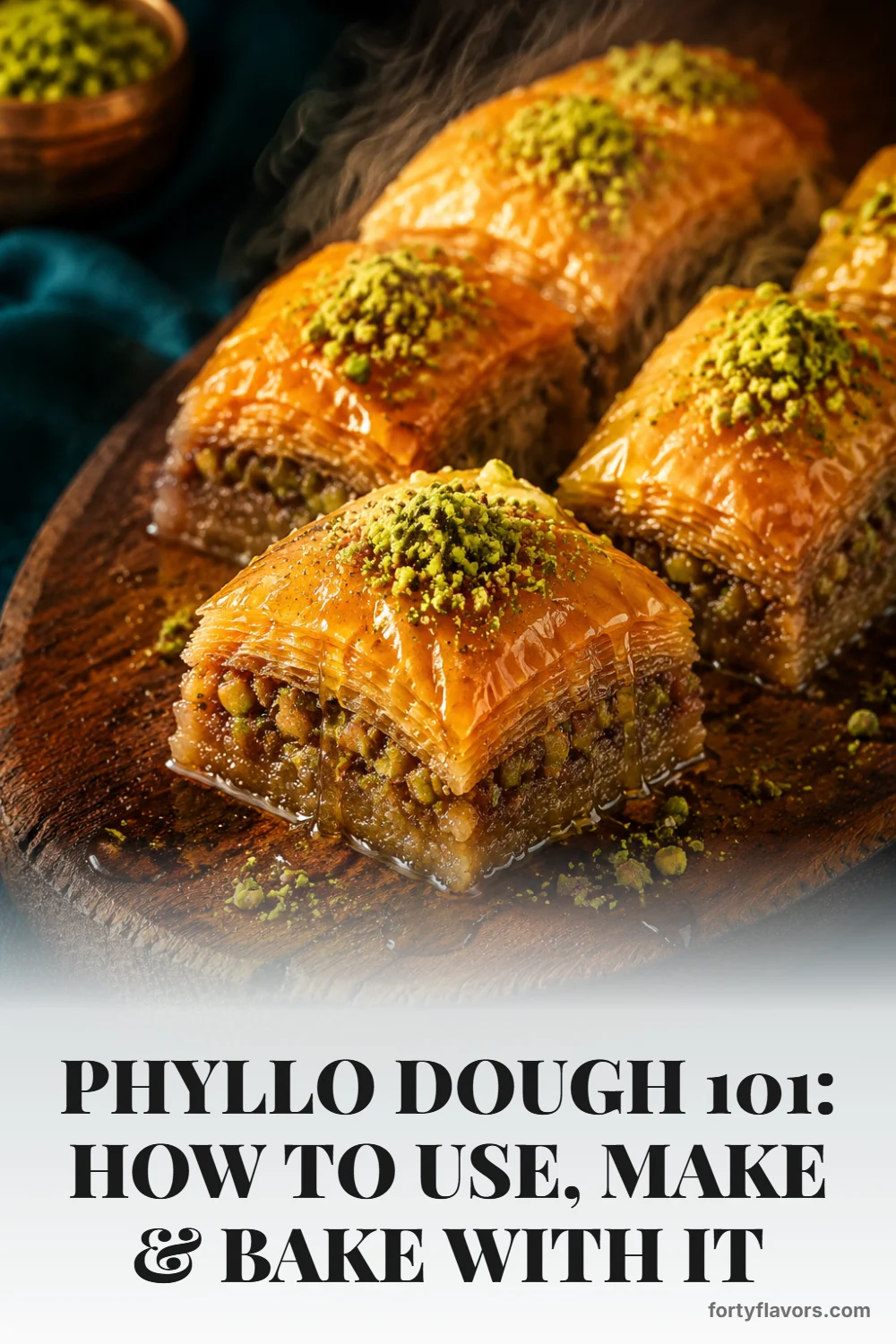
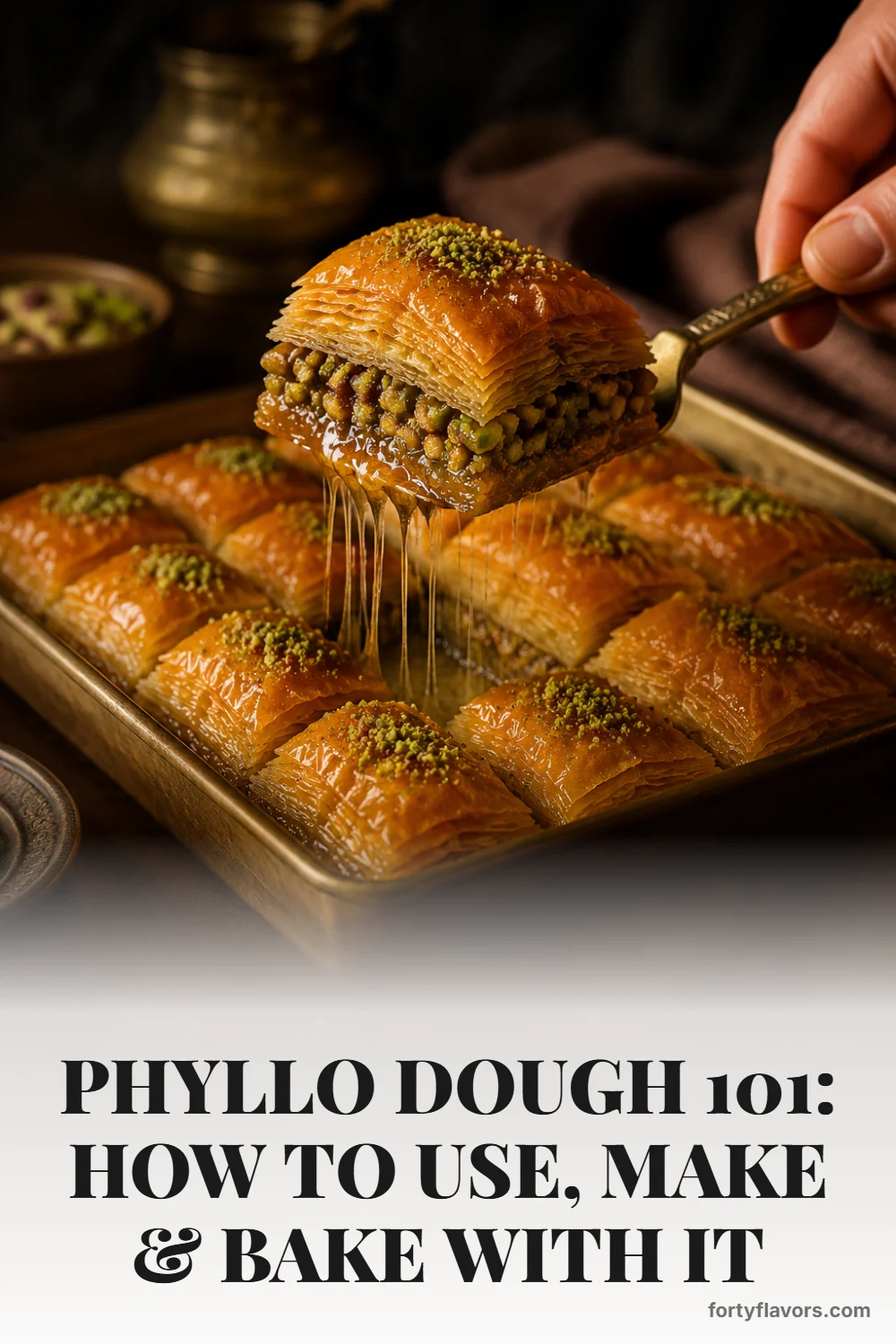
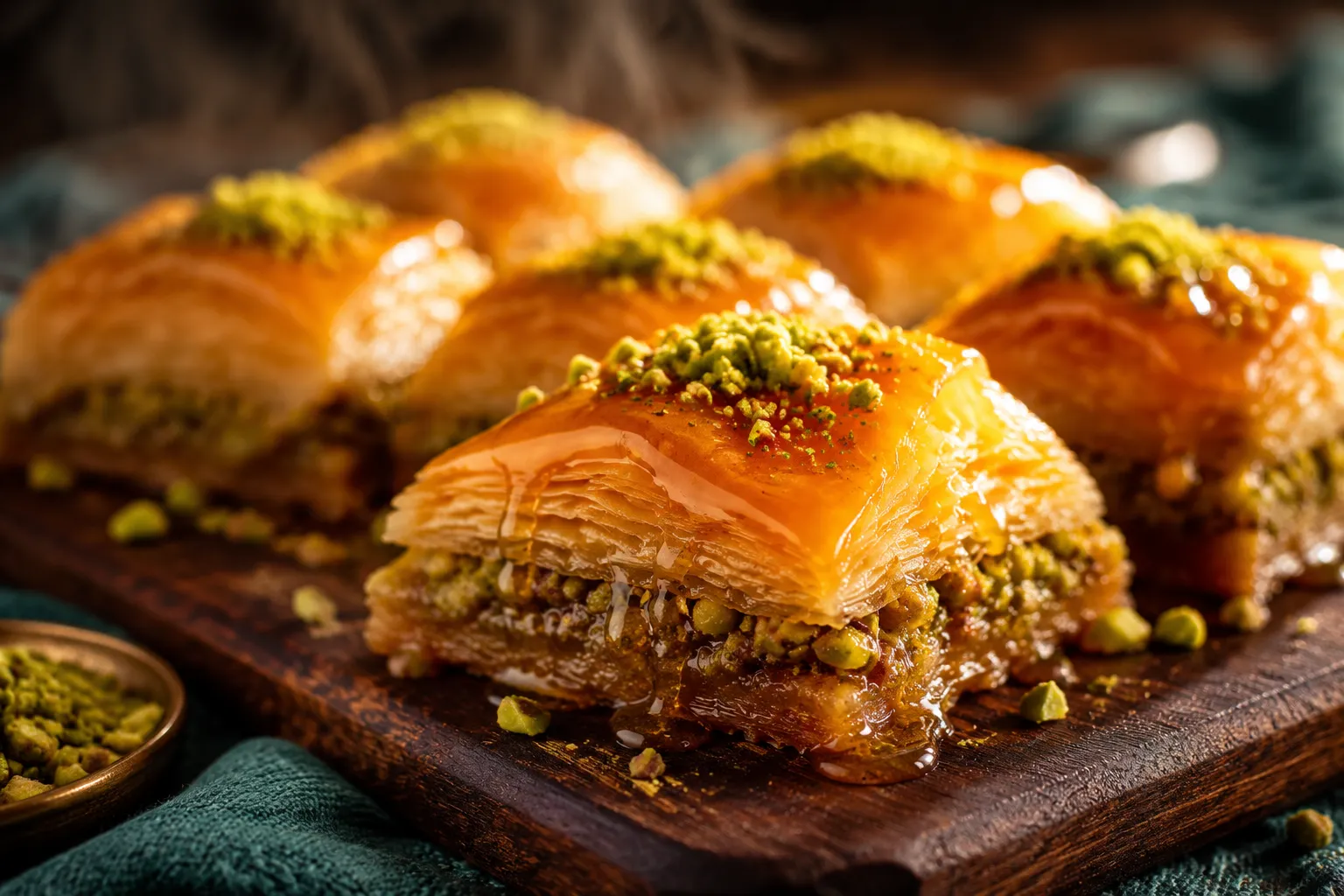
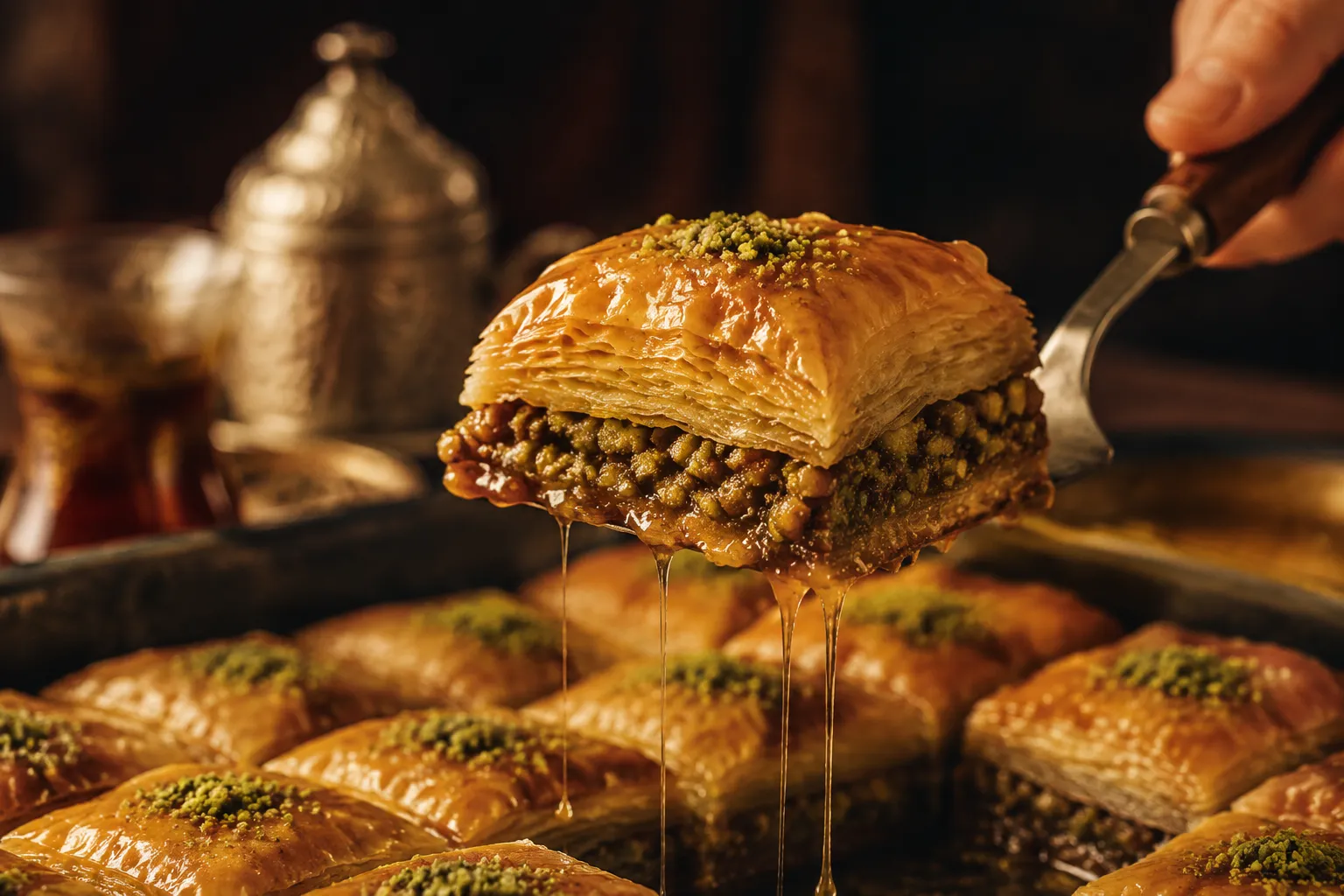
Once you have the technique down, the world of phyllo dough recipes opens up fast. For sweets, start with baklava: layers of crisp pastry, spiced nuts, and warm honey syrup that sinks into every golden edge. You can also make Greek-style honey custard pie, apple turnovers, or little bundles filled with chocolate and hazelnuts. The pastry is neutral enough to go cozy, elegant, rustic, or bakery-case fancy.
Baklava is the classic for a reason, balancing buttery layers with crunchy nuts and a citrusy syrup that makes the pastry glisten. The key is to cut the diamond or square shapes before baking, while the layers are still soft enough for a sharp knife to glide through. Honey custard pie takes the same crisp shell and fills it with a creamy semolina or milk custard. Both desserts taste even better after resting, which makes them excellent choices for holidays and make-ahead gatherings.
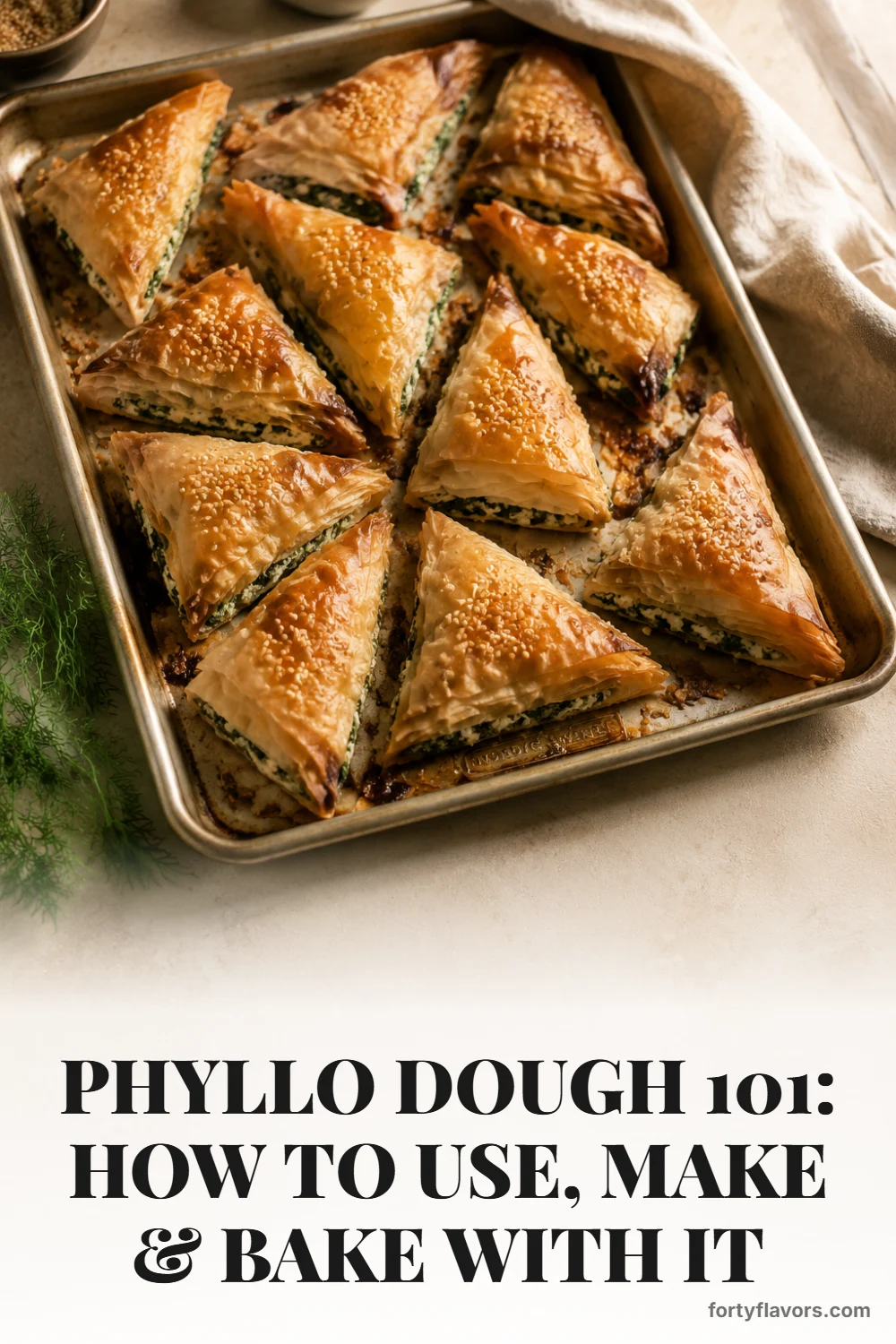
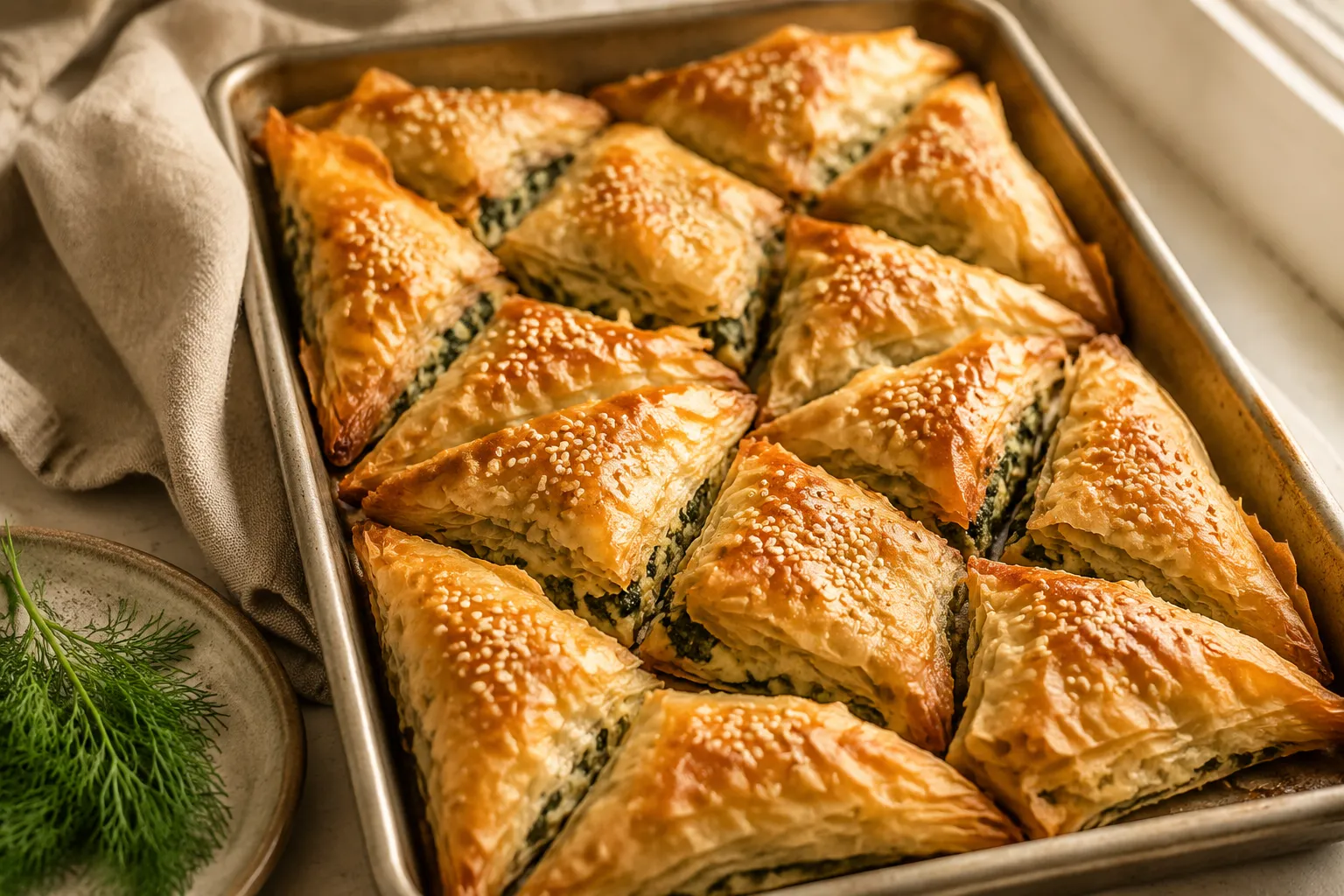
Spanakopita is the savory icon: spinach, herbs, feta, and flaky pastry baked into a slab pie or folded into triangles. The filling should be flavorful but not watery, so squeeze cooked greens well and let hot mixtures cool before layering. Cheese triangles use the same folding method with feta, ricotta, or a blend of salty cheeses and herbs. They are wonderful as appetizers, lunch with a salad, or part of a mezze-style dinner.
For an easy party shortcut, cut layered sheets into squares and press them into a mini muffin tin. Bake until crisp, then fill with whipped feta, mushrooms, caramelized onions, lemony crab salad, or sweetened mascarpone and berries. You can also buy pre-baked filo cups, but making your own lets you control the size and flavor. Keep fillings moist but not soupy so the cups stay crisp as long as possible.
The easiest way to enjoy this pastry is to split the project into stages. Make fillings a day ahead, mix syrup ahead for desserts, or prepare your dough balls in the morning and roll later in the day. If you are using frozen sheets, plan your thawing time so you are not tempted to microwave the box, which can create brittle edges and sticky centers. A calm timeline is the difference between a relaxing bake and a pastry emergency.
For party cooking, many assembled dishes can wait in the refrigerator for a short time before baking, especially savory pies and triangles. Cover them well so the top layers do not dry out, then bake straight from chilled, adding a few extra minutes if needed. Syrup-soaked desserts often hold beautifully at room temperature once baked, because the syrup helps preserve texture and flavor. Just avoid trapping warm pastry under a tight lid, which can soften those crisp layers you worked so hard to build.
If sheets tear, crack, or cling together, the cause is usually temperature or moisture. Pastry that is too cold can snap; pastry with condensation can stick and shred. Let the wrapped roll warm gently, then unroll it slowly on a dry surface. A few torn sheets are completely normal, even for experienced bakers, so use them in the middle layers and save the prettiest sheets for the top.
Tearing often happens when the dough is dry, under-rested, or handled with too much pressure. With homemade sheets, give the dough more resting time and use cornstarch generously but lightly. With store-bought sheets, keep the stack covered and lift from the corners with both hands. If one area is fragile, brush around it and patch with a small scrap, just like you would mend a quilt.
Soggy layers usually come from wet fillings, too much butter, or covering the bake while it is still steaming. Drain greens thoroughly, cool cooked fillings, and bake until deeply golden rather than pale blonde. Tough layers can happen when sheets are compressed, overbrushed, or baked at too low a temperature. Aim for a hot enough oven to crisp the pastry quickly, and let finished bakes rest on a rack so steam can escape.
Serve savory filo pies with lemony salads, cucumber-yogurt sauce, roasted vegetables, or a bright tomato and herb plate. A pan of spinach-feta triangles feels effortless next to olives, hummus, marinated chickpeas, and warm soup. For dessert, pair nut-filled pastries with strong coffee, black tea, or a scoop of vanilla ice cream if you are leaning cozy. However you bake it, the magic is the contrast: crisp pastry, tender filling, and just enough richness to make every bite feel special.
Hover any image and hit “Pin it” to save it to your Pinterest boards.