How Many Grams in a Cup? Complete Conversion Chart
Ingredients
Scale
Wondering how many grams are in a cup? The answer depends on what you're measuring. Here's the exact conversion chart every home baker needs.
If you've ever stood in your kitchen mid-recipe wondering how many grams in a cup of flour, sugar, or butter, you are absolutely not alone. American recipes love their cups, but the moment you crack open a European cookbook, follow a sourdough formula online, or try to scale a recipe up for a crowd, grams take over. The honest answer is that one cup doesn't equal one fixed number of grams. It depends entirely on what's in the cup.
This guide is the cheat sheet I wish I'd had during my first year of serious baking. We'll walk through the exact gram weights for every common pantry staple, give you a printable chart you can tape inside your cabinet, and explain why a $15 kitchen scale will quietly upgrade every cake, cookie, and loaf you make. Bookmark this one. You'll use it constantly.
And if you've ever wondered why your cookies turn out flat one week and cakey the next using the same recipe, the answer is almost always inconsistent measuring. Grams fix that overnight.
For pure water, one US cup weighs exactly 240 grams. That's the cleanest number you'll find, and it's the foundation every other conversion bends around. But the second you swap water for flour, sugar, or oats, the weight shifts dramatically because each ingredient has a different density. A cup of marshmallows and a cup of honey occupy the same space but live on completely different ends of the scale.
This is why pro bakers and serious cookbook authors quietly stopped trusting volume measurements years ago. A loosely scooped cup of all-purpose flour might weigh 110 grams. A packed, shaken, scooped-from-the-bag cup can hit 160 grams. That 50-gram swing is the difference between tender and tough.
Density is the whole story. Heavy, fine ingredients like granulated sugar pack tightly and weigh more per cup. Light, airy ingredients like cocoa powder or shredded coconut weigh much less. Liquids fall somewhere in between based on their fat and sugar content. Honey clocks in around 340 grams per cup, while a cup of milk lands closer to 245 grams.
The takeaway: there is no universal cup-to-gram number, only ingredient-specific ones. That's exactly why a reliable baking measurement chart belongs in every kitchen.
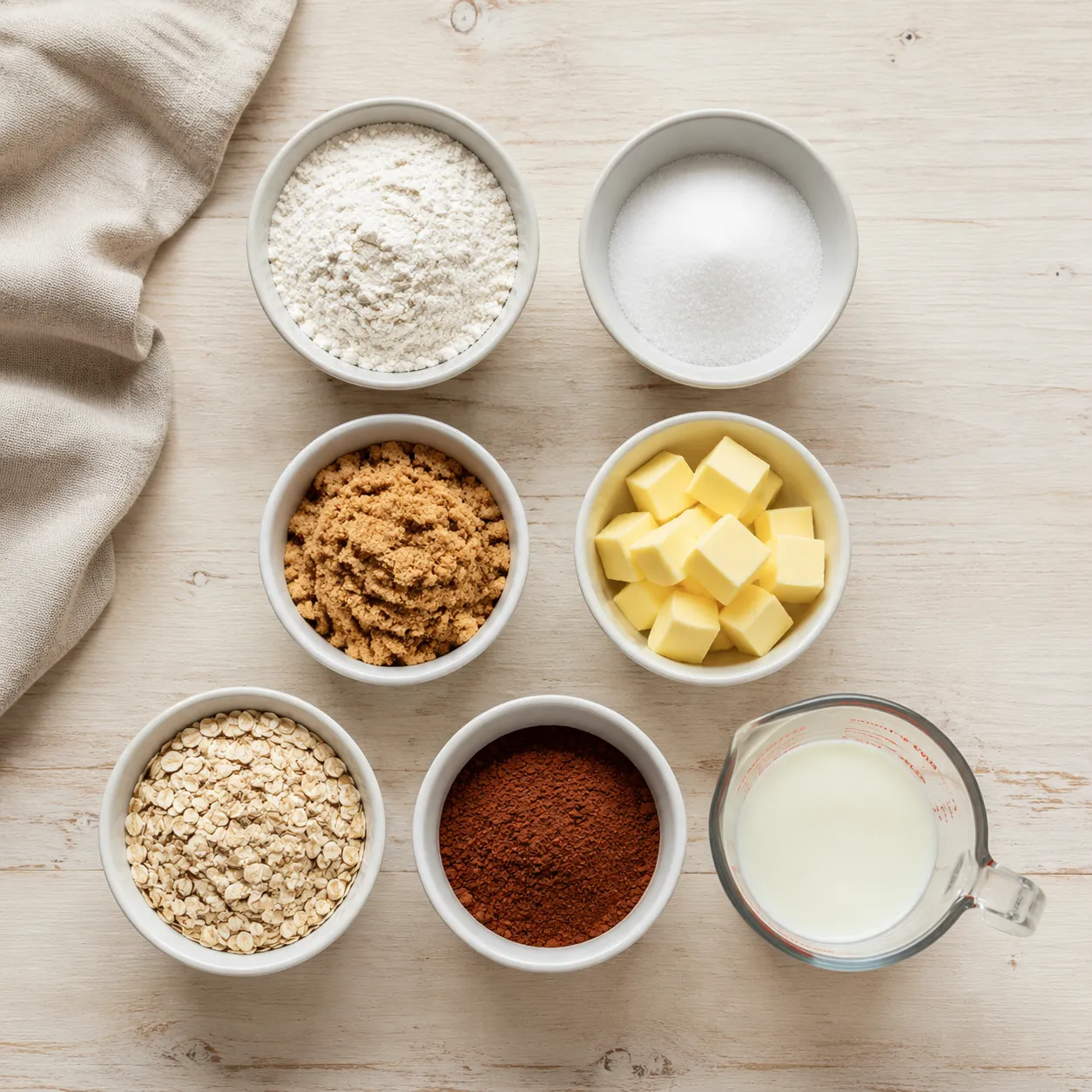
Here's the master reference. These are the standard weights used by professional test kitchens and most major US cookbooks. Print this section, stick it on the fridge, and stop second-guessing yourself.
Numbers in a list are useful, but knowing the why behind each one makes the chart stick. Here's a closer look at the ingredients you'll measure most often, plus the small details that trip people up.
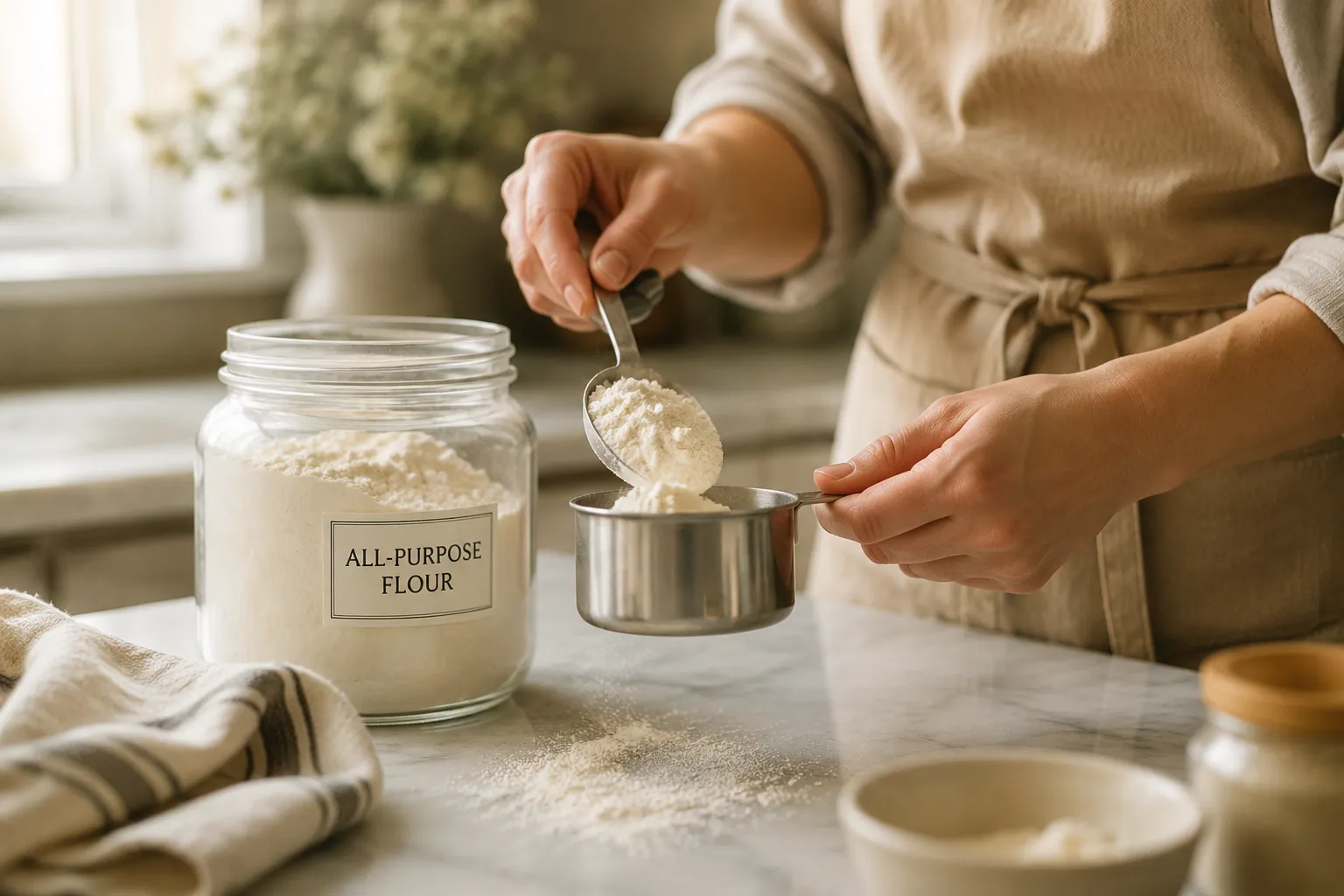
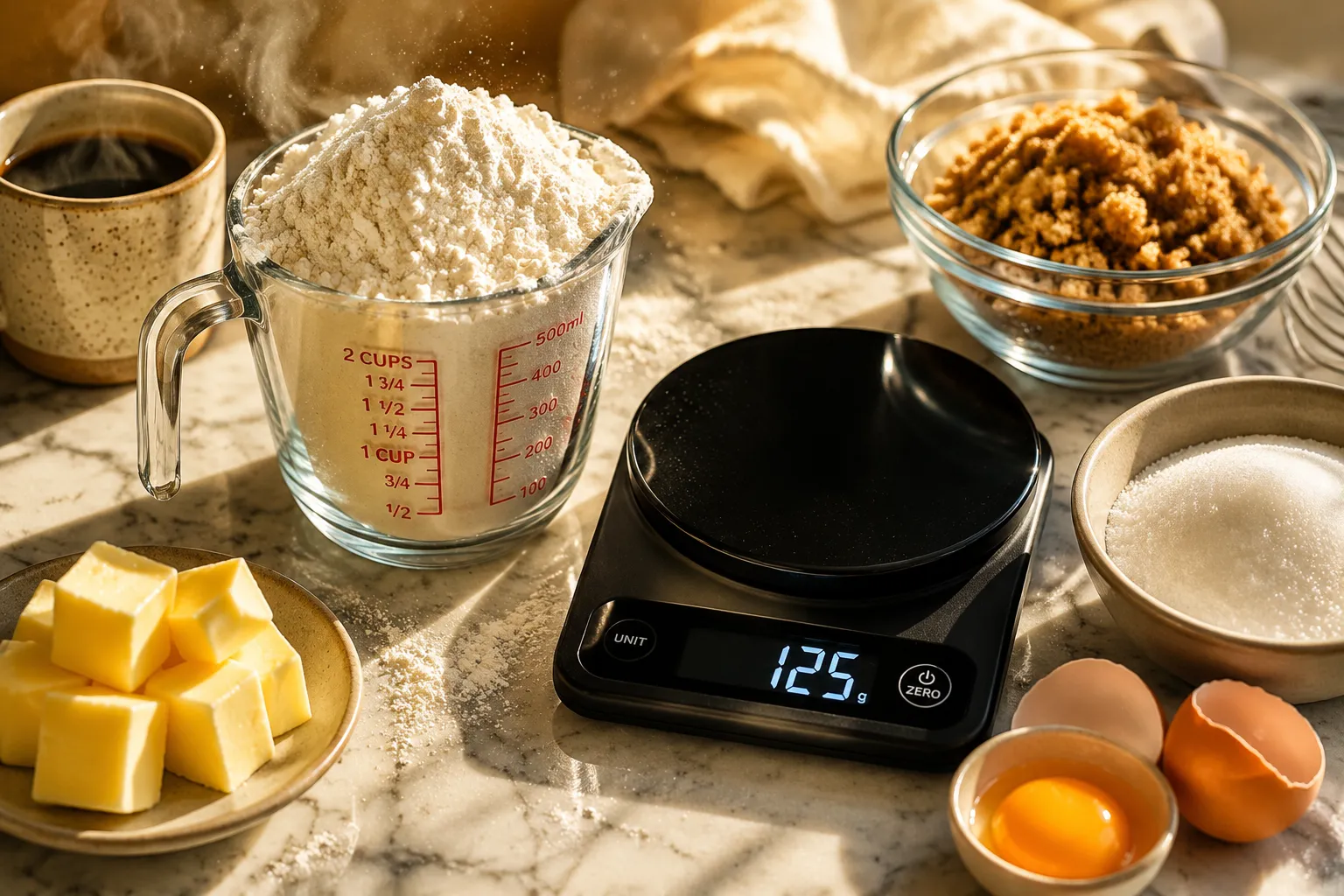
For all-purpose flour, the gold standard is 125 grams per cup, measured by spooning the flour into the cup and leveling the top with a straight edge. Bread flour weighs slightly more at 130 grams because it's milled from harder wheat with more protein. Cake flour, which is finer and starchier, comes in lighter at 115 grams. When you see a recipe spec'd in flour to grams, the recipe developer is telling you exactly how much they used, no scooping interpretation required.
Granulated sugar is dense and consistent at 200 grams per cup, no matter how you scoop. Brown sugar is the wild card because it's almost always measured packed. One firmly packed cup is 220 grams, while loose brown sugar can be as low as 145 grams. Powdered sugar varies depending on whether it's sifted or unsifted, but 120 grams per sifted cup is the standard. When converting sugar to grams, always note whether the recipe says "packed" or just "cup."
One cup of butter equals two standard US sticks, or 227 grams. This is one of the easiest butter conversion numbers to memorize because it's printed right on the wrapper. Oils are a bit lighter than water because fat is less dense — vegetable oil sits around 218 grams per cup, and olive oil is similar at 216 grams.
These are the ingredients where home cooks get burned the most. Cocoa powder is incredibly light and airy at just 85 grams per cup, so a heavy-handed scoop can double the chocolate hit and turn brownies bitter. Rolled oats land at 90 grams, while chopped nuts vary from 110 to 130 grams depending on size. For granola, energy bars, and cookies, weighing these ingredients keeps texture exactly where you want it.
Baking is chemistry. The ratio of flour to fat to liquid to leavener determines whether your cake rises, your cookies spread, or your bread develops a proper crumb. A digital kitchen scale gives you the exact same gram weight every single time, which means your favorite recipe will taste identical on the tenth bake as it did on the first. Volume measuring simply can't promise that.
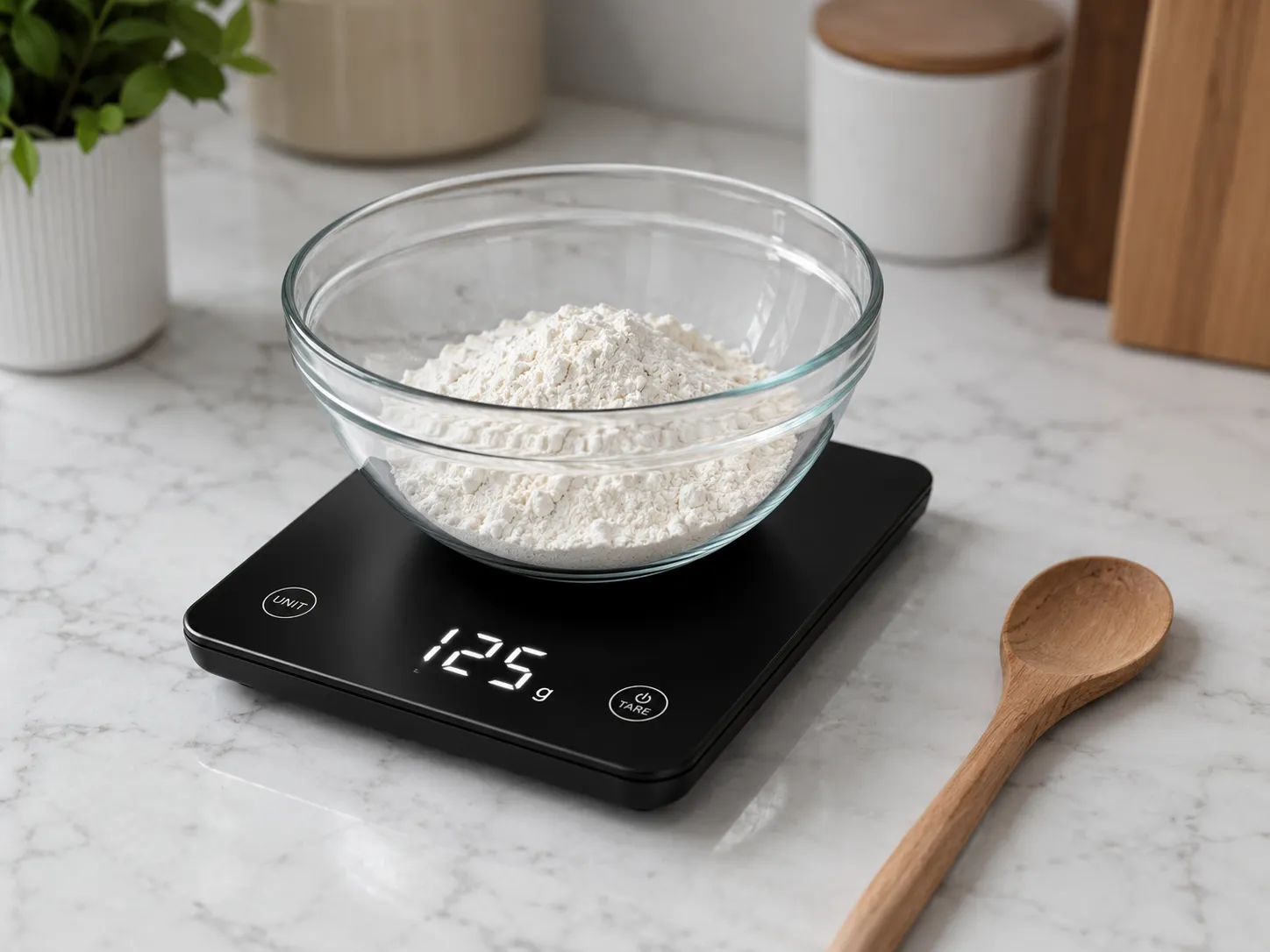
The other underrated win: a scale dramatically reduces dishes. Place your mixing bowl on the scale, hit tare to zero out the weight, and add ingredients one at a time, taring between each. No nesting cups, no sticky measuring spoons, no scraping peanut butter out of a one-cup measure. Once you've baked this way for a week, going back to cup to gram conversions with measuring cups feels almost archaic.
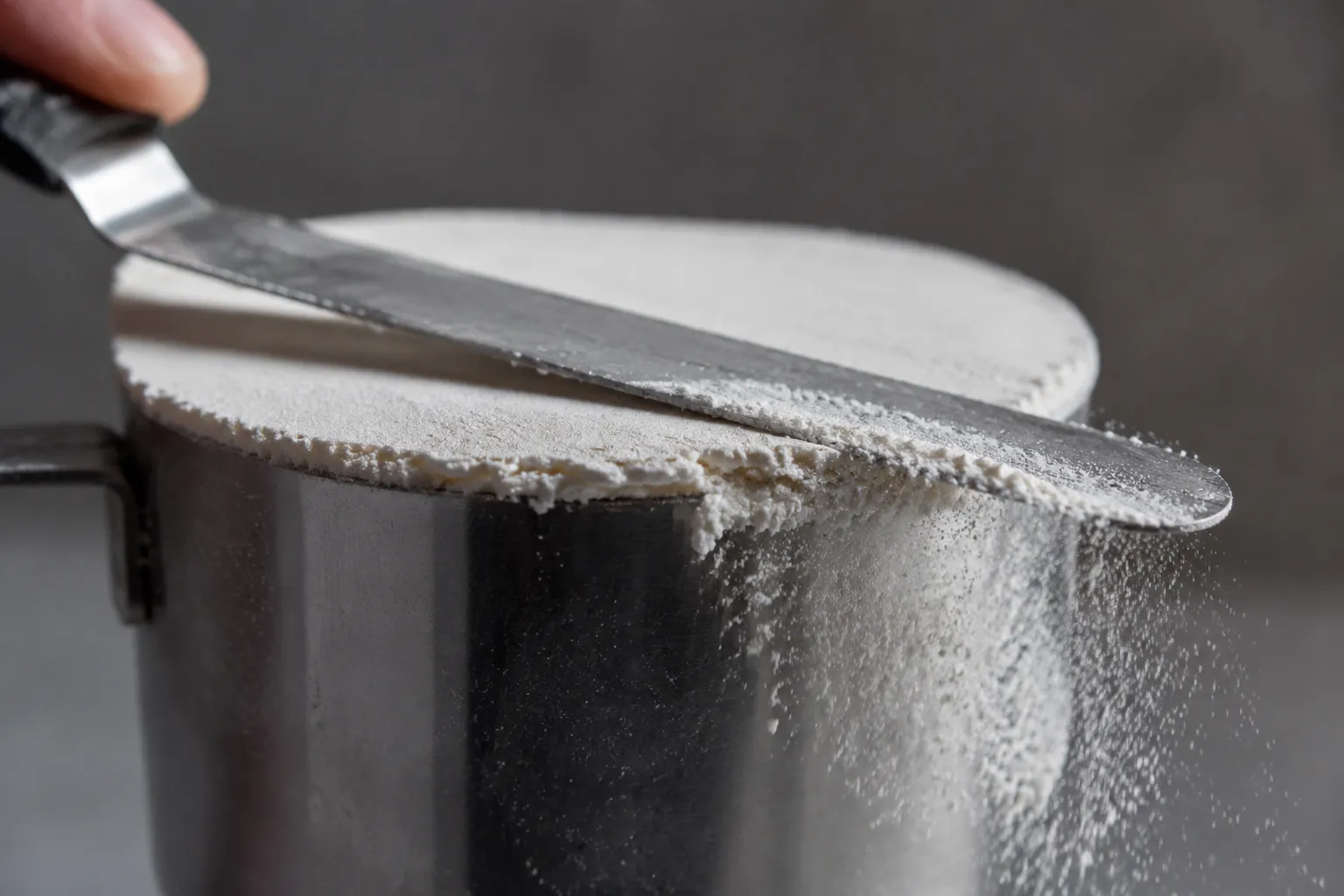
If you don't own a scale yet, you can still get reasonably close to the standard 1 cup in grams values by using the spoon-and-level technique. Fluff the flour in its container with a fork or whisk to break up any settling. Spoon the flour gently into your dry measuring cup until it overflows slightly. Then sweep the back of a butter knife across the rim to level it off. Never scoop directly from the bag.
The single biggest measuring error in American kitchens is dipping the cup straight into the flour bag. That motion compresses the flour and can pack 30 to 40 percent more weight into the cup than the recipe intended. The result is dry, dense, crumbly baked goods, even when you've followed every other instruction perfectly. Spoon-and-level is the rescue, but a scale is the cure.
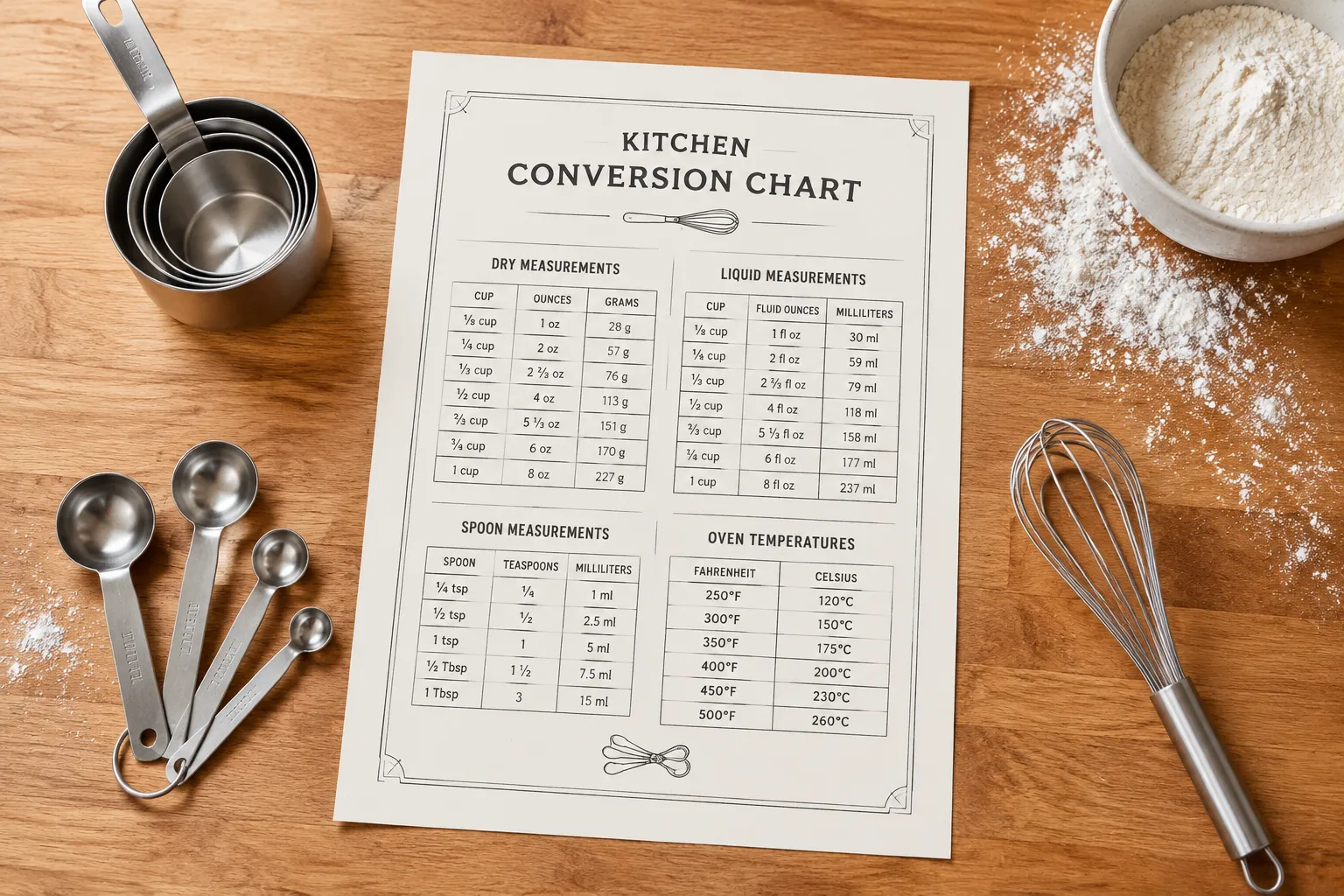
One US cup is 240 milliliters. A metric cup, used in Australia, New Zealand, and parts of Europe, is 250 milliliters. That 10-milliliter gap sounds tiny, but across a multi-cup recipe it can throw hydration off by enough to notice. Always check which standard your recipe uses, especially with international baking blogs.
This one trips up almost everyone. Fluid ounces measure volume, weight ounces measure mass, and they are not interchangeable. Eight fluid ounces of water happens to weigh roughly eight ounces, which is where the confusion started. But eight fluid ounces of flour weighs about 4.4 ounces. When a recipe says "8 oz flour," assume weight unless it specifically says fluid. Knowing how many grams in a cup is the cleanest workaround because grams are unambiguous.
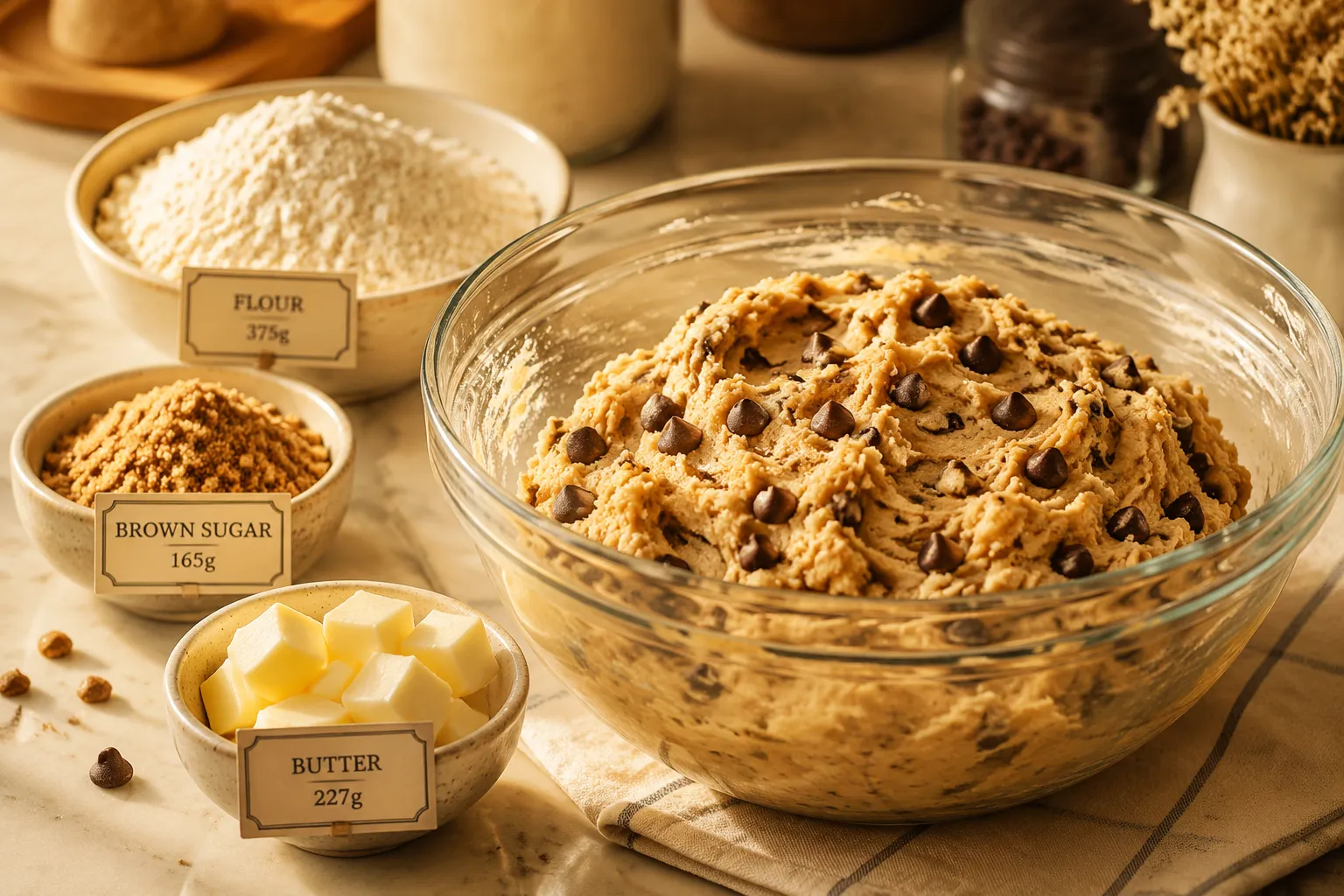
Save this page on your phone, print it for the pantry, or tape it inside a kitchen cabinet. The more you use these cup to gram conversions, the more the numbers stick. Within a few weeks, you'll know that flour is 125, sugar is 200, and butter is 227 without even checking.
If you're following a serious recipe — laminated dough, macarons, sourdough, layer cakes — always reach for the scale. Volume measuring is fine for soups, stews, and a quick batch of pancakes, but precision baking rewards precision tools. The next time someone asks how many grams in a cup of their favorite ingredient, you'll have the answer ready, and your baking will quietly get better for it.
While the values above are the US standard, you may run into recipes that use slightly different reference weights. Most variations are small enough to ignore, but a few are worth knowing about.
The best place for a conversion chart is wherever you'll actually see it mid-recipe. Print a copy and tape it inside a cabinet door, slip a laminated version into your recipe binder, or save a screenshot to your phone's home screen. Bakers who cook often find that within a month of regular use, they've memorized the half-dozen numbers they reach for most.
If you're sharing recipes with friends or family overseas, send them gram weights instead of cups. It removes any guesswork about which size cup they're using and travels cleanly across kitchens. Pair the chart with a basic digital scale and you've built a baking setup that will serve you for years.