Cuban Sandwich Recipe (Authentic Cubano, Pressed Crispy)
Ingredients
Scale
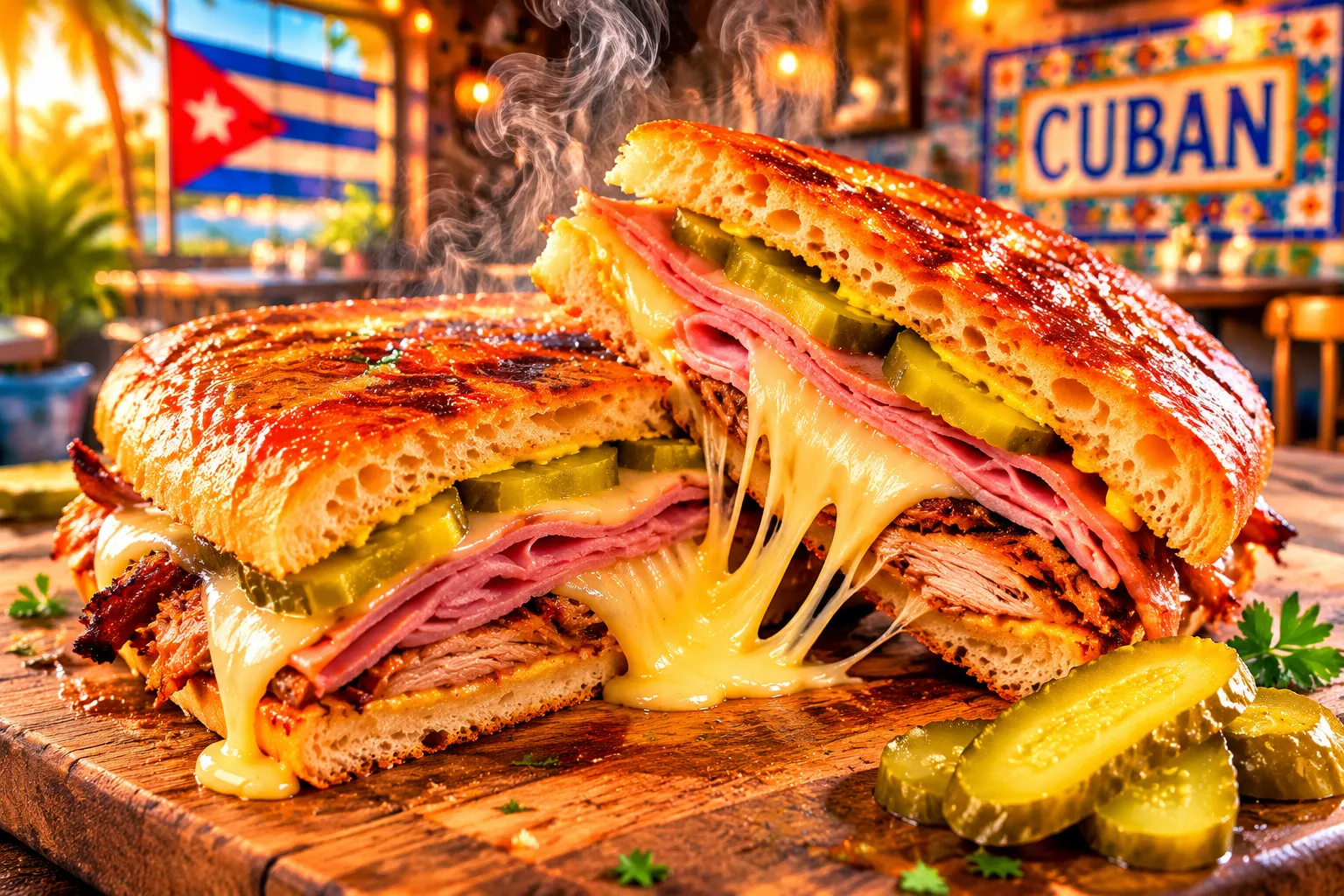
A real-deal Cuban sandwich: garlicky mojo pork, sweet ham, melty Swiss, tangy pickles, and yellow mustard pressed inside buttery Cuban bread until shatteringly crisp.
A great cuban sandwich is a study in contrasts: shatteringly crisp on the outside, molten and savory inside, with the kind of pickle-and-mustard tang that wakes up every bite. After years of chasing that same crunch from Tampa lunch counters and Miami ventanitas, I finally figured out how to nail it at home, no panini press required. The trick is treating it like the layered, pressed art form it really is: thin slices, soft bread, plenty of butter, and patient heat.
This is the version I make for game days, lazy Saturdays, and the occasional 'we have leftover roast pork' Tuesday. It leans on slow-roasted mojo pork, sweet ham, melty Swiss, briny pickles, and a generous swoosh of yellow mustard between two halves of soft, airy cuban bread. Press it until the crust is mahogany and the cheese oozes, slice it on the diagonal, and you have one of the most satisfying sandwiches on earth.
If you've only ever had the rubbery deli version, get ready. A real cubano sandwich tastes like garlic, citrus, and butter all at once, and it's a weeknight-friendly project once you understand the moves.
The cuban sandwich is a pressed sandwich born in the cigar factories of Ybor City and Key West in the late 1800s, where Cuban, Spanish, and Italian immigrant workers wanted a hearty, portable lunch. At its core, it's roast pork, ham, Swiss cheese, dill pickles, and yellow mustard layered on long, soft bread, then flattened and toasted until the cheese melts and the crust crackles. Simple on paper, but every layer pulls weight, and small choices like meat thickness or butter quantity decide whether you get cafe-quality crunch or sad, soggy disappointment.
Travel down I-75 and the argument heats up. Tampa-style adds Genoa salami, a nod to the city's strong Italian community, while Miami purists insist a real cubano contains no salami at all. Both versions are considered authentic in their respective regions, and honestly, both are delicious. I'll show you the Miami-leaning base recipe and tell you exactly where to slot in salami if you want the Tampa twist.
The pork is the soul of this sandwich. Mojo pork is pork shoulder marinated and roasted in a bright, garlicky citrus sauce made from sour orange juice, lime, garlic, oregano, and cumin. Skip it for plain pork loin and you'll lose the funk and brightness that make a cubano taste unmistakably Cuban. If you don't have time to roast a whole shoulder, even a quick mojo-marinated pork tenderloin will get you most of the way there, and leftover holiday pork roast is fair game too.
True cuban bread is a long, lard-enriched loaf with a tissue-thin crust and pillowy crumb that flattens beautifully under heat. It's traditionally baked with a strip of palmetto leaf laid on top to create that signature crease down the middle. If you can't find it locally, a soft Italian or French bread is the closest substitute. Avoid sourdough or crusty baguettes; they fight the press instead of yielding to it, and you'll end up with a hard, jaw-tiring sandwich rather than the airy, flattened ideal.
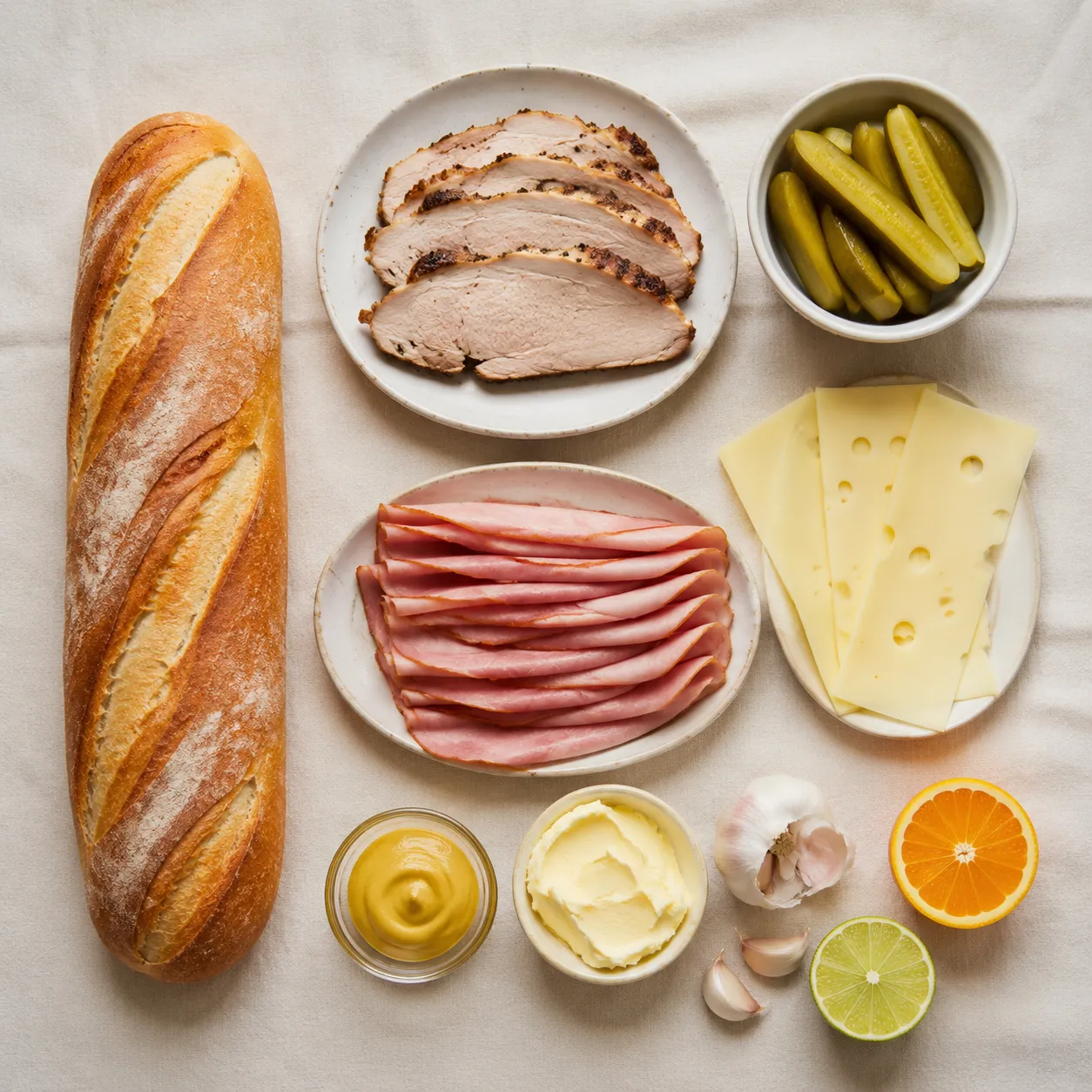
The beauty of this build is its short list, but quality matters when you only have five fillings to work with. Each layer plays a specific role, so don't swap willy-nilly. Buy the best deli meat you can, slice it thin, and the rest of the recipe almost makes itself.
You need cuban bread, mojo pork, sweet ham, Swiss cheese, dill pickles, and yellow mustard. That's the lineup. Some cooks add salami (hello, Tampa) or a smear of mayo, but those are regional flourishes, not the foundation. Stick with the five core ingredients and you're already ahead of most deli versions, which tend to substitute roast pork loin and skip the mojo entirely.
Look for sweet sliced ham labeled 'jamón dulce' or 'honey ham,' but skip anything heavily smoked, which can overpower the pork. For cheese, real Swiss or Emmental is traditional; Baby Swiss melts a touch creamier if that's what you have on hand. Have the deli counter slice both thin, ideally around 1/16 inch, so the layers drape and melt evenly rather than sitting in stiff, chunky slabs.
Crisp dill pickle chips or thinly sliced spears bring the snap and acidity that cuts through the rich pork and butter. Use a good crunchy dill, not bread-and-butter, which is too sweet for this build. As for mustard, plain American yellow mustard is non-negotiable; Dijon and grainy mustards taste wrong here. The whole point of a dill pickle sandwich layered with bright yellow mustard is that tangy zip pushing back against all the richness.
Once your mojo pork is roasted (or pulled from yesterday's leftovers), the build comes together in about 15 minutes. The order of operations matters because it controls how the sandwich melts and presses, so resist the urge to freestyle the stacking.
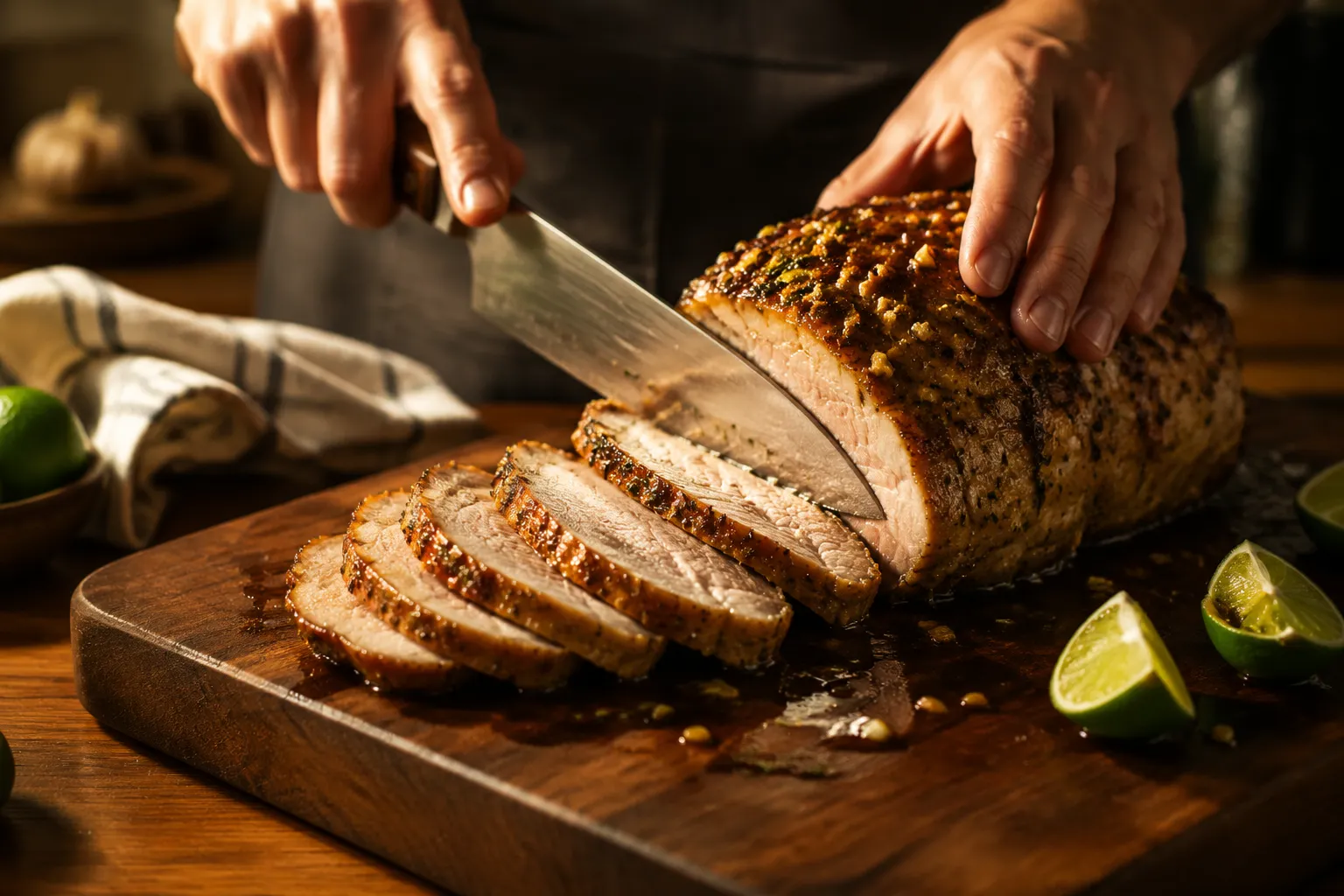
Marinate a 3 to 4-pound pork shoulder overnight in a blender of sour orange juice (or equal parts orange and lime juice), a head of smashed garlic, oregano, cumin, olive oil, and salt. Roast low and slow at 300°F until fork-tender, about 3 to 4 hours, then let it rest 20 minutes before slicing thin against the grain. You want clean slices, not pulled chunks, so the layers stack neatly inside the bread without bursting out the sides.
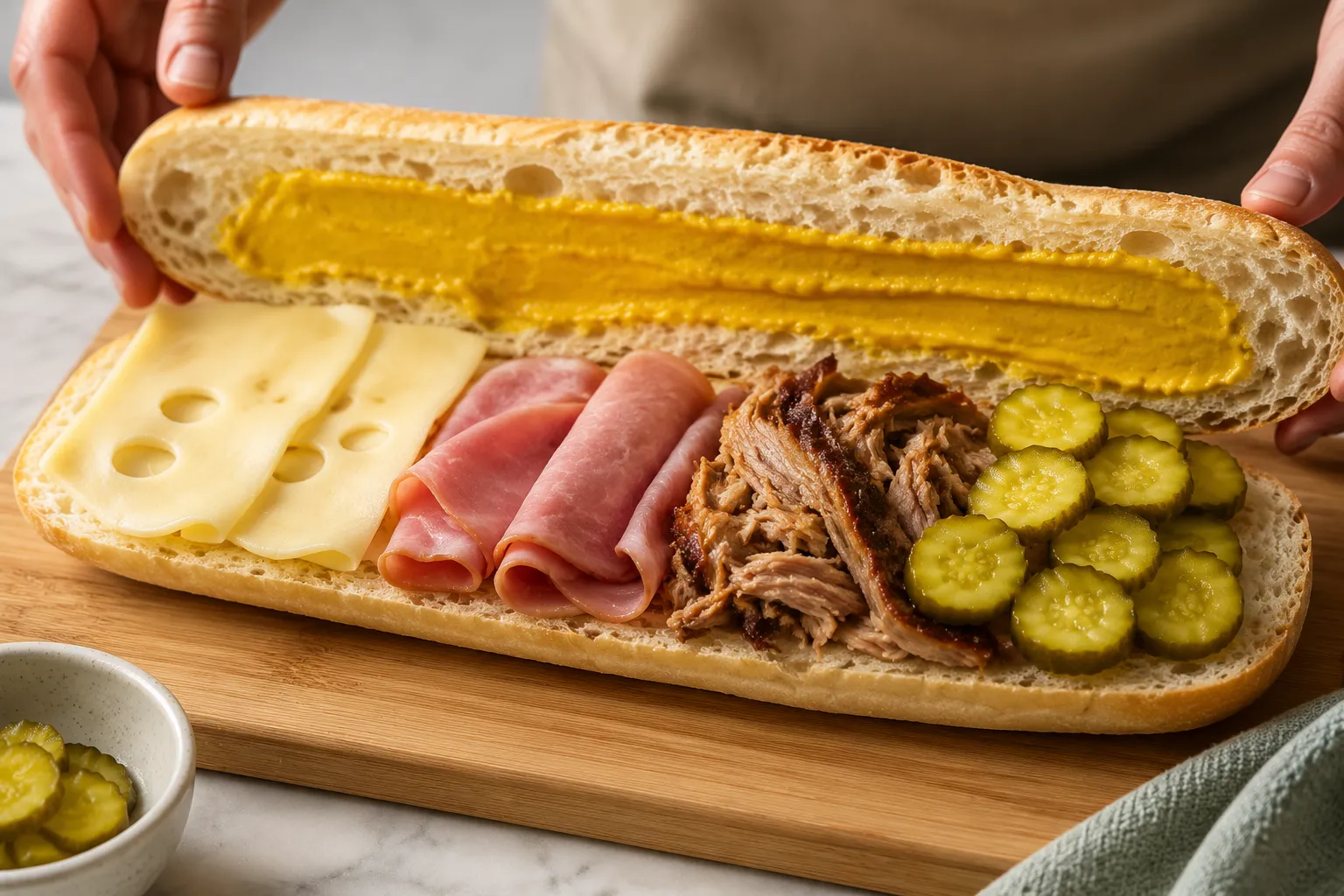
Slice your loaf of cuban bread lengthwise and lay it open on the counter. Mustard goes on both cut sides; this seals the bread against moisture and adds that signature tang from end to end. Layer Swiss cheese first on the bottom, then ham, then mojo pork, then pickles, and finish with another layer of Swiss cheese on top so the whole thing glues together when it melts. Close the sandwich firmly and butter the outside top and bottom generously with softened butter, never oil, which won't crisp the crust the same way.
Heat a heavy skillet or griddle to medium-low. Lay the sandwich in, weight it down with another heavy pan, and press for 3 to 4 minutes per side. You're not trying to incinerate the crust; you want gentle, patient heat that flattens the bread to about half its original height while the cheese inside slumps into a glossy Swiss cheese melt. Flip once, press the second side, and pull the sandwich when both faces are deeply golden and the cheese is visibly oozing at the edges.
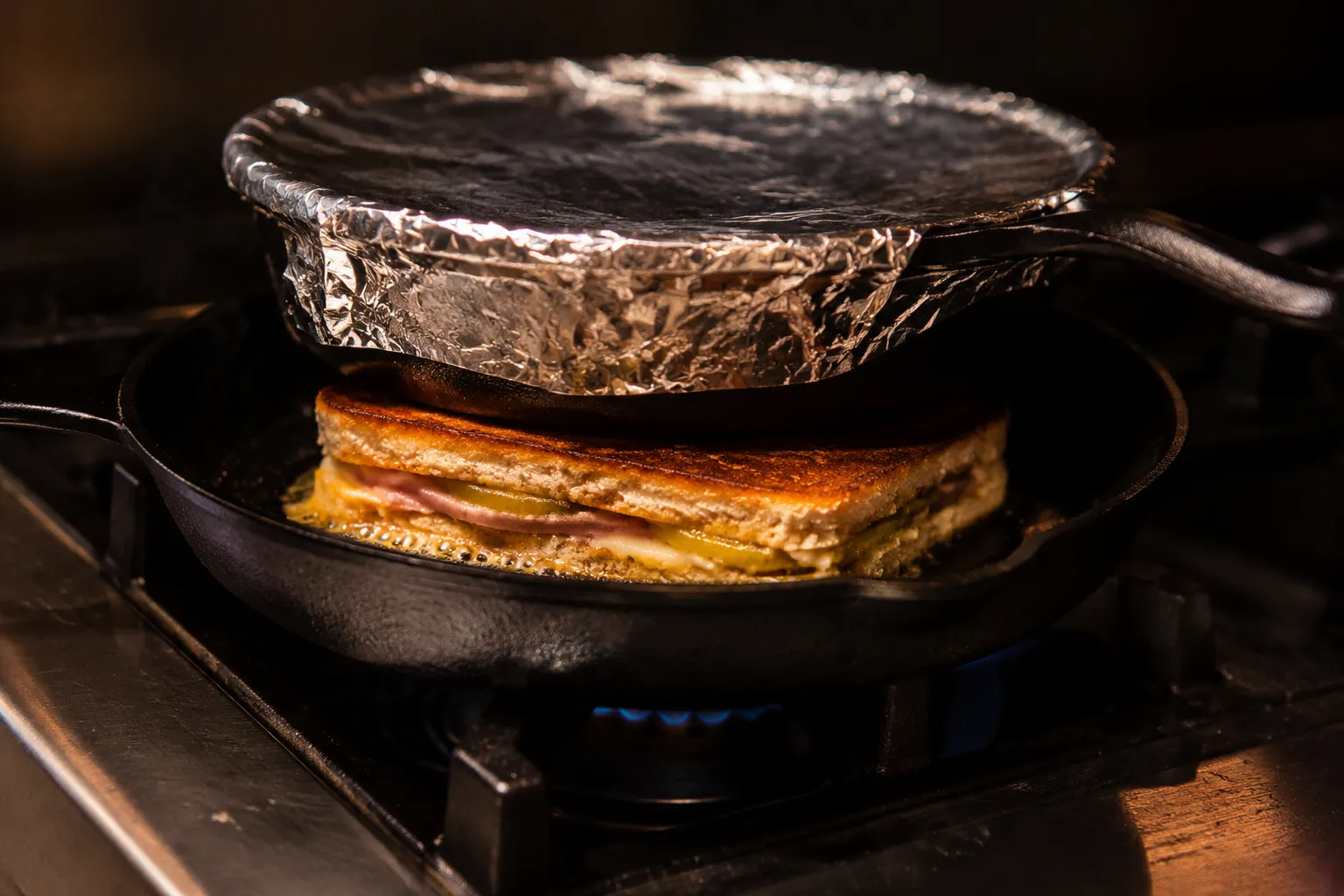
Most home kitchens don't have a plancha or commercial press, and that's totally fine. A pressed sandwich just needs heat from below and steady weight from above, and you can absolutely get there with cookware you already own.
This is my go-to. Heat one cast iron skillet over medium-low, add the sandwich, then nest a second cast iron pan on top. If the second pan isn't heavy enough on its own, set a few cans of beans or a foil-wrapped brick inside it to add weight. Press 3 to 4 minutes per side. The dual-pan setup mimics a panini grill almost exactly, and cast iron's even, retained heat is perfect for the long, slow toast a real cubano demands.
Feeding a crowd? Build four sandwiches, wrap each tightly in foil, and arrange them on a sheet pan. Stack a second sheet pan on top, weight it with a Dutch oven or a couple of bricks, and bake at 400°F for about 10 minutes. Unwrap, brush the tops with extra butter, and run them under the broiler for 1 to 2 minutes until the crust crackles. Not as crisp as a true skillet press, but a lifesaver for game day or a brunch table.
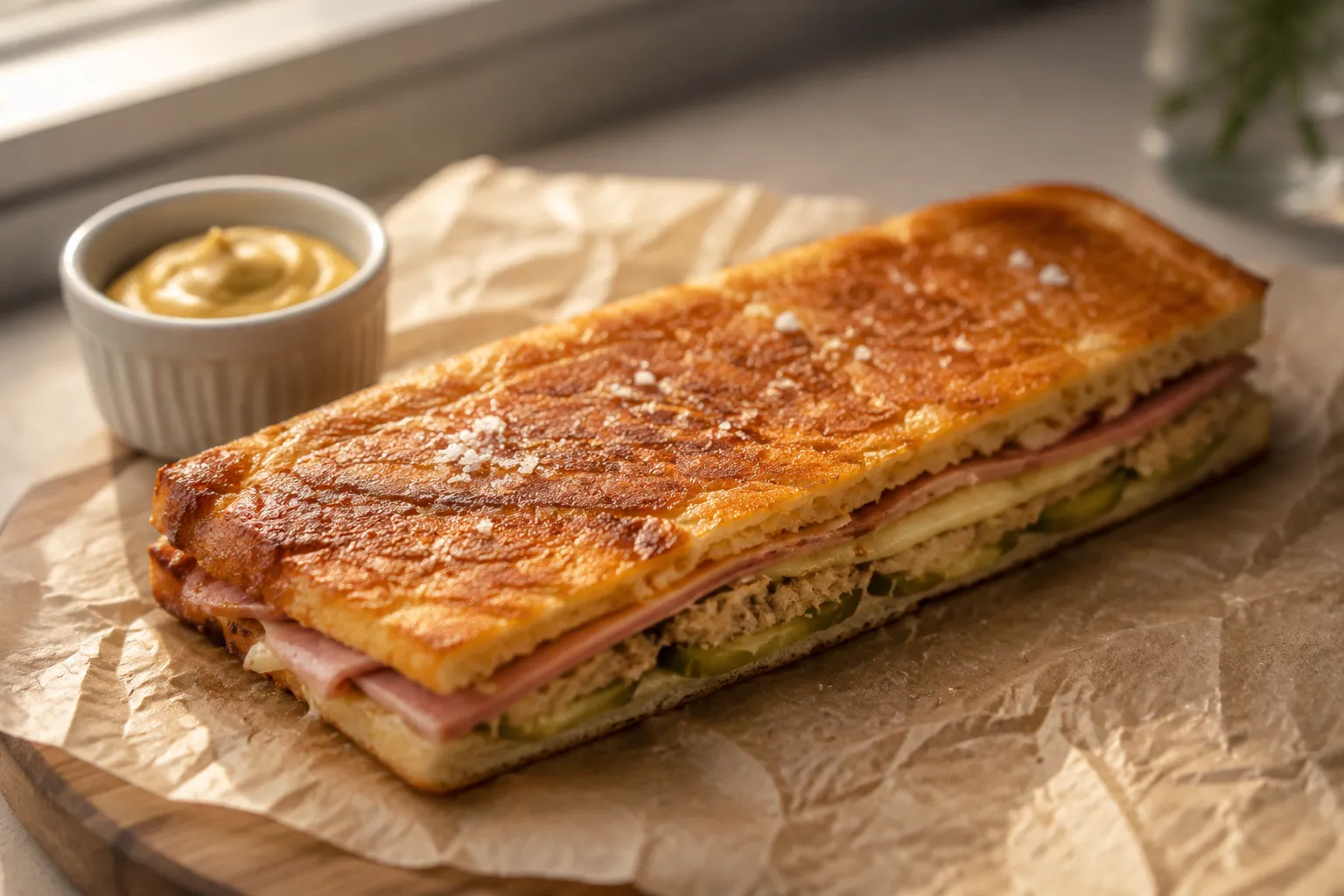
The look you're after is squished, almost flat, with a lacquered, deeply golden crust. Three things help: butter (not oil) on the outside, medium-low heat (not high, which scorches before the inside melts), and steady weight throughout the press. Resist the urge to peek and flip every minute. Set your timer, walk away, and let physics do its job.
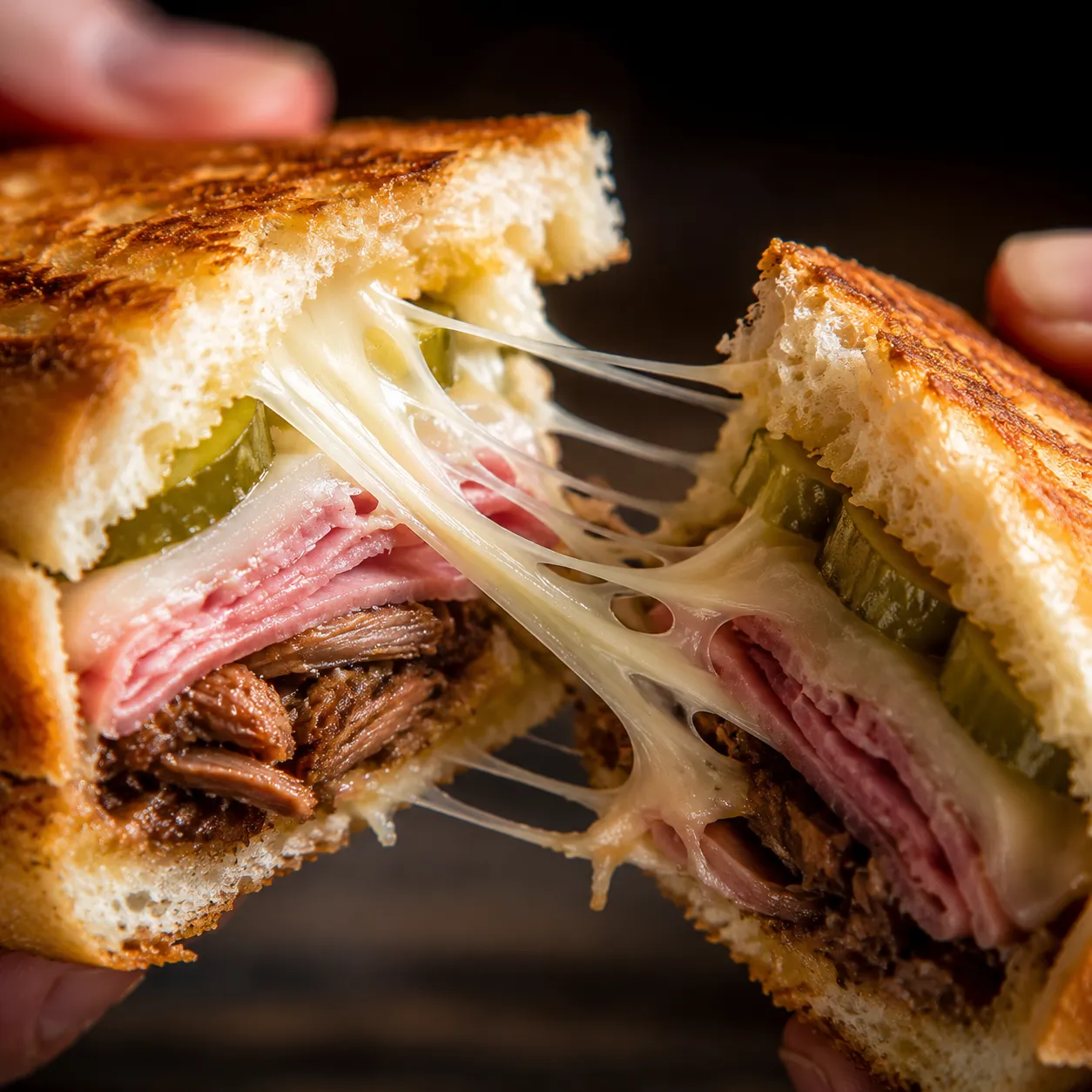
A proper cuban sandwich is rich, so I lean toward bright, crunchy sides that cut through the butter. Crispy plantain chips with a squeeze of lime are the classic move, but a simple side of yuca fries, black bean soup, or a vinegar-forward slaw all work beautifully. For drinks, an icy Materva or Jupiña soda is traditional, though a cold lager or a tart limeade keeps things in the same flavor neighborhood.
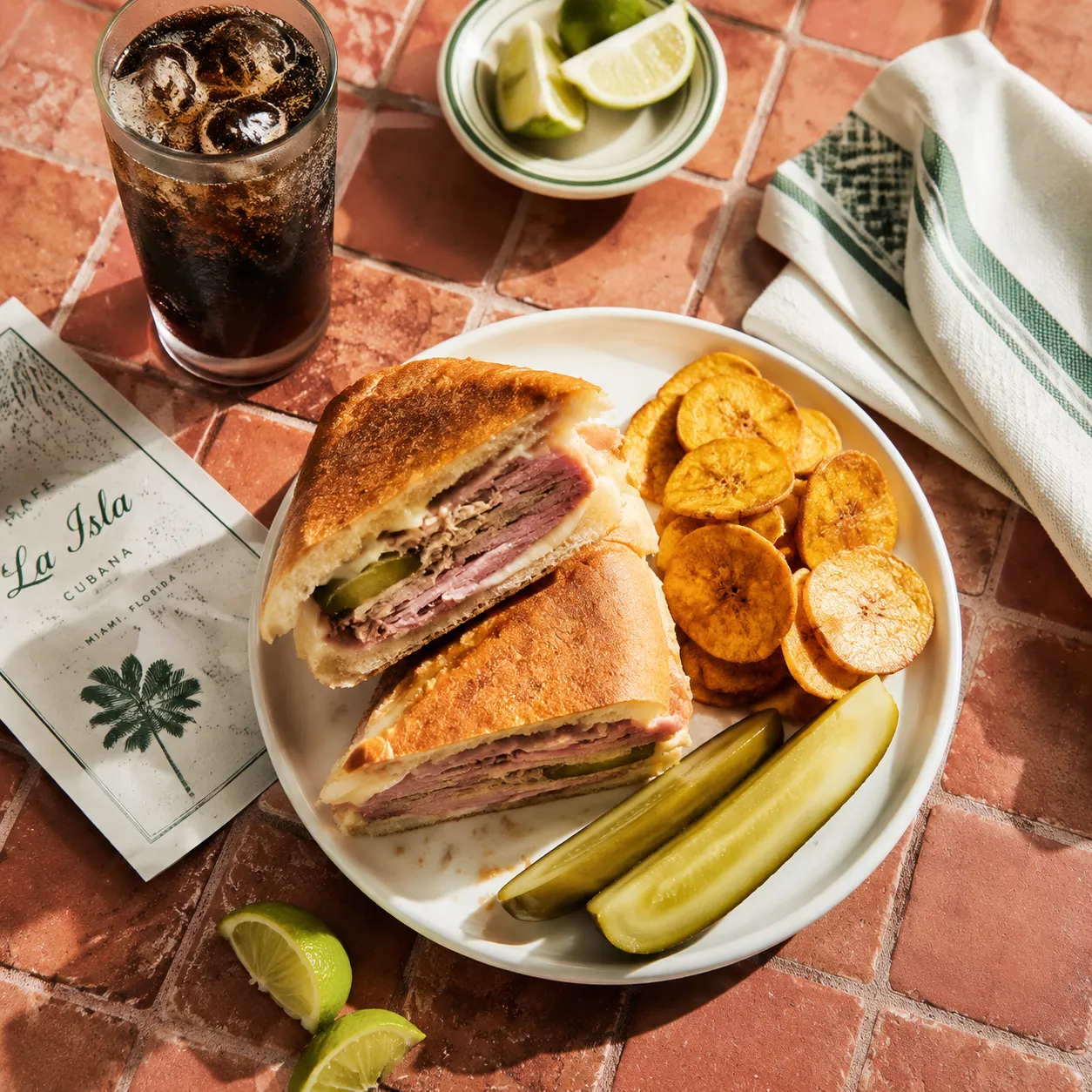
If you're rounding out a Cuban-inspired spread, a simple avocado salad with red onion and lime, or a side of arroz con frijoles, will fill out the table without competing with the sandwich. For a more casual lunch, halve the sandwich and serve it with a pile of salty kettle chips and an extra ramekin of pickle spears for dipping.
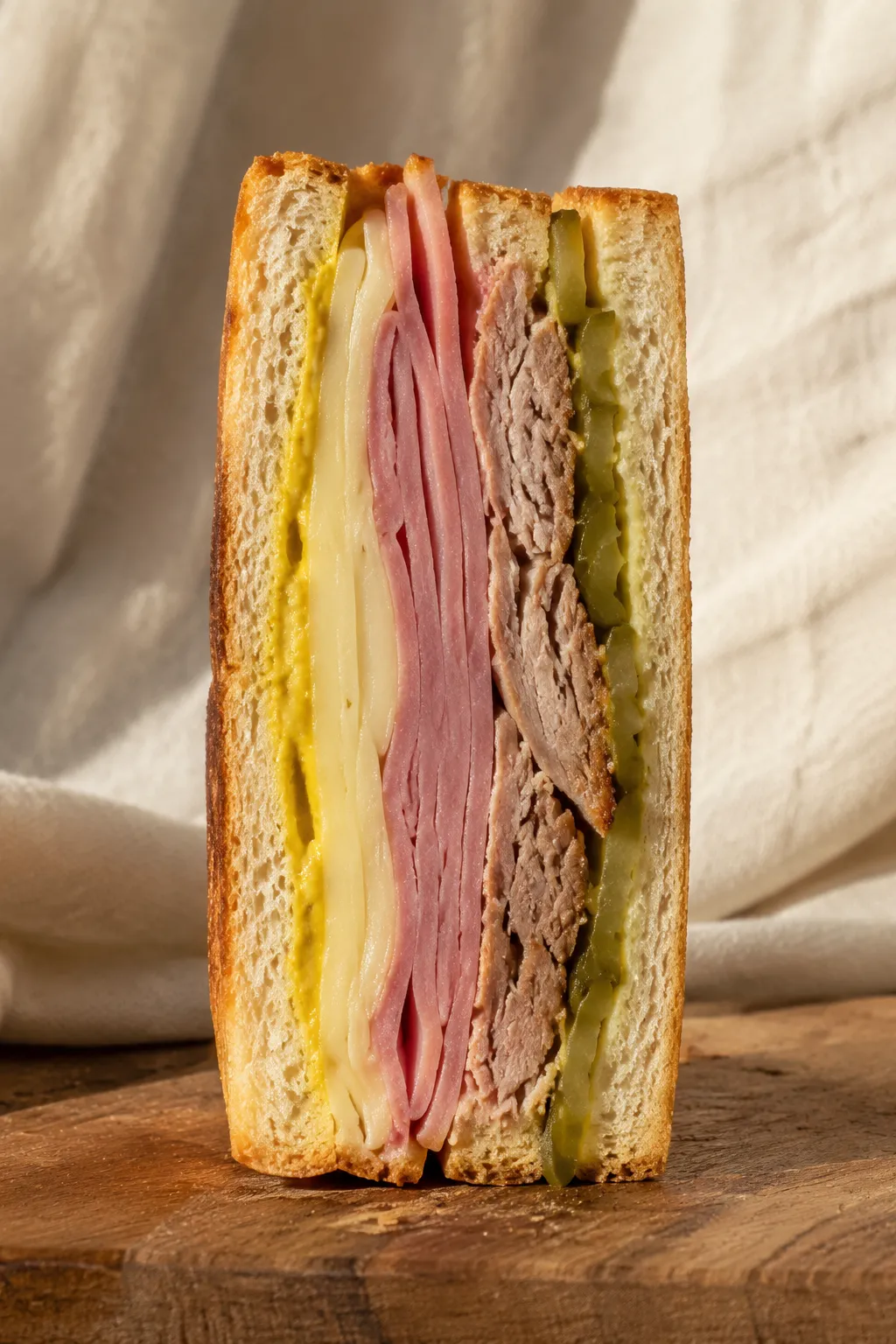
Once you've pressed your first cubano at home, you stop accepting sad versions from chain delis. The combination of garlicky pork, salty ham, melty cheese, sharp pickles, and buttery bread is one of those rare flavor builds where every component lifts the others. Keep the layers thin, the heat patient, and the butter generous, and you'll be turning out cafe-quality sandwiches by lunch.
Once you nail the classic build, the cubano is endlessly riffable. Try one of these spins when you want to switch things up:
Leftover pressed Cuban sandwiches keep, wrapped tightly in foil, in the fridge for up to 2 days. To revive them, skip the microwave (it turns the bread into a chewy disaster) and instead reheat in a 350°F oven for 8 to 10 minutes, or back in the cast iron skillet over medium-low for 2 to 3 minutes per side to crisp the crust again.
For longer make-ahead, freeze the components separately: sliced mojo pork keeps beautifully in the freezer for up to 3 months, and a wrapped loaf of Cuban bread will hold for about a month. Thaw both in the fridge overnight and assemble fresh for the best texture. I don't recommend freezing fully built or pre-pressed sandwiches; the pickles weep and the bread turns gummy.