Whiting Fish Recipe: Crispy Pan-Fried in 20 Minutes
Ingredients
Scale
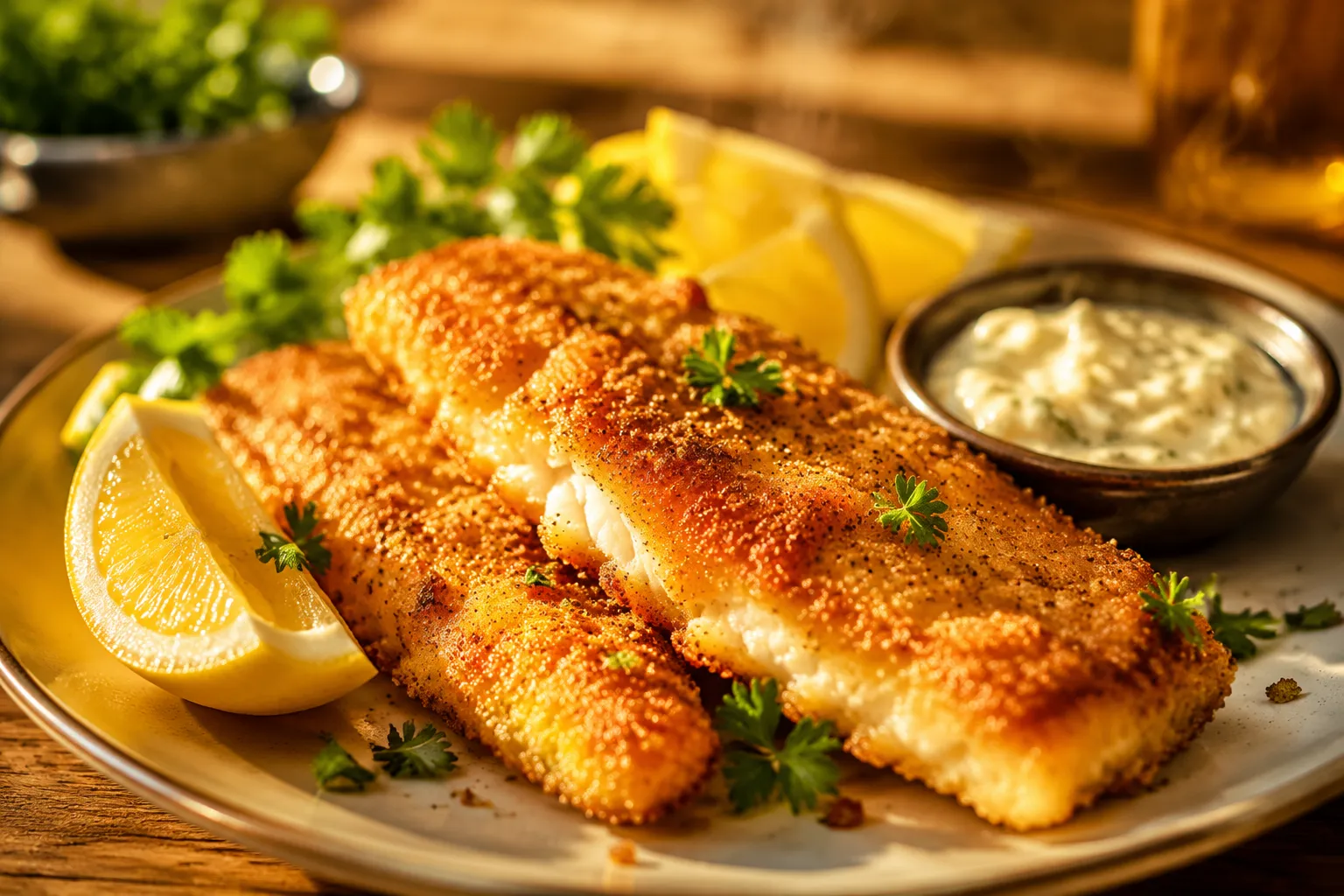
Crispy on the outside, flaky and sweet inside, this whiting fish recipe turns an underrated budget fillet into a 20-minute weeknight dinner.
If you've been scrolling past whiting fish at the seafood counter because you weren't quite sure what to do with it, this is the recipe that's about to change everything. Crispy on the outside, tender and almost sweet inside, with a golden cornmeal crust that shatters the second your fork touches it — and it all comes together in about 20 minutes flat. Whiting is one of those quiet bargains in the seafood case: small, affordable, and so much more flavorful than its reputation suggests.
This is the kind of weeknight dinner that feels like a treat without asking much of you. The fillets are thin, so they cook in just a few minutes per side. The dredge is pure pantry — cornmeal, flour, paprika, garlic powder, and a whisper of cayenne if you like a little kick. While the fish rests on a wire rack, you've got just enough time to whisk together a quick homemade tartar sauce, slice a lemon, and pile up some slaw on the side.
I make this on Friday nights when I want something that scratches the Southern fried fish itch without dragging out the deep fryer. It's a recipe my family asks for on repeat, and it might just be the easiest way to prove that an underrated white fish can absolutely steal the show.
Whiting is a small saltwater fish in the cod family, found mostly in the North Atlantic and along the Pacific coast. You'll often see it labeled as silver hake on the East Coast or Pacific whiting on the West, but cooking-wise it's all the same animal — lean, mild, and forgiving. The fillets are slim and pearly white, usually weighing six to eight ounces each, and they're almost always one of the most affordable options at the counter. If you've been hunting for easy white fish recipes that don't break the bank, this is the unsung MVP.
Most whiting sold in U.S. supermarkets has been quick-frozen at sea, which actually preserves its delicate texture really well. The skin is silvery and thin, the flesh is white with a faint pinkish tint, and the bones are very fine. When you're deciding what fish to buy for a fast weeknight meal, look for fillets that are firm, translucent, and smell clean and briny — never sharp or ammonia-like. Frozen-at-sea is genuinely a quality marker here, not a downgrade.
Mild, slightly sweet, and clean — that's the short version. The flavor is far less assertive than salmon or mackerel and a touch sweeter than cod or tilapia. It's the kind of flaky white fish that takes well to almost any seasoning you throw at it, which is why it's a staple in classic fish-and-chip shops and Southern fish fries up and down the East Coast. Even seafood-skeptical kids tend to come around once they hit that crunchy cornmeal crust.
All four are lean white fish, but they're not interchangeable. Cod and haddock have larger flakes and a meatier bite, which makes them pricier and a bit more forgiving on a grill. Tilapia is leaner still but can taste muddy depending on its source. Whiting splits the difference: softer than cod, sweeter than tilapia, and a fraction of the cost of haddock. For a fast pan-fry, the smaller, thinner fillets actually cook more evenly and crisp up faster than their pricier cousins.
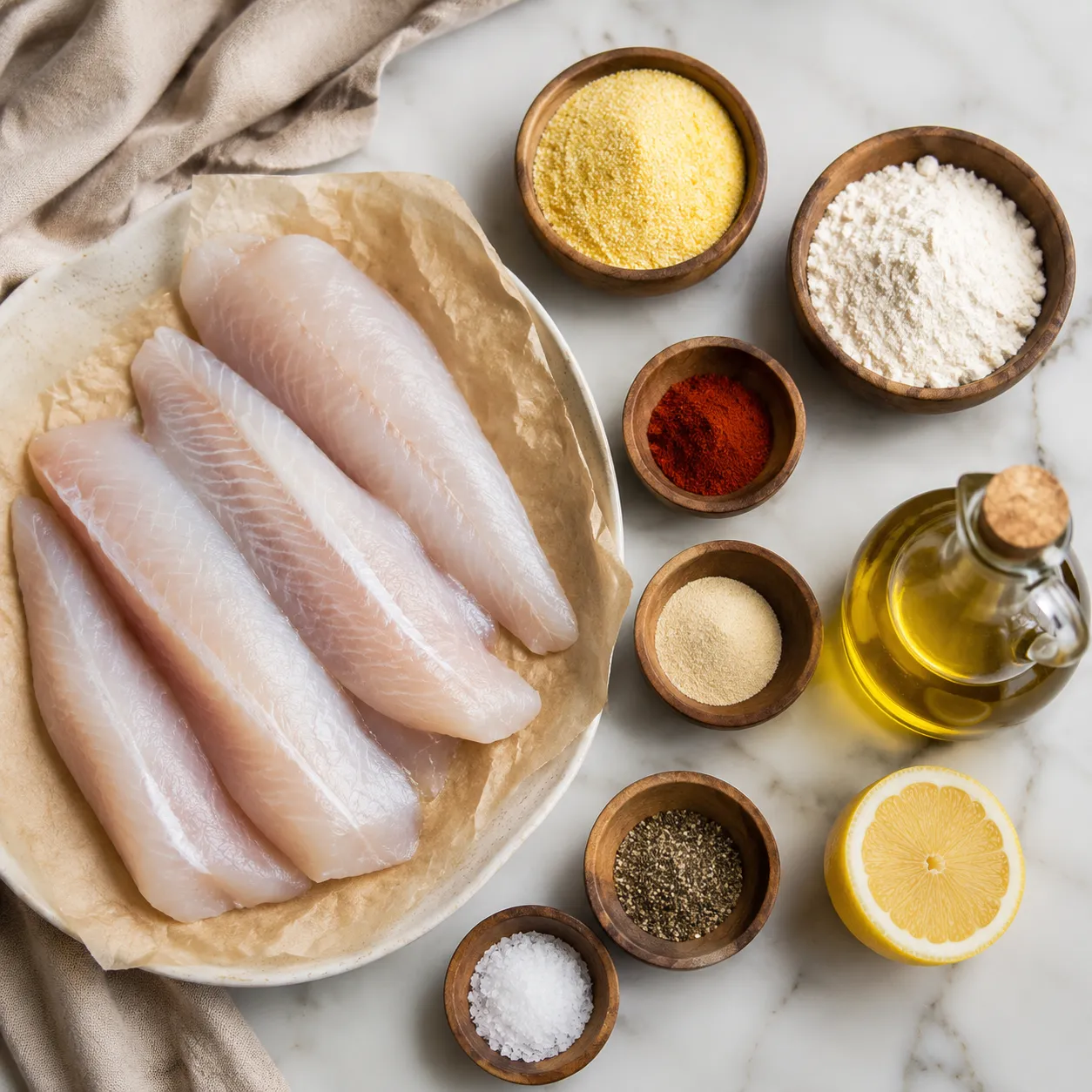
Here's the beauty of this one: it's almost entirely pantry. The shopping list is short, the technique is simple, and most of these spices are probably already in your cabinet right now.
You'll need about 1.5 pounds, which serves four hungry people. Fresh whiting fillets are great if your fishmonger has them, but frozen is honestly just as good — sometimes better, since they're flash-frozen at peak quality. Just thaw overnight in the fridge, never at room temperature, and pat the fillets bone-dry before they meet the cornmeal.
Yellow cornmeal is the workhorse here, giving you that gritty, golden, audibly crunchy cornmeal crust that's the soul of any good cornmeal fish fry. I cut it with all-purpose flour to soften the texture a touch and help the coating cling to the fillets. Stone-ground cornmeal will give you a coarser, more rustic crunch; finer-ground gives a smoother, more delicate finish. Both work beautifully — go with whatever you have.
Paprika brings color and a gentle smoky warmth. Garlic powder, kosher salt, and black pepper round things out, and a pinch of cayenne adds just enough heat to wake everything up without overpowering the sweet fish. You'll also want a neutral oil with a high smoke point — vegetable, canola, or peanut all work — and a fresh lemon for finishing. That's the whole list.
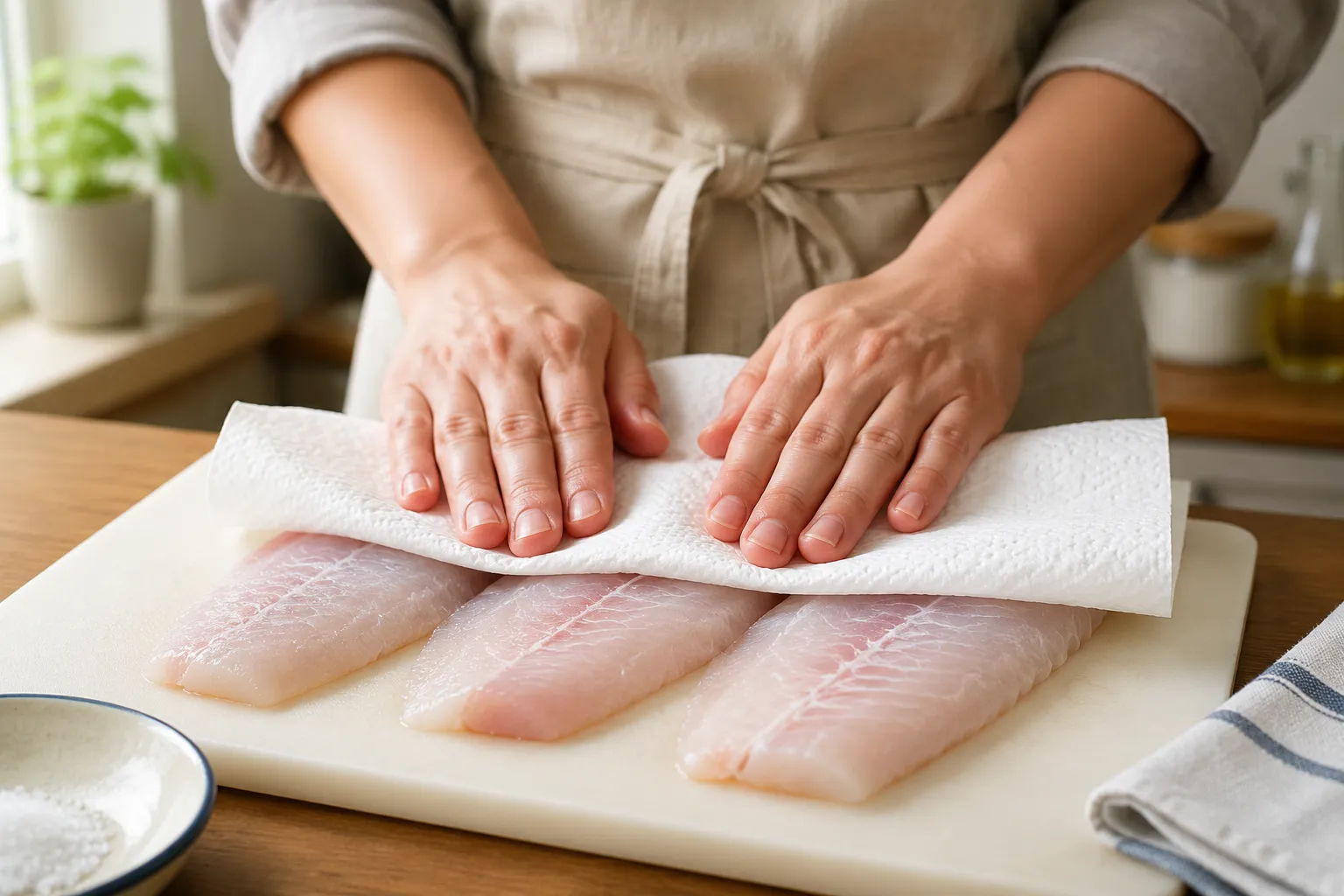
The full timing is in the recipe card below, but here's a walkthrough so you know what to expect at the stove. The whole technique borrows from the school of pan-fried fish fillets — shallow oil, hot pan, light dredge, fast flip — and it's nearly impossible to mess up once you've done it once.
Moisture is the enemy of crispy. Lay the fillets out on a paper-towel-lined baking sheet and press them dry on both sides — really dry. Then season with salt and pepper directly on the flesh so the fish itself is flavored, not just the coating. Let them sit for five minutes while you set up the dredge.
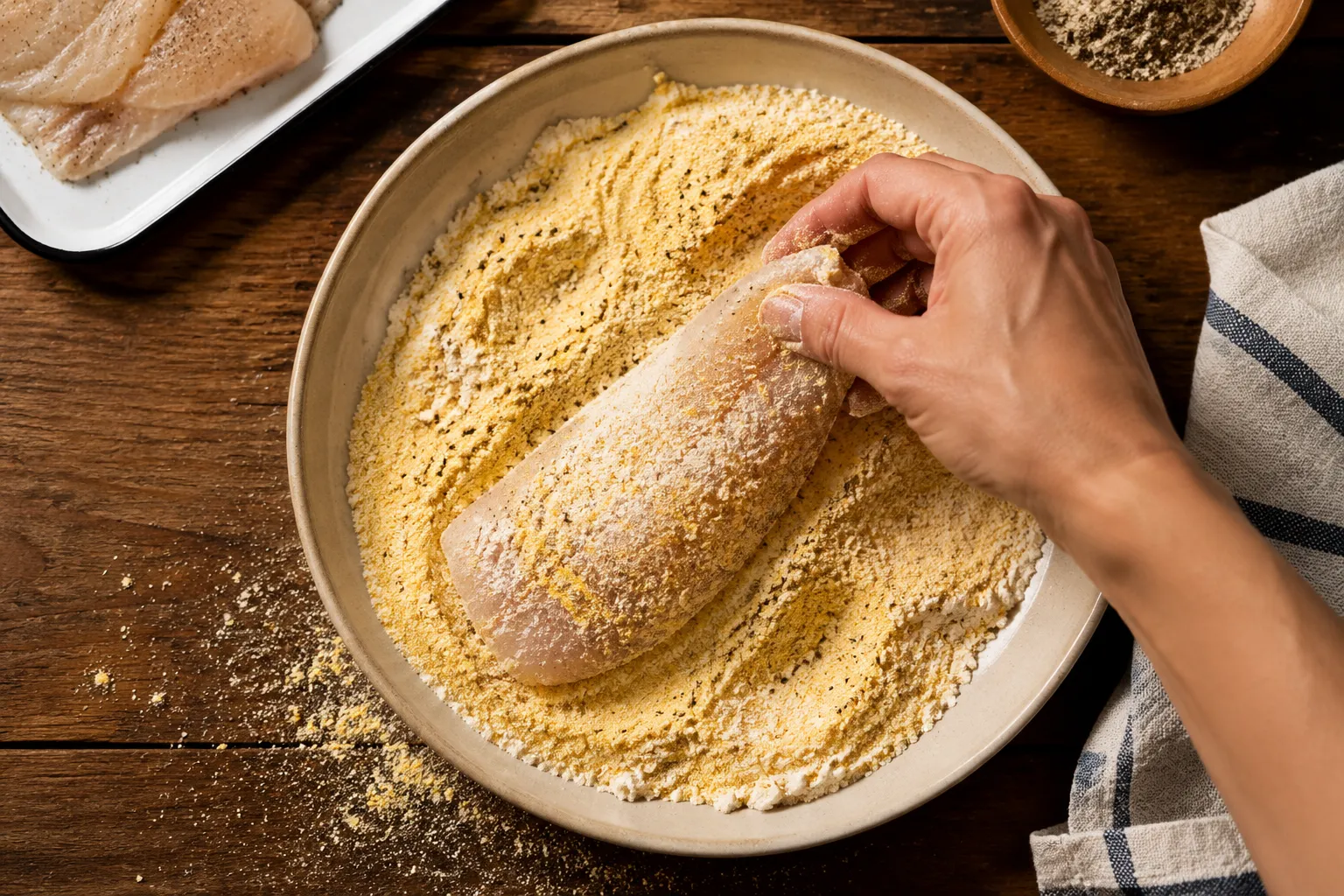
In a wide shallow dish, whisk together the cornmeal, flour, paprika, garlic powder, salt, pepper, and cayenne. Press each fillet firmly into the mixture, flip, and press again — you want full coverage, including the edges. Tap off any loose excess so it doesn't burn in the oil. A quick rest on a rack while the oil heats helps the coating set and adhere.
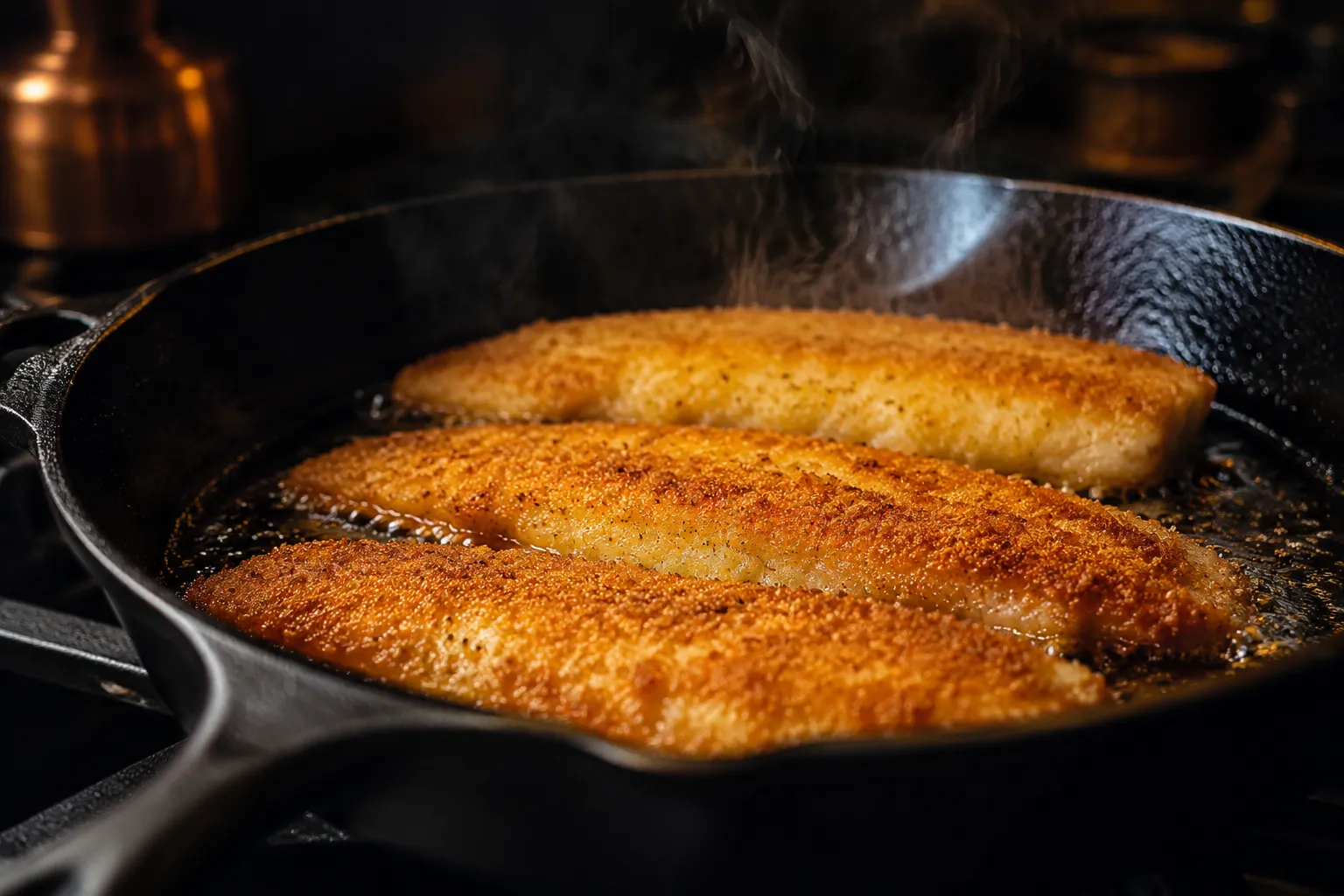
Heat about a half-inch of oil in a cast-iron skillet over medium-high until it shimmers — around 350°F if you're using a thermometer. Lay the fillets in away from you, working in batches so the pan stays hot. Three to four minutes per side is all you need; don't fuss with them, just let the crust set before flipping. Pan-fried whiting goes from raw to perfect fast, so stay close to the stove.
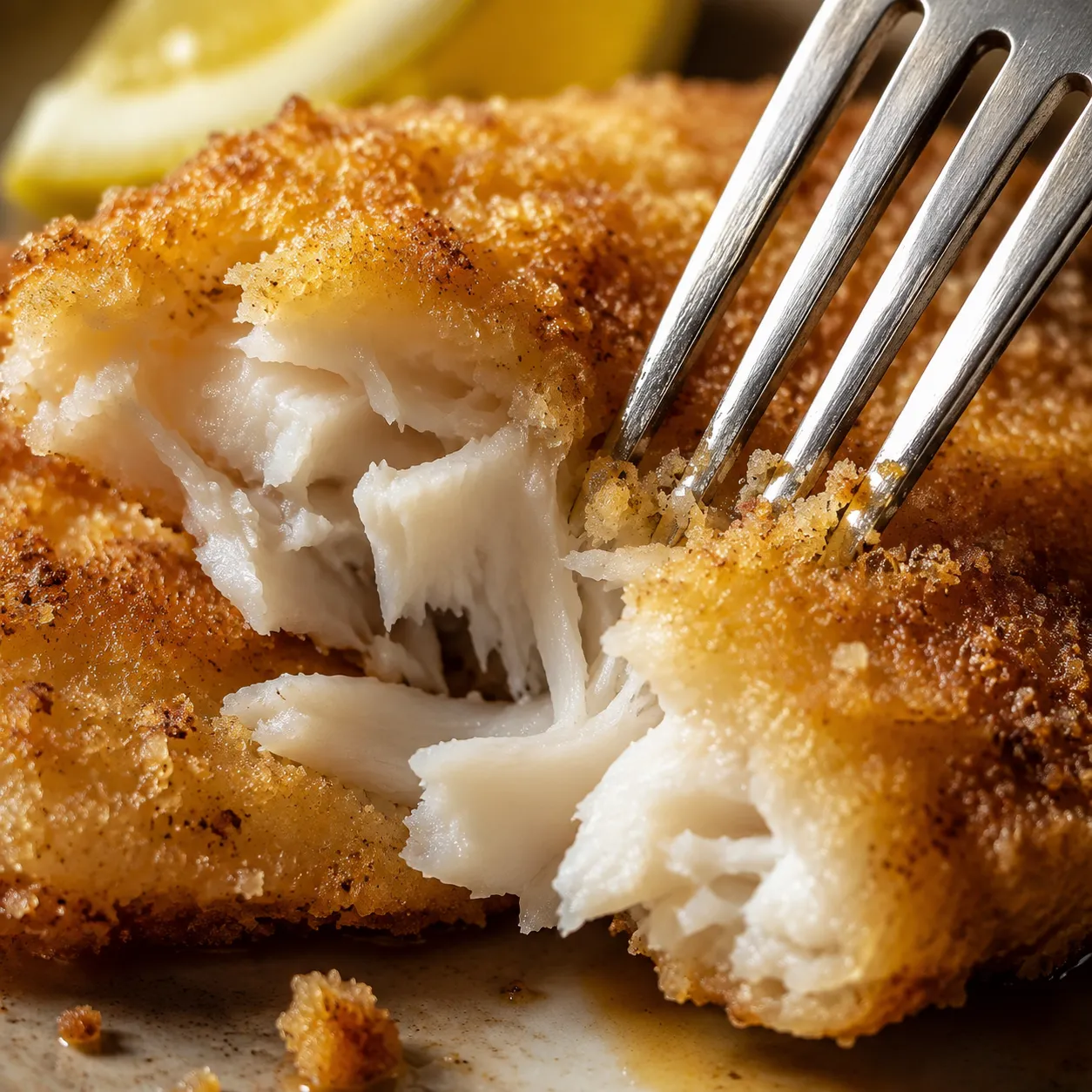
Transfer the finished fillets to a wire rack set over a sheet pan — not paper towels, which will steam the bottom and kill the crunch. A flaky sea-salt sprinkle while they're still hot, a generous squeeze of lemon, and you're done. The interior should pull apart in clean, snowy flakes the moment you press a fork in.
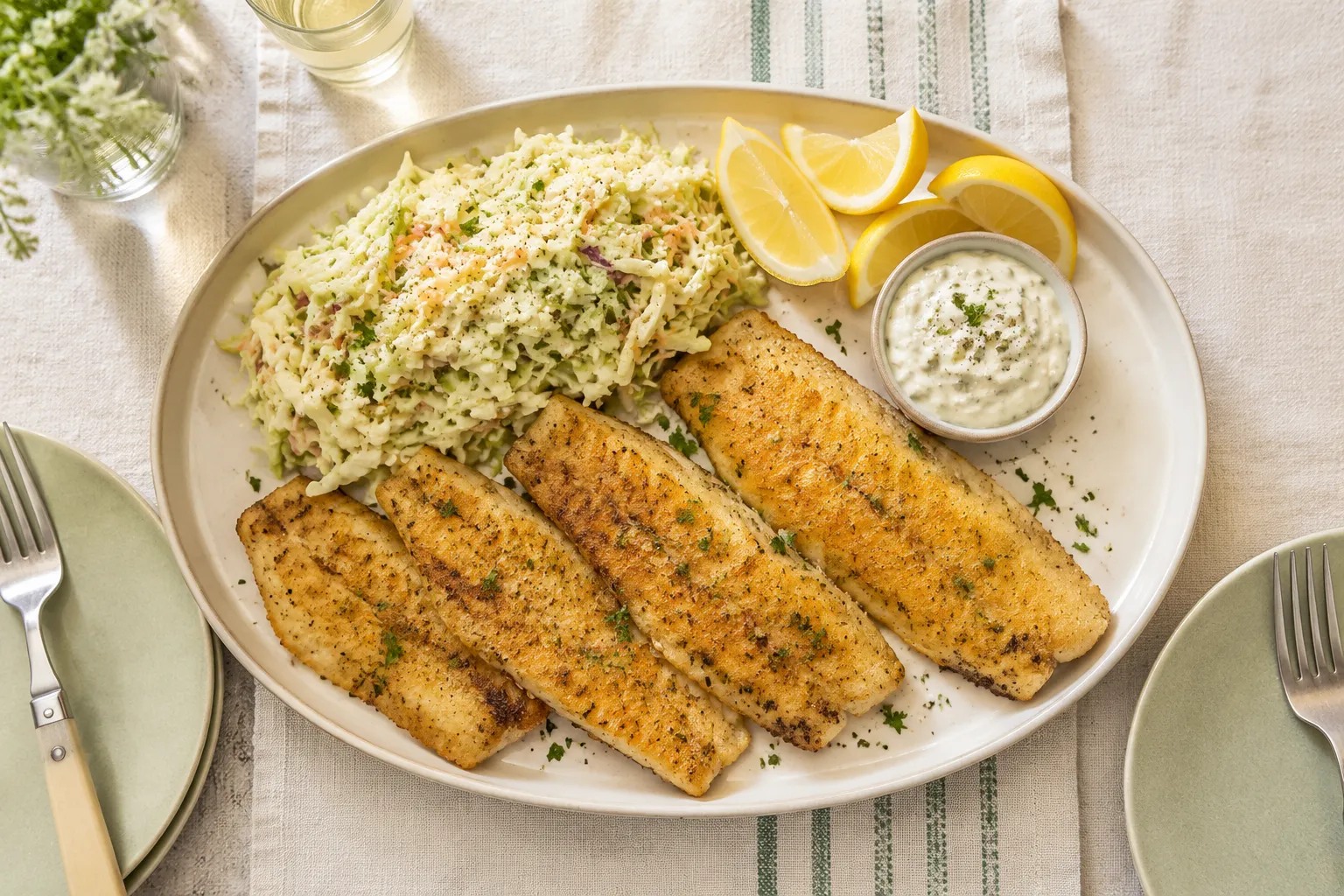
A great white fish recipe deserves sides that play to its strengths: bright, cool, crunchy, and a little tangy. Once you've got the fish covered, the rest of the plate practically builds itself.
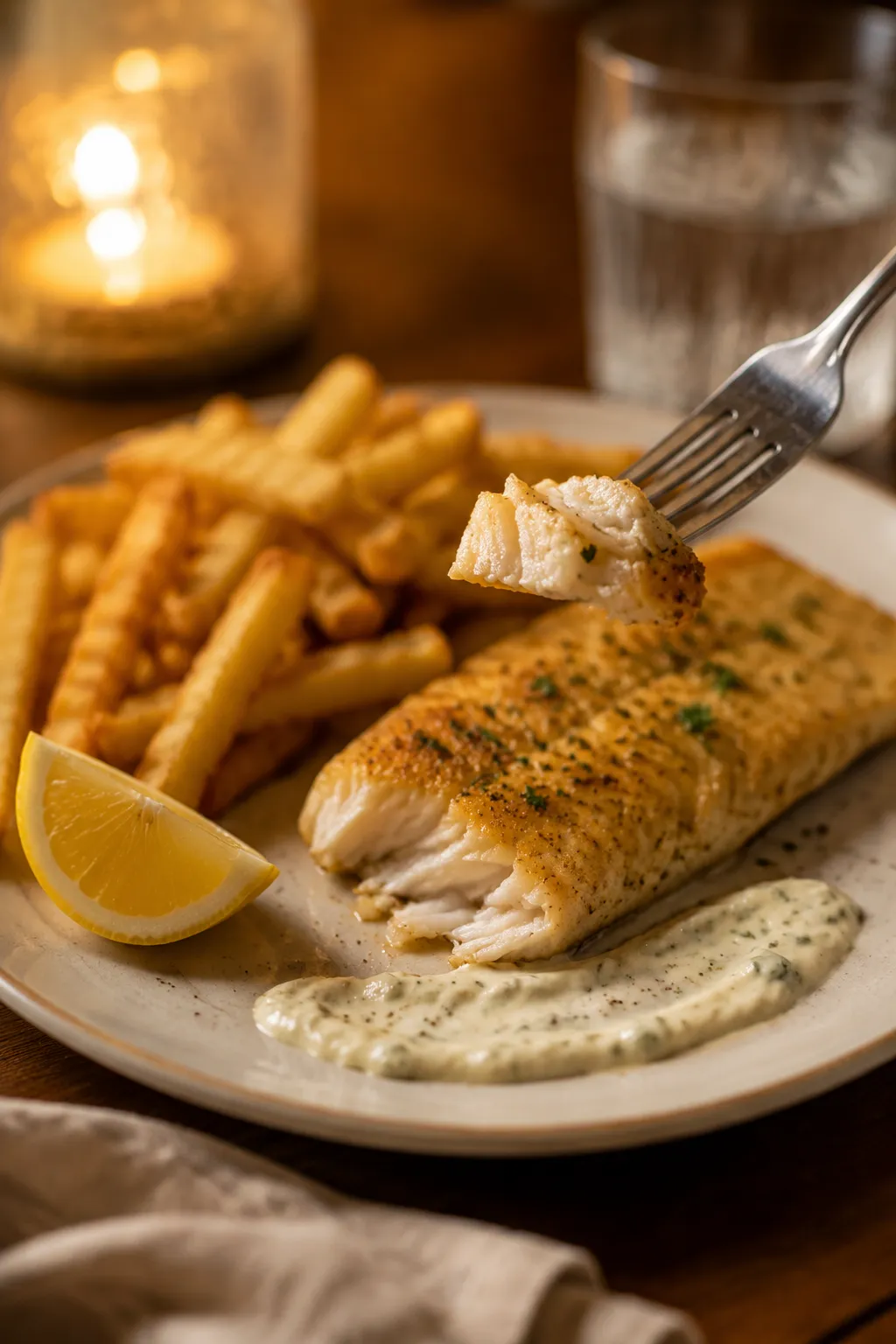
For full Friday-night fish-fry energy, go classic. Creamy coleslaw cuts through the richness of the fried crust. Hush puppies are practically required if you're leaning Southern. Crinkle-cut fries or thick-cut steak fries make this feel like a coastal fish-shack dinner — and don't sleep on a side of garlic bread for soaking up any leftover sauce or lemon juice on the plate.
If you want to keep things a little more weeknight-friendly, swap the fries for a lemony rice pilaf and a pile of garlicky sautéed greens. Roasted broccoli with chili flakes is another favorite, and a simple cucumber-tomato salad works beautifully when it's hot out. The fish stays the star, but the plate feels less indulgent and more dinner-ready.
A classic tartar sauce — mayo, dill pickle, capers, lemon, a little Dijon — is the no-brainer here, and a good homemade tartar sauce takes literally 90 seconds to whisk together. Spicy remoulade gives you a Louisiana lean. Garlic aioli is wonderful if you want something more European. And of course, plenty of fresh lemon wedges on the side for the people who know that acid is half the magic.
Whether you're starting with fresh or frozen whiting, the prep is mostly the same. Frozen fillets should thaw in the refrigerator overnight in their packaging, or in a sealed bag submerged in cold water for 30 to 45 minutes if you forgot to plan ahead. Avoid the microwave defrost setting — it cooks the edges before the center thaws and the texture goes mealy. Once thawed, give the fillets a quick rinse, pat them very dry, and run your fingertips over each one to check for stray pin bones. A clean, dry fillet is half the battle for a beautiful golden crust.
This whiting fish recipe is also a great gateway into trying other small, affordable fillets you might have skipped at the counter — porgies, croaker, smelt, even small mackerel. The cornmeal dredge method works across the board, and once you've nailed the technique on one species, you've nailed it for all of them.
Pan-frying in a half-inch of oil hits a sweet spot: deep enough to crisp the entire perimeter of the fillet, shallow enough that you can do it in a regular skillet on a regular weeknight without a giant pot of bubbling oil to deal with. The thin profile of the fillets means the inside cooks through in the same time the outside browns — no overcooked exterior wrapped around an underdone middle. And the cornmeal-flour blend gives you both sturdy crunch and tender bite, a much better texture than flour alone or breadcrumbs that often get soggy.
Once you have this technique down, you'll be reaching for whiting fillets every time the weeknight clock is ticking and you want something everyone at the table will actually finish. It's honest, simple, satisfying food — and it makes you look like you know exactly what you're doing in the kitchen, which is always a bonus.
This recipe is a sturdy template — once you know the technique, you can riff in a dozen directions depending on what's in your pantry and who's at the table. Swap, season, and accessorize without rewriting the playbook.
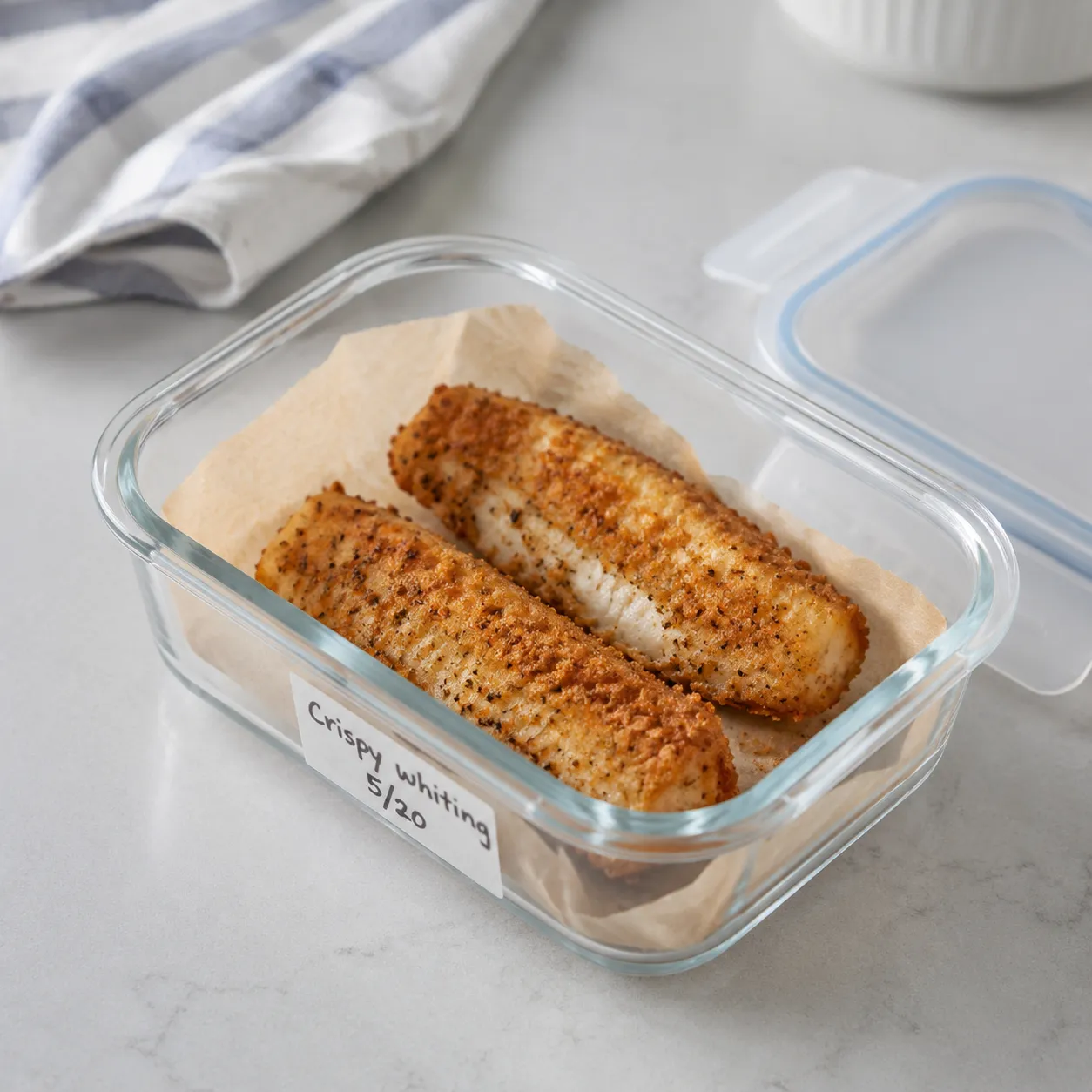
Leftover whiting keeps for up to 3 days in an airtight container in the refrigerator. For best results, let the fillets cool completely on a wire rack before sealing them up — trapped steam will soften the crust overnight and you'll lose that hard-won crunch. You can also freeze cooked fillets for up to 2 months, layered between sheets of parchment in a freezer-safe container so they don't fuse together.
To reheat without losing the crisp, skip the microwave and reach for the oven or air fryer. Place fillets on a wire rack set over a sheet pan and warm at 375°F for 8 to 10 minutes (a few minutes longer from frozen), or air-fry at 380°F for about 5 minutes, until the crust crackles again and the inside is hot all the way through. Finish with a fresh squeeze of lemon and they're nearly as good as the moment they came out of the skillet.