Authentic Masala Chai Recipe (Stovetop in 15 Minutes)
Ingredients
Scale
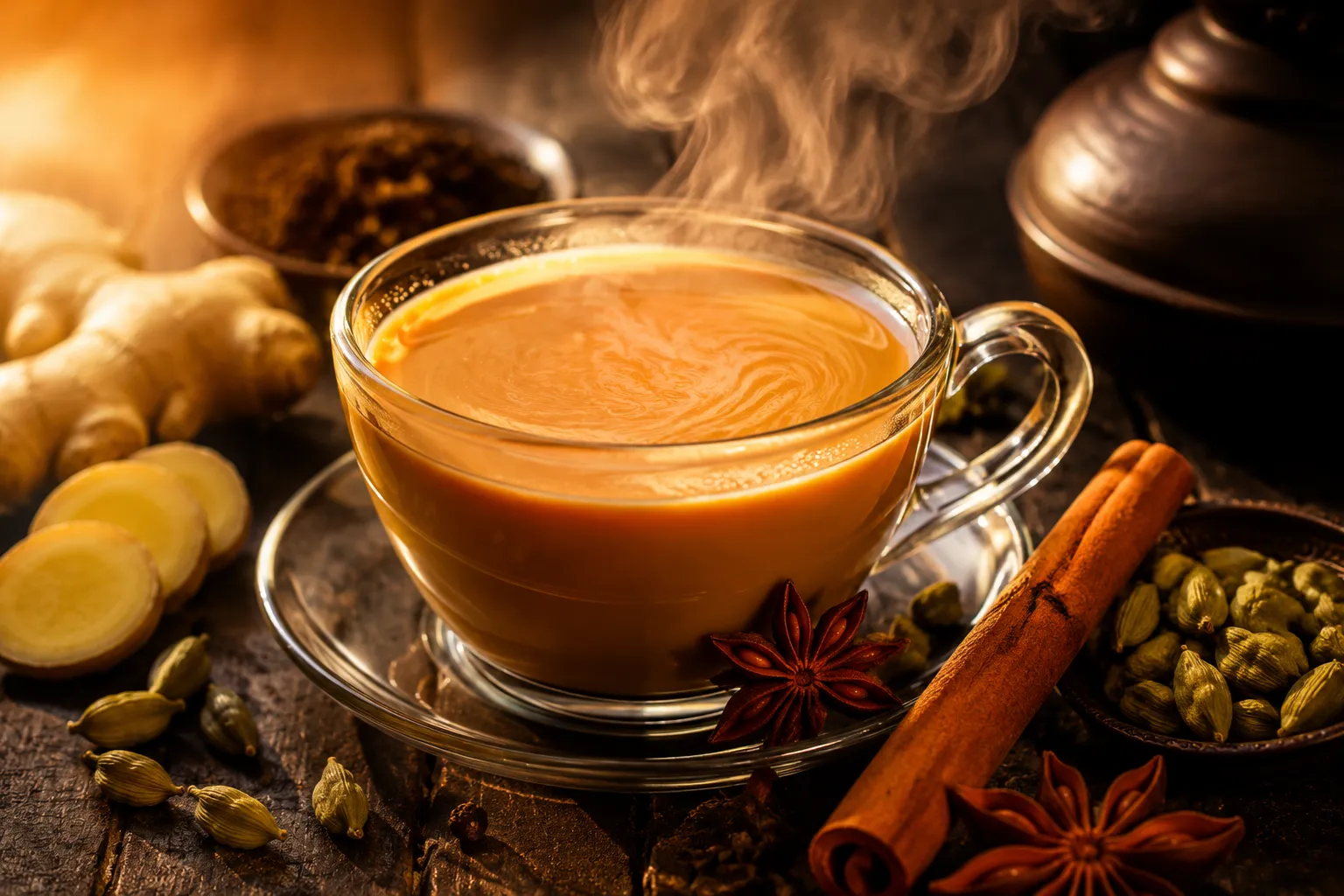
Skip the coffee shop. This authentic masala chai recipe brews bold Indian spiced tea with whole cardamom, ginger, and cinnamon in just 15 minutes on the stovetop.
If you've ever wandered through a busy Indian railway station at dawn, masala chai is the smell that greets you first — bold black tea simmered with crushed cardamom, ginger, and a flurry of warming spices, poured steaming into tiny clay cups by vendors who've been at it since long before sunrise. This recipe brings that same soulful cup to your home stovetop, and it takes just 15 minutes from start to first sip.
Forget the powdery instant mixes and oversweet café syrups. Real Indian spiced tea is a slow, fragrant infusion — whole spices cracked open with a mortar and pestle, simmered in water until the kitchen smells like a spice market, then finished with milk and a touch of sugar. Once you taste the difference, you'll wonder why you ever paid five bucks for a watery cardboard cup.
This is the masala chai recipe I've been making (and quietly tweaking) for years, modeled on the way my friend's mother brews it every morning in her Pune kitchen. It's bold enough to wake you up, balanced enough to drink all afternoon, and forgiving enough that you can adjust the spices to your own palate without breaking anything. Pull out a small saucepan and let's brew.
Masala chai literally translates to "spiced tea" — chai is the Hindi word for tea, and masala means a blend of spices. So when an American coffee shop offers you a "chai tea latte," they're technically saying "tea tea latte," which is one of those cultural quirks the West hasn't quite untangled yet. What we're making here is the real thing: strong Assam black tea simmered together with fresh ginger and a fragrant chai masala spice blend of cardamom, cinnamon, cloves, and pepper, then enriched with whole milk and sweetened to taste. It's a drink with deep regional variation — every household has its own ratio, every street vendor his signature touch.
You'll often hear masala chai compared to a chai latte, but the two aren't quite the same drink. A chai latte at most American coffee chains is built from a pre-sweetened concentrate or syrup mixed with steamed milk — fast, but one-dimensional in flavor. A "dirty chai" adds a shot of espresso to that latte. Authentic Indian chai, by contrast, is brewed fresh on the stovetop from whole spices, with each batch slightly different depending on the cook's mood and the season. The depth of flavor is on another level entirely, and the ritual of making it is half the pleasure.
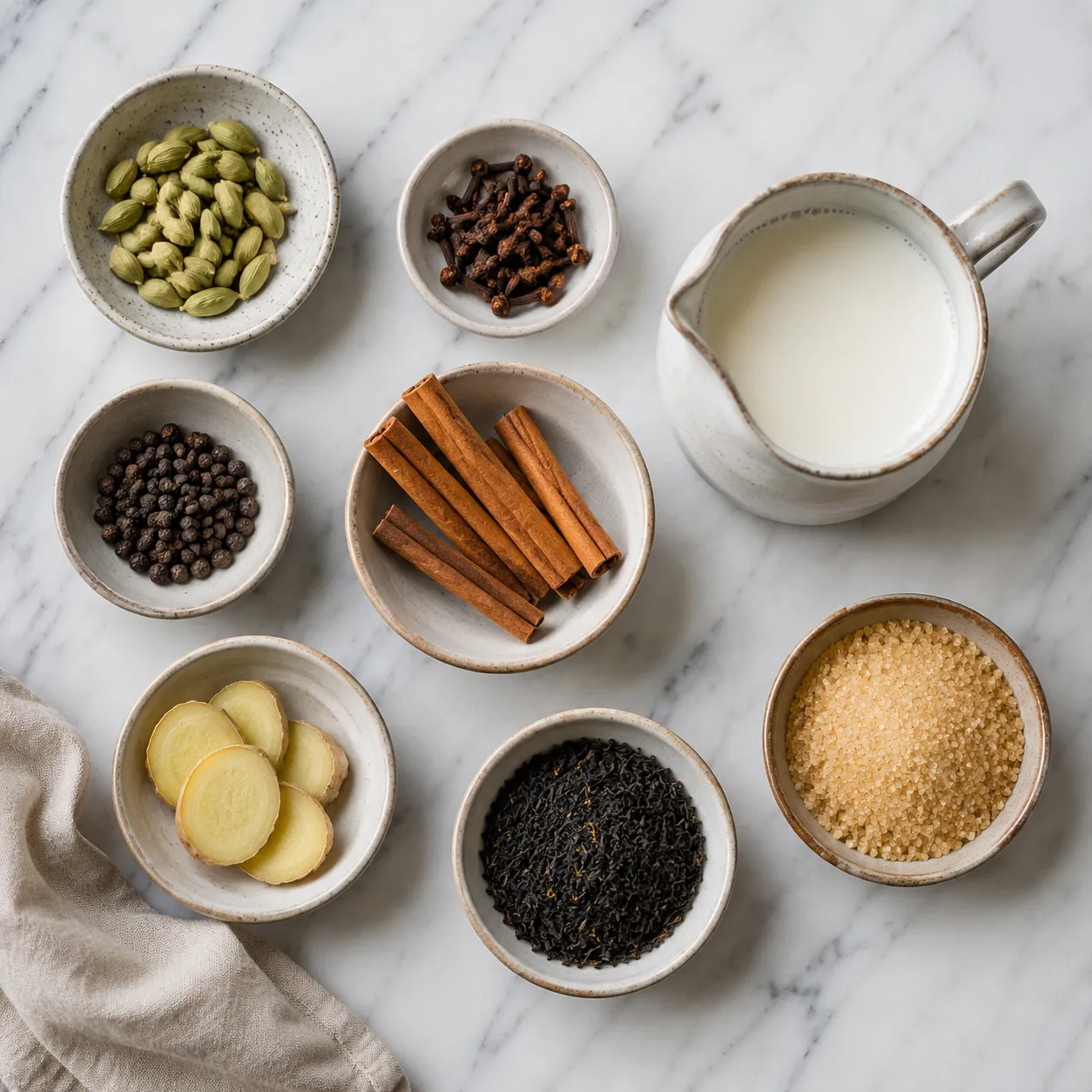
The ingredient list is short, but each item earns its keep. The heart of this drink is the chai masala spice blend, traditionally built around four warming spices — green cardamom, cinnamon, cloves, and black pepper — plus a generous knob of fresh ginger. Cardamom is the star, lending the floral, citrusy lift that makes a great cup of cardamom tea unmistakable. Pepper adds a low warmth at the back of the throat; cloves bring sweetness and depth; cinnamon ties it all together. Some families also add fennel seeds, star anise, or a grating of fresh nutmeg, and you should feel free to play with the proportions until you find your house blend.
For the tea itself, reach for loose-leaf Assam black tea or CTC (crush-tear-curl) Assam if you can find it at an Indian grocer or online. These are robust, malty teas that won't disappear under all that milk and spice. Avoid delicate Darjeeling or green teas here — they'll get bullied into oblivion. Whole milk gives the creamiest, most luxurious result, but unsweetened oat milk is a fantastic dairy-free swap that holds up to a hard simmer without splitting. As for sweetener, plain white sugar is traditional, though jaggery (an unrefined Indian cane sugar), brown sugar, or even a spoonful of honey stirred in off-heat all work beautifully.
Knowing how to make masala chai is mostly about pacing — you want to coax the spices, not bully them. Don't rush the simmer, don't dump everything into the pan at once, and resist the urge to crank the heat past medium-low. Each stage layers a new dimension of flavor onto the next. Here's the rhythm I follow every time, broken into four short steps that anyone can manage on a weekday morning.
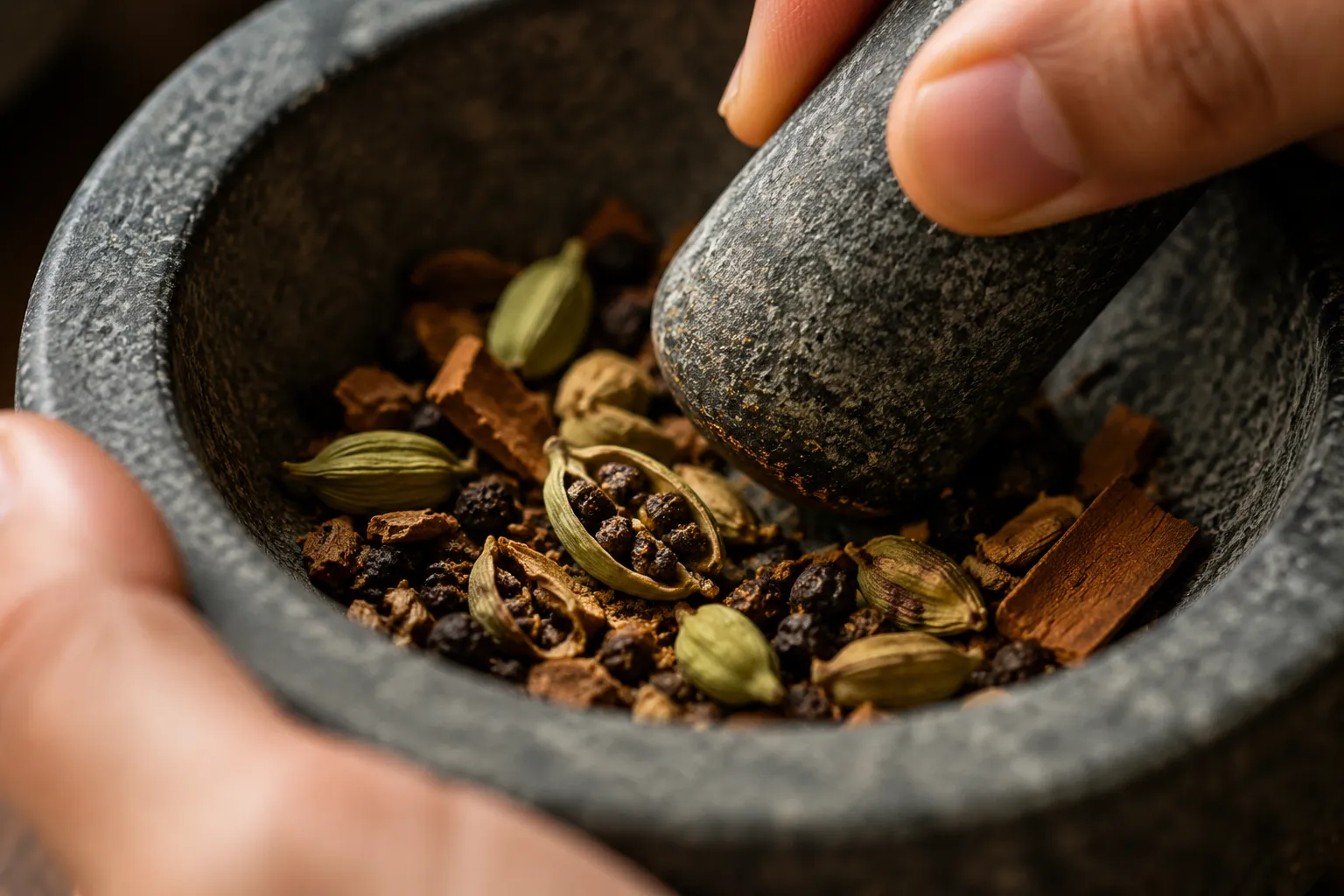
Start by gently cracking your whole spices in a mortar and pestle — just enough to split the cardamom pods and break the cinnamon stick into shards. You're not trying to powder them; you want the husks open so the aromatic oils can escape into the water. If you don't own a mortar and pestle, the flat side of a chef's knife works in a pinch. Pre-ground spice powders go stale quickly and turn chai dusty and bitter, so this small step is the single biggest upgrade you can make.
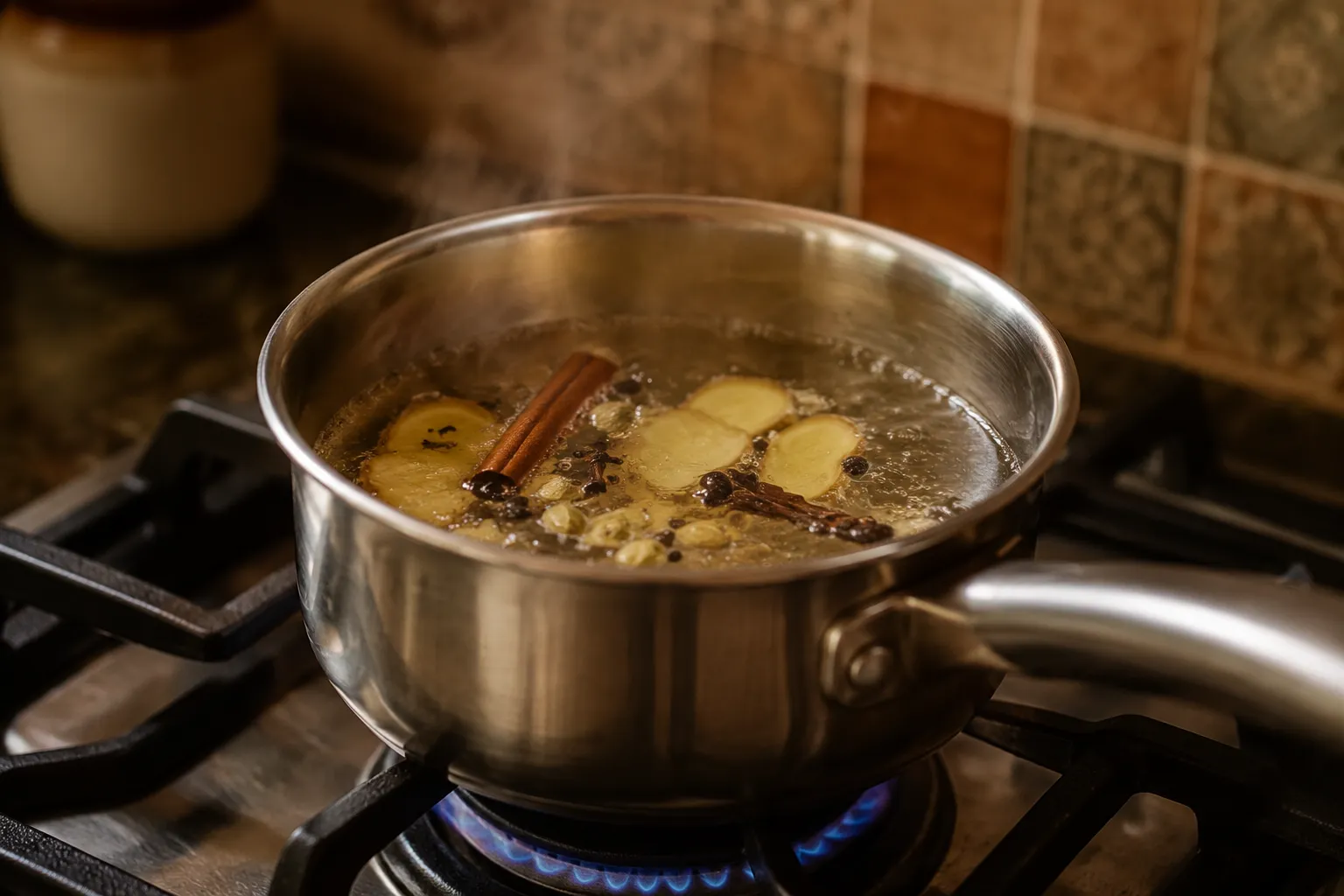
Add the crushed spices, sliced ginger, and water to a small saucepan and bring it to a simmer over medium heat. Let it bubble gently for 4 to 5 minutes — the water should turn pale gold, and your kitchen should start smelling unreasonably good. This pre-infusion step is what separates a great cup from a flat one. Skipping it and just steeping everything together at the end produces noticeably weaker spice character.
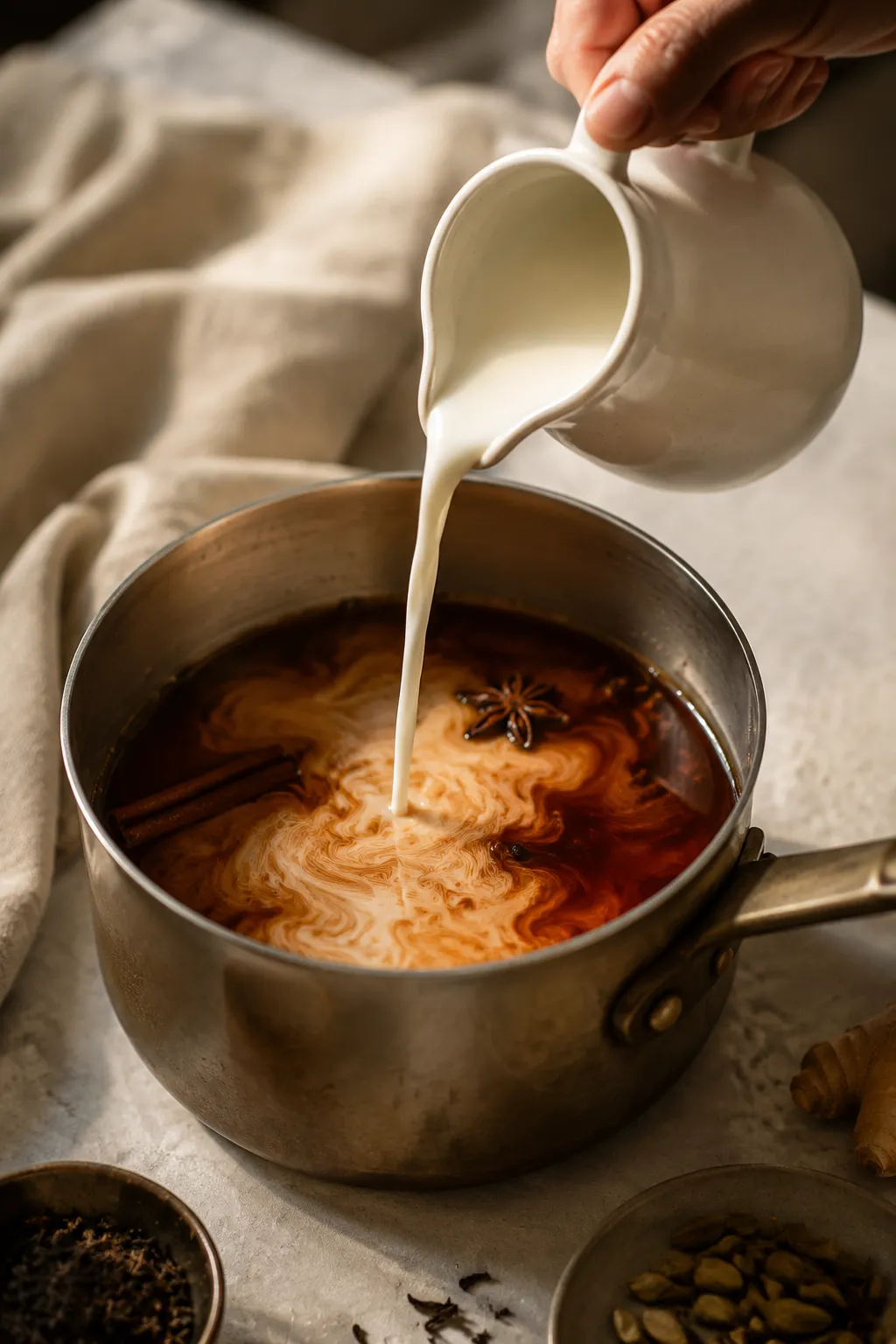
Now stir in the loose-leaf Assam and let it steep for about a minute, until the liquid darkens to a deep mahogany. Pour in the whole milk and the sugar, then bring everything back to a gentle simmer. Watch it carefully — chai loves to climb the side of the pan and boil over the second you turn your back. Some traditional cooks let the chai rise to a foam and fall back two or three times for extra body and a creamier mouthfeel; one rise is plenty for a typical Tuesday morning.
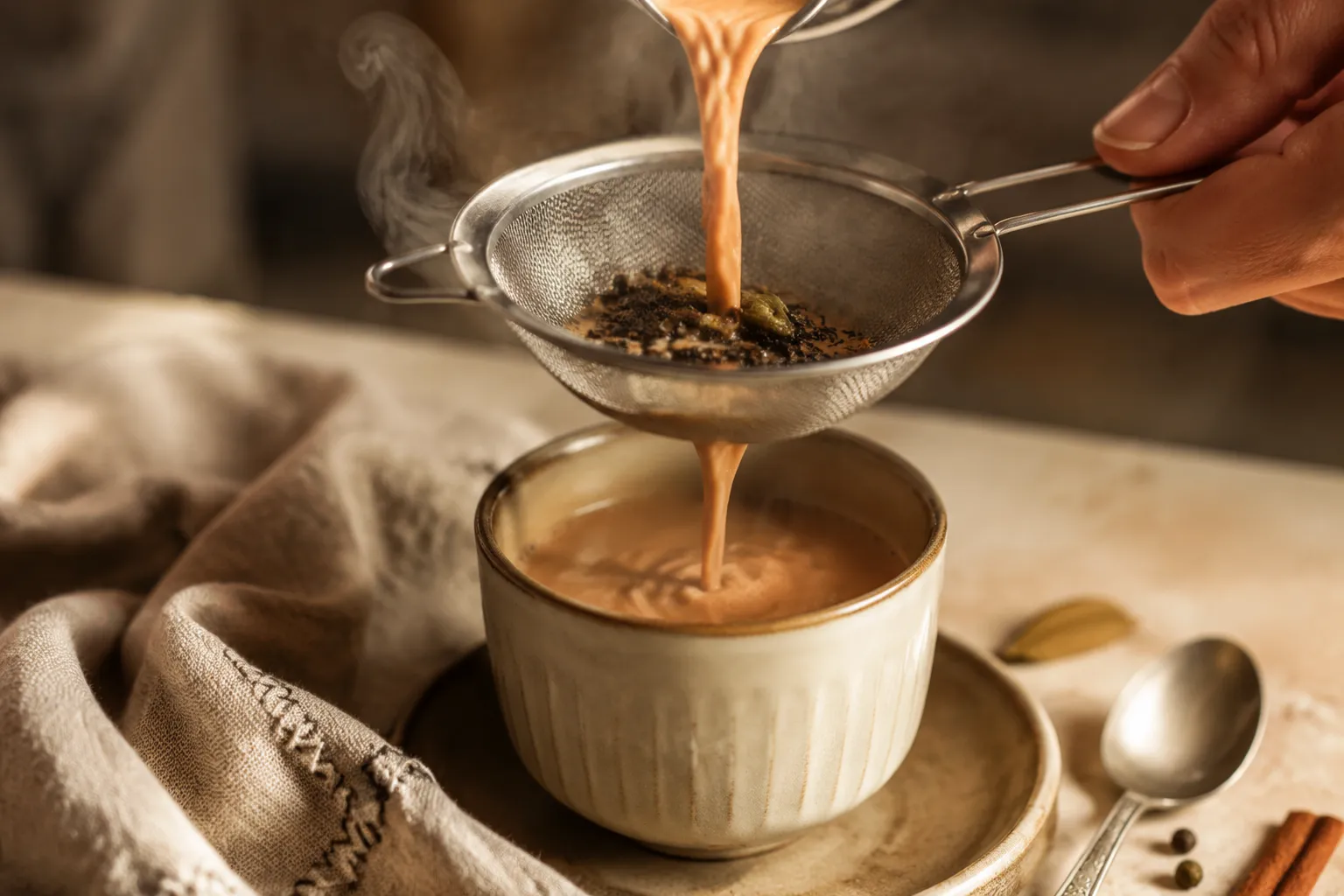
Pour the finished chai through a fine mesh strainer into your favorite mug or small glass, pressing gently on the spent leaves and spice husks with the back of a spoon to extract every last drop. Serve immediately, while the foam is still alive on top and the aroma is at its peak. Chai really is a drink that rewards drinking it hot — let it sit too long and the spices flatten out, and reheating is never quite as good as the first pour.
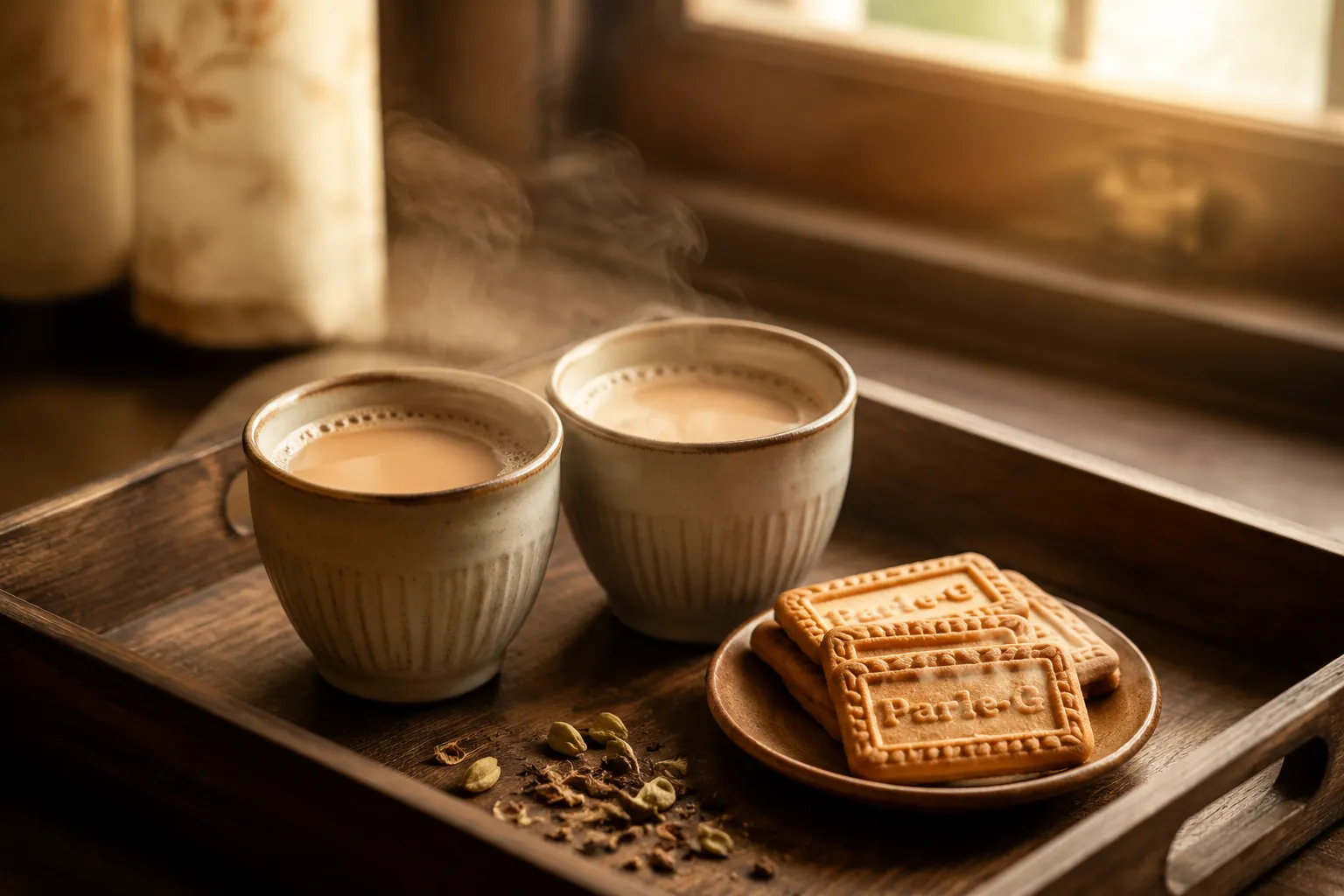
A cup of chai is rarely a solo act in India — it's social, ceremonial, and almost always served alongside a small snack. Classic pairings include crisp Parle-G biscuits for dunking, salty namkeen mixes, fluffy rusk toast, or a buttered slice of pav (Indian bread) in the morning. For a more Western spin, lean into anything spice-adjacent: shortbread, ginger snaps, banana bread with walnuts, or even a square of good dark chocolate. The bitterness of 70-percent chocolate bouncing off the warm cardamom is a small revelation worth chasing.
If you're hosting, brew a double batch and serve it in clear glass cups so guests can admire the layered amber color and the soft ring of milk foam at the top. Add a platter of small sweet and savory bites — gulab jamun, samosas, a cinnamon-spiced cake — and you've turned a casual cup into a proper afternoon tea moment. Save those clay tumblers if you ever pick some up at an Indian market; they impart a faint, earthy sweetness that elevates the whole ritual.
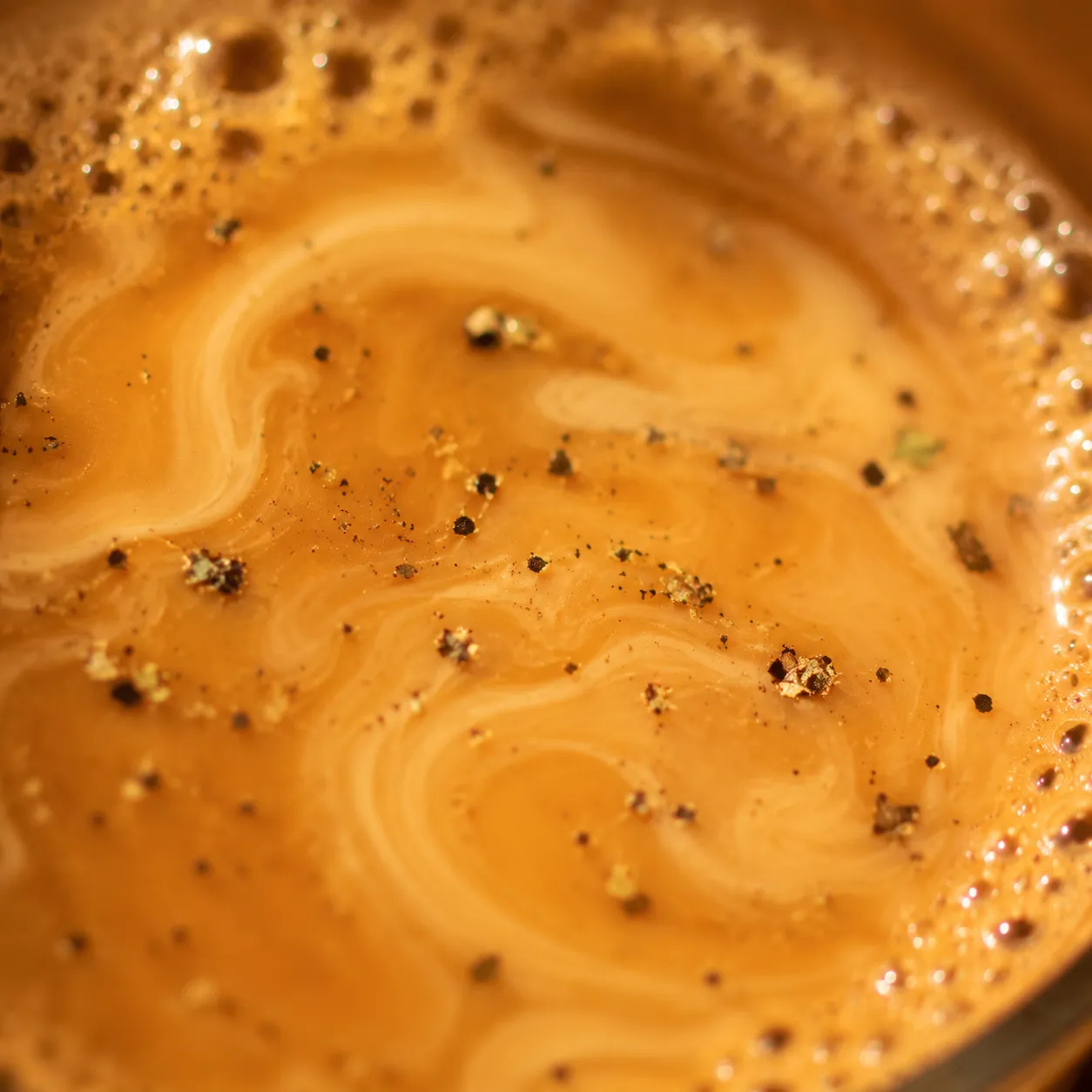
The secret to a memorable cup isn't a fancy gadget or a rare ingredient — it's freshness and patience. Crushing whole spices to order delivers a heady, almost floral aroma that stale powder can't fake, no matter how nice the jar. Simmering the spices in water before the tea ever touches the pan extracts every drop of aromatic oil and lets each one bloom on its own terms. And finishing with full-fat milk gives you that signature creamy mouthfeel that coats the tongue and makes you naturally slow down between sips.
Every great café chai you've had follows roughly this template — and now you can pull it off at home in less time than it takes to drive to one. After a week or two of brewing, you'll start to recognize the spices by smell alone and find yourself adjusting on the fly: a little more ginger when you're fighting a cold, an extra cardamom pod on a rainy afternoon, a pinch of fennel when you want something soothing. That's when chai stops being a recipe and starts being yours.
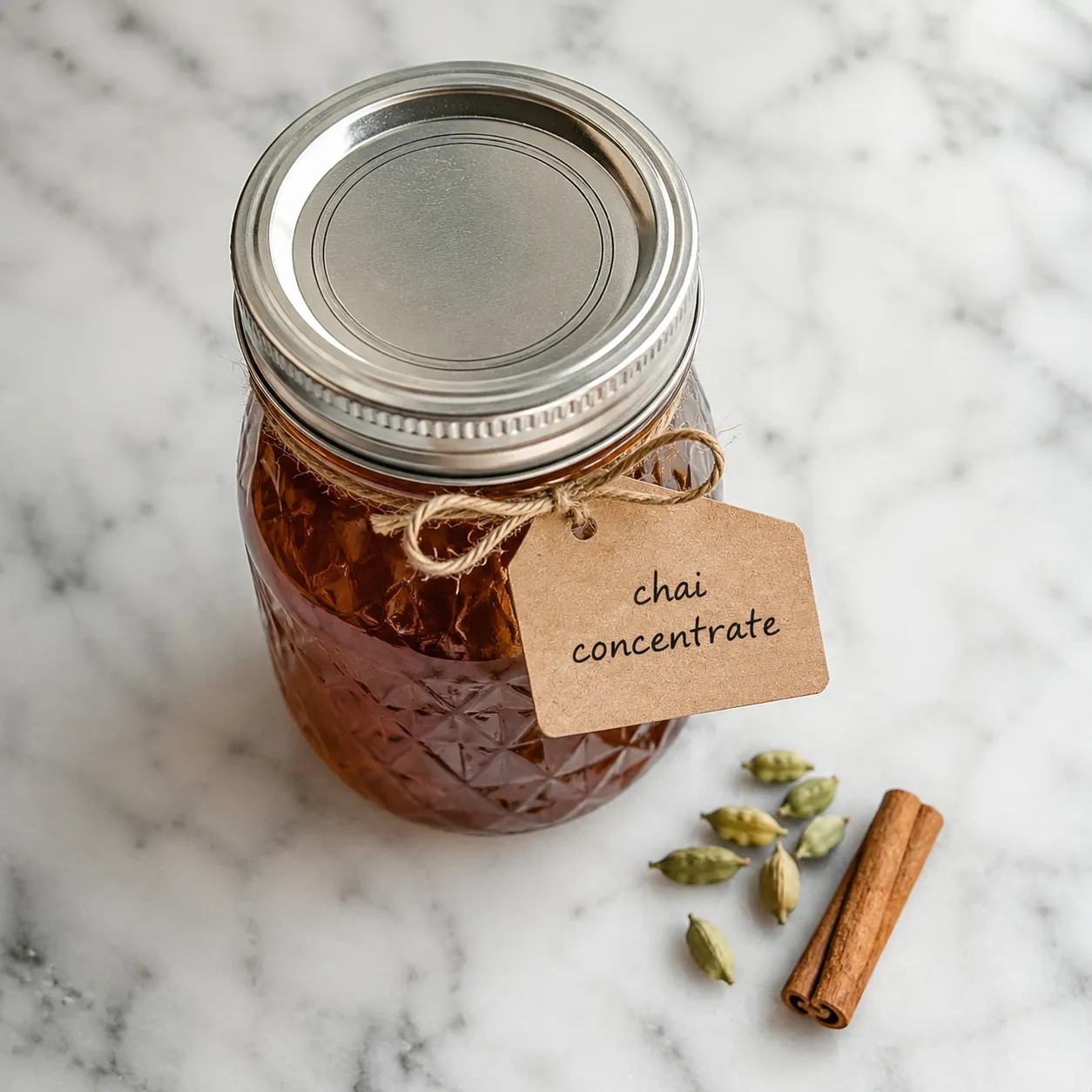
If you drink chai daily (no judgment, same), spend ten minutes on a Sunday batching a homemade chai concentrate and you'll thank yourself all week. Simmer the spices and tea in water as usual but skip the milk and sugar entirely, then strain the deep amber liquid into a clean glass mason jar. To serve, simply heat milk in a small pan or with a frother, mix it with the concentrate in roughly equal parts, sweeten to taste, and you've got a shop-quality cup in under three minutes. It's the closest thing to a chai cheat code I know, and it makes weekday mornings feel measurably less frantic. The same concentrate also makes a beautiful base for iced chai in the summer — pour it over ice and top with cold milk for a drink that easily beats the bottled stuff at the grocery store.
The base recipe is a launching pad — once you've made it twice, start playing. Swap milks, change temperatures, scale up for the week. A few of my favorite directions:
Leftover masala chai keeps in an airtight container in the refrigerator for up to 3 days. Reheat gently in a small saucepan over low heat, stirring constantly — never boil reheated chai with milk in it, since the dairy can scorch and turn grainy. The microwave works in a pinch (30-second bursts, stirring between each), but stovetop reheating preserves the texture better.
For longer storage, freeze the milk-free chai concentrate. Pour the strained concentrate into ice cube trays or a freezer-safe jar (leave an inch of headspace for expansion). Frozen cubes keep up to 3 months and thaw in minutes on the counter or in a mug of hot milk. Avoid freezing chai that already contains dairy — it separates and turns watery on thaw, and no amount of whisking will fully bring it back.