Sangria Recipe: The Best Easy Spanish Pitcher Drink
Ingredients
Scale
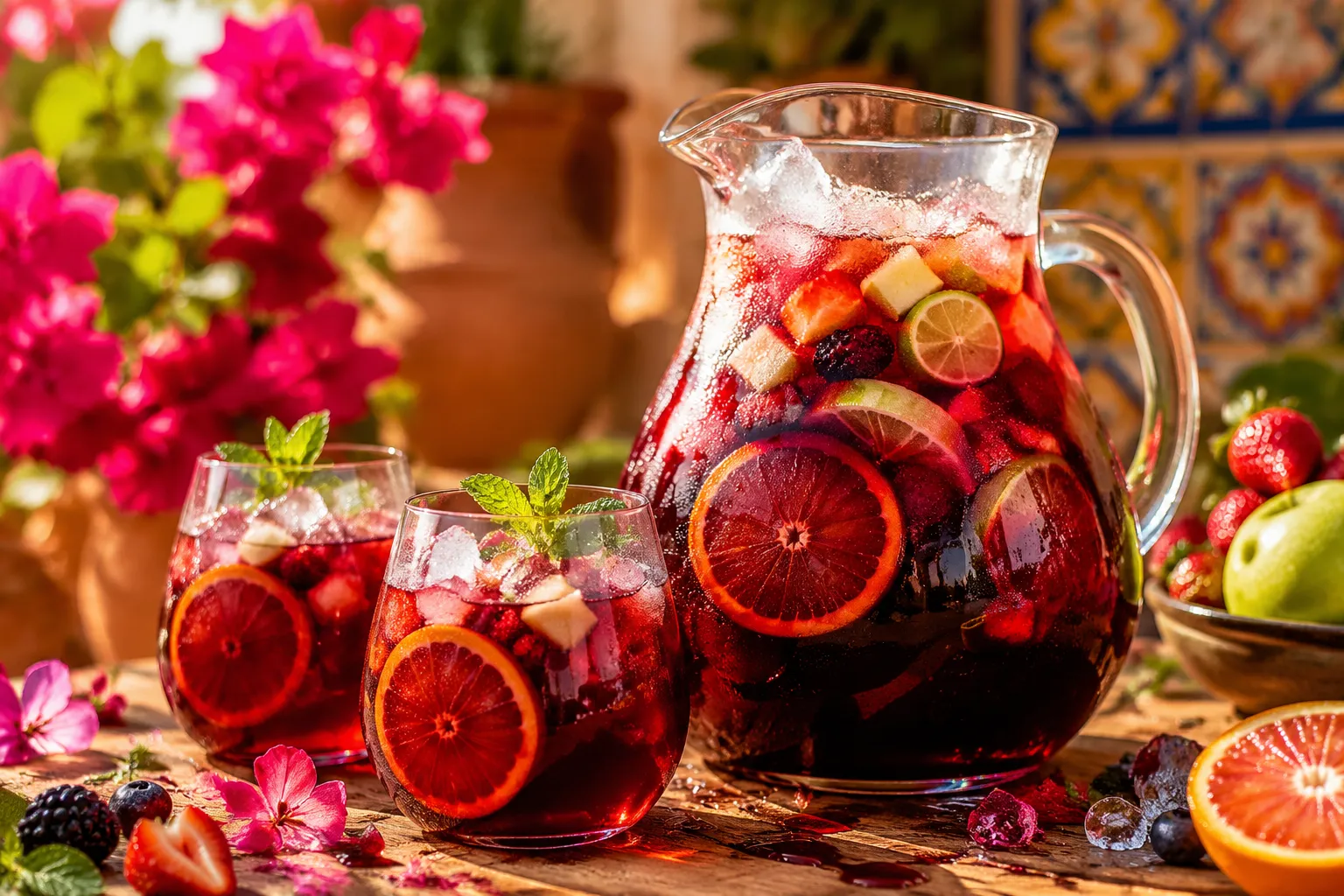
An authentic Spanish sangria recipe with bold red wine, brandy, citrus, and juicy fruit. Stir, chill, sip. The easiest party pitcher you'll make all summer.
A great sangria recipe is the easiest party trick I know. You stir a bottle of Spanish red wine together with brandy, orange liqueur, sliced citrus, and a crisp green apple, then walk away while the fridge does the rest of the work. Four hours later you've got a pitcher of jewel-toned, fruit-soaked deliciousness that tastes like a sunlit afternoon in Barcelona — no fancy bartending required.
I learned to love sangria the way Spaniards actually drink it: chilled all the way through, poured over a heap of ice, and topped with a quick splash of club soda for fizz. It shouldn't taste sugary or syrupy. A traditional sangria recipe leans into the wine itself, letting the brandy and orange liqueur add warmth without smothering the fruit. The result is bright, balanced, and surprisingly easy to drink slowly across an entire afternoon.
This is one of those easy summer cocktails that earns its place at every kind of gathering — backyard cookouts, tapas nights, Sunday brunches, even a quiet evening on the patio. It scales up to feed a crowd, holds in the fridge overnight, and looks downright gorgeous in any pitcher you pull off the shelf. If you've been intimidated by sangria's restaurant reputation, take a breath: this is a genuinely ten-minute job that delivers ten times the flavor of anything you'd buy pre-mixed.
Most American versions of sangria miss the mark in the same way — too much sugar, the wrong wine, and not enough chill time. A real Spanish sangria recipe is built on three principles: fruit-forward red wine, a touch of brandy for depth, and patience. Get those three things right and the rest is just stirring.
In Spain, sangria isn't a fancy cocktail. It's a casual house drink poured at lunch, dinner, and absolutely every long Sunday afternoon. The wine of choice is almost always Rioja or Garnacha, both of which have the juicy red-fruit character that pairs naturally with citrus. The brandy is usually Spanish too — something like Brandy de Jerez — but any decent supermarket brandy works just fine. Don't waste money on top-shelf spirits here; this is a drink built on balance, not luxury.
The other piece is restraint. You're not making a syrup-loaded jug of red wine cocktails meant to mask cheap booze. You're making a wine-forward drink that tastes like wine, just better. Two tablespoons of sugar is plenty. The fruit and orange liqueur do most of the sweetening on their own once the pitcher rests overnight, and that's exactly the point.
A great sangria comes down to good ingredients in honest proportions. You don't need anything obscure — most of these items are already in your kitchen or one quick grocery run away.
The wine is the foundation. Reach for a medium-bodied Spanish red — Rioja, Garnacha, or Tempranillo — that's fruity rather than oaky. Skip pricey bottles; this drink shines with $10 to $15 wines that have plenty of bright fruit character. If you only have a French or Italian red on hand, a young Côtes du Rhône or a simple Chianti will work in a pinch. The wine should taste good enough to drink on its own, but it doesn't need to be special.
Brandy is the traditional spirit in an authentic sangria recipe and adds warmth and depth you can really taste. Pair it with an orange liqueur like Cointreau or triple sec for a citrusy lift. If you'd rather make a white sangria recipe instead, swap the red for a dry Albariño, Sauvignon Blanc, or Pinot Grigio and keep everything else the same — the formula travels beautifully across both colors.
For fruit, citrus is non-negotiable: thin-sliced oranges and lemons release their oils into the wine and give that unmistakable sangria perfume. A diced green apple adds crunch and tartness that holds up overnight. Berries, peaches, pears, and grapes are all welcome additions — just avoid soft fruits like banana, which turn mushy. Some hosts swear by frozen fruit cocktails as a shortcut: tossing in frozen berries chills the pitcher fast and doubles as edible ice that won't water down the drink.
Round things out with a couple tablespoons of sugar (or honey, if you prefer) and a splash of fresh orange juice for natural sweetness. Right before serving, top each glass with club soda or lemon-lime soda for fizz and lift. Ten ingredients, one pitcher, very big payoff.
This is the easiest pitcher cocktail in your repertoire — three real steps and a few hours of patience. Here's how to make sangria the right way without overthinking a single thing.
Start by prepping the fruit. Wash and slice one orange and one lemon into thin rounds, leaving the peel on for color and oils. Core a green apple and dice it into bite-size cubes. Add everything to your pitcher.
Sprinkle the sugar over the fruit and use a wooden spoon to gently press and stir for about a minute. This step is called maceration, and it's where the real flavor magic happens. The sugar pulls juice from the fruit, which then mingles with the wine and creates that signature jammy depth. Don't skip it or rush past it — those sixty seconds genuinely matter.
Next, pour in the wine, brandy, orange liqueur, and orange juice. Give the pitcher a long, slow stir until the sugar dissolves completely and the fruit is suspended evenly through the liquid. Take a quick sniff: it should smell bright and citrusy with a warm undertone of brandy.
Cover the pitcher with plastic wrap or a tight-fitting lid and refrigerate for at least four hours, ideally six to eight. Overnight is even better. As it chills, the fruit infuses the wine with citrus oils and natural sweetness while the brandy mellows into the background. Resist the urge to taste at hour two — it'll be flat and thin. By hour six, it's a different drink entirely, rounded and lush.
When you're ready to serve, fill wine glasses or short tumblers with plenty of ice. Pour the sangria over the top, spoon a few pieces of soaked fruit into each glass, and finish with a splash of club soda for fizz. Garnish with a fresh orange wheel or a sprig of mint if you're feeling festive. The first sip should taste bright, balanced, and unmistakably Spanish — fruity wine, warm brandy, zippy citrus, and just enough sweetness to keep you reaching for the pitcher.
A pitcher of sangria is a built-in centerpiece. It looks beautiful, pours easy, and pairs with just about everything you'd serve at a relaxed summer gathering.
For glassware, stemmed wine glasses are traditional in Spain, but short tumblers or even chunky mason jars work just as well for a casual backyard vibe. Always serve over generous ice — sangria should be cold enough to drink slowly. Garnish with an extra orange wheel, a few mint leaves, or a single fresh berry per glass for that magazine-cover look. If you want a true Spanish touch, drop in a wedge of lemon and a thin curl of orange peel.
Pair it with anything you'd find on a tapas menu. Manchego cheese, marcona almonds, briny olives, jamón serrano, and crusty bread are the classic crew. Patatas bravas, garlic shrimp, tortilla española, and chorizo bites all play beautifully with the wine's acidity. If you're searching for Spanish tapas recipes to round out the spread, focus on briny, salty, and savory bites — they're the perfect counter to the fruit-forward sangria.
Sangria works just as well at the brunch table as it does on the dinner patio. It sits comfortably alongside a frittata, a smoked salmon platter, or even buttermilk pancakes, making it one of the most versatile brunch punch recipes you can pour. Your guests will think you fussed for hours. To scale up for a real crowd, multiply the recipe by the number of bottles you need and use a glass drink dispenser instead of a pitcher. Plan on roughly four servings per bottle, keep an extra bottle chilling in case the party runs long, and always set out a small spoon so guests can fish out the soaked fruit at the bottom of their glass.
Once you've made this classic sangria recipe from scratch, you'll never reach for the pre-made bottled stuff again. The fruit tastes better, the wine breathes deeper, and the whole pitcher feels like a small piece of Spain set down on your table — exactly the kind of drink that turns an ordinary Saturday into something memorable.
This recipe is the perfect base for endless riffs. Once you've nailed the classic version, swap ingredients seasonally or tailor the pitcher to your guests with these variations:
Sangria keeps in the refrigerator for up to 3 days in a covered pitcher or sealed glass jar. The flavor actually improves overnight as the fruit continues to infuse the wine, so making it 24 hours ahead is encouraged. After day three, the citrus peels begin to turn slightly bitter and the fruit gets mushy — that's your cue to finish the pitcher or strain out the fruit and reuse the liquid for another day or two.
You can technically freeze sangria, but it changes the texture and the alcohol prevents it from freezing solid. A better trick is freezing leftover sangria into ice cube trays and using the cubes in fresh wine pours or as a flavor boost in lemonade. The soaked fruit at the bottom of the pitcher is gold too — spoon it over vanilla ice cream, blend it into a smoothie, or stir it into Greek yogurt for a boozy adult breakfast.