Tanghulu Recipe: Classic Chinese Candied Fruit Skewers
Ingredients
Scale
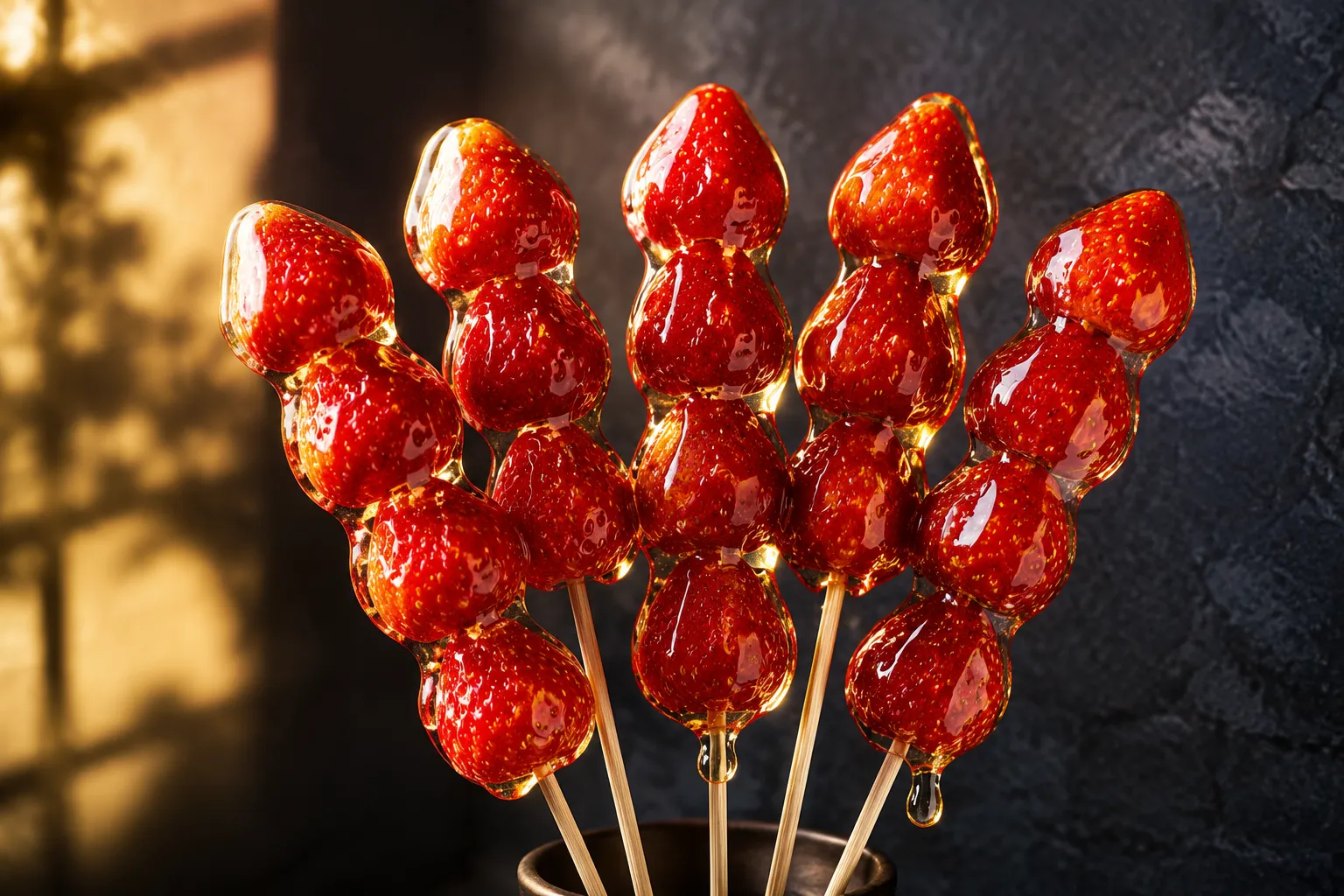
Tanghulu is the iconic Chinese street snack with a glass-like sugar shell that shatters over juicy fruit. Master it at home with just three pantry staples.
Tanghulu has been the showstopping street snack of Beijing for centuries, and one bite into that paper-thin, glass-like shell tells you exactly why. The crackle is wildly satisfying, the fruit underneath stays cold and juicy, and the whole thing comes together with three pantry staples you almost certainly already have. If you've watched the viral videos and assumed this had to be complicated, I have very good news.
This homemade version skips corn syrup entirely and leans on a clean 2:1 sugar-to-water ratio cooked to a precise 300°F. That's the temperature where everything magical happens. The syrup transitions to the hard crack sugar stage, sets up clear and brittle, and produces that signature shatter-and-snap when you bite in. No cloudiness, no stickiness, no second-guessing.
I tested this recipe more times than I'd like to admit (my dentist would have thoughts), and the difference between a batch that works and one that flops always comes down to two details: thoroughly dry fruit and a candy thermometer. Get those right and you're basically done.
Trace back through any list of iconic Chinese street food desserts and tanghulu sits near the top. The traditional version, sold by vendors throughout northern China and especially Beijing, features bright red hawthorn berries threaded onto long bamboo skewers and dipped in hot sugar syrup until they're encased in a clear, brittle shell. Hawthorn has a tartness that cuts through the candy beautifully, which is why the original recipe became a cold-weather classic. Vendors traditionally stake the finished skewers into a thatched straw post and sell them on chilly evenings, when the shell stays glassy longest. The cold air actually helps the candy hold its snap.
The modern version exploded online thanks to that ASMR-perfect crunch. Strawberries, grapes, and even mandarin segments started showing up on food feeds everywhere, and home cooks who'd never touched a candy thermometer suddenly wanted to make Chinese candied fruit at the kitchen counter. The appeal is obvious: the visual is gorgeous, the technique looks intimidating but isn't, and the result genuinely delivers on the hype. What the videos don't always show is the troubleshooting curve, which is exactly why this guide leans hard into the why-it-failed details.
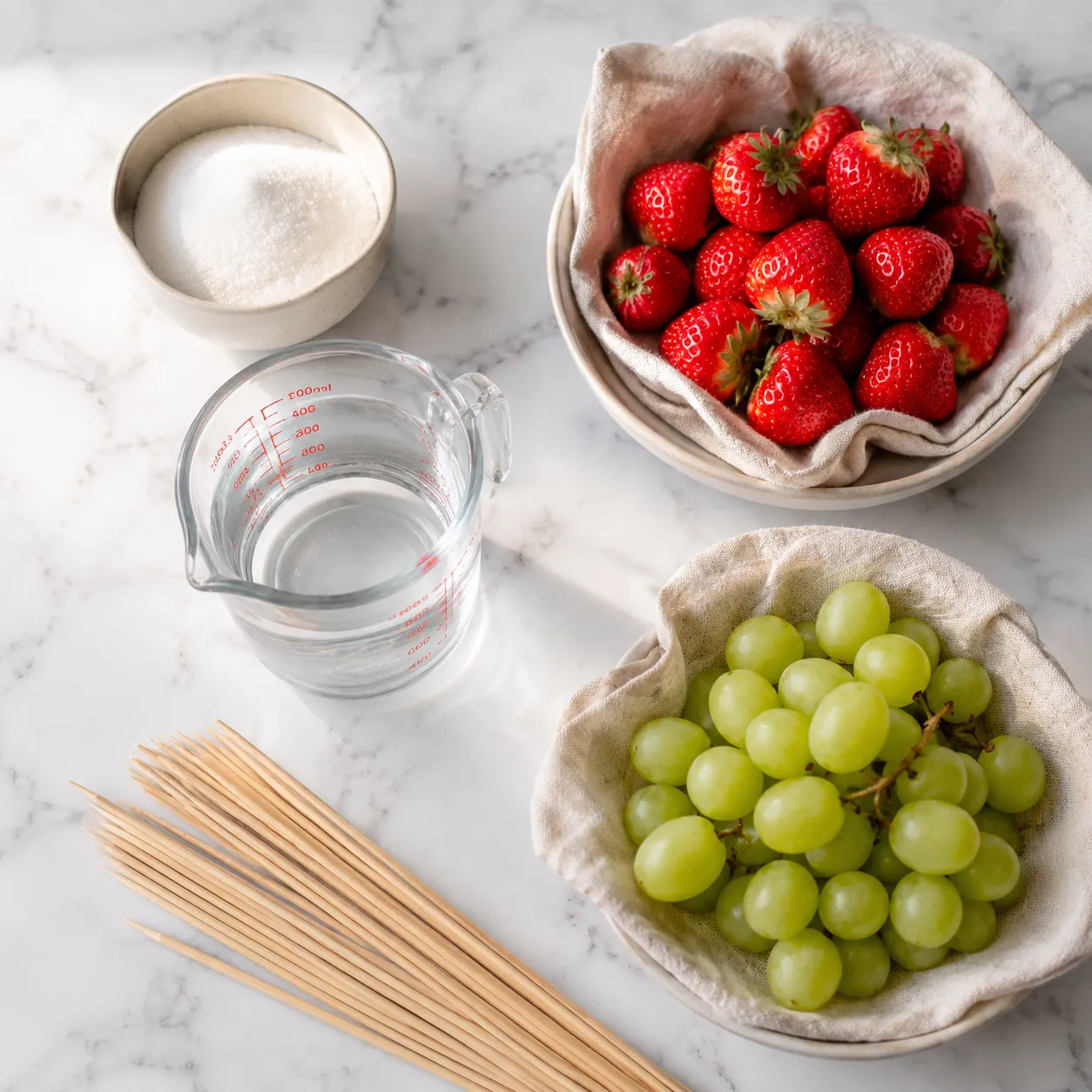
The beauty of this recipe is its restraint. You need sugar, water, fruit, and skewers. That's the whole list.
Hawthorn berries are the traditional choice, but they're hard to find fresh outside of Asian markets. Strawberries are the most popular substitute and what I default to. The firm flesh and slightly tart bite mirror hawthorn's flavor profile well. Grapes work beautifully too (especially seedless red or green), as do blueberries clustered three or four to a skewer, mandarin segments, and firm kiwi rounds. Avoid anything overly juicy or thin-skinned. Raspberries weep, banana slices brown, and pineapple's surface moisture will wreck your shell every time. A touch of strawberry tanghulu nostalgia: this is the version most people fall in love with first.
A 2:1 ratio of granulated sugar to water is the magic number. Two cups of sugar to one cup of water gives you enough volume to dip six skewers without scraping the bottom of the pan and stalling the temperature. Use plain white granulated sugar — brown sugar, coconut sugar, and other alternatives don't behave the same way at high heat and will scorch before they ever reach 300°F. Save those for cookies.
You'll see plenty of recipes call for a tablespoon or two of corn syrup, which acts as an interfering agent and helps prevent the sugar from recrystallizing in the pan. It's a fine addition if you have it, but it isn't necessary as long as you don't stir the syrup once it starts boiling. The Beijing street vendor original uses pure sugar and water, and that's the method I'm walking you through here.
Here's the high-level flow before you dive into the recipe card. Read through both before you start. Once the sugar hits temperature, you have about two minutes of working time and you do not want to be hunting for a paper towel.
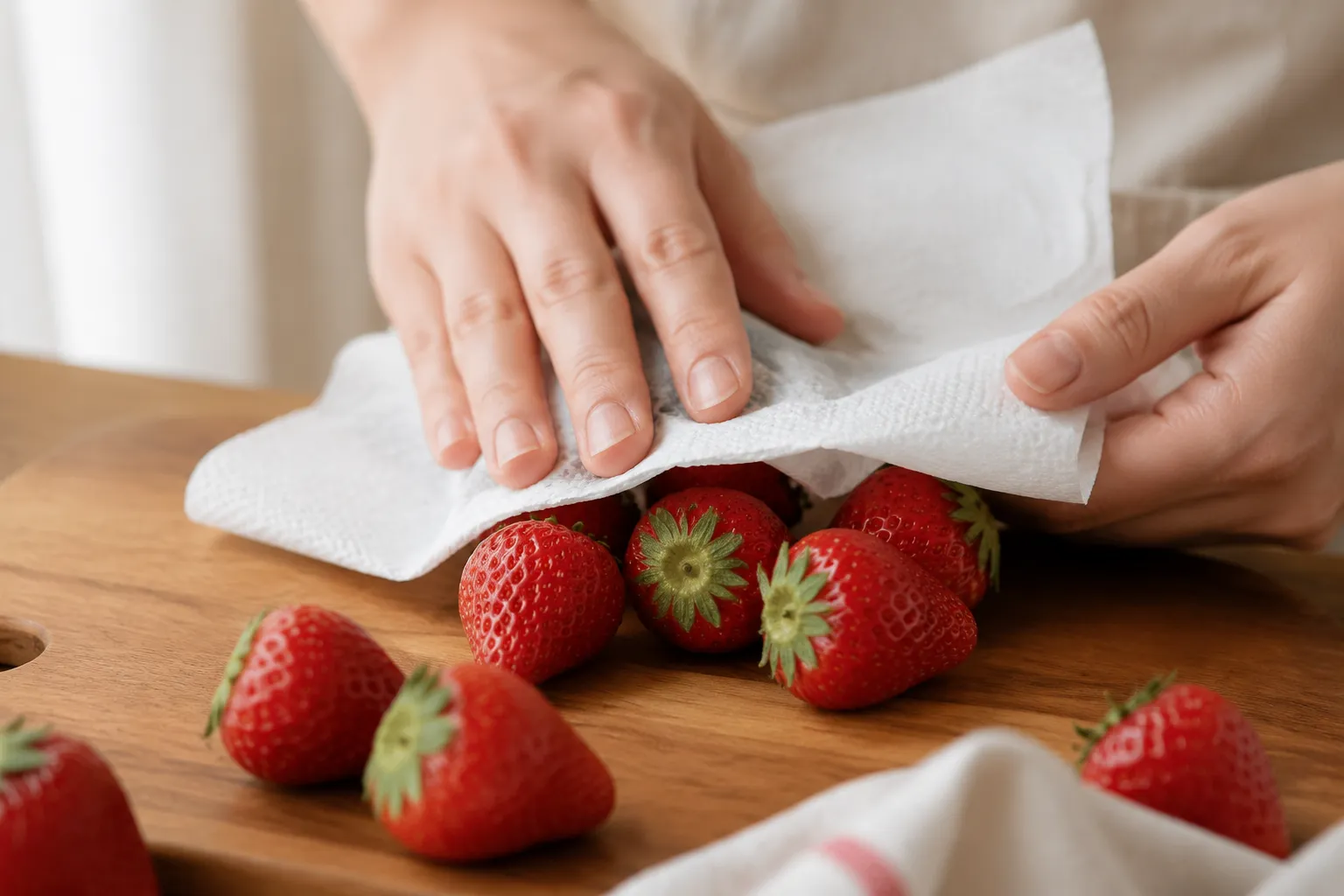
Wash your fruit, then dry it like your shell depends on it (because it does). Pat each piece with a clean towel, then leave it on a paper-towel-lined sheet pan for 15 to 20 minutes to air-dry. Any surface moisture turns to steam in the hot syrup and creates pinholes that let air sneak under the shell. That's how you end up with a sticky coating two hours later. Remove strawberry stems, blot the hollows where the leaves were, and check grapes for any split skin.
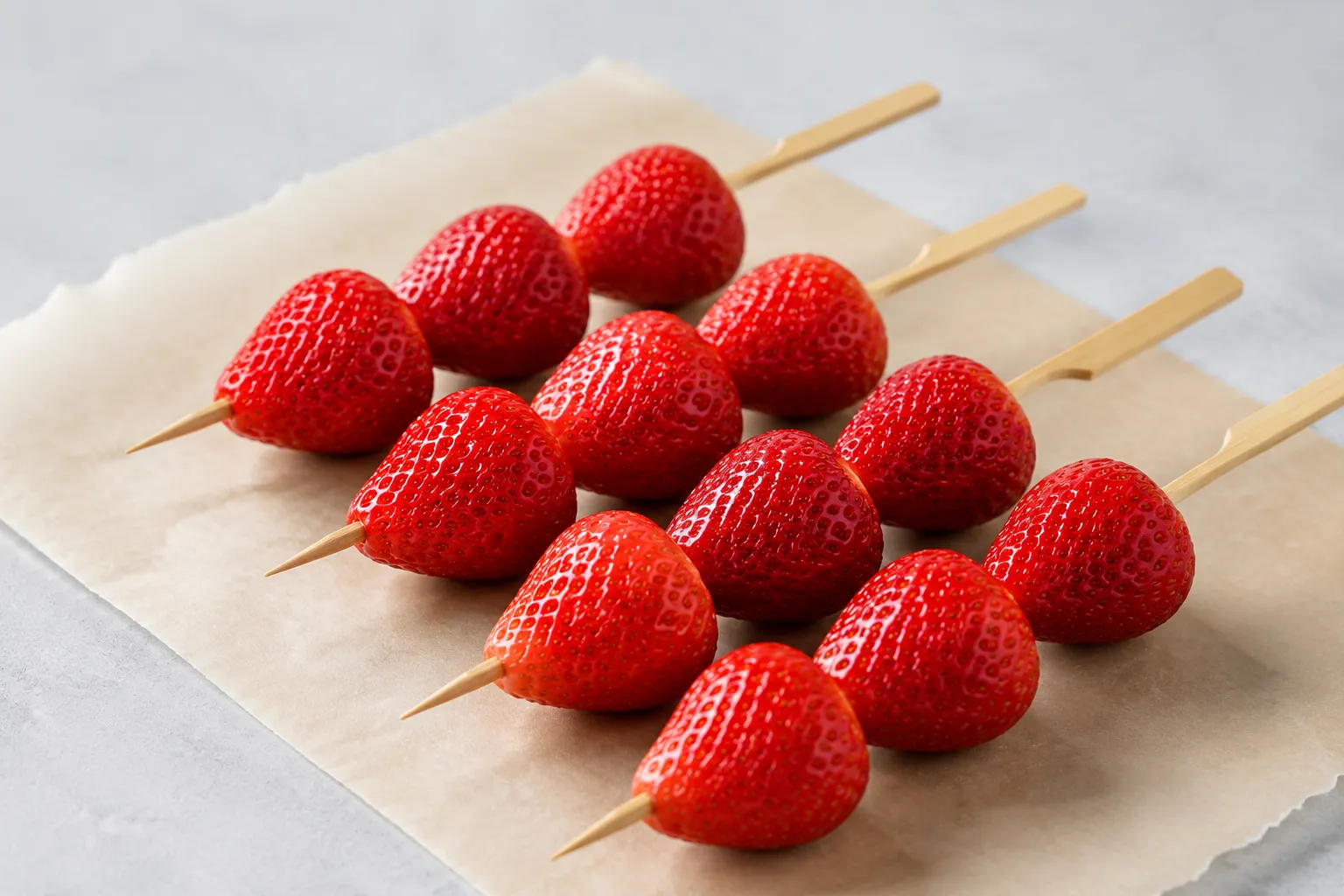
Thread two to four pieces of fruit onto each bamboo skewer, leaving about an inch of space at the bottom for your dipping grip. Don't pack them too tightly. You want syrup to flow into the gaps and coat all sides cleanly. If you're mixing fruits, group similar sizes on a single skewer so they all submerge at the same depth.
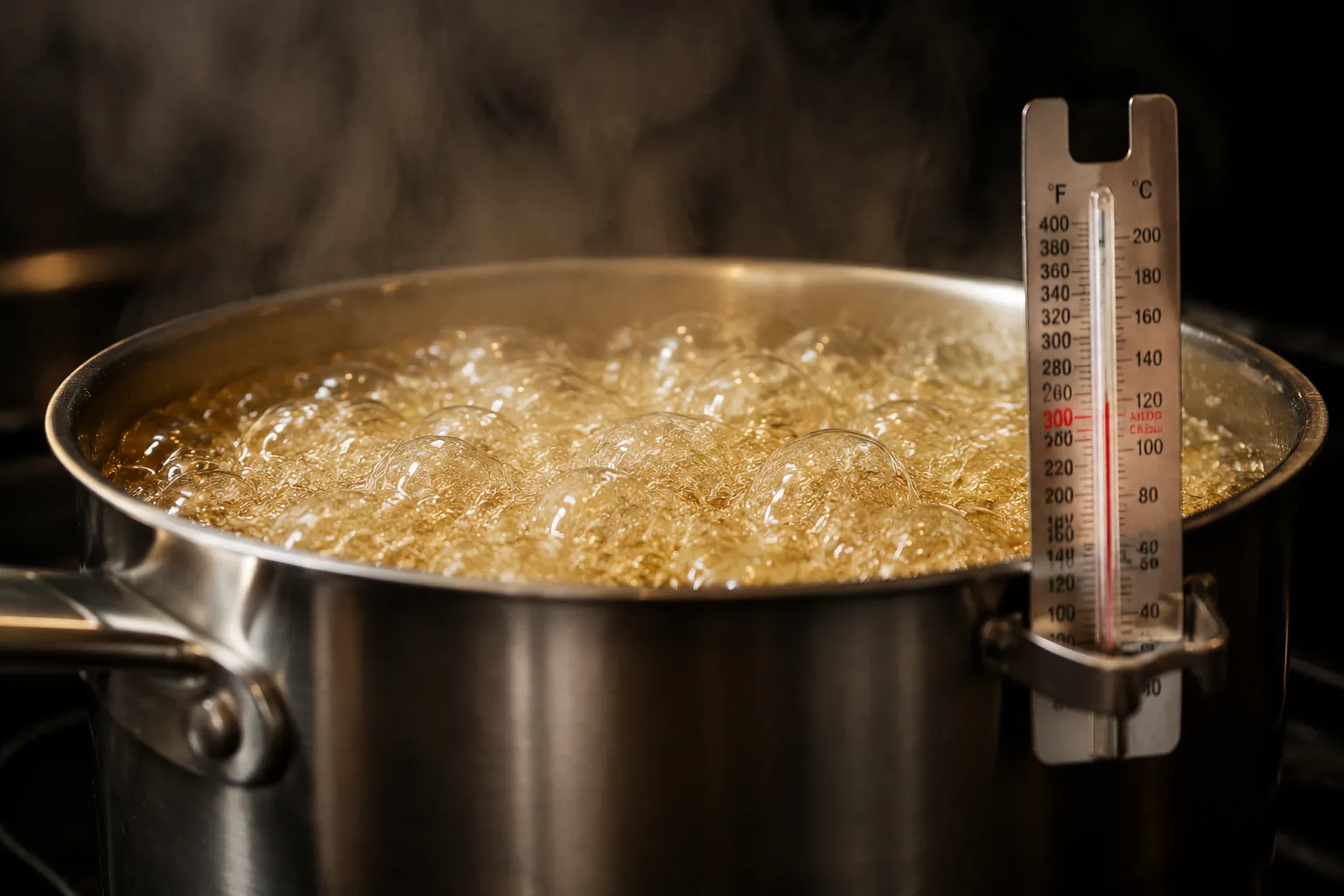
Combine sugar and water in a small, heavy saucepan over medium-high heat. Stir gently just until the sugar dissolves, then stop touching it. Seriously, hands off. Clip a candy thermometer to the side and let the syrup bubble away undisturbed. It'll move quickly through soft ball, firm ball, and soft crack territory before settling at 300°F, which is the threshold for a true glass-shattering shell.
The moment the thermometer hits 300°F, kill the heat and tilt the saucepan toward you so the syrup pools on one side. Dip each skewer at an angle, rotating to coat fully, then let excess drip back into the pan for two or three seconds. Place dipped skewers on a parchment-lined sheet pan (not foil — the syrup welds to it) and let them set for 5 to 10 minutes until the shell is rock-hard.
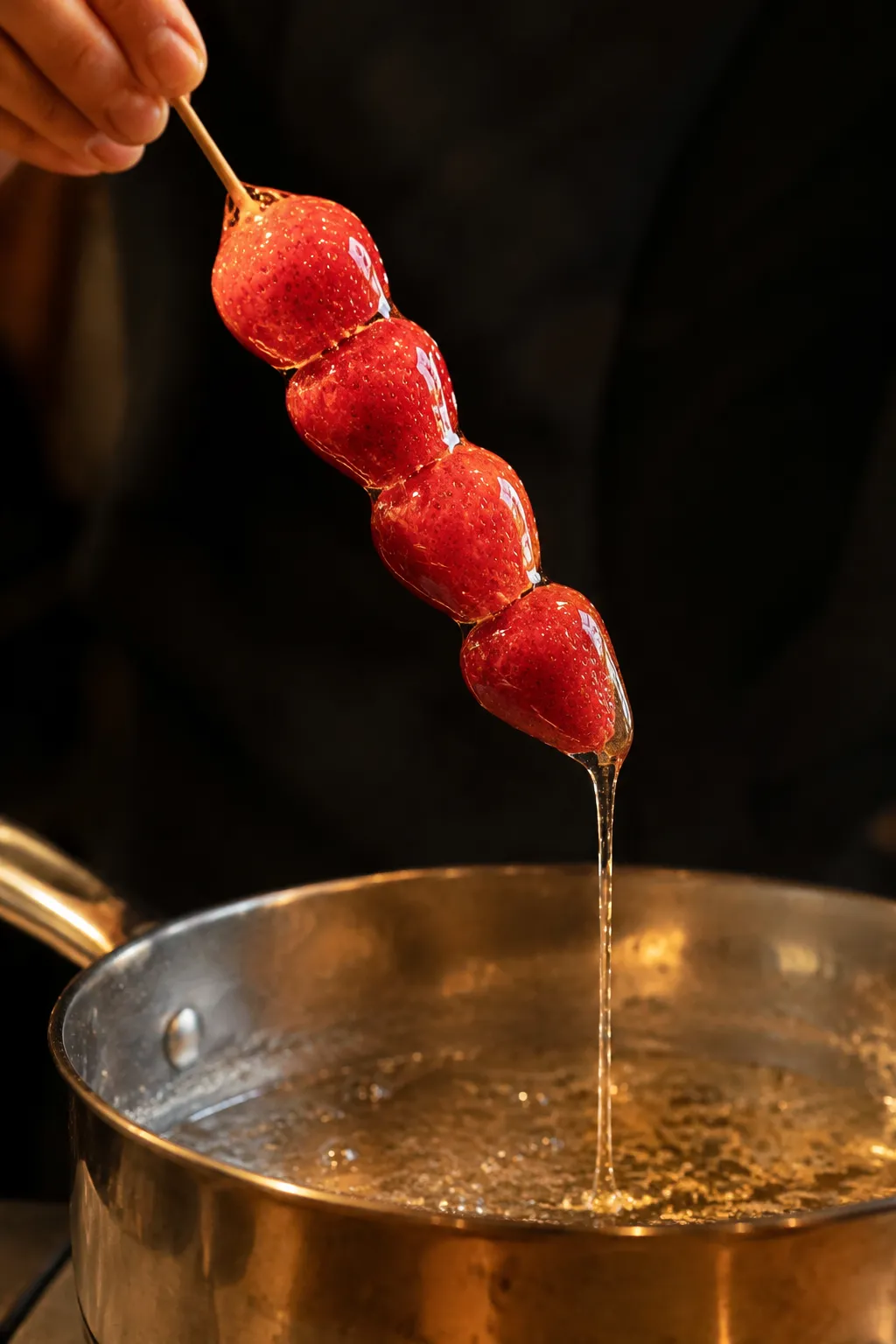
A reliable candy thermometer guide is your best friend here, because this recipe lives or dies on temperature precision. Even 10 degrees too low and you'll get a chewy, taffy-like coating instead of glass. Ten degrees too high and the sugar starts caramelizing into amber, which tastes fine but loses that crystal-clear look that makes the shell so striking in the first place.
The other thing I want to underline: do not stir the syrup once it's boiling. Stirring drags sugar crystals down the sides of the pan and into the syrup, where they seed recrystallization and turn your would-be glass shell cloudy and grainy. If you see crystals forming on the side of the pan, brush them down with a wet pastry brush instead of stirring.
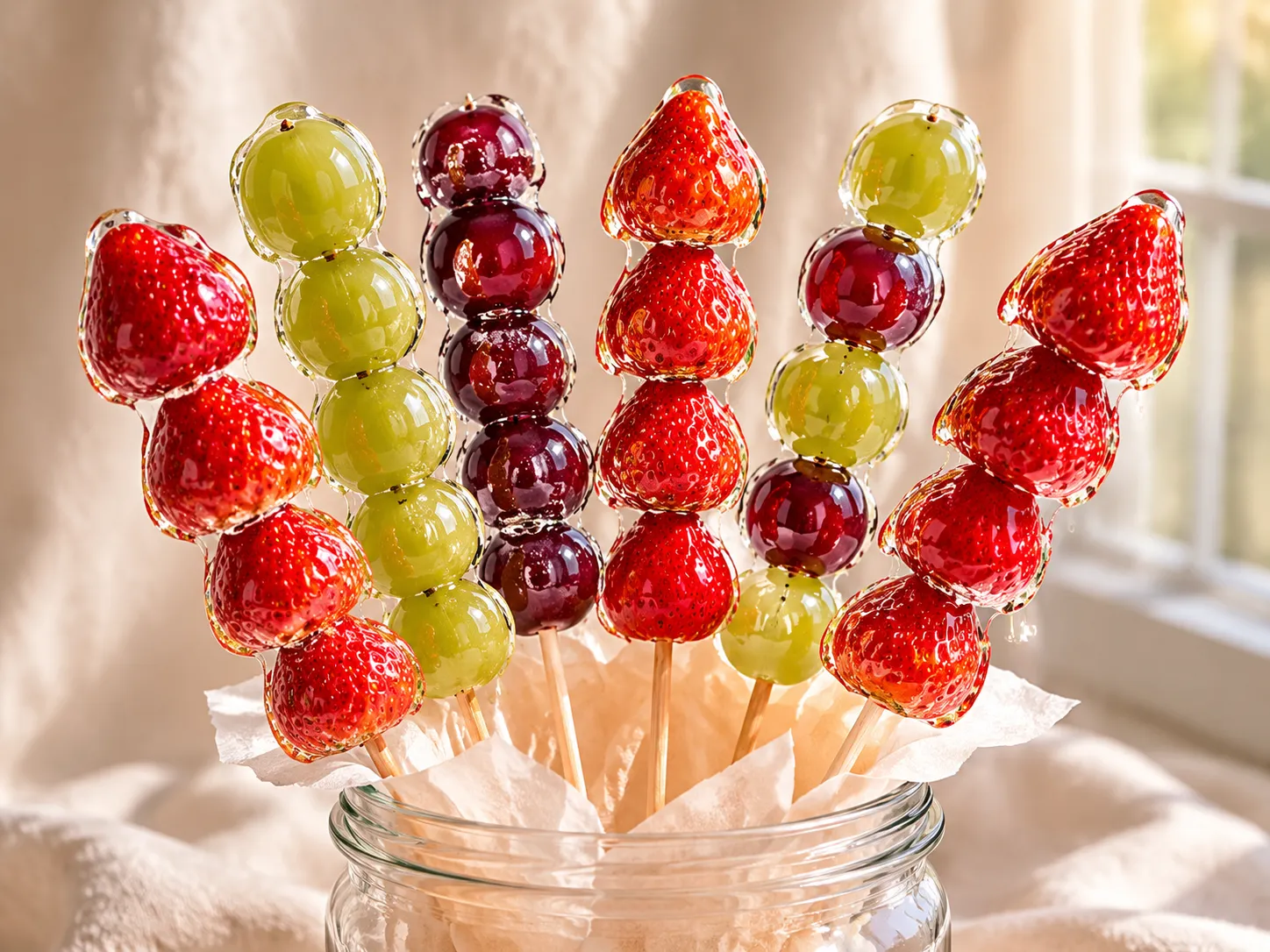
Most failures fall into three buckets, and all three are fixable.
This is the number-one issue, and it's almost always a temperature problem. If your syrup didn't fully reach the hard crack sugar stage, the residual moisture in the candy keeps it pliable instead of brittle. Your fix: invest in a digital candy thermometer (the clip-on dial models drift wildly), and confirm with the cold water test. A drop of properly cooked syrup should snap cleanly into shards in ice water, not bend or flatten.
If your shell has an amber tint or tastes faintly bitter, you pushed past 300°F into caramelization territory. Sugar moves fast above 290°F, so pull it the second it hits temperature. A pale champagne color is fine; anything darker than light gold means the next batch needs to come off the heat sooner. Don't chase darker for flavor — caramel is a different dessert.
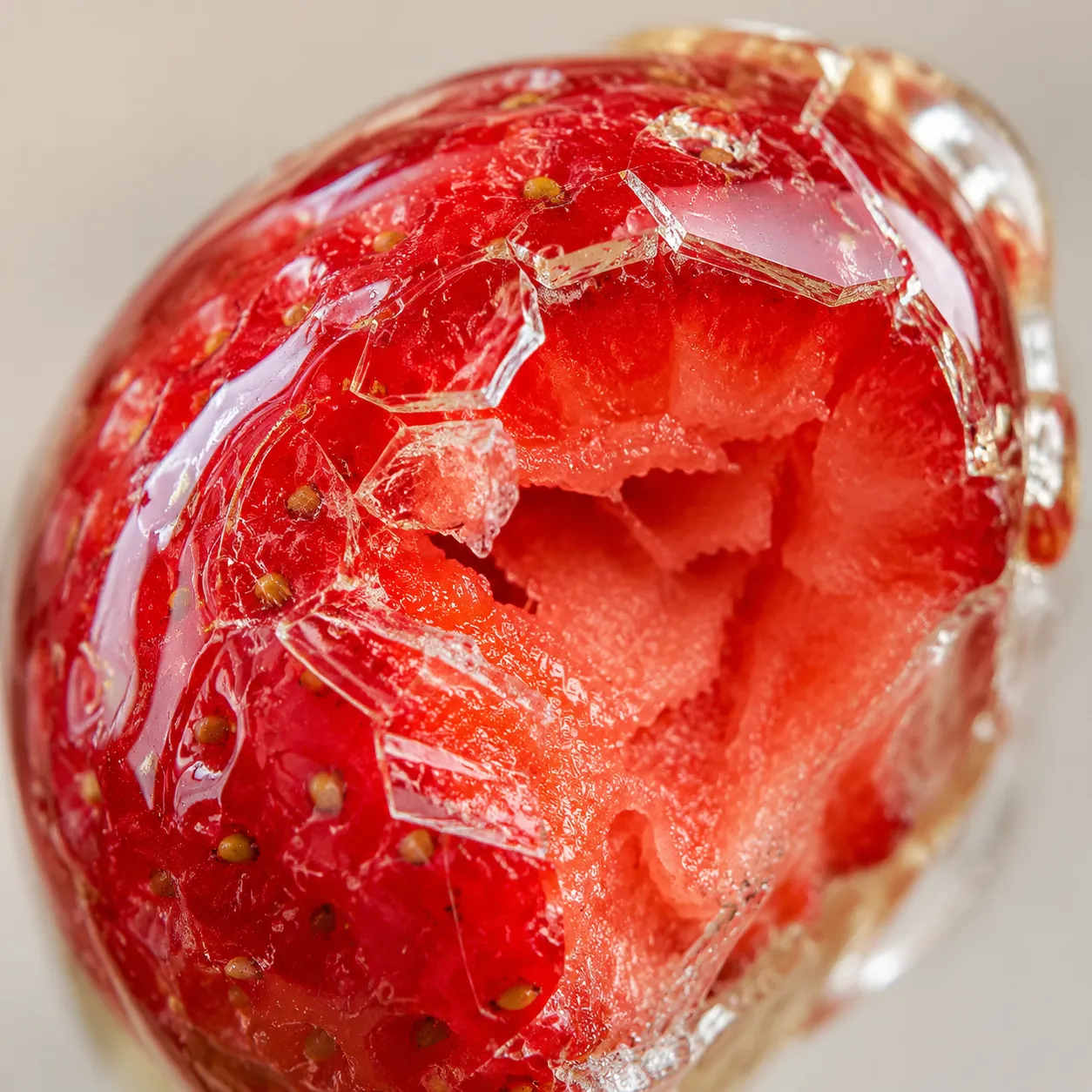
If the candy coating peels away from the fruit instead of bonding, surface moisture is the culprit. Dry the fruit longer, and consider a quick dunk-and-dry routine: wash, pat, and let the skewered fruit air-dry on paper towels for a full 30 minutes before dipping. Some cooks even skewer the fruit the day before and refrigerate uncovered overnight to dehydrate the surface slightly — a pro move that produces a noticeably better seal between candy and fruit.
Tanghulu is at its best the moment the shell sets, which makes it perfect for the kind of last-minute presentation that wows people without much effort. Serve them upright in a tall glass with a few inches of dried beans or coarse sugar at the bottom to anchor the skewers, the way Beijing vendors stake them on straw. They look stunning on a dessert table next to other strawberry desserts like shortcake or chocolate-dipped berries, and the contrast between the crackly shell and a soft, creamy second dessert is genuinely fun to eat.
For a casual evening, a few skewers on a wooden board with jasmine tea or sparkling wine is all you need. If you're hosting a party and want to lean into other fruit skewer recipes for variety, mix these in with chocolate-dipped fruit and yogurt-coated berry sticks for a build-your-own dessert bar. And if making homemade hard candy turns into your new obsession (it happens), the same syrup technique scales up to lollipops, brittle, and pulled candy with very little tweaking.
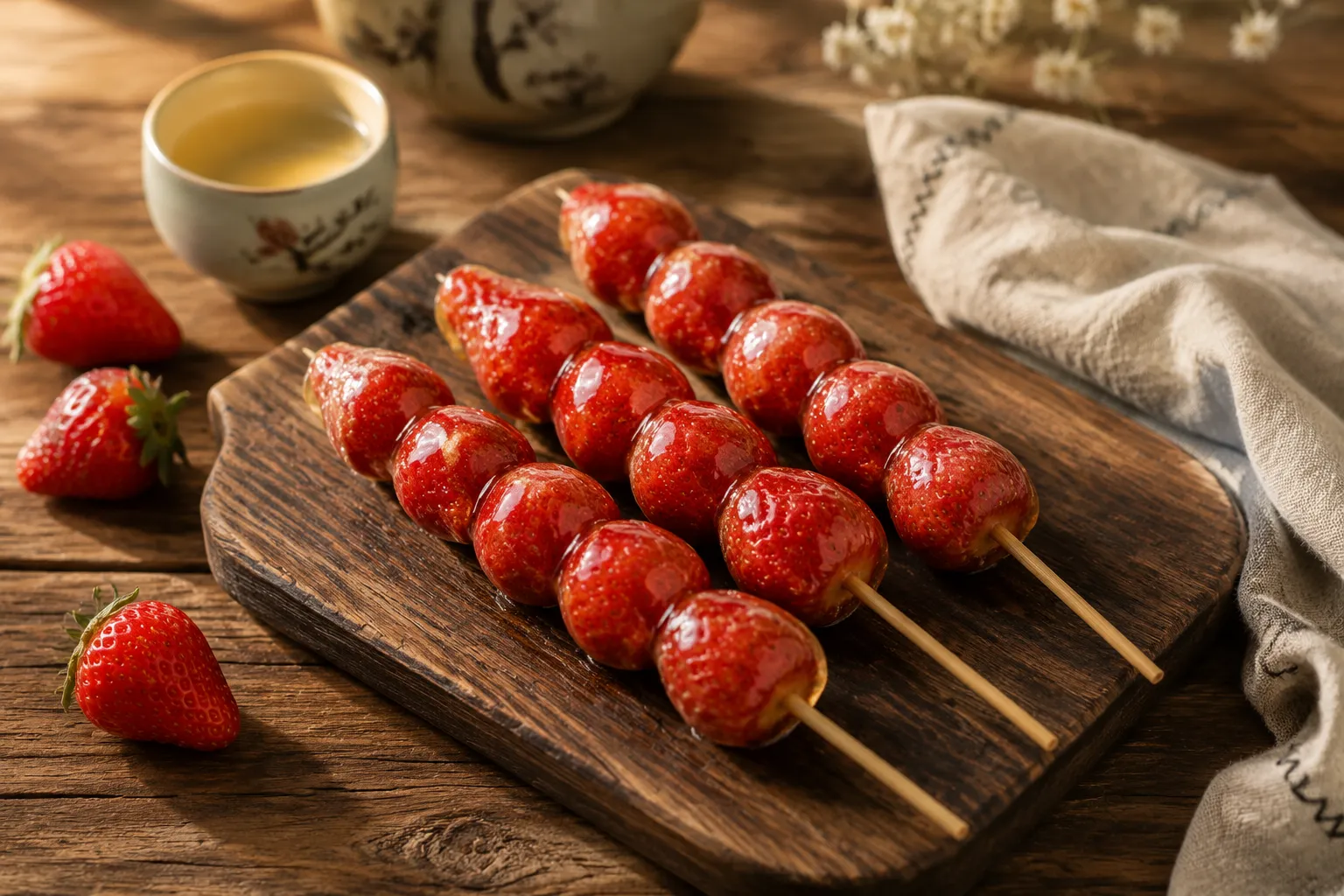
Once you've nailed the technique, the fruit is the playground. The same 300°F syrup works on virtually any firm, low-moisture fruit, and you can mix and match within a single skewer for a stained-glass effect that photographs beautifully.
This is a same-day dessert — full stop. The sugar shell starts pulling moisture from both the fruit inside and the air outside almost immediately, and within 4 to 6 hours at room temperature it'll go from crackly to tacky to outright sticky. Plan to make these within an hour or two of serving for the absolute best crunch.
If you have leftovers, store them in a single layer on parchment paper inside a loosely covered container at cool room temperature. Never the fridge, where humidity destroys the shell faster than anything. They'll still taste good for snacking the next day, but the signature shatter will be gone. Avoid airtight containers too — trapped moisture is the enemy here, and a slightly vented setup actually holds up better than a sealed one.