Ginger Snaps Recipe: Crispy, Spiced Holiday Cookies
Ingredients
Scale
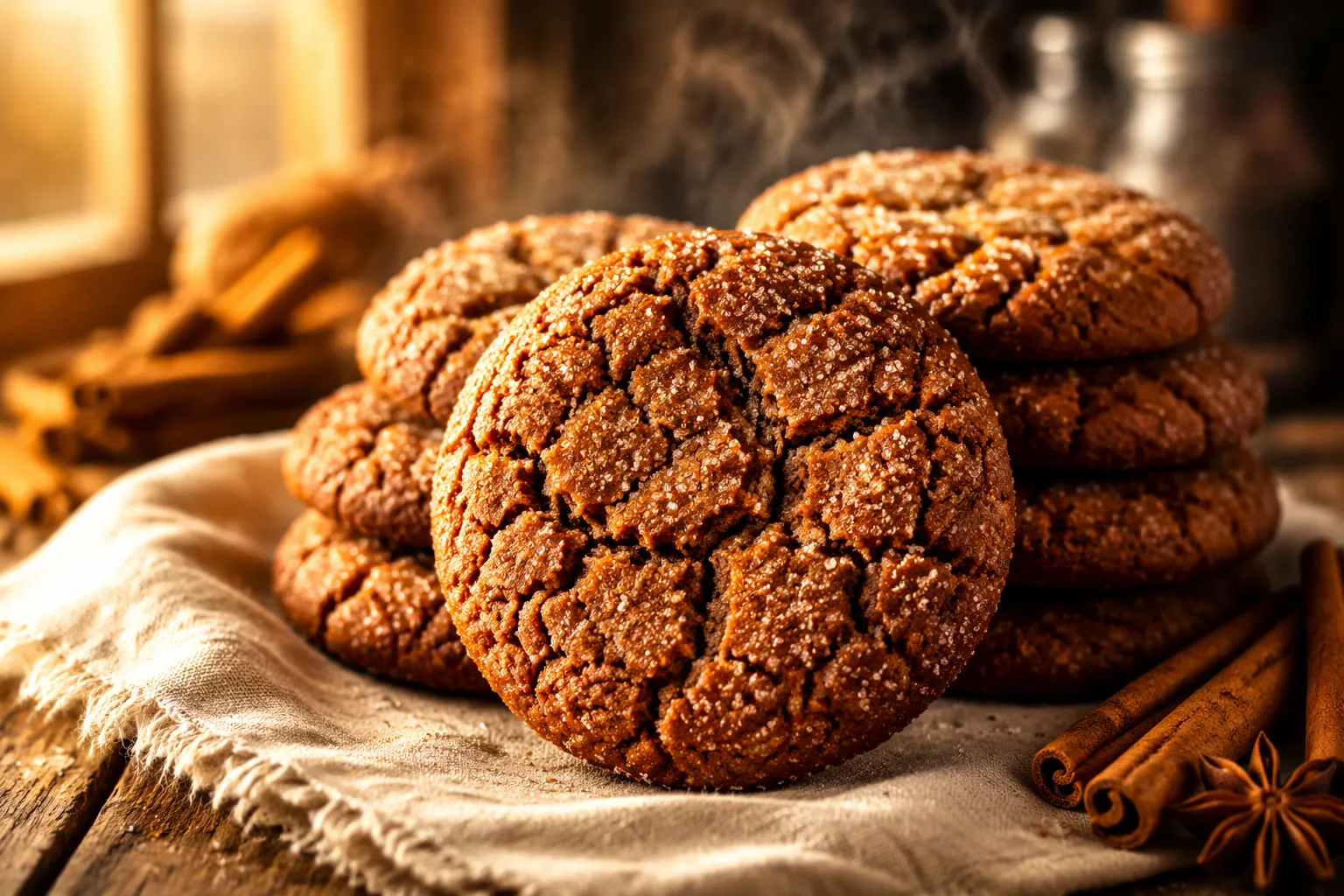
Crackly tops, snappy edges, and a deep molasses-ginger punch — these old-fashioned ginger snaps deliver real crunch without an overnight chill.
The first ginger snaps recipe I ever made came from a stained index card tucked in my grandmother's recipe box, and it set the bar high: glassy crackle tops, edges that snapped like a wafer, and a deep molasses-and-spice perfume that drifted through the whole house. This version is built on that same nostalgic foundation, tuned for a modern home oven and pantry. No overnight chill, no shortening, no fuss.
What you get are bakery-style cookies with a signature crinkle top, a tender-but-crisp center, and the kind of warm-spice depth that makes a quiet kitchen feel like the holidays. They roll, sugar-coat, and bake in under thirty minutes, which means you can pull off a fresh batch on a Tuesday or stack them onto a tray for a cookie swap without rearranging your entire weekend.
If you've been hunting for a reliable gingersnap cookie recipe that actually snaps — not the soft, cakey kind — you're in the right place. We're using all butter for flavor, dark molasses for backbone, and a hot 350°F oven to set those crackle lines fast. I'll walk you through the spice ratio, the rolling-in-sugar trick that produces the crinkle top, and how to nudge bake time toward crispier or chewier depending on which camp you're in.
Good ginger snap cookies are pantry magic — almost everything is probably already in your kitchen. Most of the personality comes down to three levers: the spice blend, the molasses you choose, and the fat. Get those right and the rest is just careful measuring and a quick hand at the mixer. I keep all of these ingredients in my baking station from October through January because the urge to make a fresh batch tends to strike without warning.
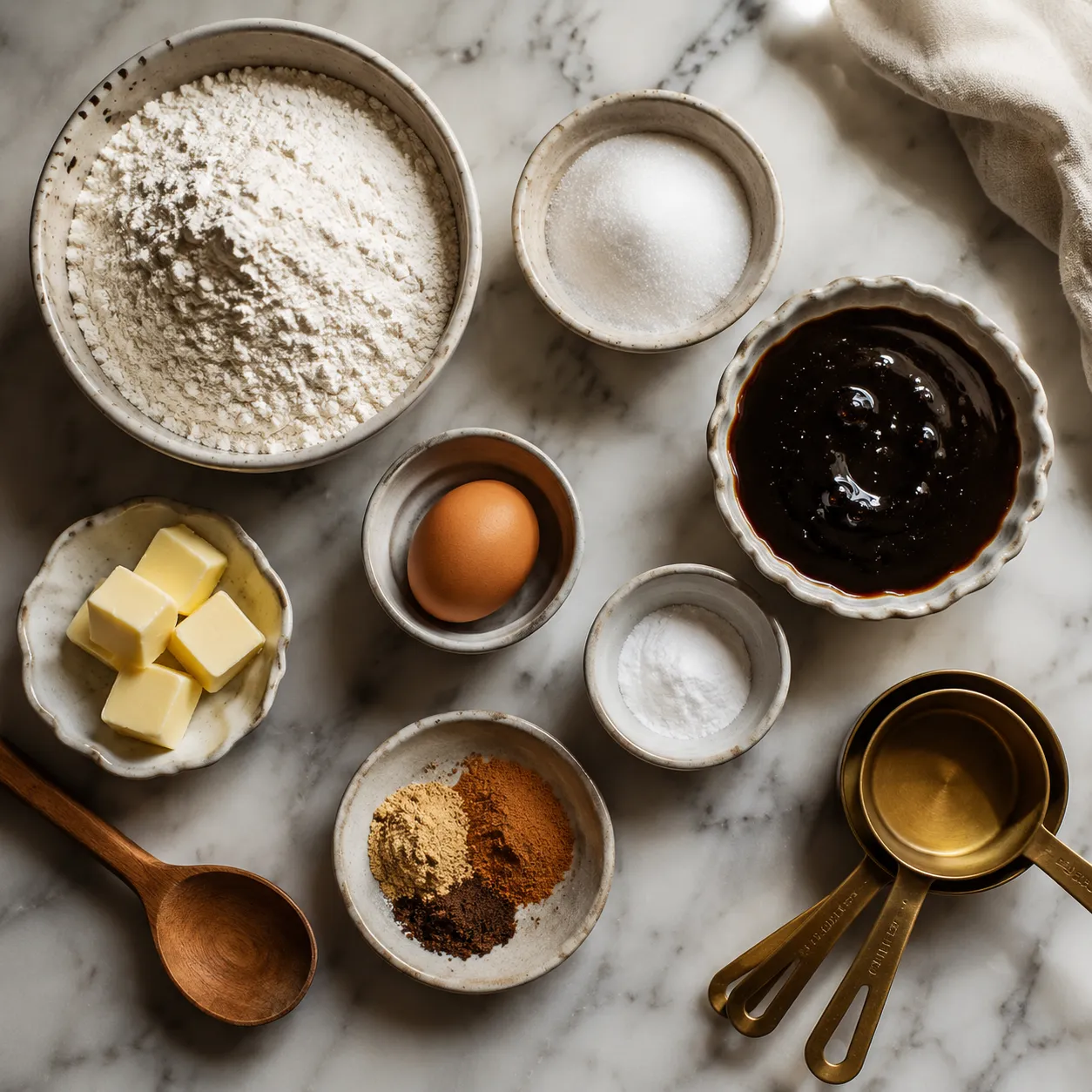
Ground ginger is the headline, but it works hardest when cinnamon rounds out the warmth and cloves add that woody, almost peppery finish at the back of the bite. I use 1½ teaspoons ground ginger, 1 teaspoon cinnamon, and ½ teaspoon cloves — a ratio I've landed on after years of tweaking. If your spice jars have been collecting dust since last fall, replace them. Stale spices are the single fastest way to flatten the flavor of any spiced cookie, and ground ginger especially loses its bite within a year of opening.
Molasses is non-negotiable, and the type matters. Dark or robust molasses brings the deep, slightly bitter caramel notes that define the cookie's character. Light or so-called mild molasses works in a pinch, but the flavor reads thinner and the color comes out paler. Skip blackstrap entirely — it's too acidic and bitter, and it can throw off both spread and texture. If you bake a lot of molasses cookies through the season, a single jar of Grandma's Original or Brer Rabbit Full Flavor will carry you through every batch with consistent results.
Old-school recipes often call for shortening because it produces a sturdier, drier cookie. I prefer all butter for the flavor — that browned, nutty undercurrent is worth a slightly more delicate texture, and the heavy sugar coating compensates by locking in crackle. If you want maximum snap, swap half the butter for shortening; just don't go all-shortening unless you genuinely miss the cafeteria-cookie vibe of the 1980s. Real butter is what makes these taste like a holiday memory rather than a mass-produced tin.
The method is straightforward: cream, mix, roll, sugar, bake. The only place this ginger snaps recipe deviates from a typical drop cookie is the heavy sugar coating, which is what creates the crinkle top as the dough spreads in the oven. Skip it and you'll get a tasty but flat-topped cookie that misses the whole point.
Beat softened butter with granulated sugar for a full three minutes until pale and fluffy — this aerates the dough so it puffs and cracks instead of melting flat. Cold butter won't cream properly; rock-hard butter from the fridge stays clumpy no matter how long you mix. If you forgot to set it out, cube it and let it sit on the counter for fifteen minutes while you measure everything else. The texture should look closer to frosting than to butter when you're done.
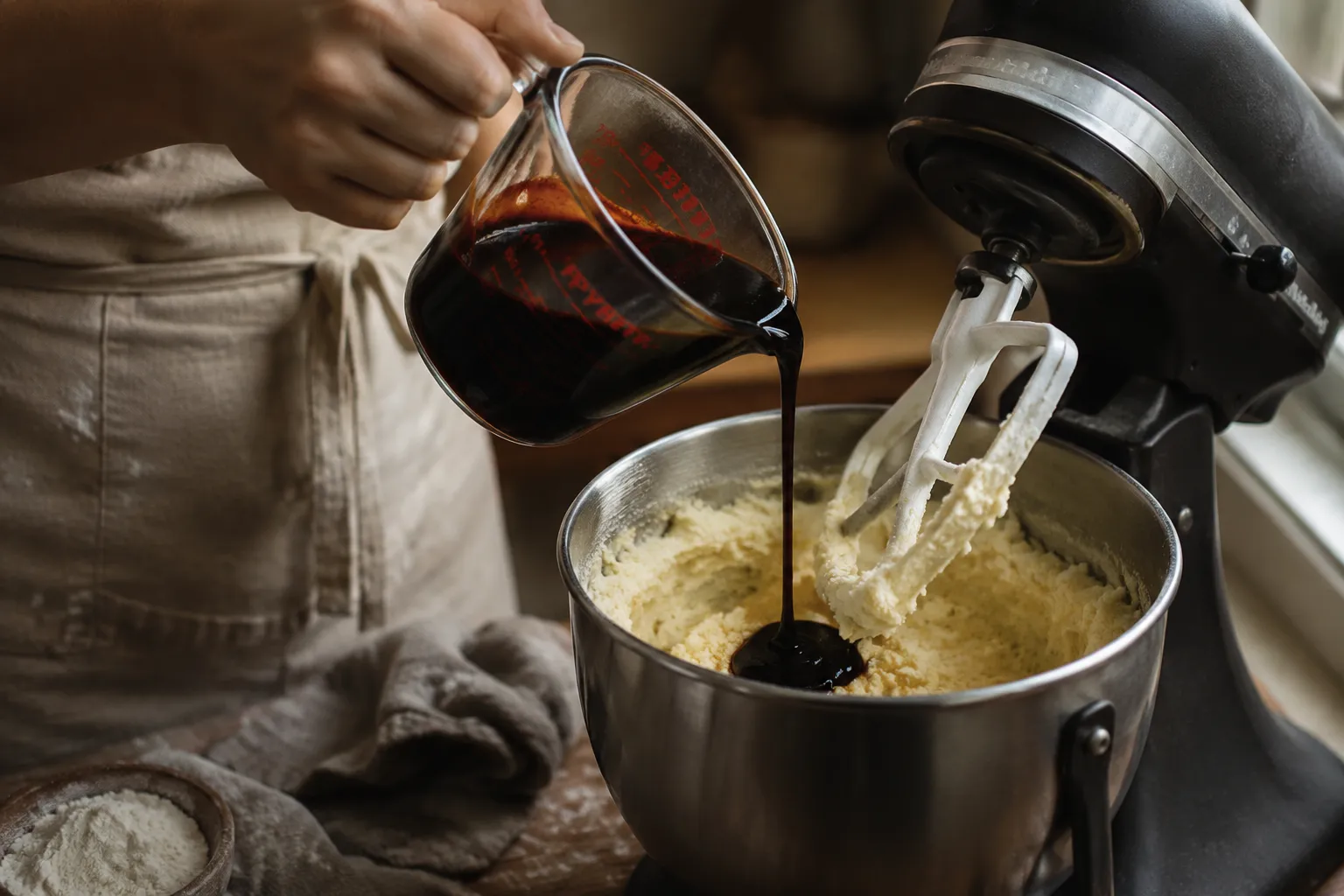
Drizzle the molasses into the creamed butter slowly so it incorporates evenly rather than pooling at the bottom of the bowl. Add the egg next and beat just until smooth. The mixture will look glossy and a shade darker than peanut butter at this stage. Then add your dry ingredients — flour, baking soda, spices, and salt whisked together first — and mix on low only until no streaks remain. Overmixing develops gluten and gives you a tougher cookie that loses its delicate snap.
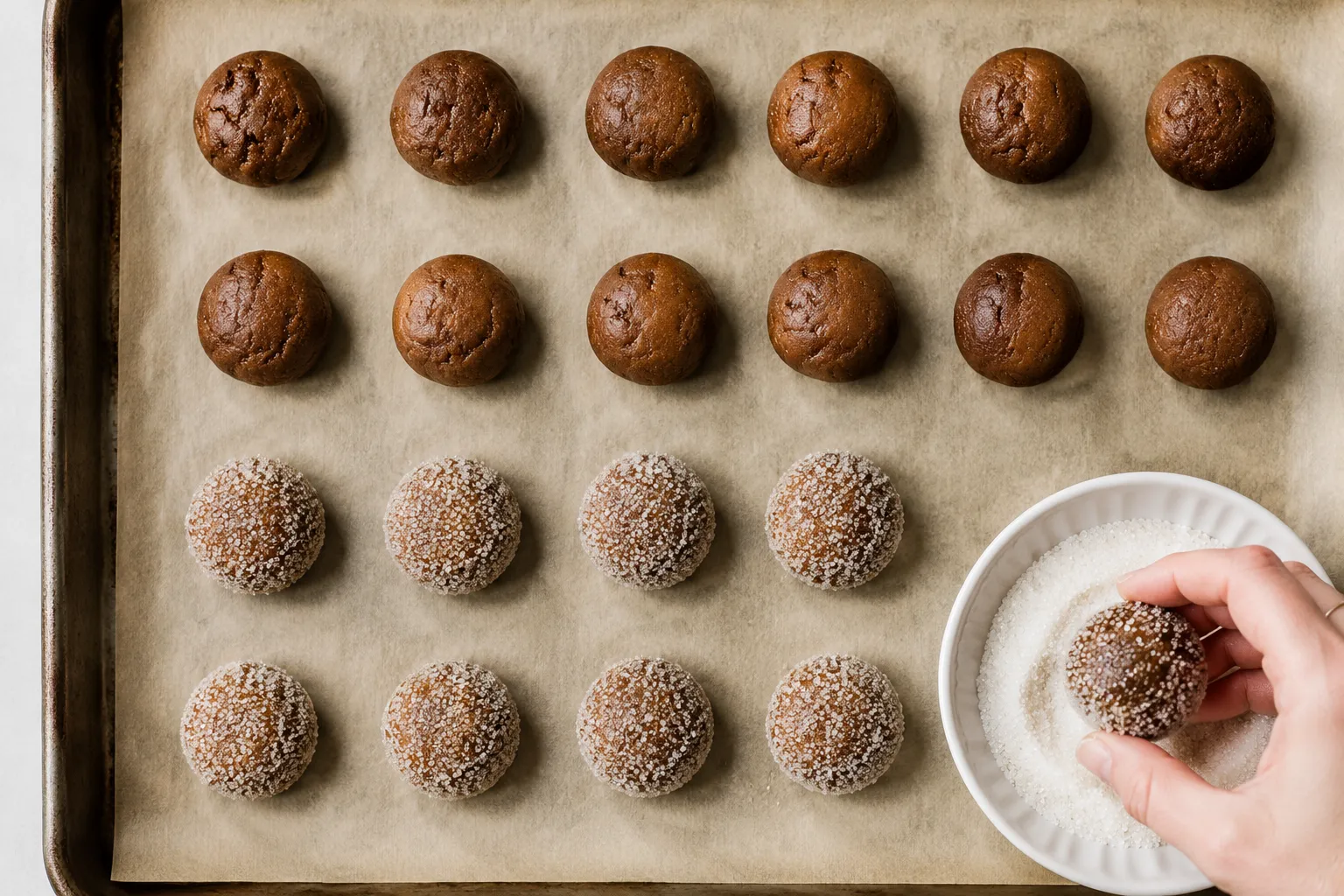
Scoop tablespoon-and-a-half portions, roll into smooth balls between your palms, then drop each one into a small bowl of granulated sugar and turn until heavily coated. Don't be shy here — that thick sugar shell is what fractures into the trademark crinkle top as the dough spreads. Space the balls two inches apart on a parchment-lined sheet and bake at 350°F for 11 to 13 minutes.
The cookies are done when the tops are deeply cracked and the centers no longer look glossy. They'll feel soft when you pull them out — that's correct. They firm up to a true snap as they cool on the pan over the next few minutes, and the crackle pattern darkens and deepens as residual heat keeps working.
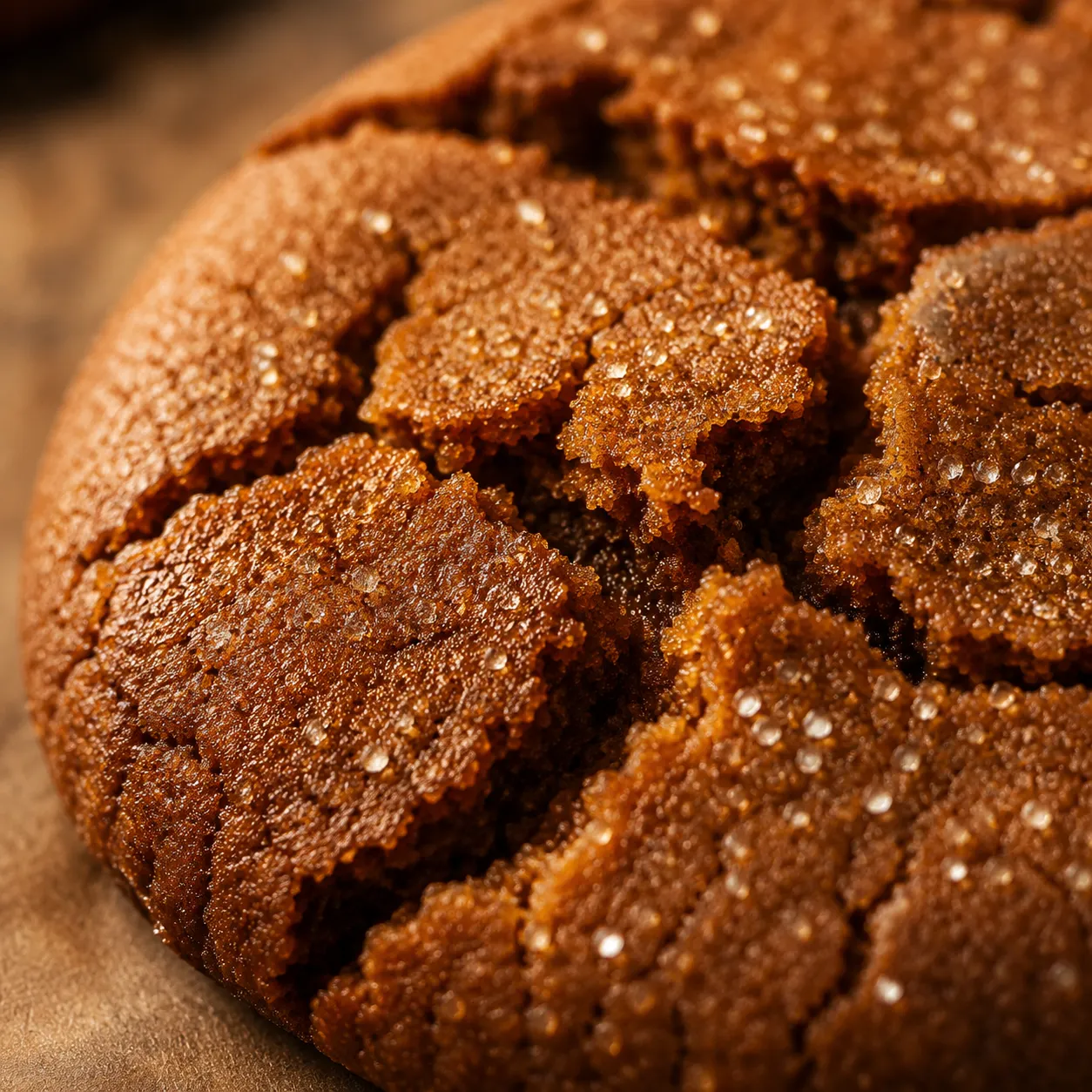
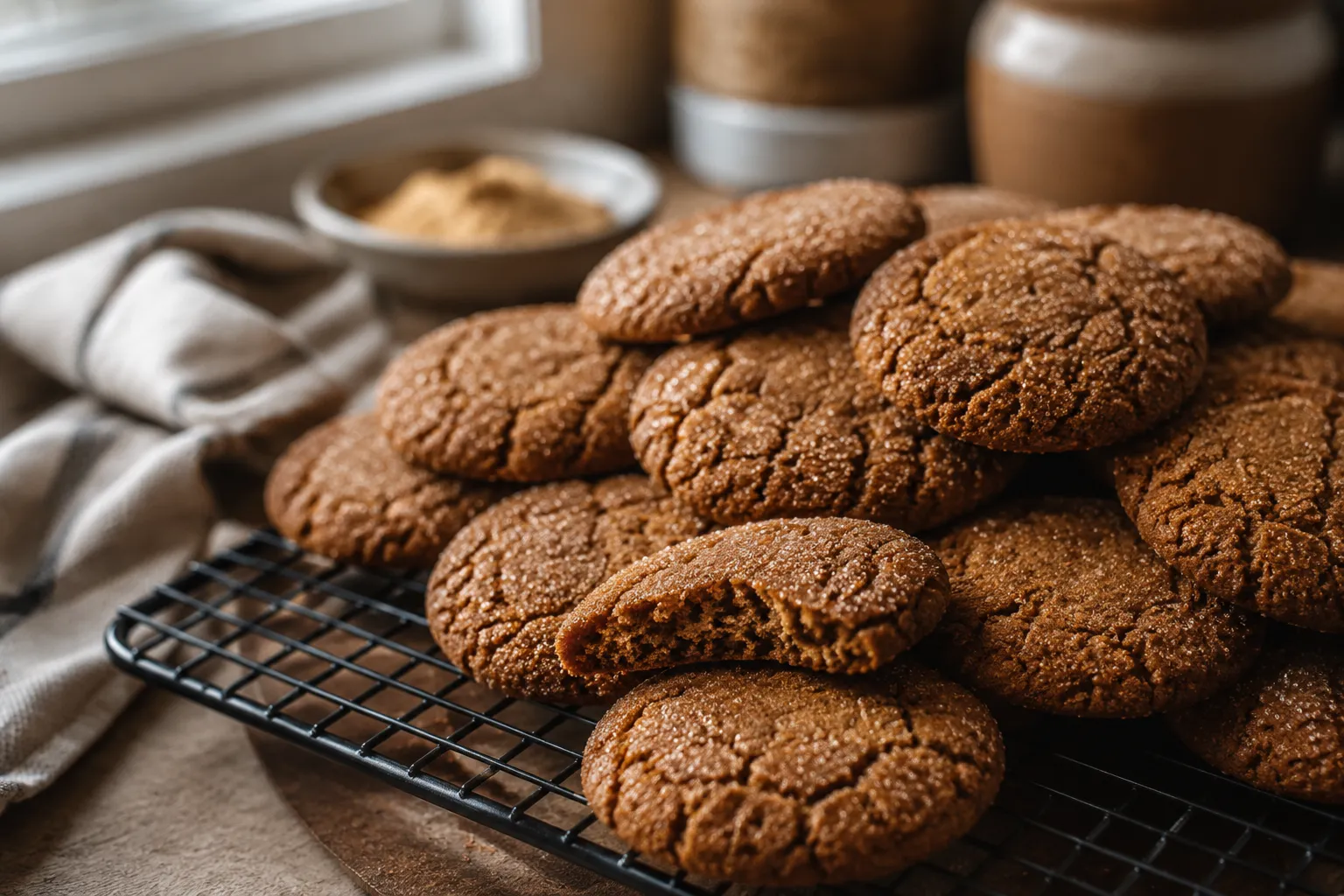
The crackle top is pure science. As the heavily sugared dough hits the heat, the surface sets and dries while the interior keeps spreading and rising. The rigid sugared shell can't keep up, so it fractures into those signature lines. The hotter and faster you bake, the deeper the cracks. Pull them at 11 minutes for cookies with chewy middles and crisp edges — closer to soft ginger cookies than a true snap. Push to 13 or 14 minutes if you want the whole cookie to shatter when you bite it. Residual heat on the pan continues the bake, so plan for some carry-over and don't judge texture until the cookies are completely cool. The same dough can produce two genuinely different cookies depending on which minute you stop.
These cookies are quietly versatile. They're at their best simple — a stack on a saucer next to a hot drink — but they also hold up to ambitious holiday plating, which earns them a permanent spot in my holiday cookie recipes rotation each December. They travel, they gift, they crumble into a dozen useful directions, and they cost almost nothing to make.
A strong cup of black coffee is the classic match: the bitterness cuts the molasses sweetness and the warm spice plays beautifully with a dark roast. Chai is another natural fit, doubling down on the cinnamon-clove-ginger story. For something less expected, dunk one into a small glass of eggnog and let the cookie absorb just enough to soften the edge before you bite. It's a five-second dessert that tastes like you planned it.

Ginger snap crumbs make one of the best alternative crusts in baking. Pulse a sleeve of cookies with melted butter and press into a pan for a pumpkin pie or sweet potato cheesecake crust that completely outshines plain graham. The spice carries forward into the filling and adds dimension you can't get from a neutral base. Save any broken cookies from a batch specifically for this — they're too good to toss, and the sugar coating gives the crust a built-in caramelization edge.
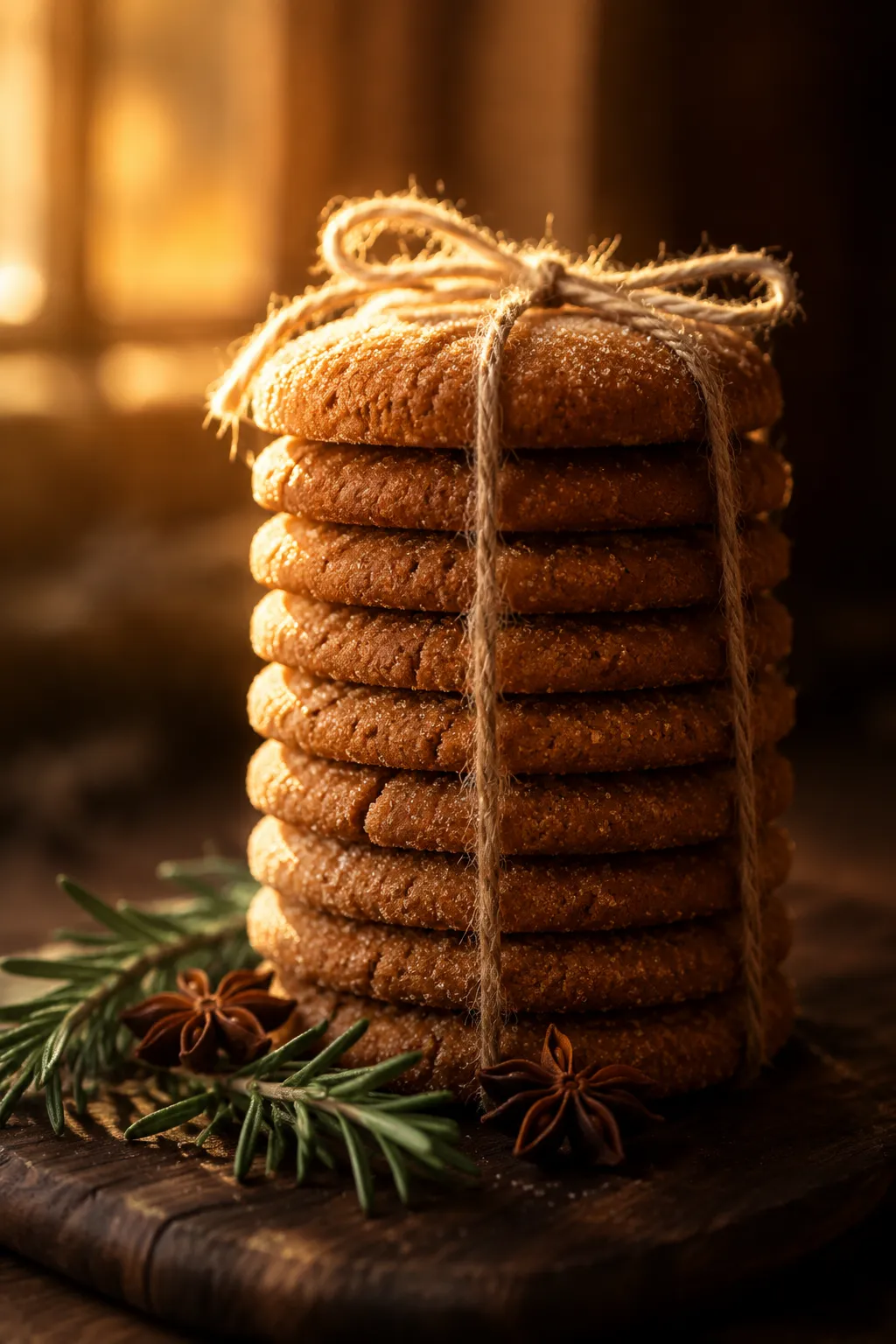
Tied with twine and stacked tall, these cookies are practically engineered for gifting. They keep their crunch for over a week when sealed properly, ship well in a padded tin, and look the part on any Christmas cookie box. Mix them with a soft cookie like an iced sugar cookie or a chewy oatmeal raisin so the box has texture variety.
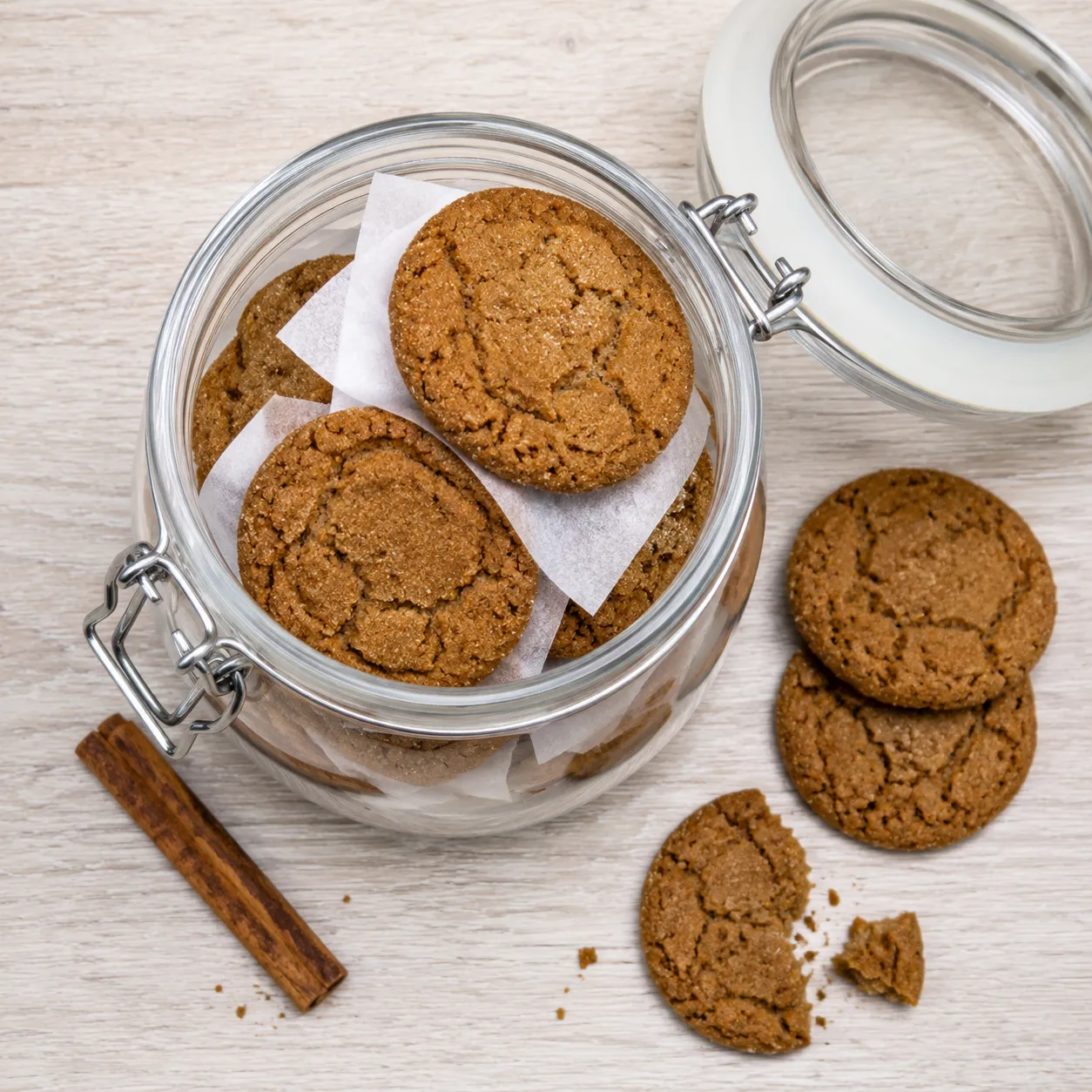
A glass jar with a tight gasket lid is my favorite way to display and gift them at once — the cookies stay crisp, the layers look intentional, and the recipient gets a little kitchen object to keep. If you're assembling a tray for neighbors or a cookie swap, this ginger snaps recipe doubles cleanly and the dough freezes beautifully for staggered baking.
If you love this style of warm, nostalgic baking, my deeper guide to spiced cookie tips covers everything from blooming whole spices in butter to balancing molasses cookies for different climates — small adjustments that turn a good ginger snaps recipe into your house specialty.
The base recipe is steady enough to take a few well-placed liftoffs without losing its character. Stay within 1/4 cup of added mix-ins so the dough still spreads properly, and keep any extra wet additions to a teaspoon or less so the texture doesn't shift toward cake.
Store fully cooled cookies in an airtight container at room temperature with a square of parchment between layers. They'll stay crisp for 10 to 14 days — far longer than most homemade cookies — provided they're not sharing space with anything soft like brownies or muffins, which release moisture and soften the snap. A glass jar with a gasket lid is ideal; a sealed cookie tin works just as well. Avoid plastic zip bags for long-term storage, since they trap residual humidity from cooling and will dull the texture within a few days.
For longer storage, both baked cookies and raw dough freeze beautifully. Bag baked, fully cooled cookies in a freezer-safe zip bag for up to 2 months and thaw at room temperature for 15 minutes before serving. For dough, scoop into balls, freeze on a tray until solid, then transfer to a labeled freezer bag for up to 3 months. Bake straight from frozen at 350°F, adding 1 to 2 minutes — roll the frozen balls in granulated sugar just before baking so the coating sticks cleanly.