Almond Meal vs Flour: Complete Guide & How to Make It
Ingredients
Scale
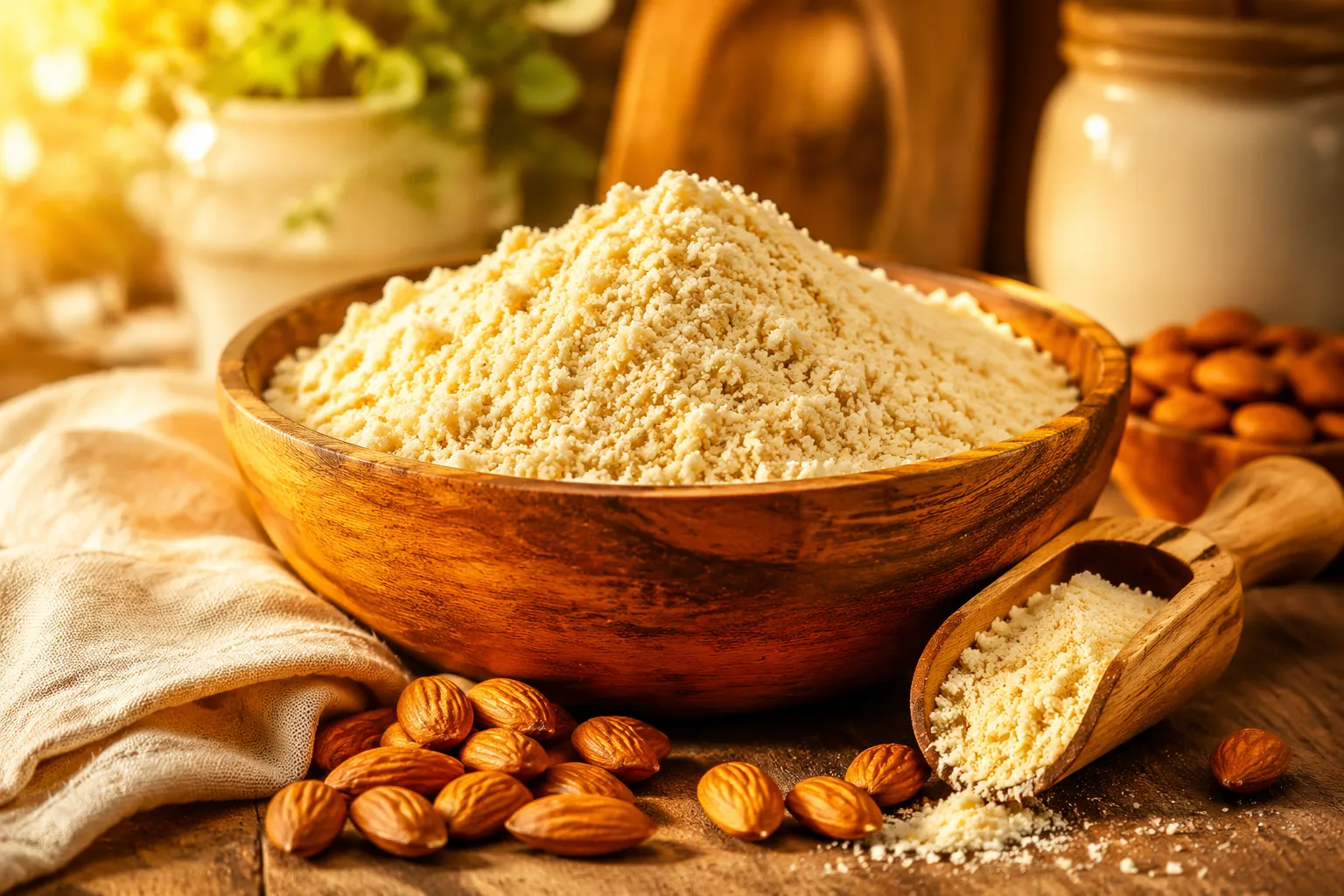
Almond meal is the affordable, nutty, gluten-free baking flour your pantry has been missing. Here is exactly what it is, how to make it, and how to bake with it.
If you have ever stood in the baking aisle wondering what flour almond meal actually is, and whether it deserves a spot in your pantry, you are in good company. This humble pale-tan ingredient has quietly become one of the most useful staples in modern home baking, especially for anyone leaning into gluten-free baking, lower-carb desserts, or just deeper, nuttier flavor in their cookies and cakes. It is affordable, easy to make at home in five minutes flat, and behaves beautifully in everything from rustic crusts to tender muffins.
But here is the catch: almond meal is wildly misunderstood. Home cooks confuse it with almond flour, swap it 1:1 for wheat flour and end up with hockey pucks, or buy a five-dollar bag at the grocery store when they could be making fresher meal from a one-dollar handful of raw almonds. This guide pulls together everything you actually need: what almond meal is, how it differs from its finer cousin, how to make a fresh batch in your food processor, and how to bake with it without disasters.
By the time you finish, you will know more about flour almond meal than 90% of home bakers, and you will have a brand-new go-to for cookies, pancakes, and pie crusts. Let's get into it.
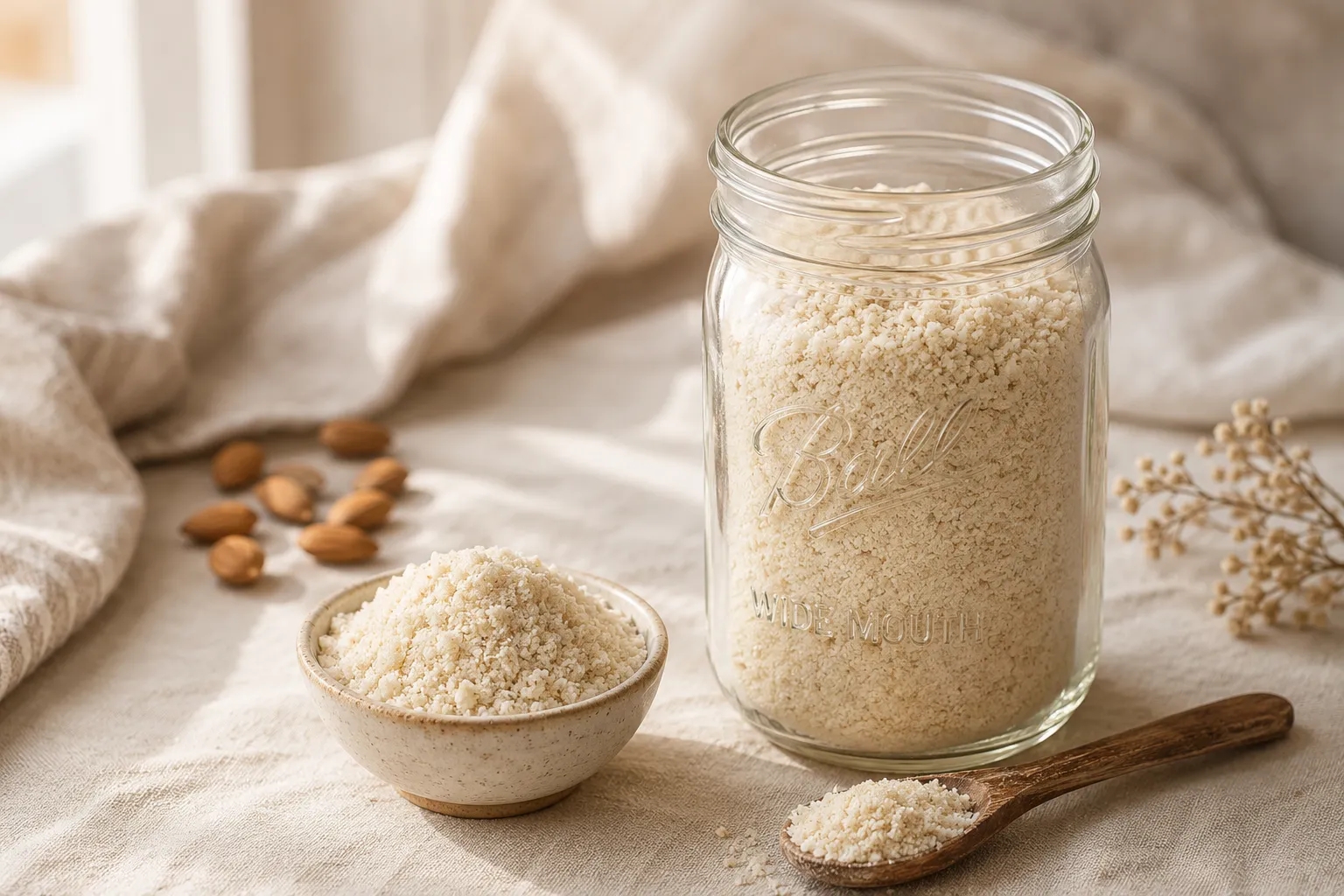
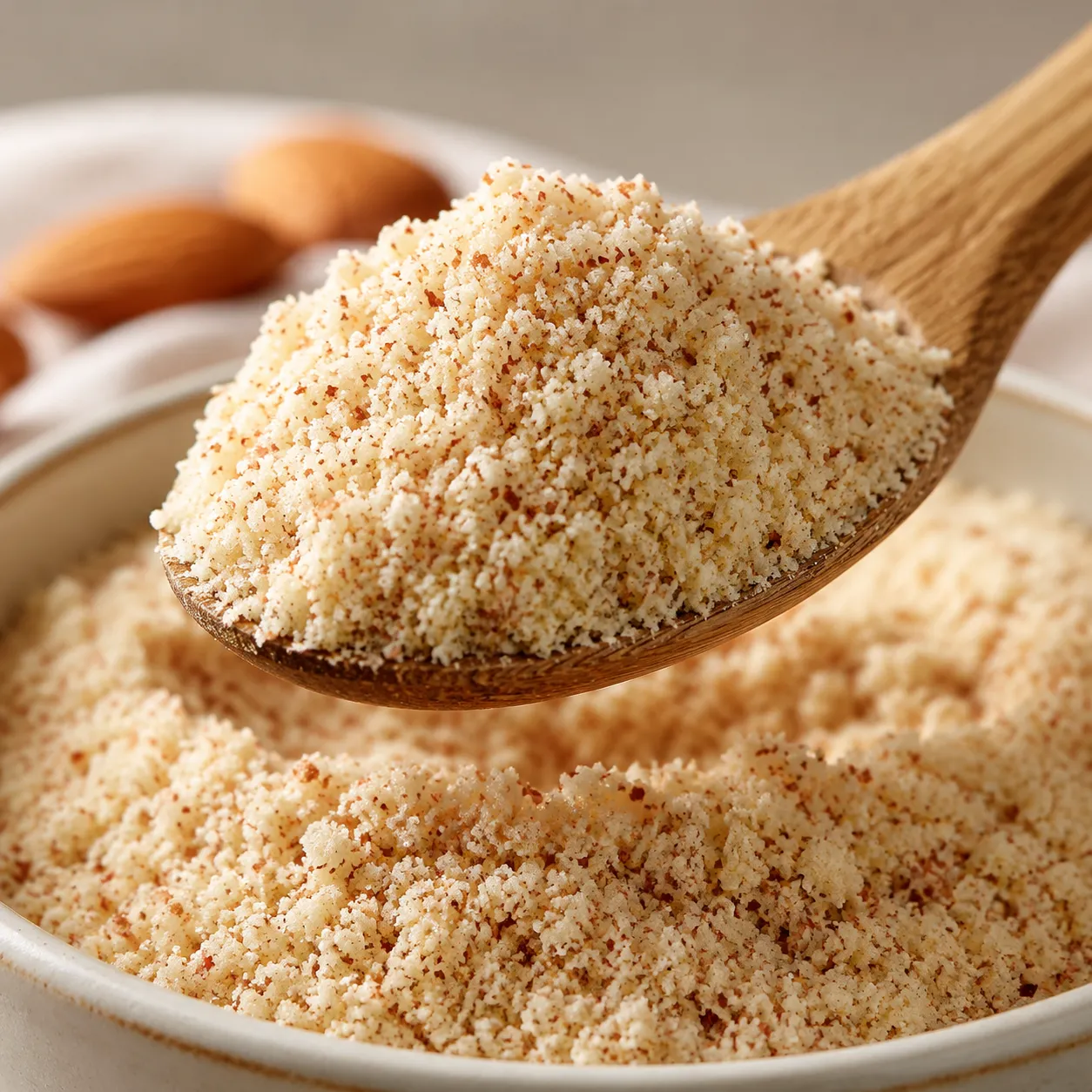
Almond meal is, quite literally, ground-up almonds. The traditional version is made from raw whole almonds with the brown skins still on, pulsed in a food processor until they reach a coarse, sandy consistency similar to coarse cornmeal or polenta. The skins give it a flecked appearance, with small dark specks scattered through the warm beige base, along with a slightly more rustic flavor and a touch of fiber.
Almond flour, by contrast, is finer. It is typically made from blanched almonds with the skins removed, then ground and sifted to a powdery, pale-cream texture closer to wheat flour. That is the practical difference behind the whole almond flour vs almond meal debate: meal is coarser, darker, and earthier; flour is finer, paler, and more delicate. Both are 100% almonds, both are naturally gluten-free, and both belong on any short list of gluten-free flour substitutes worth keeping around.
When does the choice actually matter? For dense, rustic baked goods like crumbles, breakfast cookies, savory crusts, or coatings for chicken and fish, almond meal is the better pick. Its coarser grain adds welcome texture and a heartier bite. For delicate French-style macarons, fine cakes, or anything that needs a smooth crumb, blanched almond flour is the way to go. For most everyday recipes, like muffins, drop cookies, and quick breads, the two are interchangeable, and you will never miss the difference.
Making your own homemade nut flour is honestly easier than the trip to the store. All you need is a food processor and a bag of raw, skin-on almonds. The whole process takes about five minutes, costs roughly half what the boutique bags charge, and gives you a fresher product with zero additives or anti-caking agents.
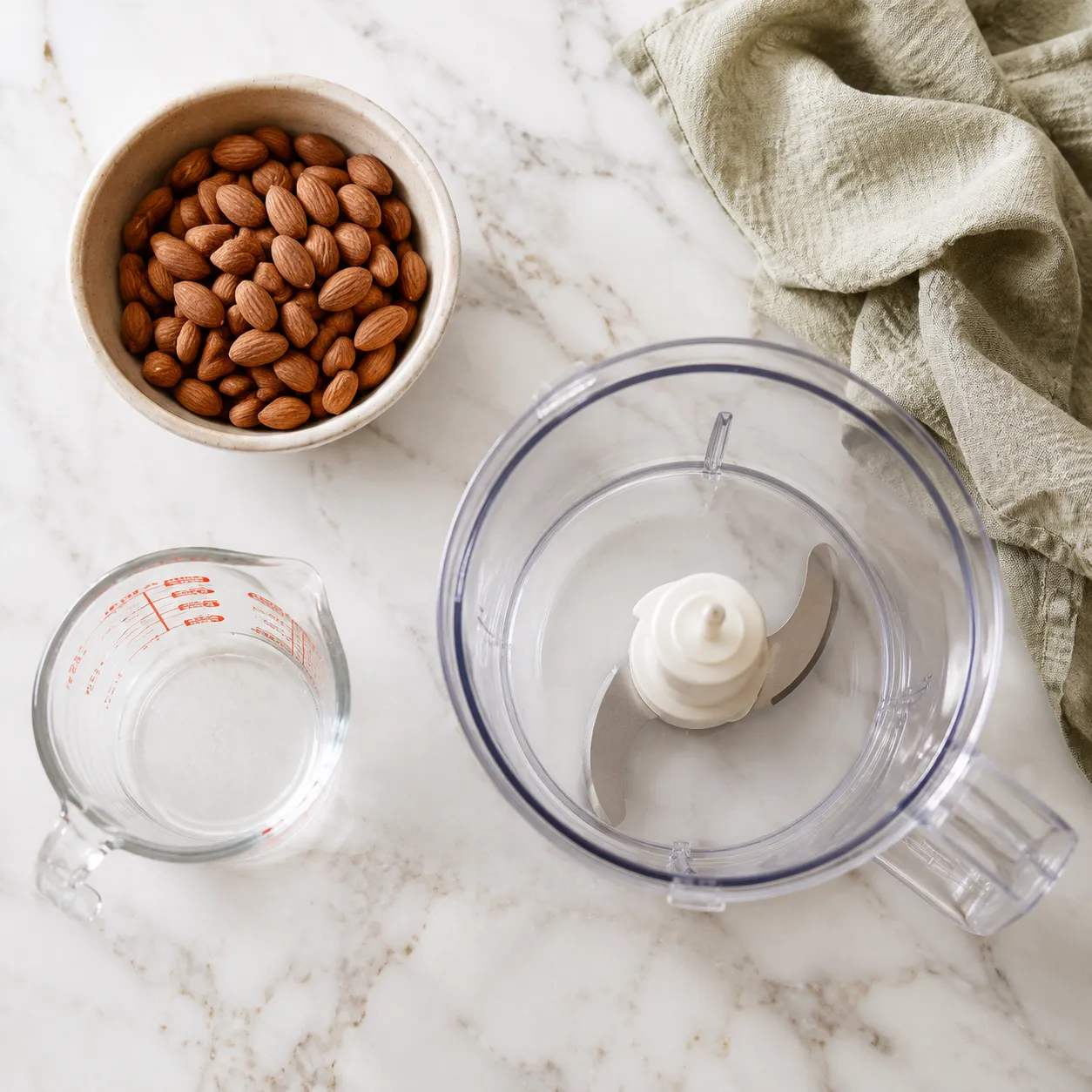
Start with cold almonds straight from the fridge or freezer. Chilled nuts release less oil during processing, which is the single biggest factor between fluffy, fresh flour almond meal and accidental almond butter. Add them to a dry food processor bowl in a single even layer, no more than about two cups at a time, so the blade can work through them evenly without overheating the nuts at the bottom.
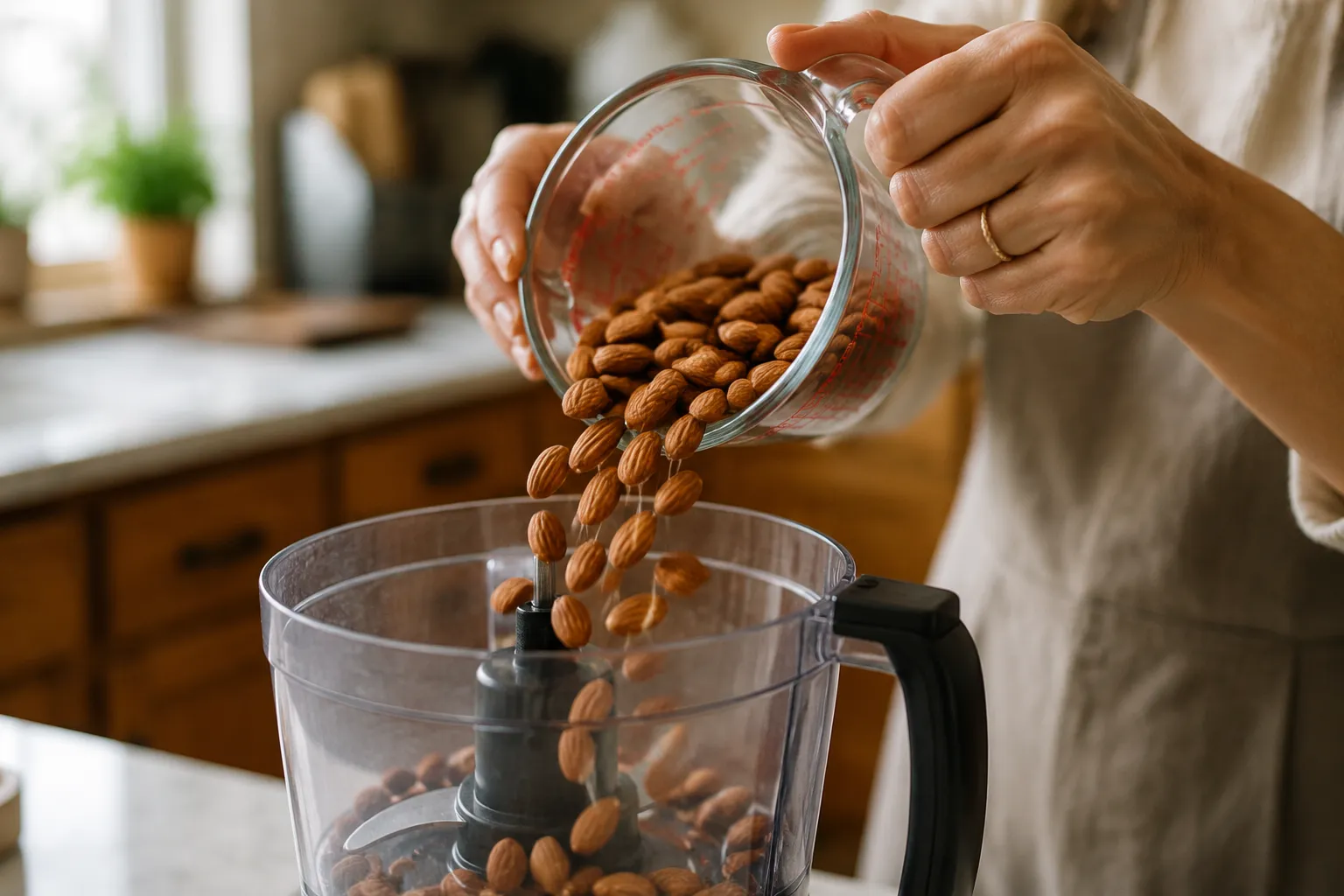
Pulse in short bursts of one to two seconds rather than running the motor continuously. After every five or six pulses, stop, lift the lid, and scrape down the sides of the bowl with a spatula. This keeps the larger pieces moving back into the blade's path and prevents the smaller bits at the bottom from over-grinding into a paste.
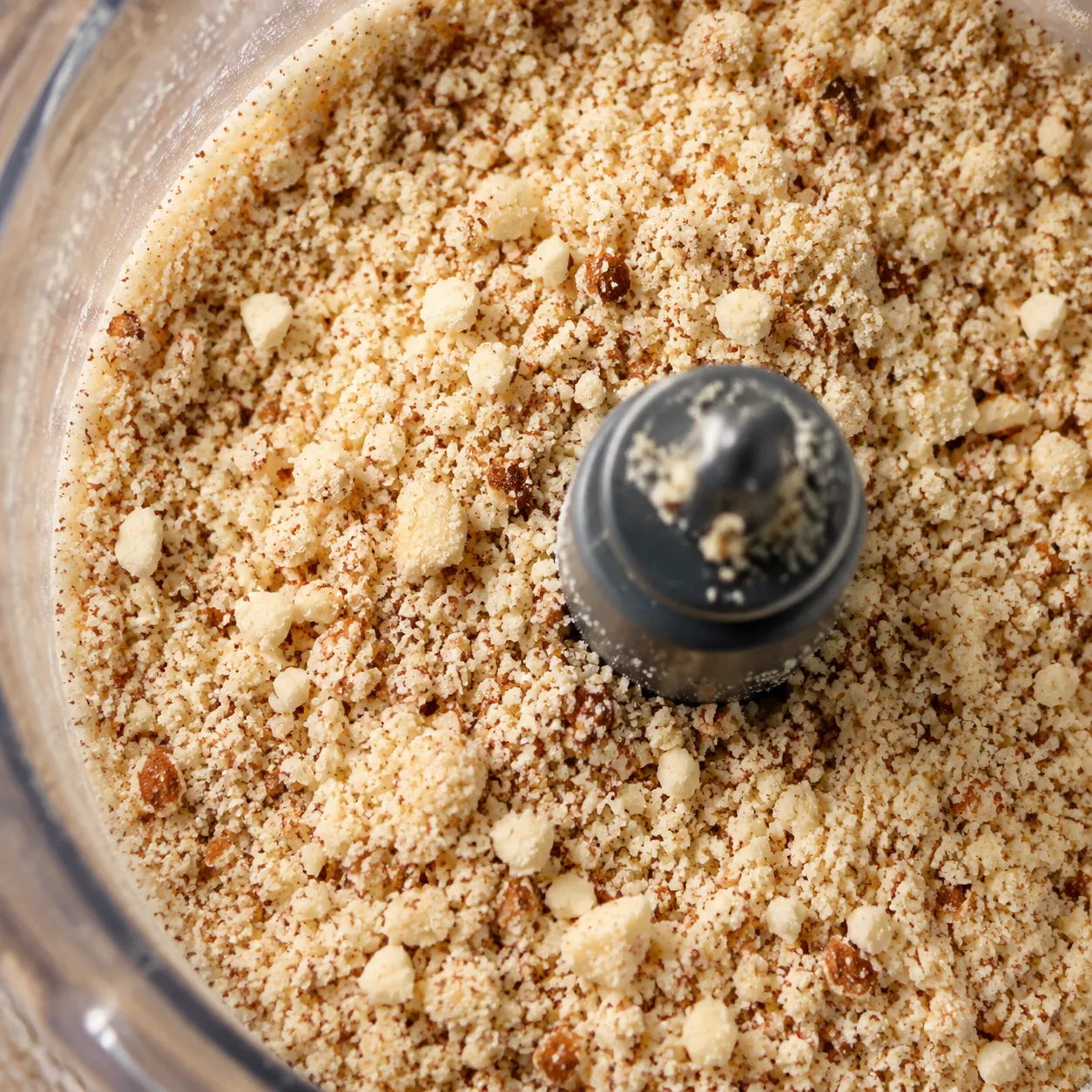
You are done the moment the texture looks like coarse cornmeal or damp sand, usually around thirty to forty pulses depending on your machine. If you want a finer grind closer to blanched almond flour, push it another five to ten pulses, but stop before it starts clumping or smelling oily. For the cleanest texture, sift the finished meal through a fine-mesh strainer and re-pulse any larger bits that get caught.
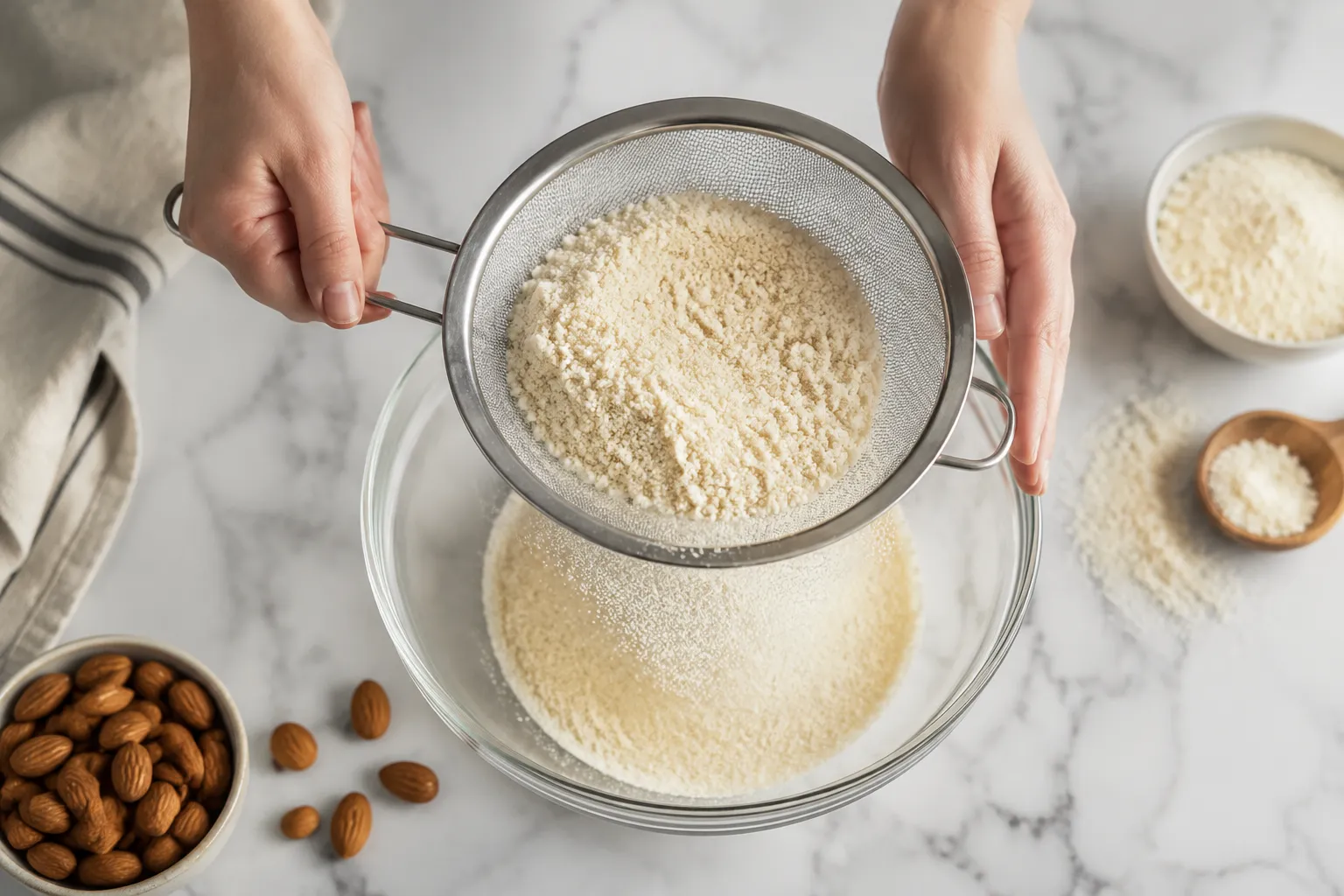
Transfer your fresh meal to an airtight glass jar and you have got two cups of bakery-quality flour almond meal for a fraction of the boutique price. The first time you do it, you will wonder why you ever paid for the bagged stuff.
Baking with almond meal is one of those skills that feels intimidating until you have done it twice. The most important thing to remember is that almond meal contains no gluten and no starch, which means it does not behave like wheat flour. It cannot trap air the same way, it cannot form structure on its own, and it adds significantly more fat and moisture to a batter than its wheat-based counterpart.
For most cookies, muffins, and quick breads, you can substitute almond meal at roughly a 1:1 ratio for all-purpose flour, but you will usually want to add an extra egg, or at least an extra yolk, for binding. Reduce any added oil or butter by about a quarter, since the almonds bring their own fat to the party. Bump up your leavening with an extra quarter teaspoon of baking soda or powder per cup, which helps lift the heavier batter.
What it is not great for: yeast breads, classic pizza dough, or anything that relies on gluten development for chew and structure. In those cases, blend almond meal with another gluten-free flour like oat or rice flour, and add a binder like xanthan gum or psyllium husk. For everything else, including pancakes, scones, crumb toppings, breading for cutlets, and energy bites, almond meal is a quietly brilliant performer that pulls more flavor from a recipe than wheat flour ever could.
If you are new to baking with this ingredient, start with recipes designed around it rather than retrofitting old wheat-based favorites. The wins come fast and the failures are forgiving. Here are three that have earned permanent rotation in my kitchen and that pair beautifully with a Saturday morning coffee or an afternoon snack break.
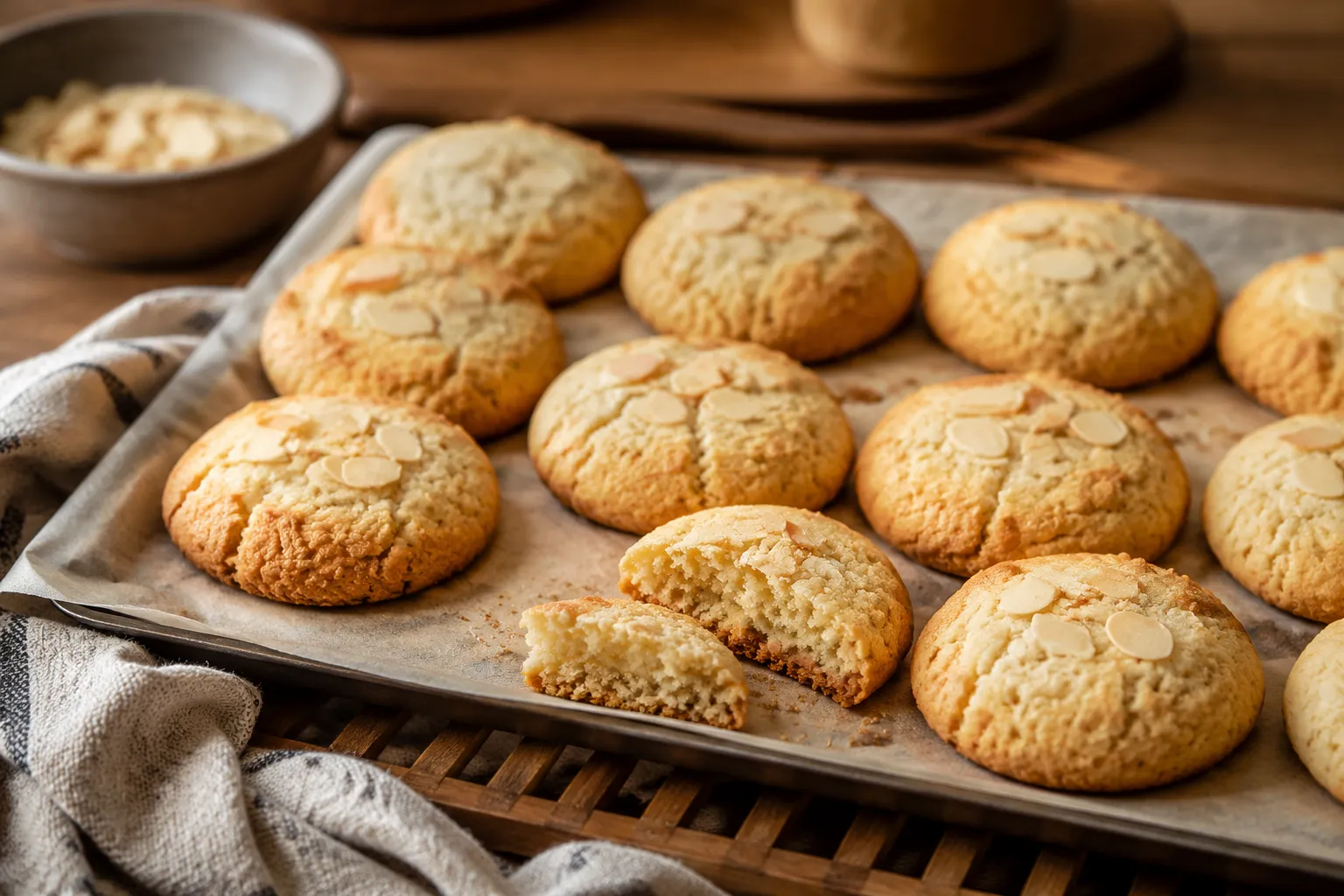
First up: soft, chewy almond meal cookies sweetened with maple syrup and studded with dark chocolate. They come together in one bowl in about fifteen minutes, stay tender for days, and taste like a slightly grown-up version of a chocolate chip cookie. The almond meal adds a butterscotchy depth that you simply cannot get from wheat flour alone.
Next, grain-free almond meal pancakes. Three eggs, a cup of almond meal, a splash of milk, a pinch of baking soda, and a glug of vanilla, that is the whole batter. They are rich enough to feel like a treat but high enough in protein to actually keep you full past 10 a.m. Top with sliced bananas, warm berries, or a generous swipe of nut butter.
Finally, a five-ingredient almond meal pie crust that handles everything from quiche to pumpkin pie. Mix almond meal, melted butter, an egg, a pinch of salt, and a tablespoon of maple syrup, press the crumbly mix into your pan, and pre-bake for ten minutes. It is gluten-free, does not need rolling, and tastes nuttier and more interesting than any traditional crust.
If you would rather buy than DIY, totally fair, especially when you need a few cups for a holiday baking project, there are a few label details worth checking. Look for bags that list "almonds" as the only ingredient, with no preservatives, gums, or anti-caking agents. The color should be warm tan with visible flecks of darker brown skin; anything too pale is probably mislabeled almond flour and will behave differently in your recipes.
Organic almond meal is worth the small premium if your budget allows. Almonds are among the more pesticide-treated tree nuts in conventional production, and because almond meal is essentially concentrated almond, anything in or on the nut concentrates with it. Organic versions also tend to come from smaller producers with faster turnover, which means fresher product on your shelf.
Reliable brands you will find in most US grocery stores and online include Bob's Red Mill, whose natural almond meal is the gold standard for coarser texture, plus Anthony's, King Arthur, and Trader Joe's. Costco's Kirkland brand offers the best price per pound if you bake regularly. Whatever you buy, check the "best by" date, since fresher genuinely matters with nut flours, and stale meal will make stale-tasting baked goods no matter how good your recipe is.
That is the whole picture: what almond meal is, how it differs from blanched almond flour, how to make it yourself in five minutes, and how to bake with it without crossing your fingers. Once you have got a jar of fresh flour almond meal in the pantry and you understand how to store nut flours so they actually last, a whole world of tender, nutty, naturally gluten-free baking opens up. Mix a batch this weekend, bake one of the recipes above, and you will see why this little ingredient deserves permanent shelf space.
Once you have the basic technique down, the same five-minute method opens up a whole shelf of nut flour variations. Each one is made the exact same way, just with different starting nuts or a quick prep step before processing.
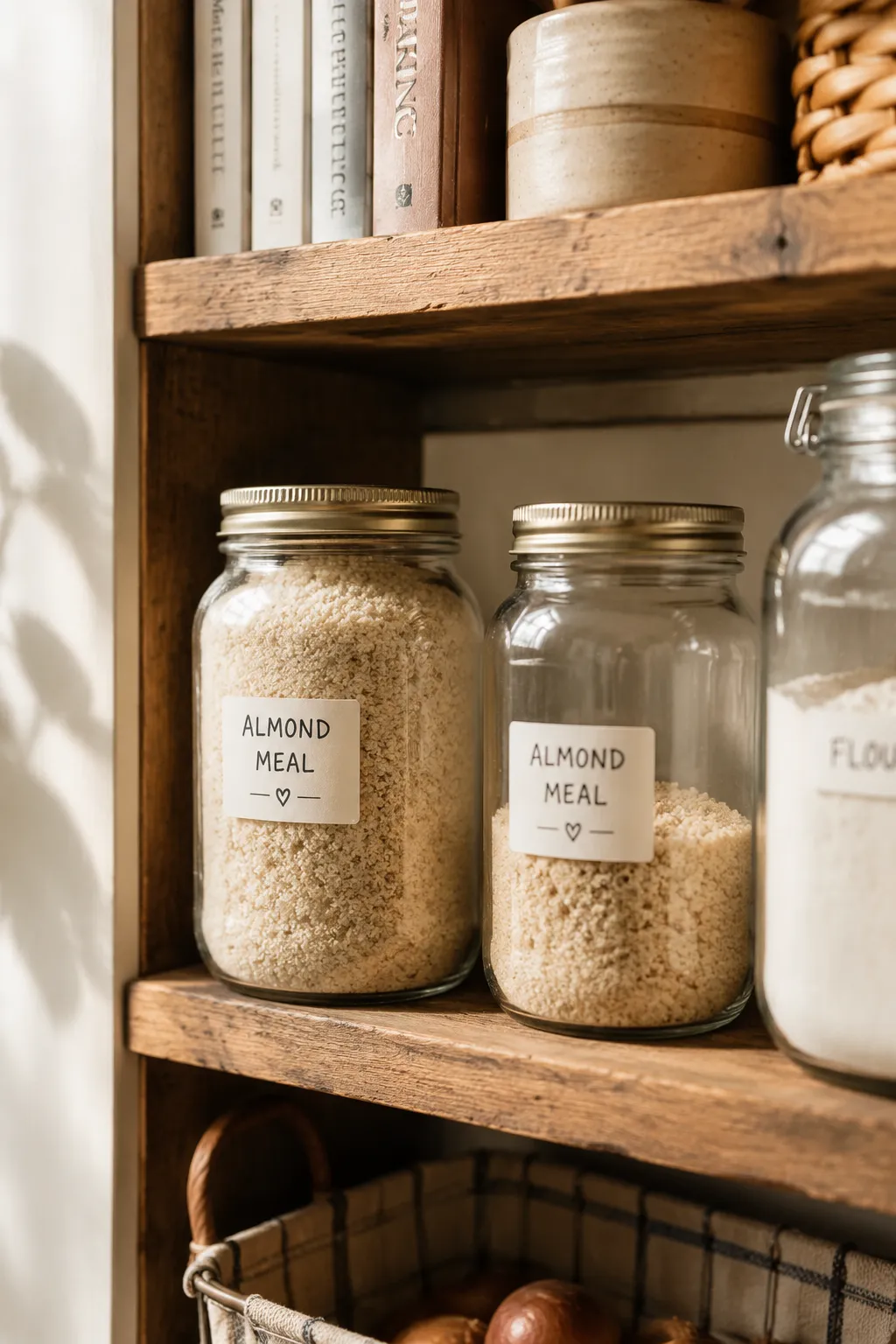
Almond meal is high in healthy oils, which makes it more perishable than wheat flour. The good news is that proper storage extends its life dramatically. Transfer your fresh meal to an airtight glass jar or a heavy-duty zip-top freezer bag with as much air pressed out as possible. Label it with the date you made it so you don't have to guess later.
For shelf life, keep almond meal in a cool, dark pantry for up to 3 months, in the refrigerator for up to 6 months, or in the freezer for up to a full year. The freezer is genuinely the best long-term option, especially if you make double batches. Always smell your meal before using it: fresh almond meal smells lightly sweet and nutty, while rancid meal smells sharp, oily, or like old paint. If it smells off in any way, toss it. Stale or rancid meal will ruin a batch of cookies faster than any other mistake.