Brie Cheese 101: How to Buy, Serve & Eat It
Ingredients
Scale
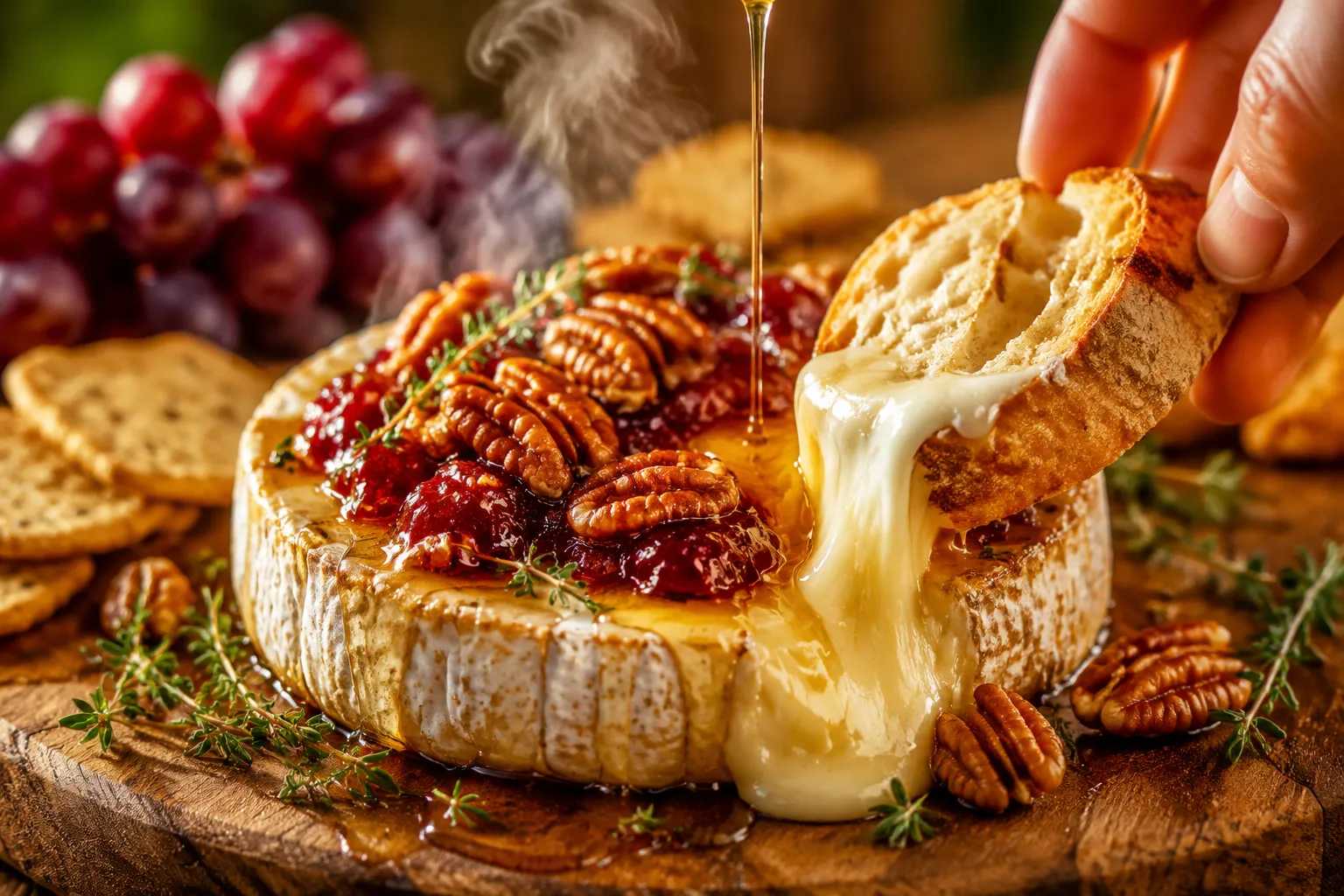
Soft, buttery, and impossibly creamy, brie cheese is the ultimate party board hero. Here's how to buy it, serve it, and pair it like a pro.
If there's one thing that turns any gathering into something special, it's a wheel of brie cheese on the table. Soft, buttery, and lightly tangy with that signature snowy rind, brie has a way of making people lean in, reach for a cracker, and stay a while. Whether you're building your first cheese board, bringing a wheel to a dinner party, or just trying to figure out what to do with that wedge in the fridge, this guide walks through everything you actually need to know.
We'll cover the difference between varieties, how to tell when a wheel is perfectly ripe, what to pair it with, and a foolproof 20-minute baked brie recipe at the end you can make on autopilot. Think of this as the friend who works at the cheese counter, walking you through the case without any of the snobbery.
By the time you're done reading, you'll know how to shop for it, store it, slice it, melt it, and serve it like you've been doing this forever. Let's get into it.
Brie is a soft-ripened cheese from northern France, traditionally made from cow's milk and aged just long enough to develop its iconic snowy white rind and velvety, almost-spreadable interior. The flavor leans buttery, mushroomy, and faintly tangy, with a richness that builds as the wheel ripens. It belongs to the same family as Camembert and other bloomy-rind varieties, but brie has its own distinct character that makes it the most recognizable name on the cheese counter.
Brie has been made in the Île-de-France region around Paris since at least the 8th century, where local monks perfected the technique of curdling raw cow's milk and letting it ripen with surface molds. Charlemagne is said to have fallen in love with it, and at the 1815 Congress of Vienna, brie was crowned the King of Cheeses after a friendly diplomatic tasting. That long pedigree is part of what gives the wheel its mystique today.
Cheesemakers warm fresh milk, add cultures and rennet, then ladle the soft curds into round molds without pressing. After draining and salting, the young wheels are sprayed with Penicillium candidum, the friendly mold responsible for the bloomy white rind. Over four to eight weeks of aging, the rind ripens inward, gradually breaking down the paste from firm and chalky to luxuriously soft.
The two look like cousins, and in many ways they are. Camembert hails from Normandy, runs smaller, and tends to be earthier, more pungent, and a touch saltier. Brie wheels are larger, milder, and more buttery, with a creamier texture that stays approachable even when fully ripe. If brie is the elegant ballroom dance, Camembert is its rowdier sibling at the after-party.
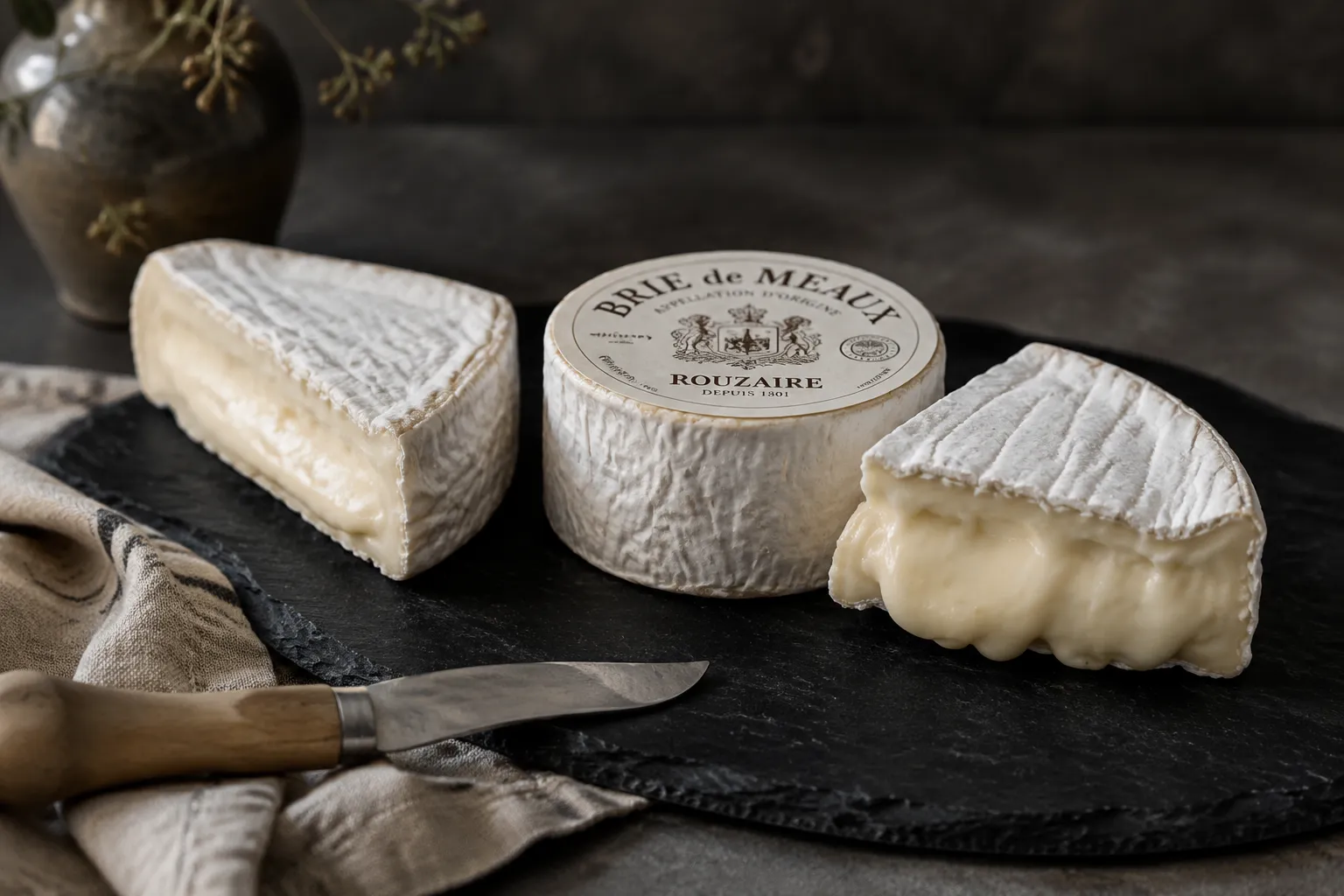
Walk into a good cheese shop and you'll notice the case is full of wheels that all look broadly similar but taste wildly different. Knowing a few names will help you order with confidence and pick the right wheel for the occasion, from a casual Tuesday snack to an anniversary dinner.
These are the two protected (AOP) French originals. Brie de Meaux is the buttery, mushroomy classic most Americans recognize, made with raw milk and aged at least four weeks. Brie de Melun is smaller, saltier, and more intensely funky, beloved by cheese geeks. Because both are made with raw milk and aged less than 60 days, the official versions aren't legally imported into the U.S., but pasteurized Meaux-style wheels are widely available and excellent.
Double cream brie has cream added to the milk, raising the butterfat to around 60% and pushing the texture into rich, almost ice-cream territory. Triple cream wheels (think Saint-André or Brillat-Savarin) push that even further. They're crowd-pleasers because the high fat content makes the paste impossibly silky, easy to spread, and beginner-friendly in flavor — basically a one-way ticket to converts.
Domestic producers like Marin French and Vermont Creamery make excellent pasteurized wheels that lean a little milder and more uniformly creamy than their French counterparts. They're often more affordable, easier to find at the supermarket, and a great starting point if you're new to bloomy-rind cheeses. Don't sleep on them just because they're not French.
A great wheel can elevate a whole spread, while a sad supermarket version can fall flat. A little label-reading and a bit of touch-test confidence go a long way at the counter.
Look for a rind that's mostly white with faint ivory or beige patches, never sticky, slimy, or sharply ammonia-smelling. The wheel should feel slightly heavy for its size, with edges that look plump rather than collapsed. If you can, ask to taste before you buy — a good cheesemonger will happily slice a sliver, and that thirty-second sample will save you from a disappointing board.
The press test is your best friend. Gently push the top with your thumb. If it gives like the pad of your palm just below the thumb, it's ripe. If it feels firm like a rubber eraser, it needs another few days at cool room temperature on the counter. If it feels mushy or runs when cut, you're past peak — still edible, just stronger and funkier in flavor.
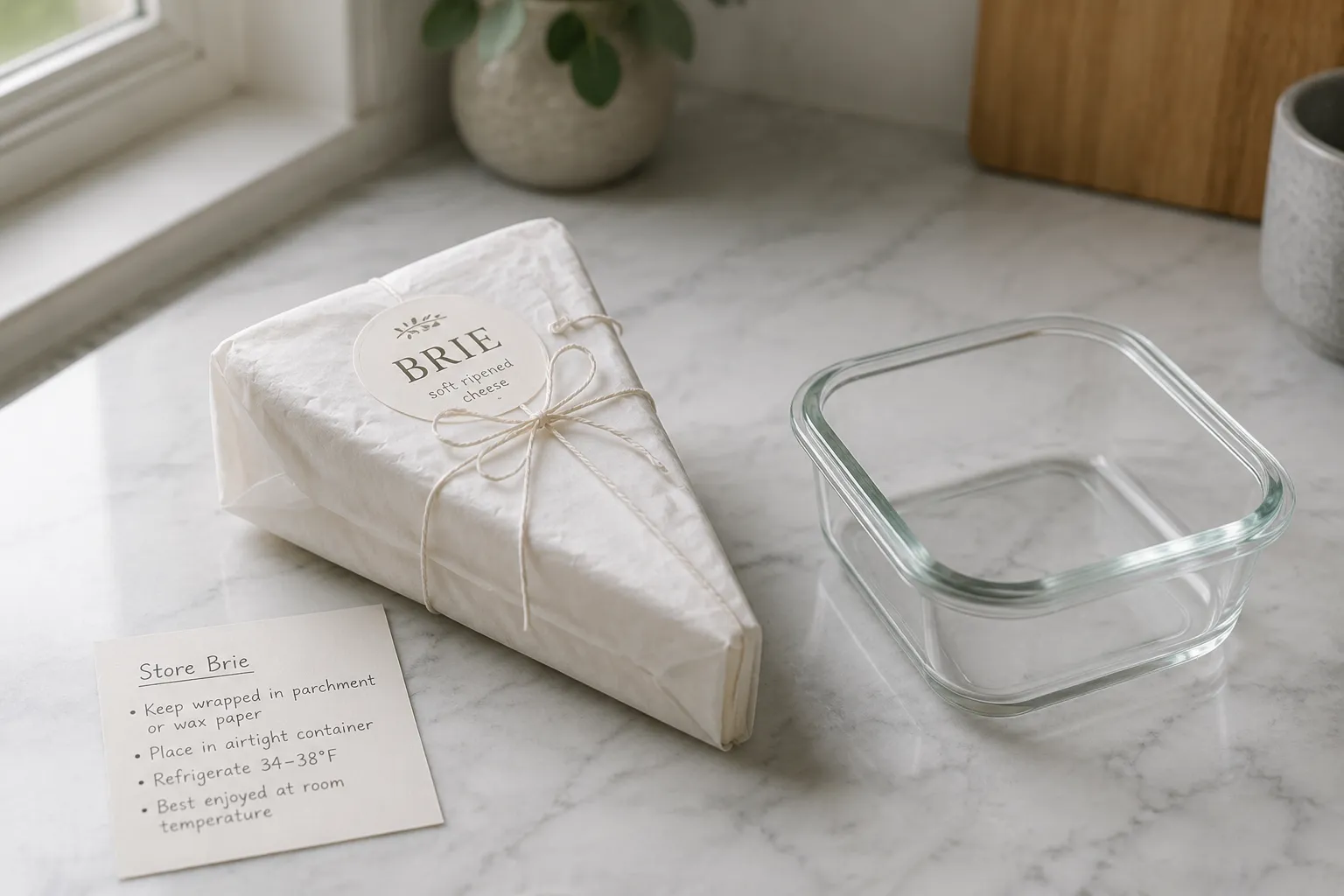
Keep your wheel wrapped in cheese paper or parchment, then loosely in foil, in the warmest part of your fridge (the cheese drawer or a top shelf). Plastic wrap is the enemy: it suffocates the rind and creates ammonia notes. Unopened wheels keep one to two weeks past the sell-by date, opened wedges about a week.
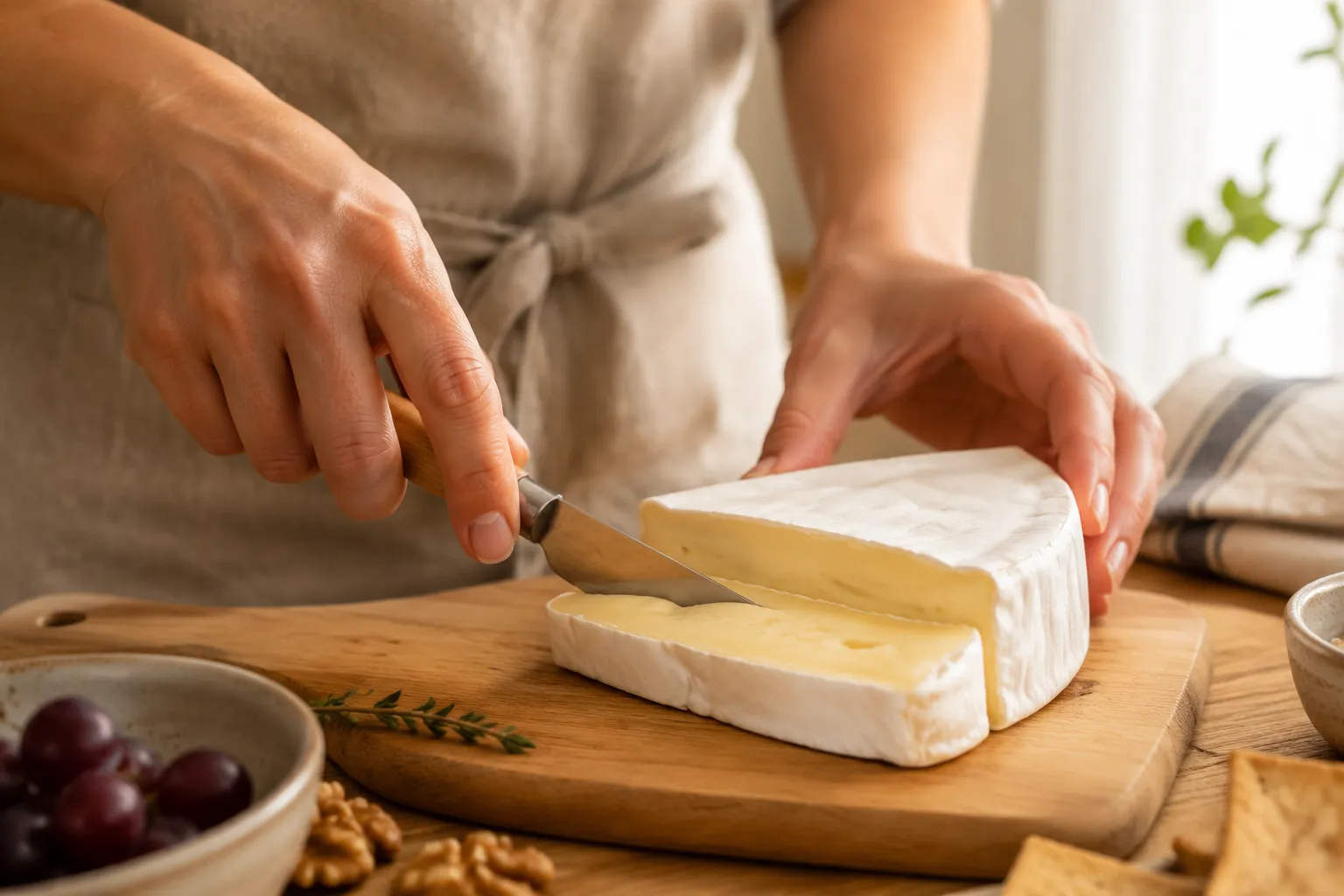
Half of being good at brie is just letting the cheese be itself. Don't overthink it.
Yes, almost always. The brie rind is fully edible, contributes earthy, mushroomy depth, and is part of the traditional experience. The exception is if a wheel is overripe and the rind tastes sharply ammoniated. Otherwise, eat it like a French person and don't apologize. Trying a bite of rind with a bite of paste is the most authentic way to taste what the wheel is actually doing.
Cold brie tastes muted and chalky. Pull your wheel out 30 to 60 minutes before serving (still wrapped) so the paste relaxes, the aroma blooms, and the flavor opens up. This single step is the difference between fine and wow, and it's the most underrated tip in cheese world.
For a wedge, slice radially from the point outward like a cake, so every guest gets a fair share of rind and creamy interior. For a small whole wheel, cut it in half across the middle, then slice each half into pie-shaped wedges. Use a thin, slightly warmed knife — a small offset spatula or dedicated cheese knife works great.
Pairing a soft-ripened cheese like this is forgiving. Its mild, buttery profile plays nicely with sweet, salty, briny, and bubbly. The classics work because they balance the richness with acidity, crunch, or a little spark.
Fresh apples and pears bring crisp acidity that cuts the cream. Red and green grapes add juiciness in single-bite form. Dried apricots, dates, and figs deepen the savory side, and a spoonful of jam — especially fig — feels almost mandatory. If you've ever made a homemade fig jam recipe, this is its moment to shine, smeared right onto a soft wedge.
A neutral water cracker, a seedy whole-grain version, or a thin slice of crusty baguette is all you really need for brie cheese and crackers done right. A batch of homemade crackers with rosemary or black pepper will make you look like you tried a lot harder than you did, and a warm, torn baguette is hard to beat for spreading. For melted versions, see the puff pastry appetizers section further down — they're a love letter to a melty wheel.
For wine and cheese pairings, brie is happiest with bubbly Champagne, dry sparkling rosé, or unoaked Chardonnay — the acidity and effervescence cut through that buttery richness. A light Pinot Noir works for reds. On the beer side, a crisp Belgian witbier or saison echoes the cheese's gentle funk. For cocktails, a French 75 or a dry gin and tonic with a lemon twist brings the perfect lift. When in doubt, follow this rule: bubbles and brie are basically married.
Brie melts into something otherworldly. The rind contains the molten interior just enough to scoop, and the flavor turns nuttier and sweeter as it heats. If you've only ever eaten it cold, you're missing half the magic.
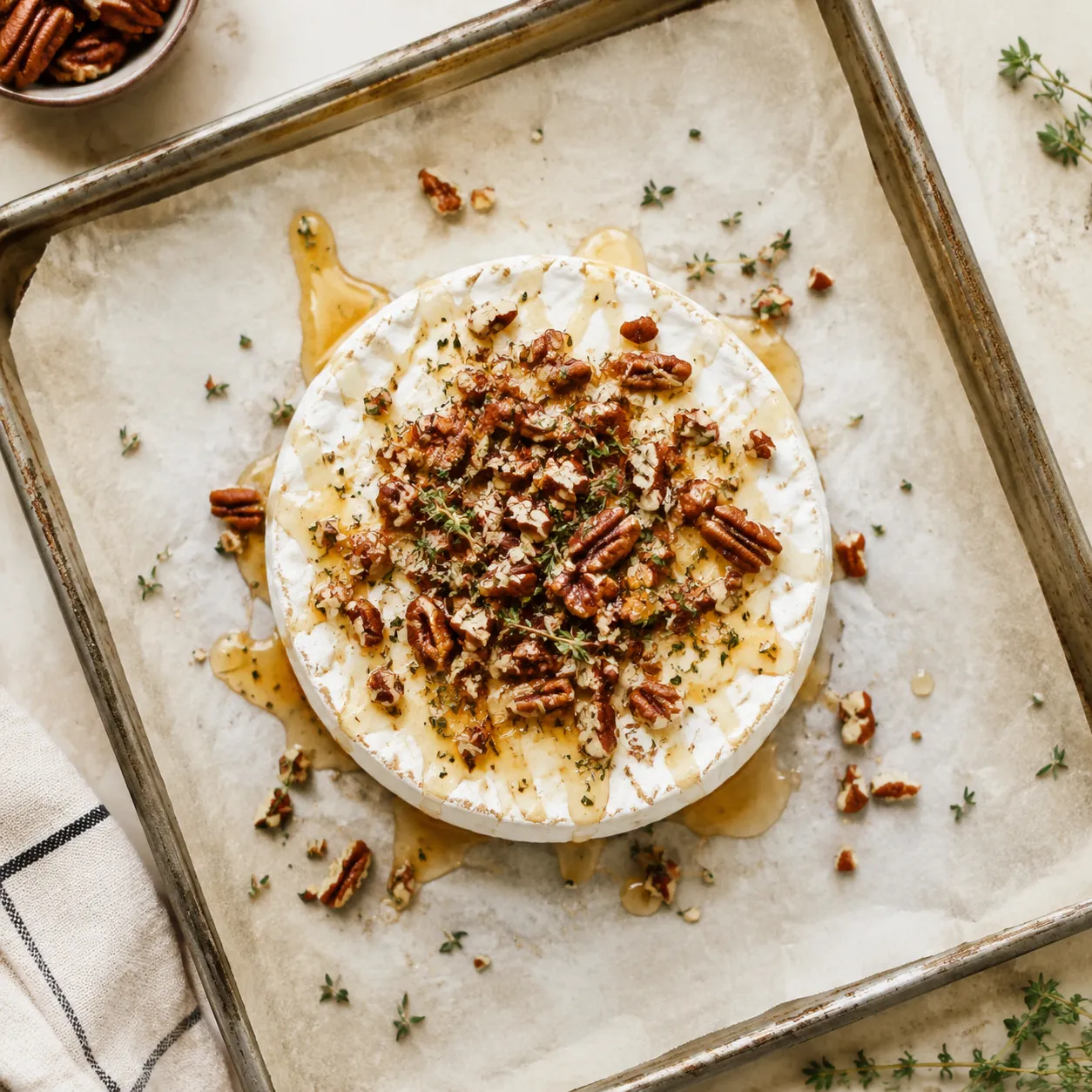
The fastest crowd-pleaser ever invented: a wheel of brie, a drizzle of honey, a handful of toasted pecans, ten minutes in the oven. Done. We'll cover the recipe in detail below, and once you have the technique, you can riff on it endlessly.
Brie melts beautifully against tart apples, salty prosciutto, and a smear of Dijon on sourdough. Add caramelized onions and you've got the kind of sandwich that makes people stop talking mid-sentence. A buttered cast iron skillet and a patient medium-low heat are all the equipment you need.
Tear cold brie over a hot pizza right out of the oven and let the residual heat do the melting. Stir cubes into warm pasta with cracked pepper and pine nuts. Or layer it on a fall salad with roasted squash, walnuts, and a maple vinaigrette. The double cream brie versions melt the most luxuriously here.
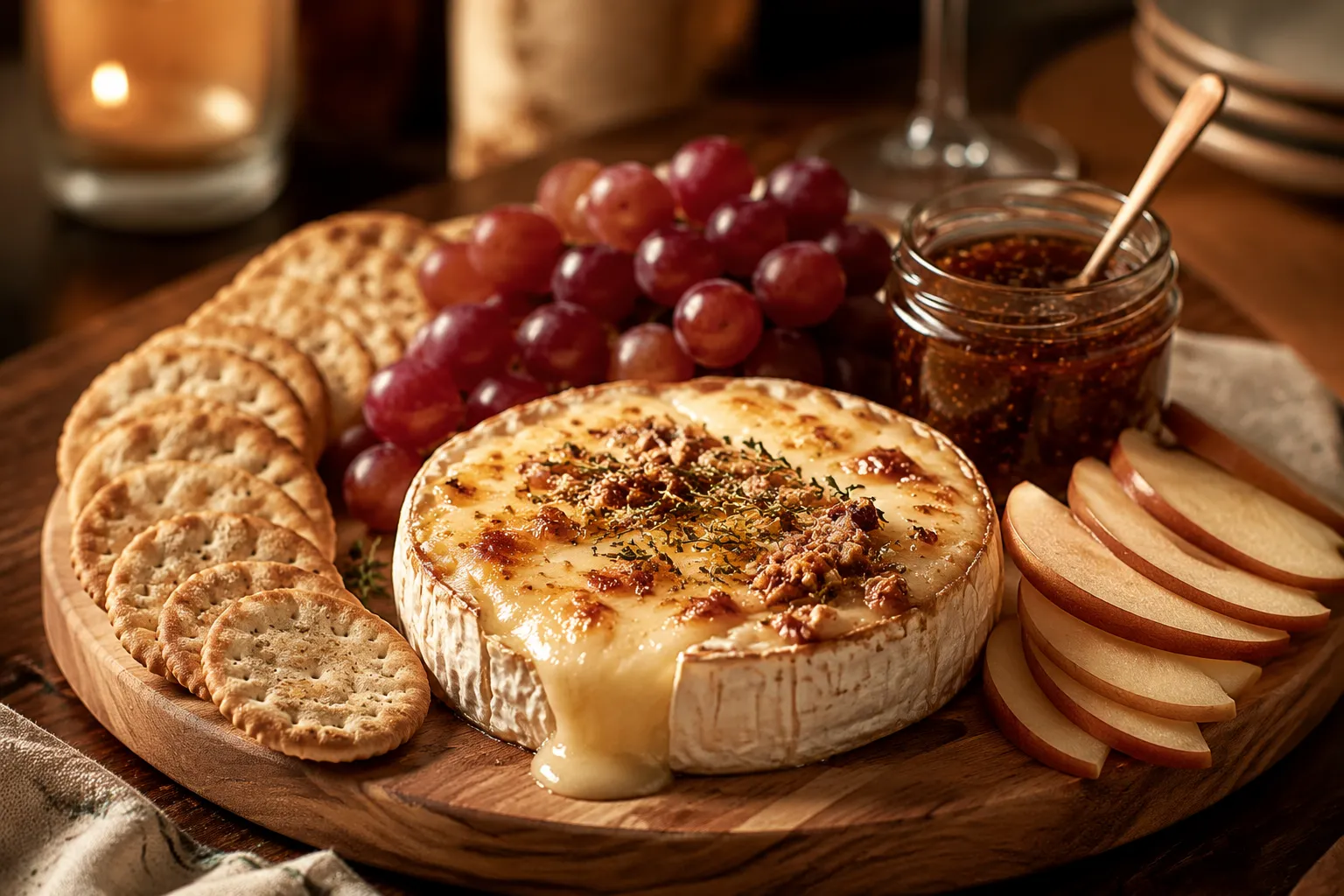
If you've made it this far, you've earned a baked brie recipe that delivers wow with very little work. This version skips the dough wrap and lets the cheese itself be the star, finished with honey, toasted nuts, and a glossy ribbon of fig jam. It's a small wheel, transformed into a 20-minute centerpiece that always disappears first.
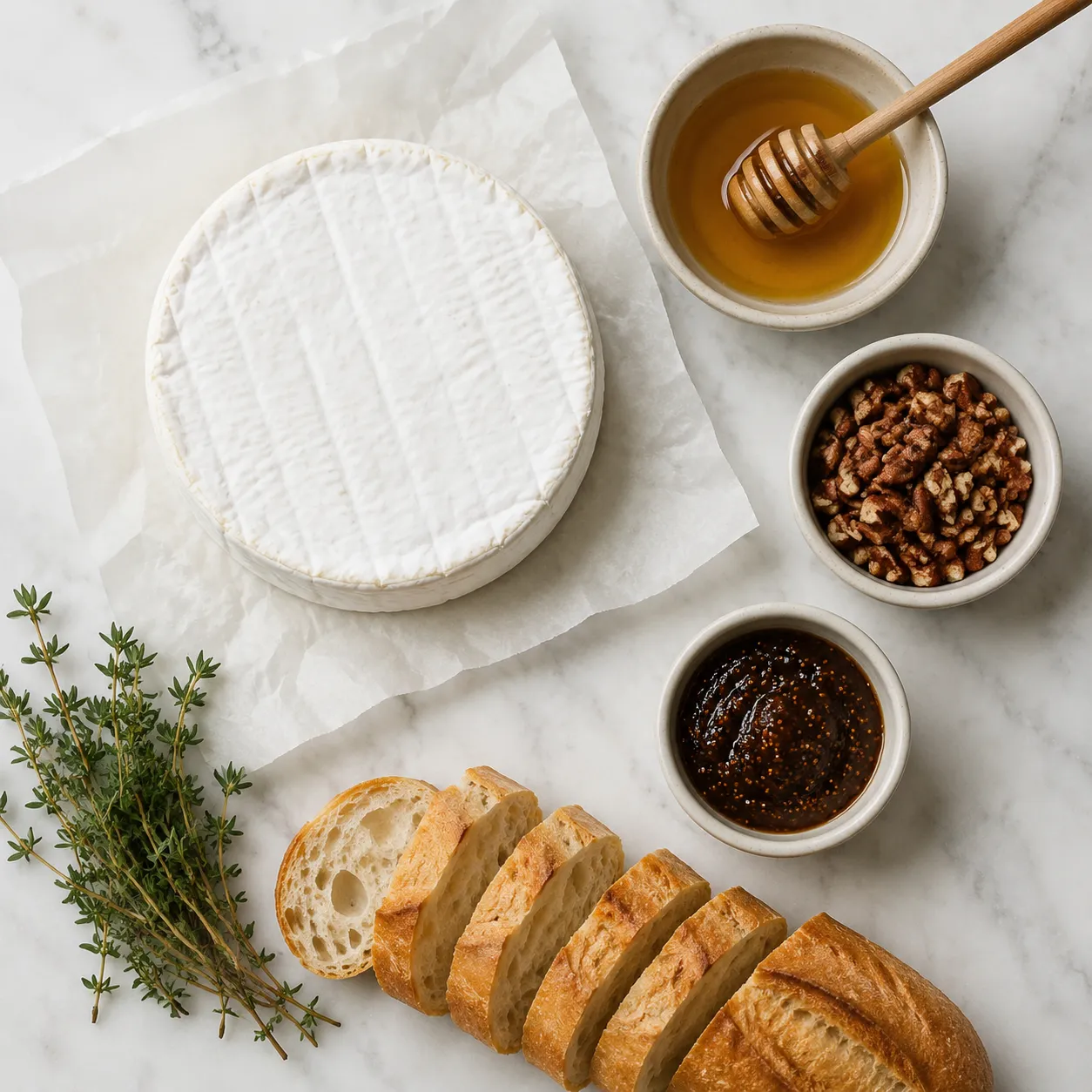
You'll need one 8-ounce wheel, a quarter cup of honey, a third of a cup of chopped pecans or walnuts, two tablespoons of fig jam, a sprig of fresh thyme, and crackers or sliced baguette for serving. That's it. The cheese is doing the heavy lifting, so don't overcomplicate the toppings.
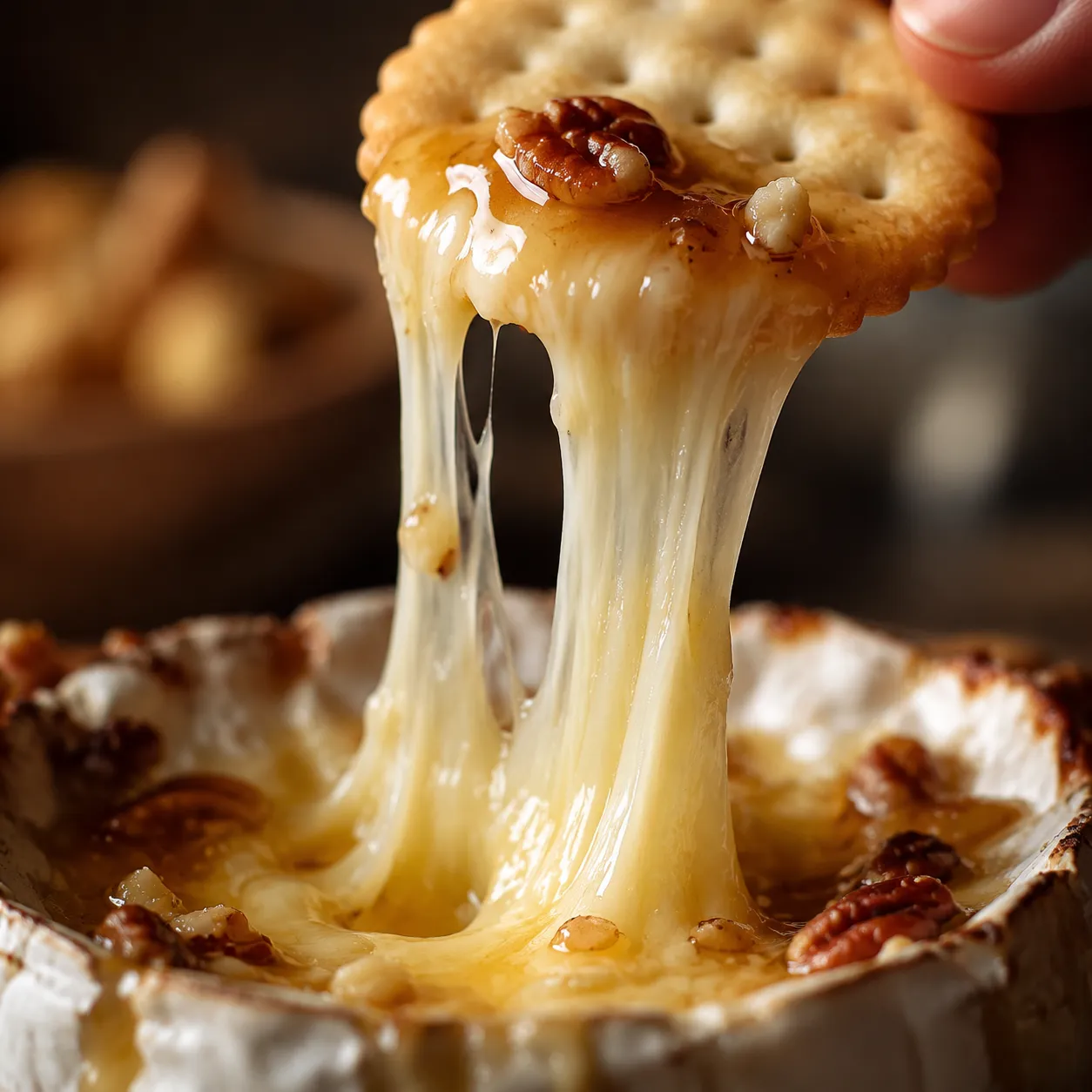
You'll find the full numbered method in the recipe card below, but here's the gist: warm the oven, set the wheel on a parchment-lined sheet pan, score the top, pile on the goodies, and bake until just barely melted in the center. The trick is pulling it before the rind splits — you want a soft, scoopable interior, not a puddle. Serve immediately, while it's at peak gooey.
Toast your nuts up to a week ahead and store them airtight. Top the wheel up to 30 minutes before baking and keep it in the fridge until you're ready. Once baked, brie waits for no one — plan to serve it within 15 minutes of pulling it from the oven for that perfect gooey scoop, or it will start to set back up.

This recipe is a great starting point, but it's also a launching pad. Once you nail the technique, the same method works with apricot preserves and pistachios, with caramelized onions and bacon, or wrapped in pastry — there are endless cheese board ideas built around a single melty wheel. Save this one, then make it your own.
The honey-pecan-fig version is a classic for a reason, but the bones of this recipe support endless riffs. Once you've got the bake time down, swap the toppings to match the season, the occasion, or whatever's hiding in your pantry.
Leftover baked brie is rare, but it happens. Once cooled, scrape any remaining cheese (and toppings) into an airtight container and refrigerate for up to 3 days. The texture firms up as it chills, but it's still excellent — spread it cold on toast, melt a spoonful into hot pasta, or stir it into scrambled eggs the next morning.
To revive a chilled portion, scoop into a small oven-safe dish and warm at 325°F for 5-7 minutes until just softened. Avoid the microwave if you can; it tends to seize the proteins and turn the cheese grainy. Freezing a baked wheel isn't recommended — the texture goes mealy on the thaw — but unbaked, unopened wheels freeze for up to 2 months if you really need to plan ahead.