Seafood Gumbo Recipe: Authentic Louisiana Creole Style
Ingredients
Scale
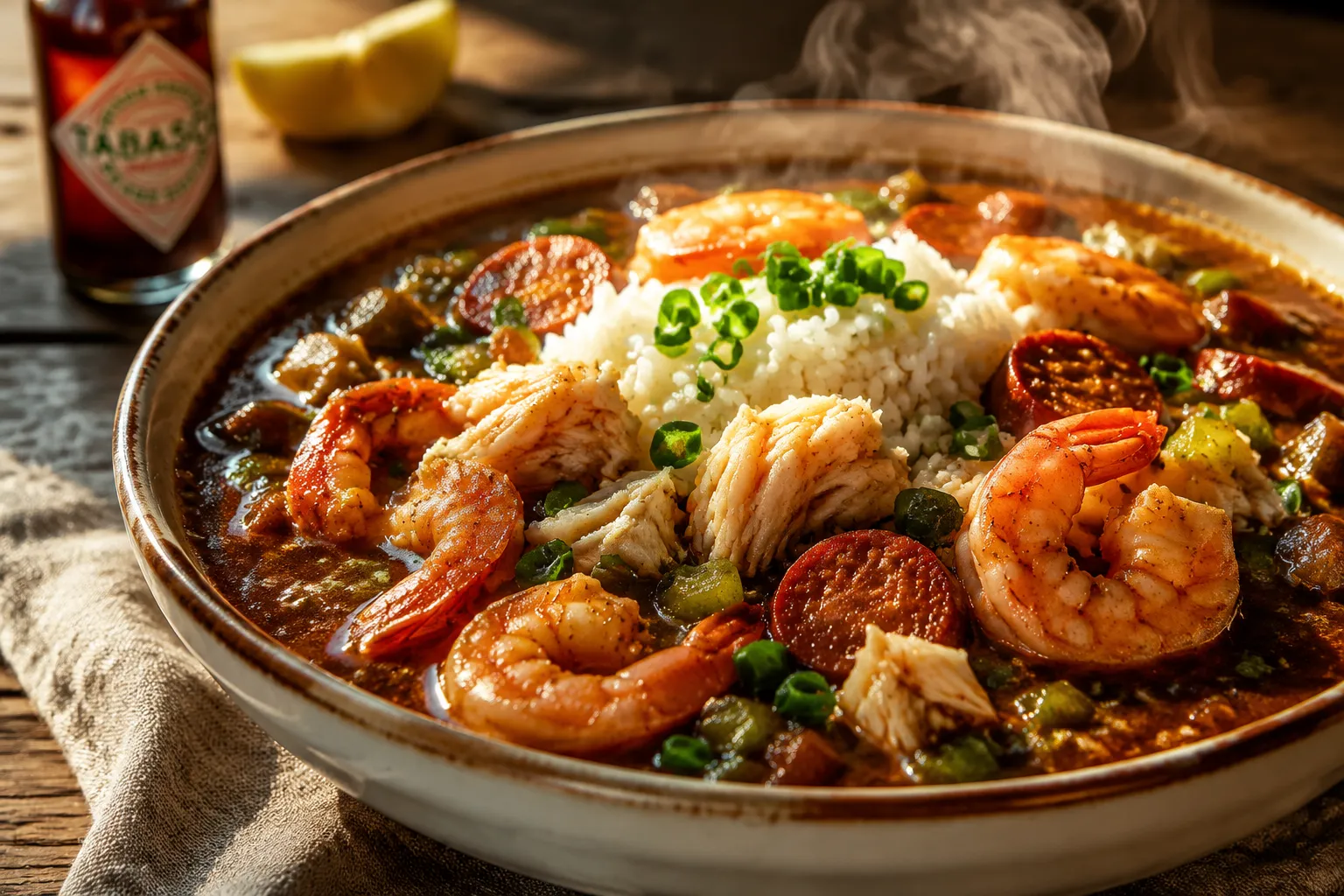
A rich, soul-warming seafood gumbo built on a chocolate-brown roux, the holy trinity, and a Gulf-style mix of shrimp, crab, and andouille — Louisiana comfort in a bowl.
This seafood gumbo recipe is the kind of slow-simmered, deeply savory pot that makes a kitchen smell like a New Orleans supper club: toasted roux, smoky andouille, sweet crab, and briny Gulf shrimp all tucked into one glossy, mahogany broth.
Gumbo has a way of turning a regular evening into an occasion. It asks for a little patience at the stove, especially while the roux darkens, but the payoff is huge: spoonfuls of seafood gumbo layered with spice, vegetables, sausage, and tender seafood over a mound of white rice. This version leans Creole, with tomatoes, okra, and a finishing whisper of filé powder for that unmistakable Louisiana gumbo body.
If you already love dishes like Cajun shrimp pasta, blackened catfish, or red beans and rice, this pot belongs right in your Southern cooking rotation. It is cozy enough for Sunday dinner, special enough for company, and make-ahead friendly in the smartest way: simmer the base early, then add the delicate shrimp and crab right before serving.
Creole seafood gumbo is a New Orleans-style stew built on a cooked flour-and-fat roux, the holy trinity of onion, bell pepper, and celery, and a generous mix of seafood. Compared with a more rustic Cajun gumbo, a creole gumbo recipe often includes tomatoes and has a slightly brighter, city-style flavor that still feels rich and smoky. The broth should be full-bodied but not muddy, with distinct notes of toasted roux, herbs, shellfish, and spice.
The roux is the foundation. As flour cooks in oil, it moves from blonde to peanut butter to milk chocolate to a dark roux that smells nutty, almost coffee-like, and savory. That color gives gumbo its signature depth, and it is the difference between a thin soup and a bowl that tastes like it has been simmering in a Louisiana kitchen all afternoon.
Okra and filé powder both play traditional roles, though they do slightly different things. Okra softens into the pot and gently thickens the broth as it simmers, while filé powder, made from ground sassafras leaves, is stirred in off the heat for fragrance and body. Together, they give this seafood gumbo recipe its classic texture without making it heavy.
The best gumbo starts with organized ingredients because once the roux is ready, things move quickly. Have your onion, green bell pepper, celery, garlic, and andouille sausage prepped before you start cooking the flour and oil. The seafood can wait in the refrigerator until the end, but the vegetables need to be ready to cool the roux and stop it from going too far.
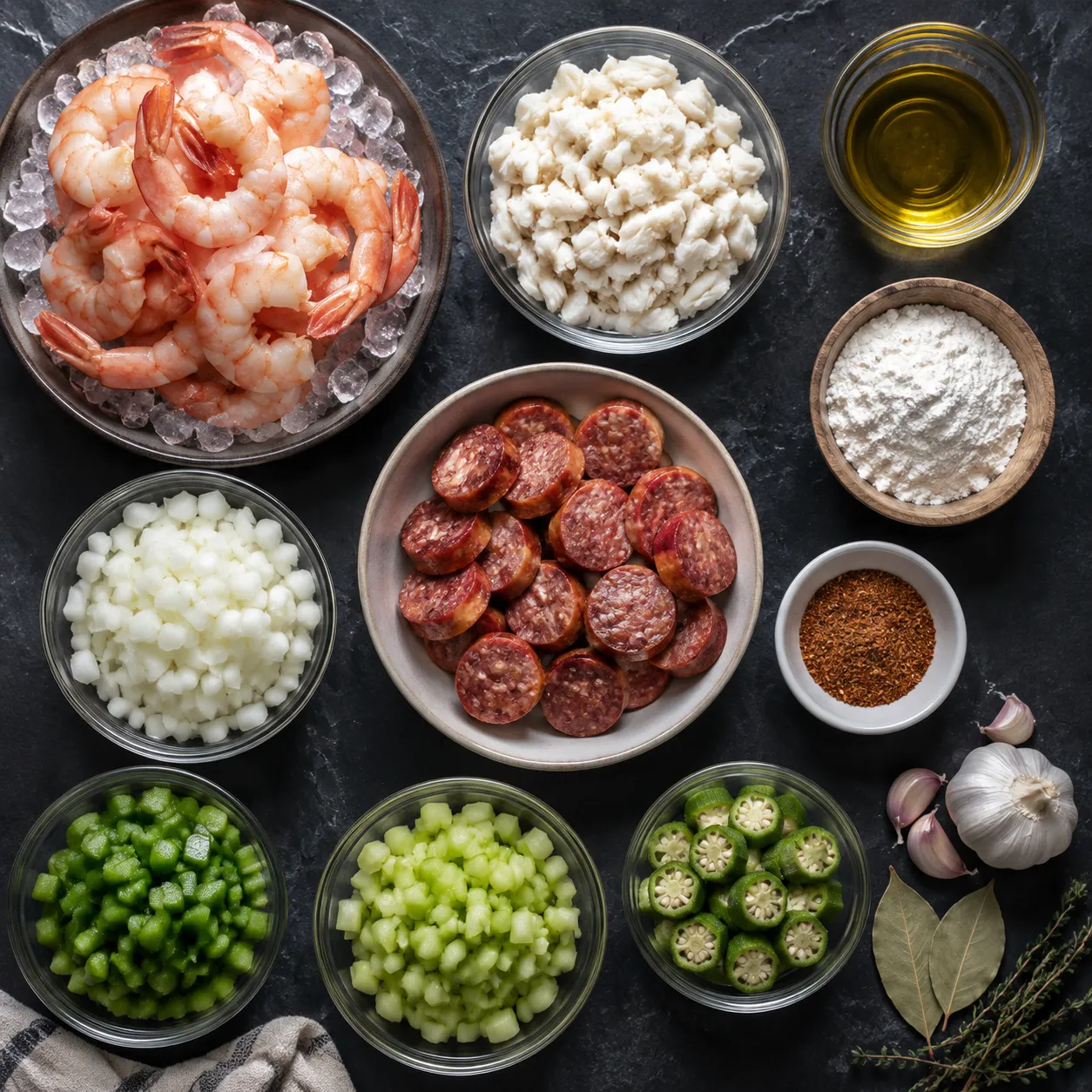
For the seafood, Gulf shrimp are the classic choice: sweet, firm, and just briny enough to stand up to the spiced broth. Lump crab adds richness and a delicate sweetness that makes the whole pot feel generous. If you have access to fresh oysters or crawfish tails, they are welcome here too, but avoid very delicate fish that will fall apart before the gumbo reaches the table.
Andouille sausage brings smoke, salt, and a little heat. Browning it first adds flavor to the pot and gives the broth a meaty backbone without overpowering the seafood. If your Creole seasoning is very salty, season gradually; if you make homemade Creole seasoning, you can control the salt and cayenne and adjust the final bowl more precisely.
Stock matters, too. Seafood stock gives the most Gulf-style flavor, but a good chicken stock works beautifully, especially with crab and shrimp layered in at the end. Tomatoes and okra nudge the gumbo in a Creole direction, while bay leaves, garlic, and a final pinch of filé powder round everything out.
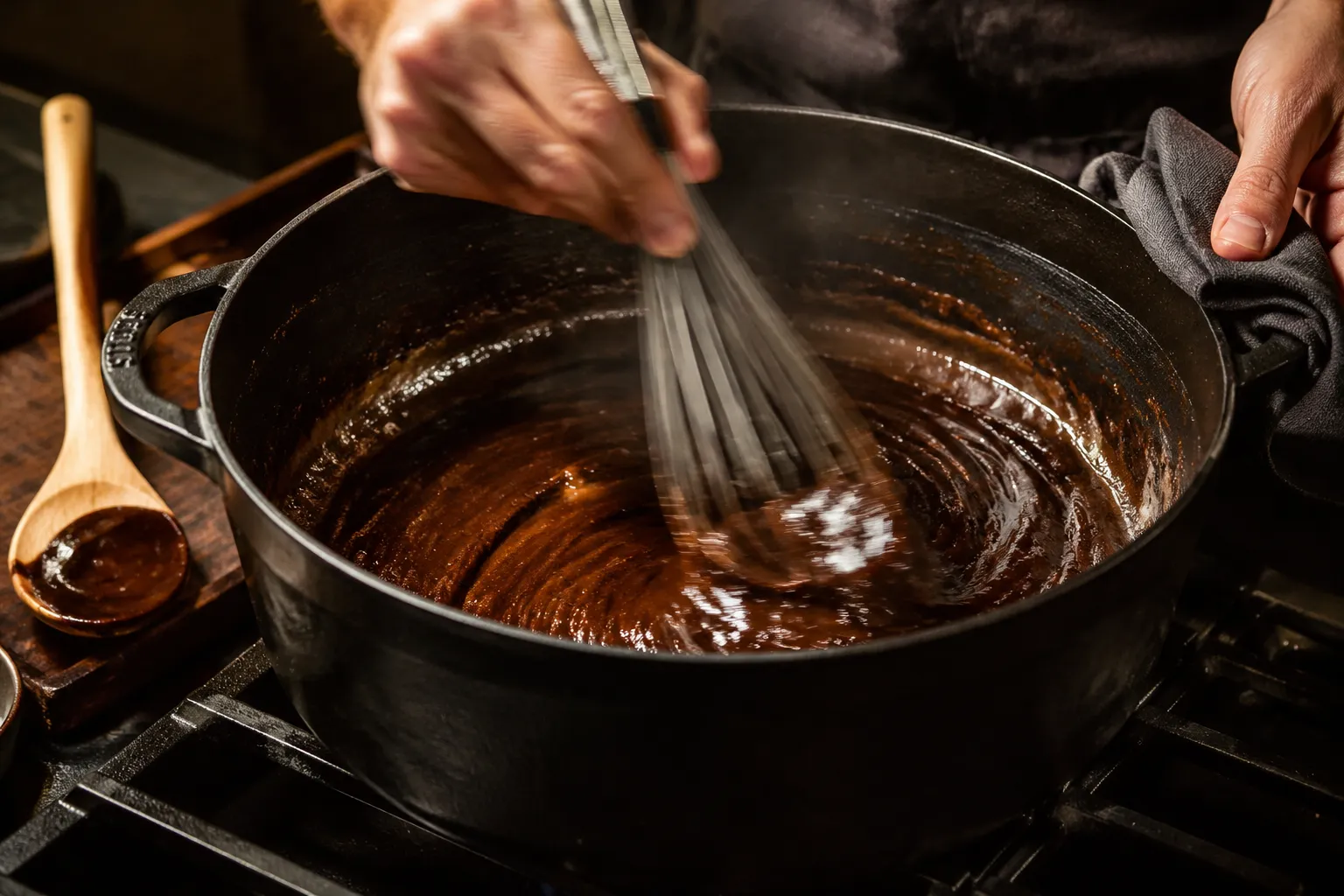
Start with the roux and give it your full attention. In a heavy Dutch oven, flour and oil cook together over medium to medium-low heat while you whisk or stir constantly. The color will shift slowly at first, then more quickly as it darkens; aim for a deep chocolate-brown shade that looks glossy and smells toasted, not burnt.
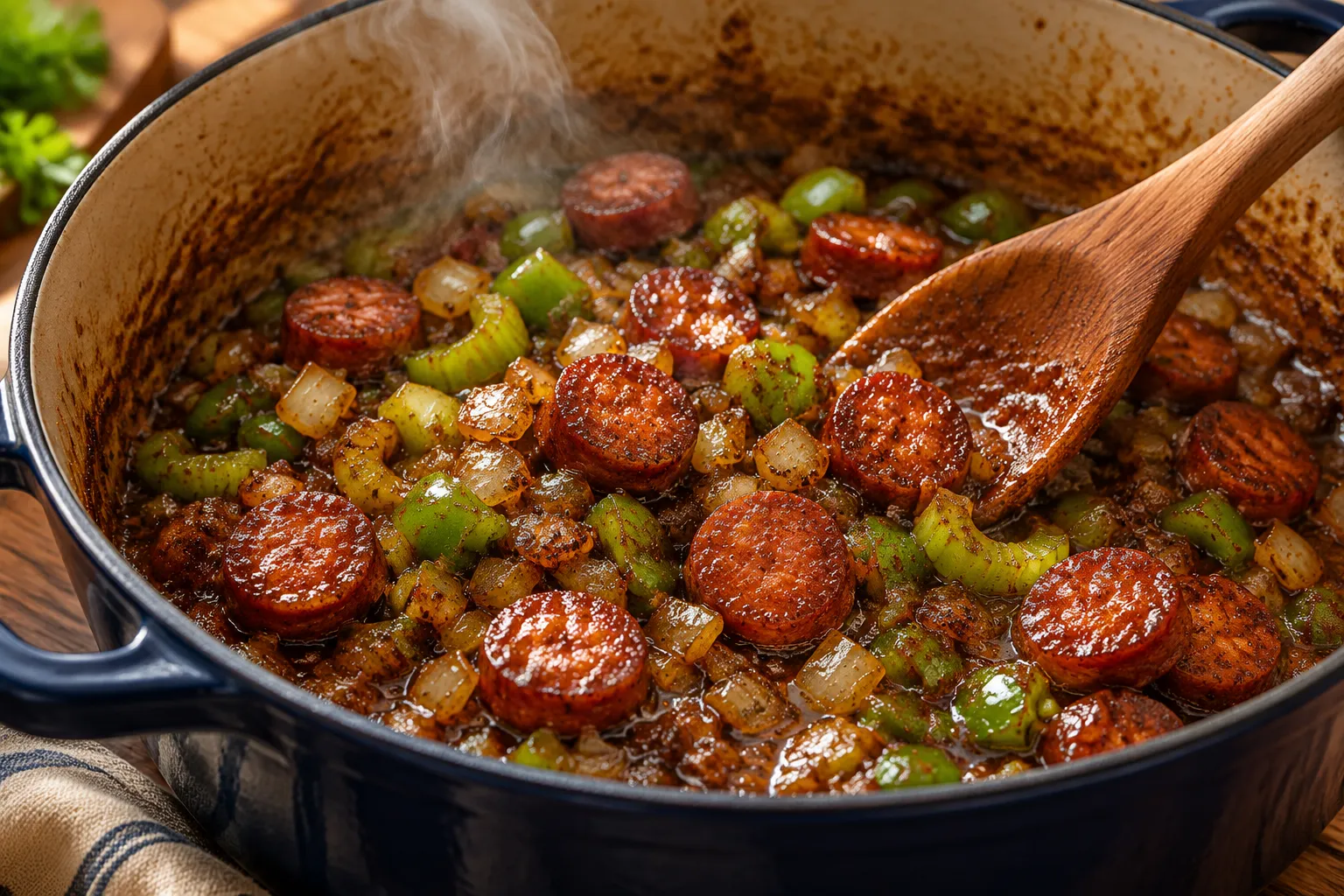
Once the roux reaches that mahogany color, the holy trinity goes in. The diced onion, bell pepper, and celery will hiss and steam as they hit the hot roux, and they help bring the temperature down while picking up all that toasted flavor. Add the sliced andouille sausage so it can mingle with the vegetables and season the base with smoky drippings.
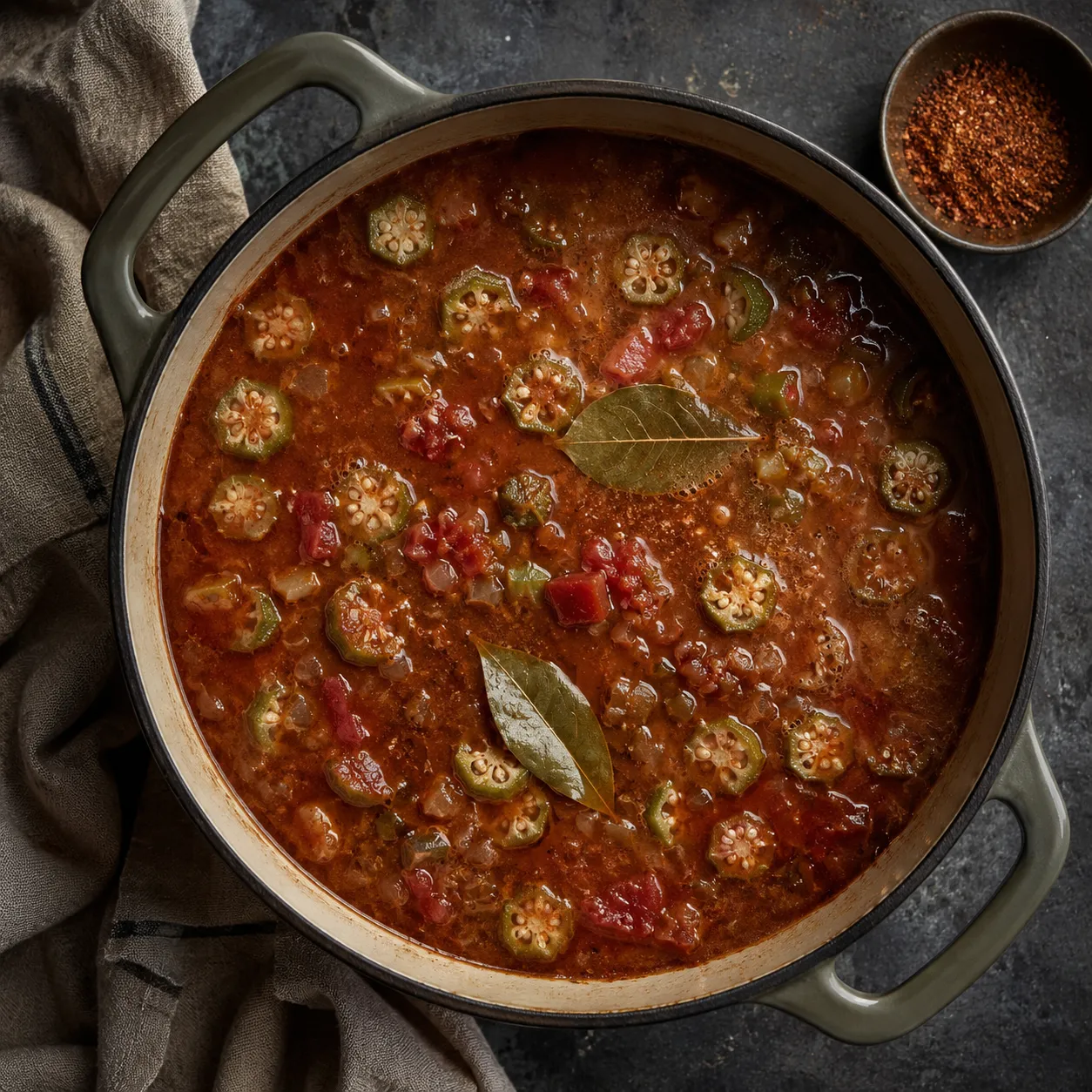
From there, garlic, Creole seasoning, bay leaves, tomatoes, okra, and stock turn the roux into a simmering gumbo base. Add the liquid slowly and stir well so the roux dissolves evenly instead of clumping. The pot should bubble gently, not boil furiously, as it reduces and the flavors become rounder and more cohesive.
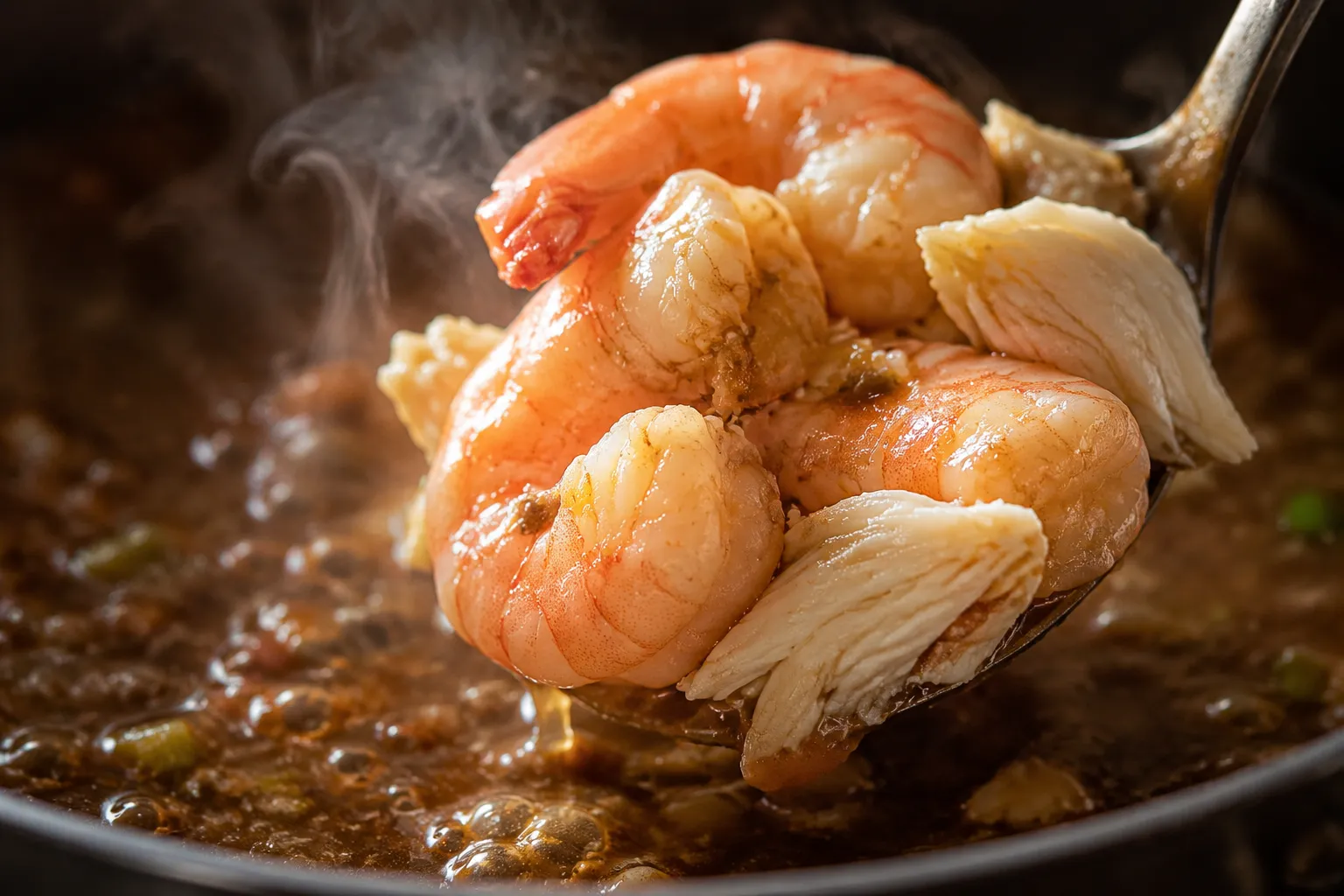
The seafood goes in last because shrimp and crab cook quickly. Stir in the shrimp just until they curl and turn opaque, then fold in the lump crab gently so the pieces stay intact. This seafood gumbo recipe tastes luxurious because the shellfish stays tender instead of simmering for an hour and turning rubbery.
A roux color guide is the easiest way to cook with confidence. Blonde roux is pale and thickening-focused, more common in sauces; peanut-butter roux has a light toasted flavor; milk-chocolate roux brings a deeper nuttiness; and dark chocolate roux is the sweet spot for gumbo with bold, restaurant-style depth. For this Louisiana gumbo, you want the last stage before burnt: dark, glossy, and fragrant.
The darker the roux, the less thickening power it has, which is why okra and filé powder are useful partners. A dark roux is really about flavor, not just body. The final broth should lightly coat a spoon and flow around the rice rather than sit like gravy.
Use a heavy-bottomed pot, a long-handled whisk or wooden spoon, and steady heat. Cast iron holds heat beautifully, but it can also keep cooking the roux after you turn the burner down, so stay attentive. If this is your first time, medium-low heat is your friend; the process takes longer, but you have more control.
Serve gumbo in shallow bowls over hot cooked white rice, letting the grains soak up the broth without disappearing completely. A sprinkle of sliced green onions and parsley brightens the top, while hot sauce lets each person decide how fiery their bowl should be. A small dish of filé powder at the table is traditional, but remind guests to stir it in after the gumbo is off the heat.
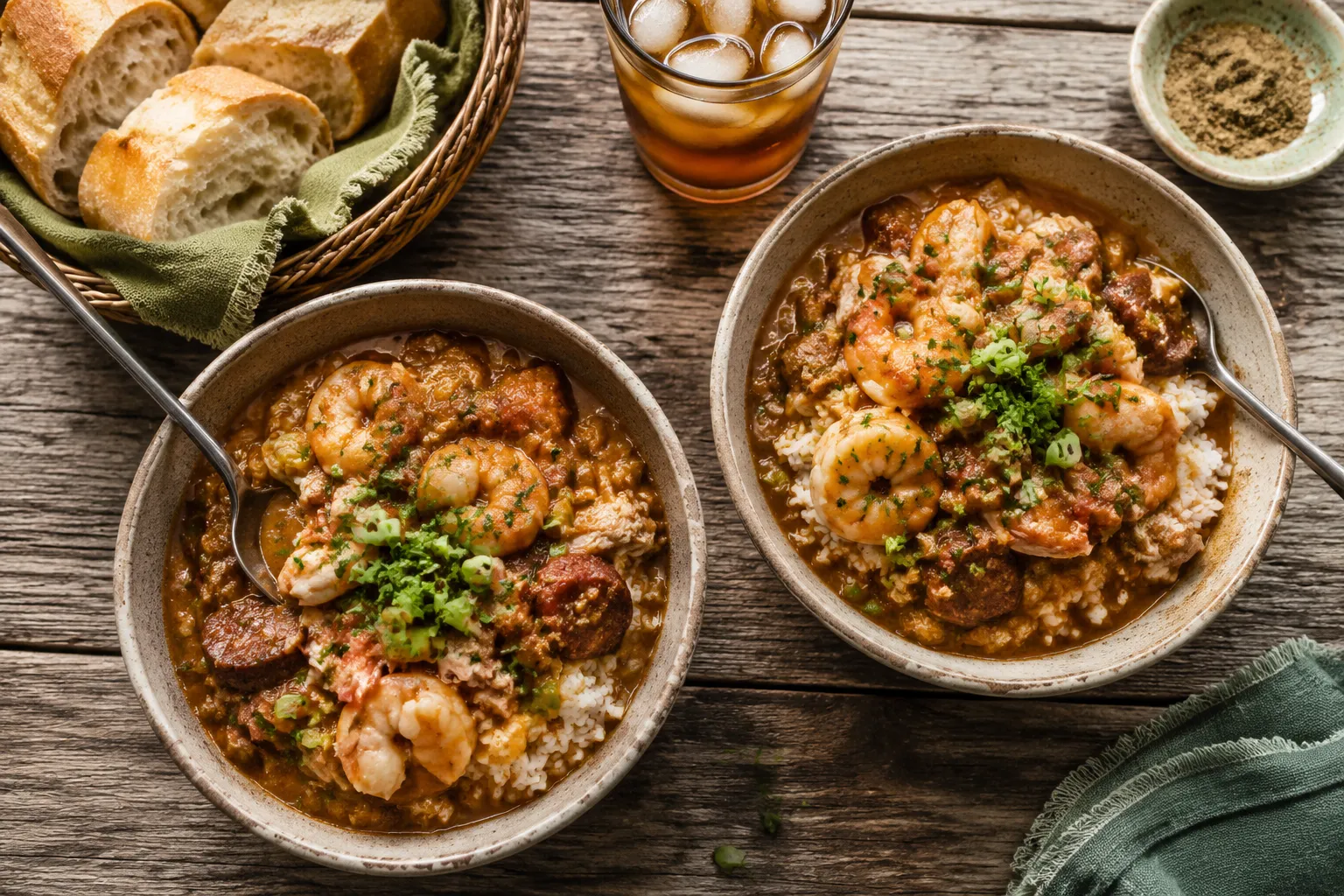
For bread, crusty French bread is classic because it can swipe through the broth and catch bits of crab and sausage. Southern cornbread is another wonderful pairing, especially if you like something slightly sweet against the savory spice. If you are building a bigger Louisiana-inspired menu, an easy jambalaya recipe makes a festive companion for a crowd, though gumbo alone is more than enough for a hearty supper.
Potato salad is a beloved side in many Louisiana homes, sometimes served right alongside the bowl or even spooned into the gumbo. It sounds surprising if you did not grow up with it, but the cool, creamy potatoes contrast beautifully with the warm, peppery broth. I also love a crisp green salad with lemony dressing to cut through the richness.
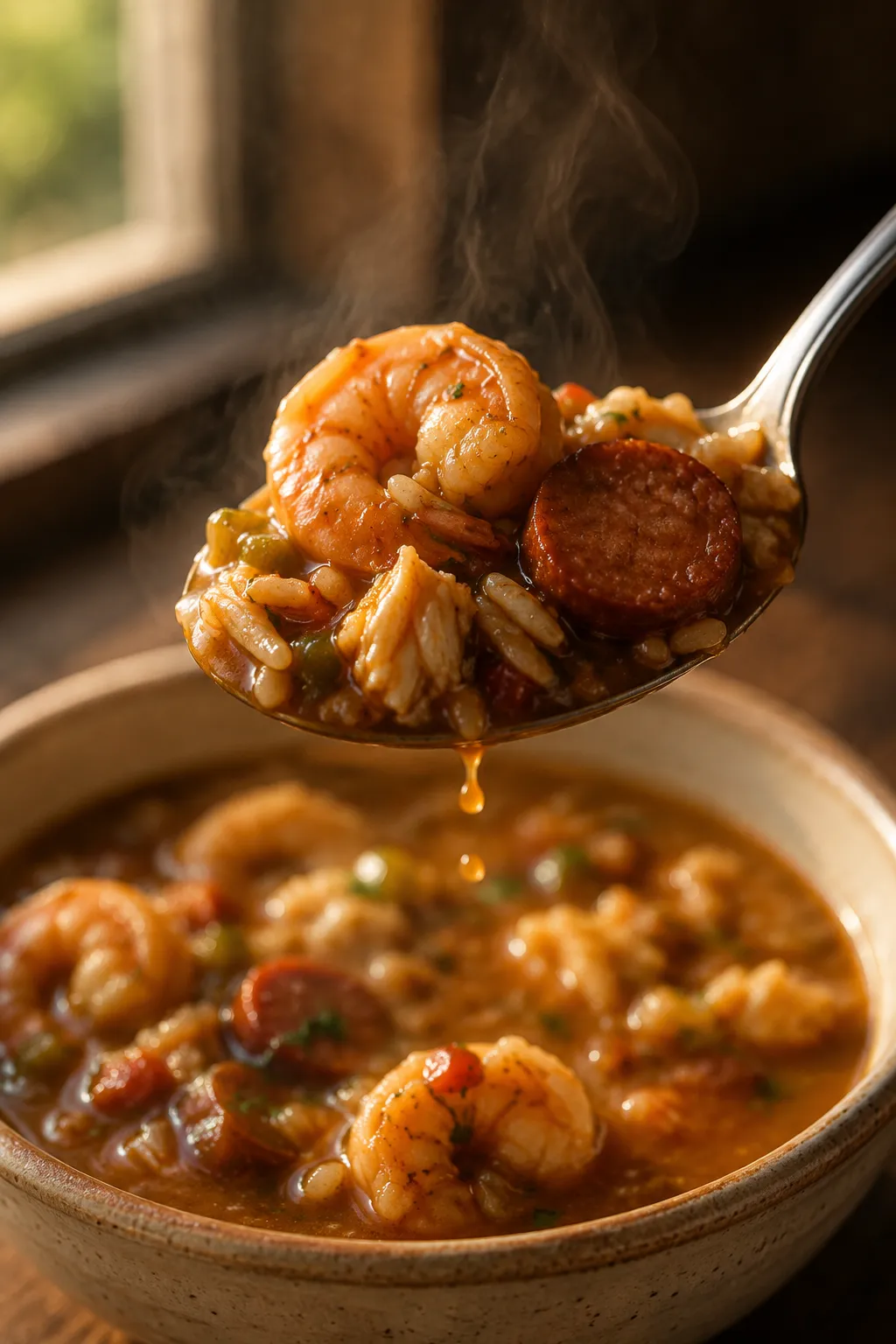
This seafood gumbo recipe is at its best when you separate the long-simmering base from the quick-cooking seafood. The roux, vegetables, and stock benefit from time, and the flavor deepens as the pot rests. Shrimp and crab, however, are happiest when added close to serving, so they stay plump and sweet.
If you are cooking for guests, make the gumbo base earlier in the day or the day before, then rewarm it gently. Once it is steaming and fully hot, add the shrimp and crab and finish the pot in minutes. That rhythm gives you all the slow-cooked flavor with none of the last-minute stress.
Gumbo is less about perfection and more about paying attention to a few key moments: a patient roux, vegetables softened in that toasted base, a gentle simmer, and seafood added with restraint. Once you understand those steps, the pot becomes flexible and forgiving. You can adjust heat, use the seafood you have, and season the broth until it tastes like your ideal version of Louisiana comfort.
Set the table with rice, herbs, hot sauce, and plenty of napkins, then let everyone build the bowl they love. Whether you are cooking for Mardi Gras, a chilly weekend, or just because the seafood counter looked too good to pass up, this seafood gumbo recipe delivers the kind of soulful, layered flavor that keeps people coming back for one more ladle.
Gumbo is wonderfully adaptable once you keep the basic structure intact: roux, trinity, stock, seasoning, and seafood added near the end. Use these variations to make the pot fit your market, your pantry, or your spice preference.
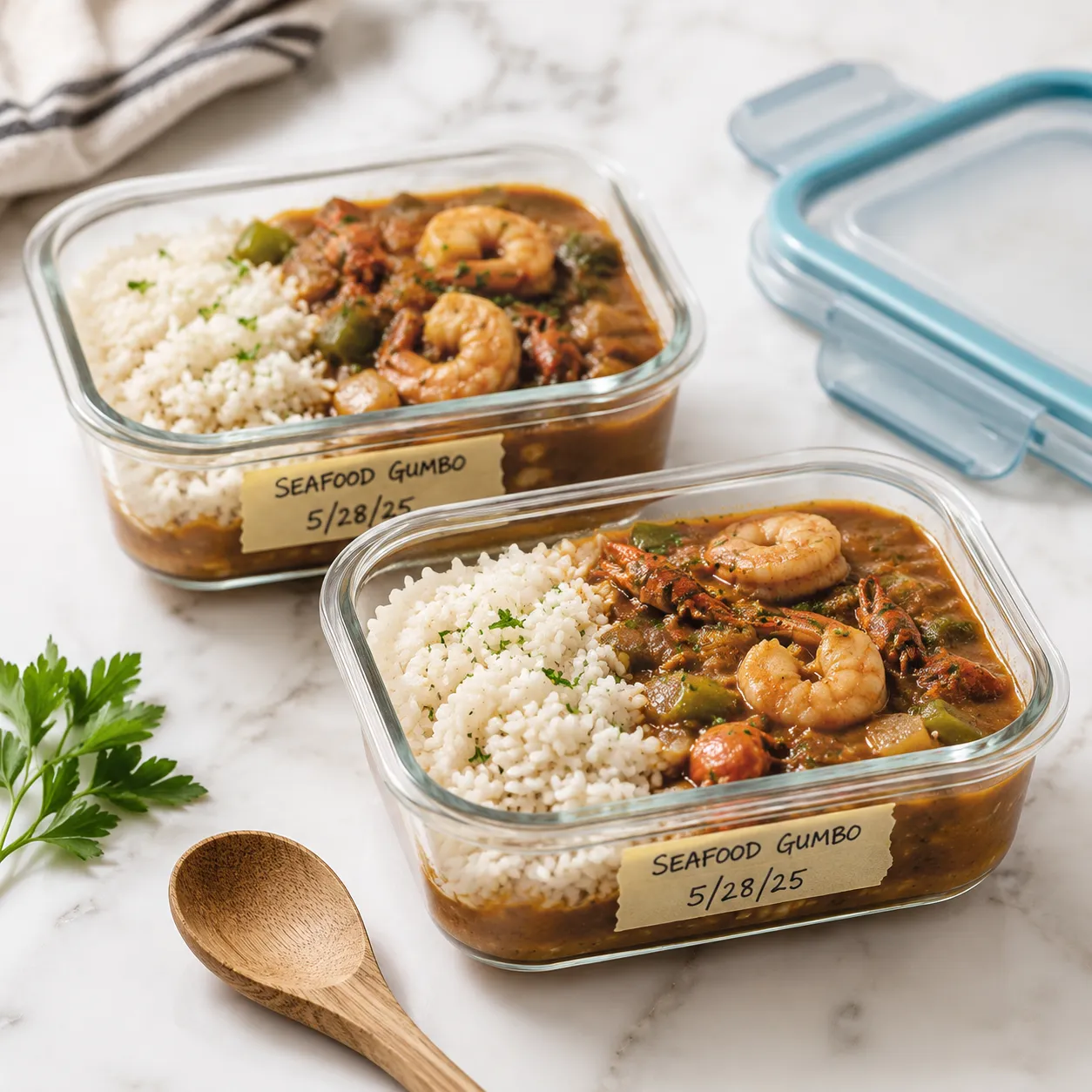
Store leftover gumbo in an airtight container in the refrigerator for up to 3 days. For the best texture, keep rice in a separate container and reheat the gumbo gently on the stovetop over medium-low heat until steaming; avoid hard boiling, which can overcook the shrimp.
For freezing, the best method is to freeze the gumbo base before adding seafood. Cool it completely, portion into freezer-safe containers, and freeze for up to 3 months. Thaw overnight in the refrigerator, simmer until hot, then add fresh shrimp and crab just before serving.