Baked Asparagus: Crispy, Tender Oven-Roasted Recipe
Ingredients
Scale
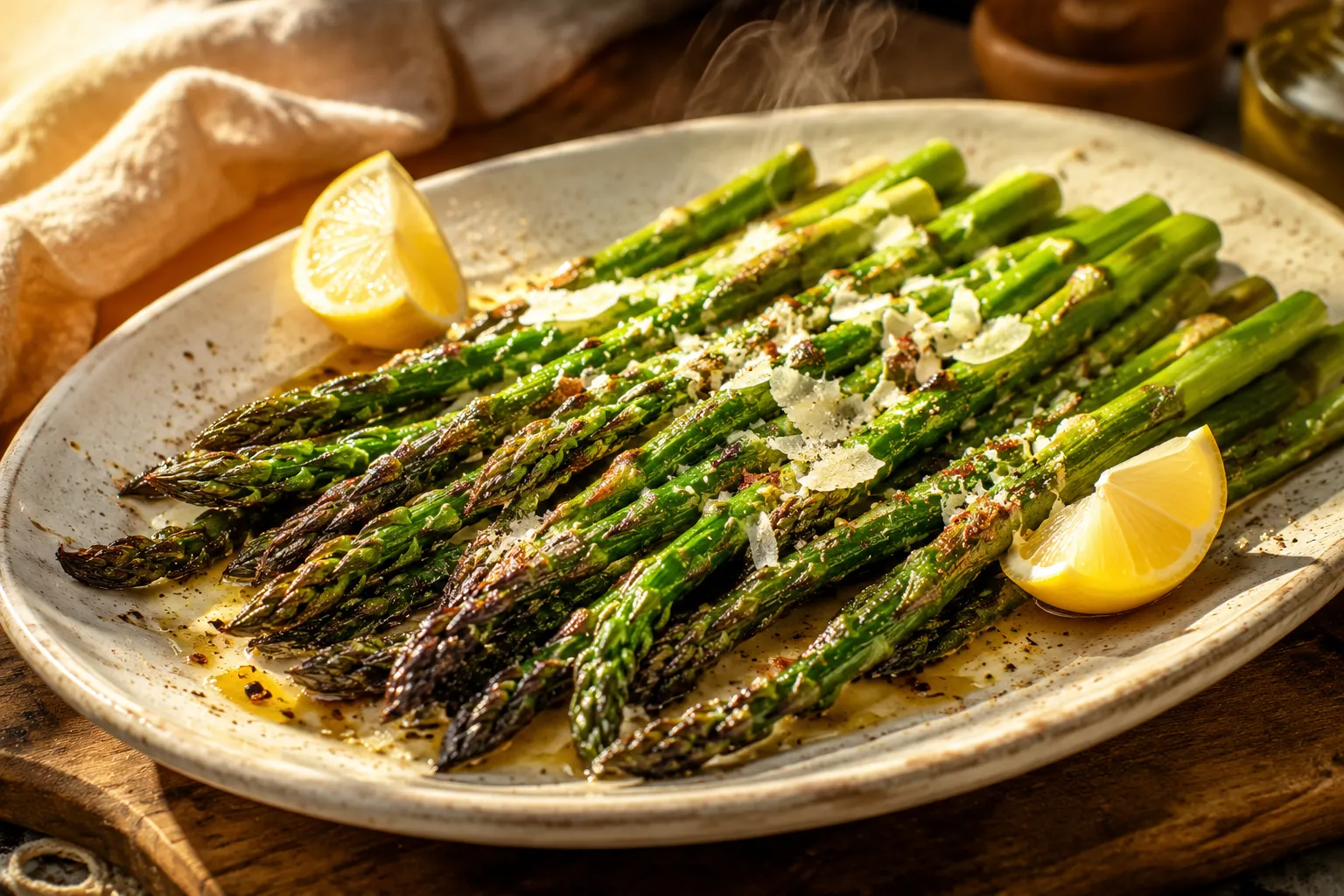
This baked asparagus turns out crisp on the tips, tender in the middle, and ready in 20 minutes flat. The simplest side dish you'll make all season.
Baked asparagus is the side dish I reach for when dinner needs to come together fast but still feel a little special. Tender spears, deeply caramelized tips, a scatter of parmesan, and a bright squeeze of lemon — it's the kind of vegetable that disappears off the platter before the chicken even makes it to the table. The best part? You need one sheet pan, five real ingredients, and twenty minutes start to finish.
I've made this recipe more times than I can count, from quiet Tuesday nights to Easter brunch for a crowd, and the formula barely changes. The trick is high heat, dry spears, and just enough fat to encourage browning without drowning the stalks in oil. Once you nail the timing for your particular bunch, you can riff endlessly with garlic, herbs, balsamic, even bacon — we'll cover all of it below.
If you've ever ended up with sad, limp, gray-green baked asparagus spears, stick around. This guide answers the big question — exactly how long to bake asparagus based on thickness — and walks through every step, from snapping the woody ends to that final shower of lemon zest.
Five staples carry this whole dish, and each one earns its spot. The shorter the ingredient list, the more each component matters, so don't be tempted to skip the lemon or short the cheese.
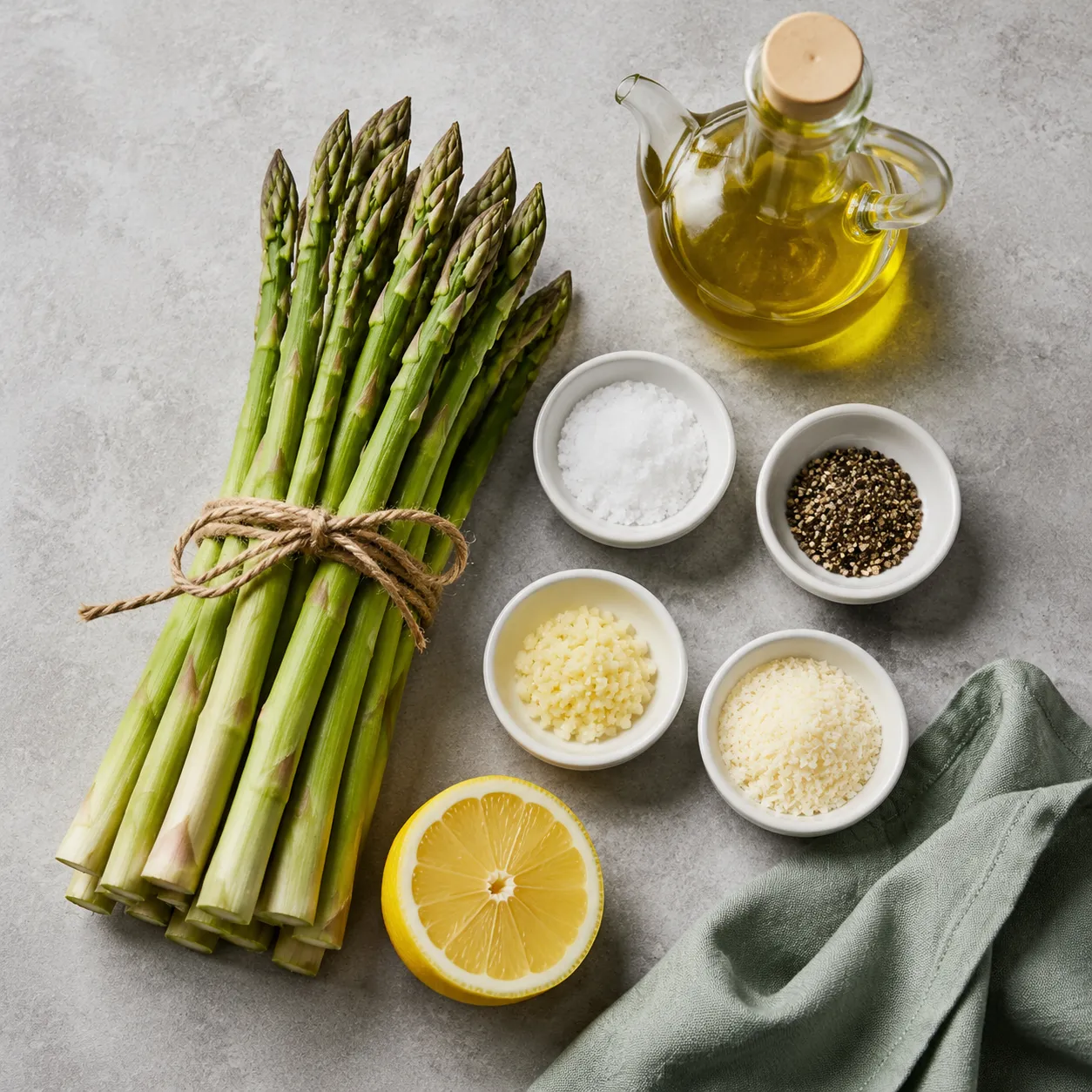
Look for fresh asparagus spears with tight, dry, compact tips — no flowering, no slimy patches, no mushy cut ends. The stalks should snap when bent rather than flop rubbery. Color is your other tell: vivid green that fades to pale near the cut end is exactly what you want. Pencil-thin spears work beautifully for fast weeknight roasting, while medium and thick spears hold up better to bold finishing flavors and a deeper char.
You'll need extra-virgin olive oil, kosher salt, cracked black pepper, fresh garlic, and a chunk of real parmesan that you grate yourself. Lemon zest brightens the whole pan at the end. Out of parmesan? Pecorino romano or grana padano slot right in. No fresh garlic? A pinch of granulated garlic works, though fresh is noticeably better. This is one of those roasted vegetables that also welcomes a finishing pat of lemon garlic butter if you want to push the dish toward the dinner-party end of the spectrum.
Prep takes maybe three minutes once you've done it once, but it's where foolproof texture is won or lost.
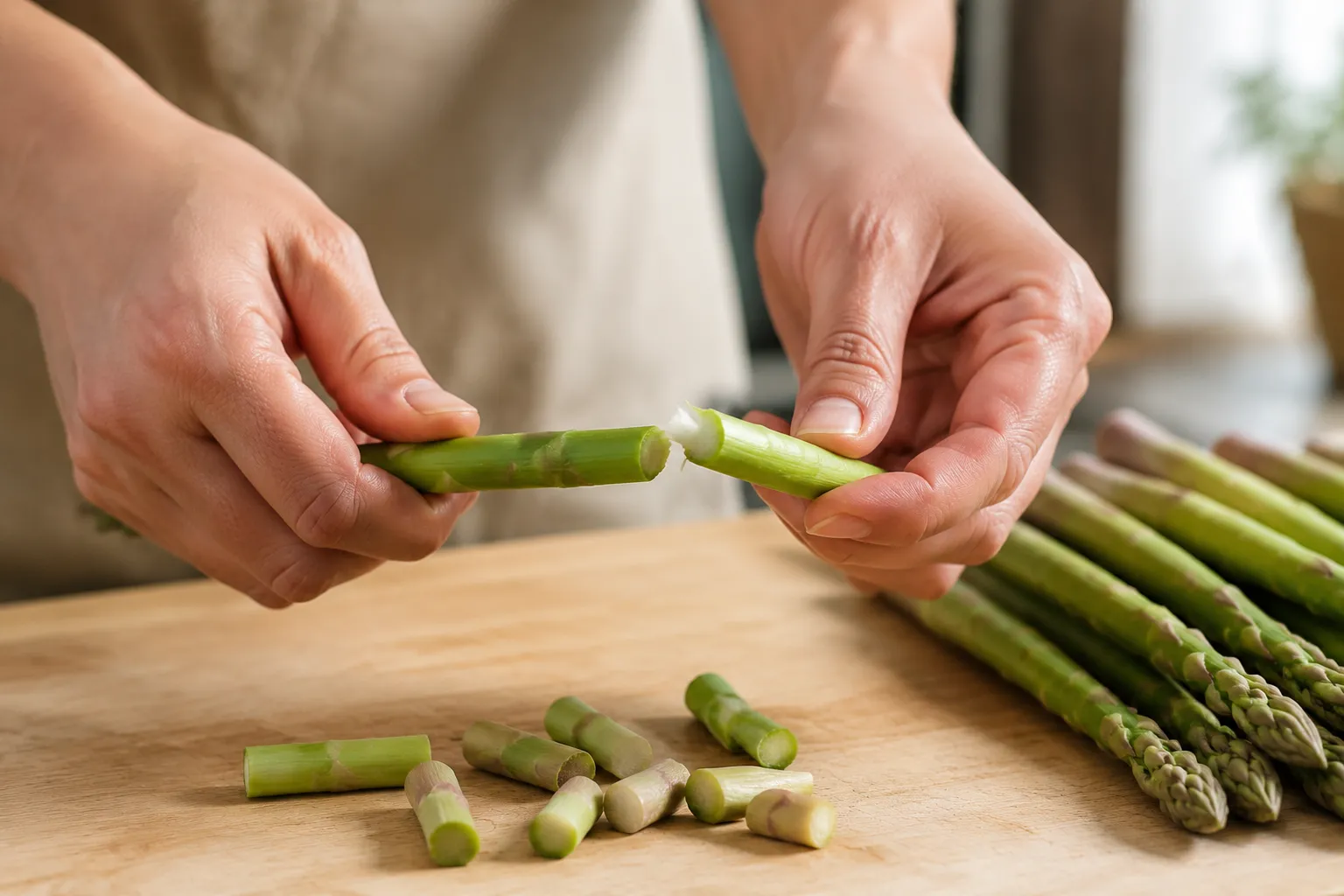
The bottom inch or two of every spear is fibrous and stringy — bake it and it will never soften, no matter how long it stays in the oven. The fastest method for how to trim asparagus is to line up the bunch on a cutting board and slice off the pale, dry ends with a sharp knife. Alternatively, hold a single spear at both ends and bend until it snaps; it'll break right where the tender part begins. Both methods work. I lean knife for speed when I'm doing a full pound.
For most spears, no. Pencil-thin and medium asparagus have skin tender enough to roast as-is. Once you get into jumbo spears thicker than your pinky finger, the lower half can stay tough and stringy even after roasting. Peel the bottom third with a vegetable peeler in those cases and you'll be rewarded with a more even, tender bite throughout the spear.
Wet asparagus steams instead of roasts. After rinsing, roll the spears in a clean kitchen towel and pat them genuinely dry. Surface moisture is the enemy of those gorgeous caramelized tips, so take an extra ten seconds here. It pays off the second the pan comes out of the oven.
This is the question that brings most home cooks to a recipe like this one, so let's get specific. The honest answer depends on three variables: spear thickness, oven calibration, and how charred you personally like your tips.
Both temperatures work, with a real tradeoff. At 400°F you get gentler, more even cooking with less risk of burning the tips before the stalks soften — great for thick spears or if your oven runs hot. At 425°F you get faster cooking and more aggressive browning, which is what I want nine times out of ten. My default is 425°F on the upper-middle rack, but oven-roasted asparagus turns out beautifully at either temperature.
Use this chart as a starting point and adjust by a minute or two based on your oven's quirks:
If you're working at 400°F, add roughly 2 to 4 minutes across the board. This is the timing chart I wish every recipe on the internet included from the start, because thickness changes everything.
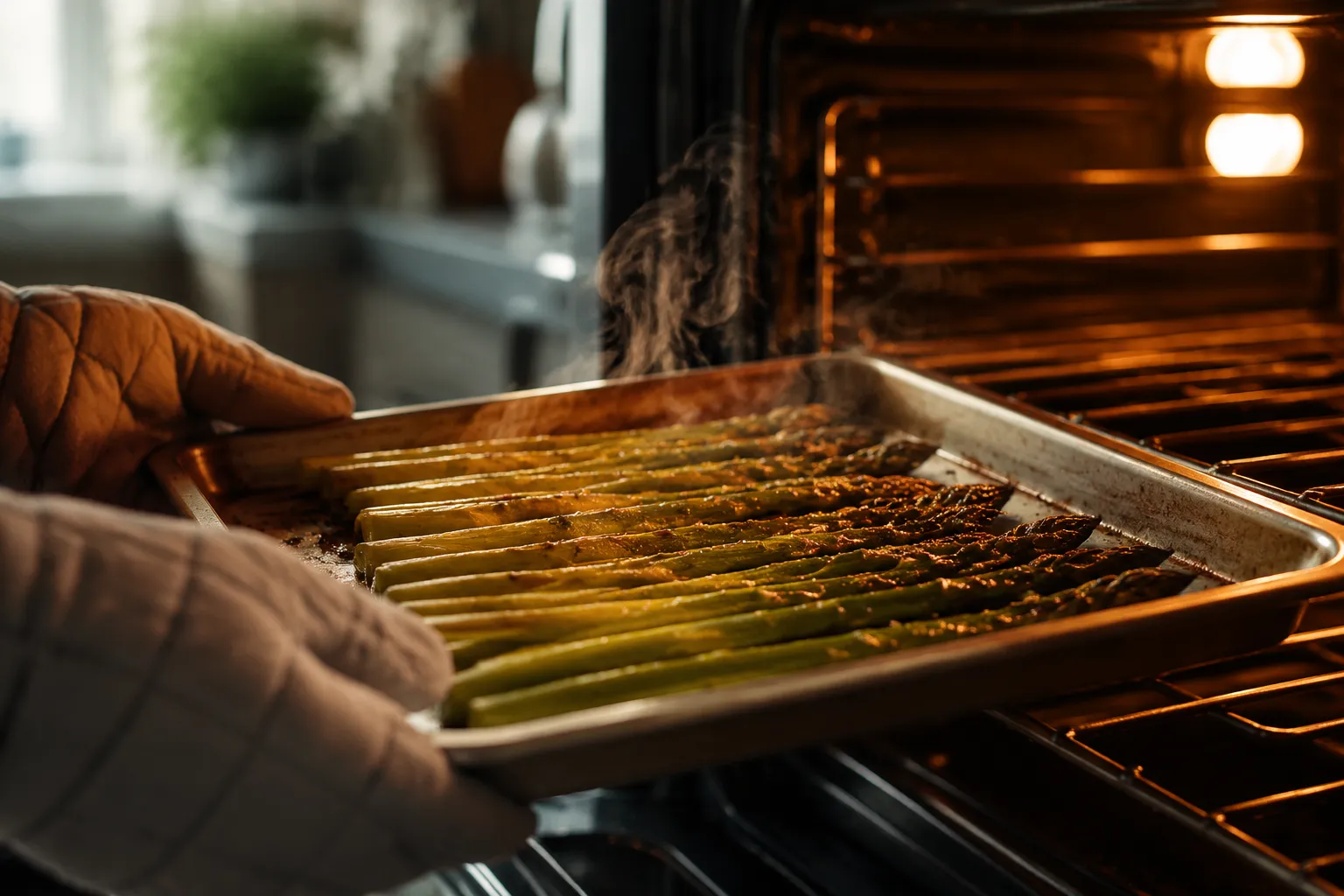
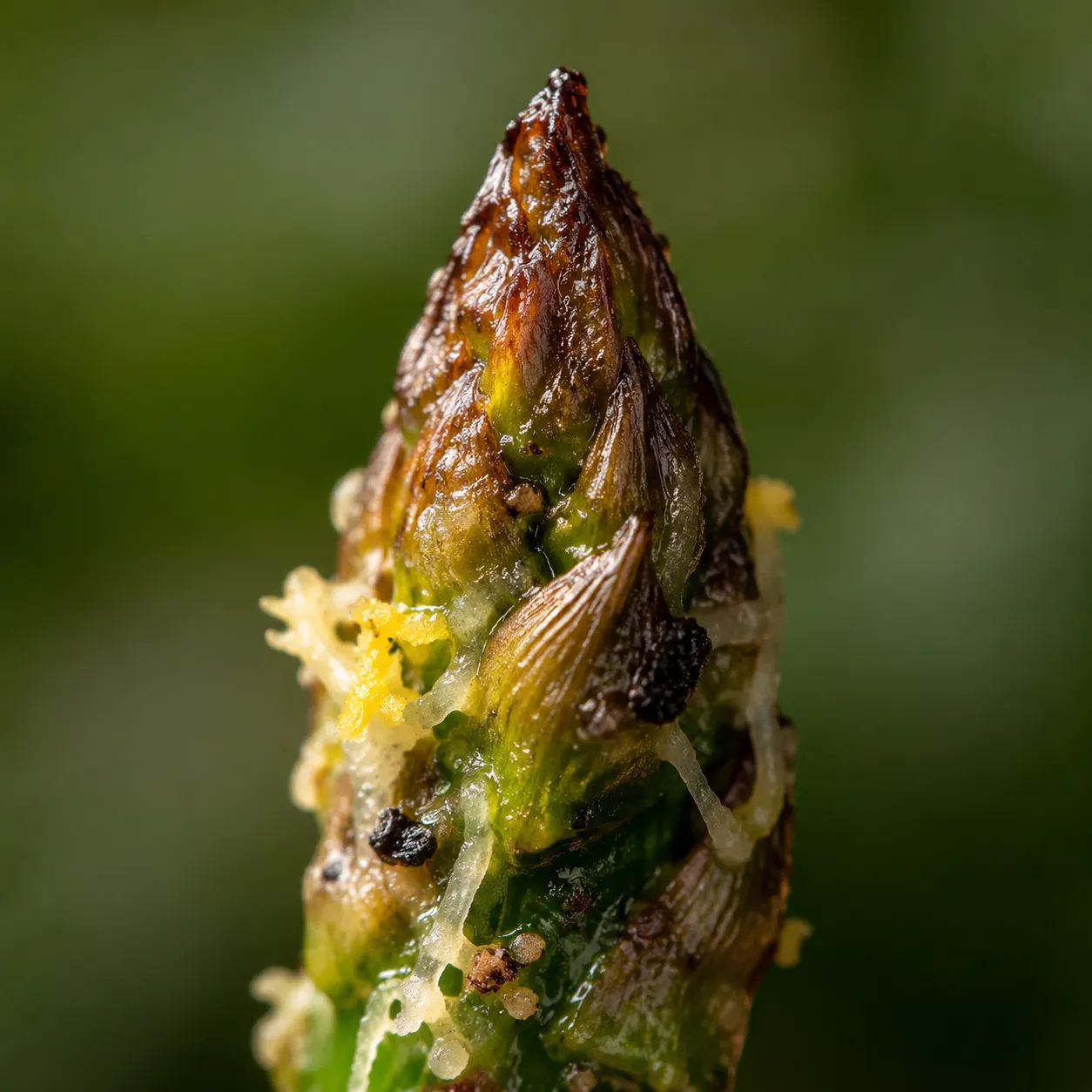
Slide a paring knife into a stalk near the thick end — it should meet a little resistance, like cooked al dente pasta. Tips will look deeply green with browned, almost crisp edges. If the spears flop dramatically when you lift them with tongs, they've slid past crisp-tender into limp territory. Pull the pan a minute earlier next time and trust the carryover heat to finish the job.
Here's the method at a glance — exact times, temperatures, and quantities live in the recipe card below.
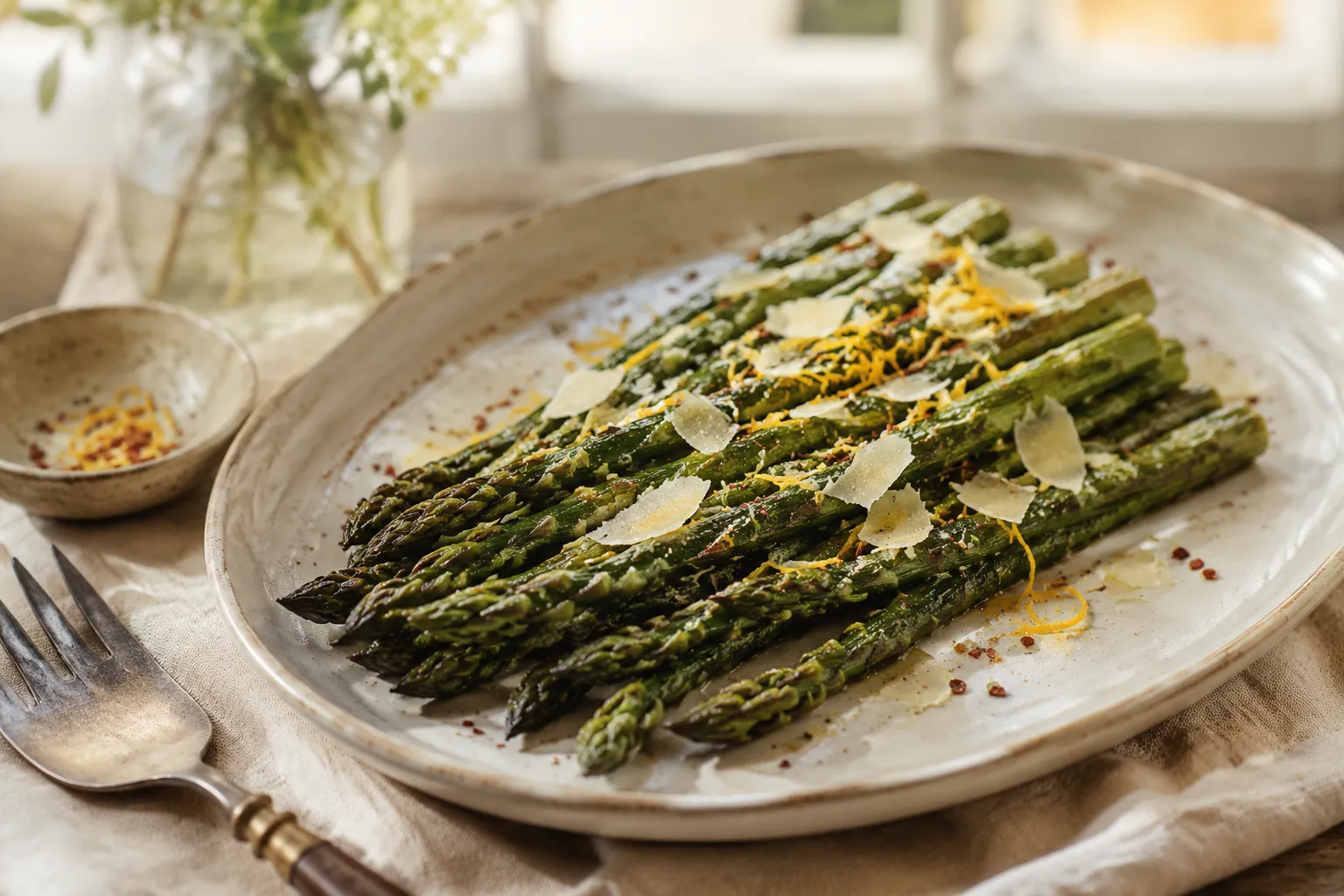
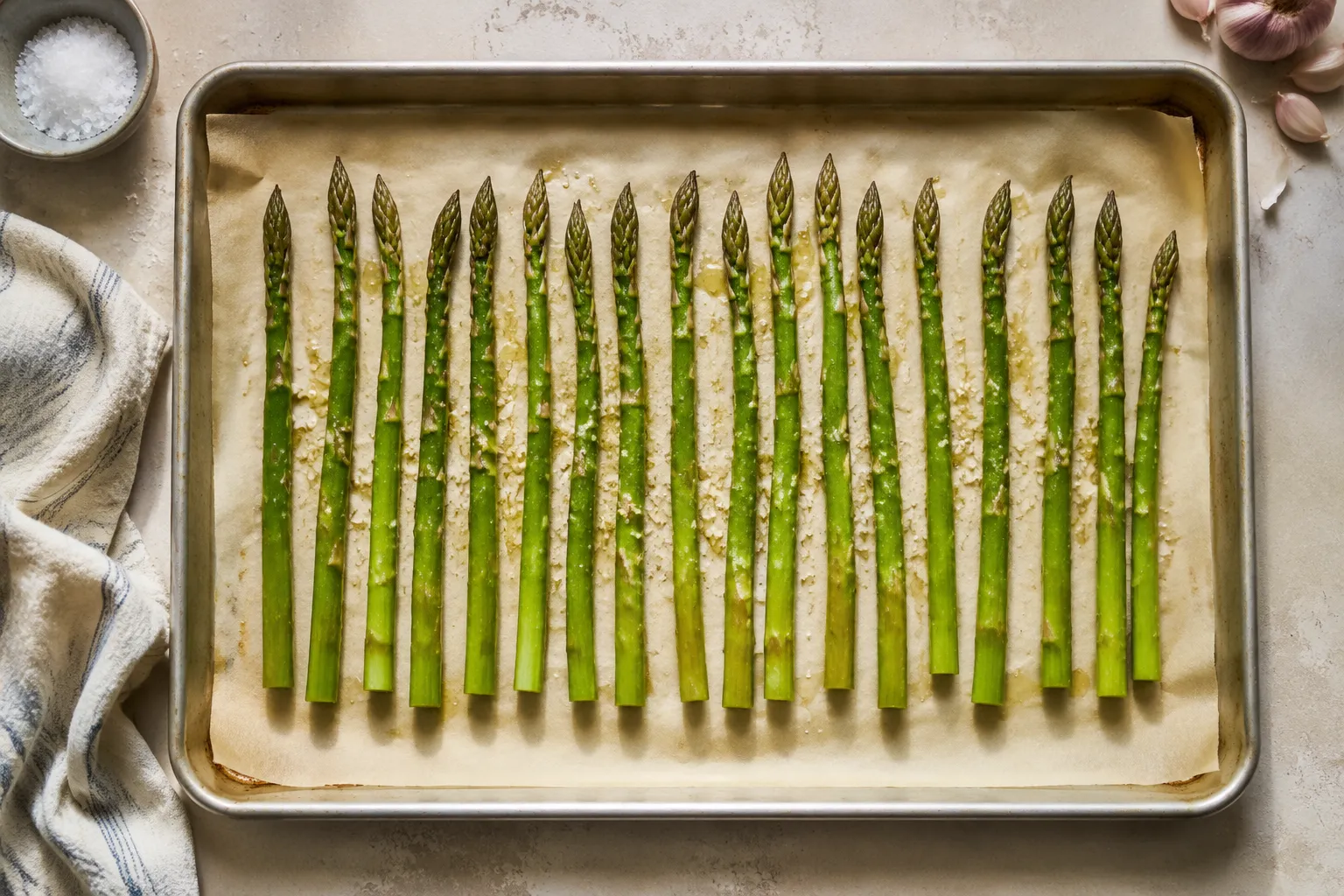
Preheat your oven to 425°F and line a rimmed sheet pan with parchment for easy cleanup. Toss the trimmed, dried spears with olive oil, minced garlic, salt, and pepper directly on the pan, then spread them in a single layer with all the tips pointing the same direction. Bake until the stalks are crisp-tender and the tips are deeply browned. The second the pan comes out of the oven, scatter parmesan over the hot spears so it half-melts onto the surface, then finish with a generous shower of lemon zest and a squeeze of fresh juice.
That's the whole thing. The only mistake that consistently ruins baked asparagus is walking away from the oven during those last couple of minutes — thin tips can go from gorgeous to scorched in 60 seconds flat, so stay close.
This is one of those easy side dishes that pairs with basically anything off the grill, out of the oven, or off the stovetop. I lean on it heavily for weeknight dinner sides because it cooks in the same oven window as a sheet-pan chicken thigh or a small pork tenderloin, which means no extra dishes and no juggling burners.
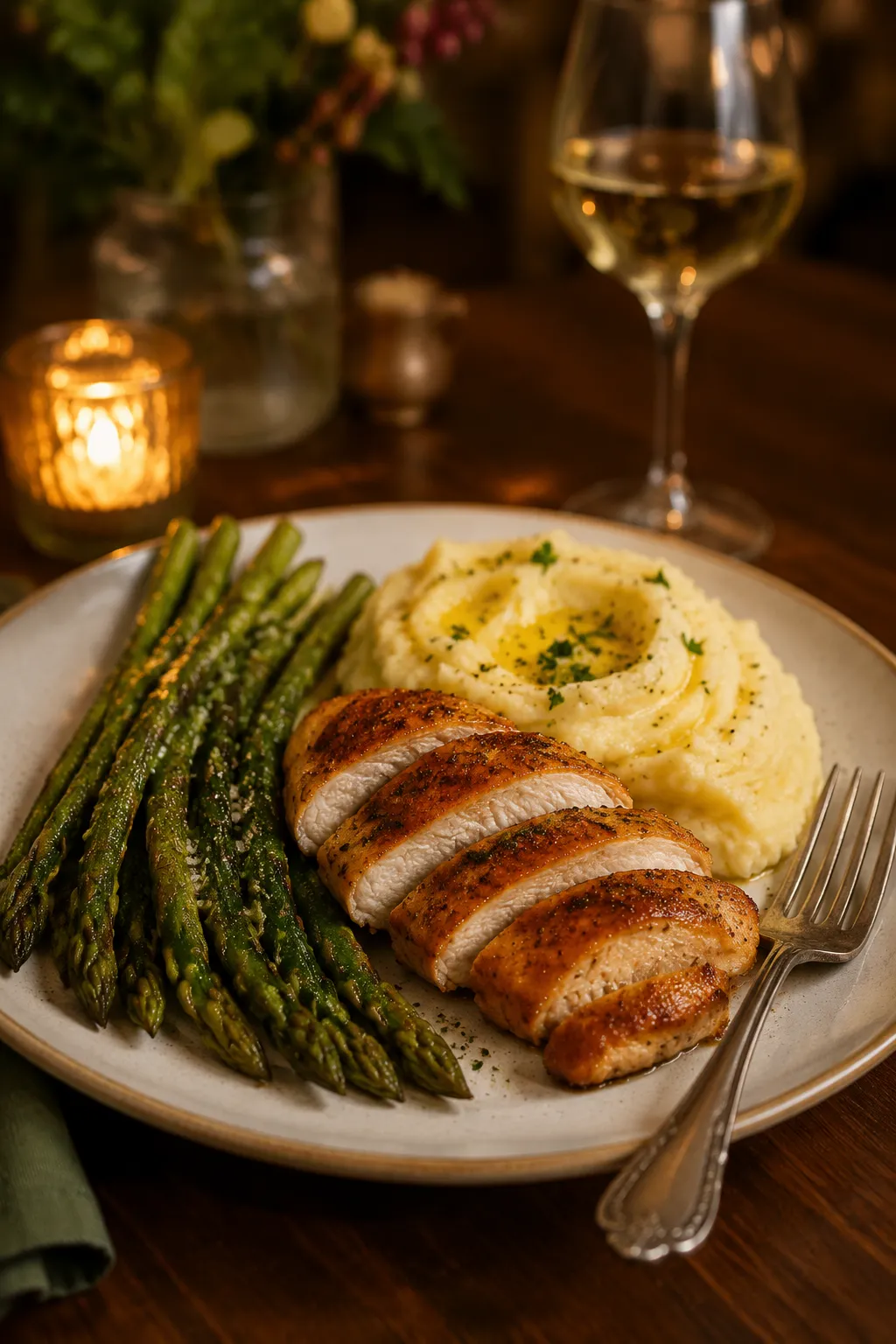
Serve baked asparagus alongside roast chicken with buttery mashed potatoes for a Sunday-supper feel, plate it next to grilled salmon with rice pilaf, or pile it onto a brunch board with soft scrambled eggs and crusty sourdough. For holidays, parmesan asparagus holds its own beside glazed ham or beef tenderloin and looks effortlessly elegant arranged on a long platter. Leftovers also chop beautifully into a grain bowl with a poached egg the next day.
You can absolutely roast these spears earlier in the day. Pull the pan a minute or two before full doneness, let them cool flat on the sheet, and they'll keep their bite when you reheat or serve at room temperature later.
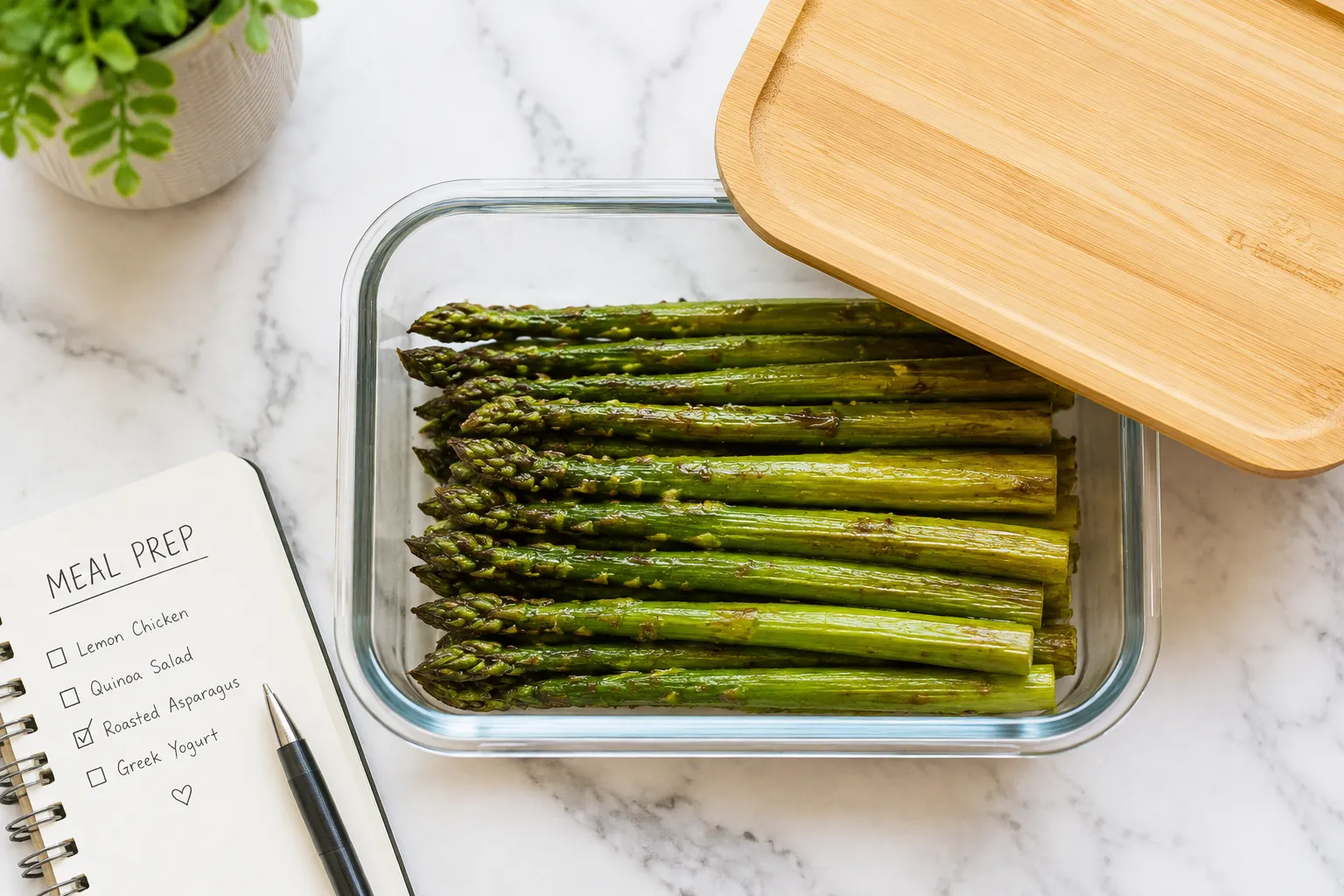
Detailed fridge timing and the best reheat method are in the storage section just below — but the short version is: glass container, fridge, and a short blast in a hot oven brings them right back to crisp without the limp, sad reheated-vegetable thing nobody wants.
The base recipe is a perfect blank canvas — once you've made it once, swap or layer in any of these flavor directions to keep things interesting all spring and summer.
Cool any leftovers completely on the sheet pan, then transfer to an airtight glass container and refrigerate for up to 3 to 4 days. Storing while still warm creates condensation that turns the spears mushy, so let them come down to room temperature first. Skip the freezer entirely — asparagus has too much water and thaws into a stringy mess.
The best way to reheat without going limp is a hot oven, never a microwave. Spread the cold spears on a parchment-lined sheet pan in a single layer and reheat at 400°F for 4 to 5 minutes, just long enough to crisp the tips and warm the stalks through. Add a fresh squeeze of lemon and a pinch of salt off the heat. They won't be quite as snappy as fresh, but they'll be miles better than the steamed mush you get from a microwave.