Easy Kielbasa Skillet Dinner: 30-Minute One-Pan Meal
Ingredients
Scale
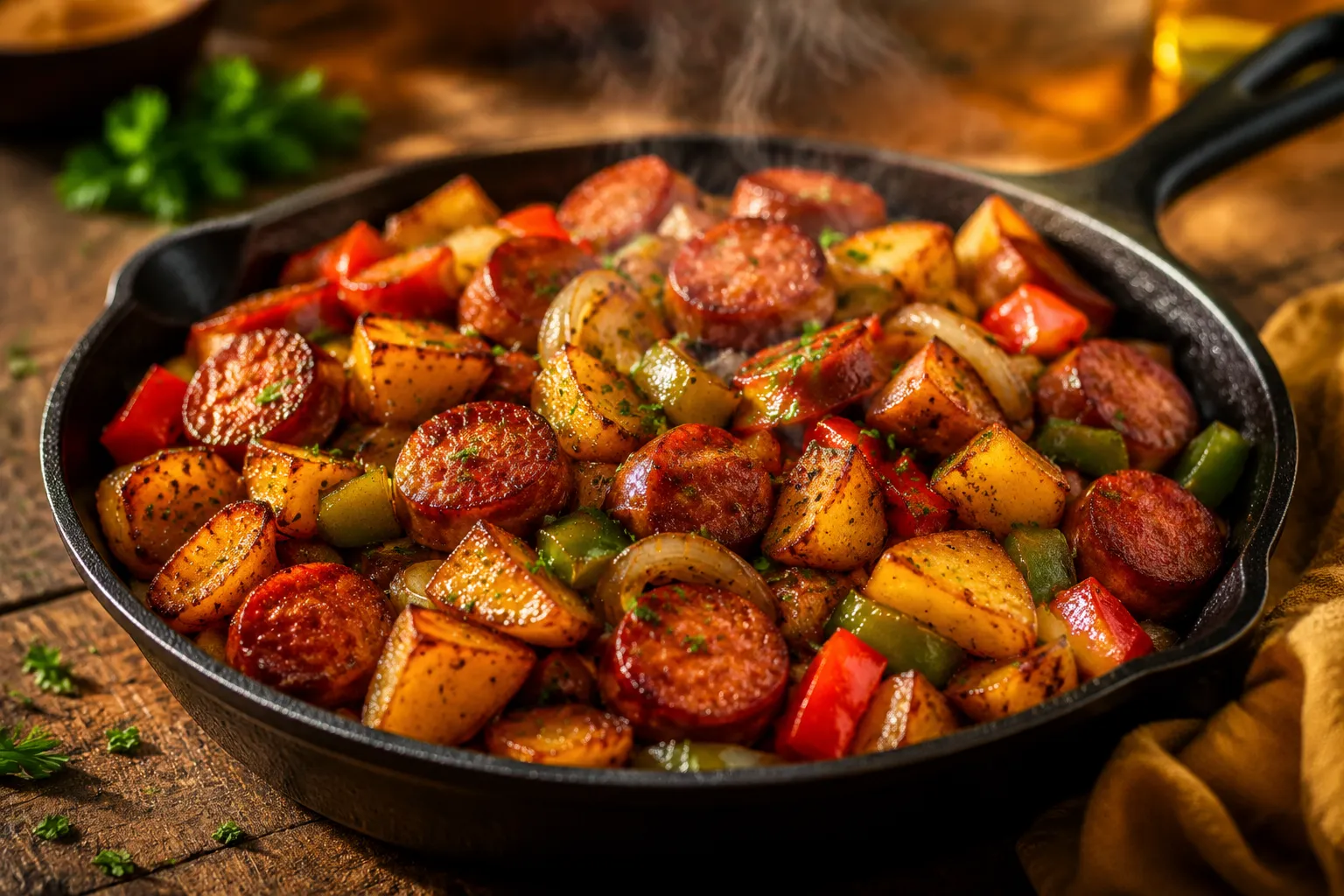
This easy kielbasa skillet dinner brings together smoky Polish sausage, tender potatoes, and sweet peppers in one pan — ready in 30 minutes flat.
There's something deeply satisfying about a kielbasa skillet dinner that comes together faster than the time it takes to scroll through your inbox. Smoky Polish sausage, golden Yukon potatoes, and sweet bell peppers all caramelize together in a single cast-iron pan until your kitchen smells like a steakhouse on a Sunday night. This is the kind of one-pan meal that earns a permanent slot in the weeknight rotation because it asks for almost nothing and gives back so much.
I started making this version after years of mediocre attempts where the potatoes never quite crisped and the sausage steamed instead of seared. The fix turned out to be two small techniques: parboil the potatoes before they hit the pan, and let the smoked sausage develop a real mahogany crust before anything else joins the party. Thirty minutes from cold burner to plated, and zero soggy bites. If you've been hunting for easy weeknight meals that don't leave a sink full of dishes, this is the one to bookmark — alongside other one-pan dinners that lean on big-flavor proteins to do the heavy lifting.
This recipe is a love letter to the American supermarket sausage aisle — Hillshire Farm, Johnsonville, Eckrich, whichever U-shaped ring is on sale this week — and a reminder that smoked sausage and potatoes are a genre unto themselves. Keep a ring in the fridge and a bag of baby potatoes in the pantry, and dinner is essentially already made before you've even taken your coat off. Add to that the fact that the whole thing comes together on one burner with a single cutting board, and you have a recipe that solves the cleanup problem before it even starts.
Kielbasa (kuhl-BAH-sah) is simply the Polish word for sausage, and back in Poland it covers dozens of regional varieties — fresh, smoked, garlicky, juniper-spiced, blood, you name it. In the United States, though, the term has narrowed to refer to one specific style: a smoked, U-shaped pork-and-beef link seasoned heavily with garlic and marjoram, sold pre-cooked and shelf-ready right next to the hot dogs. That's the version this recipe is built around, and the one most American cooks reach for when they're flipping through Polish sausage recipes online.
There are two big categories worth knowing. Smoked (kielbasa wędzona) is fully cooked at the factory — your job is just to heat it through and chase color. Fresh (kielbasa biała, often called "white sausage") is raw and needs full cooking, usually simmered or roasted to a safe internal temperature. For a fast skillet meal, smoked is the way to go. It browns beautifully, holds its shape, and brings that hardwood-smoke depth no other quick weeknight protein delivers in 20 minutes.
Hillshire Farm is the most widely available and reliable for everyday cooking. If you have a Polish deli or a Wegmans nearby, look for Krakus, Andy's Polish, or Kiolbassa Beef Smoked — they have a coarser grind and a more pronounced garlic bite. Whatever brand you grab, look for natural casings that snap when you slice them and a deep brick-red interior. Avoid anything labeled "imitation" or with cure colors that look fluorescent under the deli case lights.
The ingredient list reads like a pantry inventory, which is exactly the appeal. Nine humble items — mostly things you probably already have — transformed by direct heat into something that tastes far more deliberate than the prep suggests. Buy the best sausage your budget allows; it's the loudest voice in the dish, and a flabby ring will translate directly to a flabby final plate. Here's what each component brings to the pan.
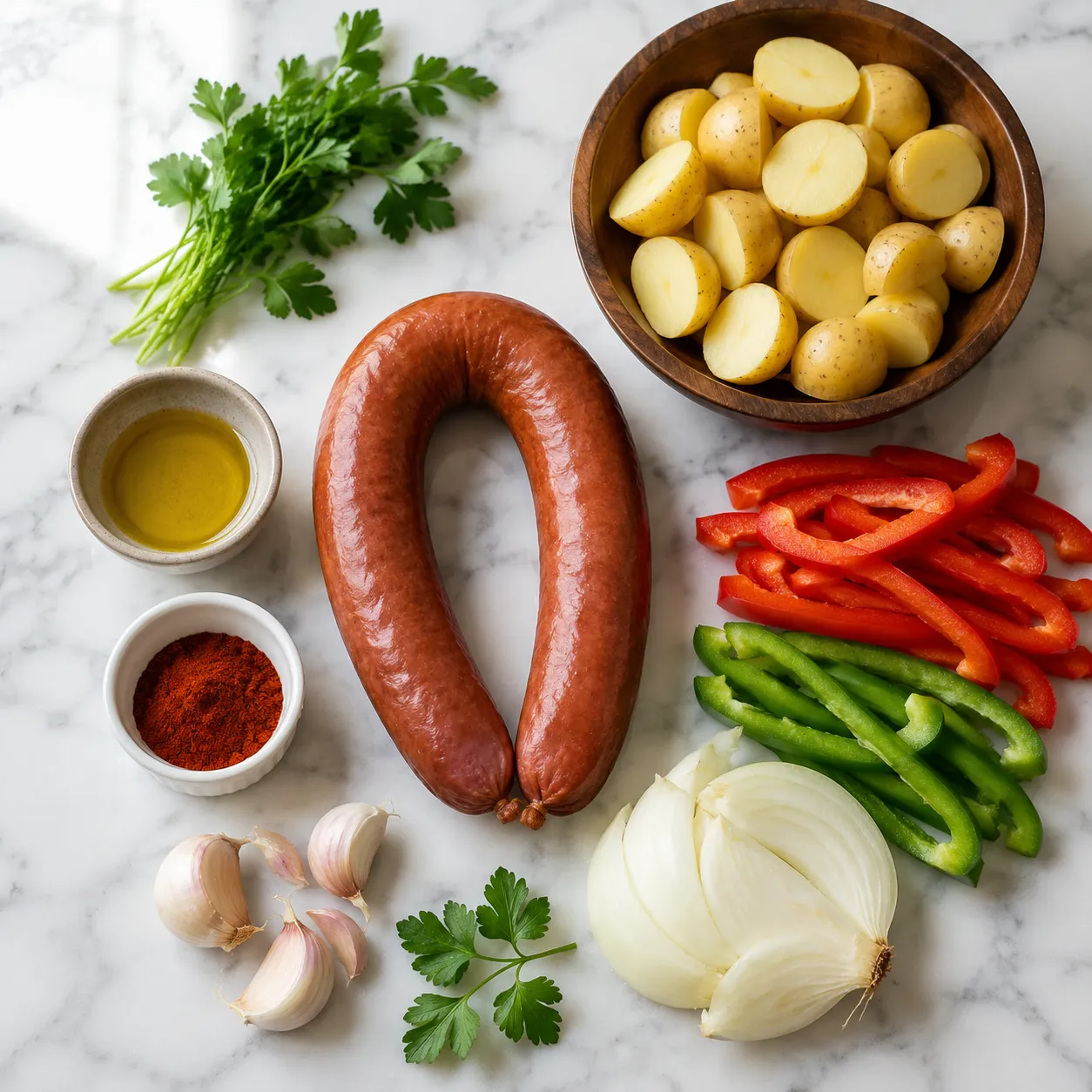
The full numbered method lives in the recipe card below, but it's worth understanding the why behind the how before you start cooking. Two principles drive this whole technique: parboil the potatoes for six minutes before they hit the skillet, and resist the urge to stir constantly once they're in. Browning happens when food sits in direct contact with hot metal, not when it's swimming around in steam.
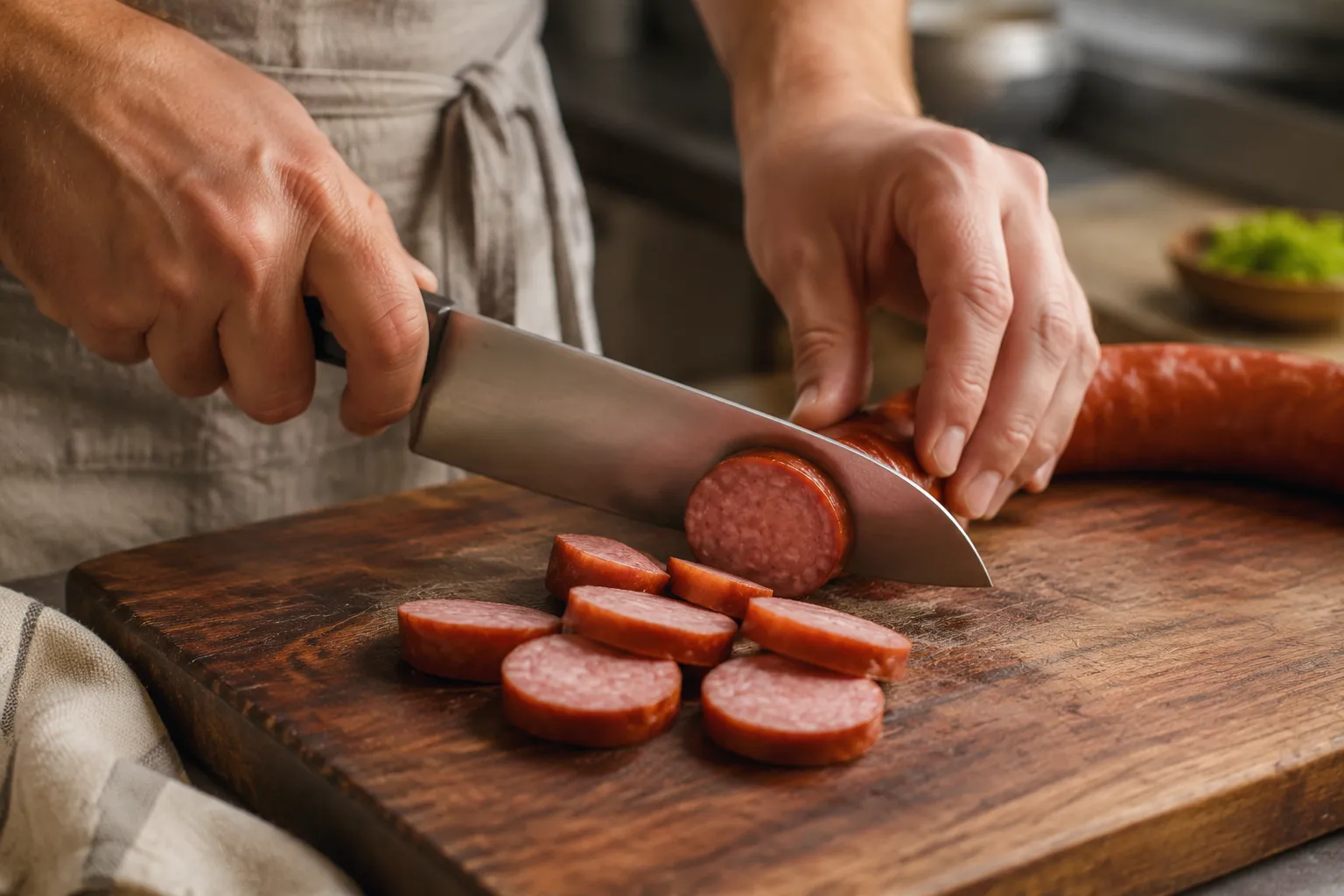
Get the potatoes going in salted water first while you slice the sausage into thick coins. Six to seven minutes in a hard simmer is enough to soften the centers without turning them to mush — drain them well and let them air-dry for a minute, because surface moisture is the enemy of a good crust. Meanwhile, heat a 12-inch cast-iron or heavy stainless skillet over medium-high until a flick of water dances and disappears across the surface in under two seconds.
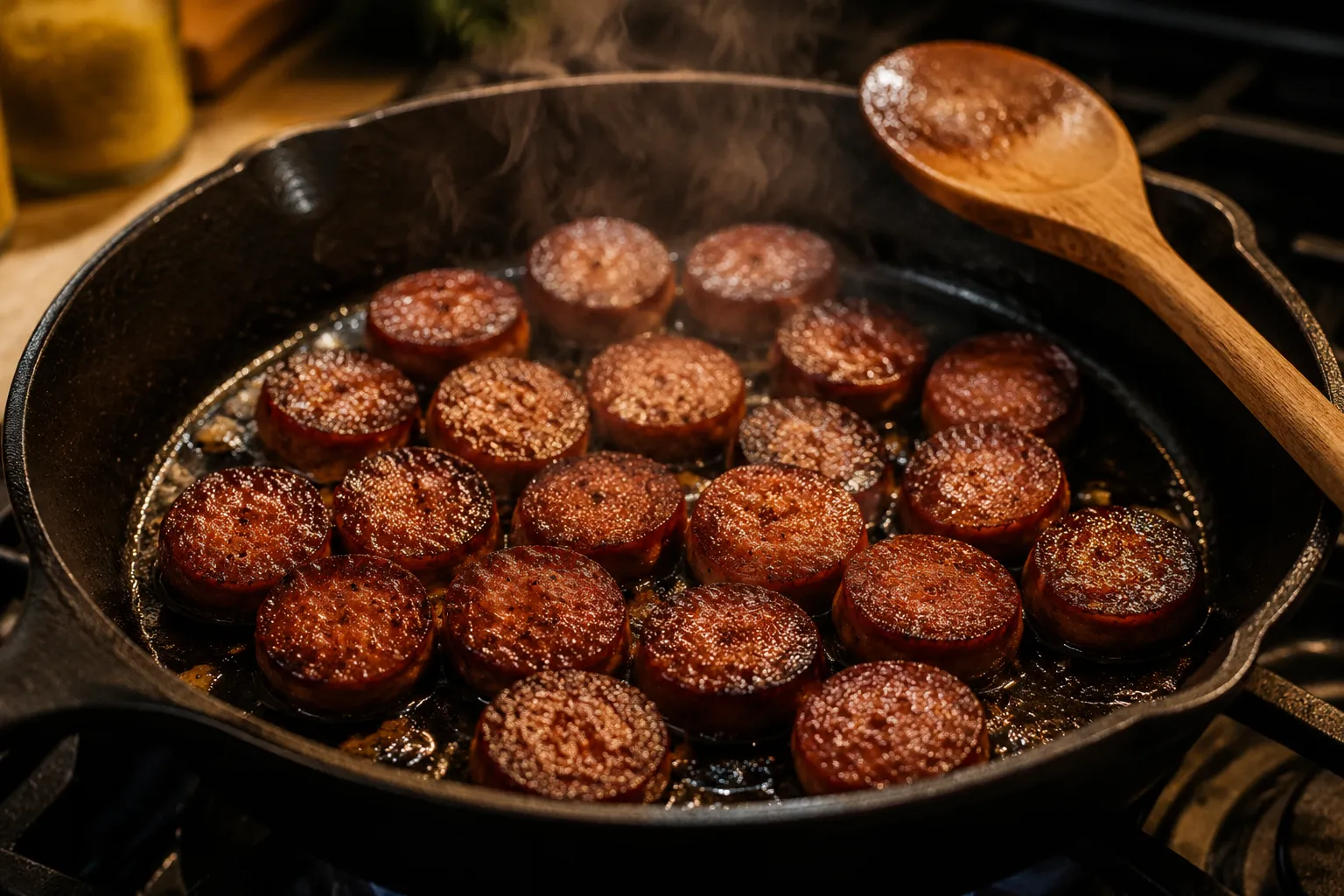
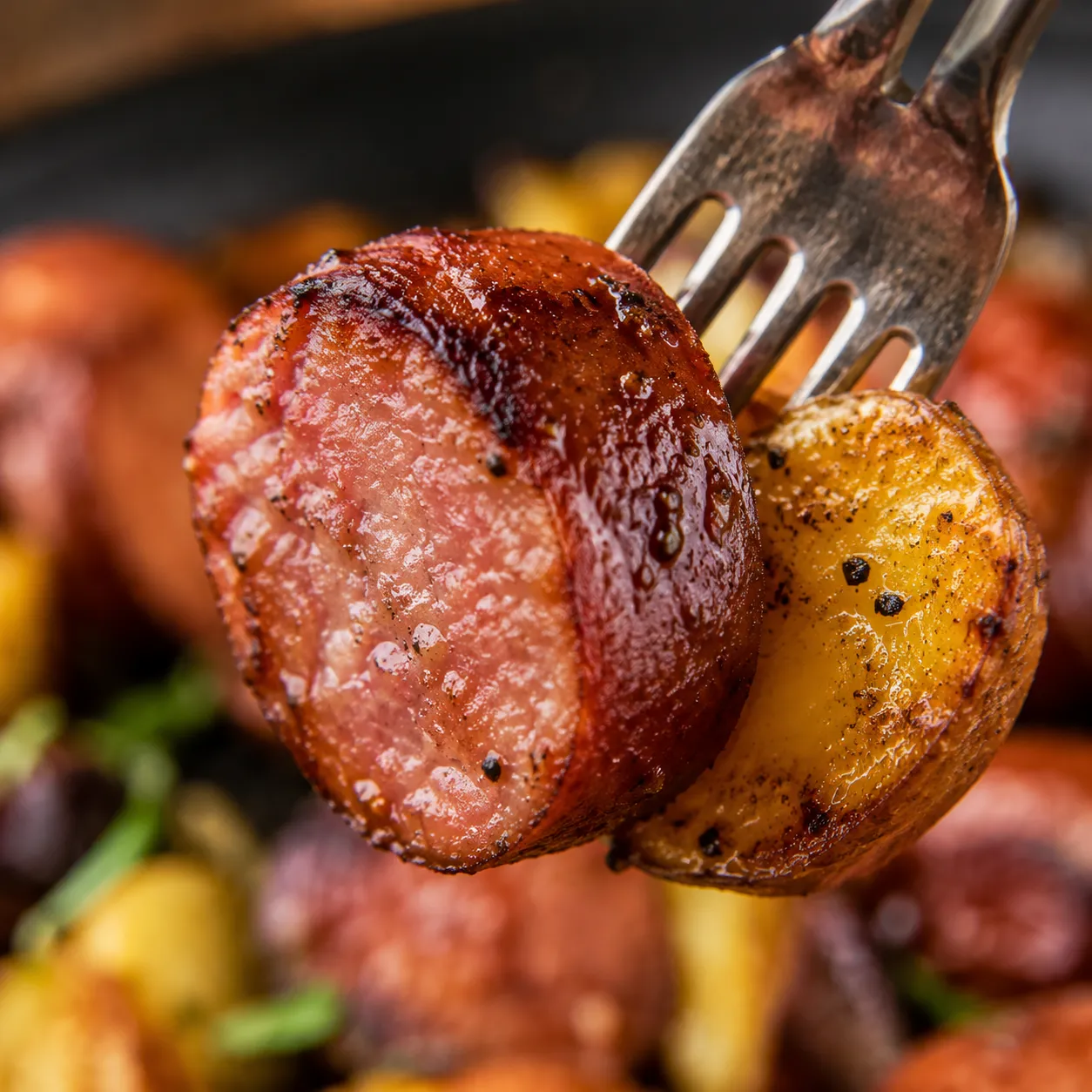
Lay the sausage coins in a single layer and walk away for three full minutes. Don't poke, don't peek, don't stir. When you flip them, you should see deep mahogany edges and caramelized rendered fat pooling around each coin. Push the browned sausage to one side, add the parboiled potatoes cut-side down, and give them the same patient treatment — about four minutes undisturbed before the first stir.
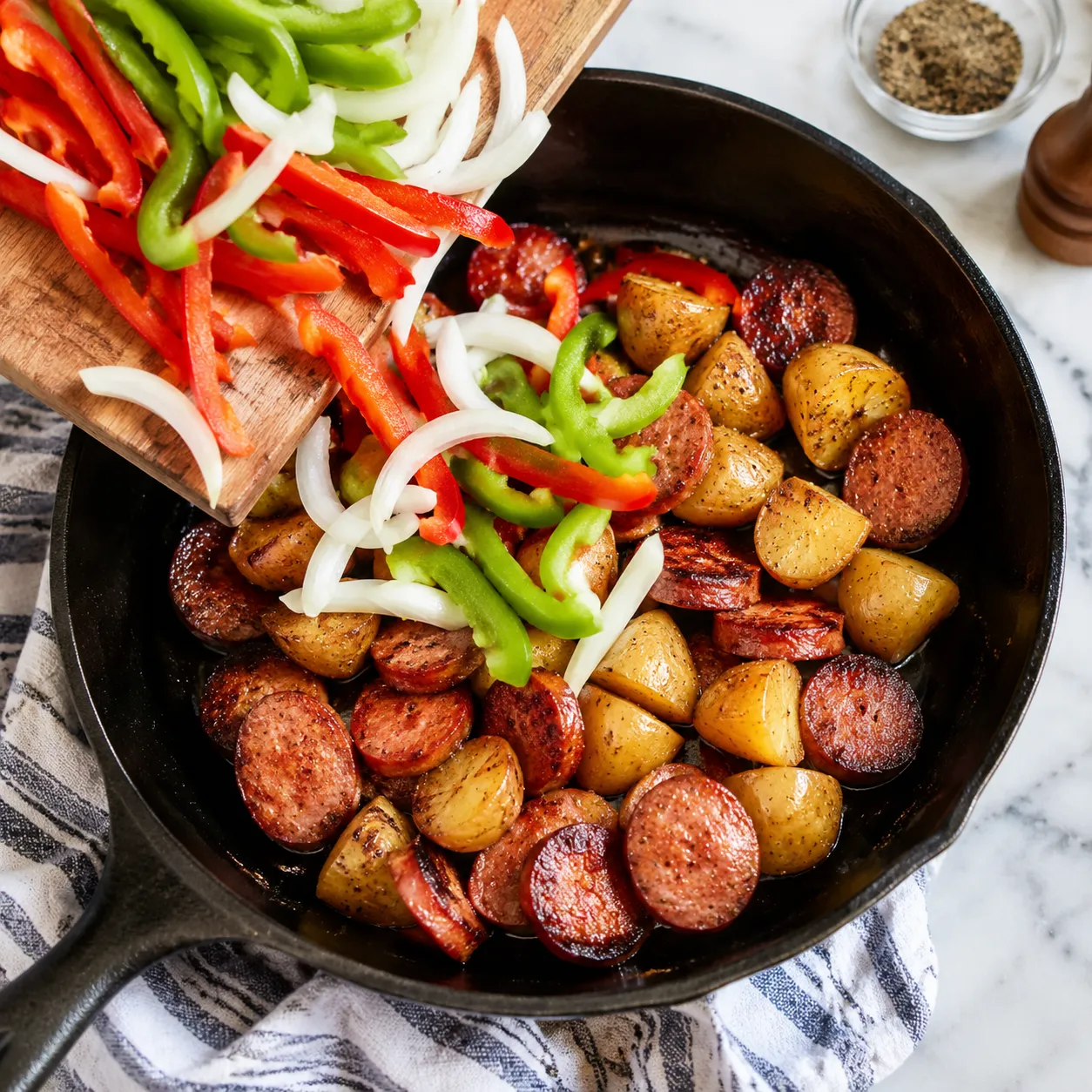
Now the peppers and onions go in, sliding under the potatoes so they hit the hottest part of the pan. Smoked paprika and a pinch of kosher salt come next, followed by the minced garlic in the final 60 seconds so it perfumes everything without scorching into bitterness. The whole skillet should be glistening, sizzling audibly, and smelling like a Polish deli on a Saturday morning.
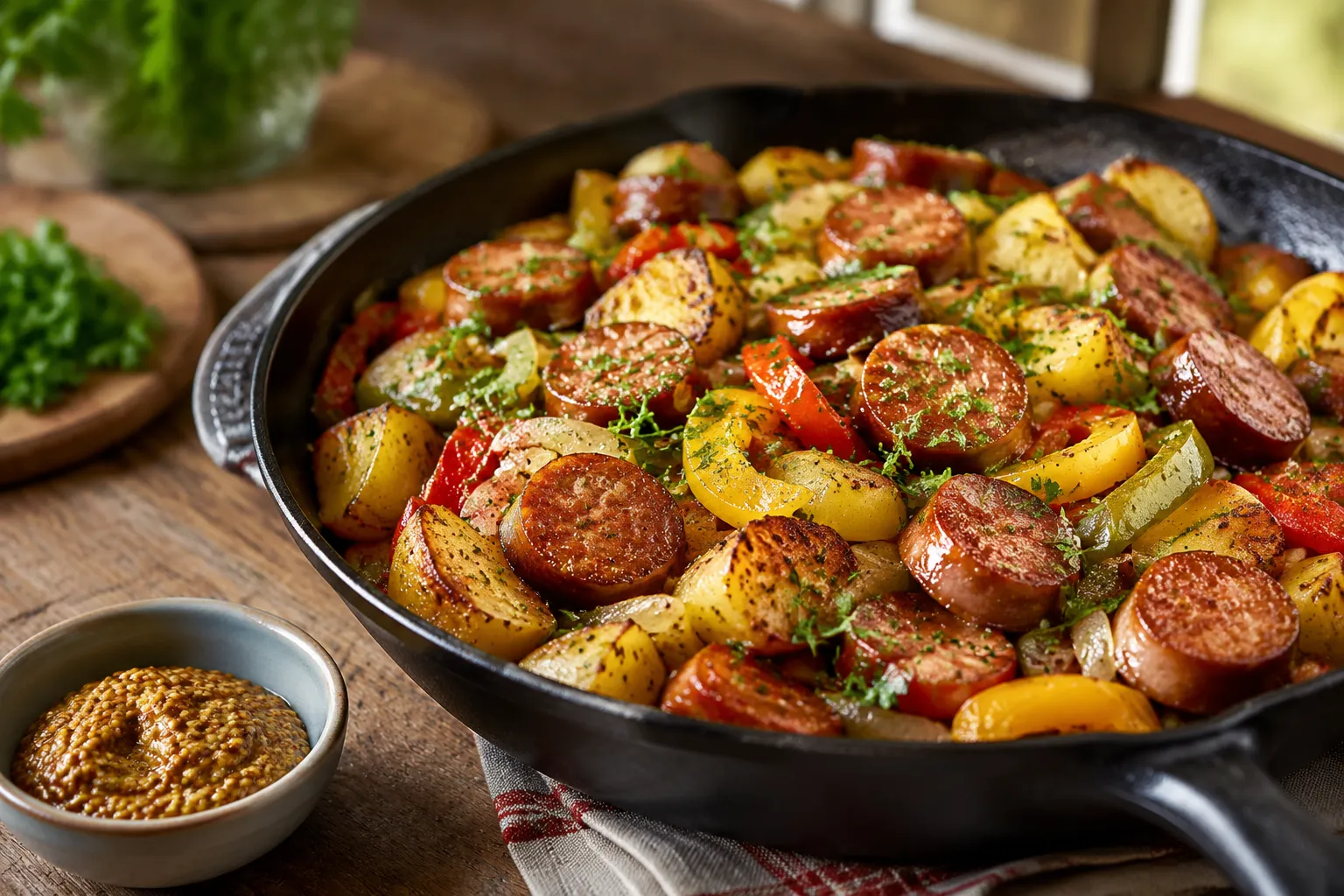
Off heat, scatter chopped parsley generously across the top. Taste, adjust salt and pepper, and bring the pan straight to the table on a trivet. Cast iron holds heat forever, which means the last bites on the plate are still as hot as the first. If you want to push the flavor even further, deglaze the empty pan with a splash of chicken stock or beer after plating and pour the glossy dark pan sauce back over everything.
Even though this is essentially a complete one-pan meal already, the right side dish can lift it from "good weeknight dinner" to "show this to your in-laws."
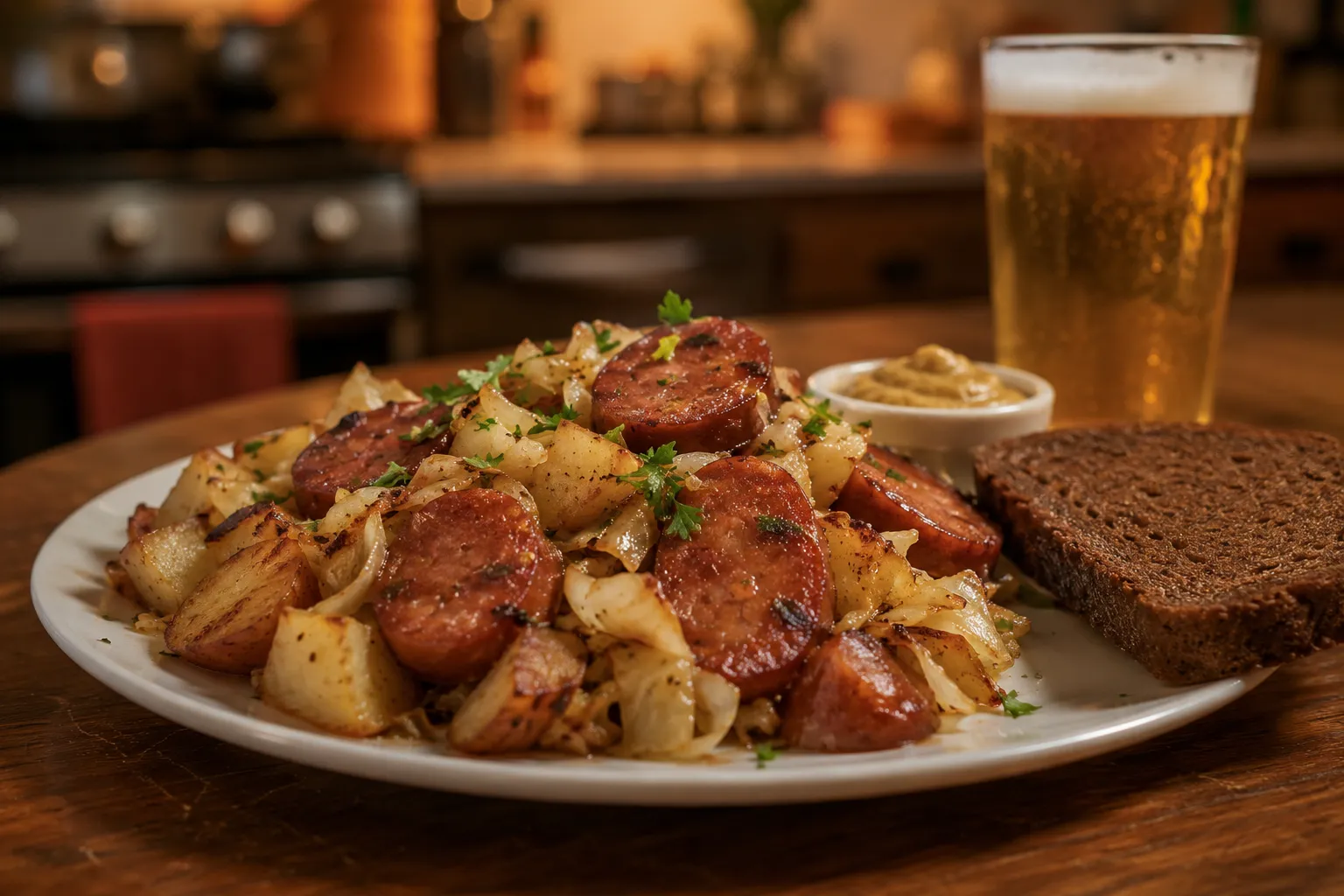
The traditional Polish playbook calls for sauerkraut, grainy mustard, and a slice of dark rye bread to soak up the rendered juices in the skillet. If you're leaning into that direction, a cold pilsner or a glass of dry Riesling holds up beautifully against the smoke and salt. Pierogies — store-bought is more than fine, no judgment here — turn the whole thing into a proper Sunday-supper situation. A spoonful of horseradish-spiked sour cream on the side rounds out the plate without much effort.
For a lighter pivot, serve the skillet over a bed of arugula tossed with lemon and good olive oil. The peppery greens cut through the richness, and the residual heat from the pan wilts the leaves just enough. A soft scoop of sour cream stirred with chives, dolloped on top, takes twenty seconds and pulls the whole plate together in one bite. If you bookmark only one of these skillet dinner ideas this season, this is the one I'd argue for.
A quick word on planning: this dish is genuinely a meal-prep dream. The sausage holds its texture through reheating better than chicken or beef does, and the potatoes actually crisp up further in the second-day skillet treatment, which feels like a small miracle when most leftovers go in the opposite direction.
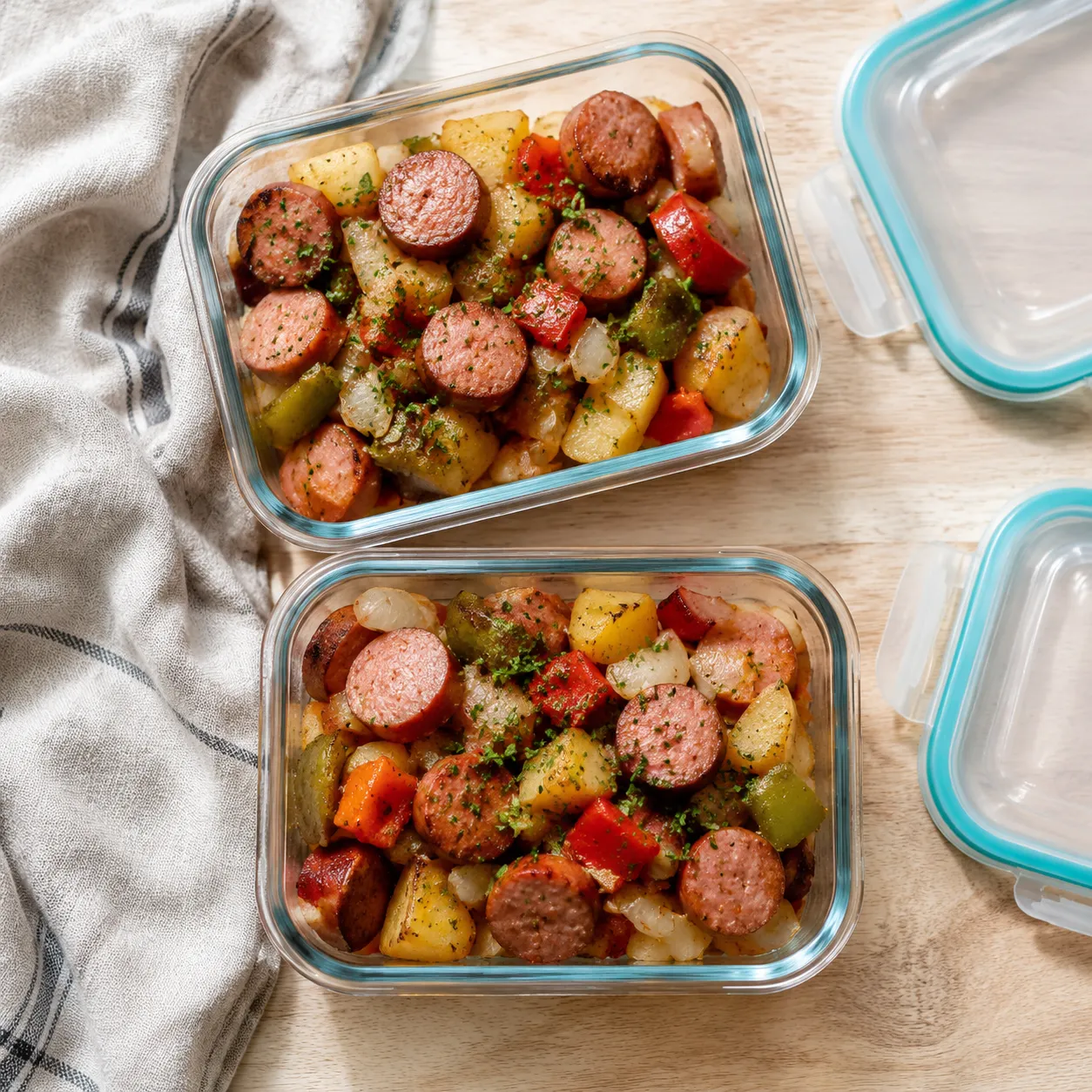
Portion the cooled skillet into glass containers as soon as it hits room temperature and you've got four lunches that beat anything from the cafeteria downstairs. Pack a small ramekin of mustard on the side, maybe a wedge of cucumber or a few cornichons, and you're set for the week. Make a double batch on Sunday — it'll disappear by Wednesday, every time.
This skillet is built to be remixed. Once you nail the master technique — sear the sausage, crisp the potatoes, layer in the vegetables — swap freely. The smoke-and-sear template holds up across cuisines, dietary needs, and whatever happens to be wilting in the crisper drawer.
Cool leftovers to room temperature within two hours and transfer them to airtight glass containers. Stored in the refrigerator, the skillet keeps its texture for up to four days — actually improving in flavor by day two as the smoked paprika and garlic settle in. For longer storage, freeze portions in airtight containers or heavy freezer bags for up to two months, pressing out as much air as possible to prevent freezer burn.
To reheat without drying things out, skip the microwave when you can. Warm the leftovers in a dry skillet over medium heat for about five minutes, tossing once or twice, until everything sizzles and re-crisps along the edges. A small splash of chicken broth or water added halfway through keeps the potatoes from going chalky. If you must use the microwave, cover the dish with a damp paper towel and heat in 45-second bursts, stirring between each, until heated through. Thaw frozen portions overnight in the fridge before reheating — never on the counter — and don't refreeze once thawed.