Easy English Toffee Recipe (Buttery, Crunchy, Foolproof)
4.8 from 12 reviews
0SHARES
Now Playing
Easy English Toffee Recipe (Buttery, Crunchy, Foolproof)
0:00
0:00
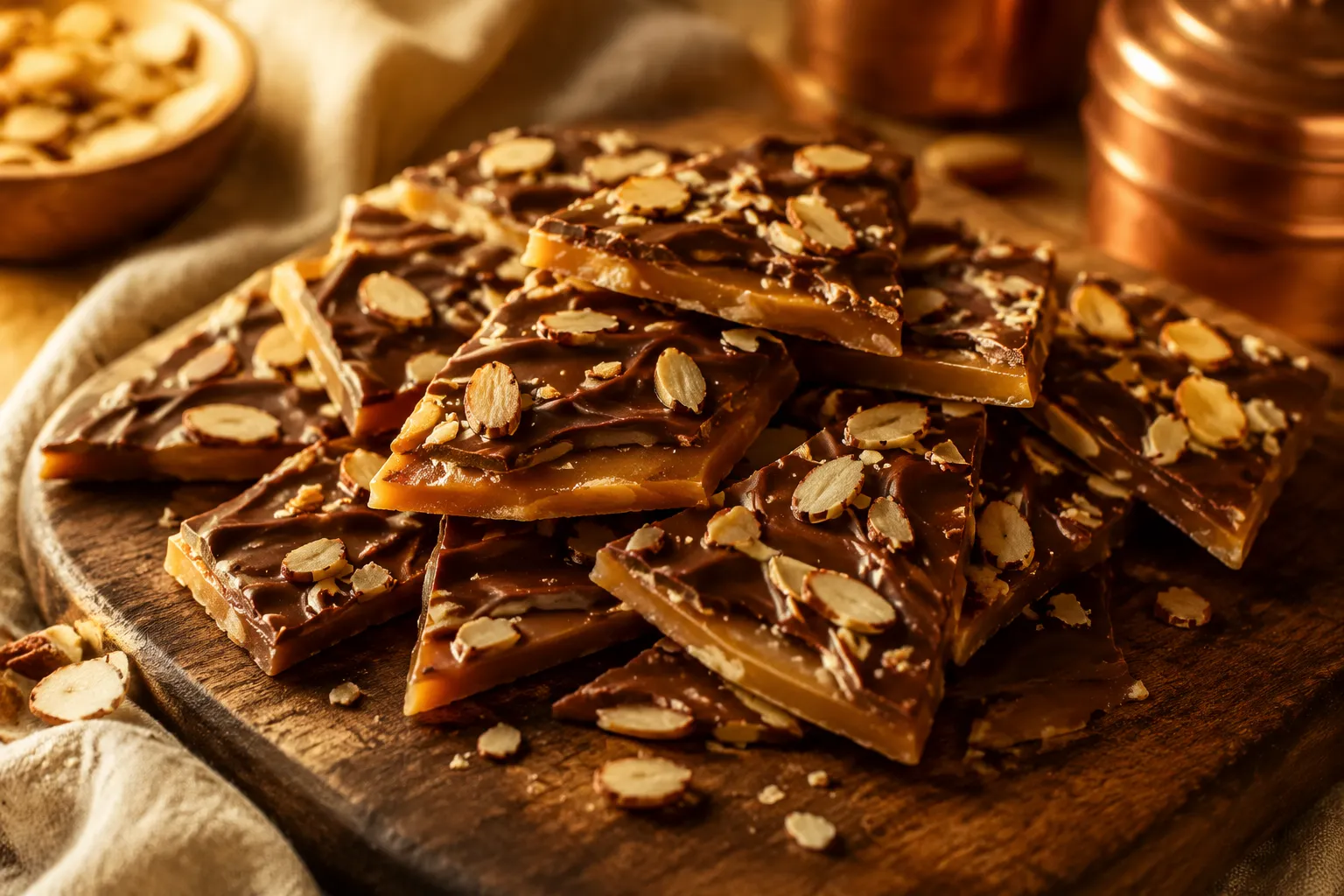
This English toffee recipe turns 6 pantry staples into glassy, buttery, chocolate-topped candy that snaps like a dream. No guesswork, just one foolproof method.
Why You'll Love This Recipe
**Why You'll Love This English Toffee Recipe**
- Just 6 pantry staples plus salt and vanilla — no specialty ingredients required.
- Buttery, glassy-snap texture that breaks into beautiful shards every time.
- About 30 minutes of active work, with most of the wait being hands-off cooling.
- Foolproof when you use a candy thermometer and follow the temperature cue.
- Stores beautifully for 2 weeks at room temperature or 3 months in the freezer.
- Stunning in tins or jars, which is why it's a near-universal favorite for edible gifts.
This English toffee recipe is the one I make every December, the one I package in tins and slip into mailboxes, the one that disappears off the cookie tray before the gingerbread even gets a glance. It's six pantry ingredients and one heavy saucepan, transformed into glassy, deeply buttery candy that snaps cleanly between your fingers and melts on your tongue. If you've ever been intimidated by candy-making, this is the place to start.
What I love most is how forgiving it becomes once you understand the science. We're not chasing a vague "looks done" moment. We're chasing 300°F on a candy thermometer, the hard-crack stage, and once you hit that number the rest is just spreading chocolate and waiting. I'll walk you through every detail, including the most common ways toffee can go sideways and exactly how to rescue it when it does.
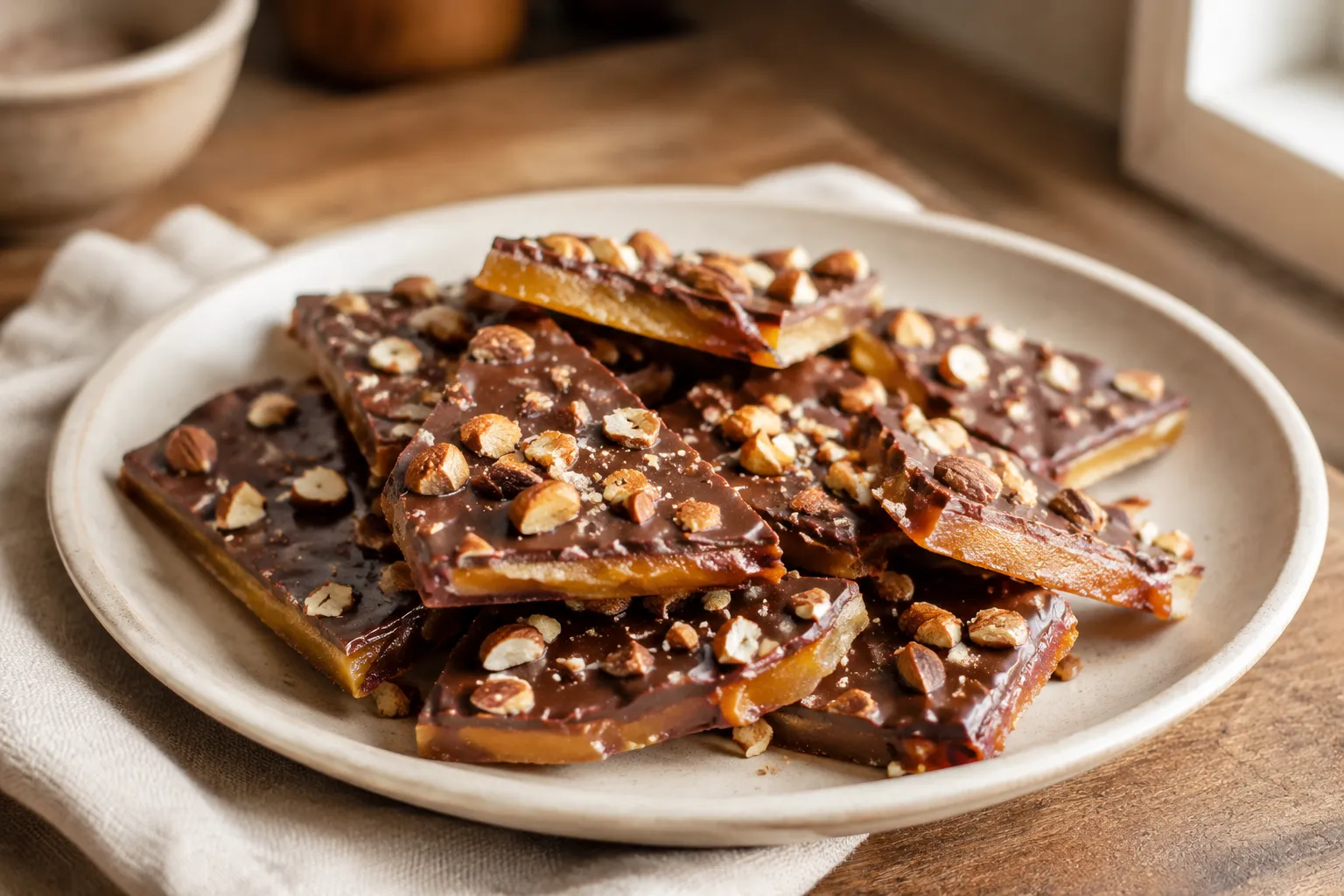
Think of this as a foolproof toffee recipe with the science quietly tucked in. You'll get a buttery toffee base layered with melted dark chocolate and toasted almonds, all snappable into uneven, gift-worthy shards in under thirty minutes of active work.
## What Is English Toffee, Exactly?
English toffee is a hard, deeply caramelized confection made by cooking sugar and butter to the hard-crack stage at 300°F, then pouring it thin and topping it with chocolate and toasted nuts. It traces back to British sweet shops where buttery, almond-studded slabs were broken into rough pieces and sold by weight. The defining traits are that signature glassy snap, a deeply caramelized butter flavor, and a chocolate-and-almond finish that puts it firmly in the same family as a thicker, fancier chocolate almond bark.
### English Toffee vs. American Toffee
The lines blur in modern kitchens, but traditional English toffee is cooked higher and harder than American-style toffee, which often stops earlier in the firm-ball or soft-crack range and leans chewy. American versions also sometimes skip the nuts entirely or use pecans instead of almonds. If you want the classic crackle-on-the-board texture that shatters into uneven pieces, you want English style, full stop.
### English Toffee vs. Brittle and Caramel
Brittle is sugar-forward with very little butter and lots of nuts suspended throughout, while caramel is cooked far lower, around 240 to 250°F, which keeps it soft and pourable. English toffee sits between them: butter-rich like caramel, hard-set like brittle, and unmistakably its own thing once you taste a single shard.
## Ingredients for the Best Toffee Recipe
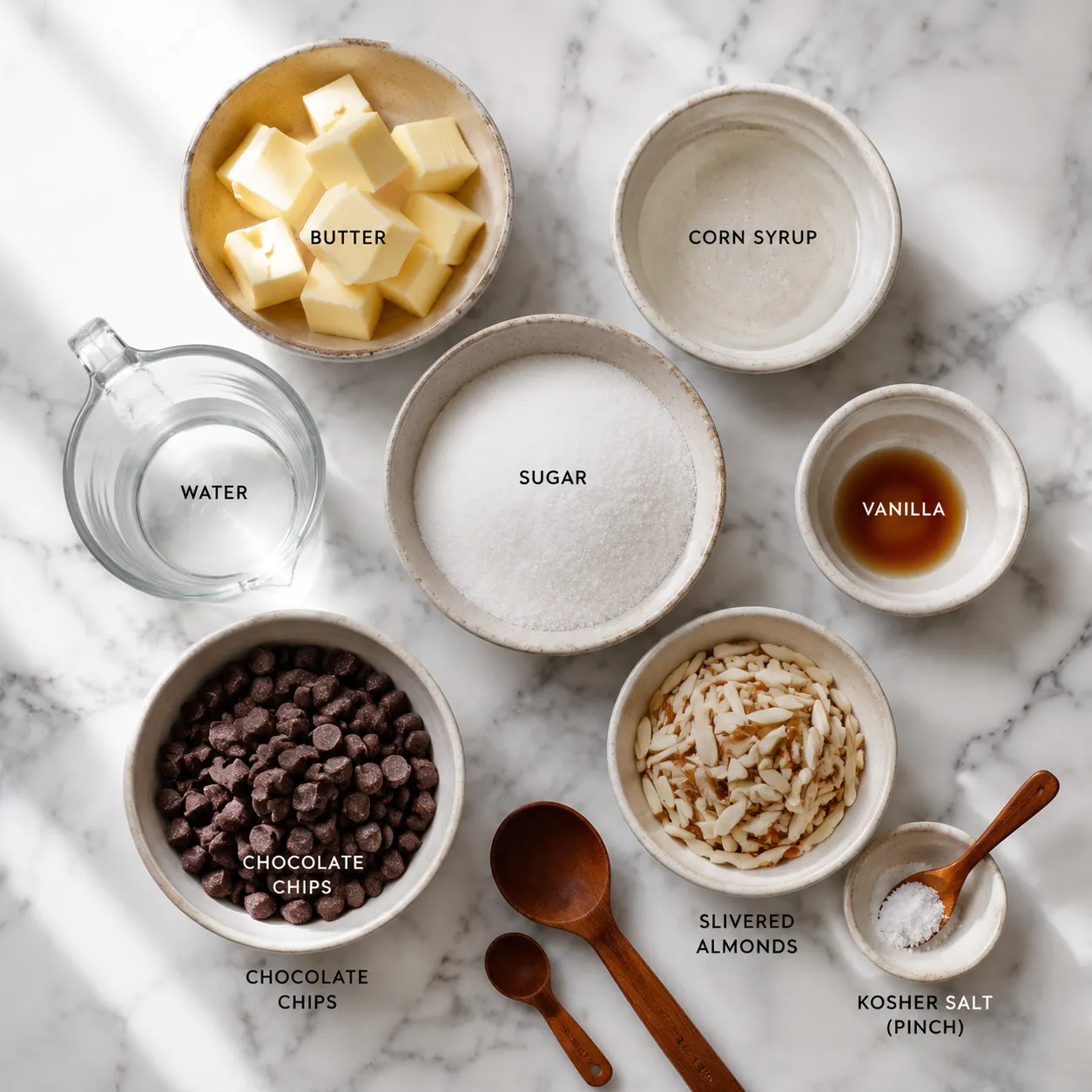
You only need six core ingredients plus salt and vanilla, and every one of them earns its keep. Quality matters more than quantity here because there's nowhere for cheap butter or stale chocolate to hide.
### Butter: Salted vs. Unsalted
I use salted butter and add a small extra pinch of kosher salt at the end. Salted butter pulls double duty by seasoning the toffee from within and giving you that craveable sweet-salty edge. If you only have unsalted, simply increase the kosher salt to 1/2 teaspoon. Whatever you choose, use real dairy butter — margarine and plant-based spreads contain too much water and will not set up properly.
### Sugar, Water, and Corn Syrup
Granulated white sugar gives you the cleanest amber color and crispest snap. The 3 tablespoons of water help dissolve the sugar evenly so it doesn't scorch on the way up to temperature. The single tablespoon of light corn syrup is the secret weapon: it interferes with crystal formation and is the single biggest reason home cooks end up with grainy toffee. Don't skip it.
### Chocolate and Almond Topping
Semisweet chocolate chips melt right onto the hot toffee from residual heat, no double boiler needed. Toasted slivered almonds add buttery crunch and a subtle nuttiness that's pure homemade English toffee character. You can swap in chopped pecans, hazelnuts, or even pistachios depending on what's in your pantry.
## Equipment You'll Need
This toffee recipe doesn't ask for fancy equipment, but candy-making is one of those rare moments where the right tools genuinely matter. Borrow them if you don't own them. A dollar-store saucepan or a guesstimate-by-eye approach is how foolproof recipes turn into greasy disasters.
### Heavy-Bottom Saucepan
Use a 3- to 4-quart heavy stainless or enameled saucepan. Thin pans create hot spots and burn the milk solids in the butter before the sugar reaches temperature. A heavy bottom buffers the heat, gives you time to react, and is the single most underrated piece of candy equipment in your kitchen.
### Candy Thermometer
Buy one. A $10 clip-on thermometer or a $25 instant-read with a probe will both work, and you'll use it for caramel, jam, deep-frying, and any future candy adventure. If you're new to sugar work, a quick candy thermometer guide will demystify the stages — soft-ball, firm-ball, soft-crack, hard-crack — and save you a lot of squinting at bubbling syrup. We're aiming for hard-crack at exactly 300°F.
### Half-Sheet Pan and Parchment
A standard rimmed half-sheet pan (13x18 inches) gives you toffee about 1/4 inch thick, which is the sweet spot between snap and substance. Line it with parchment paper, not wax paper — wax paper smokes under hot toffee. A silicone baking mat works well too if that's what you have on hand.
## How to Make English Toffee Step by Step
The cooking is fast once you start, so prep everything before you light the burner: butter cubed, sugar measured, chocolate weighed, almonds toasted, sheet pan lined, thermometer clipped. Candy waits for no one.
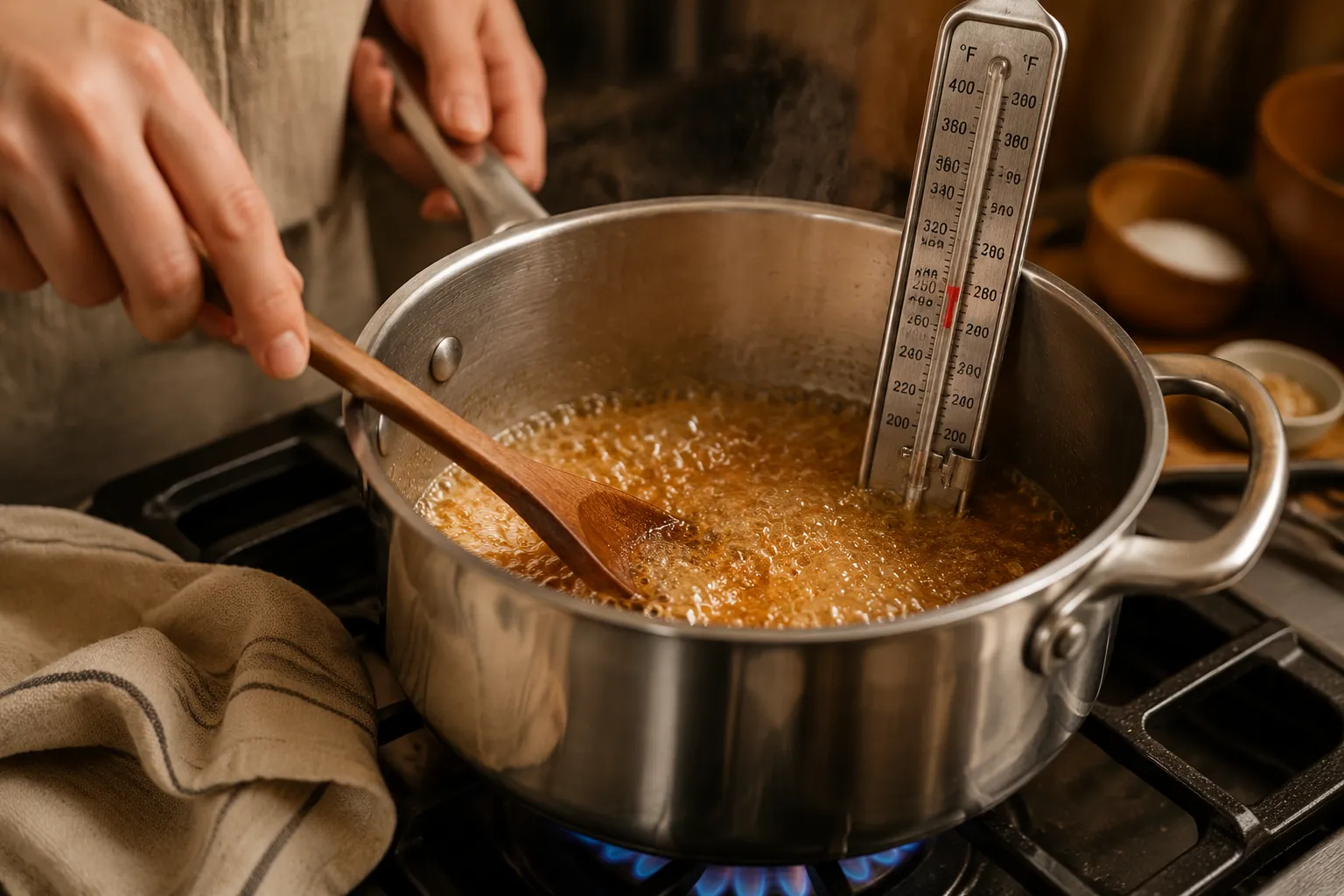
Begin by toasting your almonds in a dry skillet or 350°F oven until they smell nutty and look golden, about 5 to 7 minutes, then set them aside. Combine the butter, sugar, water, and corn syrup in your heavy saucepan over medium heat, and stir gently with a wooden spoon or silicone spatula until the butter melts and the sugar dissolves. From here, the mixture will bubble vigorously, deepen from pale yellow to gold to deep amber, and climb steadily on the thermometer.
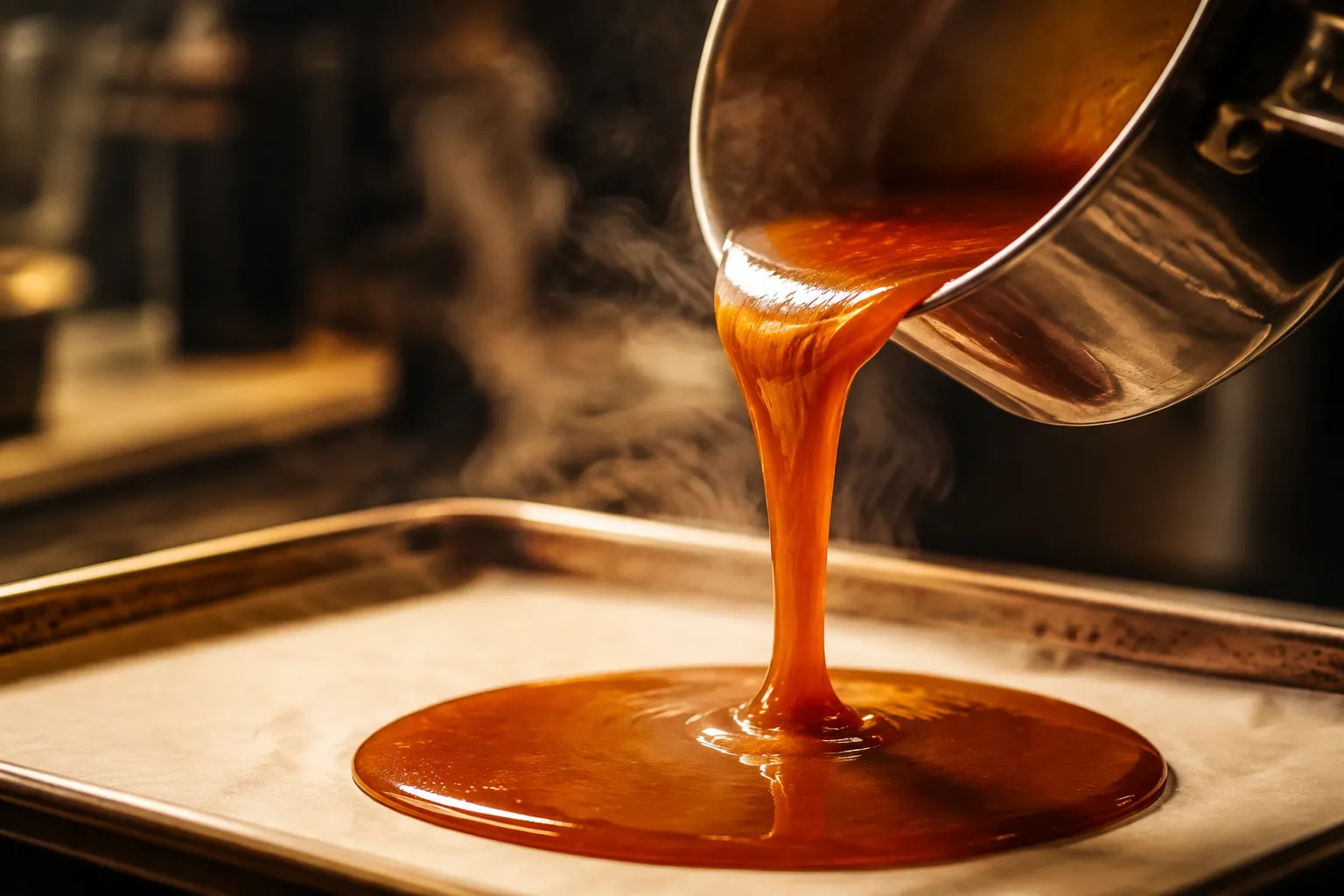
Stir slowly and continuously to keep the milk solids moving and the temperature even. Around 290°F you'll smell the butter caramelizing and the color will turn a deep peanut-butter amber. Pull the pan the instant the thermometer hits 300°F — every degree past that races toward burnt and bitter. Stir in the vanilla off the heat (it will sputter), then pour the molten toffee straight onto the parchment, tilting the pan to spread it into an even sheet.
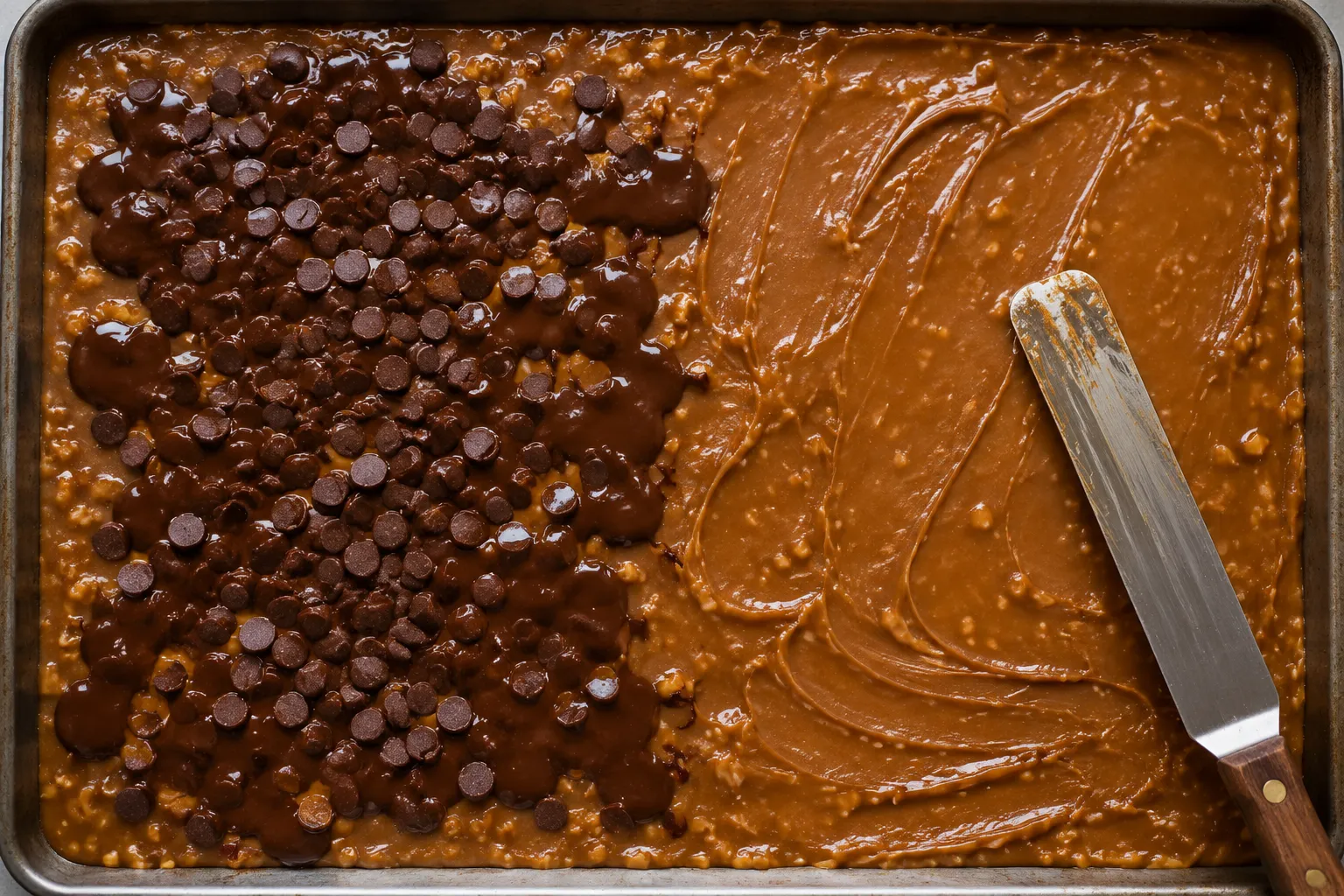
Scatter the chocolate chips over the surface and wait two minutes for them to soften. Smooth them into a glossy layer with an offset spatula, sprinkle the toasted almonds and remaining salt across the top, and press them in lightly so they stick. Cool at room temperature for 30 minutes, then transfer the sheet to the fridge for another 30 minutes to fully set the chocolate. Lift the parchment, and break the slab into shards with your hands or the back of a heavy knife.
The full numbered method lives in the recipe card below — bookmark it and pin it to the fridge for next time.
## Serving Suggestions and Pairings
English toffee is the rare dessert that's elegant enough for a dinner party and casual enough for movie night. Pile shards on a wooden board next to a wedge of sharp cheddar and a handful of dried cherries for an unexpected cheese-board moment. Crumble it over vanilla ice cream, swirl it into brownie batter, or chop it fine and use it as the crunchy topping on a no-bake cheesecake.
It's a natural fit alongside other Christmas cookie recipes on a holiday platter — the snap and chocolate richness balance softer cookies like shortbread and snickerdoodles beautifully. For after-dinner moments, a small drizzle of warm salted caramel sauce over a piece of toffee with a shot of espresso turns it into something worth lingering over.
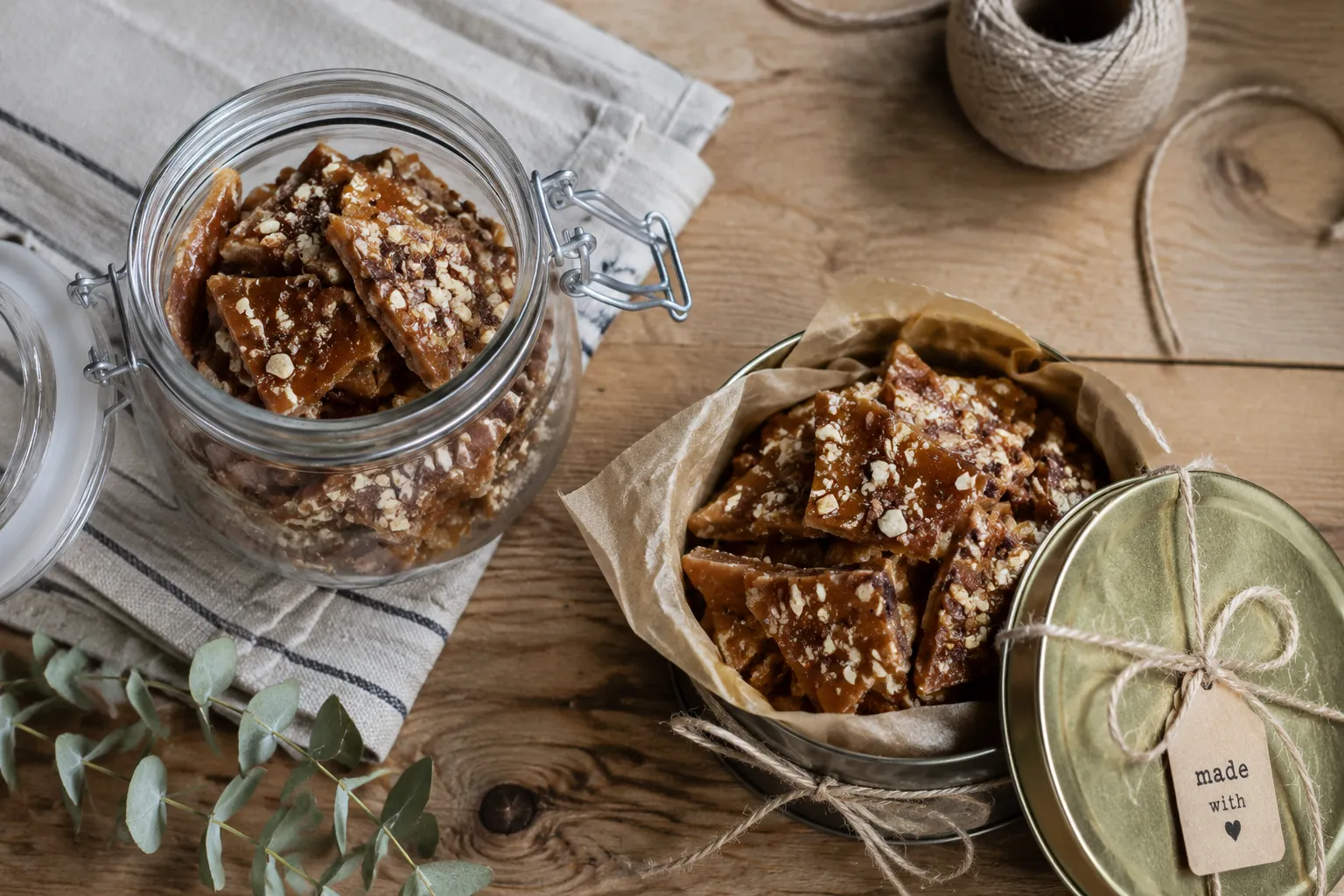
If you're putting together holiday candy gifts, this is your move. A few shards layered between parchment in a kraft tin or a clear glass jar is the kind of present people remember and ask for again next year. Tie it with twine, add a handwritten label, and you've got a gift that beats anything you could grab at the airport.
The texture holds up beautifully for shipping too, as long as you cushion the tin and avoid extreme heat in transit. I've sent toffee from Texas to Vermont in December without a single broken piece.
## Final Thoughts
There's something quietly magical about turning a stick of butter and a cup of sugar into glossy, snappable confection. This toffee recipe rewards patience and a thermometer with results that look — and taste — like they came from a fancy chocolate shop. Make it once, and I promise it'll find a permanent slot in your December rotation.
💡 Expert Tips
**Expert Tips for Foolproof Toffee**
- Stir slowly and continuously, not aggressively. Whipping the syrup forces butterfat to separate from the sugar — keep the motion calm and steady throughout the cook.
- Pre-measure every single ingredient before you turn on the burner. Once the syrup starts climbing toward 300°F you have zero time to scramble for vanilla or hunt for parchment.
- Pull the pan from the heat at exactly 300°F, not 305°F. Even five extra degrees pushes toffee from rich and toasty into burnt and bitter, and there is no way to walk it back.
- Use parchment paper, not wax paper, on your sheet pan. Wax paper smokes and melts under hot toffee, while parchment releases the cooled slab cleanly with no residue.
- If your toffee starts to look greasy or separated mid-cook, lower the heat immediately and whisk in 1 to 2 tablespoons of very hot water to bring the emulsion back together.
🔄 Variations & Substitutions
This basic formula is endlessly adaptable once you've nailed the hard-crack technique. Try swapping the chocolate, the nuts, or the finishing salt to create entirely different vibes from the same one-pan method.
- **Pecan toffee:** Replace the almonds with toasted chopped pecans for a Southern-style spin.
- **Dark chocolate sea salt:** Use 60-70% dark chocolate and finish with flaky Maldon salt for a more grown-up version.
- **White chocolate cranberry:** Top with melted white chocolate and dried cranberries for a festive holiday look.
- **Espresso toffee:** Stir 1 teaspoon of instant espresso powder into the butter at the start for a deep, mocha-tinged flavor.
- **Spiced toffee:** Add 1/2 teaspoon ground cinnamon and a pinch of cayenne to the chocolate layer for a warm, gently spicy finish.
- **Pistachio rose:** Use white chocolate, chopped pistachios, and a tiny dusting of dried rose petals for an unexpected showstopper.
🧊 Storage & Leftovers
Stored airtight at cool room temperature, homemade toffee stays crisp and fresh for about 2 weeks. Place the shards between sheets of parchment paper inside a tin or glass jar with a tight-fitting lid, and keep the container in a cool, dry spot away from the stove or any sunny windows. The biggest enemy of toffee is humidity, which is exactly why you should never refrigerate it — moisture causes the chocolate to bloom and the toffee itself to soften and turn tacky.
For longer storage, toffee freezes beautifully for up to 3 months. Layer the pieces between parchment in a freezer-safe zip-top bag with the air pressed out, seal tightly, and thaw at room temperature for about 15 minutes before serving. The texture comes back exactly as you packaged it, which makes this an ideal make-ahead candy for holiday prep or last-minute gifting.
Frequently Asked Questions
What is the secret to making good toffee?
The biggest secret is precise temperature control combined with the right tools. Use a heavy-bottom stainless saucepan to prevent hot spots, real salted butter for flavor, and a clip-on candy thermometer to take the guesswork out. Cook your butter and sugar to exactly 300°F (the hard-crack stage), stirring slowly and continuously rather than aggressively. Pull the pan the instant you hit temperature and pour immediately, because every degree past 300°F races toward bitter and burnt. Pre-measure every ingredient before you light the burner, since once the syrup is moving, candy waits for no one.
Why did my toffee separate into a greasy mess?
Separation almost always comes down to one of three causes: heat that was too high, stirring that was too aggressive or too sparse, or a sudden temperature swing from a cold ingredient. When the butterfat breaks away from the sugar syrup, you'll see a slick layer of oil pooling around the pan. To rescue it, immediately reduce the burner to low and add 1 to 2 tablespoons of very hot water, then whisk gently until the mixture comes back together as a smooth, emulsified syrup. Going forward, keep your heat at a steady medium and stir slowly throughout the entire cook.
What is the difference between English toffee and regular toffee?
English toffee is cooked all the way to the hard-crack stage at 300°F, which gives it that signature glassy snap and crisp shatter. It's also traditionally finished with a layer of chocolate and toasted almonds, which has become its visual and flavor calling card. American-style toffee is often softer and chewier because it's pulled earlier in the cooking process, sometimes around the soft-crack range, and may skip the nuts or chocolate entirely. Both are delicious in their own right, but if you want the classic crackle-and-snap experience that breaks into shards on a board, you want true English toffee every time.
Do I really need a candy thermometer for toffee?
Strongly recommended, yes. Toffee depends on hitting 300°F (hard-crack) precisely. Even 10 degrees under leaves you with chewy, sticky candy that won't shatter, and 10 degrees over tastes scorched and bitter. A clip-on candy thermometer costs about $10 and will pay for itself the first time you use it, plus it's useful for caramel, jam, and deep frying down the line. If you absolutely don't have one, you can use the cold-water test by dropping a small spoonful of hot syrup into a glass of ice water; if it forms hard, brittle threads that crack cleanly when bent, you've reached hard-crack.
How long does homemade English toffee last?
Stored airtight at cool room temperature, homemade toffee stays crisp and fresh for about 2 weeks. Layer the pieces between sheets of parchment to prevent the chocolate from sticking and blooming, and keep the container away from warm spots like the stove or a sunny windowsill. For longer storage, freeze toffee in a zip-top bag with the air pressed out for up to 3 months — it thaws in just minutes at room temperature with no loss of texture. Avoid the refrigerator at all costs, because the humidity inside makes the chocolate sweat and the toffee itself turn sticky and tacky.
Easy English Toffee Recipe (Buttery, Crunchy, Foolproof)