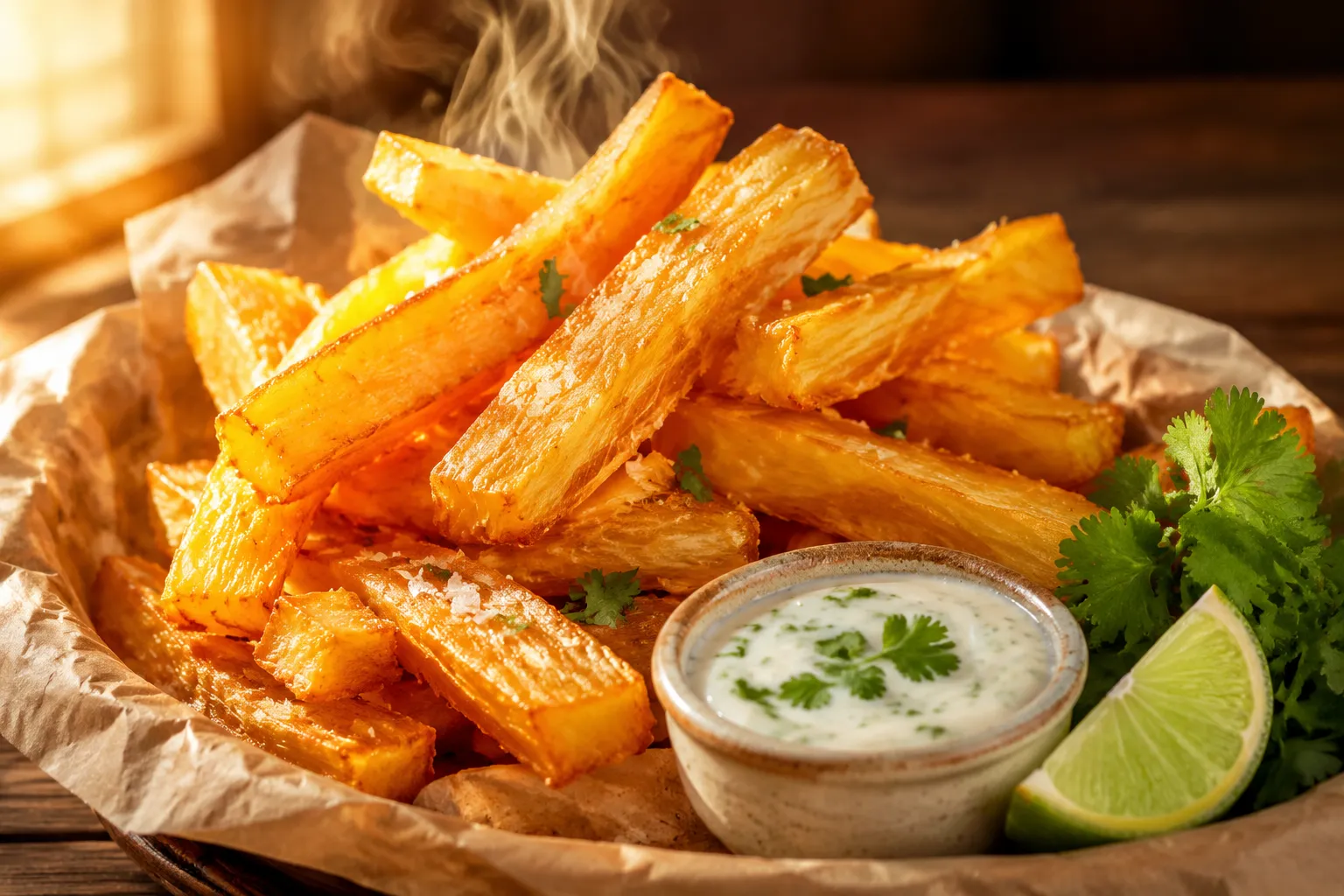
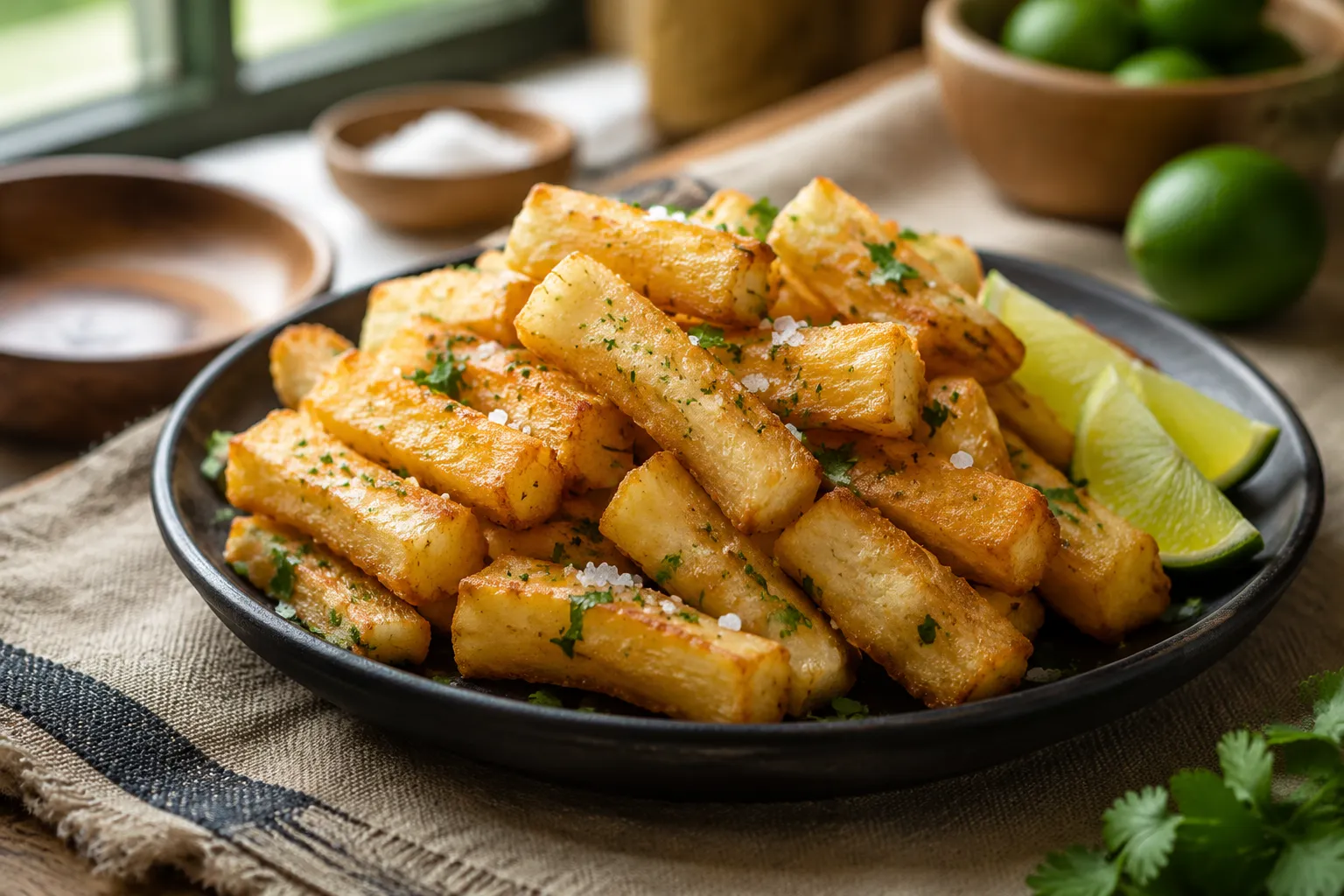
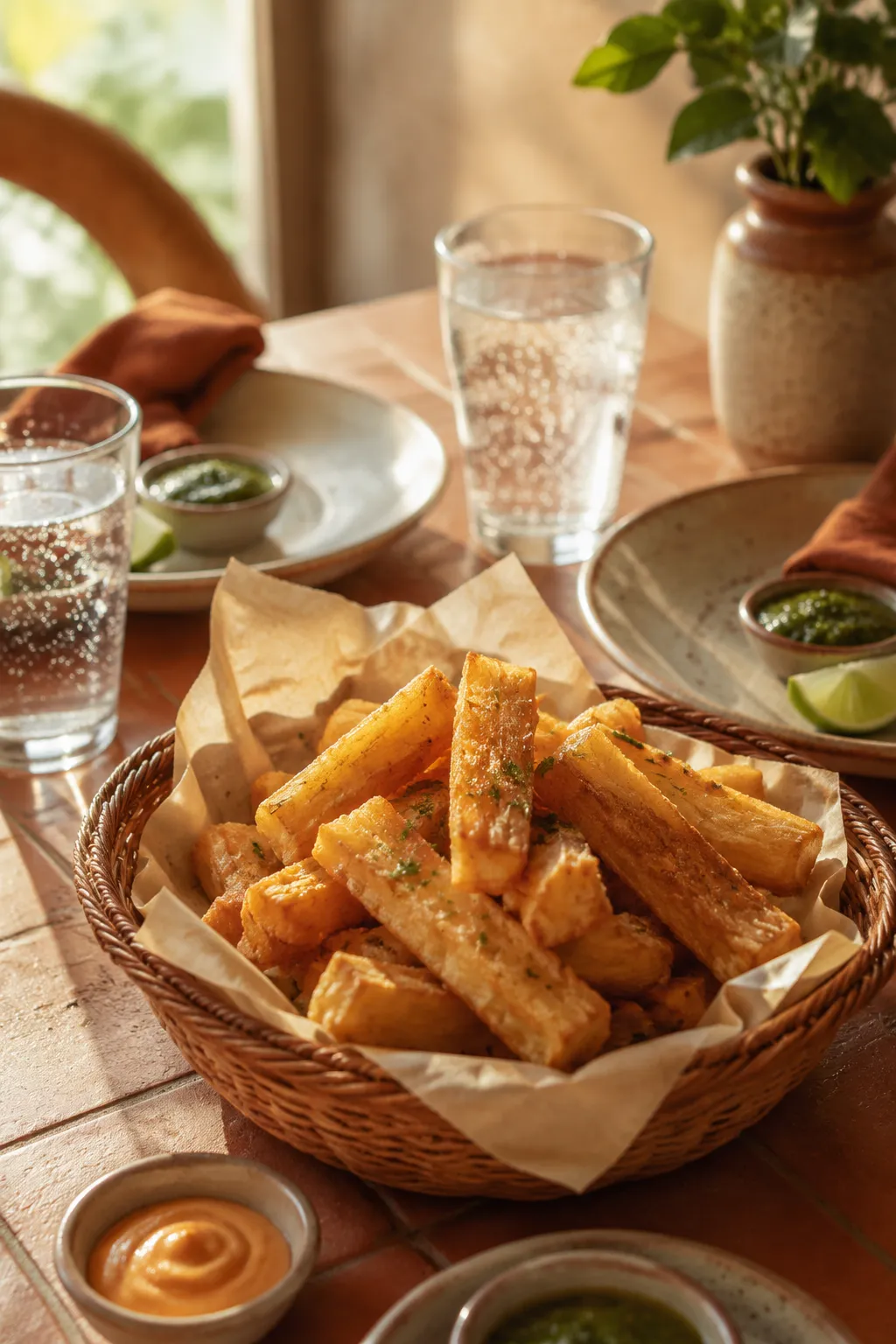
These crispy yuca fries are golden on the outside, pillowy on the inside, and far more addictive than regular french fries. Ready in 30 minutes.
Why You'll Love This Recipe
**Why You'll Love This Recipe**
- **Crispier than french fries.** Yuca's higher starch content gives you a shatter-crisp shell and a fluffier, creamier interior than any potato can match.
- **Naturally gluten-free and vegan.** Cassava is grain-free and plant-based, so these slot easily into gluten-free, paleo, and vegan menus without any swaps.
- **Just six pantry ingredients.** No flour, no breading, no specialty equipment beyond a thermometer and a heavy pot.
- **Restaurant-quality at home.** The two-step boil-then-fry method is exactly how Cuban and Colombian kitchens do it, and it works the very first time.
- **Endlessly flexible.** Deep fry, air fry, or oven bake — same prep, three finishes — so you can pick the method that fits your night.
- **A built-in conversation piece.** Most guests have never had homemade yuca, and you'll get asked for the recipe before the basket is empty.
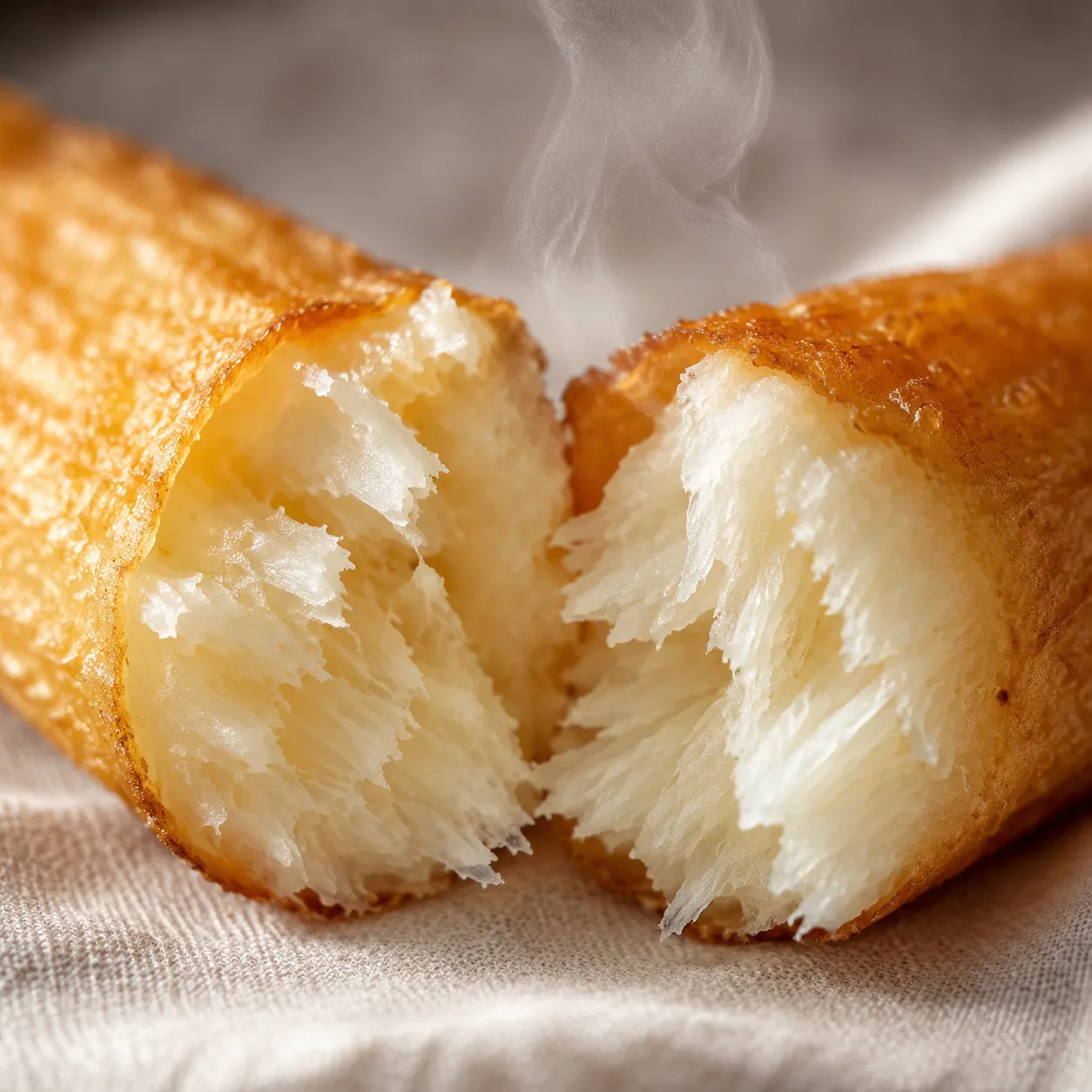
Crispy yuca fries are the gluten-free side dish that quietly outshines every basket of regular french fries on the table. The first time you bite through that crackling deep-golden shell into a center somehow lighter and creamier than a baked potato, you'll understand why this humble South American root has been a comfort-food staple from Cuba to Brazil for centuries. They shatter, they steam, they soak up garlicky dipping sauce like it's their job.
If you've only ever ordered them at a Latin restaurant, the homemade version is going to surprise you. The technique is straightforward — peel, boil, dry, fry — but the order matters more than people realize. Skip the boil and the inside stays starchy and dense. Skip the dry-and-chill step and the oil splatters everywhere without crisping. Get the rhythm right, though, and you'll pull a tray of cassava fries out of the pan that look like they came straight from a chef's pass.
Below you'll find the deep-fry method I trust most, plus air fryer and oven-baked options in the variations section if you'd rather skip the bubbling pot of oil. There's also a quick Cuban-style garlic mojo sauce I'd strongly encourage you not to skip — it's the single thing that turns a great snack into an unforgettable one.
## What Is Yuca (Yucca / Cassava)?
Yuca is the long, brown-skinned tuber you've probably walked past a thousand times in the produce aisle without realizing it doubles as one of the world's great fry-able starches. It's also called cassava, manioc, or yucca, and it's a foundational ingredient across Latin American, Caribbean, and West African cooking. The flesh under that bark-like skin is dense, snowy white, and packed with starch — significantly higher in starch than a russet potato, which is exactly why it crisps up so spectacularly when fried.
A spelling note that confuses everyone: "yuca" (one C) refers to the edible cassava root, while "yucca" (two Cs) is technically the desert ornamental plant with sword-shaped leaves. In practice, food writers and grocery stores use the spellings interchangeably, so you'll see "yucca fries" on plenty of menus referring to the exact same dish.
You can find fresh yuca root in most well-stocked supermarkets, Latin grocers, and Asian markets, usually displayed waxed and unrefrigerated. Look for roots that feel firm and heavy, with no soft spots or gray streaks in the cross-section when you ask the produce manager to slice one open. If fresh isn't available — or if you'd rather skip the peeling — frozen peeled yuca chunks work beautifully and are sold in the freezer aisle of most Latin and international markets. Goya makes a reliable bag I keep stocked for last-minute cravings.
## Ingredients You'll Need
The beauty of fried yuca is how few ingredients it actually requires. You're letting the root do the heavy lifting, so the seasonings stay clean and simple.
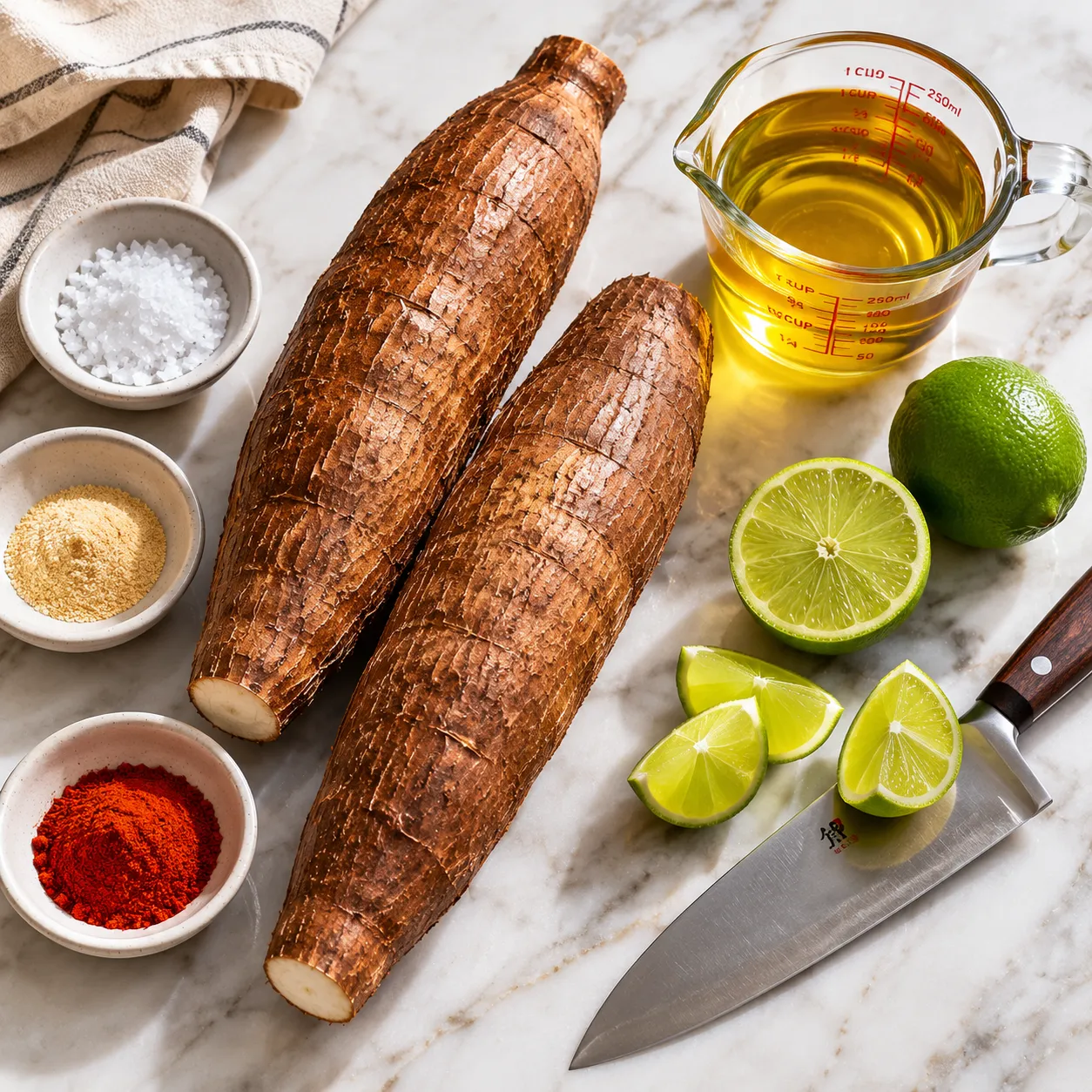
- **Yuca root**: Two pounds of fresh yuca, or one bag of frozen peeled yuca chunks. Plan on roughly half a pound per person as a side.
- **Frying oil**: Neutral, with a high smoke point. Vegetable, canola, peanut, or refined avocado oil all work well. Skip olive oil for deep frying.
- **Kosher salt**: For the boiling water and for finishing. Flaky sea salt on top is a nice upgrade right before serving.
- **Garlic powder and smoked paprika**: A simple seasoning blend that complements the sweet, mild yuca flavor without overpowering it.
- **Lime wedges**: A bright squeeze right before eating wakes everything up.
The seasoning blend is fully customizable. Cumin, dried oregano, ancho chili powder, or a Cajun blend all work depending on what you're serving alongside. My everyday mix is just salt, garlic powder, and smoked paprika, but I'll lean spicier when these are headed toward tacos or grilled steak.
## How to Make Crispy Yuca Fries
The full numbered steps live in the recipe card below, but here's the bird's-eye view of why each stage matters. Yuca is denser than potato, so you can't simply slice and fry it the way you would a russet — you'd end up with a beautifully bronzed exterior wrapped around a starchy, chalky core. The boil-then-fry method solves that problem completely and is the technique used in every Latin restaurant kitchen I've ever stood in.
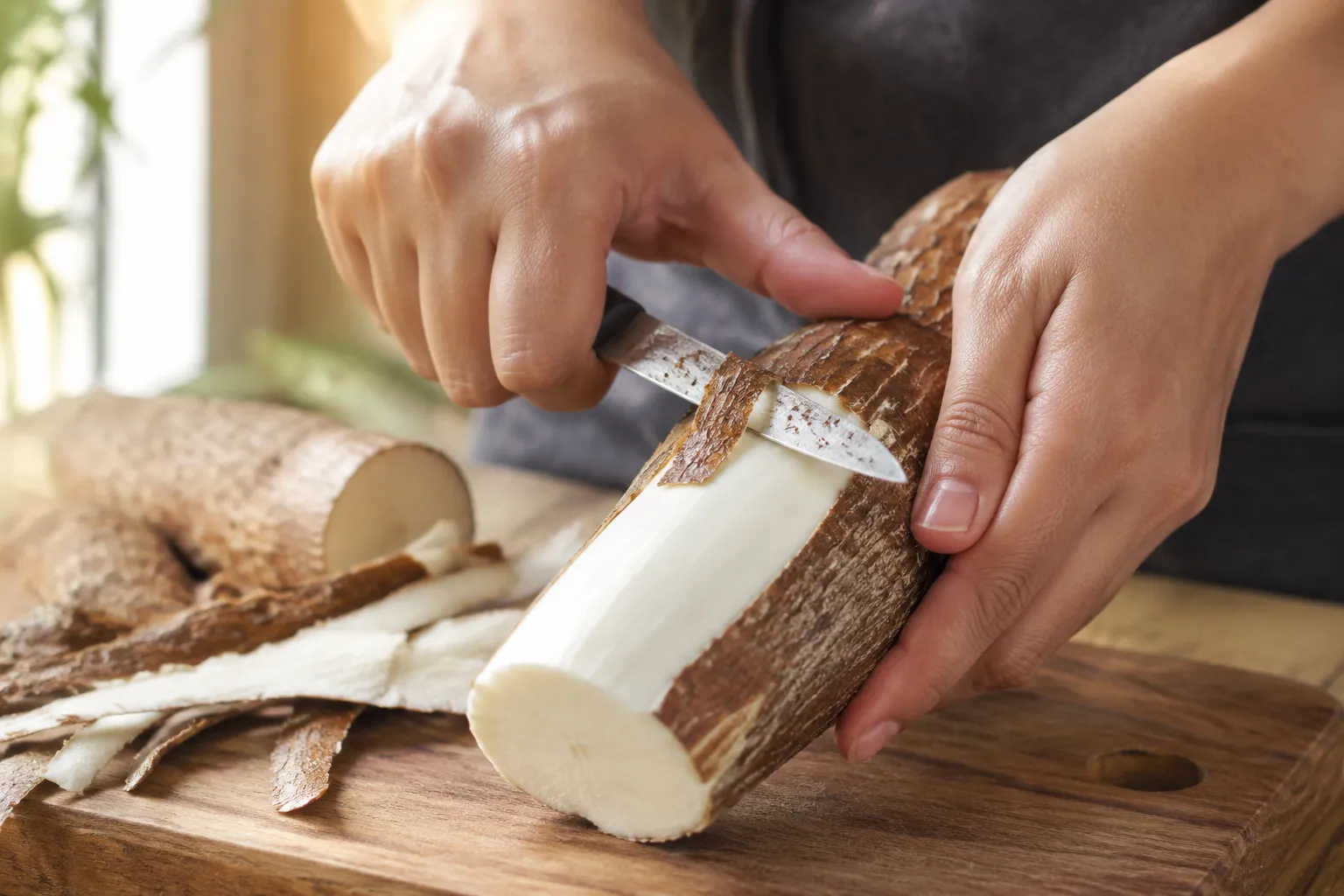
Start by trimming the ends and standing the root upright on a cutting board. The skin has two layers: a brown bark-like outer skin and a thin pinkish layer just beneath. Run a sharp paring knife from top to bottom in long strips and peel both layers off together. You can also score the skin lengthwise and pry it off in panels, which gets faster once you've done it a few times. Cut the peeled root into 3- to 4-inch lengths, then quarter each length into thick batons. Look for the thin woody core running down the center — pop it out with the tip of your knife and discard, since it stays fibrous even after cooking.
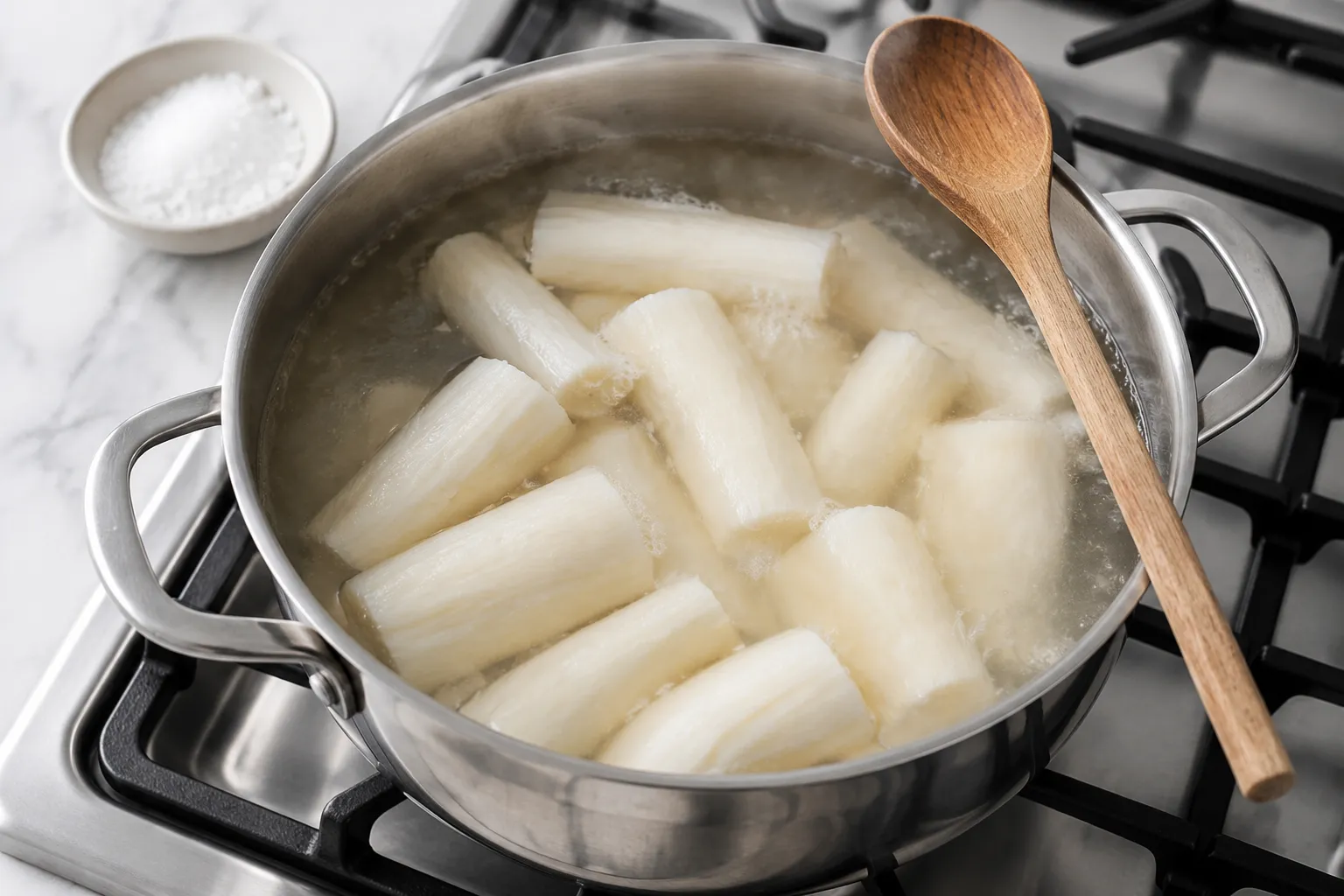
Drop the batons into a pot of generously salted water, bring to a gentle boil, and cook until a fork slides in with mild resistance — usually 15 to 20 minutes for fresh, less for frozen. You're going for just-tender, not falling apart. Drain thoroughly, spread the pieces on a sheet pan, and let them steam-dry for at least 10 minutes. If you have time, slide the tray uncovered into the fridge for 20 to 30 minutes. Cold, dry yuca is the secret to crackly fries that don't sputter the second they hit the oil.
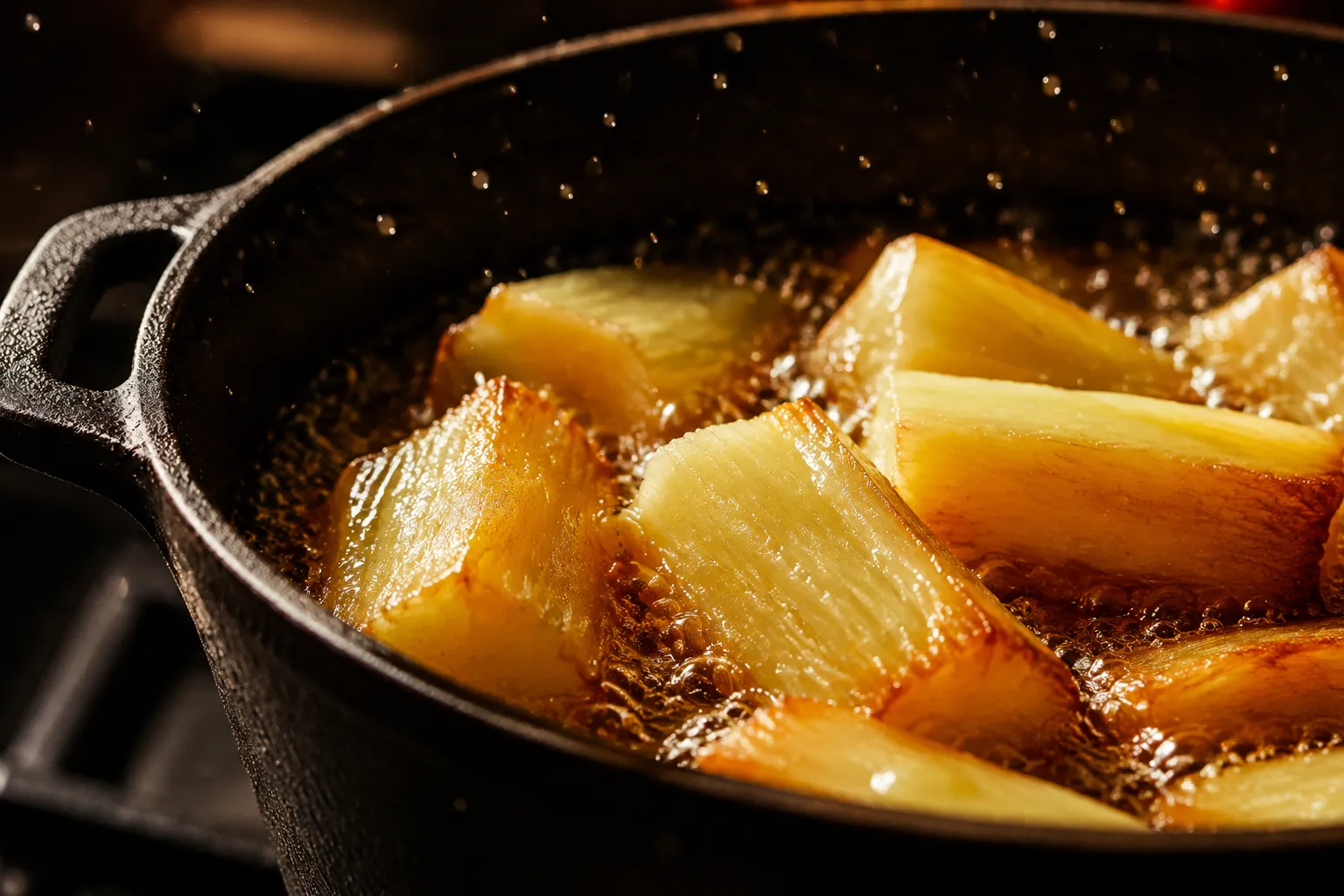
Heat your oil to 365°F in a heavy Dutch oven or deep skillet — a clip-on thermometer is worth every penny here. Fry the yuca in two or three batches so the pot stays hot, turning the pieces occasionally, until they're deep golden brown with crackled edges, about 4 to 6 minutes per batch. Transfer to a wire rack rather than paper towels (towels steam the bottoms soft) and immediately shower with kosher salt while the surface is still glossy with oil. Toss with the garlic powder and smoked paprika in a wide bowl right before serving.
## What to Serve With Yuca Fries
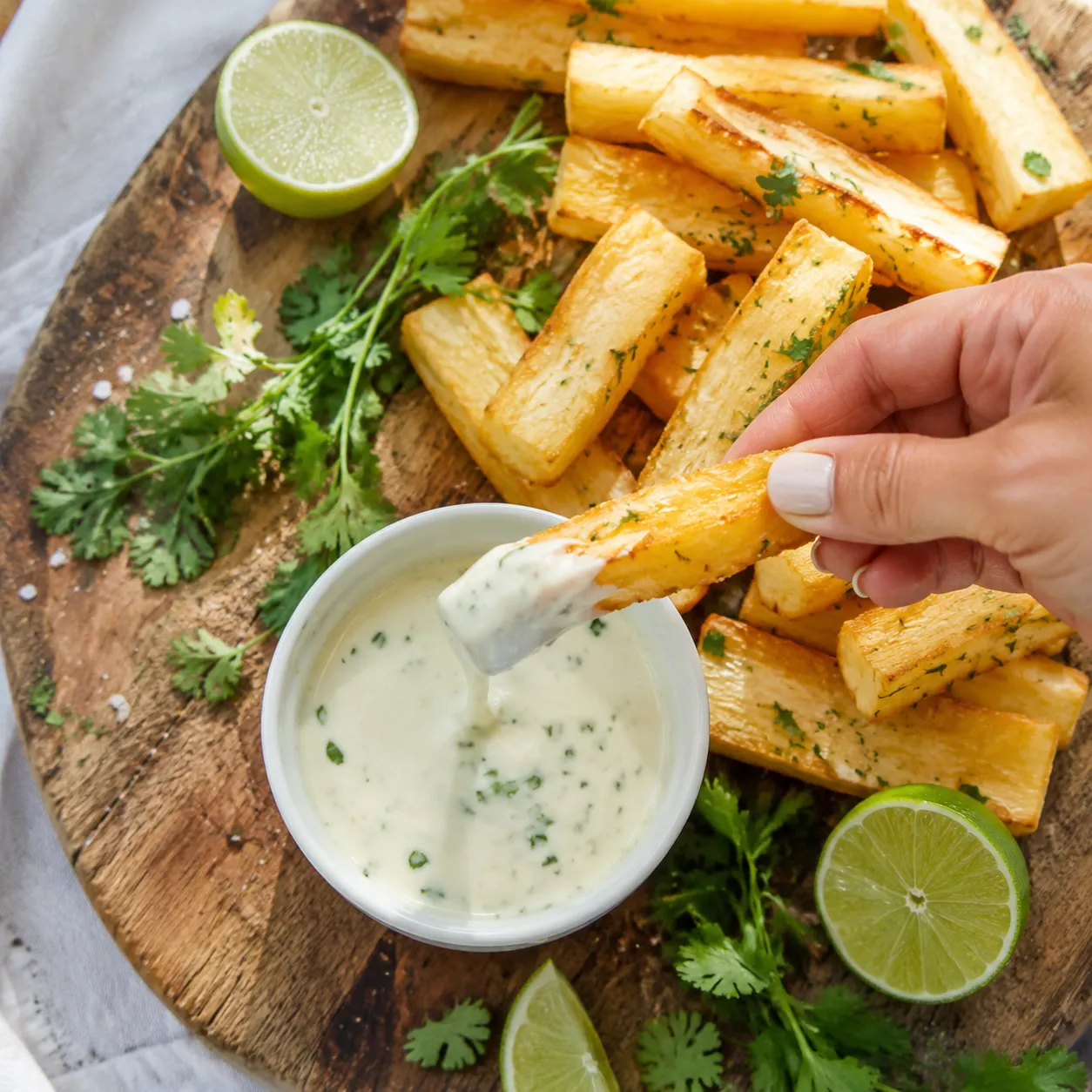
These are built to share, and the dipping sauce situation is half the fun. The classic Cuban pairing is a garlic mojo sauce — raw garlic crushed to a paste with salt, loosened with sour orange juice (or a mix of lime and orange), then bloomed in warm olive oil until it sizzles and turns golden. It's punchy, herby, and tastes like nothing else. For a creamier option, a quick garlic aioli dipping sauce stirred together with mayo, lemon, Dijon, and a microplaned clove of garlic is ready in two minutes and clings beautifully to the craggy edges. A spoonful of homemade chimichurri sauce, with its bright parsley-garlic-vinegar punch, is another fantastic move if you're leaning Argentinian.
For a full meal, serve these yuca fries alongside a heaping plate of Cuban black beans and rice with a piece of citrus-marinated grilled chicken or pork. They also pull weight as a steakhouse-style side — try them next to a seared ribeye with chimichurri spooned over the top. If you're building a tapas spread, set a basket out with crispy smashed potatoes, sliced chorizo, and marinated olives and let everyone graze. The fries hold their crunch surprisingly well at room temperature for 20 to 30 minutes, which makes them a smart appetizer choice for parties.
If you're already a regular fry-maker and you're wondering how these stack up against air fryer sweet potato fries or your usual russet hand-cuts, the honest answer is that yuca occupies its own category. The interior is silkier, almost custardy, and the exterior crackles in a way potato never quite manages. Make them once and these yuca fries will earn a permanent rotation slot — somewhere between "weeknight side" and "I have people coming over and need to impress them quickly."
💡 Expert Tips
**Expert Tips**
- **Don't skip the boil.** Frying raw yuca leaves the centers chalky and undercooked even after the outside browns. The water bath fully gelatinizes the starch and is what creates that signature creamy interior.
- **Dry thoroughly before frying.** Surface moisture is the enemy of crispness and the cause of dangerous oil splatter. Steam-dry the boiled batons on a sheet pan for 10 minutes minimum, and chill them uncovered in the fridge if you have an extra 30 minutes.
- **Pull out the woody core.** Every yuca root has a thin fibrous string running down the center. It never softens, so flick it out with the tip of your knife after cutting the batons — your guests will thank you.
- **Watch your oil temperature.** Aim for a steady 365°F. Too cool and the fries absorb oil and turn greasy; too hot and the outside browns before the inside finishes warming through. A clip-on candy thermometer takes the guessing out of it.
- **Salt while glossy.** Season the moment they leave the oil, while the surface is still slick. Salt added five minutes later just slides off.
🔄 Variations & Substitutions
**Variations**
The boil-and-dry prep stays exactly the same across every method — only the final crisp-up changes. Pick whichever finish suits your night.
- **Air fryer yucca fries**: After boiling and drying, toss the batons with 2 tablespoons of oil and a pinch of salt. Air fry at 400°F for 15 to 18 minutes, shaking the basket halfway, until deeply golden. Slightly less rich than deep-fried, with a drier, almost roasted crunch.
- **Oven-baked yuca fries**: Spread the dried batons on a parchment-lined sheet pan, drizzle generously with oil, and roast at 425°F for 25 to 30 minutes, flipping once. Best for hands-off cooking and feeding a crowd.
- **Spicy chili-lime**: Toss the finished fries with chili powder, cayenne, and lime zest for a punchier, snackier version.
- **Loaded yuca fries**: Top with shredded queso fresco, crema, pickled onions, and cilantro for a Latin-style answer to loaded cheese fries.
- **Truffle and parmesan**: Drizzle with truffle oil and a heavy snow of microplaned parmesan right out of the fryer for a steakhouse vibe.
🧊 Storage & Leftovers
**Storage**
Yuca fries are at their absolute best within 30 minutes of frying, but leftovers reheat better than you'd expect. Cool completely, then store in an airtight container in the refrigerator for up to 3 days. Avoid stacking them more than two layers deep so the bottom fries don't go soggy from trapped steam.
To bring back the crisp, spread the cold fries in a single layer on a sheet pan and reheat in a 425°F oven for 5 to 7 minutes, or in the air fryer at 400°F for 4 to 5 minutes, shaking once. Skip the microwave — it turns them into damp, gluey ghosts of their former selves. For longer storage, freeze the par-boiled, fully dried batons (before frying) on a sheet pan, then transfer to a zip-top bag for up to 2 months. Fry directly from frozen, adding 1 to 2 minutes to the cook time.
Frequently Asked Questions
What is the difference between yuca and yucca fries?
They're the same dish — the spelling difference is mostly cosmetic. Strictly speaking, "yuca" (one C) refers to the edible cassava root native to South America, while "yucca" (two Cs) refers to a separate ornamental desert plant with sword-shaped leaves. In American English, however, the spellings are used interchangeably on menus, in cookbooks, and in grocery stores, so you'll see both labels referring to identical fries made from cassava. If you're shopping at a Latin market, ask for yuca; in the freezer aisle of a mainstream supermarket, the bag may say either.
Do you have to boil yuca before frying?
Yes, the boil step isn't optional. Yuca has nearly twice the starch content of a russet potato, and that starch needs water and heat to gelatinize before any frying happens. If you skip the boil and drop raw batons straight into hot oil, the exterior will brown beautifully but the inside will stay hard, chalky, and undercooked, no matter how long you leave them in. Boiling first softens the dense flesh into a creamy interior, and the subsequent fry creates that crackly shell. It's a two-step method for a reason.
Can I make yuca fries in an air fryer?
Absolutely, and it's a great lower-oil alternative. Boil and thoroughly dry the yuca batons exactly as you would for deep frying, then toss them with 2 tablespoons of neutral oil and a pinch of salt. Air fry at 400°F for 15 to 18 minutes, shaking the basket halfway through, until they're deeply golden with crackled edges. The texture leans a touch drier and more roasted than deep-fried, but the contrast between the crisp shell and pillowy interior still comes through beautifully. Don't crowd the basket — work in batches if needed.
How do I store and reheat leftover yuca fries?
Cool the fries completely, then store them in an airtight container in the refrigerator for up to 3 days. Try to keep them in a single layer or two at most, since stacking traps steam and softens the bottom pieces. To reheat, spread them on a sheet pan and warm in a 425°F oven for 5 to 7 minutes, or pop them in the air fryer at 400°F for 4 to 5 minutes, shaking once. Avoid the microwave at all costs — it turns the crispy exterior soft and gummy. Freshly salted leftovers reheated this way come out remarkably close to the original.
Is yuca gluten-free?
Yes. Yuca, also called cassava, is naturally gluten-free, grain-free, and vegan, which makes these gluten-free fries an excellent alternative for anyone avoiding wheat or following a paleo, Whole30, or AIP-style eating pattern. Cassava flour, made from the same root, is a popular grain-free baking substitute for the same reason. Just be mindful of cross-contamination if you're frying — use fresh oil that hasn't been used to cook breaded items, and check that any seasoning blend or dipping sauce you serve alongside is also certified gluten-free if you have celiac disease or a serious sensitivity.