Seafood Boil with the Best Cajun Butter Sauce
Ingredients
Scale
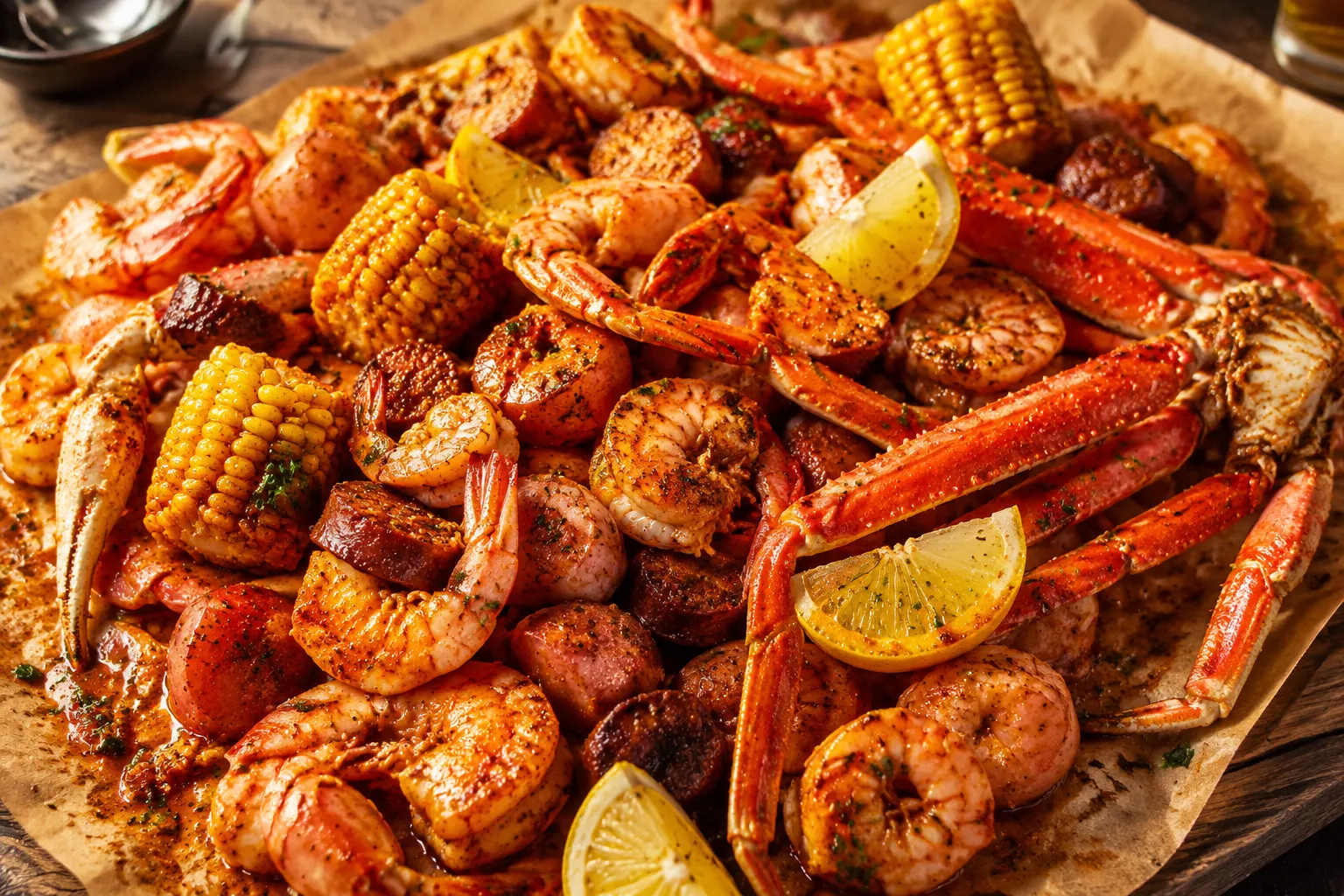
A classic Southern seafood boil loaded with shrimp, crab legs, sausage, corn, and potatoes, finished with a garlicky Cajun butter sauce you'll want to drink.
This sea food boil is the kind of recipe that turns an ordinary weeknight into a full-blown dinner party. I'm talking shell-on shrimp, snow crab legs, smoky andouille sausage, sweet corn on the cob, and tender baby potatoes all swimming in the most outrageous garlicky Cajun butter sauce you'll ever ladle over a plate. It's loud, messy, hands-on, and absolutely worth dragging out the biggest stockpot in your cabinet for.
If you've only ever ordered a Southern seafood feast at a restaurant, you might assume there's some secret you can't crack at home. There isn't. The whole thing comes down to two simple moves: a heavily seasoned pot of bubbling broth that cooks everything in stages, and a separate skillet of glossy garlic butter to toss it all in once it's drained. That two-pot trick is what separates a watery, under-seasoned mess from the kind of buttery, lip-smacking sea food boil that gets cleared in fifteen minutes flat.
This shrimp and crab boil is forgiving, flexible, and pretty much foolproof once you nail the timing. There's no fussy plating, no rare ingredient hunt, and no special equipment beyond a big stockpot and a wide skillet. Pull together a stack of paper towels, invite a few friends who don't mind eating with their hands, and dump it all out on butcher paper down the middle of the table. The presentation IS the fun, and the leftovers, if you're lucky enough to have any, make the best lunch of the week.
A great pot starts with a smart shopping list, and the lineup here is wonderfully flexible. Large shell-on shrimp and snow crab legs are my go-to combo because they cook in roughly the same window and they're easy to source frozen when your seafood counter is bare. Smoky andouille sausage brings the meaty backbone, while a head of garlic, two lemons, and a yellow onion build the aromatic base for both the boil water and the sauce. If you can find a true Cajun-style smoked sausage, even better — it leans into the regional flavor profile and adds a touch of authentic heat.
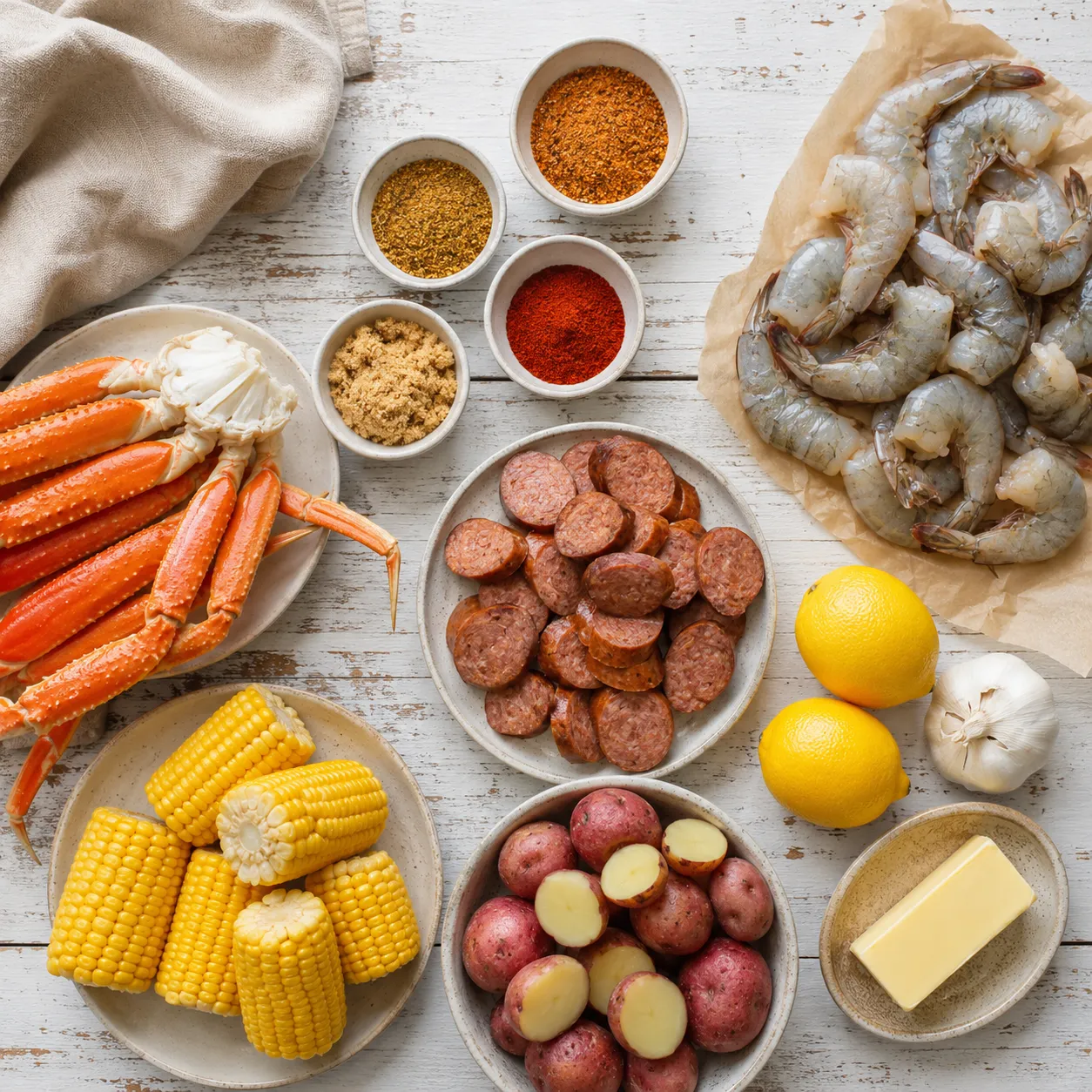
The starring veggies are baby potatoes and corn on the cob, and they drink up the seasoned broth like sponges, so don't skimp on either. Cut the corn into halves or thirds so each guest gets a manageable cob and the sauce has more surface area to cling to. Halve any potatoes bigger than a golf ball so they cook evenly alongside the smaller ones — uneven sizes are the most common reason a boil turns out half mushy and half crunchy. Yukon golds work in a pinch, but red baby potatoes hold their shape best.
For the seasoning, lean on a combo of Cajun seasoning and old bay seasoning. They're the dynamic duo of any proper shrimp boil. Cajun blends bring heat, paprika, and herby depth; Old Bay leans bright, peppery, and slightly briny. Use both in the boil water AND in the sauce. A pinch of brown sugar in the sauce balances the salt, and a fresh squeeze of lemon at the end keeps everything from feeling heavy. Quality matters more than fanciness — frozen shrimp from a reliable brand and a head of supermarket garlic will still make a knockout pot, as long as you thaw seafood in the fridge overnight before cooking.
A successful sea food boil comes down to timing, not technique. Each ingredient has its own cooking window, and the goal is to layer them in so everything finishes at the same moment. Start by filling your largest stockpot with about 4 quarts of water and seasoning it aggressively — think two big handfuls of seasoning, a halved lemon, a quartered onion, a few smashed garlic cloves, and a generous pour of salt. Bring it to a rolling boil before any food goes in. The broth should taste assertive on its own, because it's flavoring the inside of every bite.
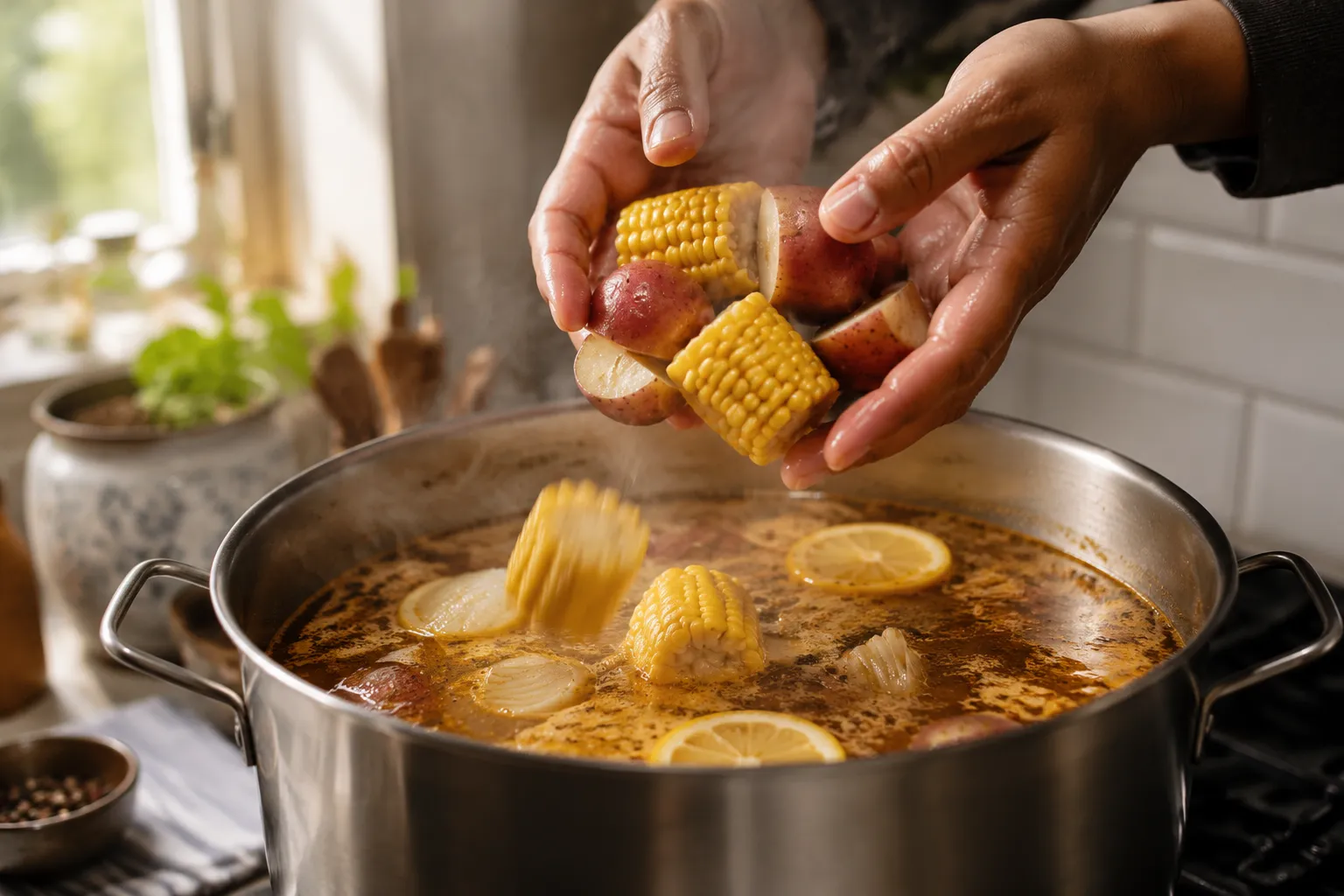
Potatoes go in first because they need the most time, around 12 to 15 minutes, until a paring knife slides through with no resistance. Once they're nearly fork-tender, drop in the corn and the sliced andouille sausage and let them simmer together for another 5 minutes. The sausage releases its smoky fat into the broth, which is exactly what you want — that rendered flavor finds its way into every potato and corn cob still in the pot.
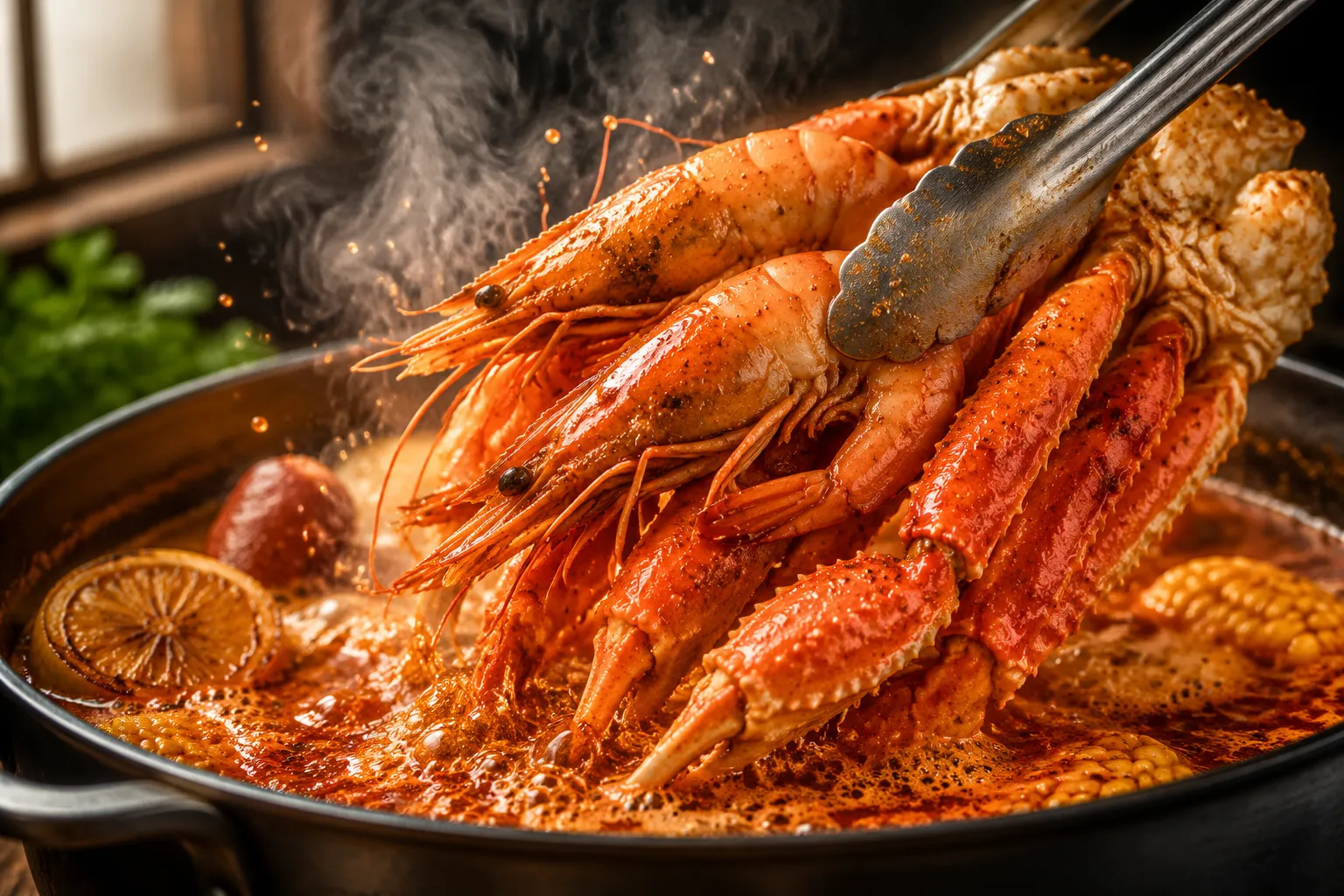
Now the seafood. Snow crab legs are usually pre-cooked when you buy them, so they only need 3 to 4 minutes to heat through. Shell-on shrimp are even quicker — 2 to 3 minutes is plenty. Add the crab first, give it a one-minute head start, then add the shrimp. The instant the shrimp curl into pink C-shapes and turn opaque, kill the heat and drain everything into a colander. Reserve a cup of that broth before draining — it's liquid gold for loosening the sauce.
While the boil is doing its thing, the seafood boil sauce comes together in about 10 minutes in a separate skillet. So many home cooks shortcut this step and end up with sad, weakly seasoned shellfish. Don't skip it. The boil flavors the inside of the food; the sauce coats the outside. You need both, and they're doing different jobs.
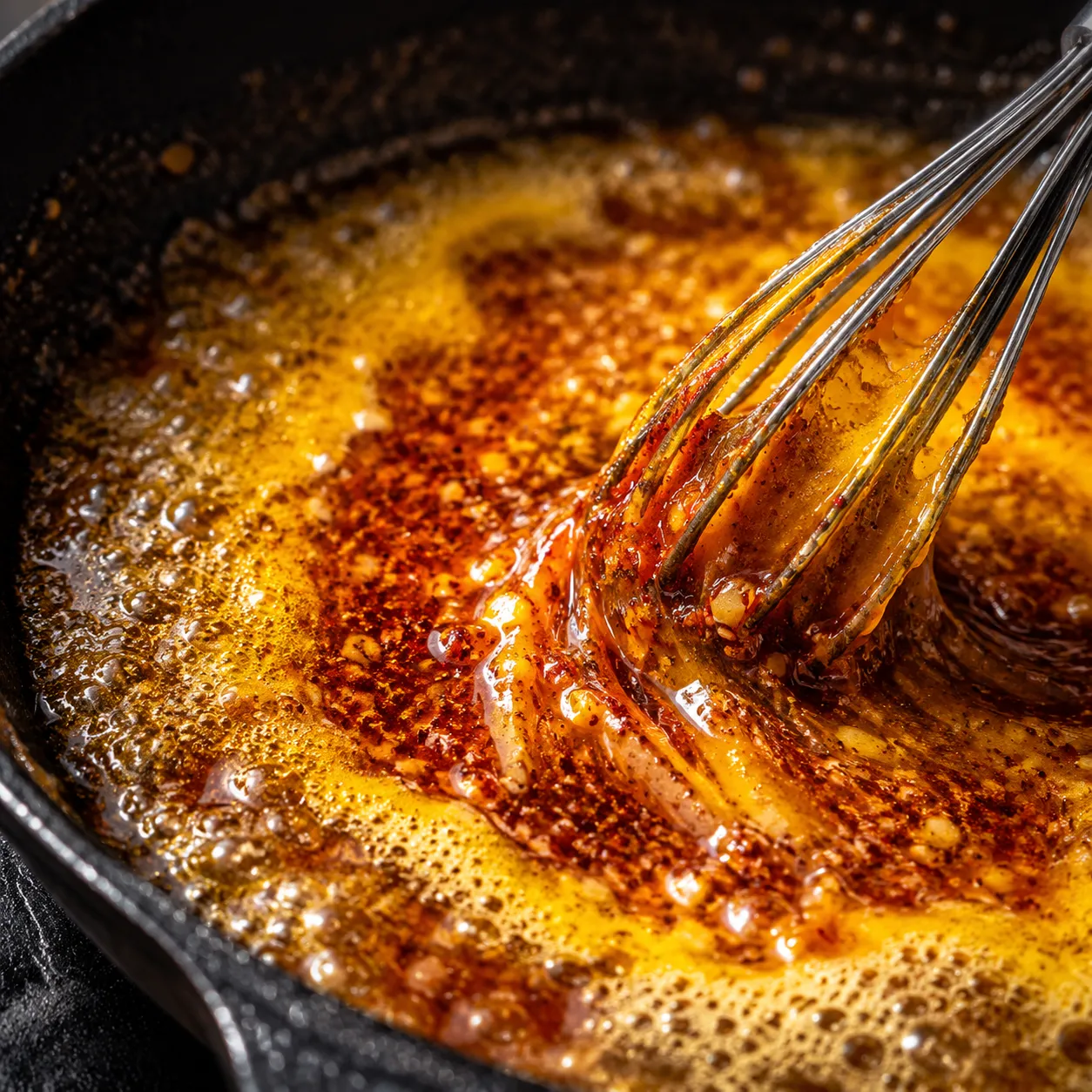
Melt a full cup of unsalted butter over medium-low heat in a wide skillet or Dutch oven. Once it foams, add the entire head of minced garlic and let it sweat — not brown — for about 90 seconds. Burnt garlic will throw off the whole sauce, so keep the heat gentle and stir often. Stir in three tablespoons of Cajun seasoning, two tablespoons of Old Bay, a teaspoon of smoked paprika, and a tablespoon of brown sugar. Whisk in the juice of one lemon and a splash of the reserved boil broth to loosen everything into a glossy, pourable Cajun butter sauce. Taste and adjust: more lemon for brightness, a pinch of cayenne for heat, a touch more sugar if it tastes too sharp.
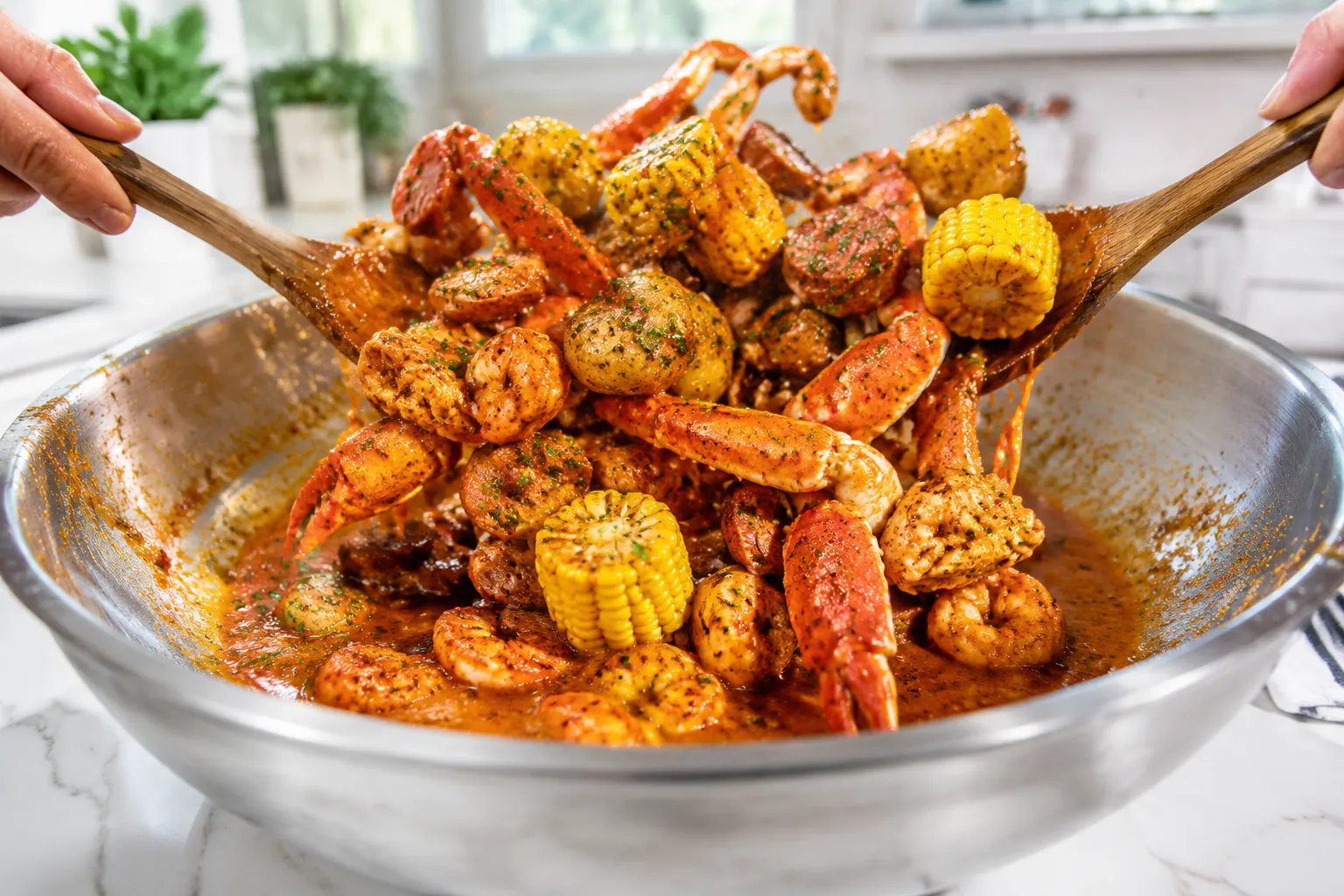
Once the seafood and veggies are drained, dump everything into a giant bowl (or back into the dry pot) and pour the warm sauce over the top. Toss gently with two big wooden spoons until every piece is glistening. Don't be shy — that sauce is the whole personality of this meal, and you want it pooled in every corn cob crevice and tucked into every crab leg joint. If your bowl feels crowded, work in two batches; even coating matters more than getting it all done at once.
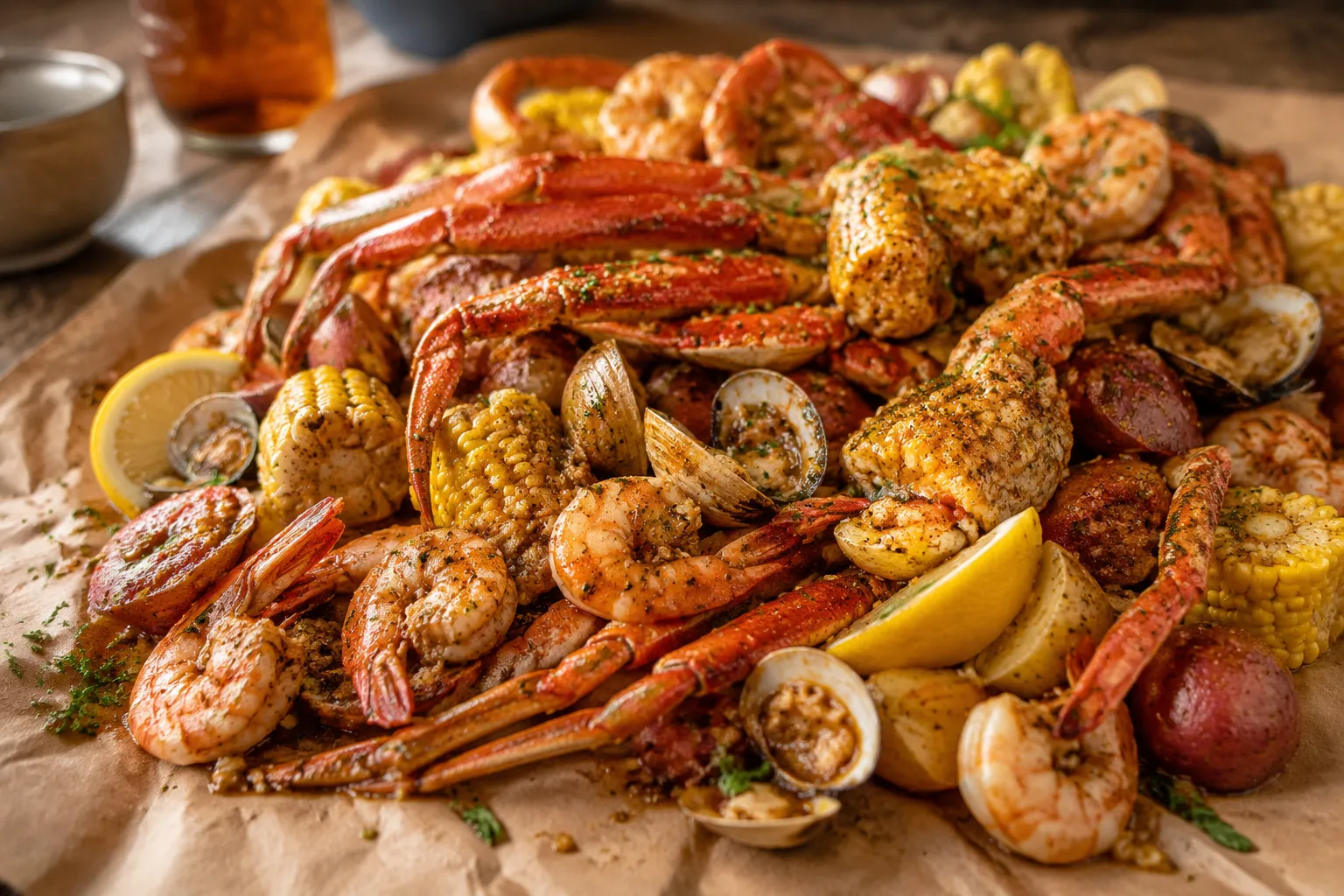
There's something genuinely thrilling about dumping a glistening pile of buttery seafood out onto butcher paper. Tear off a long strip, run it down the middle of the table, and pile everything in the center: shrimp, snow crab clusters, sausage rounds, golden corn, and rosy potatoes. If you're a fan of the classic crab leg recipe approach, scatter extra lemon wedges and a fistful of fresh chopped parsley on top for color and brightness. Set out shell crackers, small bowls of extra sauce for dipping, and a roll of paper towels per person. No plates, no silverware, no ceremony.
This is the moment that earns a sea food boil its reputation as a true Southern seafood feast. Everyone digs in at the same time, hands and elbows everywhere, telling stories between cracks of crab shell. It's loud, communal, and impossible to make formal — which is exactly the point. The casual format is part of why this meal feels special. Nobody's trying to look polished; everyone's just having a great time.
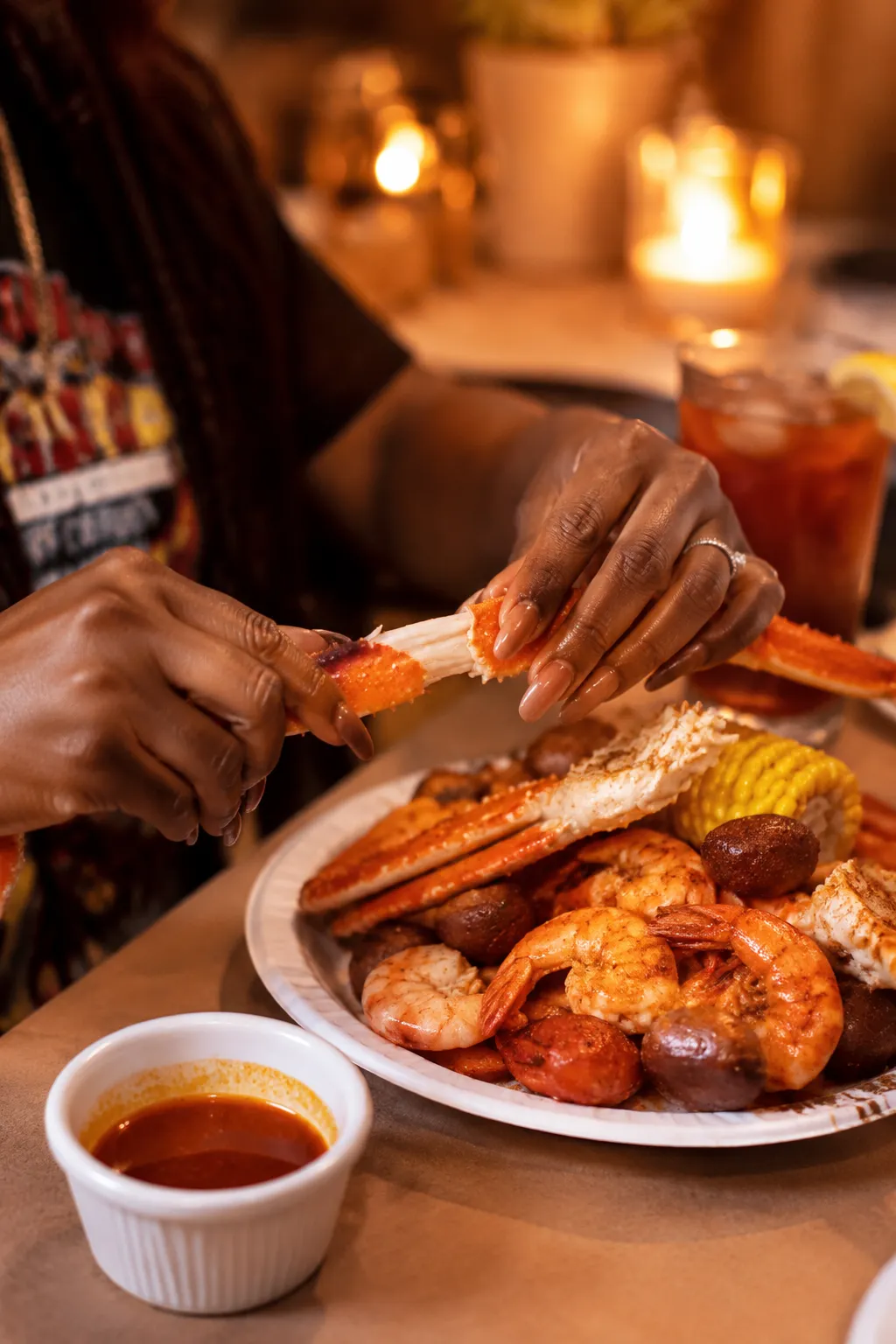
A sea food boil is filling on its own, but a few well-chosen sides turn it into a proper spread. On the lighter end, a crisp vinegar slaw cuts through the butter beautifully, and a simple green salad with lemon vinaigrette gives the palate a place to land between bites. For something heartier, hush puppies, cornbread, or a pan of warm garlic bread are tradition for a reason — they're built for sopping up extra sauce and they round out the meal without competing for attention.
Drinks should keep it casual. An ice-cold lager, a pitcher of Arnold Palmers, or a citrusy white like Sauvignon Blanc all play well with the spice and brine. If you're hosting a crowd, set out sweet tea and a stack of cold beers and call it a day. For dipping, set ramekins of warm sauce around the table — once people start dunking shrimp into pools of garlic butter sauce, you'll wish you had doubled the recipe. Have extra lemon wedges nearby for last-minute squeezes.
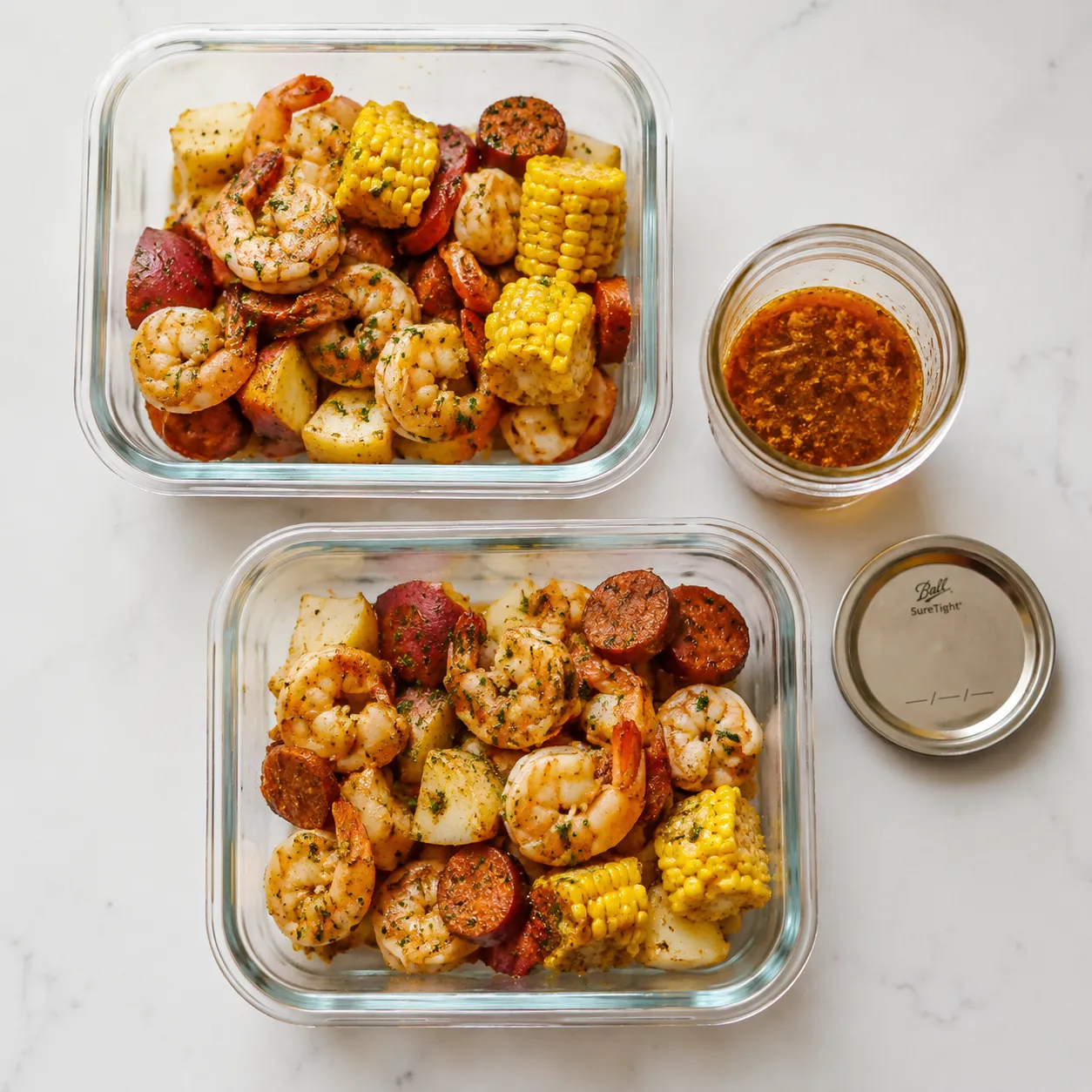
If you somehow end up with leftovers, you've stumbled into the best lunch of the week. The seasoned potatoes, sausage, and corn reheat beautifully, and any extra sauce keeps in a small jar to drizzle over rice, eggs, or roasted vegetables for days. Make this once and it earns a permanent spot in your hosting rotation — the kind of meal people call ahead about and remember years later.
This recipe is a starting point — make it your own based on what looks freshest at the market and the heat tolerance of your crowd.
Refrigerate leftover seafood and vegetables in airtight containers for up to 2 days. Store any extra Cajun butter sauce separately in a small jar — it'll solidify in the fridge but rewarms beautifully. Avoid freezing; the shrimp and crab turn spongy and the potatoes go grainy when thawed.
To reheat without rubbery shrimp, gently warm leftovers in a covered skillet over medium-low heat with a splash of water or broth, just until heated through. You can also reheat in a 300°F oven, covered, for about 10 minutes. Rewarm the sauce in a small saucepan over low heat, whisking until it re-emulsifies, and toss everything together right before serving.