Cheese Fondue Recipe: The Best Classic Swiss Fondue
Ingredients
Scale
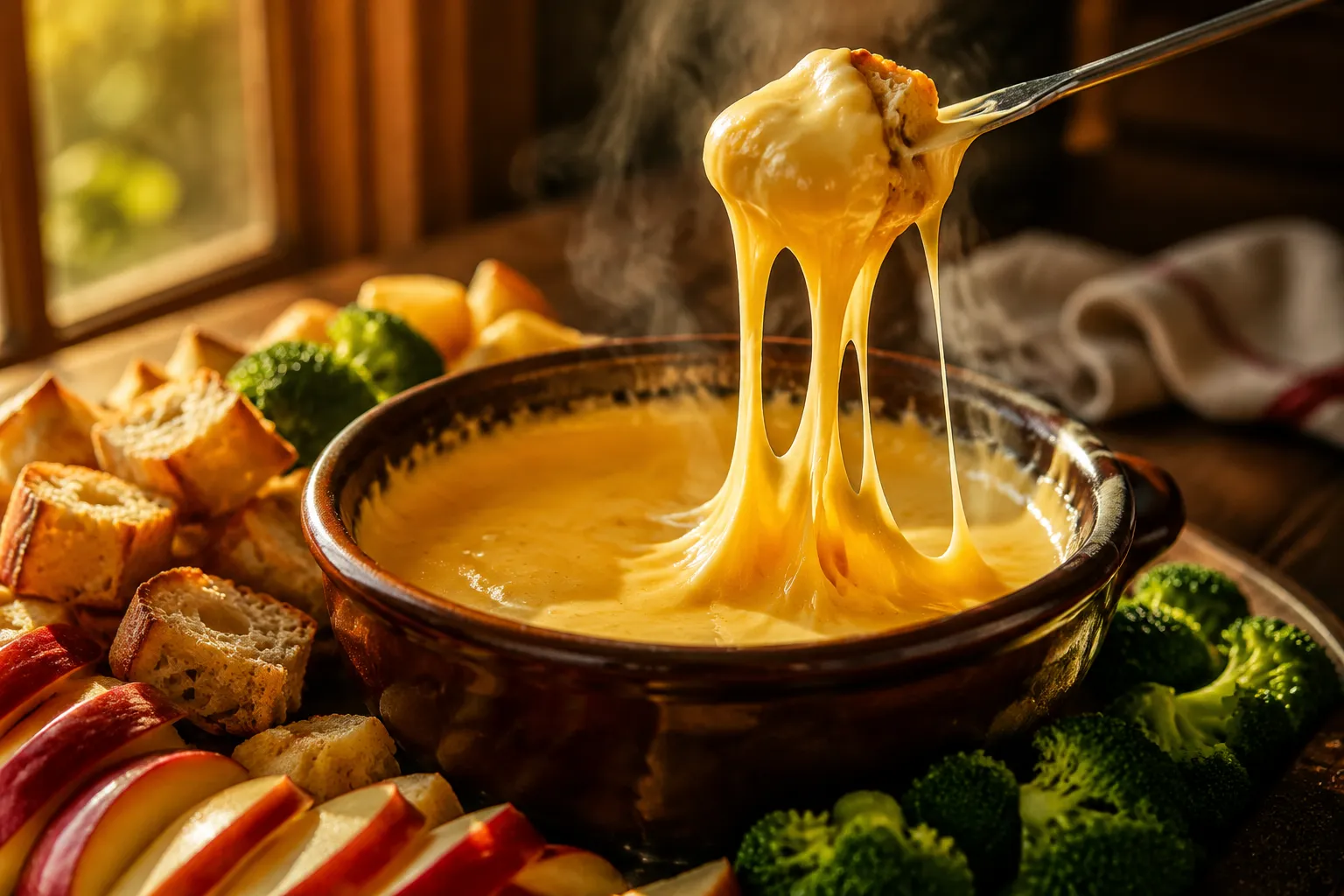
A silky, garlicky cheese fondue that melts in 30 minutes. The right cheese blend, smooth pour, and zero clumps, every single time.
The best fondue cheese isn't about a fancy pot or imported gadgetry. It's about choosing two wedges of real Alpine cheese, grating them yourself, and coaxing them into a glossy, garlicky pool that pulls in long, lazy strands. This cheese fondue recipe is the one I make for date nights in February, ski-weekend dinners, and any time friends crowd the kitchen looking for something to dip. It comes together in 30 minutes flat, on a regular stove, in a regular saucepan, with results that taste like a chalet in the Alps.
If you've ever ended up with a clumpy, oily, or broken pot of cheese, I get it. Fondue feels finicky until you understand the science behind it. Heat too high, cheese too cold, no acid, no starch, any one of those will tank a batch. The good news is that once you know the few details that actually matter, fondue becomes one of the most forgiving warm appetizers for a crowd you can pull off without breaking a sweat.
We're going Swiss-classic here: equal parts Gruyère and Emmental, dry white wine, a whisper of kirsch, and a halved garlic clove rubbed through the pot like perfume. Whether you own a copper caquelon, a fondue pot from your wedding registry, or just a heavy enameled saucepan, this method works. Let's break down what cheese to buy, what to dip, and exactly how to get that picture-perfect pull every single time.
The single biggest factor in a great pot of fondue is your cheese choice. The Swiss have done the homework for us across a few centuries, and the consensus pairing is a 50/50 blend of Gruyère and Emmental. The Gruyère brings sharp, nutty, almost butterscotch complexity. The Emmental is mild, melty, and a little sweet. Together they hit the sweet spot of flavor and texture, neither too pungent nor too bland. What makes a great fondue cheese is exactly this: enough acidity to melt cleanly, enough fat to stay glossy, and enough age to taste like something.
Look for genuine Swiss Gruyère cheese aged at least 8 to 10 months at the cheese counter, not the pre-shredded bag in the dairy aisle. Wedges are non-negotiable. Pre-shredded cheese is coated in cellulose and potato starch to keep it from caking on the shelf, which sounds helpful until you melt it and end up with a gritty, chalky pool that refuses to come together.
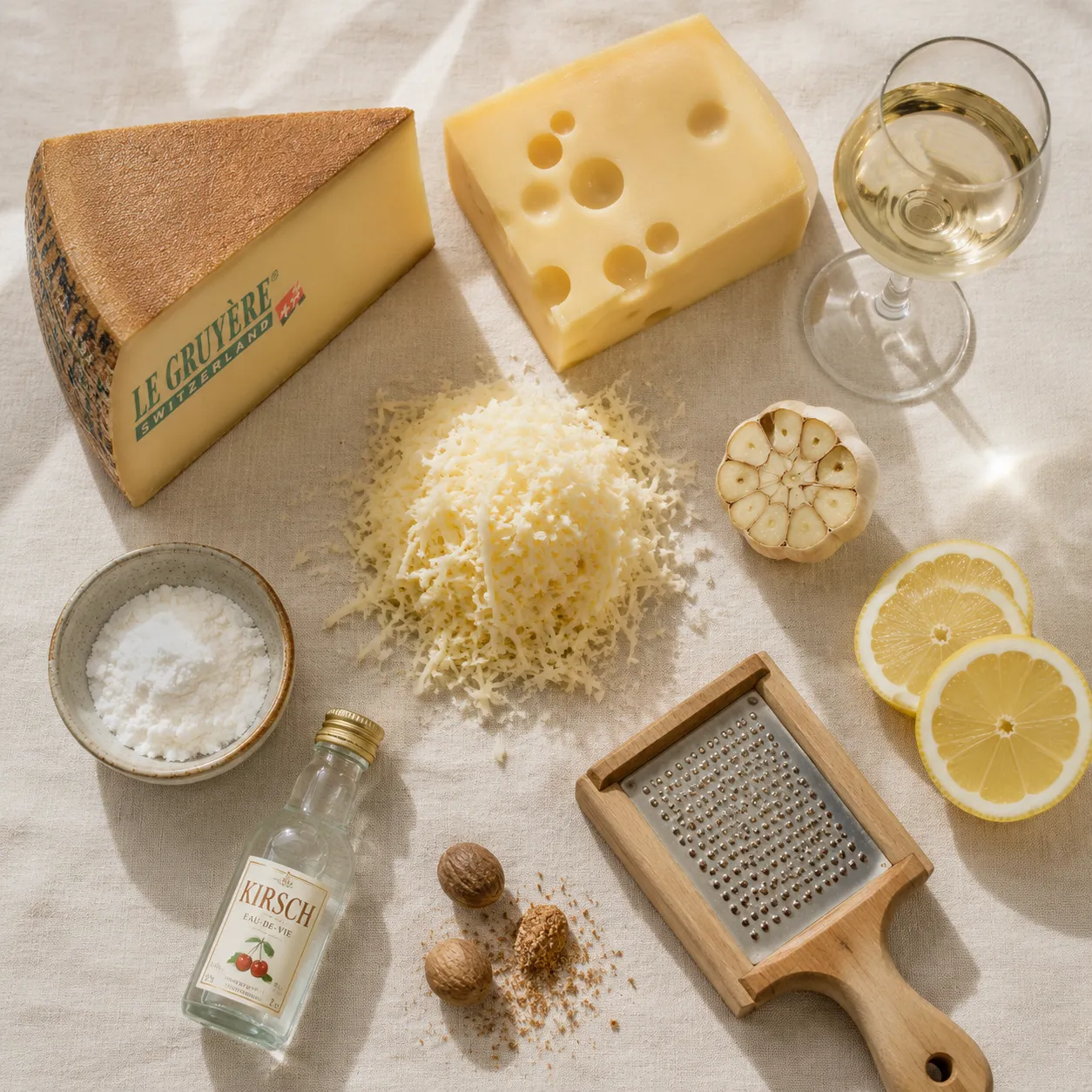
If you can't track down Emmental, perfectly good substitutes include Comté (the French cousin to Gruyère, deeper and brothier), Fontina Val d'Aosta (creamy, grassy, a little funky), and Raclette (pungent and beefy, my favorite when you want a louder flavor). Stay away from cheddar, mozzarella, Monterey Jack, and most American slices. They're either too oily, too rubbery, or too acidic to behave in a wine-based pot. The question of cheese fondue what cheese to buy comes up constantly, and the short answer is: real Alpine wedges, freshly grated, full stop. Build your fondue cheese blend from those and the rest of the recipe practically takes care of itself.
A proper cheese fondue recipe is a study in restraint. Six core ingredients, no fillers, each one doing a specific job. The cheese is the headliner: 8 ounces of Gruyère and 8 ounces of Emmental will feed four people as a main course or six as an appetizer. Buy them as wedges, bring them home, and grate them straight from the fridge on the large holes of a box grater while they're still cold and firm.
For the liquid, you want a crisp dry white wine. Sauvignon Blanc, Pinot Gris, or a dry Riesling all work beautifully. The wine does two things: it adds acid that keeps the cheese proteins from seizing into rubber, and it brings the cheese up to melting temperature without scorching it. A tablespoon of fresh lemon juice reinforces that acidity, and a tablespoon of cornstarch tossed with the cheese stabilizes the emulsion so the fat and protein stay friendly through dinner.
Two more flourishes finish the pot. Kirsch, a clear cherry brandy traditional to Swiss fondue, is optional but lovely (it cuts the richness with a soft fruity edge). A halved garlic clove gets rubbed around the inside of the pan before anything else goes in. Fresh nutmeg and a pinch of white pepper round it out. That's the whole grocery list. No flour roux, no cream, no shortcuts.
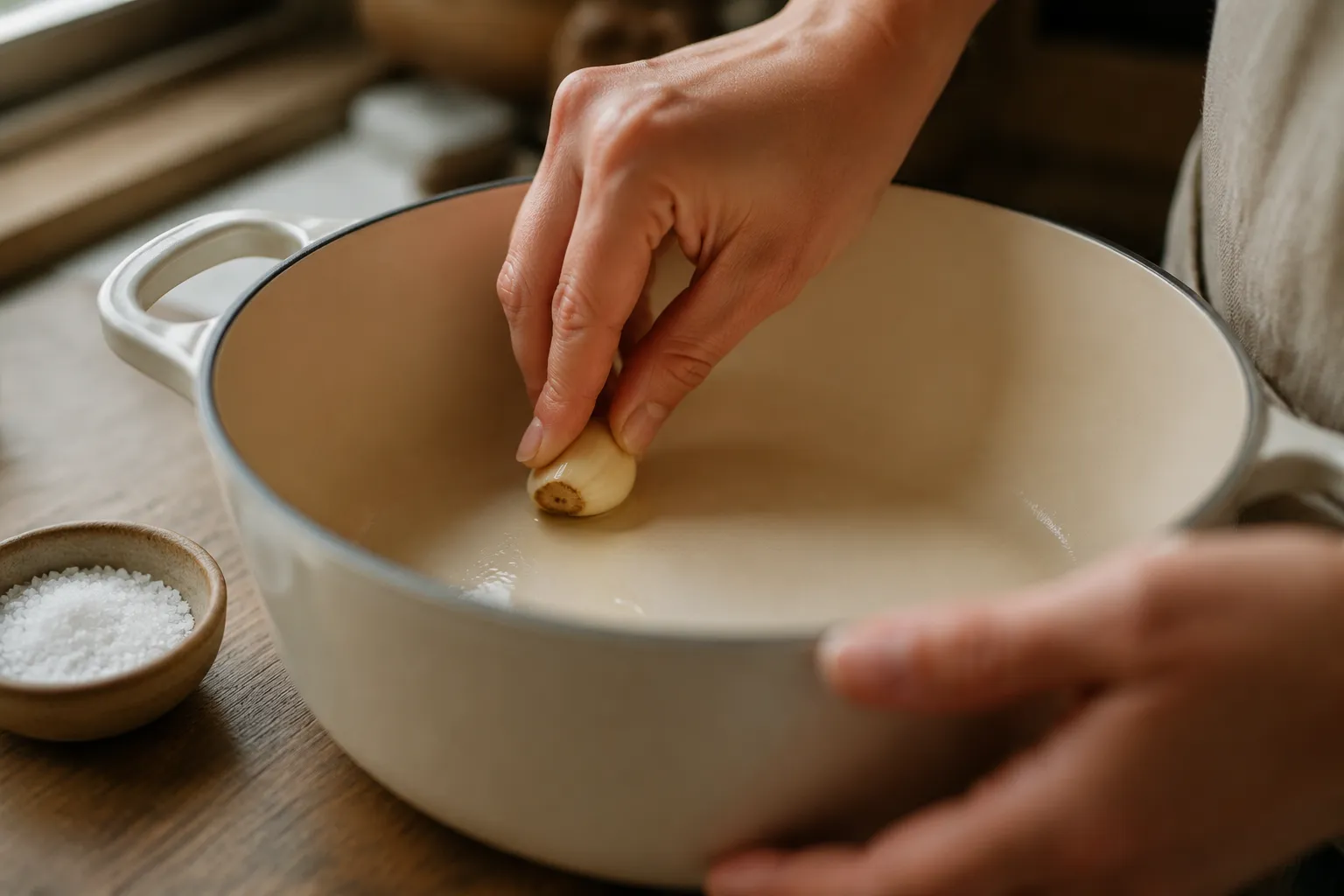
The process is short but the order matters. You'll find the full numbered instructions in the recipe card below. Here's the big-picture method so you understand the why behind each move. First, halve a garlic clove and rub the cut sides aggressively around the inside of your pot, bottom, sides, and rim. Discard the clove. This perfumes the pot without leaving any chunks behind.
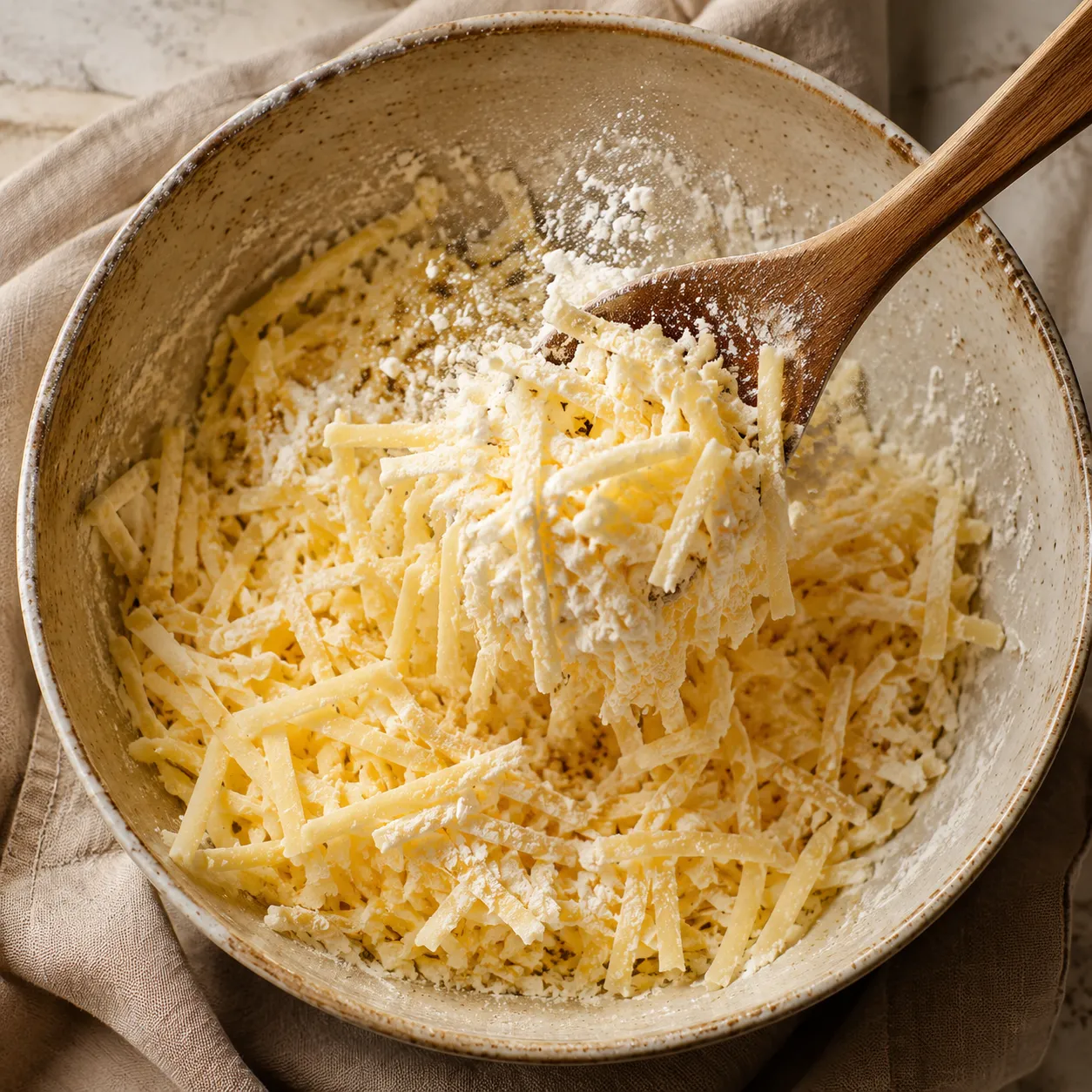
Next, toss your grated Gruyère and Emmental with the cornstarch in a big bowl until every shred is dusted white. The starch is your insurance policy. It physically separates cheese particles and traps fat as the cheese melts, which is what keeps the final pot smooth instead of greasy and split.
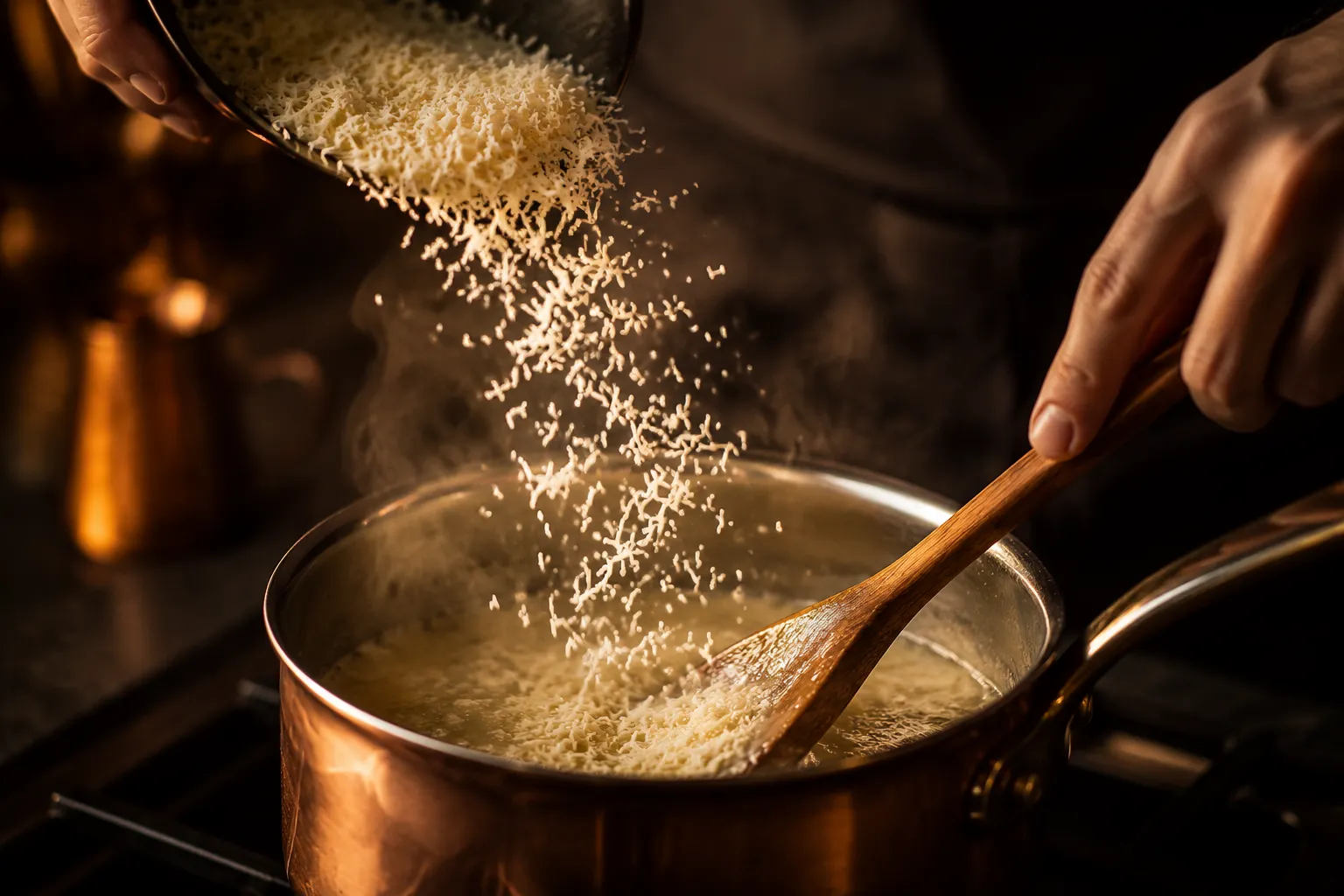
Pour the wine and lemon juice into your pot and warm them over medium-low until little bubbles fizz around the edges. You want hot, not boiling. Now start adding your fondue cheese in small handfuls, stirring constantly in a figure-eight pattern with a wooden spoon. Each handful should melt almost completely before the next one goes in. Rushing this step is the number one reason home fondues clump.
Once all the cheese is melted into a glossy, slightly thick sauce, stir in the kirsch, nutmeg, and pepper. Taste, adjust salt only if needed (Gruyère is already plenty salty), and immediately bring the pot to the table over a low flame or warm tea light. From start to finish, you're looking at 20 minutes of active cooking after a 10-minute prep.
Cheese is only half the meal. The dippers are what make fondue feel like a feast. The undisputed classic is day-old crusty bread torn or cubed into 1-inch pieces, with a bit of crust on every cube (the crust gives the fork something to grip). A sturdy sourdough, baguette, or country loaf is perfect. Soft pretzels and seedy crackers add salt and crunch, and they hold up beautifully under a heavy coat of cheese.
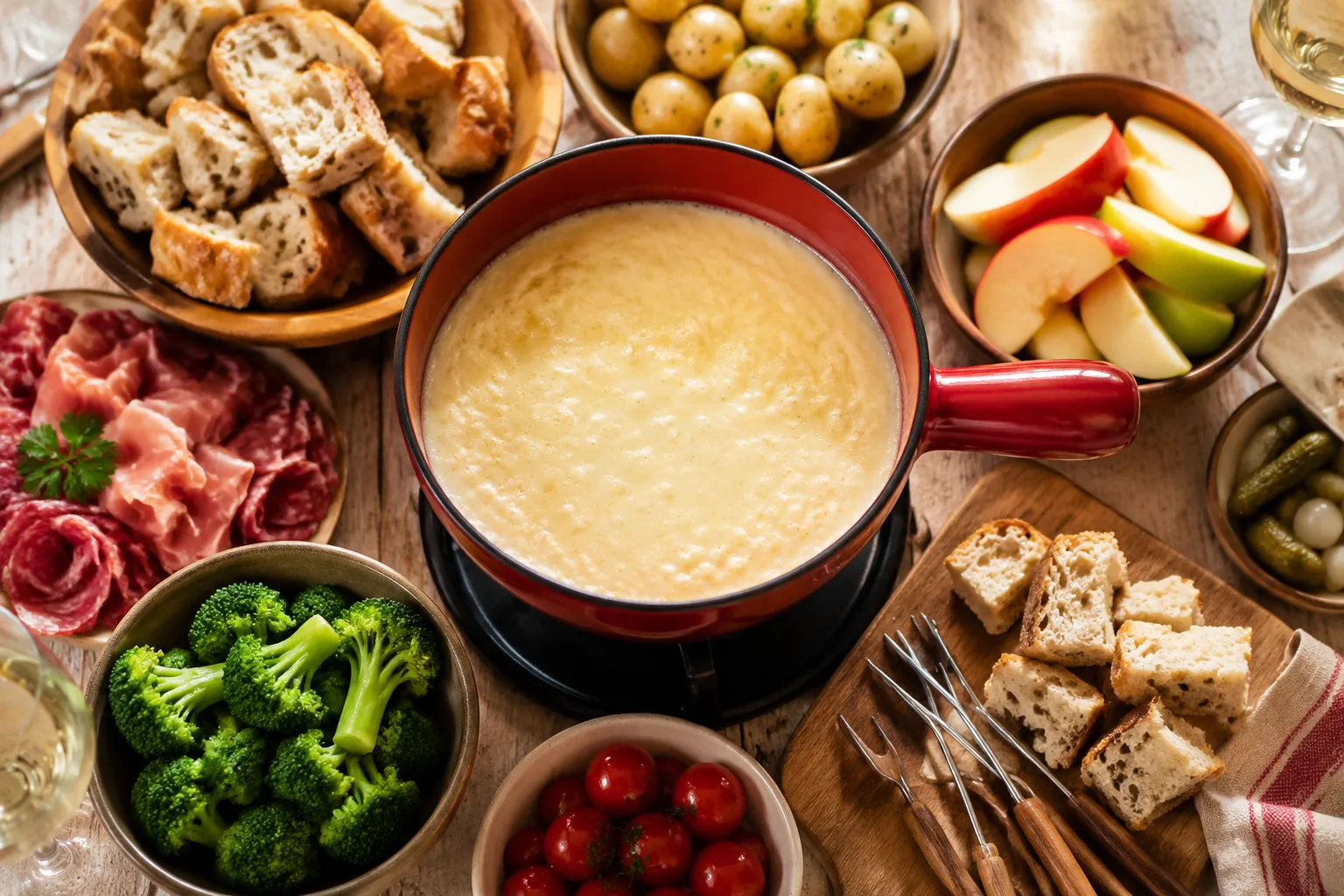
Vegetables bring color, balance, and a little virtue to the table. Lightly steamed broccoli and cauliflower florets, baby potatoes boiled until just tender, blanched asparagus, raw bell pepper strips, cherry tomatoes, and cornichons all earn their spot. For fruit, tart apples (Granny Smith, Honeycrisp) and firm pears are revelatory with Gruyère. The sweetness and acidity cut through the richness in the most satisfying way.
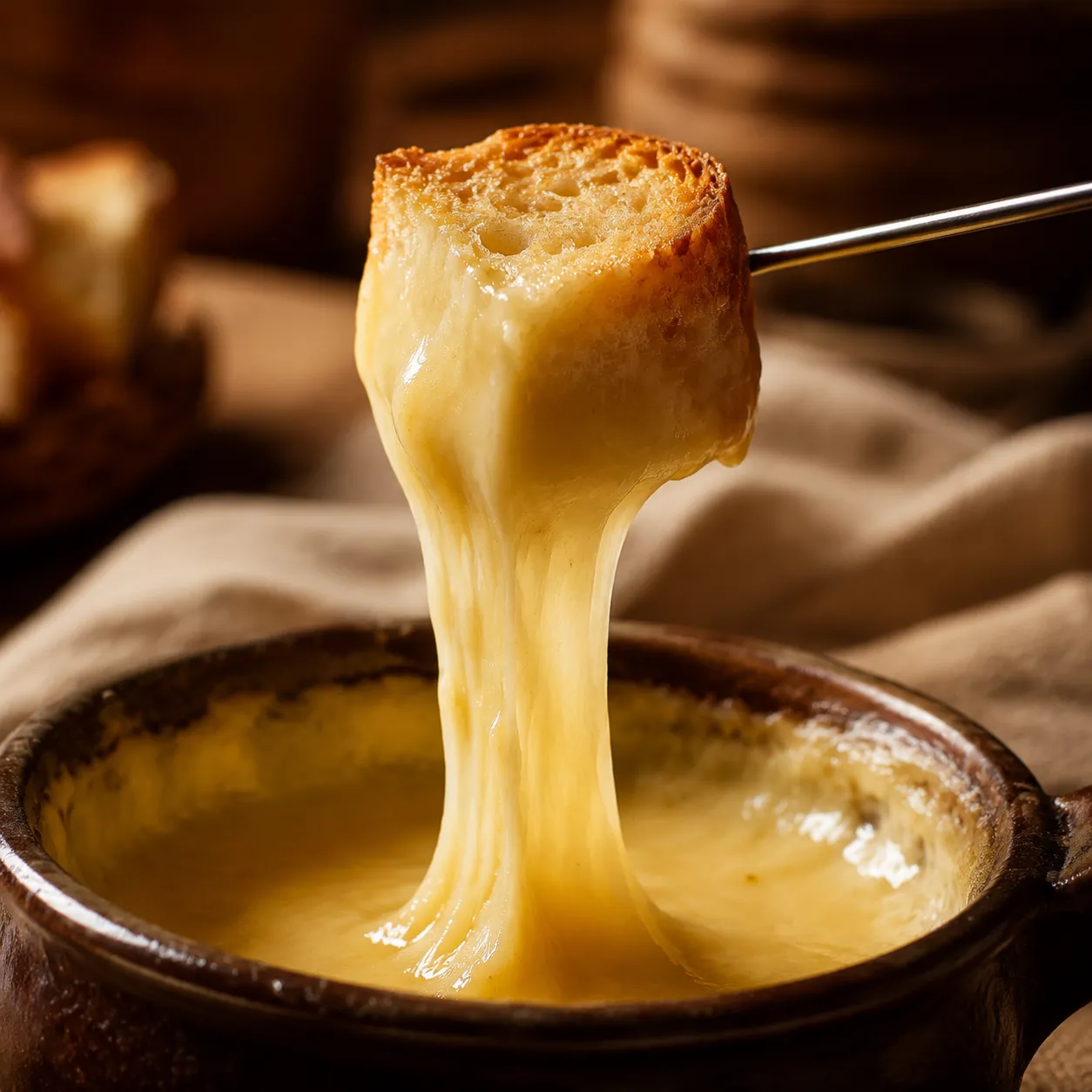
Proteins are where fondue tips into dinner territory. Cured meats like prosciutto, salami, and chorizo are plug-and-play, while roasted baby potatoes, seared steak cubes, poached chicken, and even shrimp give you something heartier to spear. If you love this kind of dip-and-share spread, you'll find a lot of crossover with easy charcuterie board ideas. Many of the same boards and bowls work double duty for fondue night.
For drinks, pour the same dry white wine you cooked with, or hot black tea (a traditional Swiss pairing said to help digest all the cheese). Skip ice water. Cold water on hot cheese in your stomach is genuinely uncomfortable.
A pot of melted Alpine cheese is enough for a crowd, but it's also a great anchor for a longer dinner. Start with a cup of something clear and savory. A French onion soup recipe is the classic move and bridges right into the fondue's flavor profile. End with a simple green salad dressed in a sharp mustard vinaigrette to reset your palate after all the richness.
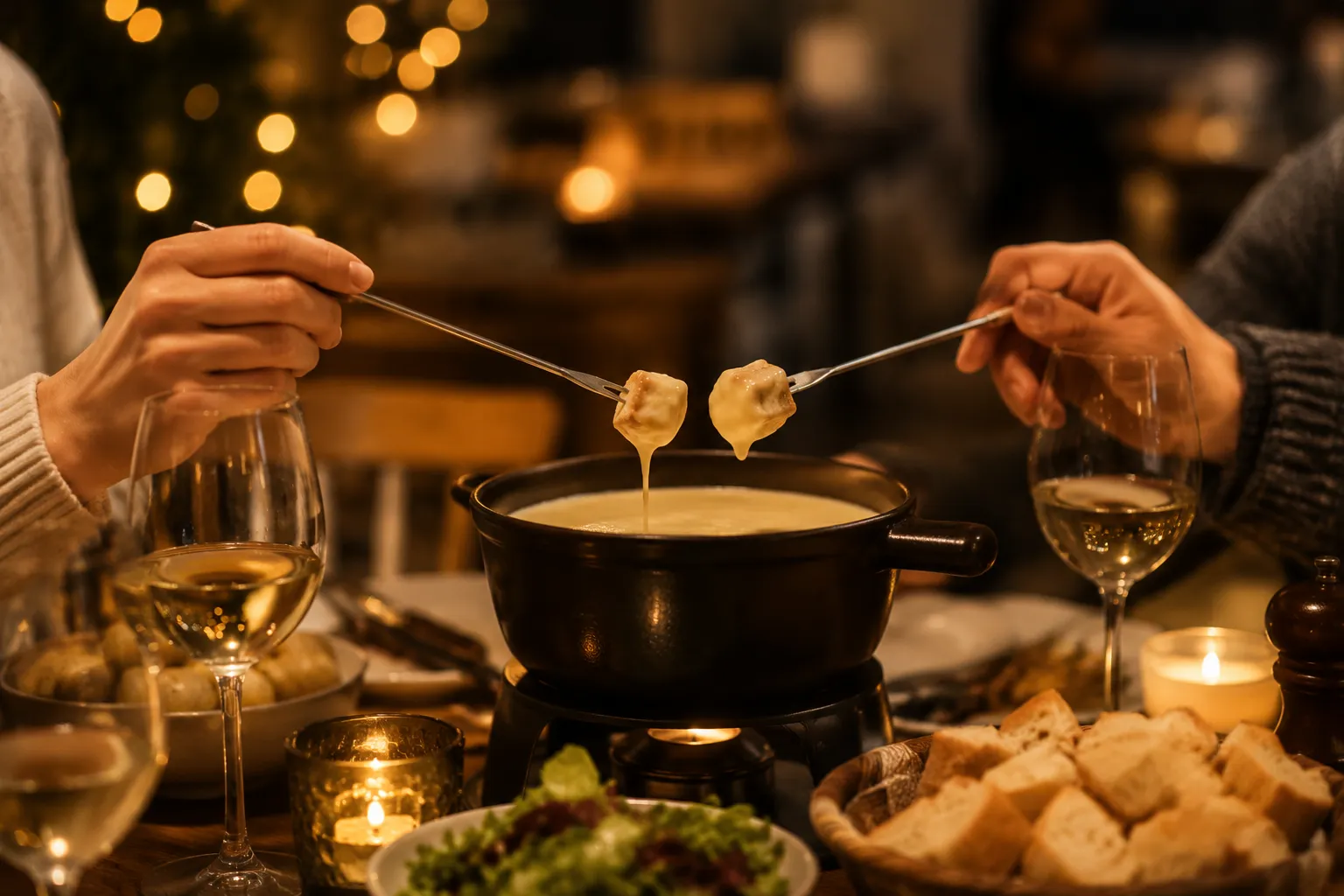
If fondue becomes your gateway drug, there are plenty of other melty, communal fondue recipes worth working into your rotation. A homemade beer cheese dip is the perfect game-day cousin, and a baked brie appetizer covers your holiday entertaining with about 10 minutes of effort. They all live in the same warm, generous, hands-in-the-pot territory, and a good fondue cheese habit usually leads straight to all of them.
One more note on equipment. You don't need a dedicated fondue pot to pull this off. A small enameled cast-iron Dutch oven, a heavy ceramic pot, or even a thick stainless saucepan will hold heat well enough to get you through dinner. Transfer the finished cheese to a pre-warmed serving bowl at the table, or set the cooking pot directly over a tea light or low electric warmer. The goal is steady warmth, never active heat. You want the fondue to stay loose and dippable, never scorch on the bottom.
When the pot is down to its final golden, crusty layer at the bottom (the Swiss call this la religieuse, "the nun"), scrape it out and split the shards among the table. It's the best bite of the night, and a quietly satisfying end to any fondue dinner.
The Gruyère-and-Emmental base is endlessly riffable once you nail the technique. Swap one cheese, swap the alcohol, layer in herbs or spice, and you have a different pot every weekend.
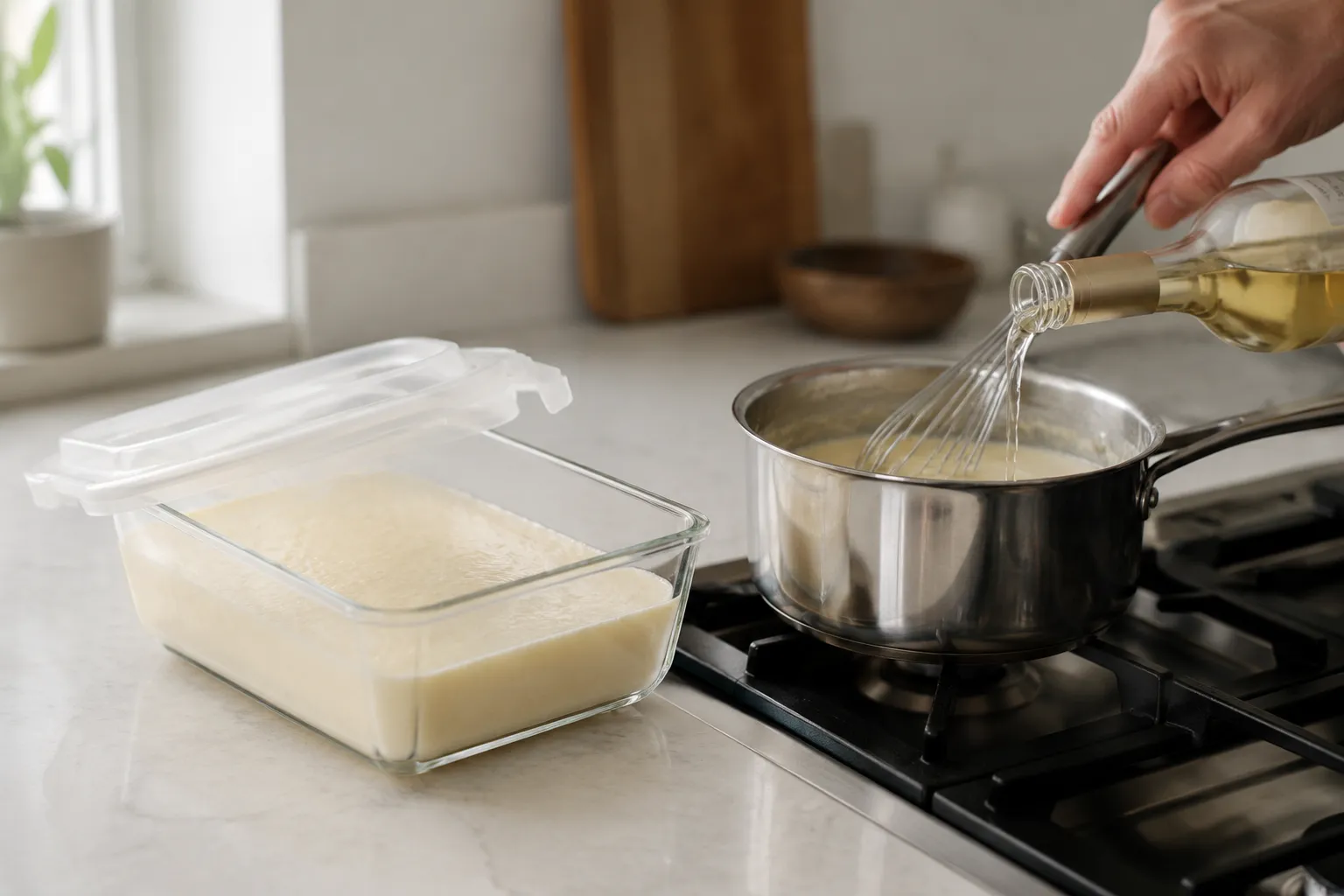
Leftover fondue keeps surprisingly well. Pour any cooled cheese into an airtight container and refrigerate for up to 3 days. The texture will set firm in the fridge (almost like a soft cheese spread), which is normal and totally fixable.
To reheat, scoop the cold fondue into a small saucepan with a splash of dry white wine, milk, or unsalted broth (about 1 to 2 tablespoons per cup of cheese). Warm it over the lowest heat your stove allows, whisking constantly in a figure-eight pattern, until it's smooth and pourable again. Avoid the microwave. It hits the cheese unevenly and almost always breaks the emulsion. If you don't want to revive the pot, leftover fondue is wonderful smeared on toast with a fried egg, stirred into mac and cheese, melted onto a burger, or used as the base for a quick croque monsieur.