Classic Martini Recipe: The Perfect 3-Ingredient Cocktail
4.8 from 12 reviews
0SHARES
Now Playing
Classic Martini Recipe: The Perfect 3-Ingredient Cocktail
0:00
0:00
A perfectly crisp, ice-cold martini recipe made with just three ingredients. Master the ratios, the stir, and the garnish like a true cocktail bartender.
Why You'll Love This Recipe
Bar-quality in under 5 minutes: This cocktail comes together quickly, but the chilled glass and precise ratio make it feel polished and professional.
Only three core ingredients: Gin or vodka, dry vermouth, and a garnish are all you need for a crisp, classic drink.
Easy to customize: Make it with gin, vodka, a lemon twist, olives, or a splash of olive brine depending on your mood.
Perfect for entertaining: It feels sophisticated without requiring a complicated bar cart or a long shopping list.
Teaches a foundational cocktail skill: Once you master chilling, stirring, and straining, you can make many other spirit-forward cocktails with confidence.
This martini recipe is the kind of polished, ice-cold cocktail that makes a regular evening feel instantly more elegant. With just gin or vodka, dry vermouth, and a bright garnish, it proves that a drink does not need a long ingredient list to feel special. The magic is in the chill, the ratio, and the way the garnish wakes up the whole glass.
A classic martini is crisp, bracing, and beautifully simple, but it is also deeply personal. Some people love the botanical snap of a gin martini with a lemon twist, while others prefer the clean, sleek profile of vodka and an olive garnish. This guide gives you the bartender-style foundation first, then shows you how to make it your own without losing the balance that makes the drink iconic.
If you have ever wondered whether a martini should be shaken or stirred, how much vermouth is actually right, or why your drink does not taste quite like the one from your favorite cocktail bar, you are in the right place. We are keeping the ingredients minimal and the technique precise, with enough flexibility for a drier pour, a silkier vodka martini recipe, or even a savory dirty martini mood when the hour calls for olives.
The Three-Ingredient Martini Foundation
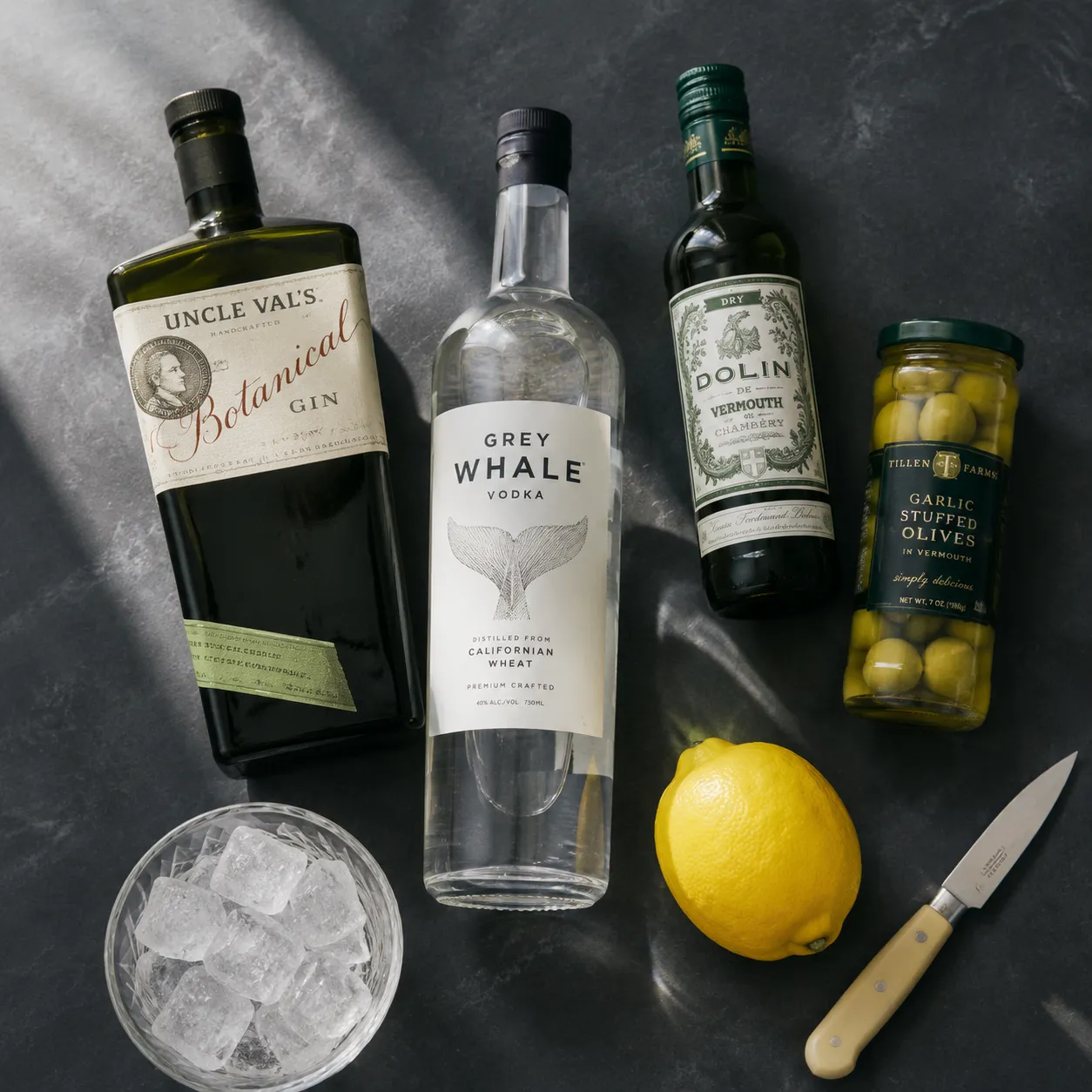
At its core, a great martini is built from three elements: a base spirit, dry vermouth, and a garnish. That short list is exactly why quality matters here; there is no juice, syrup, or bitters to hide behind. Choose a gin or vodka you genuinely enjoy chilled, because its character will lead the drink from the first sip to the last.
For the most classic structure, use 2 1/2 ounces of gin or vodka with 1/2 ounce of vermouth. This 5:1 ratio makes a dry, balanced cocktail that still lets the vermouth do its job: softening the edges, adding subtle aromatics, and creating that unmistakable martini finish. If you are new to martinis, this martini recipe is the perfect place to start because it tastes elegant without becoming harsh.
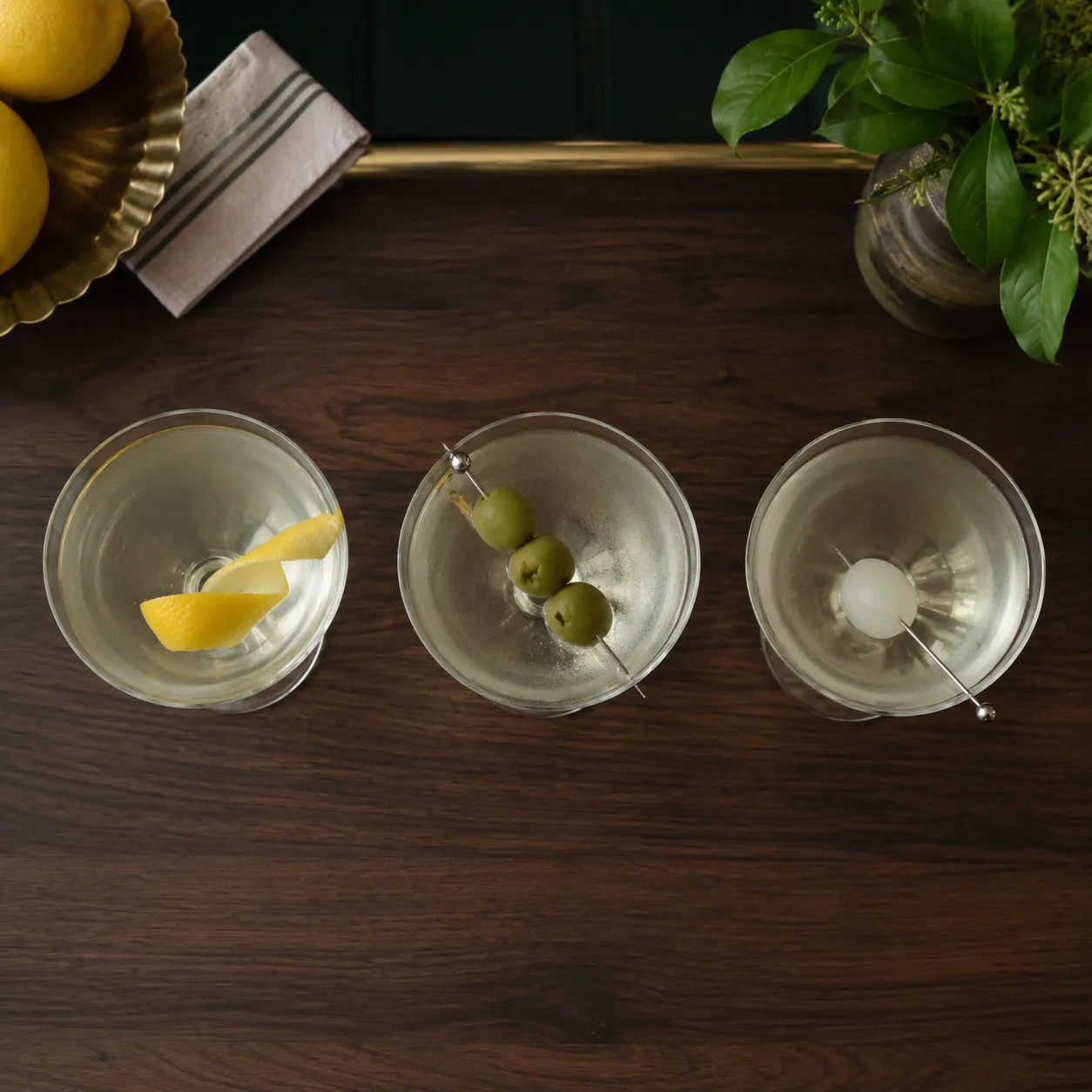
The garnish is not an afterthought. A lemon twist adds fragrant citrus oils that feel clean and bright, especially with gin, while olives bring salinity and a more savory cocktail-hour feel. Think of cocktail garnishes as the final seasoning, the same way flaky salt or fresh herbs finish a dish.
Choosing Gin, Vodka, and Vermouth
A gin martini is the benchmark for many cocktail lovers because gin brings botanicals: juniper, citrus peel, coriander, herbs, florals, spice. London dry gin makes a sharp, classic drink, while a softer modern gin can create something rounder and more aromatic. If you already enjoy gin cocktails, a martini is one of the purest ways to taste how your bottle performs.
Vodka gives the cocktail a different personality: cleaner, smoother, and more neutral. That does not mean bland; a good vodka martini should still feel cold, structured, and lightly aromatic from the vermouth and garnish. If you are serving guests, offering both gin and vodka is an easy way to make the drink feel tailored without complicating your bar setup.
Dry vermouth deserves more respect than it often gets. It is wine-based and should be refrigerated after opening, ideally used within a month or two for the freshest flavor. A tired bottle of vermouth can make even the best spirit taste flat, while a fresh bottle brings lift, elegance, and that subtle herbal snap that makes the drink complete.
The Classic Martini Ratio
The ratio is where martini drinkers start to reveal their preferences. A classic dry martini often lands around 5 parts spirit to 1 part vermouth, which is exactly the formula used here. It is crisp and spirit-forward, but not so austere that the vermouth disappears completely.
If you like a rounder, more aromatic cocktail, move to a 4:1 ratio by using 2 ounces gin or vodka and 1/2 ounce vermouth, or 2 1/2 ounces spirit with a generous 3/4 ounce vermouth. For an extra-dry martini, rinse the chilled mixing glass with vermouth, dump out the excess, and stir the spirit over ice. That style is iconic, but it works best when your base spirit is excellent and very cold.
This martini recipe uses the middle path: dry enough to feel classic, balanced enough to enjoy slowly. The first sip should be cold and focused, the middle should taste clean and lightly botanical, and the finish should leave just enough citrus or olive behind to make you want another sip.
How to Mix a Bar-Quality Martini
Start by chilling your serving glass before you do anything else. A coupe or V-shaped martini glass can go into the freezer for 5 to 10 minutes, or you can fill it with ice water while you measure the drink. The colder the glass, the longer the cocktail stays crisp, which matters because martinis are served up, without ice.
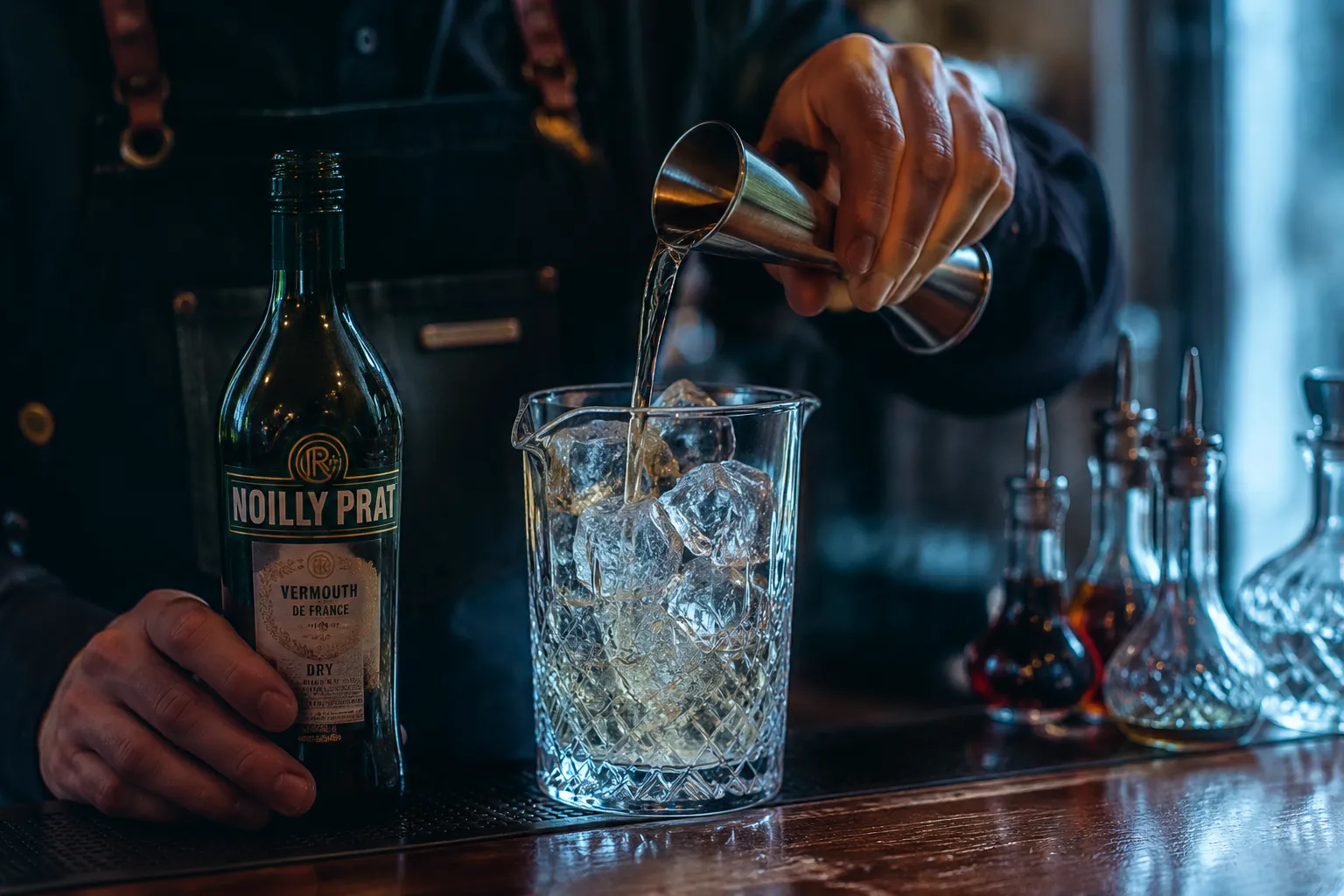
Next, fill a mixing glass with large, very cold ice. Add the dry vermouth first, then the gin or vodka, and stir with a long bar spoon until the outside of the glass feels frosty. You are not trying to whip air into the drink; you are chilling and diluting it just enough to smooth the alcohol and knit the ingredients together.
This is where the shaken or stirred question comes in. A stirred martini is clear, silky, and traditional, especially for gin. Shaking makes the drink colder faster and adds more aeration and dilution, which some vodka lovers enjoy, but it also creates a slightly cloudy, frothier texture.
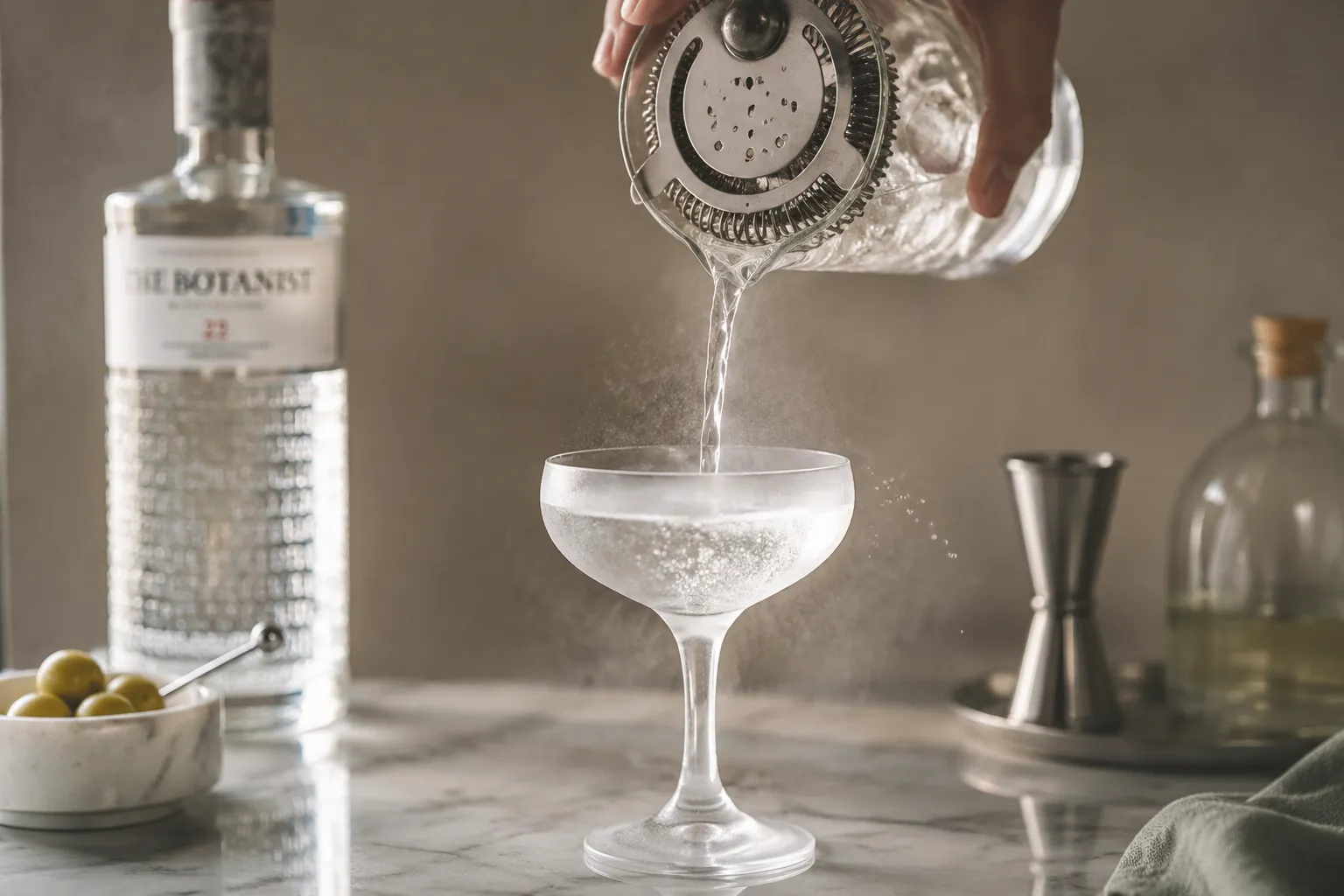
Once the drink is properly chilled, strain it into your cold glass in one smooth pour. A julep strainer or Hawthorne strainer both work, as long as you keep the ice in the mixing glass and the cocktail crystal clear. Serve immediately, because the best martini is the one that reaches the table at its coldest point.
Lemon Twist or Olive Garnish
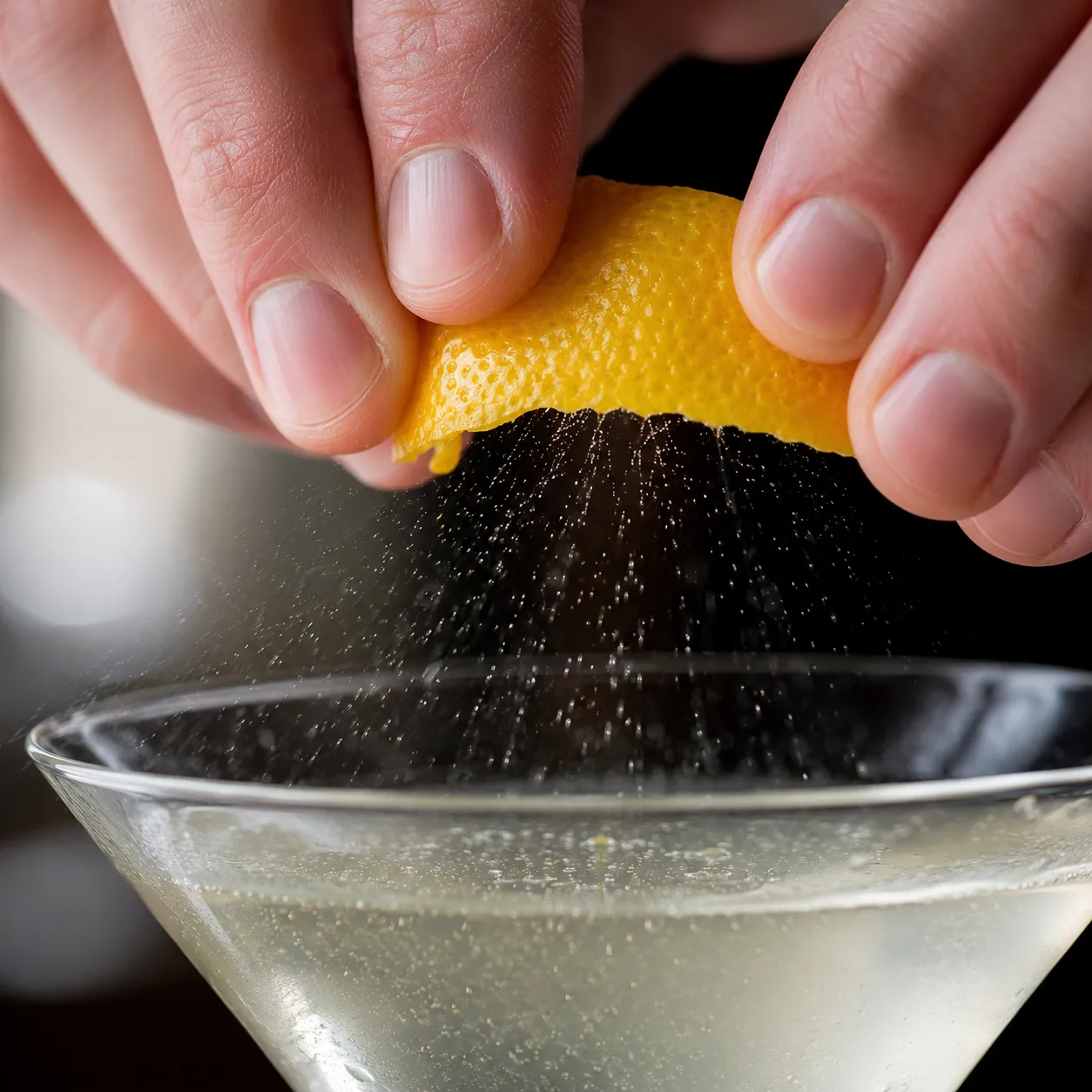
For a lemon twist, cut a strip of peel with as little white pith as possible. Hold it over the surface of the drink and gently pinch it lengthwise so the citrus oils spray across the top, then rub the peel around the rim before dropping it in or perching it on the edge. Those tiny aromatic oils make the cocktail smell bright before you even take a sip.
Olives create a richer, more savory profile. Use three small olives or one to two large ones on a cocktail pick, and choose firm green olives that taste briny but not harsh. Blue cheese-stuffed olives can be delicious, but they are better saved for a more deliberately savory pour than a pristine first round.
For entertaining, set out both garnishes and let guests choose. Lemon feels crisp and elegant with gin, while olives pair beautifully with vodka or with a softer gin. The best garnish is the one that complements the spirit rather than overwhelming it.
Gin or Vodka: Making the Drink Your Own
The classic martini began as a gin drink, and gin still gives it the most layered flavor. Juniper and botanicals make the cocktail feel alive, especially with a citrus garnish and fresh vermouth. If you like drinks with personality and a little aromatic bite, gin is the move.
Vodka, on the other hand, creates a colder, cleaner canvas. It lets the dry vermouth and garnish shine, which is why it is so popular for sleek dinner-party sipping. A vodka martini recipe is also a smart option for guests who find gin too herbal or piney.
For a dirty martini, add a small measure of olive brine along with the vermouth. The brine turns the drink savory, salty, and a little more relaxed, especially with an olive garnish. Keep the brine modest at first; you can always add more next round, but too much can flatten the spirit.
Dry, Savory, and After-Dinner Martini Styles
Once you master the base, you can read almost any martini menu with confidence. A dry martini uses less vermouth, while a wet martini uses more. A Gibson swaps the lemon or olive for a cocktail onion, which gives the drink a gentle pickled sweetness.
The savory side is where olives and brine come in, especially for anyone who loves a salty cocktail snack situation. Meanwhile, dessert-leaning martinis move into a completely different family, like the espresso martini, which is shaken with coffee and liqueur rather than stirred with vermouth. They share the glass and the glamour, but the formulas are very different.
What ties them together is intention. A martini is not a drink to rush or overcomplicate. The pleasure is in the cold glass, the clean lines, and the feeling that three carefully handled ingredients can become something quietly luxurious.
What to Serve with a Martini
A martini loves salty, simple food. Think warmed Marcona almonds, potato chips, smoked salmon toasts, deviled eggs, oysters, or a little bowl of excellent olives. The drink is crisp and strong, so food with fat, salt, and texture keeps the pairing balanced.
For date night, serve this martini recipe before dinner with a small appetizer board: aged cheddar, crackers, cornichons, chilled shrimp, and a few briny bites. It also works beautifully with steakhouse-style starters, caviar-inspired snacks, or a plate of roasted mushrooms on toast. Keep the food elegant but easy, because the cocktail is already doing plenty of heavy lifting.
If you are hosting, mix martinis one or two at a time rather than batching the whole evening in advance. They are best when stirred fresh and served very cold, with the garnish added at the last second. That little bit of ceremony is part of the charm, and it turns a simple three-ingredient drink into a true cocktail-hour moment.
Final Sip
A great martini is all about precision without fuss. Use a spirit you like, keep your vermouth fresh, chill everything thoroughly, and choose a garnish that matches your mood. Once you have the 5:1 ratio in your back pocket, this martini recipe becomes one of the easiest and most rewarding cocktails to make at home.
Whether you pour gin with a lemon twist, vodka with olives, or a lightly briny version for a savory edge, the method stays beautifully simple. Stir until cold, strain into a frosty glass, and serve immediately. That is the whole secret: fewer ingredients, handled well.
💡 Expert Tips
Use large, clear ice if you can. Bigger cubes melt more slowly, chilling the drink while giving you better control over dilution.
Keep your spirits cold. Storing gin or vodka in the freezer gives you a head start on that crisp, icy texture.
Refrigerate vermouth after opening. Vermouth is wine-based, so freshness makes a huge difference in the final flavor.
Stir longer than you think. About 25 to 35 seconds usually gives the drink enough chill and dilution to taste smooth rather than hot.
Express citrus oils over the glass. A lemon twist is not just decoration; it perfumes the surface of the cocktail.
🔄 Variations & Substitutions
Once you know the classic ratio, you can adjust the martini to match your palate while keeping the same elegant structure. Start with small changes so the drink stays balanced rather than swinging too far in one direction.
Dry martini: Use less vermouth, or rinse the mixing glass with vermouth and discard the excess before adding the spirit.
Wet martini: Increase the vermouth slightly for a softer, more aromatic drink.
Dirty martini: Add 1/2 ounce olive brine and garnish with olives for a salty, savory finish.
Gibson: Replace the lemon twist or olive with a cocktail onion.
Vodka martini: Swap gin for vodka for a cleaner, smoother profile.
🧊 Storage & Leftovers
A martini is best made fresh, stirred with ice, and served immediately in a chilled glass. Because it is served without ice, it warms as it sits, so the texture and flavor are at their peak right after straining.
If you want to prep ahead for a party, chill your glasses, refrigerate the vermouth, freeze the vodka or gin, and prepare garnishes in advance. You can also pre-measure the spirit and vermouth for a few servings, but stir each drink with ice just before serving for the cleanest, coldest result.
Frequently Asked Questions
Should a martini be shaken or stirred?
Traditionally, a martini is stirred because stirring keeps the drink silky, clear, and elegant. It chills and dilutes the cocktail without adding too much air, which is especially important for gin martinis. Shaking is not wrong, but it creates a colder, cloudier, slightly frothier drink with more dilution. Many vodka martini fans enjoy that extra chill and texture. If you want the most classic bar-style result, stir; if you prefer an icier, more aerated cocktail, shake.
What's the best ratio of gin to vermouth in a martini?
A classic dry martini usually uses a 5:1 ratio of gin to dry vermouth, which means 2 1/2 ounces gin to 1/2 ounce vermouth. This gives you a crisp, spirit-forward drink that still has enough vermouth for balance. If you prefer a softer, more aromatic martini, try a 4:1 ratio. For an extra-dry martini, use just a vermouth rinse in the glass or mixing glass. The best ratio is the one that tastes balanced to you.
What's the difference between a gin martini and a vodka martini?
A gin martini is more botanical, herbal, and aromatic because gin is flavored with juniper and other botanicals. It often pairs beautifully with a lemon twist, which highlights those citrus and herbal notes. A vodka martini is cleaner and more neutral, so the vermouth and garnish become more noticeable. Vodka can make the drink feel smoother and colder, while gin gives it more complexity. Both are classic options, and the method is nearly identical.
What is a dirty martini?
A dirty martini is a classic martini with olive brine added for a salty, savory edge. A good starting point is 1/2 ounce olive brine, along with your gin or vodka and dry vermouth. Garnish it with extra olives and use a brine that tastes clean and pleasantly salty, not metallic or overpowering. Vodka is especially popular in dirty martinis, but gin can be excellent too if you like a more complex savory cocktail.
Do I need a cocktail shaker to make a martini?
No, you do not need a cocktail shaker to make a classic martini. A mixing glass and bar spoon are the traditional tools because martinis are usually stirred, not shaken. You can also use a sturdy pint glass if that is what you have. A shaker is useful if you prefer a colder, frothier vodka martini, but it is not required. The most important things are plenty of ice, a chilled serving glass, and a smooth strain.
Classic Martini Recipe: The Perfect 3-Ingredient Cocktail